
Lake Baikal Deep water stratification and mixing Alfred
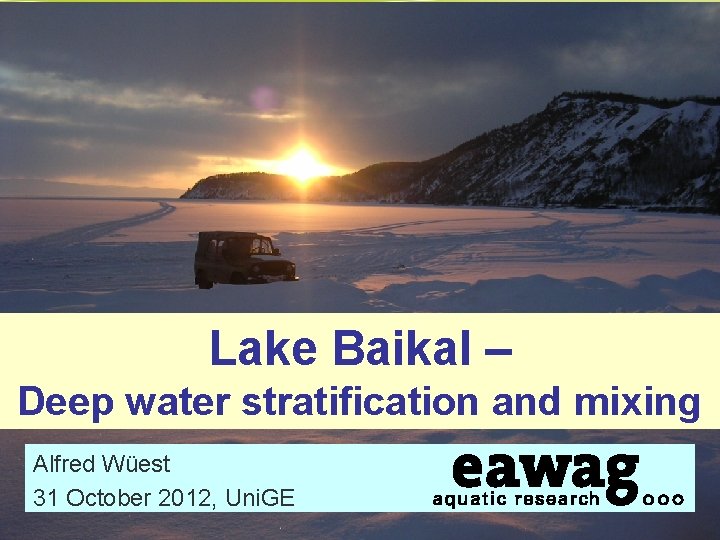
Lake Baikal – Deep water stratification and mixing Alfred Wüest 31 October 2012, Uni. GE
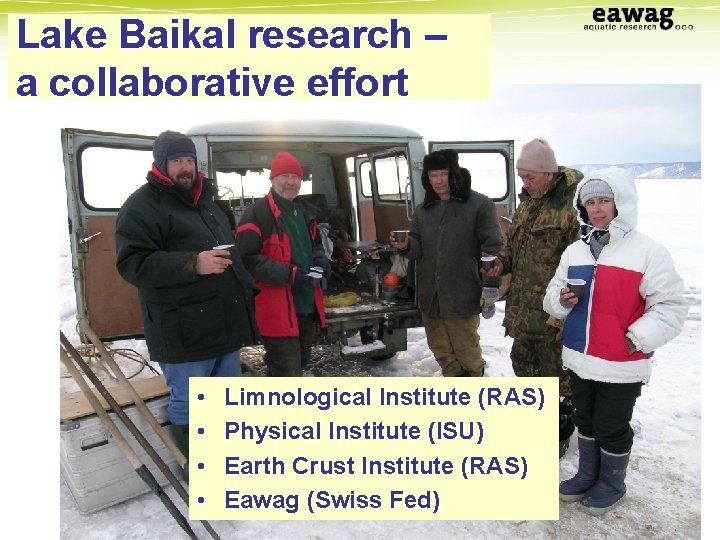
Lake Baikal research – a collaborative effort • • Limnological Institute (RAS) Physical Institute (ISU) Earth Crust Institute (RAS) Eawag (Swiss Fed)
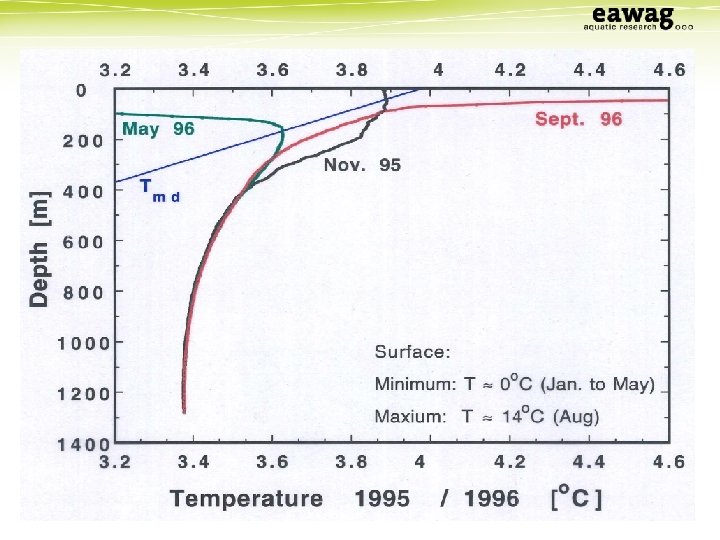
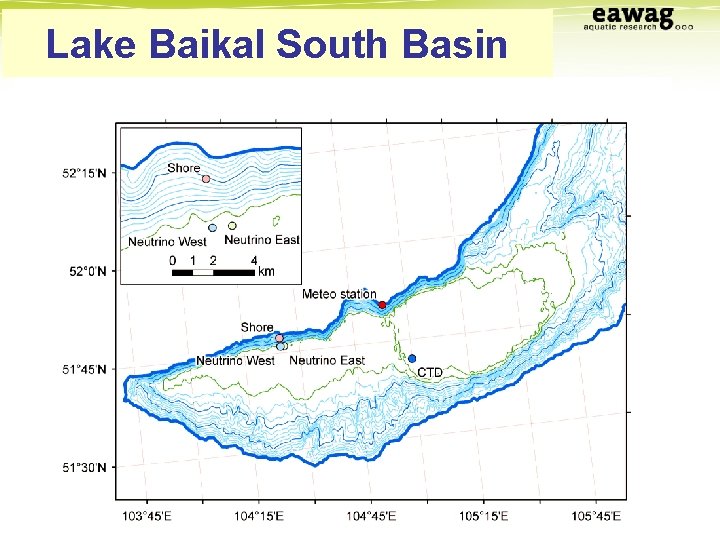
Lake Baikal South Basin
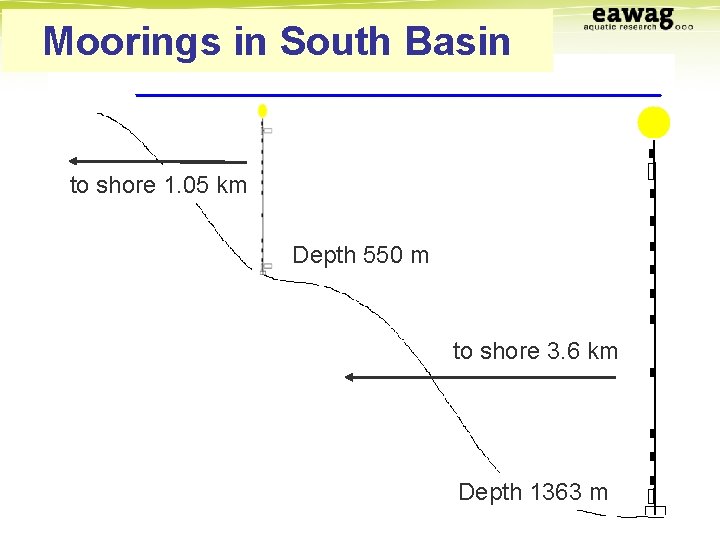
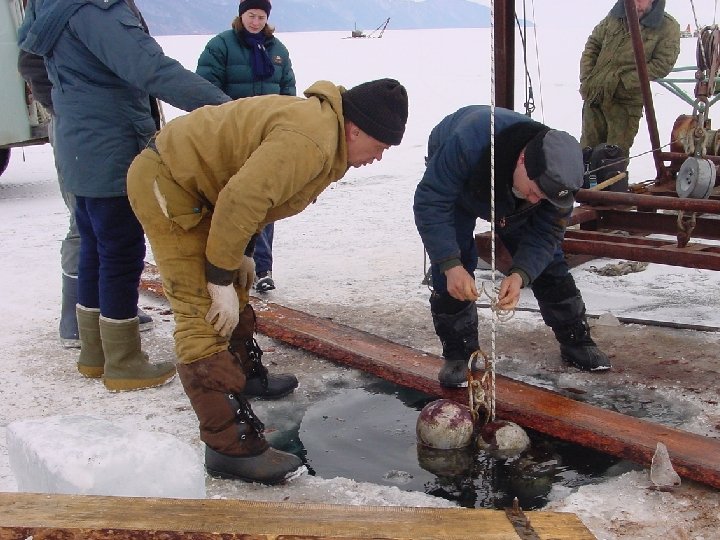
Moorings in South Basin to shore 1. 05 km Depth 550 m to shore 3. 6 km Depth 1363 m
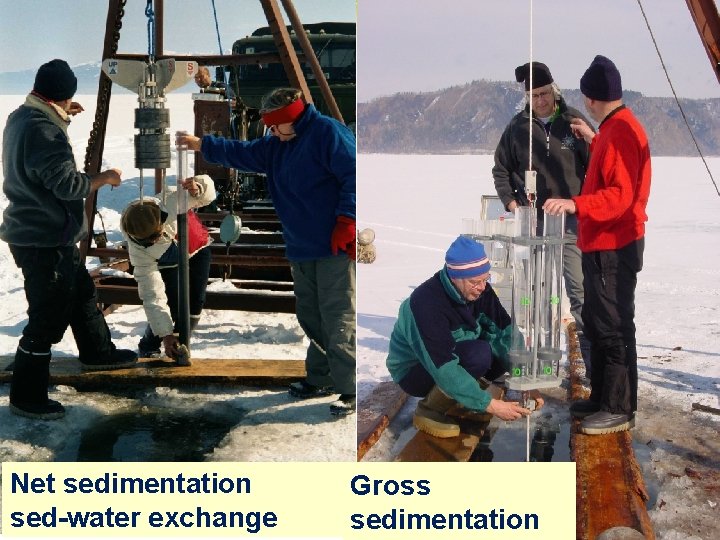
Net sedimentation sed-water exchange Gross sedimentation
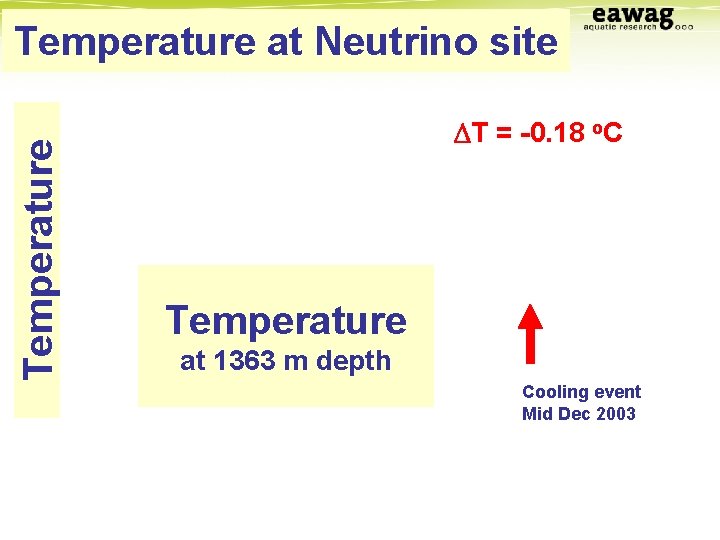
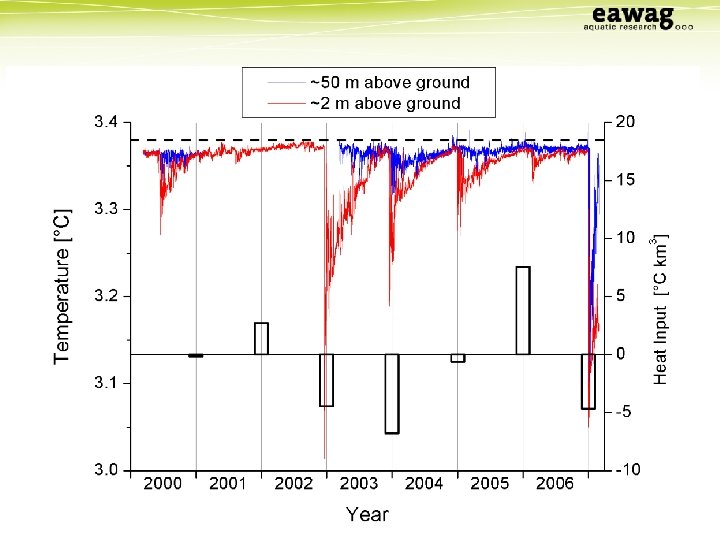
Temperature at Neutrino site DT = -0. 18 o. C Temperature at 1363 m depth Cooling event Mid Dec 2003
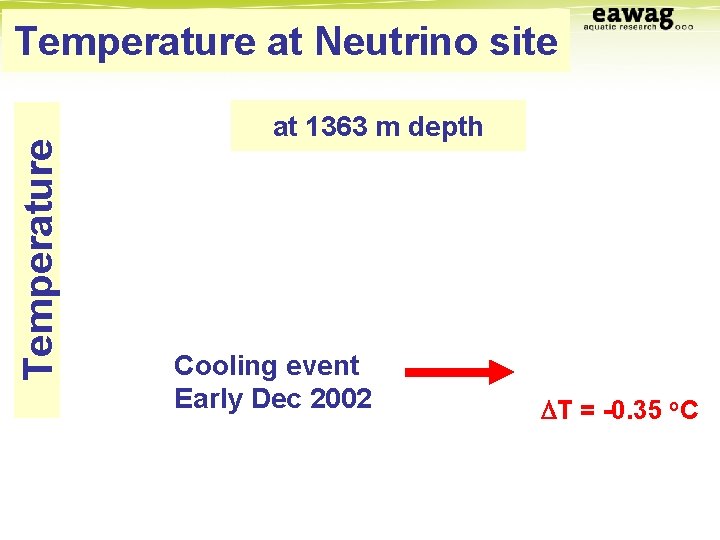
Temperature at Neutrino site at 1363 m depth Cooling event Early Dec 2002 DT = -0. 35 o. C
Deep-water renewal! how to push water below 300 m depth? How to maintain deep-water temperature cold?
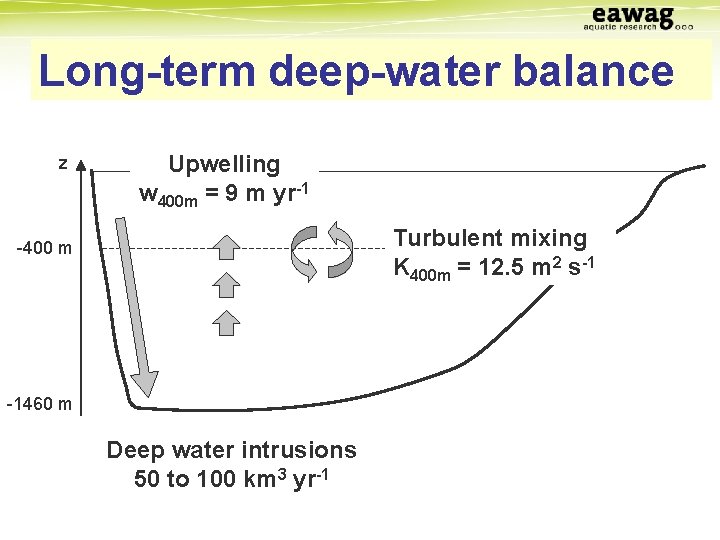
Long-term deep-water balance z Upwelling w 400 m = 9 m yr-1 Turbulent mixing K 400 m = 12. 5 m 2 s-1 -400 m -1460 m Deep water intrusions 50 to 100 km 3 yr-1
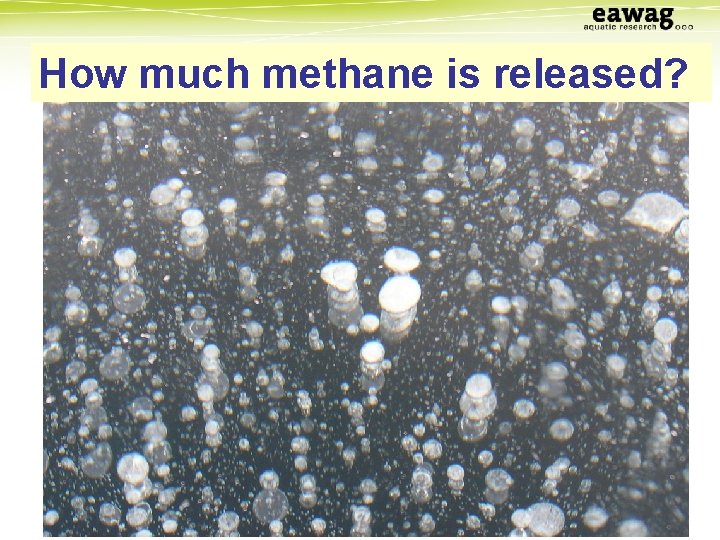
How much methane is released?
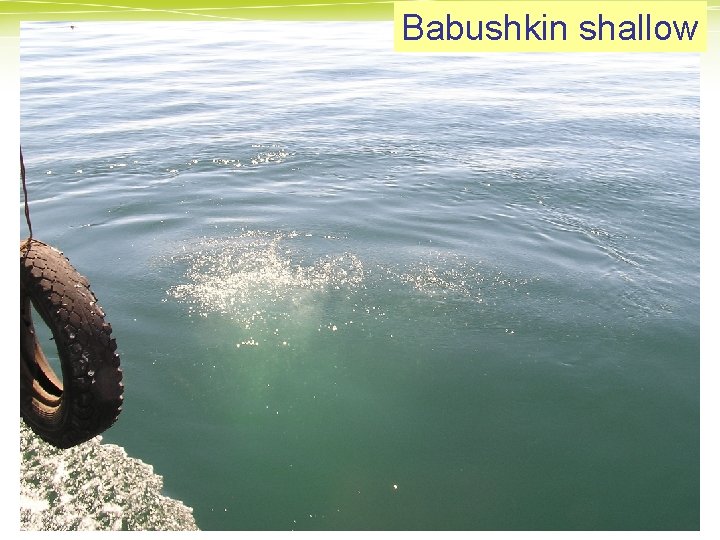
Babushkin shallow
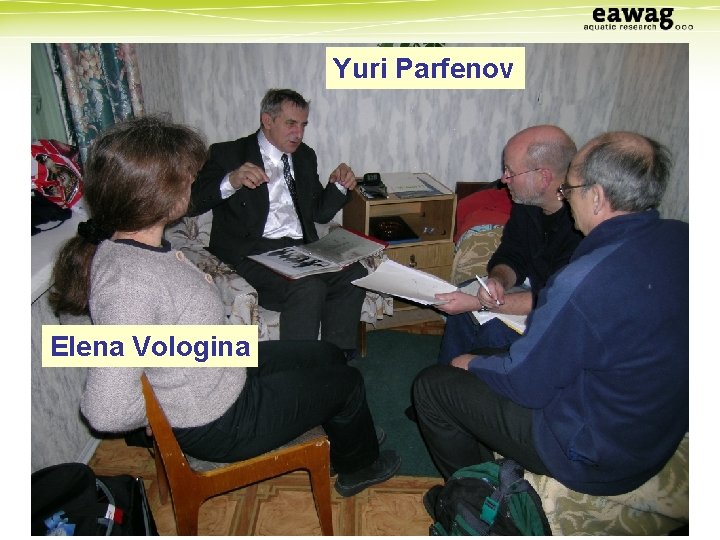
Yuri Parfenov Elena Vologina
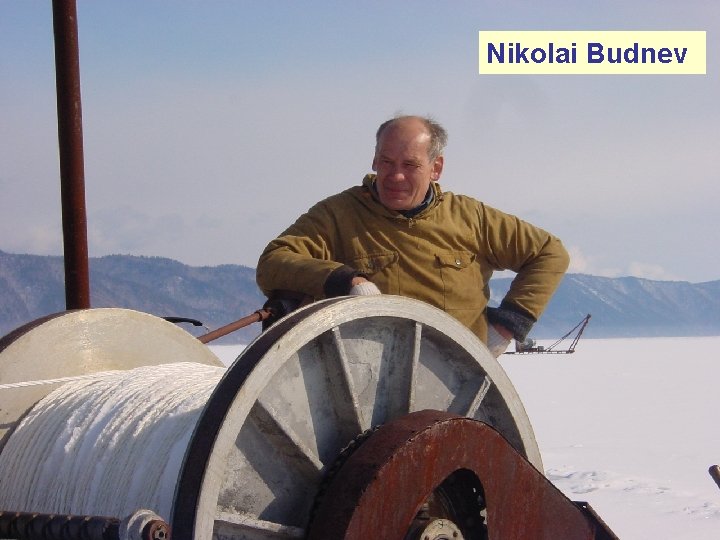
Nikolai Budnev
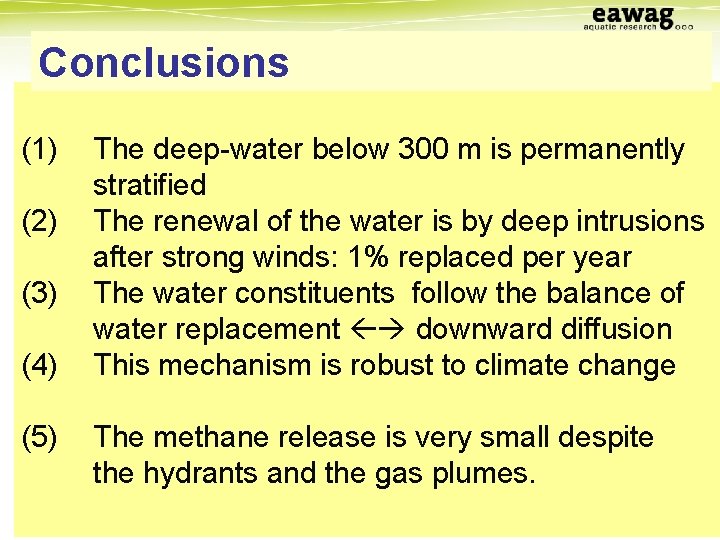
Conclusions (1) (2) (3) (4) (5) The deep-water below 300 m is permanently stratified The renewal of the water is by deep intrusions after strong winds: 1% replaced per year The water constituents follow the balance of water replacement downward diffusion This mechanism is robust to climate change The methane release is very small despite the hydrants and the gas plumes.
Thank you
- Slides: 20