
LACTATE CLEARANCE AS AN PROGNOSTIC INDICATOR FOR SURVIVAL



- Slides: 26
LACTATE CLEARANCE AS AN PROGNOSTIC INDICATOR FOR SURVIVAL IN POLYTRAUMA PATIENTS DR. ASHWINI M SHAH. Post Graduate-2 nd yr DNB Dept of Anesthesiology GANGA HOSPITAL COIMBATORE
Special thanks to • Dr. Ravindra Bhat Prof & HOD • Dr. J. Balavenkat • Senior consultant • Dr. Sekar • Senior consultant • Dr. Balasubramani Senior consultant & Intensivist Dr. Karunanidhi Ph. D, for statistical analysis
• TRAUMA - disease of bleeding • Hemorrhage - leading cause of death following trauma • Traumatic hemorrhagic shock kills quickly
• In hemorrhagic shock resuscitation aims at control of bleeding and replacement of lost blood with fluids. • Outcome depends on depth and duration of shock. • SHOCK- defined simply as inadequate tissue perfusion. • Uncompensated / overt shock • Compensated / occult hypoperfusion
• Resuscitation aimed at normalising vital parameters have been shown to be inadequate. • In large number of patients especially young adults presence of occult hypoperfusion syndrome needs to be kept in mind. • In the presence of normal vital parameters there is persistence of tissue hypoperfusion which leads to MODS or death.
• Identification of these patients and carrying on the resuscitation measures till certain metabolic endpoints are met with has reduced the mortality. • These parameters include: -serum lactate -base deficit -tissue oxygen saturation -sublingual CO 2 saturation. Out of this lactate is used extensively.
• Lactate is an end point of anaerobic metabolism. • Inability to clear lactate in the face of normal vital signs indicates persistance of hypoperfusion. • Continuing resuscitation measures till lactate is cleared has improved outcome in trauma.
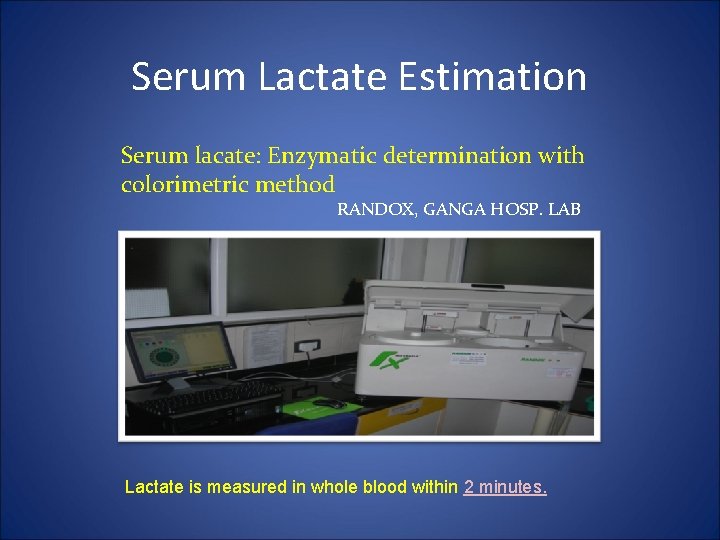
Serum Lactate Estimation Serum lacate: Enzymatic determination with colorimetric method RANDOX, GANGA HOSP. LAB Lactate is measured in whole blood within 2 minutes.
OBJECTIVE OF STUDY This study determines whether lactate clearance within 24 hrs of arrival of polytrauma patients presenting with hypovolemic shock and ISS > 16(Injury Severity Scoring) correlates with the outcome.
Review of literature 1) Abramson D, Scalea TM, Hitchcock R, et al. Lactate clearance and survival following injury. J Trauma. 1993; 35: 584 Y 591. 2) Toffaletti J. Elevations in blood lactate: overview of use in critical care. Scand J Clin Lab Invest. 1996; 56 (suppl 224): 107 -110 3) Weil MH, Afifi AA. Experimental and clinical studies on lactate & pyruvate as indicators of the severity of acte circulatory failure(shock). circulation. 1970; 41: 989 -1001 4) Mizock BA, Falk JL. Lactic acidosis in critical illness. Crit care Med. 1992; 20: 80 -95 5) Bakker, Gris P, Coffernils M, et al. Serial blood lactate levels can predict the development of multiple organ failure following septic shock.
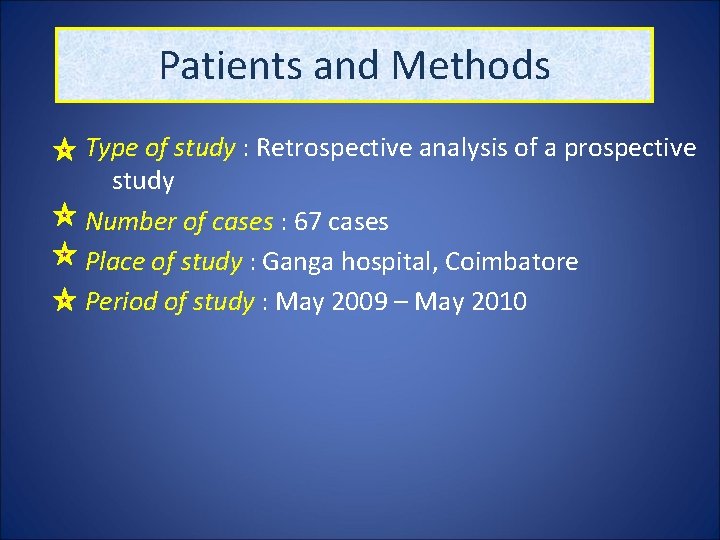
Patients and Methods Type of study : Retrospective analysis of a prospective study Number of cases : 67 cases Place of study : Ganga hospital, Coimbatore Period of study : May 2009 – May 2010
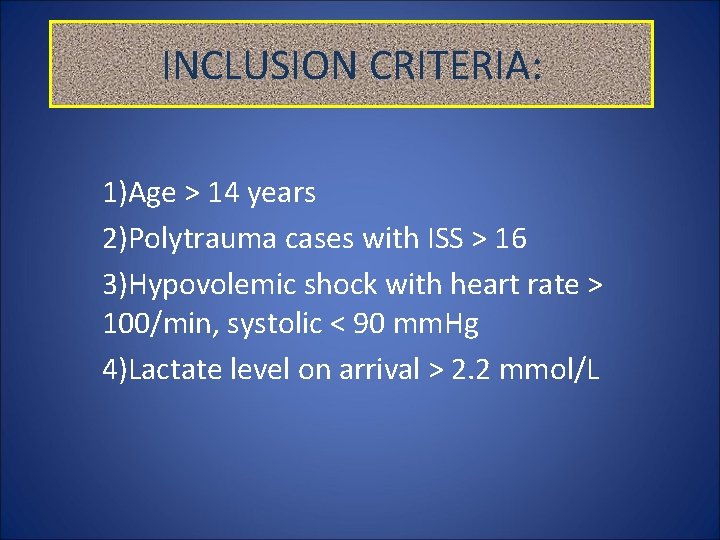
INCLUSION CRITERIA: 1)Age > 14 years 2)Polytrauma cases with ISS > 16 3)Hypovolemic shock with heart rate > 100/min, systolic < 90 mm. Hg 4)Lactate level on arrival > 2. 2 mmol/L
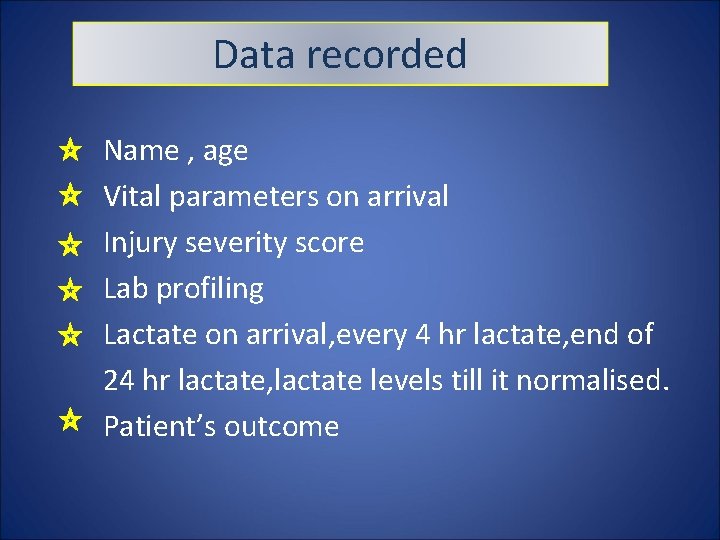
Data recorded Name , age Vital parameters on arrival Injury severity score Lab profiling Lactate on arrival, every 4 hr lactate, end of 24 hr lactate, lactate levels till it normalised. Patient’s outcome
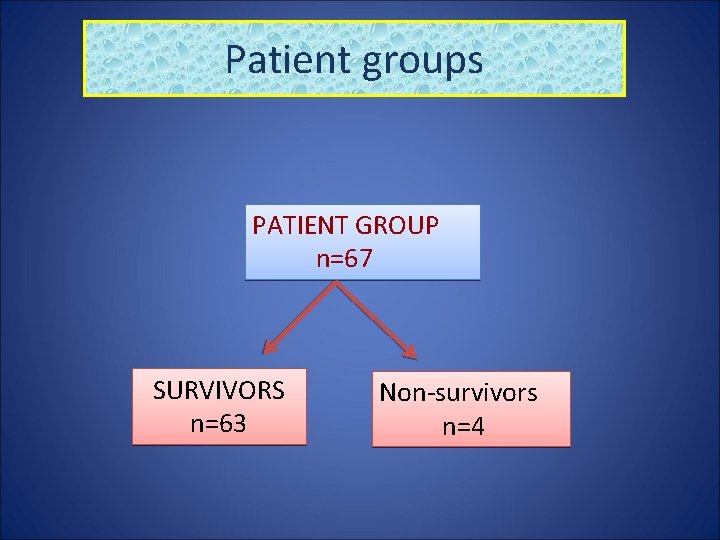
Patient groups PATIENT GROUP n=67 SURVIVORS n=63 Non-survivors n=4
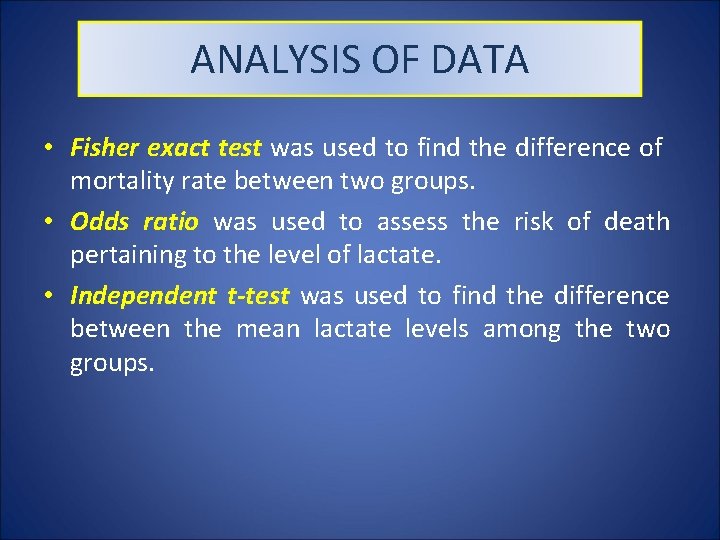
ANALYSIS OF DATA • Fisher exact test was used to find the difference of mortality rate between two groups. • Odds ratio was used to assess the risk of death pertaining to the level of lactate. • Independent t-test was used to find the difference between the mean lactate levels among the two groups.
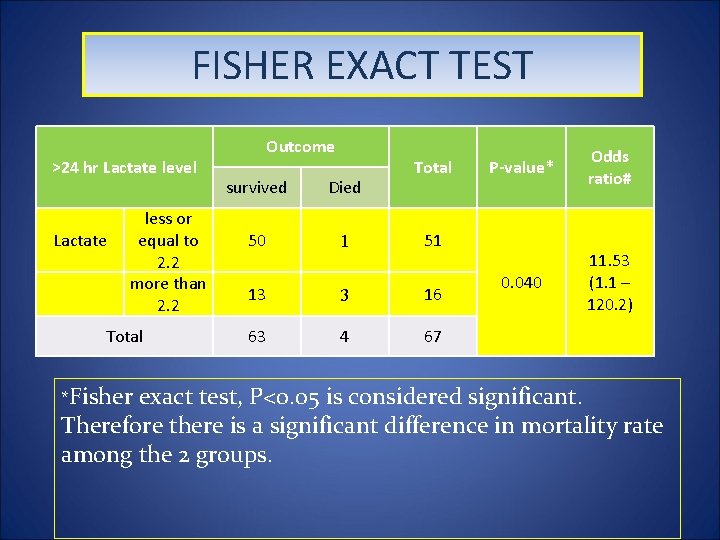
FISHER EXACT TEST >24 hr Lactate level Lactate less or equal to 2. 2 more than 2. 2 Total *Fisher Outcome Total survived Died 50 1 51 13 3 16 63 4 67 P-value* Odds ratio# 0. 040 11. 53 (1. 1 – 120. 2) exact test, P<0. 05 is considered significant. Therefore there is a significant difference in mortality rate among the 2 groups.
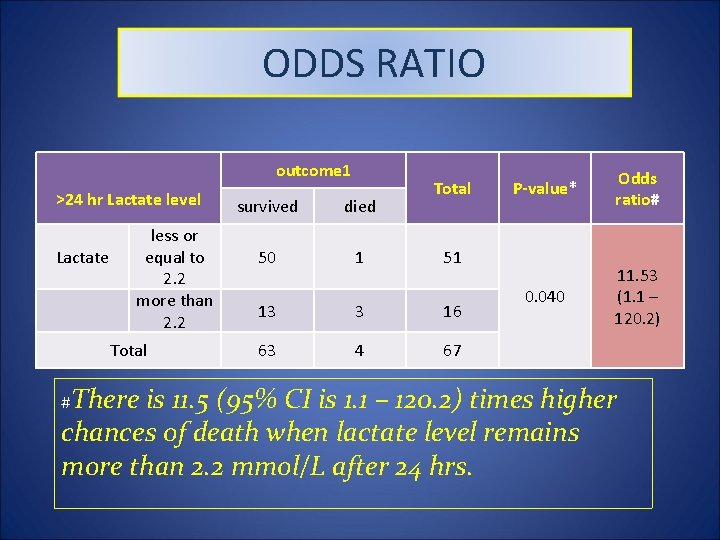
ODDS RATIO outcome 1 >24 hr Lactate level Lactate less or equal to 2. 2 more than 2. 2 Total #There survived died 50 1 Total P-value* Odds ratio# 0. 040 11. 53 (1. 1 – 120. 2) 51 13 3 16 63 4 67 is 11. 5 (95% CI is 1. 1 – 120. 2) times higher chances of death when lactate level remains more than 2. 2 mmol/L after 24 hrs.
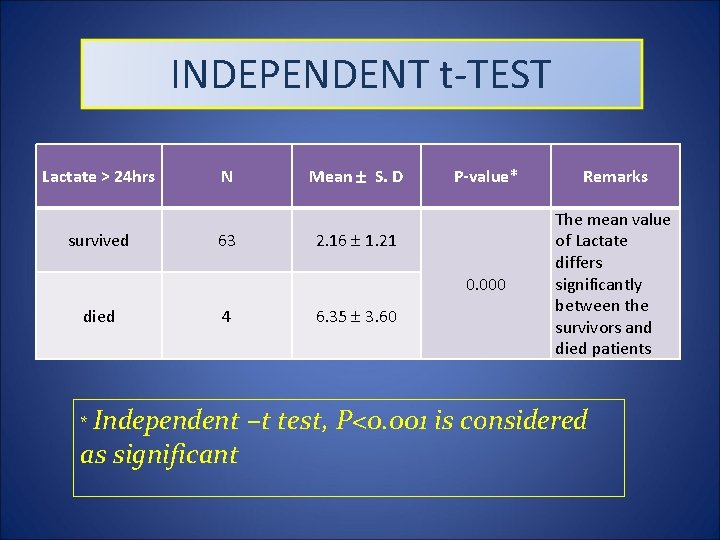
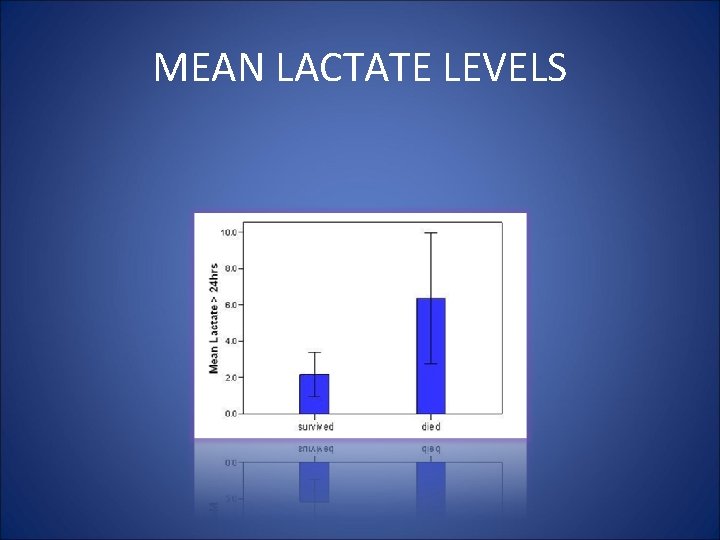
INDEPENDENT t-TEST Lactate > 24 hrs survived died N 63 4 * Independent as significant Mean S. D P-value* Remarks 0. 000 The mean value of Lactate differs significantly between the survivors and died patients 2. 16 1. 21 6. 35 3. 60 –t test, P<0. 001 is considered
MEAN LACTATE LEVELS
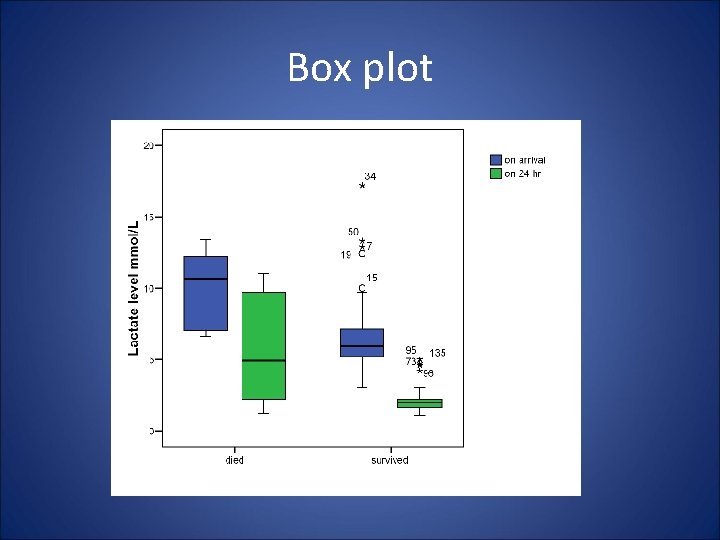
Box plot
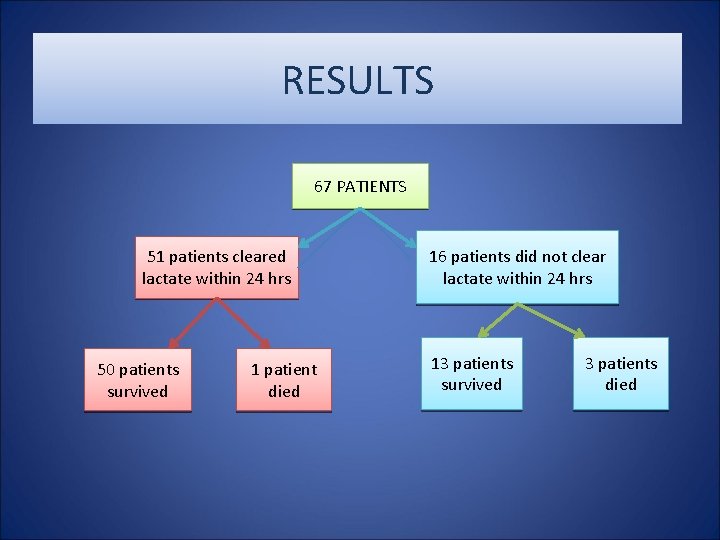
RESULTS 67 PATIENTS 51 patients cleared lactate within 24 hrs 50 patients survived 1 patient died 16 patients did not clear lactate within 24 hrs 13 patients survived 3 patients died
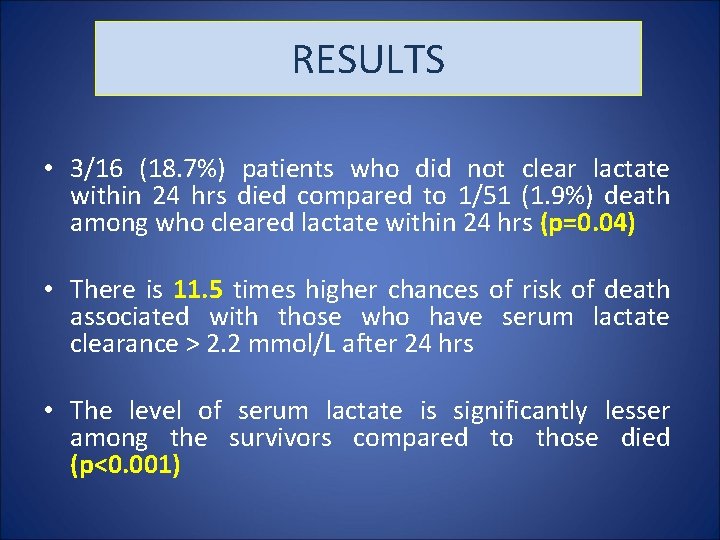
RESULTS • 3/16 (18. 7%) patients who did not clear lactate within 24 hrs died compared to 1/51 (1. 9%) death among who cleared lactate within 24 hrs (p=0. 04) • There is 11. 5 times higher chances of risk of death associated with those who have serum lactate clearance > 2. 2 mmol/L after 24 hrs • The level of serum lactate is significantly lesser among the survivors compared to those died (p<0. 001)
DISCUSSION • Lactate is a useful marker & early indicator of perfusion deficit. • One of the goals of resuscitation is to pay back the O 2 debt that occurred during the period of shock. • Early clearance of this O 2 debt improves survival in multiple injured patients.
• When lactate has not cleared within 24 hrs: -on going hemorrhage -inadequate resuscitation -myocardial depression
Conclusion • Lactate clearance is be a good marker to evaluate the prognosis of the patient • Lactate clearance is statistically a better prognostic indicator than on arrival lactate level. • However, these findings needs further confirmation with more number of subjects
Thank you