
Lack of Physical Activity and Unhealthy Food Choices
- Slides: 20
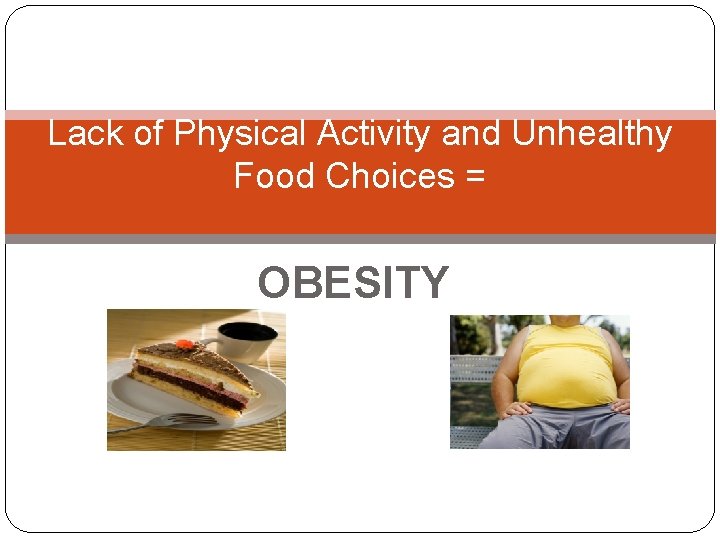
Lack of Physical Activity and Unhealthy Food Choices = OBESITY
The Scary Reality Is. . . ØOne in five children and adolescents are either overweight or obese. ØFrom 1985 to 1995 the number of overweight 7– 15 year olds almost doubled. ØThe numbers of obese children has more than tripled. ØAbout 80 per cent of obese adolescents will become obese adults. ØAt the current rate, it is predicted that 65 per cent of young Australians will be overweight or obese by 2020. (Website Source: http: //www. betterhealth. vic. gov. au/bhcv 2/bhcarticles. nsf/pages/Obesity_in_children)
Did you know? ØObesity is the leading cause of preventable death, next to smoking! ØThe number of overweight children in Australia has doubled in recent years, with a quarter of children considered overweight or obese. (Website Source: http: //www. youtube. com/watch? v=Sk. S 2 bh. F-ljg)
What health problems associated with obesity ? ØType 2 diabetes ØEating disorders ØOrthopedic disorders ØLiver problems, including fatty liver ØRespiratory disorders ØSleep apnea ØCardiomyopathy – a problem with the heart muscle, caused when extra effort is needed to pump blood. (Website Source: http: //www. betterhealth. vic. gov. au/bhcv 2/bhcarticles. nsf/pages/Obesity_in_children)
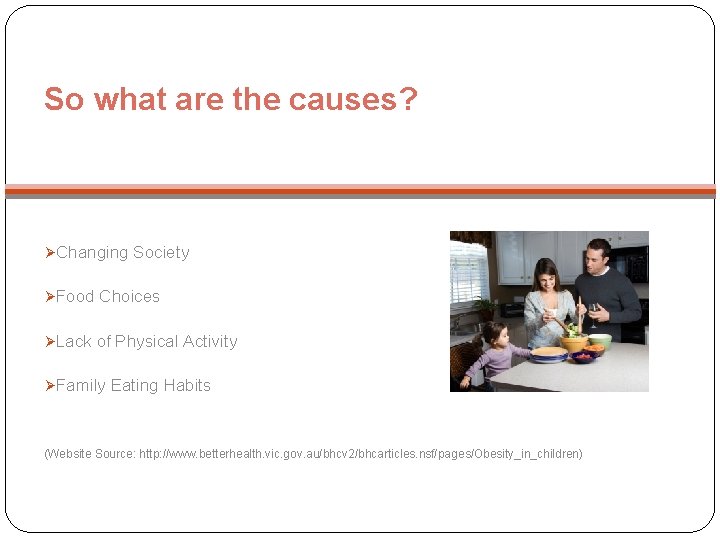
So what are the causes? ØChanging Society ØFood Choices ØLack of Physical Activity ØFamily Eating Habits (Website Source: http: //www. betterhealth. vic. gov. au/bhcv 2/bhcarticles. nsf/pages/Obesity_in_children)
Some examples include: ØCost of food has decreased. ØMore food is prepared away from home. ØEnergy-dense foods / drinks are readily available. ØPortion sizes have increased. ØMarketing of energy-dense foods / drinks has increased. ØThe use of cars has increased. ØThe number of two-income families has increased. (Website Source: http: //www. betterhealth. vic. gov. au/bhcv 2/bhcarticles. nsf/pages/Obesity_in_children)
Dietary Fat Quiz Go to this website and complete the Dietary Fat Quiz: http: //www. betterhealth. vic. gov. au/bhcv 2/bhcarticles. nsf/pages/Quiz_dietary_fats? Open. Document How did you score?
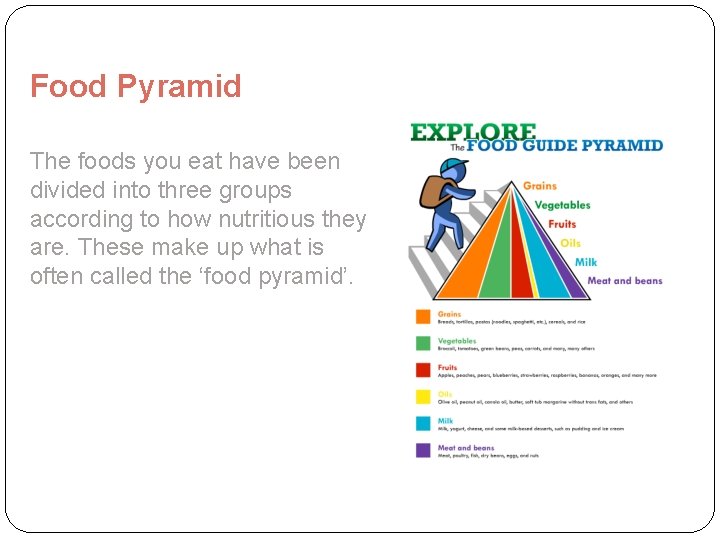
Explore the Food Guide Pyramid Click on the interactive link below and click on the pyramids colours to learn about the different food groups http: //kidshealth. org/kid/stay_healthy/food/fgp_interactive. html
Food Pyramid The foods you eat have been divided into three groups according to how nutritious they are. These make up what is often called the ‘food pyramid’.
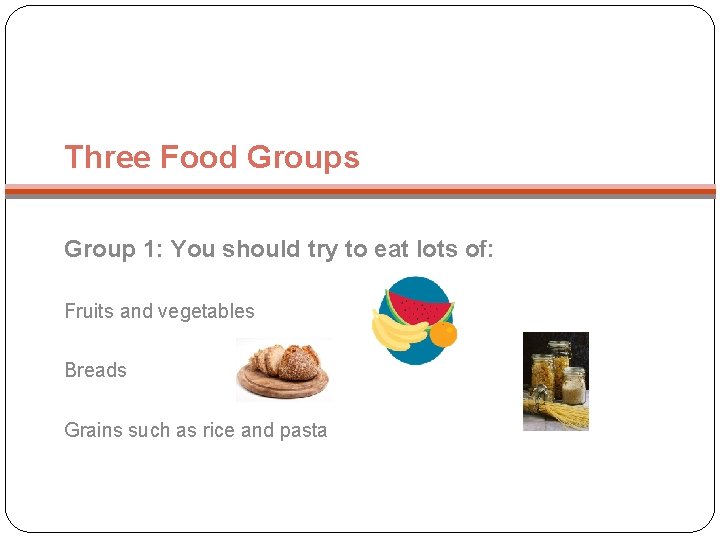
Three Food Groups Group 1: You should try to eat lots of: Fruits and vegetables Breads Grains such as rice and pasta
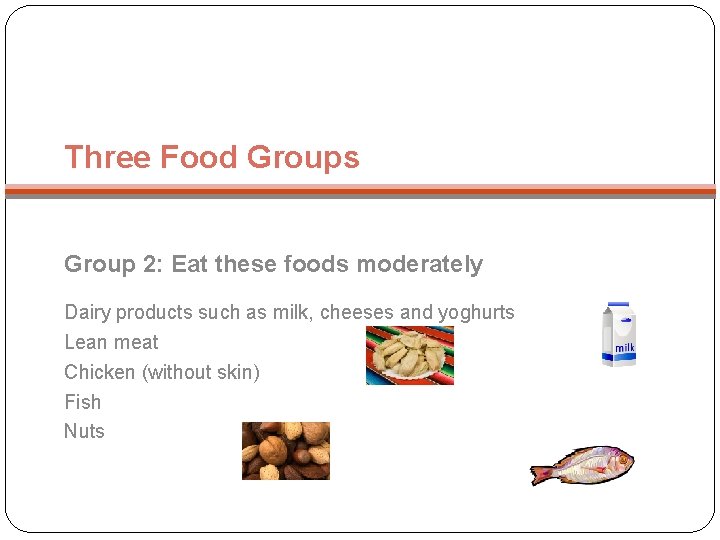
Three Food Groups Group 2: Eat these foods moderately Dairy products such as milk, cheeses and yoghurts Lean meat Chicken (without skin) Fish Nuts
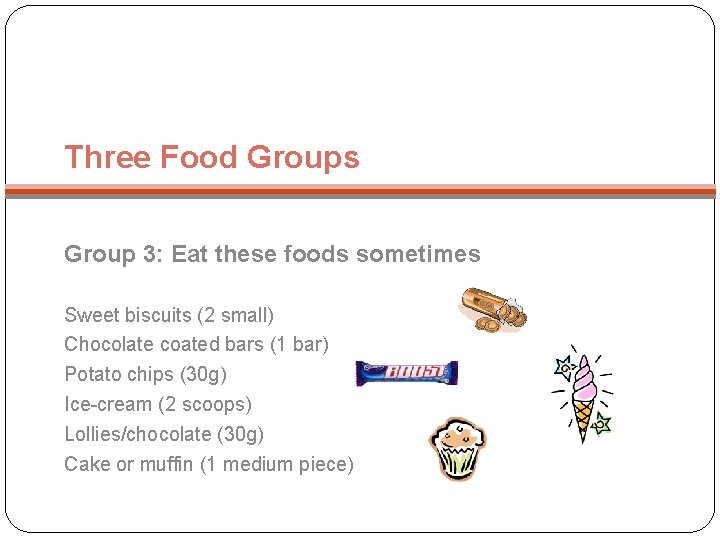
Three Food Groups Group 3: Eat these foods sometimes Sweet biscuits (2 small) Chocolate coated bars (1 bar) Potato chips (30 g) Ice-cream (2 scoops) Lollies/chocolate (30 g) Cake or muffin (1 medium piece)
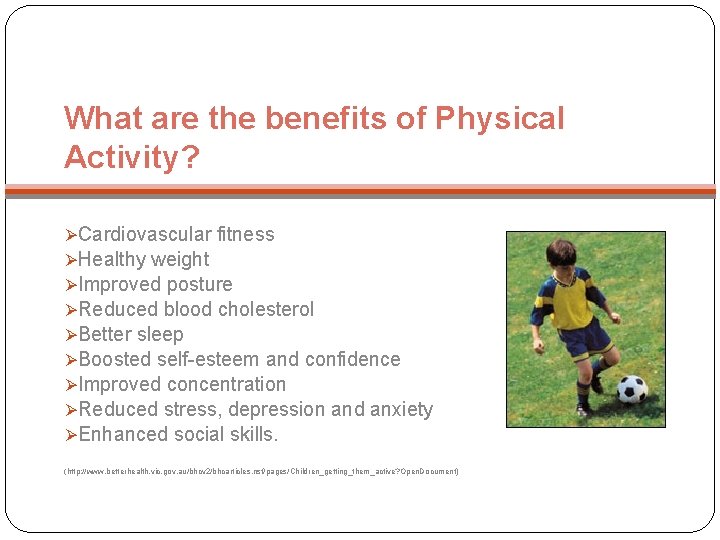
What are the benefits of Physical Activity? ØCardiovascular fitness ØHealthy weight ØImproved posture ØReduced blood cholesterol ØBetter sleep ØBoosted self-esteem and confidence ØImproved concentration ØReduced stress, depression and anxiety ØEnhanced social skills. (http: //www. betterhealth. vic. gov. au/bhcv 2/bhcarticles. nsf/pages/Children_getting_them_active? Open. Document)
How to design a fitness program? ØConsider your goals. ØThink about your likes and dislikes. Choose activities you’ll enjoy. ØPlan a logical progression of activity. ØBuild activity into your daily routine. ØThink variety. ØAllow time for recovery. ØPut it on paper. A written plan may encourage you to stay on track.
Getting Started ØStart slowly and build up gradually. ØBreak things up if you have to. ØBe creative. Include other activities such as walking, bicycling, rowing or dancing in your routine. ØListen to your body. Don’t push yourself too hard. ØBe flexible. If you’re not feeling good, give yourself permission to take a day or two off.
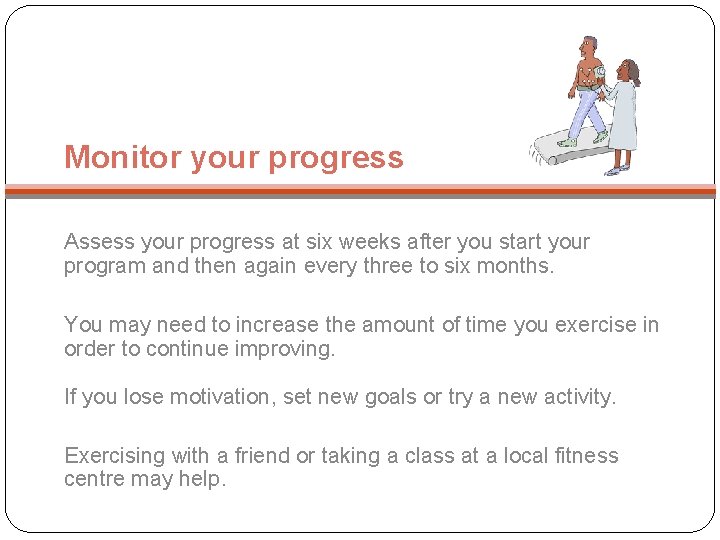
Monitor your progress Assess your progress at six weeks after you start your program and then again every three to six months. You may need to increase the amount of time you exercise in order to continue improving. If you lose motivation, set new goals or try a new activity. Exercising with a friend or taking a class at a local fitness centre may help.
TV Commercials…lets look at some Childhood Obesity Prevention Featuring Shrek: http: //www. youtube. com/watch? v=r-z. EDbl 04 NY Childhood Obesity Commercial http: //www. youtube. com/watch? v=Sk. S 2 bh. F-ljg Obesity Commercial: http: //www. youtube. com/watch? v=t. MLum. Vfh. Wfs
Your Reflections What did you think of these commercials? How did they make you feel? What actions can you take to prevent obesity?
Your Mission IN GROUPS OF 4 -5: ØDesign a healthy eating program. ØDesign an exercise program. ØMonitor your progress for 6 weeks by keeping an online journal and write a reflection to your Blog outlining your progress. ØPresent this to the class as a Power. Point Presentation.
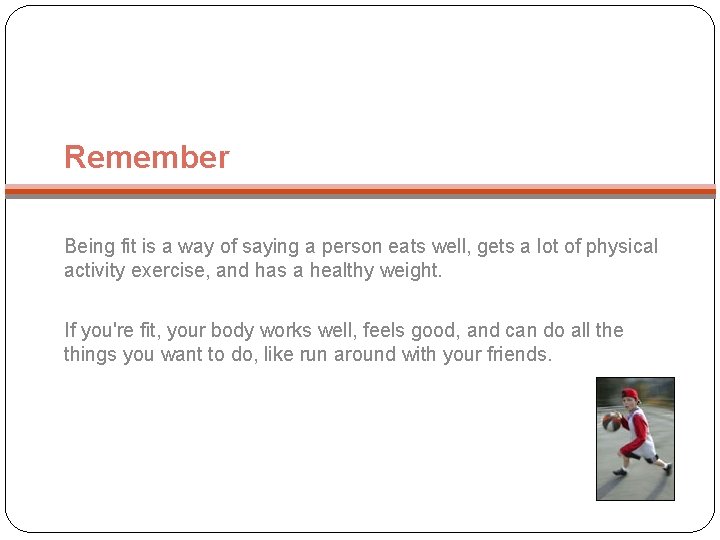
Remember Being fit is a way of saying a person eats well, gets a lot of physical activity exercise, and has a healthy weight. If you're fit, your body works well, feels good, and can do all the things you want to do, like run around with your friends.