
Lachrymal Apparatus and Protection of the Eye Lacrimal

- Slides: 38
Lachrymal Apparatus and Protection of the Eye
Lacrimal system JACKIE PETER D 11 A 012 ANIMALS PHYSIOLOGY 1 ( DVT 1033) UNIVERSITI MALAYSIA KELANTAN FACULTY OF VETERINARY MEDICINE
Outline 1. 2. 3. 4. General structure of lacrimal system. What is lacrimal system? What are the components of lacrimal apparatus? rd 3 eyelid
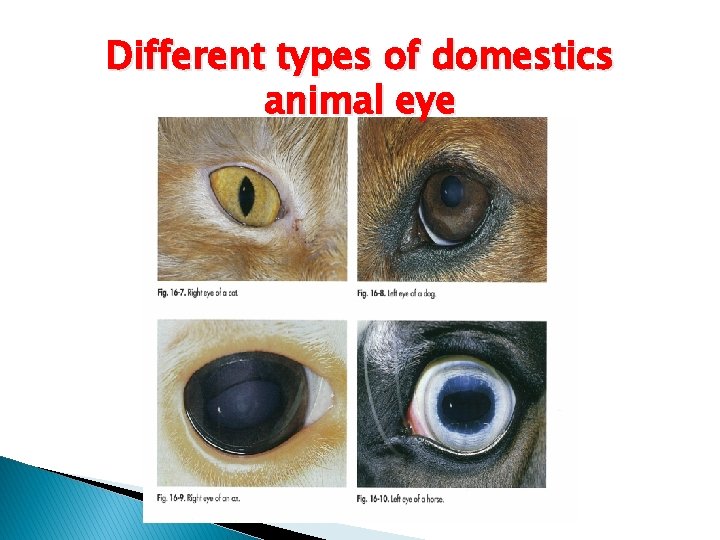
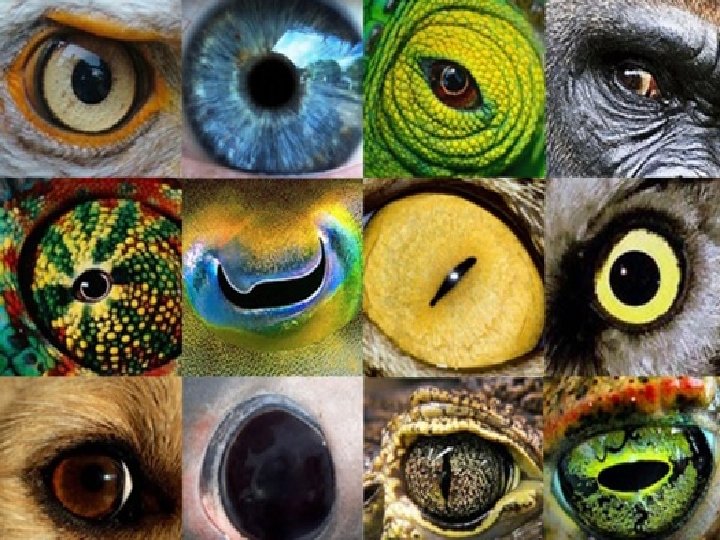
Different types of domestics animal eye
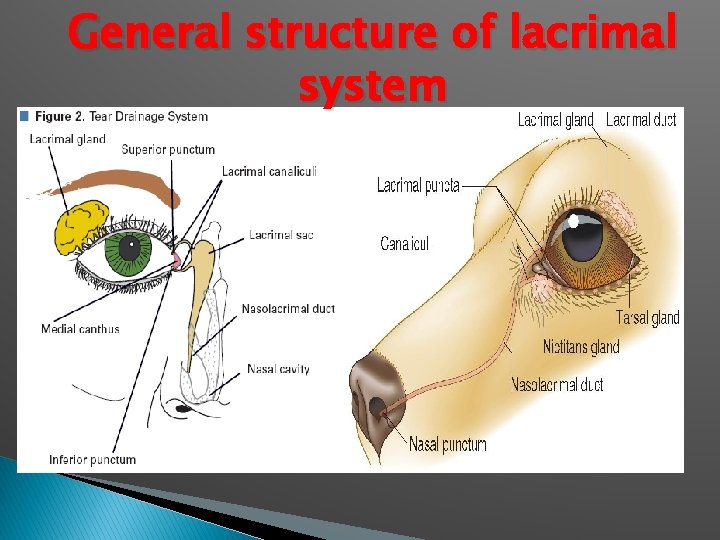
General structure of lacrimal system
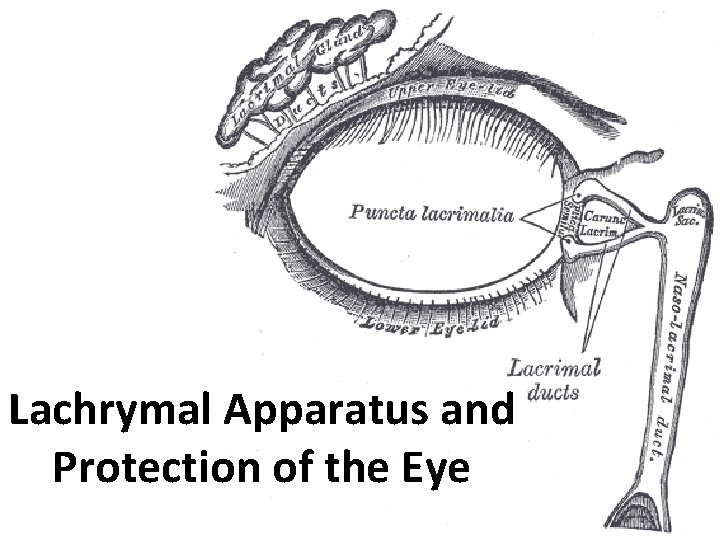
Lacrimal System q Refers q to tissues that make tears structure that produce and secrete tears and the structure that drain them away from the surface of the eye.
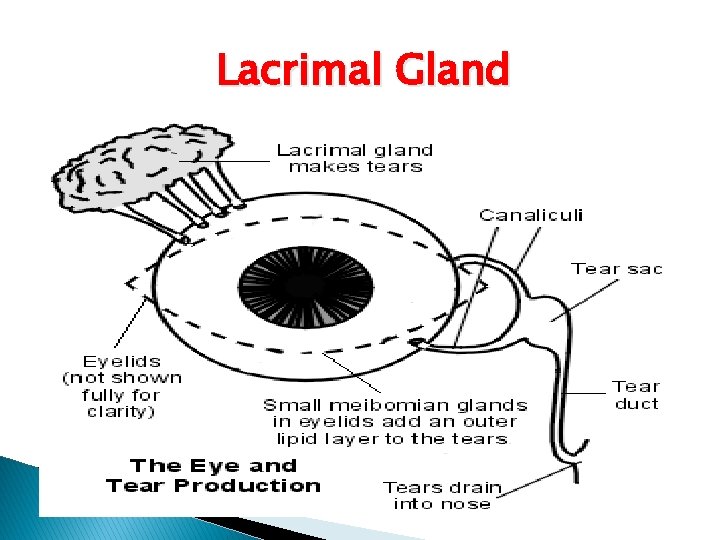
Lacrimal Gland
Lacrimal Apparatus ( apparatus lacrimalis) q physiologic system containing the orbital structures for tear production and drainage. q structure that are responsible for: I. Production II. Dispersal III. Disposal Of tear.
Lacrimal Apparatus ( apparatus lacrimalis) I. II. III. protective device that helps keep the eye moist and free of dust and other irritating particles Help keeping the eye lubricated and protected. The tear produced by lacrimal gland bring necessary nutrient.
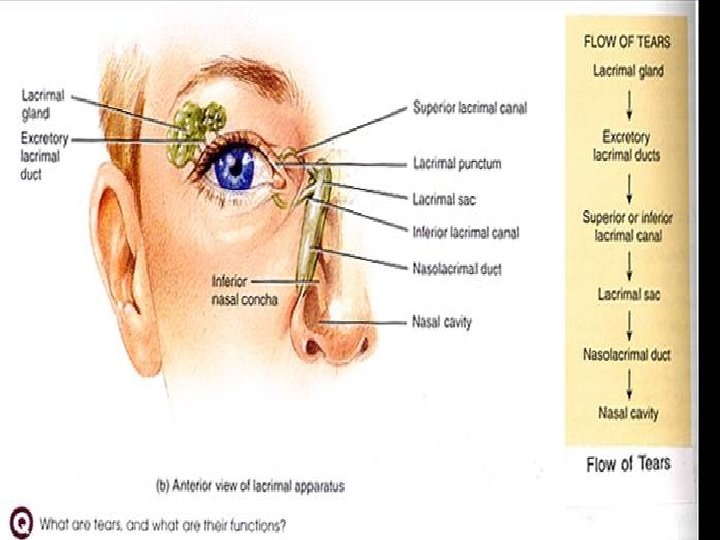
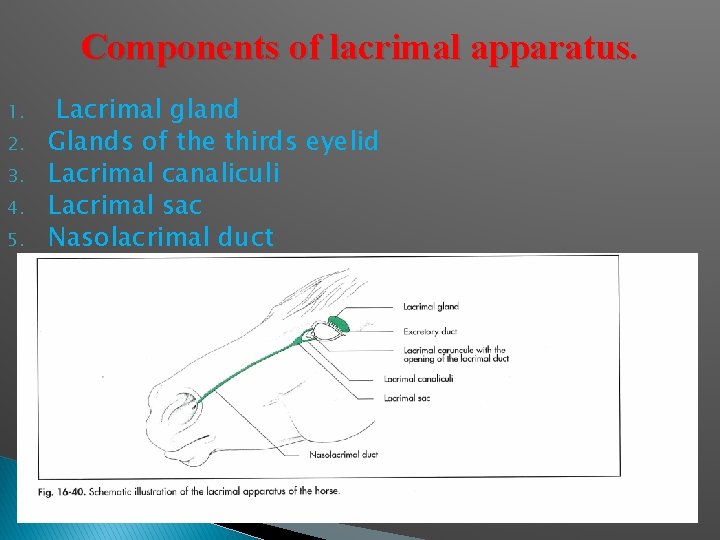
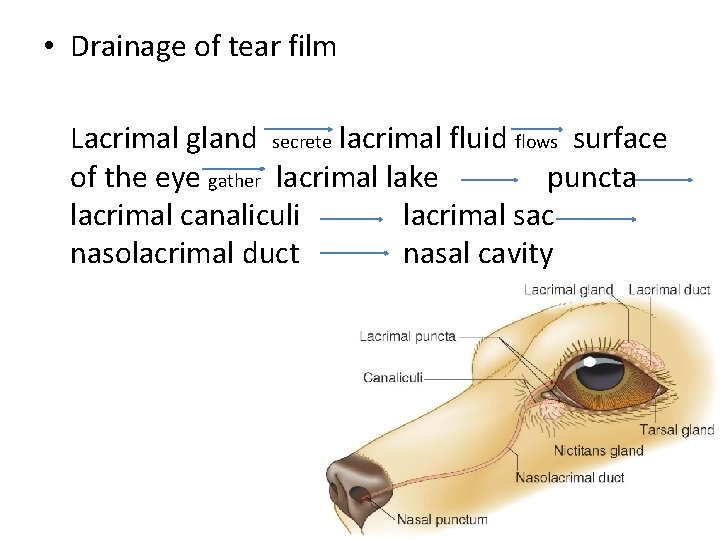
Components of lacrimal apparatus. 1. 2. 3. 4. 5. Lacrimal gland Glands of the thirds eyelid Lacrimal canaliculi Lacrimal sac Nasolacrimal duct
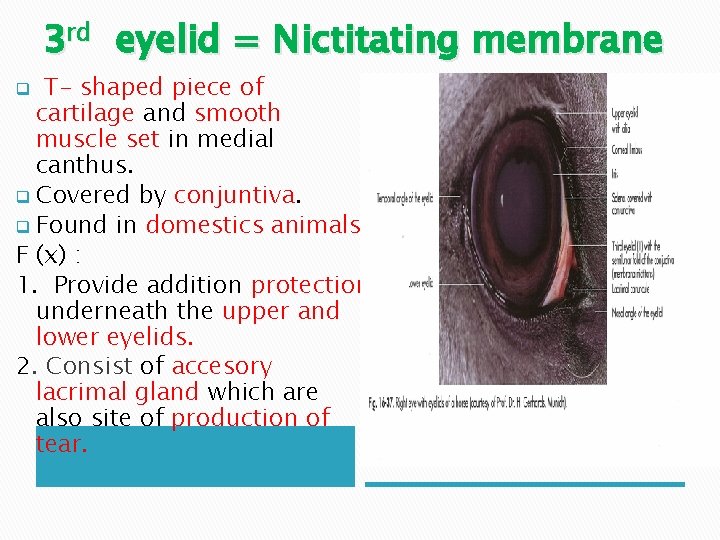
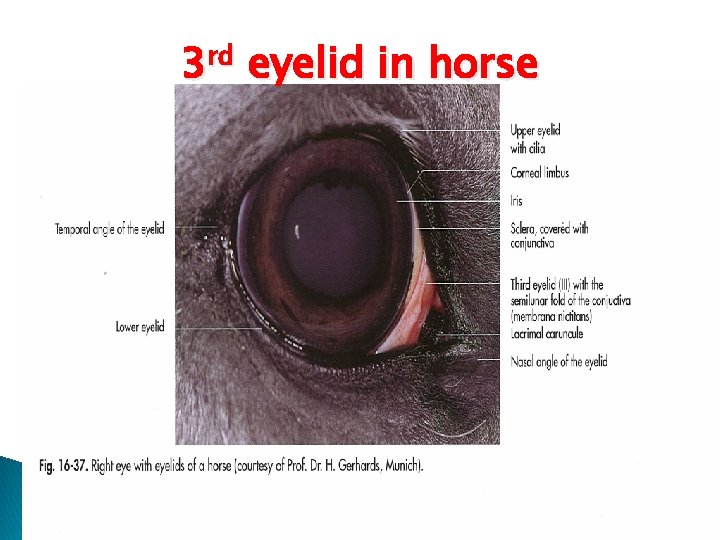
3 rd eyelid = Nictitating membrane T- shaped piece of cartilage and smooth muscle set in medial canthus. q Covered by conjuntiva. q Found in domestics animals. F (x) : 1. Provide addition protection underneath the upper and lower eyelids. 2. Consist of accesory lacrimal gland which are also site of production of tear. q
3 rd eyelid in horse
Eye Protection Presented by: Lee Joy Yoong
What protects the eyes ? Eyelash • Eyelid • Spectacle • Lacrimal / tear system ( NOT my part k ~) •
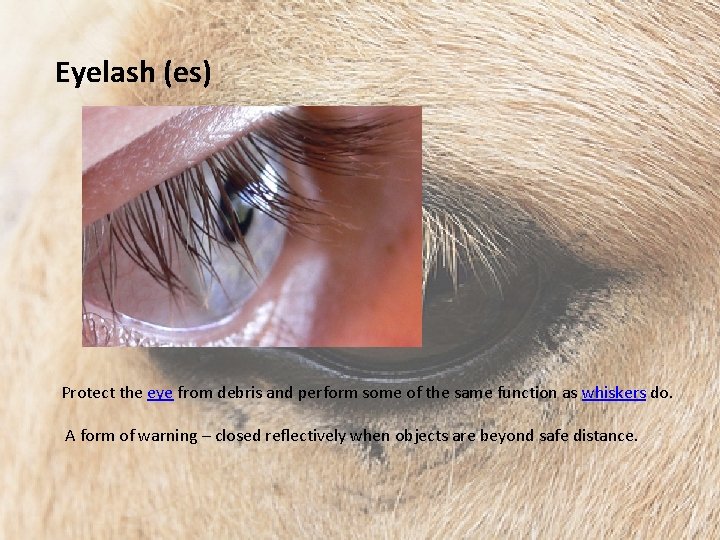
Eyelash (es) Protect the eye from debris and perform some of the same function as whiskers do. A form of warning – closed reflectively when objects are beyond safe distance.
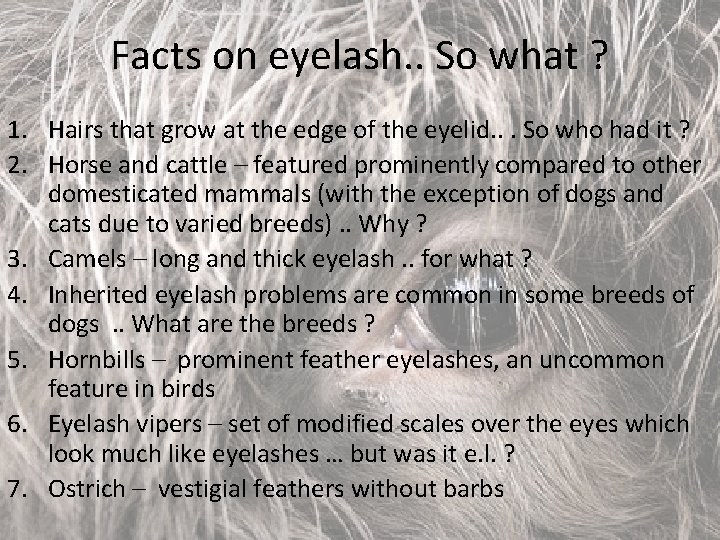
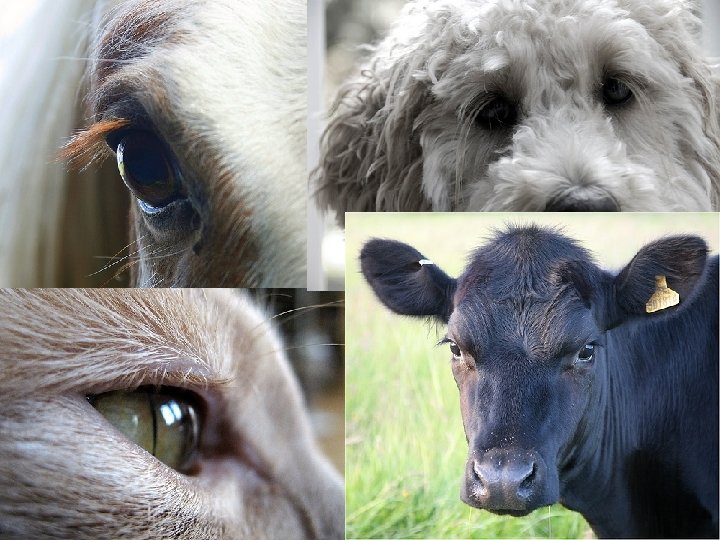
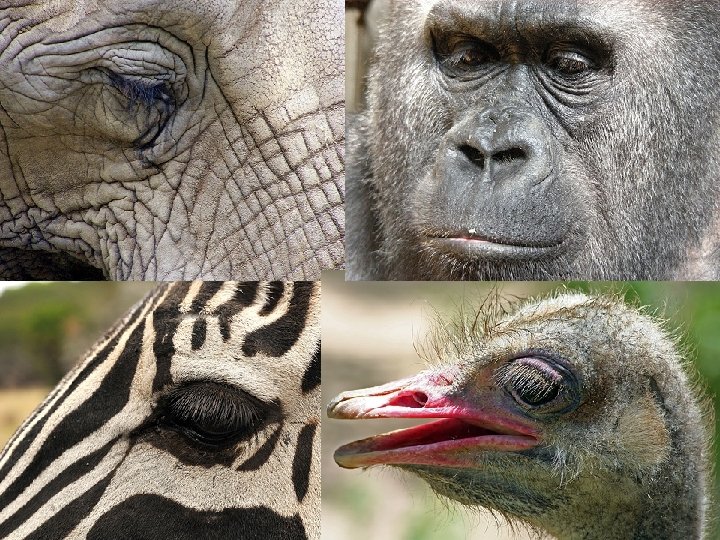
Facts on eyelash. . So what ? 1. Hairs that grow at the edge of the eyelid. . . So who had it ? 2. Horse and cattle – featured prominently compared to other domesticated mammals (with the exception of dogs and cats due to varied breeds). . Why ? 3. Camels – long and thick eyelash. . for what ? 4. Inherited eyelash problems are common in some breeds of dogs. . What are the breeds ? 5. Hornbills – prominent feather eyelashes, an uncommon feature in birds 6. Eyelash vipers – set of modified scales over the eyes which look much like eyelashes … but was it e. l. ? 7. Ostrich – vestigial feathers without barbs
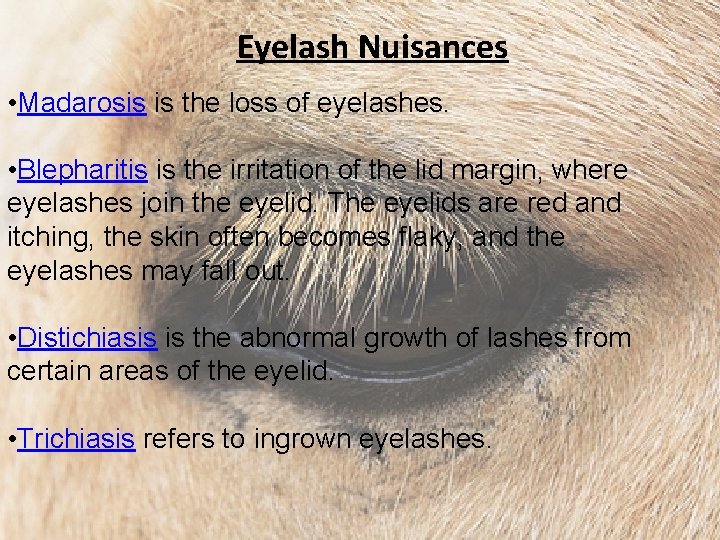
Eyelash Nuisances • Madarosis is the loss of eyelashes. • Blepharitis is the irritation of the lid margin, where eyelashes join the eyelid. The eyelids are red and itching, the skin often becomes flaky, and the eyelashes may fall out. • Distichiasis is the abnormal growth of lashes from certain areas of the eyelid. • Trichiasis refers to ingrown eyelashes.
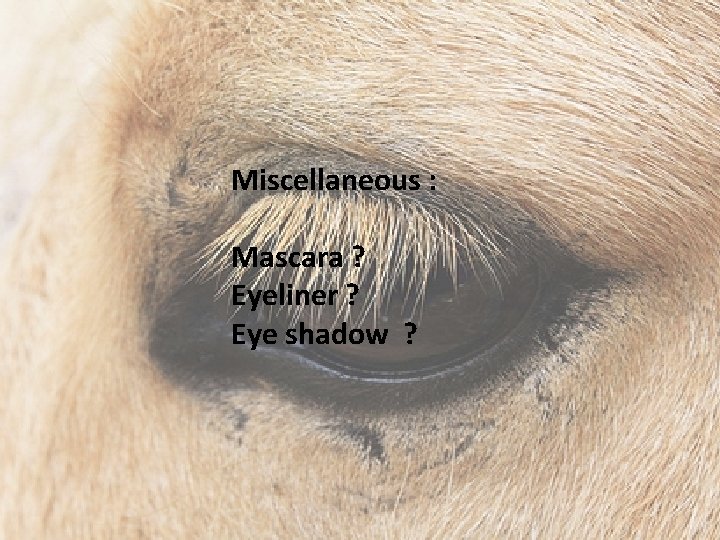
Miscellaneous : Mascara ? Eyeliner ? Eye shadow ?
Facts of eyelid 1. Thin fold of skin that covers and protects the eye… thinnest ? 2. Keep the eyes from drying out when asleep. . How ? 3. Allows blinking. . For ? 4. Opaque. . For what ?
Complications in animal during dry / extreme / itch conditions Subjects : 1) Aardvark 2) Polar bear 3) Harbor seal Nictating membrane – through evolution, a 3 rd transparent / translucent eyelid
In case where eyelid is not good enough… organism develops SPECTACLE 1. Transparent membrane covering cornea… has 3 types : a) Fusion of upper eyelid and lower eyelid … so ? b) From corneal skin (totally unattached, just covering ) c) From corneal skin (like b) but partly fused
Tears Presented by Khirrol Nizam
TEARS • lubricate the eye, and help to keep it clear of dust. • cornea is continually kept wet and nourished by basal tears. • Tear fluid / Lacrimal fluid contains water, mucin, lipids, lysozyme, lactoferrin, lipocalin, lacritin, immunoglobulins, glucose, urea, sodium, and potassium.
• main functions of tears: 1. wetting the corneal epithelium, thereby preventing it from being damaged due to dryness. 2. creating a smooth optical surface on the front of the microscopically irregular corneal surface. 3. acting as the main supplier of oxygen and other nutrients to the cornea. 4. containing lysozyme which destroys bacteria and prevents the growth of microcysts on the cornea. 5. flushing harmful bacteria and other microbes away from the eye.
• The lacrimal gland is the major producer of tears when one is crying or due to foreign body irritation. • Lacrimal fluid, containing salts, proteins, and lysozyme, has several functions: – taking the main nutrients (such as oxygen) to the cornea, – carrying waste products away from the cornea, – helping to prevent corneal infection, and – maintaining the tonicity of the tear film.
Three very basic types of tears 1. Basal tears - continually kept wet and nourished the cornea 2. Reflex tears - irritation of the eye by foreign particles, or from the presence of irritant substances such as onion vapors, tear gas, or pepper spray in the eye's environment 3. Psychic tears- strong emotional stress, anger, suffering, mourning, or physical pain
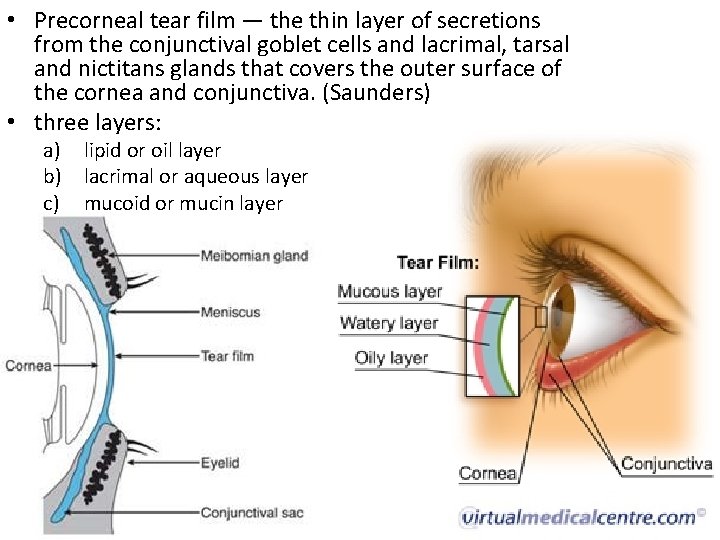
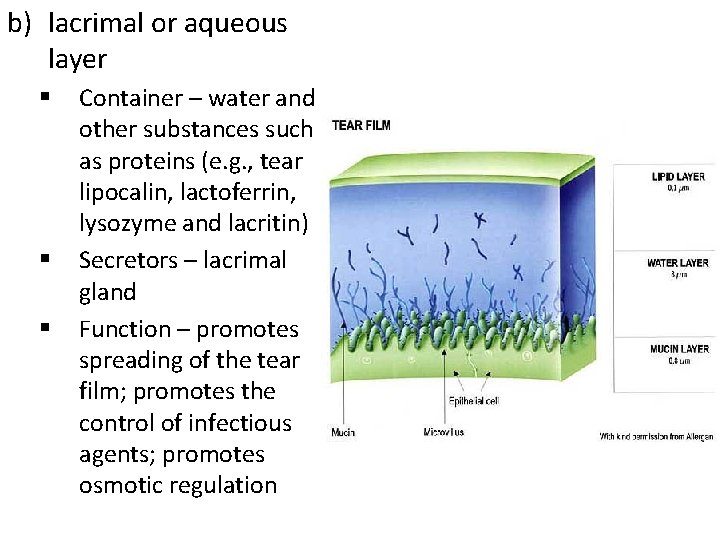
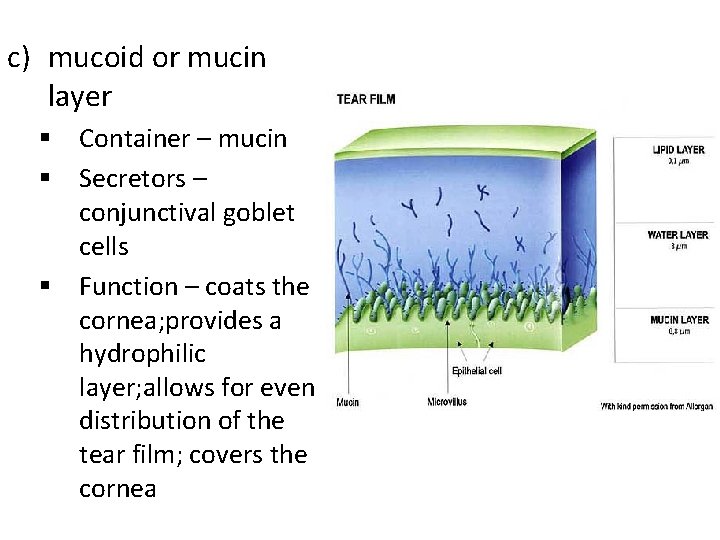
• Precorneal tear film — the thin layer of secretions from the conjunctival goblet cells and lacrimal, tarsal and nictitans glands that covers the outer surface of the cornea and conjunctiva. (Saunders) • three layers: a) lipid or oil layer b) lacrimal or aqueous layer c) mucoid or mucin layer
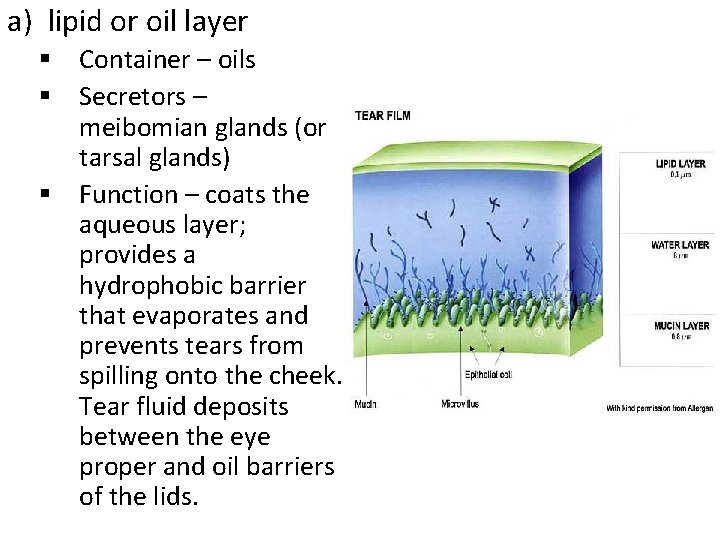
a) lipid or oil layer § Container – oils § Secretors – meibomian glands (or tarsal glands) § Function – coats the aqueous layer; provides a hydrophobic barrier that evaporates and prevents tears from spilling onto the cheek. Tear fluid deposits between the eye proper and oil barriers of the lids.
b) lacrimal or aqueous layer § § § Container – water and other substances such as proteins (e. g. , tear lipocalin, lactoferrin, lysozyme and lacritin) Secretors – lacrimal gland Function – promotes spreading of the tear film; promotes the control of infectious agents; promotes osmotic regulation
c) mucoid or mucin layer § Container – mucin § Secretors – conjunctival goblet cells § Function – coats the cornea; provides a hydrophilic layer; allows for even distribution of the tear film; covers the cornea
• Drainage of tear film Lacrimal gland secrete lacrimal fluid flows surface of the eye gather lacrimal lake puncta lacrimal canaliculi lacrimal sac nasolacrimal duct nasal cavity
Dry eye • A deficiency of any of the three layers of the tear film • causing anything from mild eye irritation to severe pain. • Symptom – – – – excessive tearing or watering of the eyes eye irritation, scratchiness, grittiness, or pain; redness of the eye(s); a burning sensation in the eye(s); a feeling of something in the eye(s); eyes that feel “glued shut” after sleeping; blurred vision
THANK YOU