
Lac operon concept An operon is a cluster
- Slides: 39
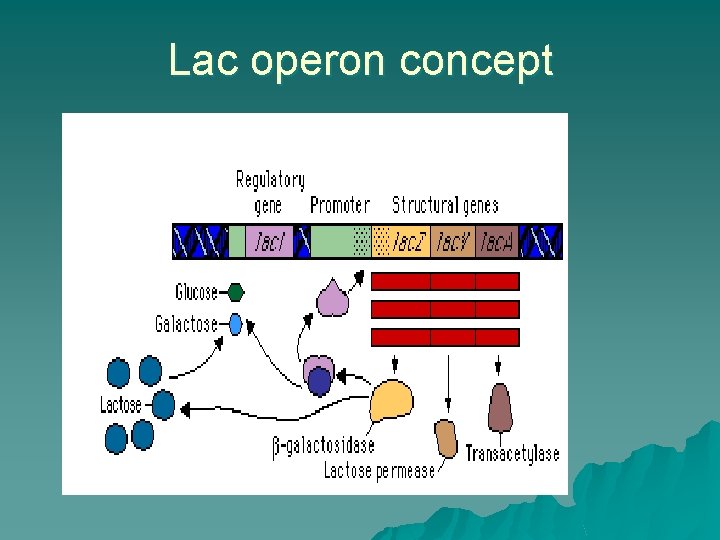
Lac operon concept
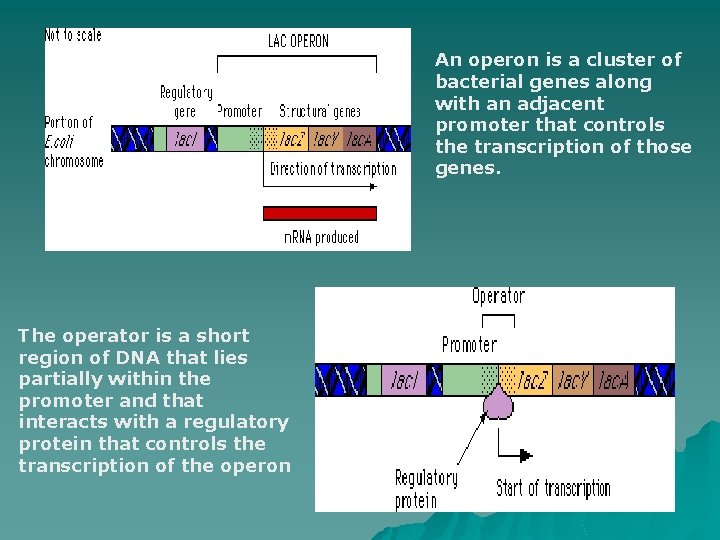
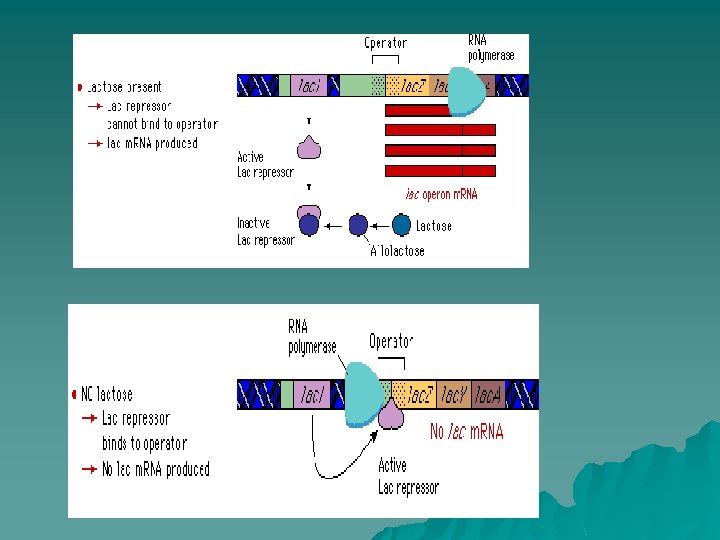
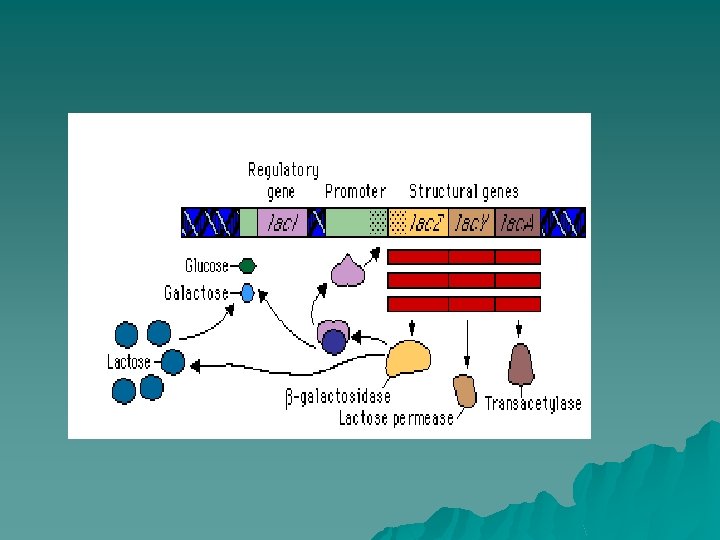
An operon is a cluster of bacterial genes along with an adjacent promoter that controls the transcription of those genes. The operator is a short region of DNA that lies partially within the promoter and that interacts with a regulatory protein that controls the transcription of the operon
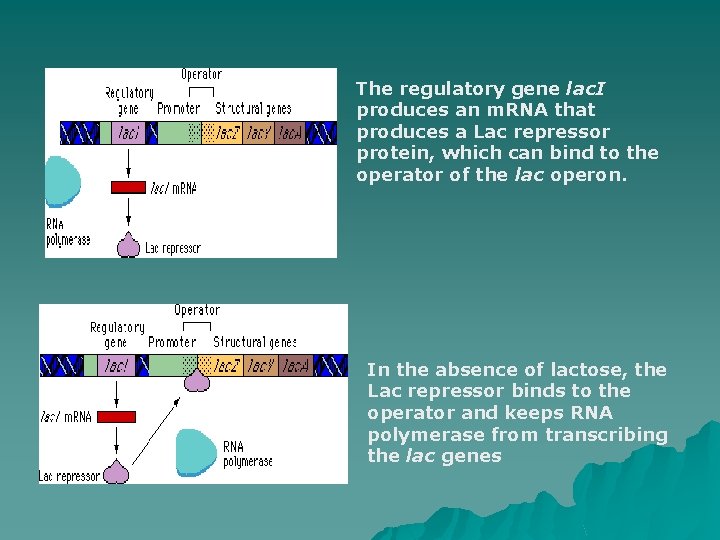
The regulatory gene lac. I produces an m. RNA that produces a Lac repressor protein, which can bind to the operator of the lac operon. In the absence of lactose, the Lac repressor binds to the operator and keeps RNA polymerase from transcribing the lac genes
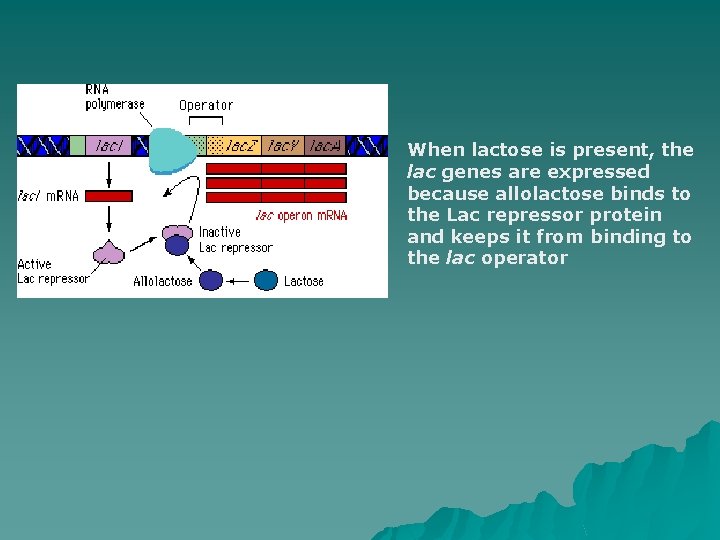
When lactose is present, the lac genes are expressed because allolactose binds to the Lac repressor protein and keeps it from binding to the lac operator
DNA fingerprinting
What is DNA Fingerprinting? A technique used by scientists to distinguish between individuals of the same species using only samples of their DNA
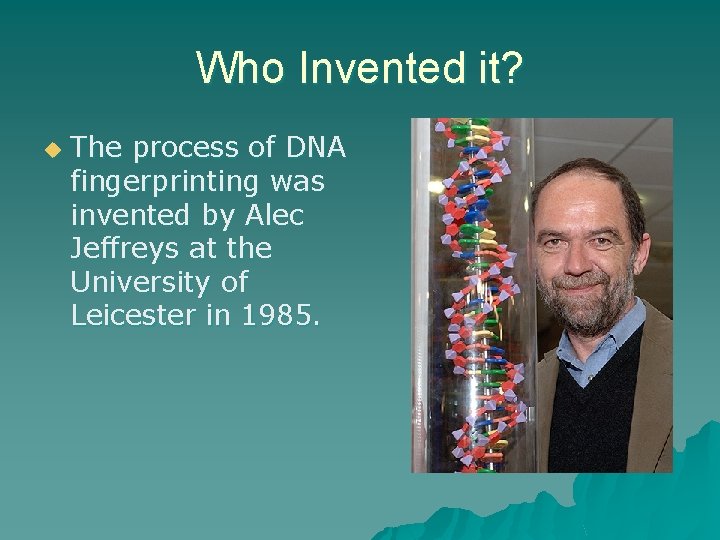
Who Invented it? u The process of DNA fingerprinting was invented by Alec Jeffreys at the University of Leicester in 1985.
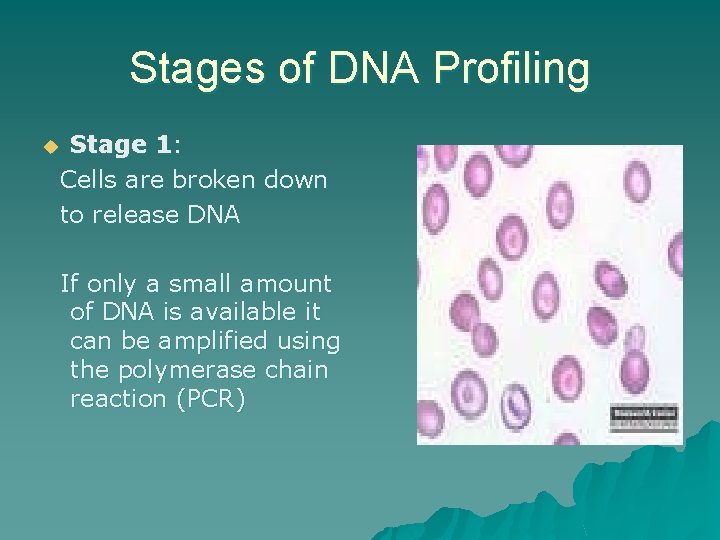
Stages of DNA Profiling Stage 1: Cells are broken down to release DNA u If only a small amount of DNA is available it can be amplified using the polymerase chain reaction (PCR)
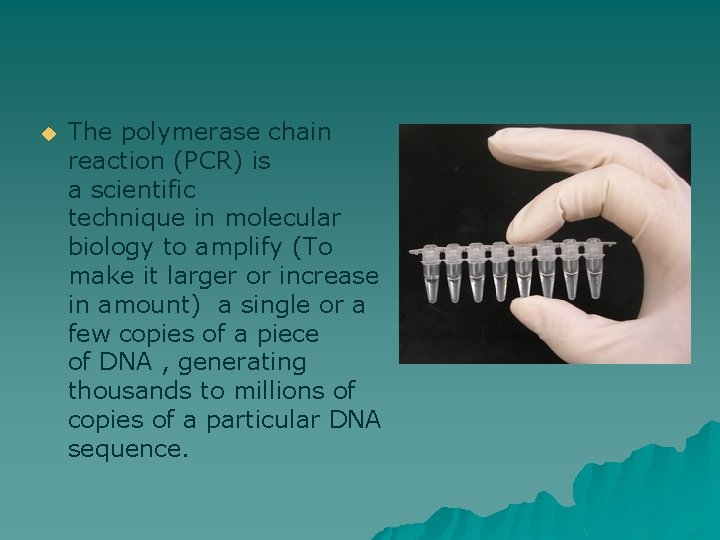
u The polymerase chain reaction (PCR) is a scientific technique in molecular biology to amplify (To make it larger or increase in amount) a single or a few copies of a piece of DNA , generating thousands to millions of copies of a particular DNA sequence.
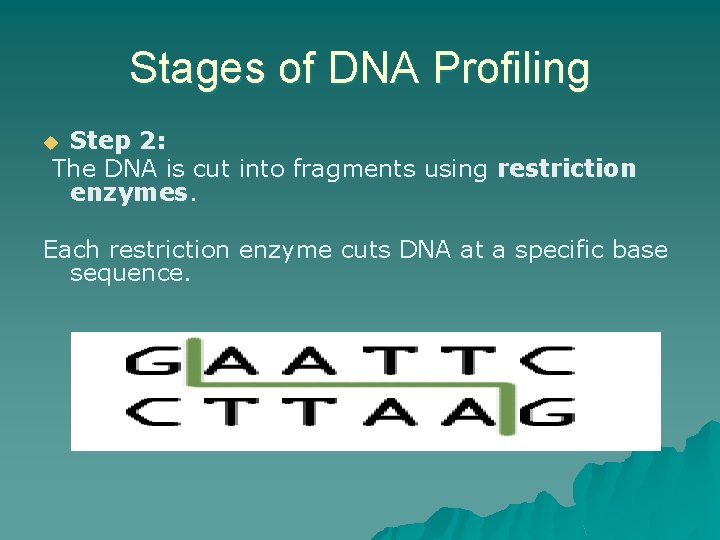
Stages of DNA Profiling Step 2: The DNA is cut into fragments using restriction enzymes. u Each restriction enzyme cuts DNA at a specific base sequence.
u The sections of DNA that are cut out are called restriction fragments. u This yields thousands of restriction fragments of all different sizes because the base sequences being cut may be far apart (long fragment) or close together (short fragment).
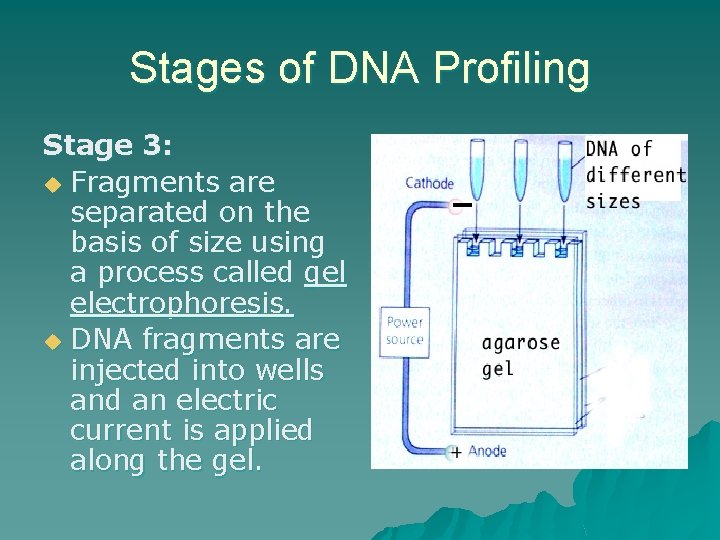
Stages of DNA Profiling Stage 3: u Fragments are separated on the basis of size using a process called gel electrophoresis. u DNA fragments are injected into wells and an electric current is applied along the gel.
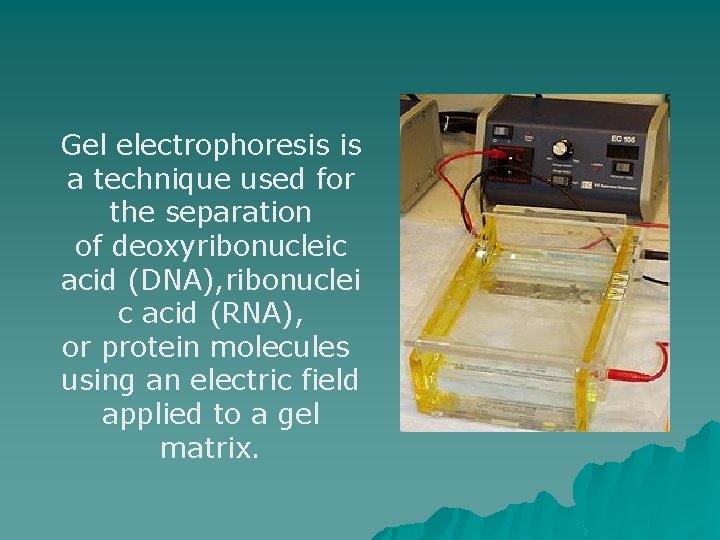
Gel electrophoresis is a technique used for the separation of deoxyribonucleic acid (DNA), ribonuclei c acid (RNA), or protein molecules using an electric field applied to a gel matrix.
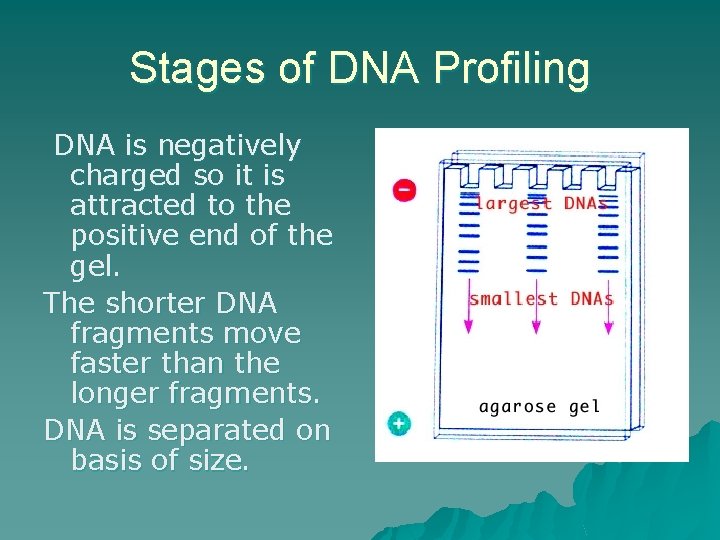
Stages of DNA Profiling DNA is negatively charged so it is attracted to the positive end of the gel. The shorter DNA fragments move faster than the longer fragments. DNA is separated on basis of size.
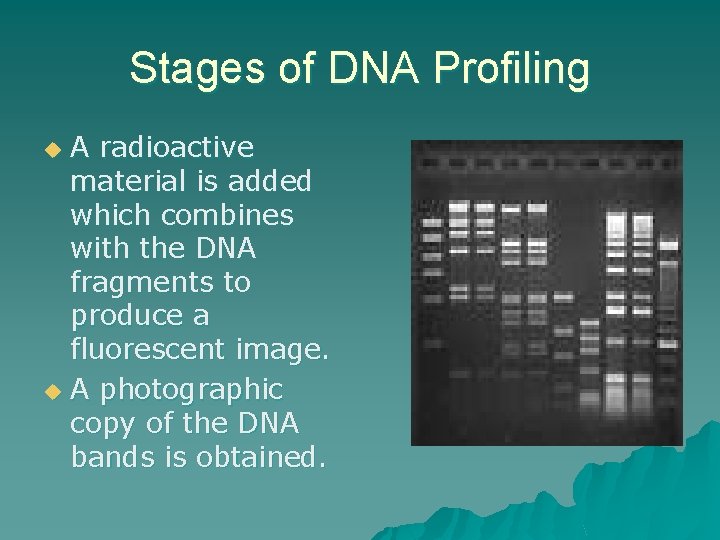
Stages of DNA Profiling A radioactive material is added which combines with the DNA fragments to produce a fluorescent image. u A photographic copy of the DNA bands is obtained. u
Stages of DNA Profiling Stage 4: u The pattern of fragment distribution is then analysed.
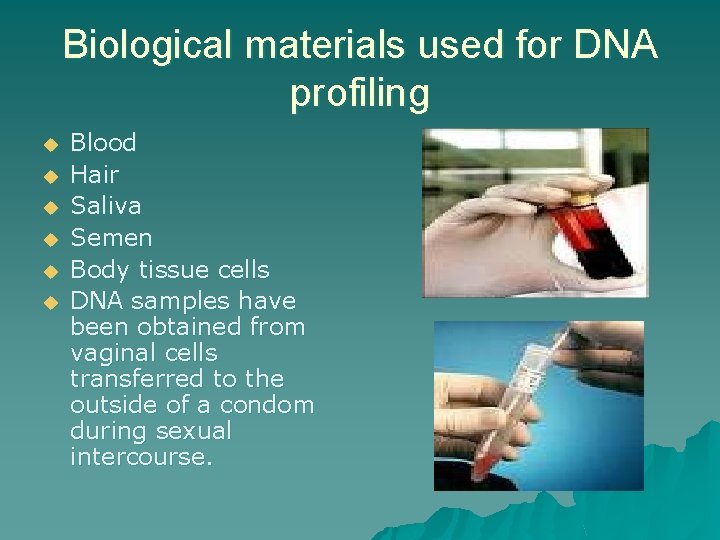
Biological materials used for DNA profiling u u u Blood Hair Saliva Semen Body tissue cells DNA samples have been obtained from vaginal cells transferred to the outside of a condom during sexual intercourse.
APPLICATIONS or USES 1. Personal Identification The notion of using DNA fingerprints as a sort of genetic bar code to identify individuals.
2. Diagnosis of Inherited Disorders diagnose inherited disorders in both prenatal and newborn babies These disorders may include cystic fibrosis, hemophilia, Huntington's disease, familial Alzheimer's, sickle cell anemia, thalassemia, and many others. 3. Developing Cures for Inherited Disorders By studying the DNA fingerprints of relatives who have a history of some particular disorder identify DNA patterns associated with the disease
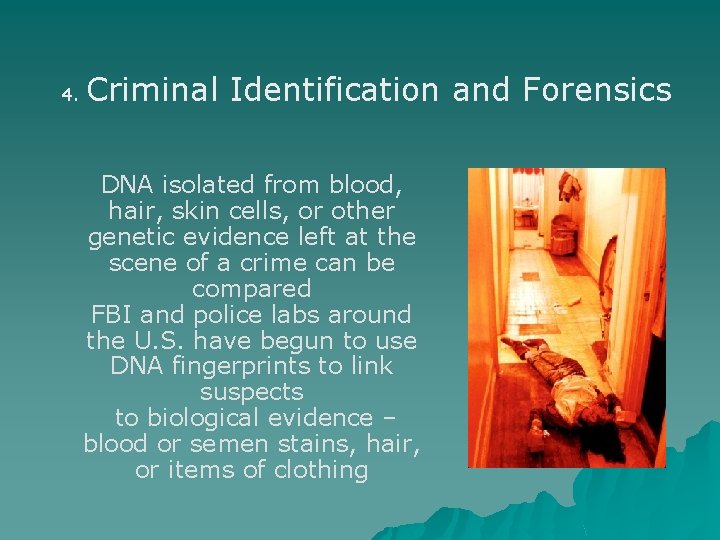
4. Criminal Identification and Forensics DNA isolated from blood, hair, skin cells, or other genetic evidence left at the scene of a crime can be compared FBI and police labs around the U. S. have begun to use DNA fingerprints to link suspects to biological evidence – blood or semen stains, hair, or items of clothing
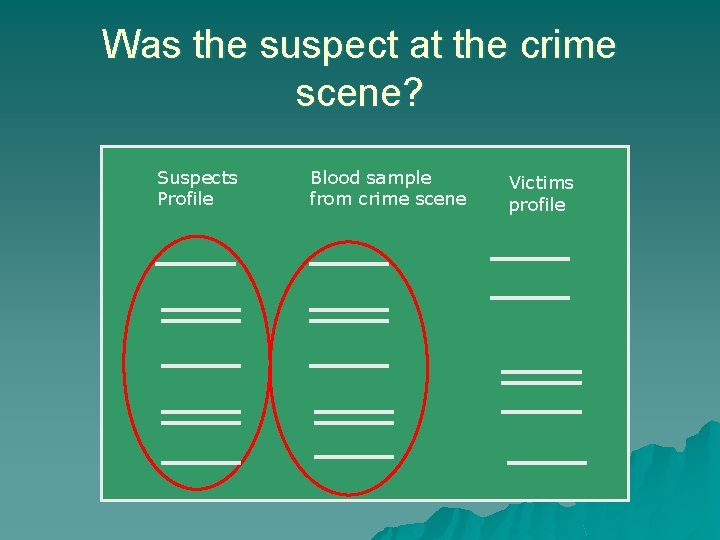
The pattern of the DNA profile is then compared with those of the victim and the suspect. u If the profile matches the suspect it provides strong evidence that the suspect was present at the crime scene. u If the profile doesn’t match the suspect then that suspect may be eliminated from the enquiry. u
Example u A violent murder occurred. u The forensics team retrieved a blood sample from the crime scene. u They prepared DNA profiles of the blood sample, the victim and a suspect as follows:
Was the suspect at the crime scene? Suspects Profile Blood sample from crime scene Victims profile
4. Paternity and Maternity Origins DNA profiles can be used to determine whether a particular person is the parent of a child. A childs paternity (father) and maternity(mother) can be determined. This information can be used in • Paternity suits • Inheritance cases • Immigration cases
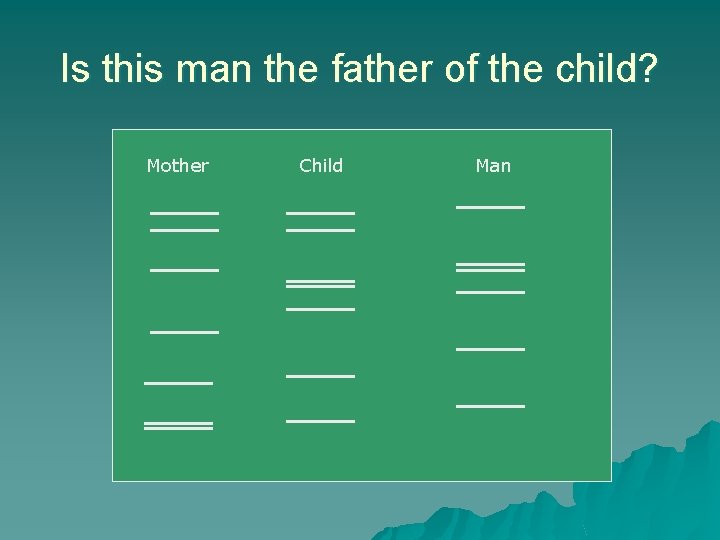
Example: A Paternity Test u By comparing the DNA profile of a mother and her child it is possible to identify DNA fragments in the child which are absent from the mother and must therefore have been inherited from the biological father.
Is this man the father of the child? Mother Child Man
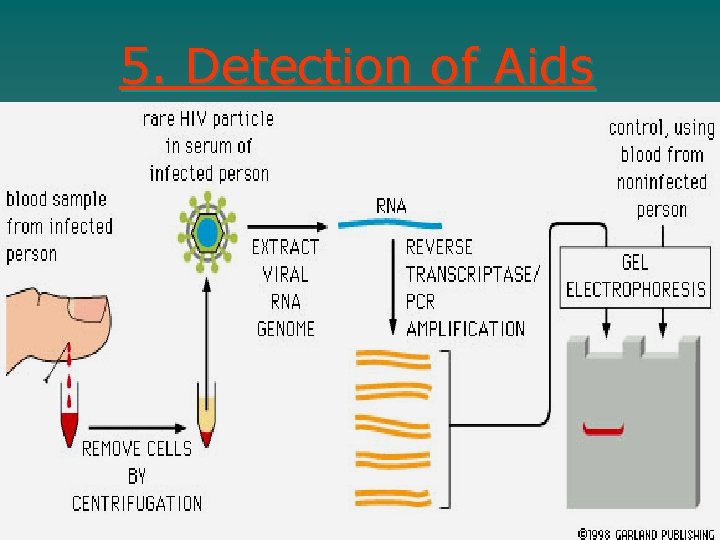
5. Detection of Aids
u add the blood with the man’s DNA, with RNA of HIV, together with "reverse transciptase" which turns RNA into DNA fragments into the PCR machine for amplification u put them into the gel electrophoresis u compare the band of HIV "DNA" with the bands form by the man’s blood
4. Diagnosis of Inherited Disorders diagnose inherited disorders in both prenatal and newborn babies These disorders may include cystic fibrosis, hemophilia, Huntington's disease, familial Alzheimer's, sickle cell anemia, thalassemia, and many others. 5. Developing Cures for Inherited Disorders By studying the DNA fingerprints of relatives who have a history of some particular disorder identify DNA patterns associated with the disease
Advantages of DNA Fingerprinting 1. Unsurpassed discriminatory potential : Complete blood group testing allows discrimiation of one person in several thousand HLA typing one in several million DNA typing can routinely provide exclusion probabilities on the order of one in billions
2. Exquisite sensitivity ØDNA can be amplified Øsmaller sample sizes are adequate Øallows rather small samples to be split and submitted for testing to more than one laboratory 3. Application to any body tissue DNA testing can be conducted with any sample having nucleated cells For example hairs, semen, urine and saliva
4. DNA is stable in comparison to proteins Øresistant to degradation by common environmental insults ØDNA is also long-lived in comparison to protein
Disadvantages of DNA Fingerprinting Ø Ø Ø DNA fingerprinting is not 100% assured VNTR are results of genetic inheritance not distributed evenly across all populations cannot have a stable probability of occurrence. Due to allele frequencies in different population or ethnics groups, the probability of match can range from 1 in 20 to 1 in 2 billion.
Ø Occurrence of certain VNTR pattern depends on an individual’s genetic background. Ø Big problem in determining the VNTR patterns of heterogeneous genetic composition of interracial individuals Ø For example, the frequency of a specific allele may be 4% in Asians instead of 1% as it is in ØNorthern Europeans. Contamiination of the sample ØShifting of bands produces wrong information.
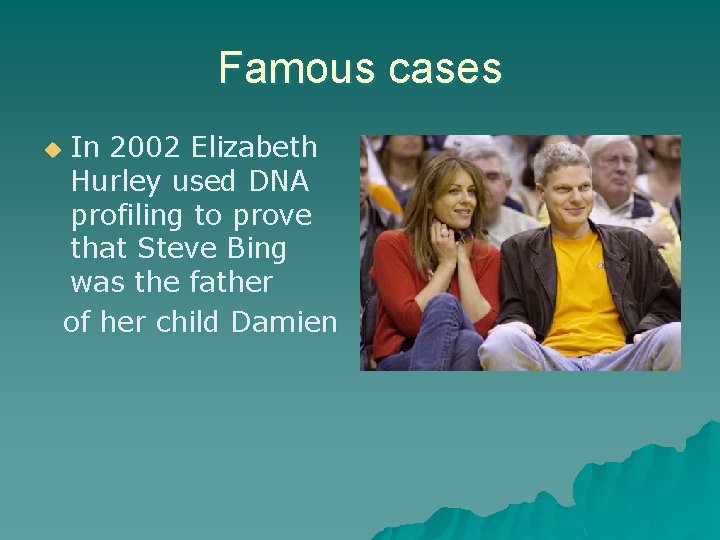
Famous cases In 2002 Elizabeth Hurley used DNA profiling to prove that Steve Bing was the father of her child Damien u
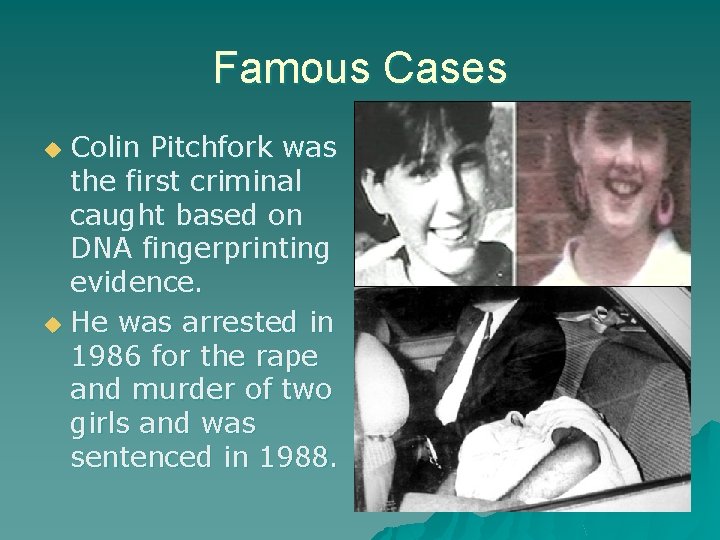
Famous Cases Colin Pitchfork was the first criminal caught based on DNA fingerprinting evidence. u He was arrested in 1986 for the rape and murder of two girls and was sentenced in 1988. u
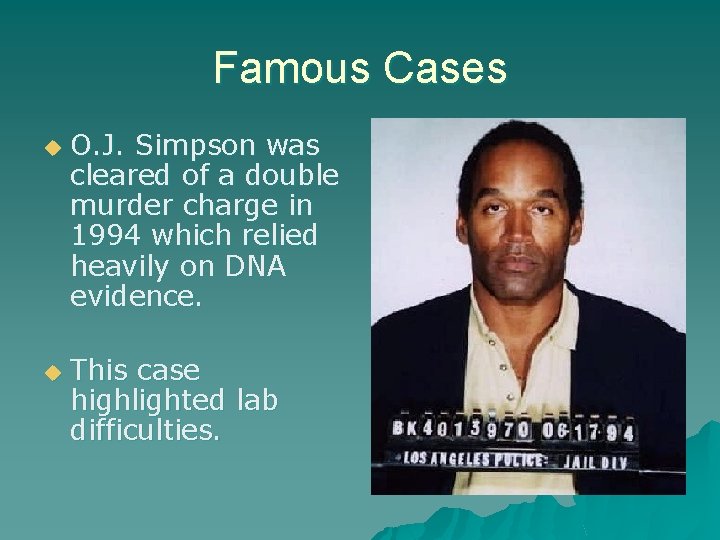
Famous Cases u u O. J. Simpson was cleared of a double murder charge in 1994 which relied heavily on DNA evidence. This case highlighted lab difficulties.