
Labour Market Information A Review of the CSC

Labour Market Information: A Review of the CSC Labour Market Model and Background for Construction Looking Forward January 2012

Introduction The purpose of this review § To review core concepts and the structure of the CSC model § To answer questions about Construction Looking Forward

Introduction The purpose of this review § To help participants see where their interests are identified in the system § To explain the tables and figures in the Construction Looking Forward reports and Power. Point presentations: • measures used, methodology and background • findings and interpretations
Introduction The purpose of the CSC labour market model § To track the state of construction labour markets across Canada § To promote awareness and discussion about the state of markets and implications for industry and government initiatives § To offer an analytical tool to industry participants (e. g. , “what if? ” simulations)
Introduction The purpose of Construction Looking Forward § Annual reports and Power. Point presentations on the state of construction labour markets in all provinces and five Ontario regions § The reports are based on: • A current macroeconomic and demographic scenario • A current inventory of major construction projects • The views and input of provincial LMI committees
Introduction Construction Looking Forward is driven by a scenario-based analysis § Each forecast is based on several important assumptions. For example: • global commodity prices • lists of very large construction projects in each province § One set of these assumptions creates one “scenario. ” § Each scenario is just one of several possible outcomes.
Outline 1. Core concepts 2. Model structure 3. Market adjustments 4. Rankings and mobility 5. Frequently asked questions
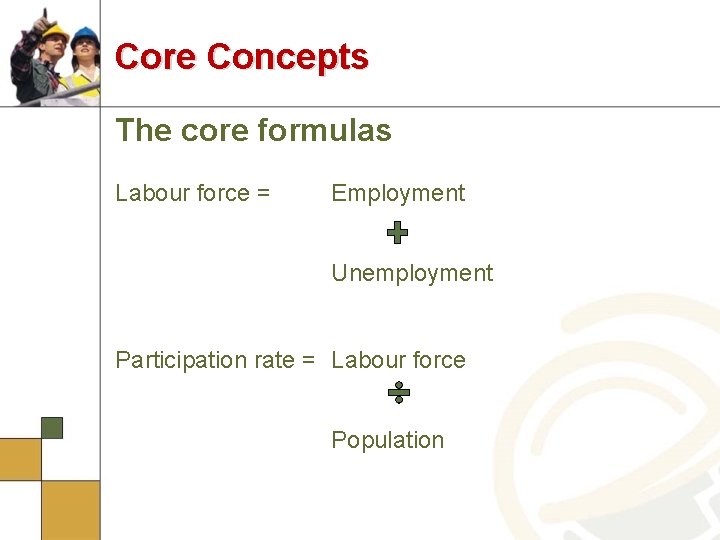
Core Concepts The core formulas Labour force = Employment Unemployment Participation rate = Labour force Population
Core Concepts Stocks are measured at one point in time § Examples: • Employment • Labour force • Housing stock • Population • Registrations
Core Concepts Flows measure the change in the stocks across a period of time § Examples: • Investment • Housing starts • New apprenticeship registrations • Apprenticeship completions • Immigration
Core Concepts Statistics Canada measures § The reliability of labour market statistics is restricted by: • smaller markets and limited samples • respondents who self-identify occupation and industry • employment attributed to region of residence § CSC research and LMI committees improve reliability
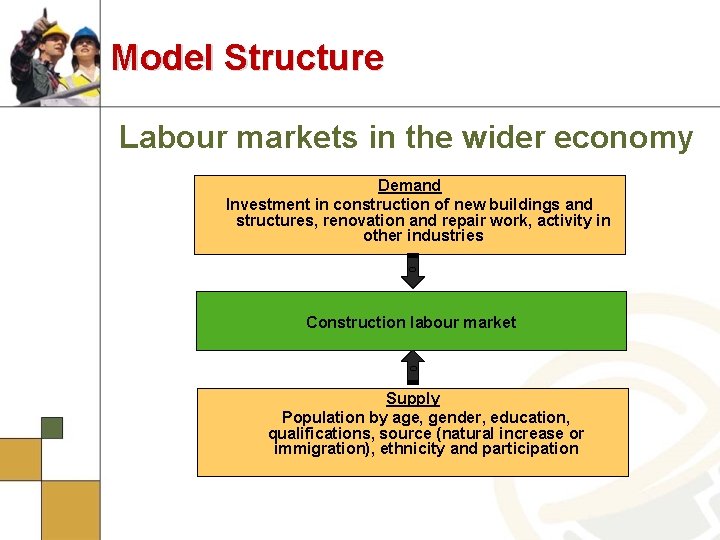
Model Structure Labour markets in the wider economy Demand Investment in construction of new buildings and structures, renovation and repair work, activity in other industries 0 0 Construction labour market Supply Population by age, gender, education, qualifications, source (natural increase or immigration), ethnicity and participation
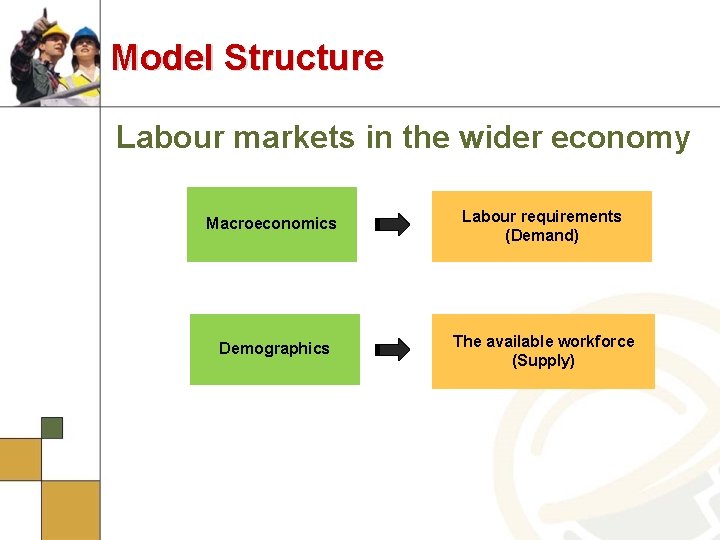
Model Structure Labour markets in the wider economy Macroeconomics Labour requirements (Demand) Demographics The available workforce (Supply)
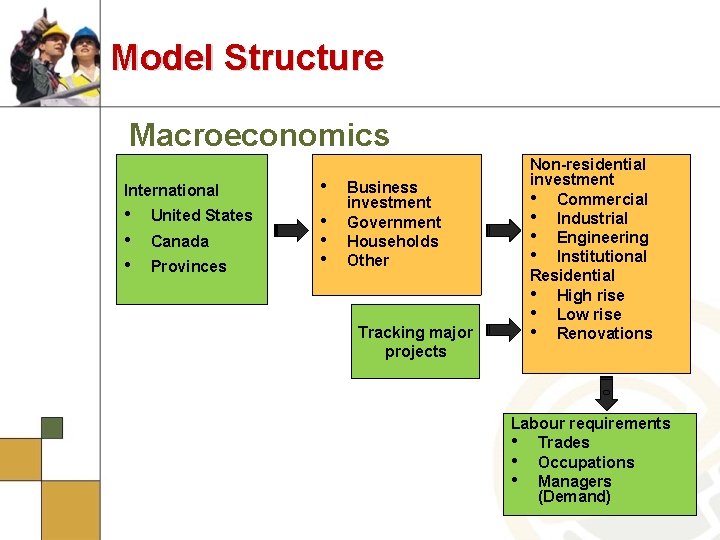
Model Structure Macroeconomics International • • United States Canada Provinces Business investment Government Households Other Tracking major projects Non-residential investment • Commercial • Industrial • Engineering • Institutional Residential • High rise • Low rise • Renovations 0 Labour requirements • Trades • Occupations • Managers (Demand)
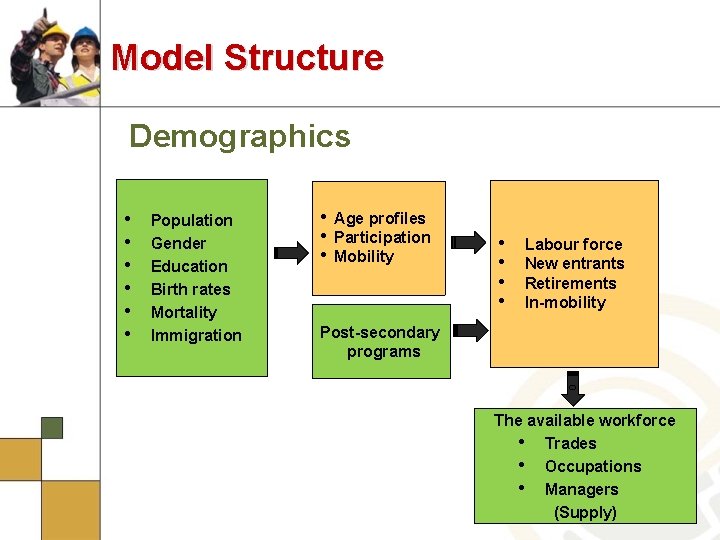
Model Structure Demographics • • • Population Gender Education Birth rates Mortality Immigration • Age profiles • Participation • Mobility • • Labour force New entrants Retirements In-mobility Post-secondary programs 0 The available workforce • Trades • Occupations • Managers (Supply)
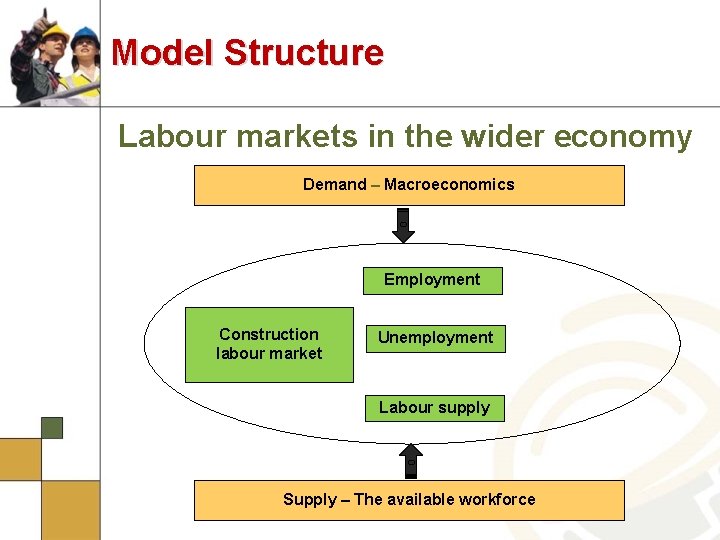
Model Structure Labour markets in the wider economy Demand – Macroeconomics 0 Employment Construction labour market Unemployment 0 Labour supply Supply – The available workforce
Model Structure Sources of labour requirements § There are two distinct sources of labour requirements (demand) in the model: • § replacement demand related to retirement and mortality • expansion demand related to growth in construction activity Replacement and expansion demand are measured for 33 trades and occupations (see next slide)
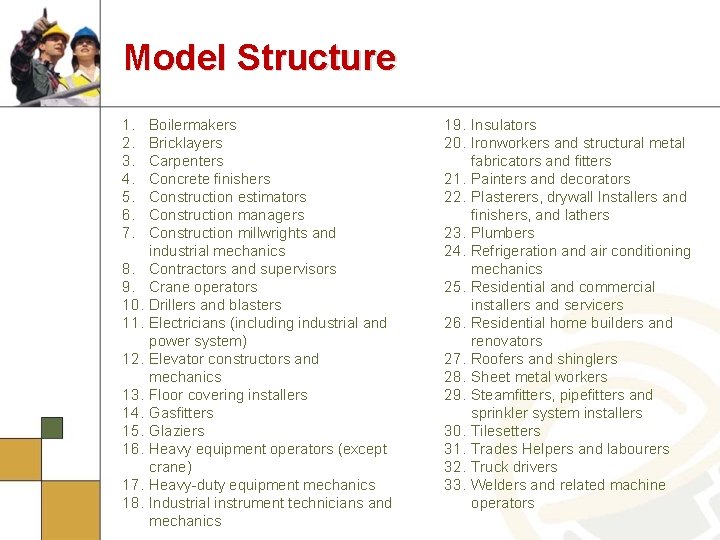
Model Structure 1. 2. 3. 4. 5. 6. 7. 8. 9. 10. 11. 12. 13. 14. 15. 16. 17. 18. Boilermakers Bricklayers Carpenters Concrete finishers Construction estimators Construction managers Construction millwrights and industrial mechanics Contractors and supervisors Crane operators Drillers and blasters Electricians (including industrial and power system) Elevator constructors and mechanics Floor covering installers Gasfitters Glaziers Heavy equipment operators (except crane) Heavy-duty equipment mechanics Industrial instrument technicians and mechanics 19. Insulators 20. Ironworkers and structural metal fabricators and fitters 21. Painters and decorators 22. Plasterers, drywall Installers and finishers, and lathers 23. Plumbers 24. Refrigeration and air conditioning mechanics 25. Residential and commercial installers and servicers 26. Residential home builders and renovators 27. Roofers and shinglers 28. Sheet metal workers 29. Steamfitters, pipefitters and sprinkler system installers 30. Tilesetters 31. Trades Helpers and labourers 32. Truck drivers 33. Welders and related machine operators
Model Structure Expansion demand § Expansion demand is measured for: • Industry: o construction o all other industries • Provinces and five Ontario regions: o Greater Toronto Area o Southwest Ontario o Central Ontario o Northern Ontario o Eastern Ontario
Model Structure Expansion demand § Expansion demand is driven by construction spending by sectors: • residential • commercial • industrial • institutional • engineering • maintenance
Model Structure Expansion demand § Expansion demand is driven by construction spending by sectors: • the macroeconomic model forecasts spending • employment is reported for residential and non-residential totals • specialized analysis tracks project detail
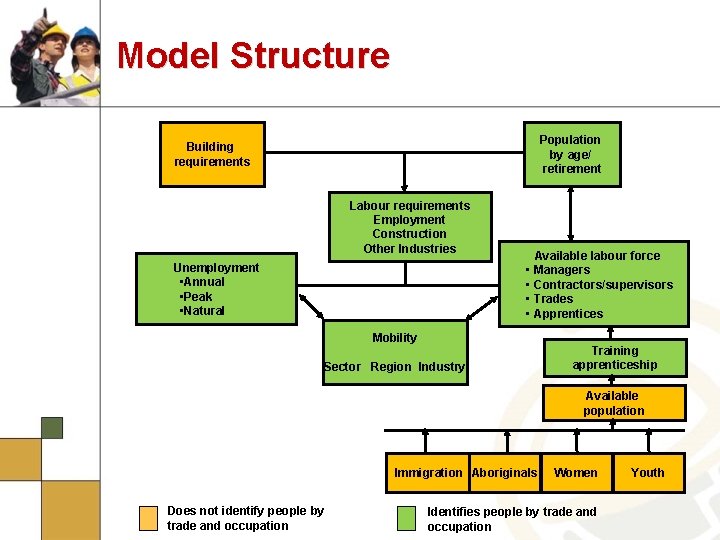
Model Structure Population by age/ retirement Building requirements Labour requirements Employment Construction Other Industries Unemployment • Annual • Peak • Natural Available labour force • Managers • Contractors/supervisors • Trades • Apprentices Mobility Sector Region Industry Training apprenticeship Available population Immigration Aboriginals Does not identify people by trade and occupation Women Identifies people by trade and occupation Youth
Market Adjustments What happens when conditions change? § The model has three rounds of adjustments: 1. Unemployment changes 2. Labour force changes 3. Immigration, apprenticeship and other institutional systems adjust The unemployment rate is the first, pivotal point.
Market Adjustments Unemployment is an essential feature of the labour market § Acts as a cushion to absorb shocks § A social cost across the cycle § Creates benefits in a balanced market
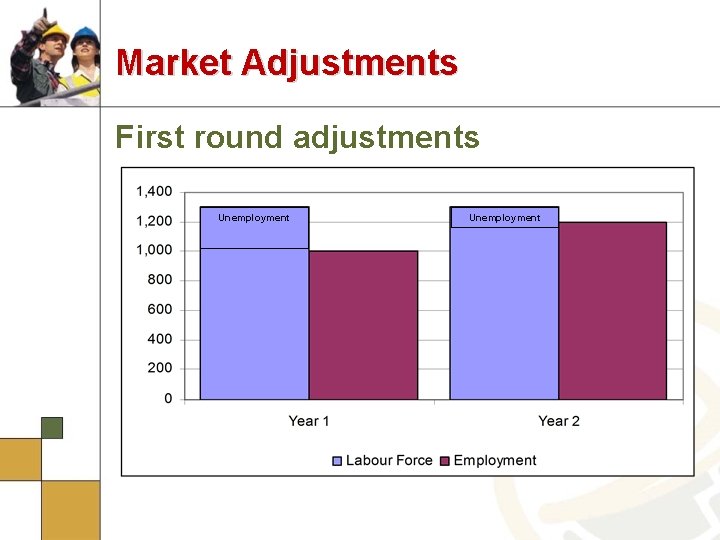
Market Adjustments First round adjustments Unemployment
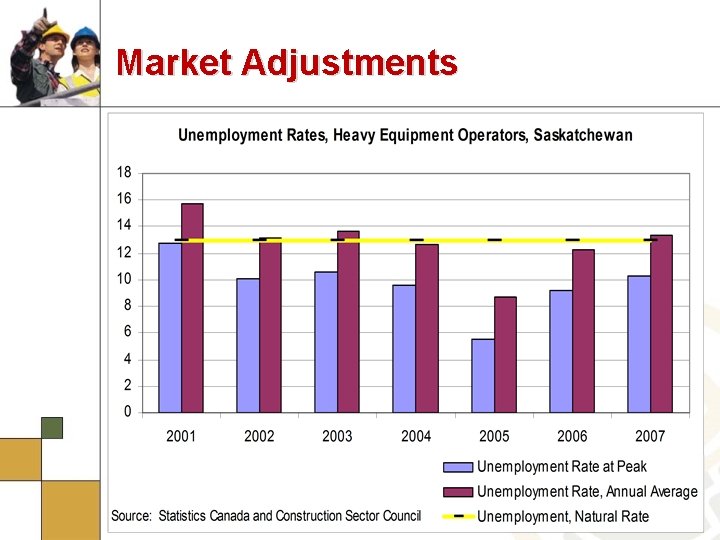
Market Adjustments Unemployment § There are three different measures: 1. Seasonal 2. Cyclical 3. Natural
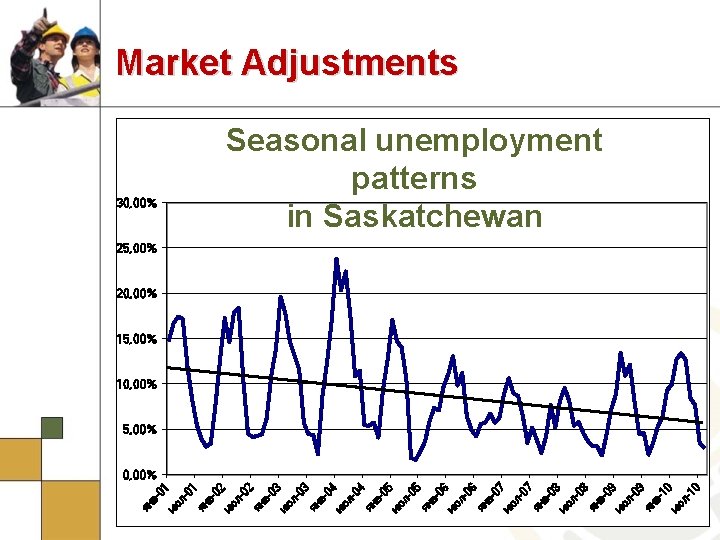
10 -1 0 л- ию ян в 09 -0 9 л- ию ян в 08 -0 8 л- ию ян в 07 -0 7 л- ию ян в 06 -0 6 л- ию ян в 05 -0 5 л- ию ян в 04 -0 4 л- ию ян в 03 -0 3 л- ию ян в 02 -0 2 30, 00% л- ию ян в 01 -0 1 л- ию ян в Market Adjustments Seasonal unemployment patterns in Saskatchewan 25, 00% 20, 00% 15, 00% 10, 00% 5, 00% 0, 00%
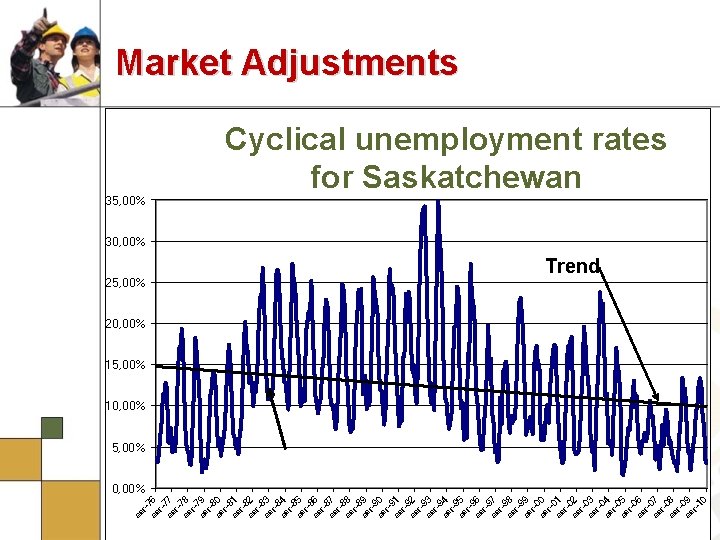
гав 76 гав 77 гав 78 гав 79 гав 80 гав 81 гав 82 гав 83 гав 84 гав 85 гав 86 гав 87 гав 88 гав 89 гав 90 гав 91 гав 92 гав 93 гав 94 гав 95 гав 96 гав 97 гав 98 гав 99 гав 00 гав 01 гав 02 гав 03 гав 04 гав 05 гав 06 гав 07 гав 08 гав 09 г 10 ав Market Adjustments 35, 00% 25, 00% Cyclical unemployment rates for Saskatchewan 30, 00% Trend 20, 00% 15, 00% 10, 00% 5, 00% 0, 00%
Market Adjustments The normal unemployment rate estimates the annual unemployment rate in balanced markets.
Market Adjustments
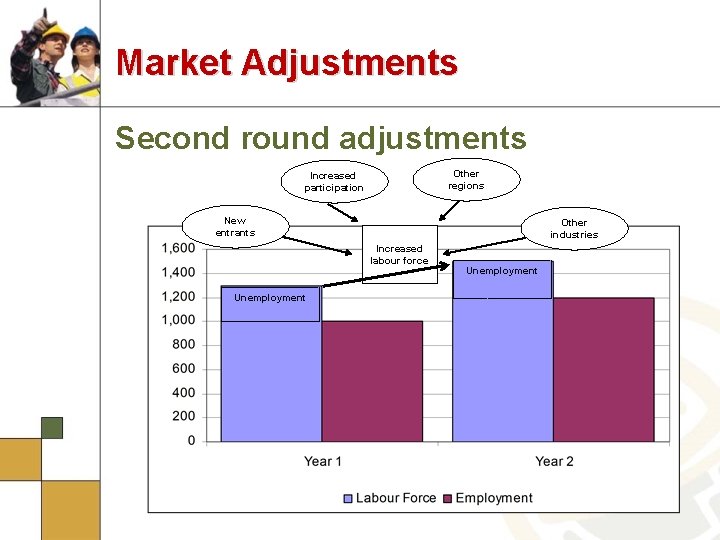
Market Adjustments Second round adjustments Other regions Increased participation New entrants Other industries Increased labour force Unemployment
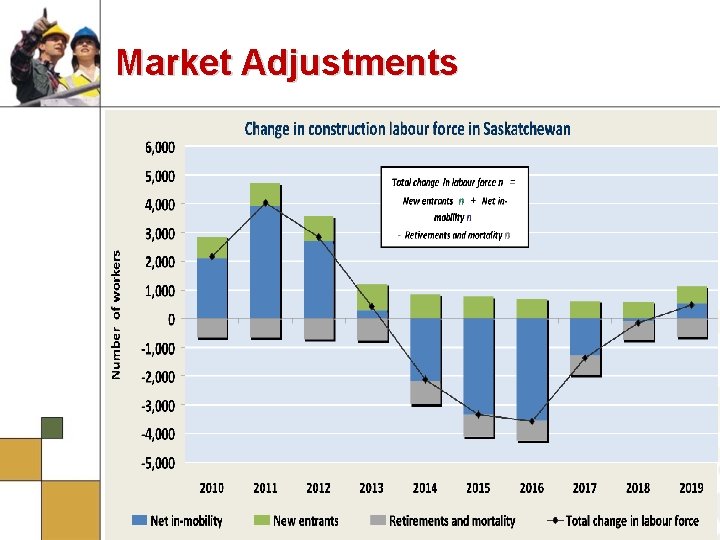
Market Adjustments Change in the labour force § New entrants § Mortality § Retirement § Net in-mobility
Market Adjustments Change in the labour force § New entrants • number of residents 30 years of age and younger entering the labour force for the first time § Determined by: • change in population (age 30 years and younger) • construction share of the workforce • labour market conditions
Market Adjustments Change in the labour force § Mortality • number of persons in the local labour force that pass away during the year based on agespecific mortality rates
Market Adjustments Change in the labour force § Retirement • number of persons permanently leaving the labour force; persons that take a pension and move to another trade or take contract work are not included § Determined by: • change in participation rates above the age of 55
Market Adjustments Change in the labour force § Net in-mobility • recruiting required by the construction industry from other industries, other trades or occupations outside construction and/or outside other provinces or countries to meet labour requirements § Determined by: • residual labour requirements o >0 implies recruiting outside o <0 implies losses to other industries/regions
Market Adjustments
Rankings and Mobility Rankings on a scale of 1 (weak) through 5 (strong) summarize the market conditions § Regional rankings are a weighted average of four measures (see next slide) § Differences in market rankings signal the potential for mobility
Rankings and Mobility Measures 1. Estimated unemployment rate relative to natural unemployment rate 2. Employment growth 3. Net in-mobility as a percentage of the labour force 4. Industry survey
Rankings and Mobility Annual weighting of the criteria § Surveys only applied for one year § Weight attached to replacement demand rises in more distant forecast periods § Comments on tables note the potential impacts of mobility
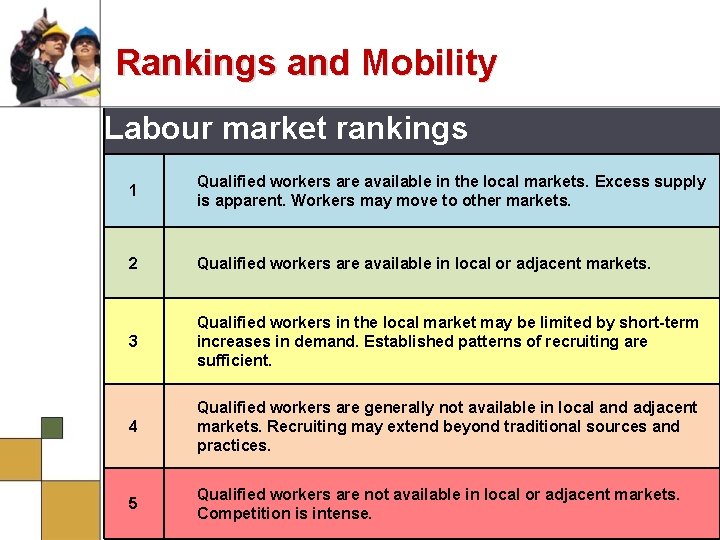
Rankings and Mobility Labour market rankings 1 Qualified workers are available in the local markets. Excess supply is apparent. Workers may move to other markets. 2 Qualified workers are available in local or adjacent markets. 3 Qualified workers in the local market may be limited by short-term increases in demand. Established patterns of recruiting are sufficient. 4 Qualified workers are generally not available in local and adjacent markets. Recruiting may extend beyond traditional sources and practices. 5 Qualified workers are not available in local or adjacent markets. Competition is intense.
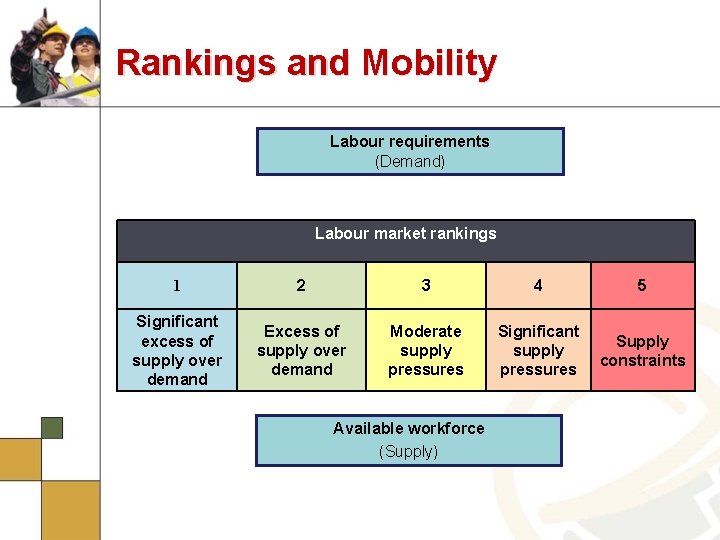
Rankings and Mobility Labour requirements (Demand) Labour market rankings 1 2 3 4 5 Significant excess of supply over demand Excess of supply over demand Moderate supply pressures Significant supply pressures Supply constraints Available workforce (Supply)
Rankings and Mobility § Differences in market rankings indicate the potential for mobility in the model § Dimensions to mobility: • across industries • across regions
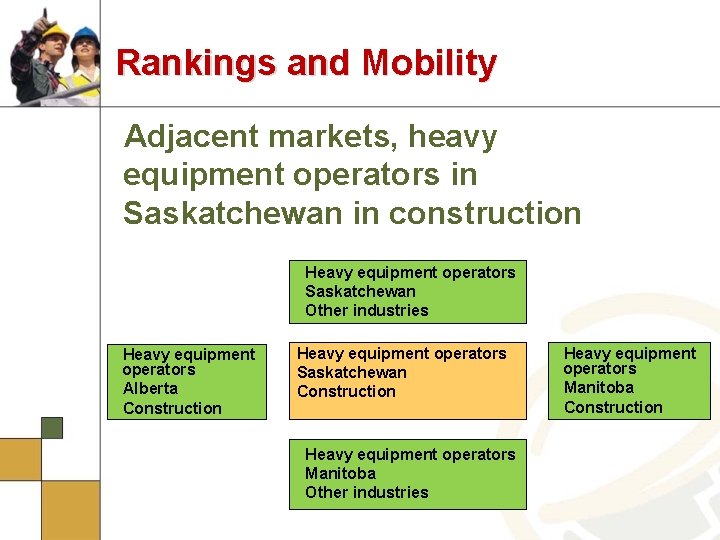
Rankings and Mobility Adjacent markets, heavy equipment operators in Saskatchewan in construction Heavy equipment operators Saskatchewan Other industries Heavy equipment operators Alberta Construction Heavy equipment operators Saskatchewan Construction Heavy equipment operators Manitoba Other industries Heavy equipment operators Manitoba Construction
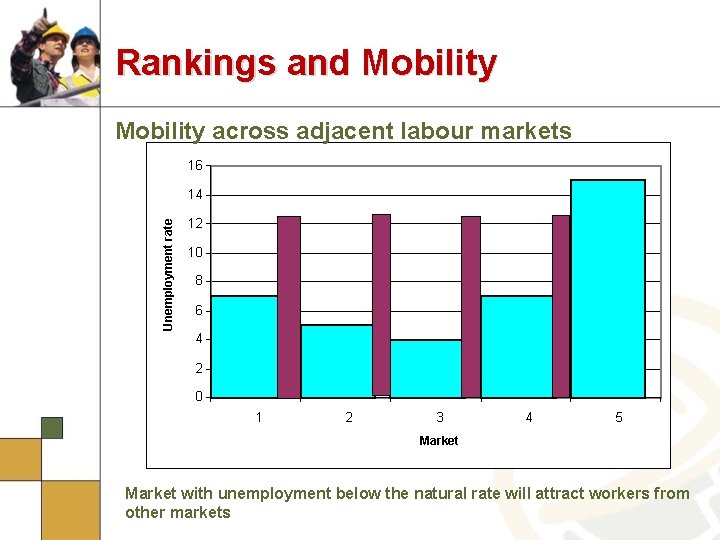
Rankings and Mobility across adjacent labour markets 16 Unemployment rate 14 12 10 8 6 4 2 0 1 2 3 4 5 Market with unemployment below the natural rate will attract workers from other markets
Conclusions Remember – the CSC LMI system: § Includes the model, reports, Power. Point presentations and website § Depends on industry input to refine reliability and market assessments § Is a tool that the industry can use for assessing labour market risks

Thank you For further information contact: Construction Sector Council (613) 569 -5552 info@csc-ca. org
- Slides: 47