
Laboratory waste What is it and what should
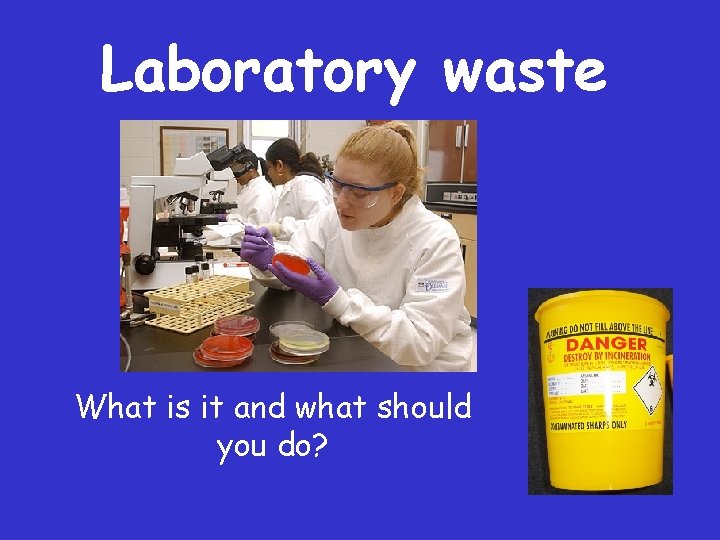
Laboratory waste What is it and what should you do?
What a waste. . • What type of waste would be made in a lab? • Chemical waste • Biological samples such as blood, urine, agar plates, etc • Non recyclable waste – packaging, rubber gloves, etc • Sharps waste – needles, glass, etc Some waste can be a combination of 2 or more categories.
Chemical waste Chemicals used in the lab generally fall under three categories • Non chlorinated organic waste – burned to produce electricity • Chlorinated organic waste – incinerated at high temperatures • Innocuous aqueous waste – poured down the drain
Biological waste is any waste that is living or was once living that was used in research. It can be disposed of in one of the following ways • Autoclaving – for Petri dishes • Yellow bags – used for soft waste such as small plastic bottles, cloths and surgical gloves. • Yellow Sharps bins – for disposal of needles, syringes and glass bottles. This type of waste is then removed by a contractor for incineration.
Sharps include needles, syringes, broken glass or glass bottles and containers. The following disposal methods apply: • Needles and syringes are placed in plastic sharps bins, if contaminated with biological samples the yellow bins should be used • Glass containers of chemicals are generally returned to the suppliers • Small glass bottles and broken glass are placed in a box lined with a plastic bag, then sealed and clearly labelled. This is then disposed of in a land fill.
- Slides: 5