
Laboratory Standard Laboratory use of hazardous chemicals v
Laboratory Standard
Laboratory use of hazardous chemicals v Chemical manipulations are carried out on a laboratory scale v Multiple chemical procedures or chemicals are used 1 a
Laboratory use of hazardous chemicals v Procedures are not part of, and do not simulate a production process v Protective laboratory practices and equipment are available to minimize employee exposure 1 b
Permissible exposure limits cannot be exceeded v PEL is the level a person can be regularly exposed to without adverse effects • Eight-hour time-weighted average • Ceiling concentration limits • Skin designation limits 2 a
Permissible exposure limits cannot be exceeded v Action level is an exposure level OSHA has designated for a specific substance • Eight-hour time-weighted average • Exposures at action level initiate exposure monitoring, medical surveillance 2 b
Exposure monitoring v Measured when there is reason to believe exposure levels exceed action level or PEL v Performed for substances regulated by an OSHA standard that requires monitoring 3 a
Exposure monitoring v Monitoring may be terminated in accordance with regulation v Employees must be notified of monitoring results within 15 working days • Individually • Posting results in accessible location 3 b
Chemical Hygiene Plan - Basic operating procedures v What spills to do for accidents and v How to avoid routine exposures v How to choose chemicals 4 a
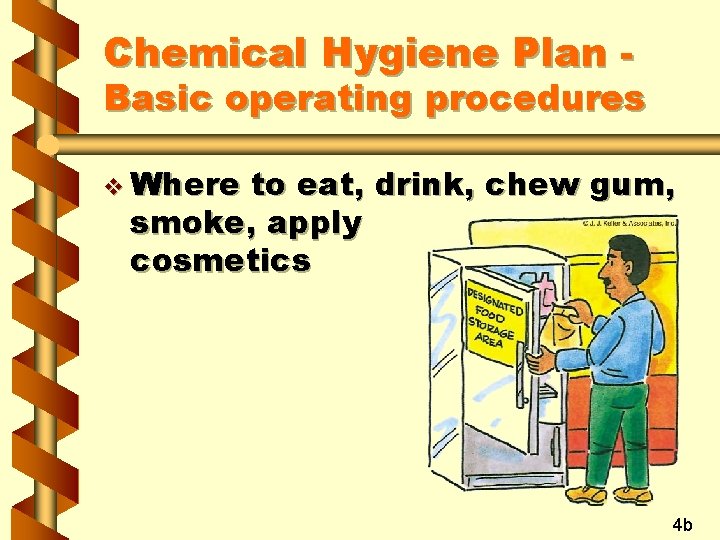
Chemical Hygiene Plan - Basic operating procedures v Where to eat, drink, chew gum, smoke, apply cosmetics 4 b
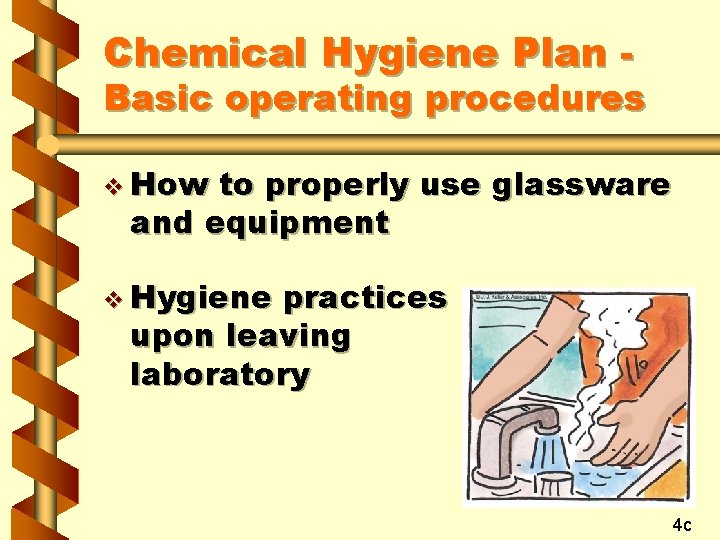
Chemical Hygiene Plan - Basic operating procedures v How to properly use glassware and equipment v Hygiene practices upon leaving laboratory 4 c
Chemical Hygiene Plan - Basic operating procedures v Proper behavior in laboratory no horseplay v How to pipette - no mouth suction v Appropriate and PPE personal apparel 4 d
Chemical Hygiene Plan - Basic operating procedures v Be aware of unsafe conditions plan ahead, follow warnings, work under exhaust hoods v Properly dispose of wastes v Do not work alone when performing hazardous procedures 4 e
Chemical Hygiene Plan v Potential laboratory hazards • Allergens and Embryotoxins • Moderate chronic and high acute toxicity • High chronic toxicity • Animal work with chemicals of high chronic toxicity 4 f
Chemical Hygiene Plan v Controls to reduce employee exposure • Engineering controls • Work practice controls • Hygiene practices • PPE 4 g
Chemical Hygiene Plan v Ensure that fume hoods function properly v Employer approval is needed before conducting some operations, procedures, activities 4 h
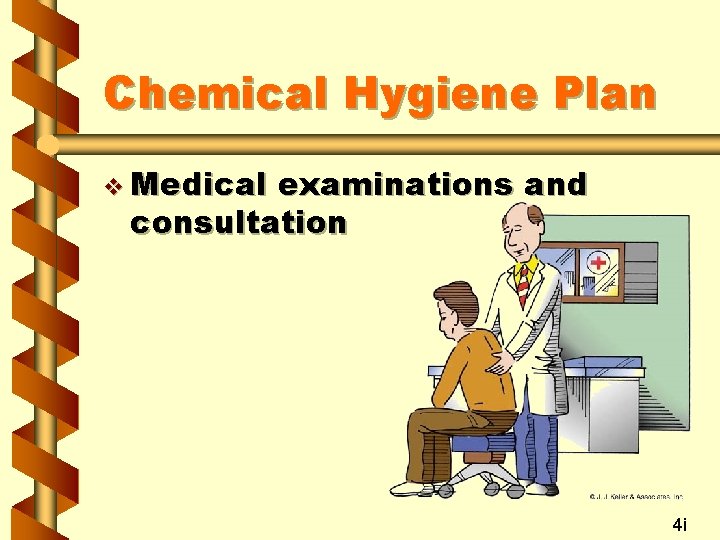
Chemical Hygiene Plan v Medical examinations and consultation 4 i
Chemical Hygiene Plan v Personnel responsible for implementation of hygiene plan • Chemical hygiene officer • Chemical hygiene committee 4 j
Chemical Hygiene Plan v Provisions for employee protection from: • Select carcinogens • Reproductive toxins • Substances with high degree of toxicity 4 k
Chemical Hygiene Plan v Provide information about: v Review plan annually • Designated areas • Containment devices • Safe removal of contaminated waste • Decontamination procedures 4 l
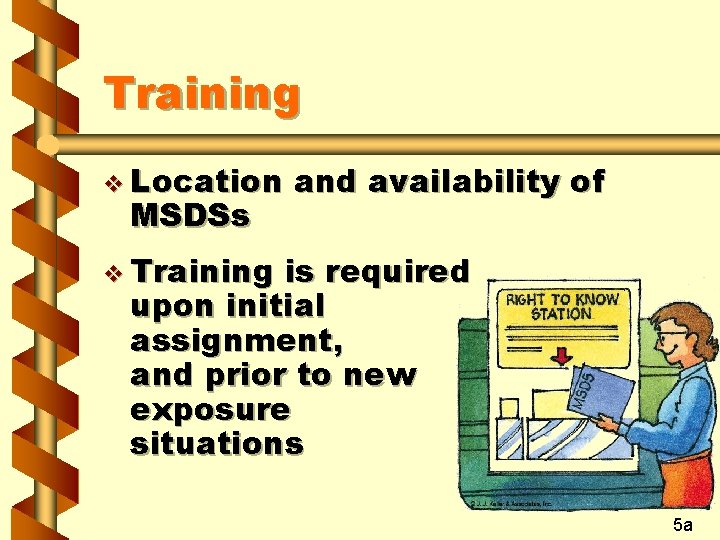
Training v Location MSDSs and availability of v Training is required upon initial assignment, and prior to new exposure situations 5 a
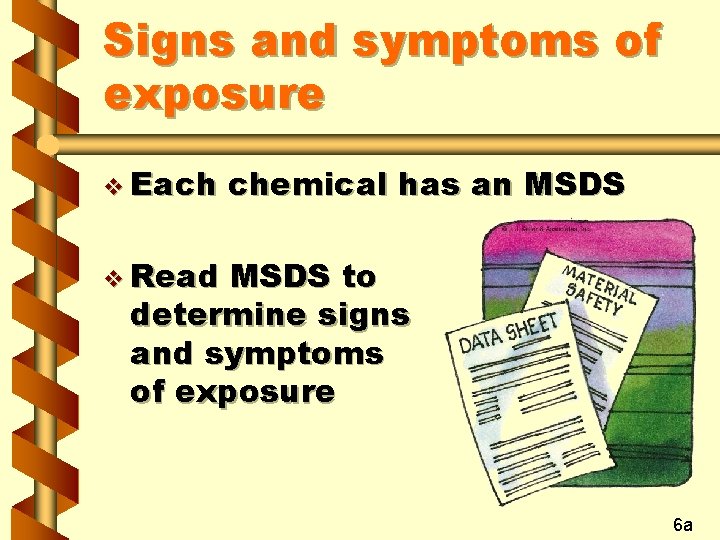
Signs and symptoms of exposure v Each chemical has an MSDS v Read MSDS to determine signs and symptoms of exposure 6 a
Methods of detection of a release v Monitoring is conducted v Continuous v Visual v Odor monitoring devices appearances of hazardous chemicals 7 a
Medical consultations/ examinations v Reasons for medical attention v Care provided by physician without loss of pay v Care provided at reasonable time and place 8 a
Medical consultations/ examinations v Information physician provided to • Chemicals to which employee is exposed • Exposure conditions • Signs and symptoms of exposure 8 b
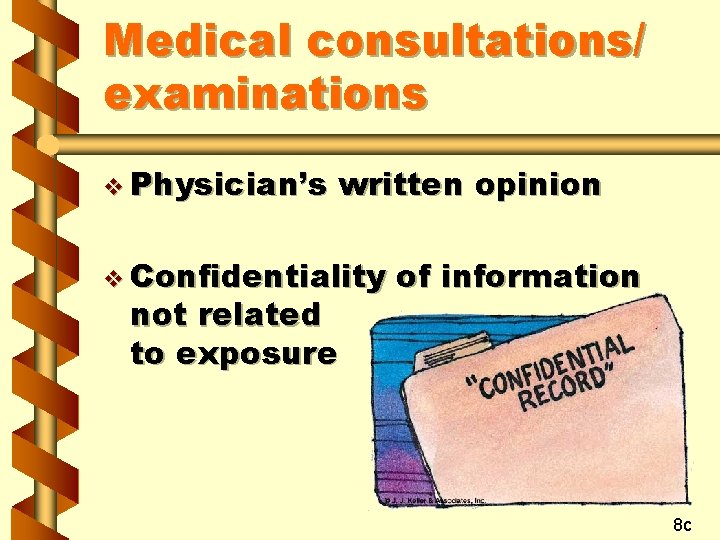
Medical consultations/ examinations v Physician’s written opinion v Confidentiality not related to exposure of information 8 c
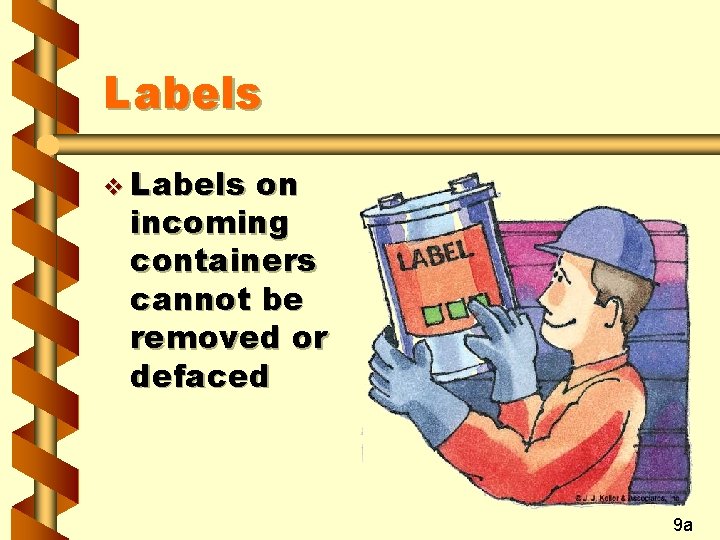
Labels v Labels on incoming containers cannot be removed or defaced 9 a
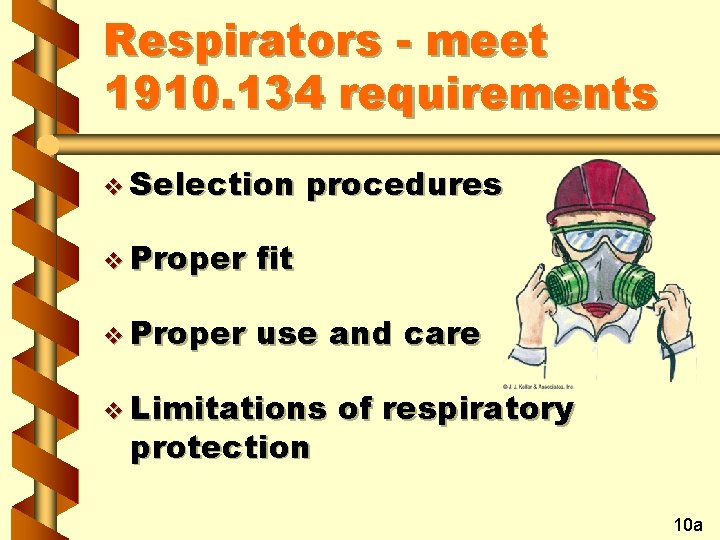
Respirators - meet 1910. 134 requirements v Selection procedures v Proper fit v Proper use and care v Limitations protection of respiratory 10 a
Recordkeeping v Records retained for duration of employment plus 30 years v Includes opinions tests and written 11 a
Summary of main points v Basic operating procedures v PPE v Hazards of chemicals used v Signs and symptoms of overexposure 12 a
Summary of main points v Detection methods of a release, or presence of chemicals v Permissible v Required exposure limits monitoring 12 b
Summary of main points v Medical examination requirements v MSDSs and labels v Respirator use v Recordkeeping requirements 12 c
- Slides: 31