
Laboratory Seven Objectives identification of uniaxial interference figures
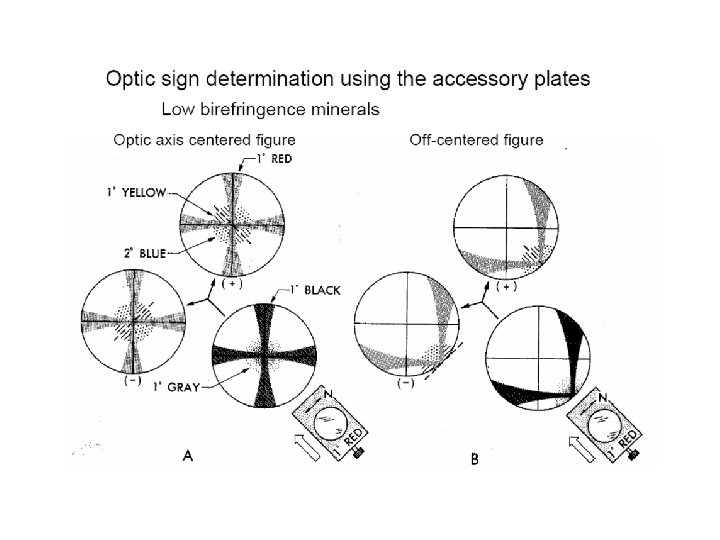
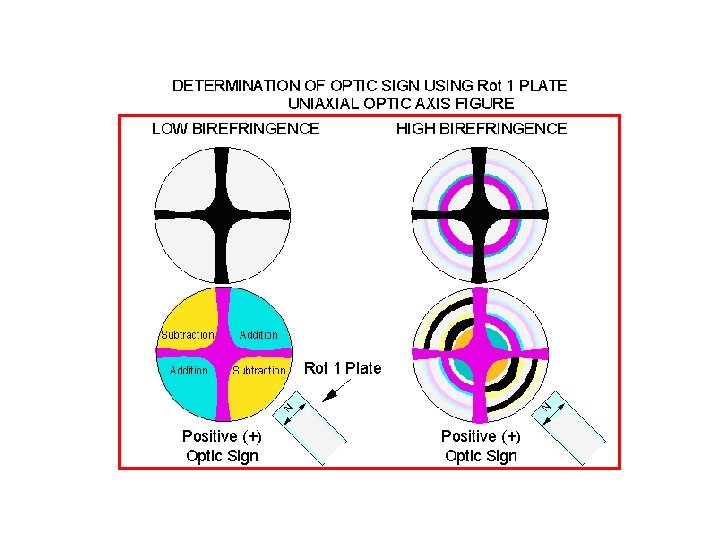
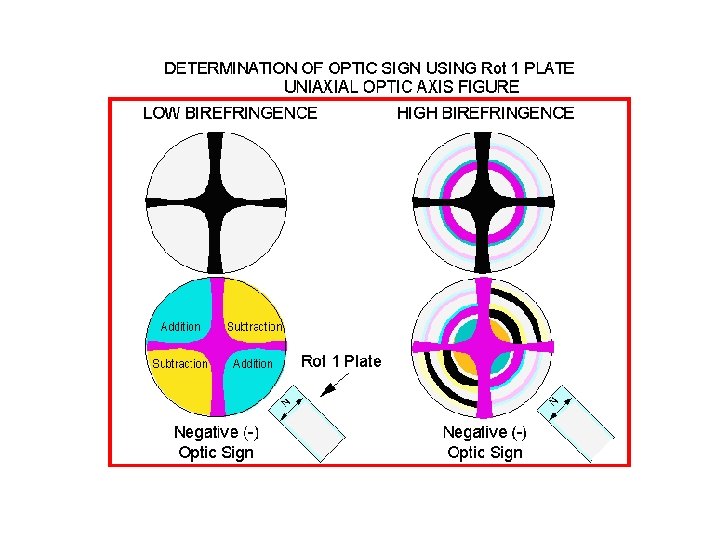
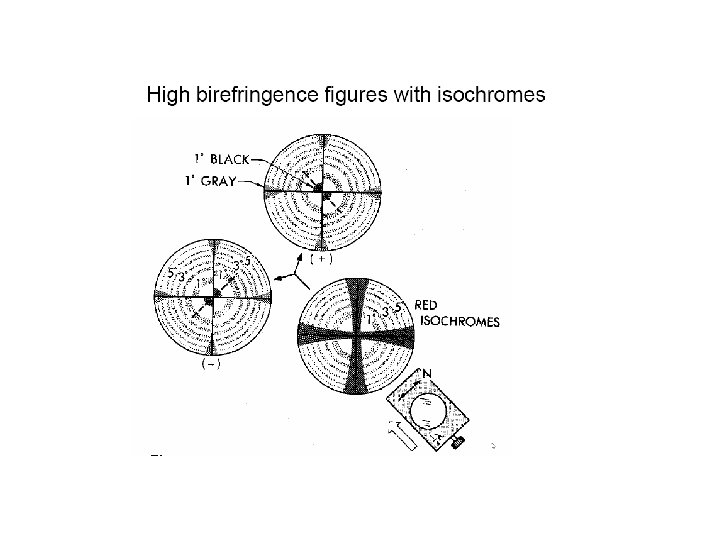
Laboratory Seven Objectives: identification of uniaxial interference figures and the determination of the optic sign.
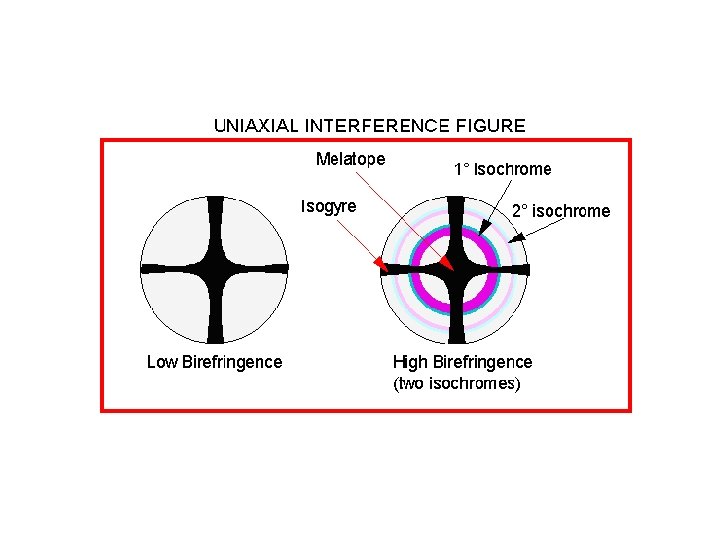

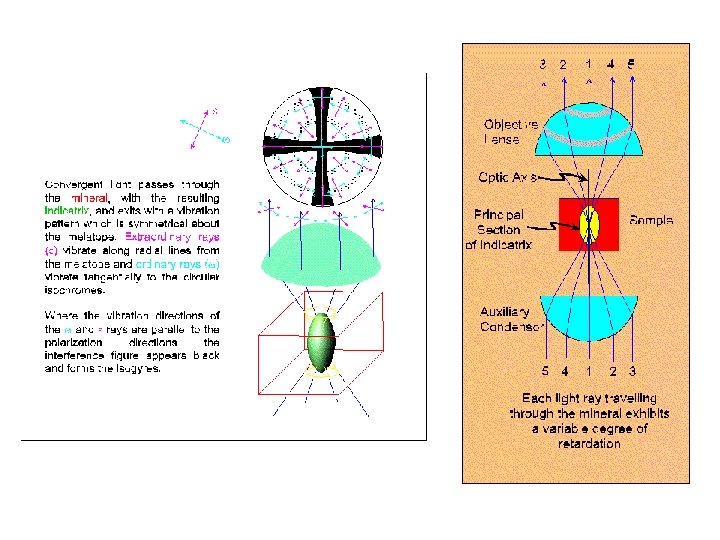
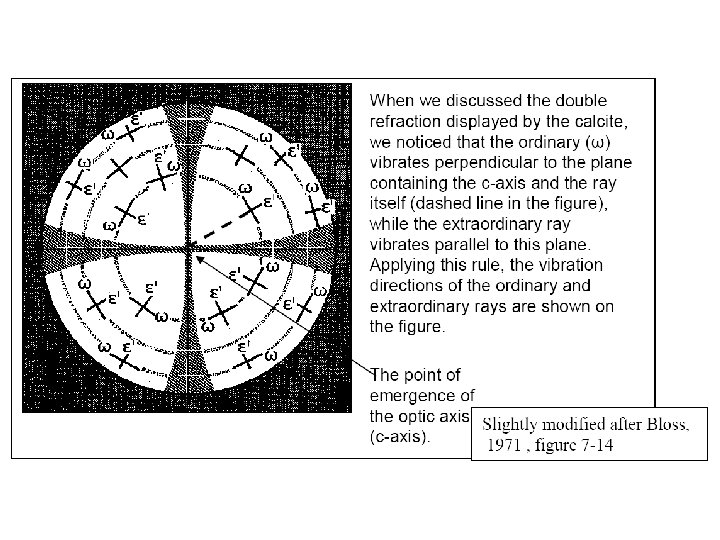

OFF CENTRED OPTIC AXIS FIGURE The interference figure is produced when the optic axis is not vertical, resulting in the interference figure, i. e. the melatope, no longer being centred in the field of view. The isogyres still form a cross, with the melatope at the centre. Because the figure is off centred, the melatope (optic axis) does not appear in the field of view, on rotation the melatope swings in a circle around the center of the field of view Isogyres will retain their basic NS & EW orientations and sweep across the field of view centred on the melatope, always moving parallel to the crosshairs If the melatope is just in the field of view the optic sign can easily be determined, using the technique outlined above
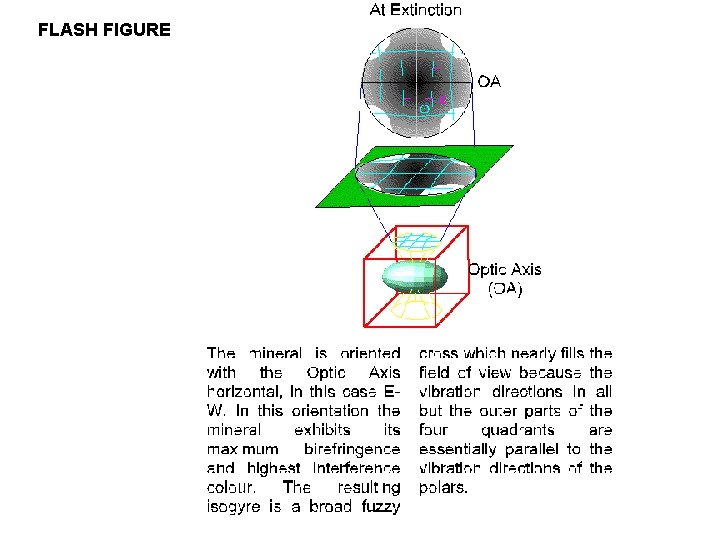
FLASH FIGURE
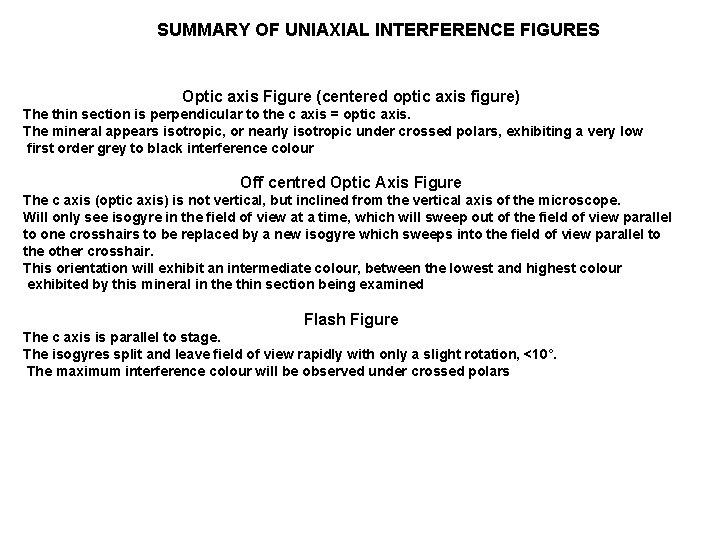
SUMMARY OF UNIAXIAL INTERFERENCE FIGURES Optic axis Figure (centered optic axis figure) The thin section is perpendicular to the c axis = optic axis. The mineral appears isotropic, or nearly isotropic under crossed polars, exhibiting a very low first order grey to black interference colour Off centred Optic Axis Figure The c axis (optic axis) is not vertical, but inclined from the vertical axis of the microscope. Will only see isogyre in the field of view at a time, which will sweep out of the field of view parallel to one crosshairs to be replaced by a new isogyre which sweeps into the field of view parallel to the other crosshair. This orientation will exhibit an intermediate colour, between the lowest and highest colour exhibited by this mineral in the thin section being examined Flash Figure The c axis is parallel to stage. The isogyres split and leave field of view rapidly with only a slight rotation, <10°. The maximum interference colour will be observed under crossed polars
- Slides: 13