
Laboratory SafetyChemical Reactivity Chemical Storage and Incompatibilities John
Laboratory Safety-Chemical Reactivity Chemical Storage and Incompatibilities John Herrington
Laboratory Safety-Chemical Reactivity • Lecture for 20 minutes or so • Video
Laboratory Safety-Chemical Reactivity Inventories • Chemical Name • Original Amount • Manufacturer (for MSDS’) • Location (at least room number)
Laboratory Safety-Chemical Reactivity Purchasing (Procurement) • Purchase Only the Amount Needed • Purchase Smaller or Custom Containers • Check the Inventory Before Purchase
Laboratory Safety-Chemical Reactivity Labeling • Label ALL containers -Except for Immediate Use • Unknowns are Dangerous and Expensive • Inspect Chemicals and Labels At Least Every 6 Months • Replace Damaged or Worn Labels • Dispose of Chemicals That Have Not Been Used for 12 to 18 Months
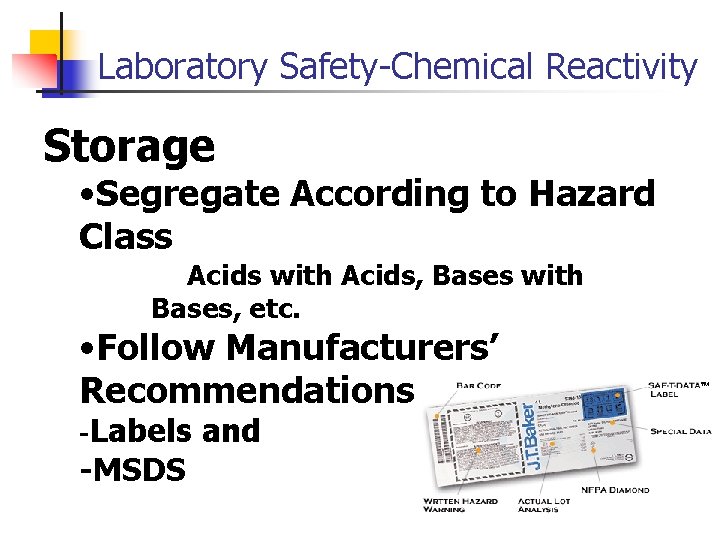
Laboratory Safety-Chemical Reactivity Storage • Segregate According to Hazard Class Acids with Acids, Bases with Bases, etc. • Follow Manufacturers’ Recommendations -Labels -MSDS and
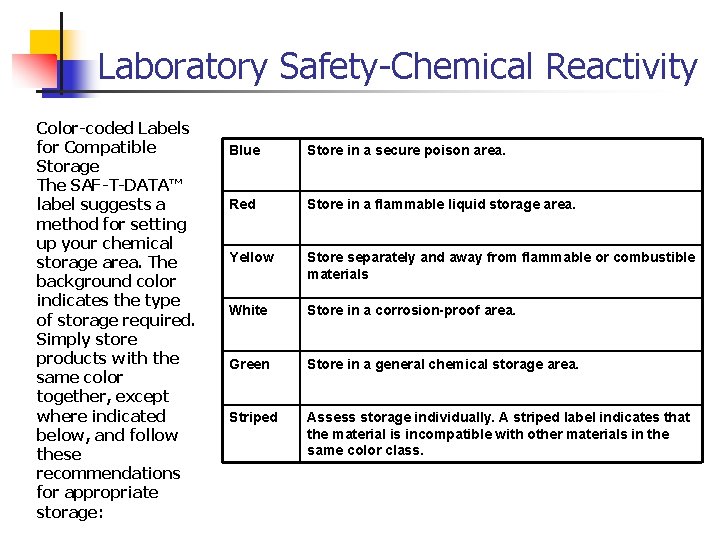
Laboratory Safety-Chemical Reactivity Color-coded Labels for Compatible Storage The SAF-T-DATA™ label suggests a method for setting up your chemical storage area. The background color indicates the type of storage required. Simply store products with the same color together, except where indicated below, and follow these recommendations for appropriate storage: Blue Store in a secure poison area. Red Store in a flammable liquid storage area. Yellow Store separately and away from flammable or combustible materials White Store in a corrosion-proof area. Green Store in a general chemical storage area. Striped Assess storage individually. A striped label indicates that the material is incompatible with other materials in the same color class.

Laboratory Safety-Chemical Reactivity

Laboratory Safety-Chemical Reactivity
Laboratory Safety-Chemical Reactivity Segregation Tips • Mineral Acids Away From Organic Acids • Organics Away From Oxidizers • Refer To the Incompatibles Chart • Do NOT Use Alphabetical Order! • Water-Reactive Materials MUST Be Stored Away From All Other Materials • Acute Poisons Should Be Locked
Laboratory Safety-Chemical Reactivity Long-Term Storage Considerations Peroxide Formers • Ethers (Isopropyl and Diethyl Ether) • Acetals • Olefins with Allylic Hydrogen • Dienes • Ureas, Amides, Lactams (Sodium Amide) • Alkali Metals and Alkoxides (Potassium) • Vinyl Monomers, Vinyl Halides, Acrylates, Methacrylates (Divinyl Acetylene and Vinylidene Chloride)
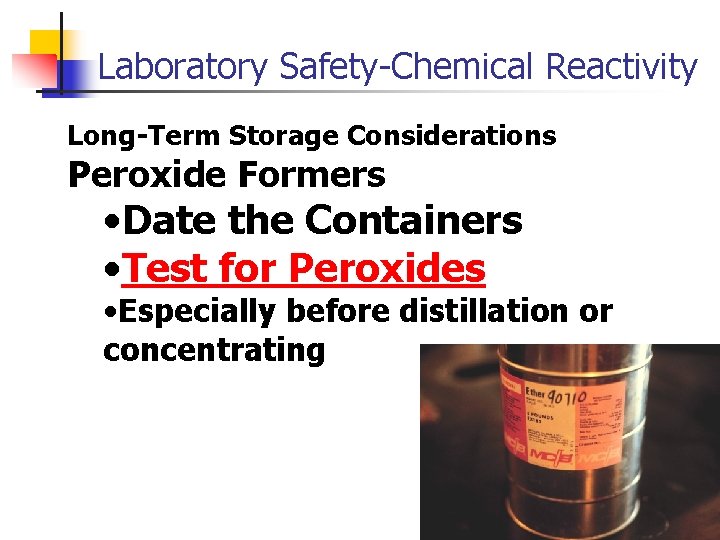
Laboratory Safety-Chemical Reactivity Long-Term Storage Considerations Peroxide Formers • Date the Containers • Test for Peroxides • Especially before distillation or concentrating
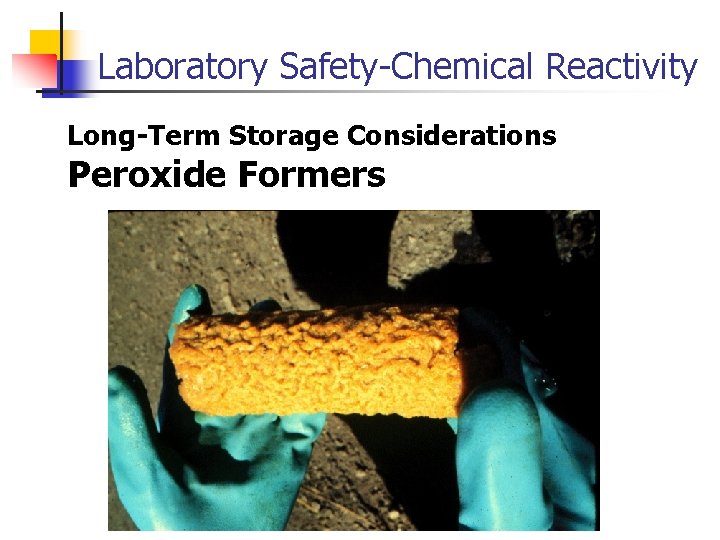
Laboratory Safety-Chemical Reactivity Long-Term Storage Considerations Peroxide Formers
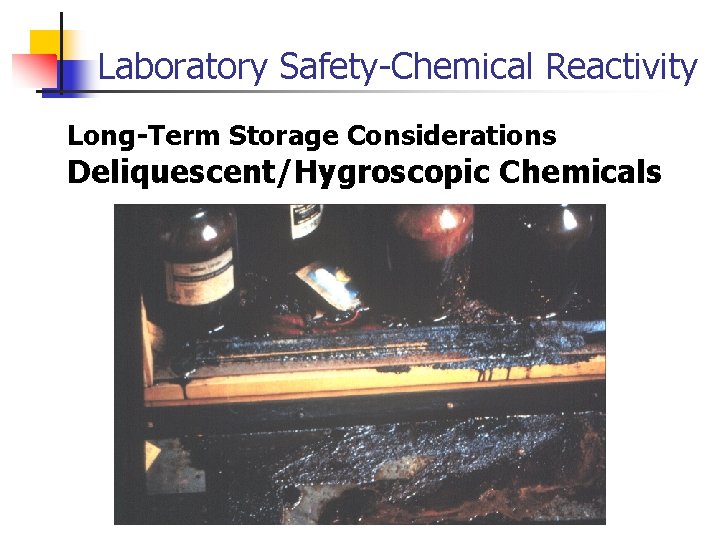
Laboratory Safety-Chemical Reactivity Long-Term Storage Considerations Deliquescent/Hygroscopic Chemicals
Laboratory Safety-Chemical Reactivity Long-Term Storage Considerations Chemicals That Dry Out -Picric Acid -Benzoyl Peroxide Sublimation -Iodine -p-Dichlorobenzene Decomposition -Hydrogen Peroxide -Calcium Hypochlorite
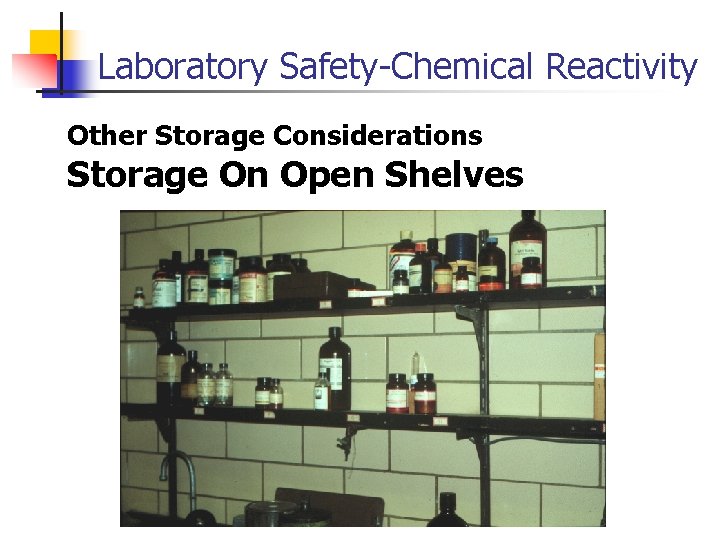
Laboratory Safety-Chemical Reactivity Other Storage Considerations Storage On Open Shelves
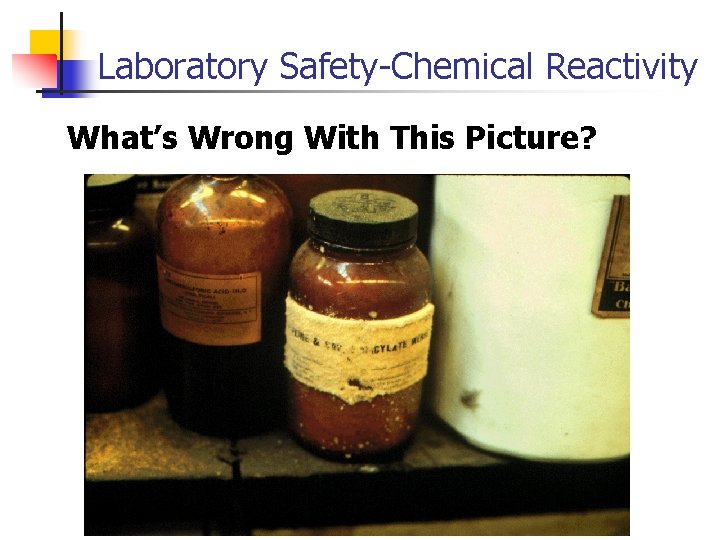
Laboratory Safety-Chemical Reactivity What’s Wrong With This Picture?
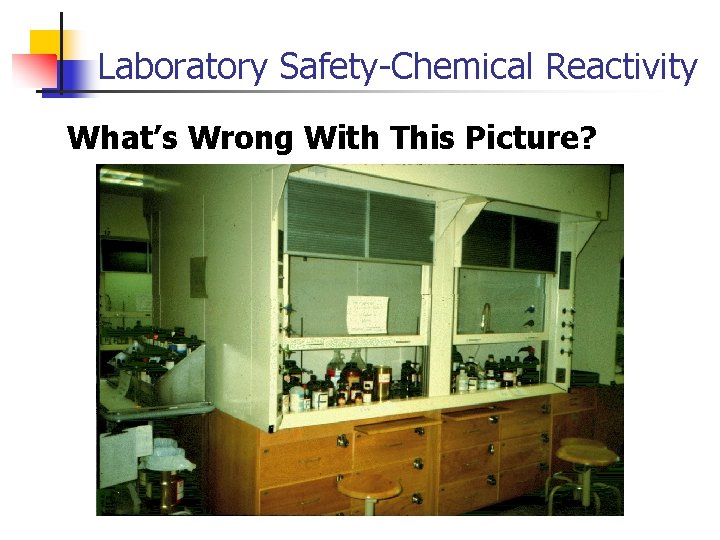
Laboratory Safety-Chemical Reactivity What’s Wrong With This Picture?
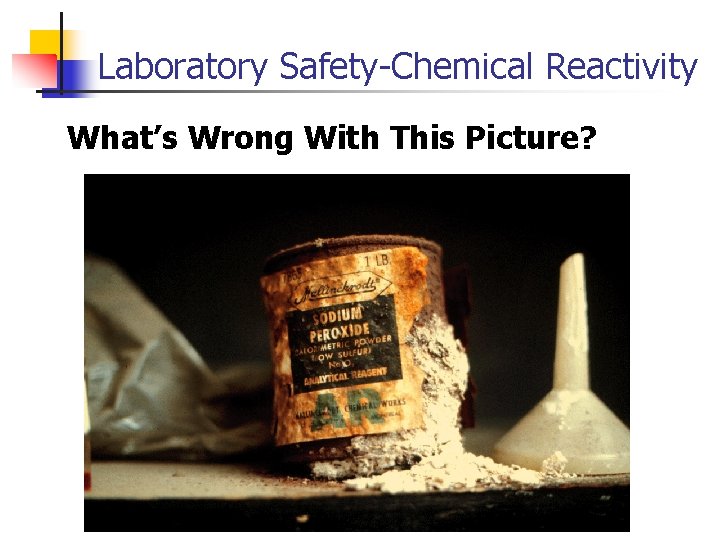
Laboratory Safety-Chemical Reactivity What’s Wrong With This Picture?
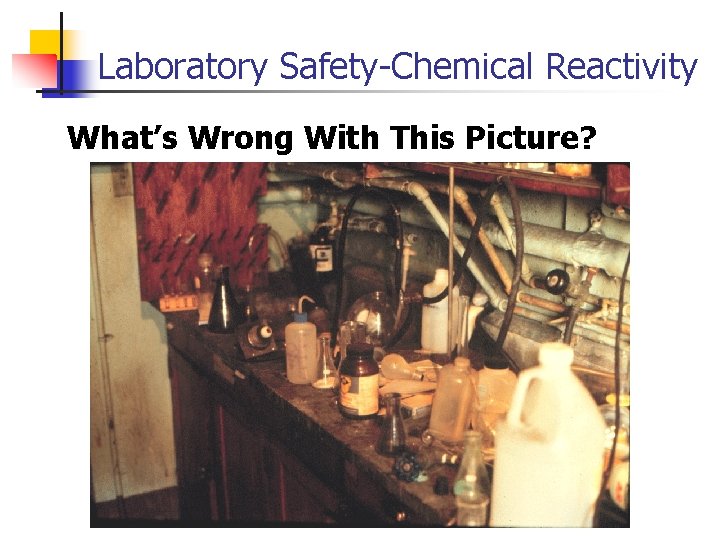
Laboratory Safety-Chemical Reactivity What’s Wrong With This Picture?
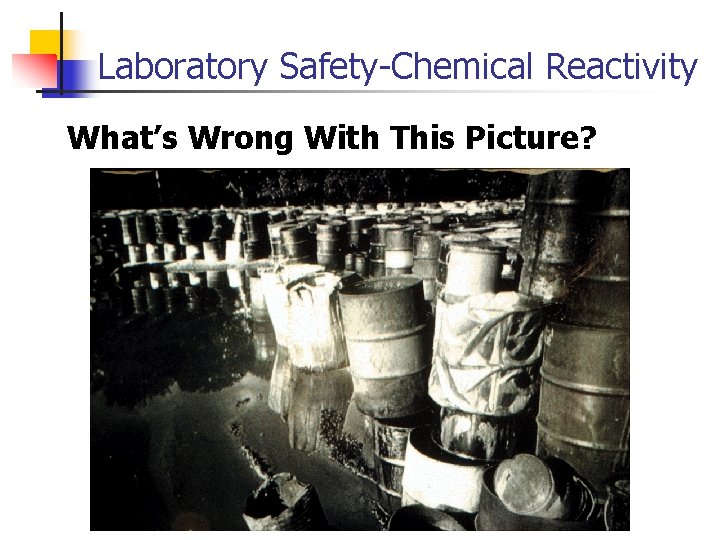
Laboratory Safety-Chemical Reactivity What’s Wrong With This Picture?
Laboratory Safety-Chemical Reactivity Video “Introduction to Reactive and Explosive Materials
- Slides: 22