
LABORATORY SAFETY MRS LANDA Introduction The science lab
LABORATORY SAFETY MRS. LANDA
Introduction The science lab is a wonderful place to work and learn. The science lab should also be one of the safest places in the school. Oftentimes we concentrate on the lab activity itself or our friends in the class and we forget about safety. We should condition ourselves to be not only conscious of safety, but to make it the major concern while we are doing an experiment. To condition ourselves we need to always practice our lab safety guidelines. We should study them, keep them with us when we are doing a lab, and constantly remind ourselves and others of our lab safety guidelines. These procedures and routines will keep our classroom organized so that the countless number of activities that take place during the year function smoothly and stress-free.
General Lab Safety Guidelines § No science student will be allowed to participate in any laboratory activities until the Lab Safety Contract has been signed by both the student and a parent or guardian. § Always conduct yourself in a responsible manner. § Never indulge in horseplay or other behavior that could lead to injury. § Perform only those experiments authorized by the teacher. § Do not bring food or drink into the lab. § Never taste any materials in the lab.

General Lab Safety Guidelines § Be familiar with your lab assignments before coming to lab. Lack of pre-lab preparation is the main threat to safety in our lab. If you and your group are unprepared, you will be unsure of yourself, waste time, and have a good chance of making a mistake that leads to a problem. § At the beginning of each lab period, you will be given a chance to ask questions. If you are unsure of some procedure, then is the time to ask. Always pay close attention to any verbal instructions given at this time.

General Lab Safety Guidelines § Safety glasses with side shields should be used when in a lab situation. § Other protective clothing, such as nitrile gloves and aprons should always be used, unless otherwise noted. Close-toed shoes shall always be worn in the lab. Sandals, open-toed shoes, and shoes with woven uppers, shall not be worn when there is a danger of spillage of corrosive or irritating chemicals. § Dress properly- long hair must be tied back, no dangling jewelry, and no loose or baggy clothing.
General Lab Safety Guidelines § Contact lenses should NOT be worn in the lab. § It is almost impossible to remove contacts after chemicals have been splashed into the eyes. Chemicals trapped under contacts will damage the eye even more than normal. § The plastic used for some types of contact lenses is permeable to vapors found in the laboratory. If these vapors are trapped behind the lens, extensive irritation may occur.
General Lab Safety Guidelines § Work in the lab only when the teacher is present or when you have permission to do so. § The work area should be kept clean and tidy. § Wash your hands with soap and water after performing all experiments. § Upon completion of work, wash and dry all equipment. § If certain safety guidelines are not followed those involved will be disqualified from the lab and given a zero for the assignment.

Chemical Safety § Read the label of the chemical bottles at least twice before using the chemical.
Chemical Safety § If any information is missing on the label the Material Data Sheet (MSDS) will have the information on how the chemical can be safely handled, used, and stored. § Never smell a material in a test tube or flask directly. Wafting is the best method, unless otherwise indicated in the label. § Keep your hands away from your face, eyes, mouth, and body while using chemicals. § Wear safety gear as instructed by your teacher.

Glassware Safety § § Do not use cracked, chipped, or broken glassware. Never eat or drink from lab glassware. Do not force glassware connections. If you are not using the equipment properly, or if horseplay is involved, you will be required to pay for the broken glassware. § Do not immerse hot glassware in cold water – it may shatter. § Be cautious of glassware that has been heated.
Cleanup Safety § Never mix chemical in sink drains. § Be sure all gas valves and burners are turned off when you finish. § If glassware is broken, stop where you are. Alert the teacher immediately. Do not move until the teacher says it is safe to do so. § The teacher will collect the broken glass, not you. More minor cuts occur after this type of accident than during it.

Cleanup Safety § Dispose of all chemical waste properly. § If you spill a chemical, you are required to report it to the teacher immediately. Do not attempt to clean it yourself. § Water spills should be wiped immediately to prevent anyone from slipping. § Leave your area neat and clean. § Return all equipment to the proper place. § Wash your hands.

Fire Safety §Never leave a lit burner unattended. §If a burner goes out, immediately close the gas valve. §Know the location and proper usage of the fire extinguisher. §Do not heat liquids on closed or sealed containers. §Do not handle heated materials directly – use clamps or tongs.
Fire Safety § Before deciding to fight a fire, keep these rules in mind: § Know what is burning. üIf you don't know what is burning, you don't know what type of extinguisher to use. § The fire is spreading rapidly beyond the spot where it started. üThe time to use an extinguisher is in the beginning stages of the fire. üIf the fire is already spreading quickly, it is best to simply evacuate the building.
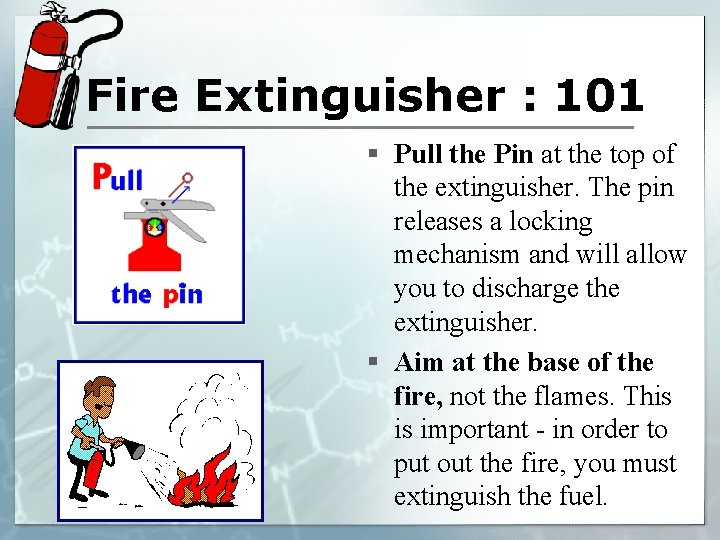
Fire Extinguisher : 101 § Pull the Pin at the top of the extinguisher. The pin releases a locking mechanism and will allow you to discharge the extinguisher. § Aim at the base of the fire, not the flames. This is important - in order to put out the fire, you must extinguish the fuel.
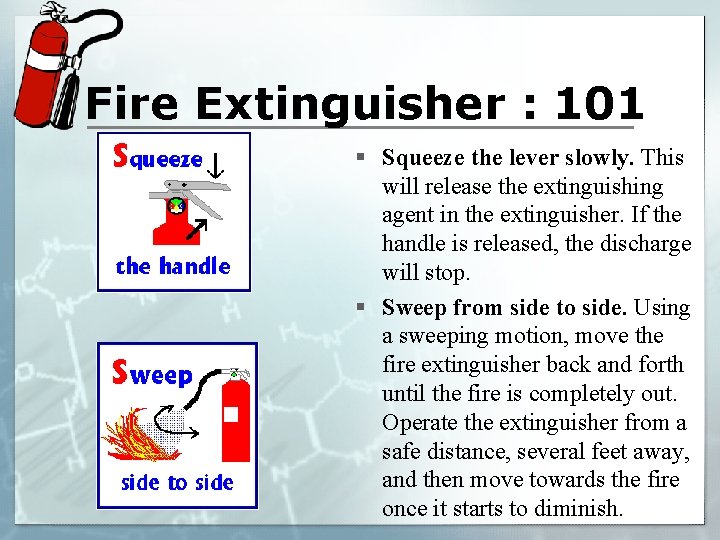
Fire Extinguisher : 101 § Squeeze the lever slowly. This will release the extinguishing agent in the extinguisher. If the handle is released, the discharge will stop. § Sweep from side to side. Using a sweeping motion, move the fire extinguisher back and forth until the fire is completely out. Operate the extinguisher from a safe distance, several feet away, and then move towards the fire once it starts to diminish.
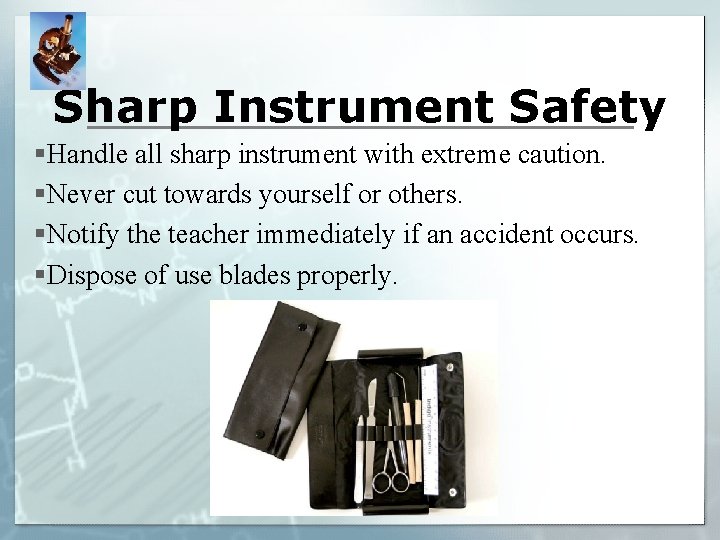
Sharp Instrument Safety §Handle all sharp instrument with extreme caution. §Never cut towards yourself or others. §Notify the teacher immediately if an accident occurs. §Dispose of use blades properly.
Lab Accidents § Report all accidents regardless of how minor to the teacher. § There is always a possibility of infection, even with the most minor injury. For this reason you should report any cut or scrape, even if there is no visible blood. If there is blood at any lab station, everyone is to stop what they are doing move to your seats until told it is safe to return to the lab.
Lab Accidents § Learn the location and proper usage of the first-aid kit. § Learn the location and proper usage of the fire extinguisher and fire blanket. § For minor skin burns, immediately apply cold water. § If you get any chemical in your eye, immediately wash the eye. § If there is an extensive chemical spill on a person, use the safety shower.
Conclusion All the students will be required to know and be familiar with the information provided. Lab safety is very important to me and to the school and we will work together until all the students feel comfortable working in the lab and following the guidelines.
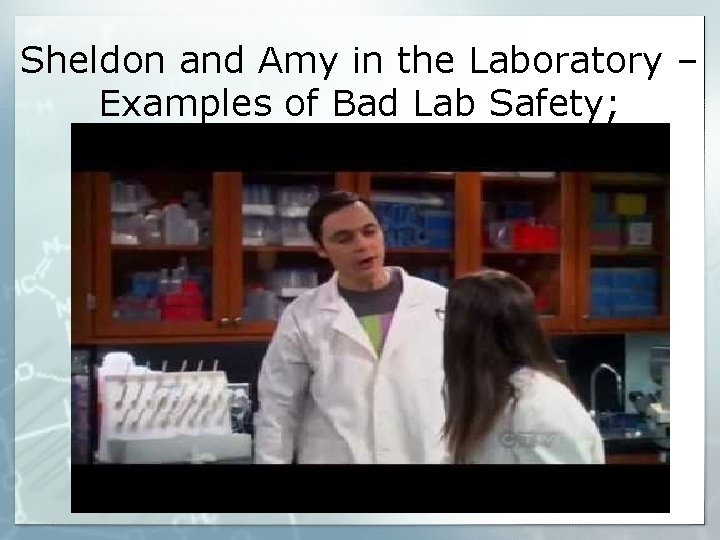
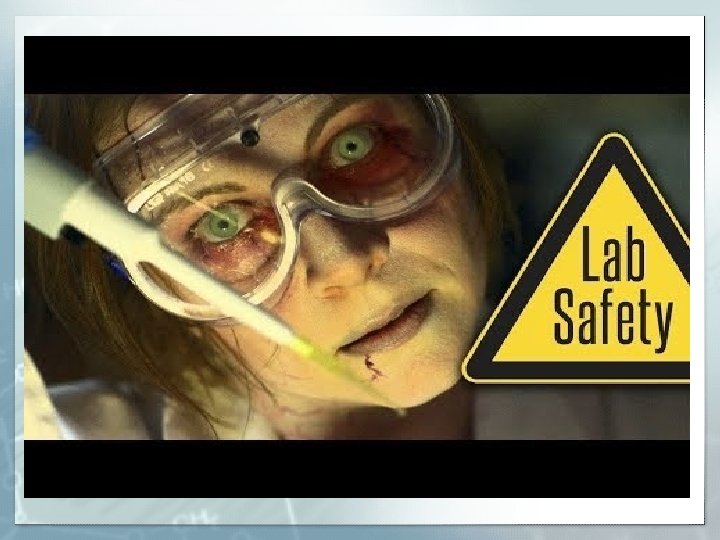
Sheldon and Amy in the Laboratory – Examples of Bad Lab Safety;
Homework: Click on the link below. When prompted to write your name, type your first and last name and class period. When completed, print the certificate and turn in on the due date. § http: //www. ncbionetwork. org/iet/labsafety/
- Slides: 23