
Laboratory Safety and Regulations 1 Lab Safety l
Laboratory Safety and Regulations 1
Lab. Safety l l l Laboratory safety is not usually thought of as a quality assurance activity, but the quality of the working environment has both direct and indirect influences on the quality of work produced. A safe working environment provides a sense of security to the employee who does not need to spend his time worrying about possible accidents of hazards. An unsafe working environment, old and faulty equipment, and unprotected chemical and biological hazards can affect detrimentally the concentration and attitude of the employees exposed to these conditions.

Lab. Safety l l These factors can also create circumstances in which serious injury, damage, and significant error can occur. Such conditions are the reflection of ignorance and / or an uncaring attitude by the laboratory management, neither of which is an attitude that promotes high quality performance 3
Lab. Hazards l l l l l Electrical Toxic vapors Compressed gasses Flammable liquids Radioactive materials ( not too common these days ) Corrosives Mechanical Poisons Biological Always take time to be knowledgeable about laboratory safety concerns and practice proper safety procedures 4
Reduce Lab. Risks l It’s essential to know the location and proper use of all safety equipment l It’s essential to know and have access to all printed information about safety policies and reagents Remember … Always take time to be safe 5
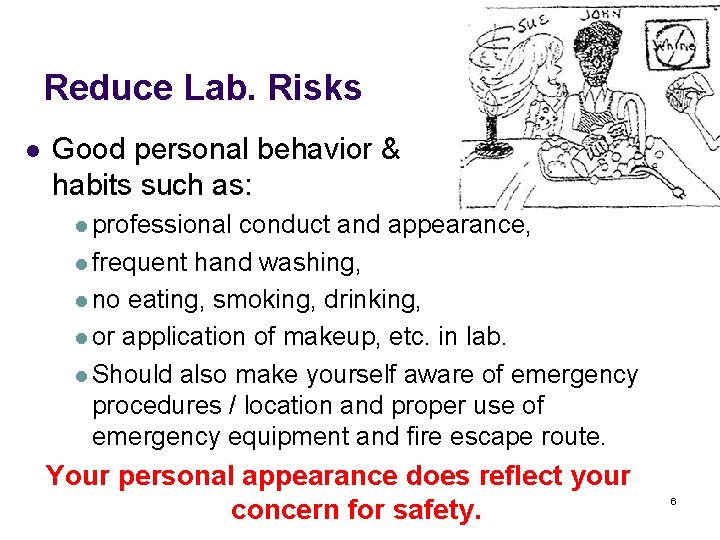
Reduce Lab. Risks l Good personal behavior & habits such as: l professional conduct and appearance, l frequent hand washing, l no eating, smoking, drinking, l or application of makeup, etc. in lab. l Should also make yourself aware of emergency procedures / location and proper use of emergency equipment and fire escape route. Your personal appearance does reflect your concern for safety. 6
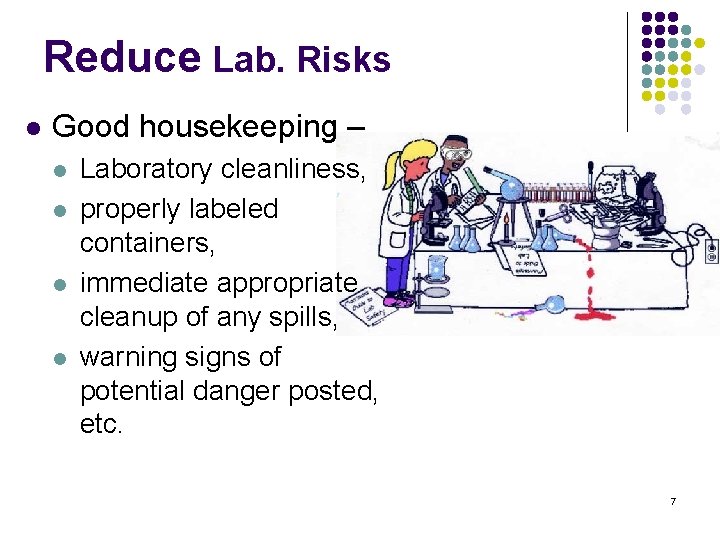
Reduce Lab. Risks l Good housekeeping – l l Laboratory cleanliness, properly labeled containers, immediate appropriate cleanup of any spills, warning signs of potential danger posted, etc. 7
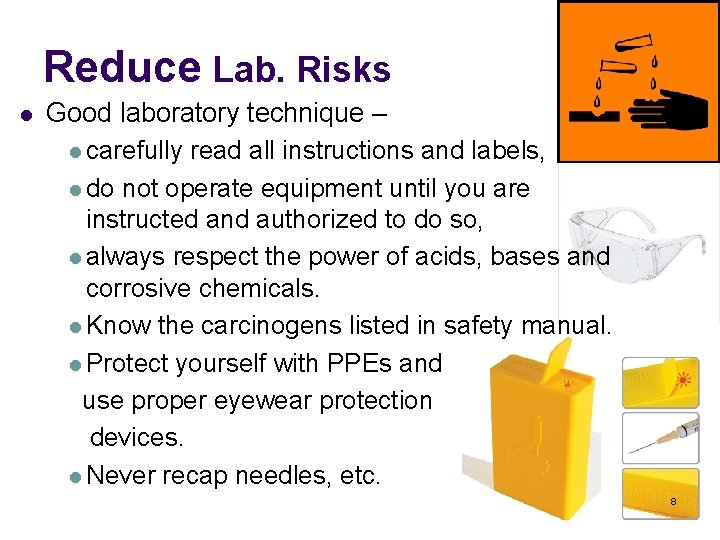
Reduce Lab. Risks l Good laboratory technique – l carefully read all instructions and labels, l do not operate equipment until you are instructed and authorized to do so, l always respect the power of acids, bases and corrosive chemicals. l Know the carcinogens listed in safety manual. l Protect yourself with PPEs and use proper eyewear protection devices. l Never recap needles, etc. 8
Safety Awareness l Safety responsibility – shared responsibility l Employer l l Provide and supervise safety methods, equipment and policies Employee l l Understand practice established safety procedures Notify supervisors of unsafe conditions Safety is everyone’s responsibility !!! 9
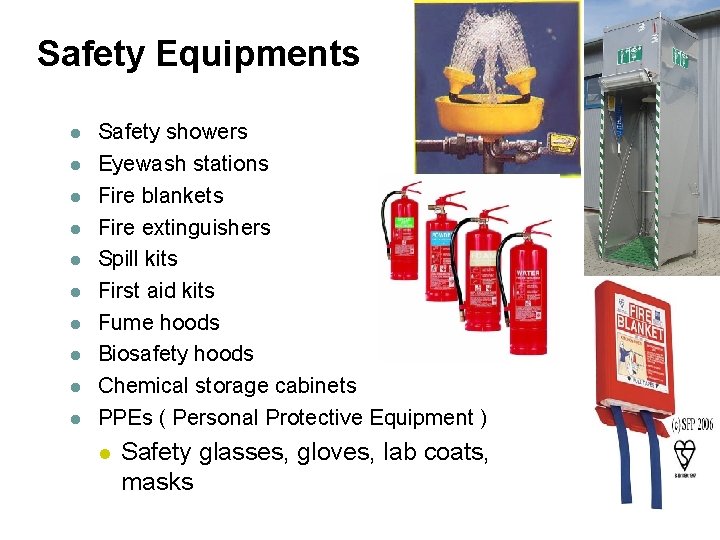
Safety Equipments l l l l l Safety showers Eyewash stations Fire blankets Fire extinguishers Spill kits First aid kits Fume hoods Biosafety hoods Chemical storage cabinets PPEs ( Personal Protective Equipment ) l Safety glasses, gloves, lab coats, masks 10

l Biological Safety l Standard Precautions ( Universal Precautions ) All biological specimens must be considered potentially infectious l Always use required PPEs (personal protection equipment) when handling biohazardous material l Cap specimens that are being centrifuged l Mouth pipeting is NEVER permitted under any circumstances l Spills must be cleaned using proper technique 11
Biological Safety Cleaning Specimen Collection Areas and Biological Spills l l l Wear gloves. Use 1: 10 bleach solution or commercially prepared solution. First clean area with visible blood and then disinfect the entire area. Keep the bleach in contact with contaminated area for at least 20 minutes. Provide accident follow-up. 12
Chemical Safety l Storage and handling of Chemicals l Different storage/handling requirements chemicals based on their differing characteristics: § § Flammable/Combustible - classified among the most dangerous in the lab. Corrosives – cause injury to eyes/skin, respiratory tract if contact is made Reactive – under certain circumstances may react violently - require special knowledge to prevent their contact with reaction causing substances. Carcinogenic chemicals- been determined to cause cancer. Benzidine is often used as example of lab chemical now classified as carcinogen 13
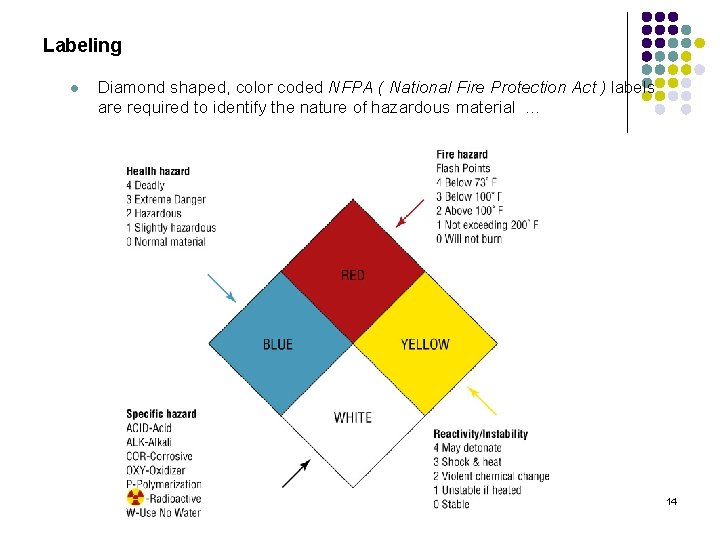
Labeling l Diamond shaped, color coded NFPA ( National Fire Protection Act ) labels are required to identify the nature of hazardous material … 14
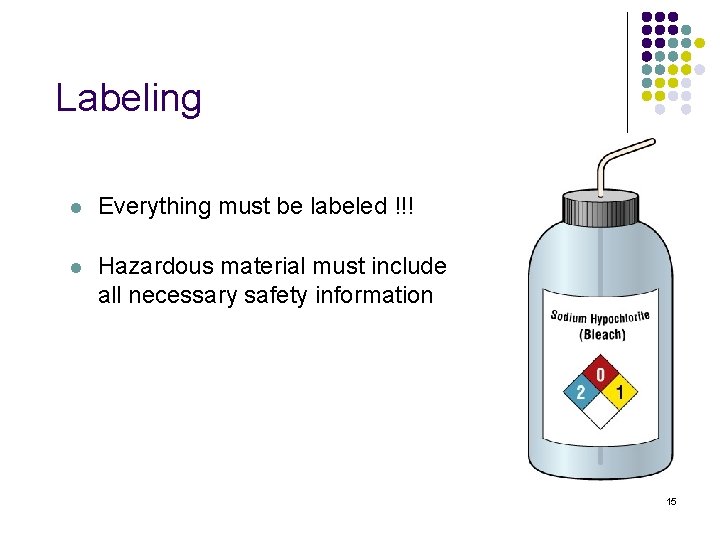
Labeling l Everything must be labeled !!! l Hazardous material must include all necessary safety information 15
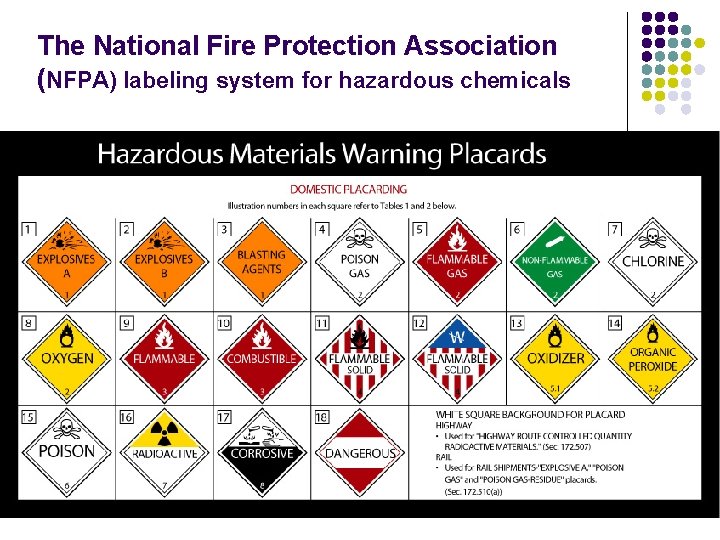
The National Fire Protection Association (NFPA) labeling system for hazardous chemicals 16
l Accident Documentation And Investigation l All accidents must be immediately reported to a supervisor (AFTER first aid ) l Accident Investigation forms must be completed by the employee and employer 17
- Slides: 17