
Laboratory Evaluation of Renal Function S POPLI M
Laboratory Evaluation of Renal Function S. POPLI. M. D. , F. A. C. P. 7/13/2005
Proteinuria Case 1 • A 20 year old patient is referred to you for , he has been diabetic for 6 years , he was told to have some kidney problem by his MD. He wants to know the cause of renal dysfunction. • GPE: BP 145/90 , otherwise exam is normal • How would you proceed ? • BUN 15 mg/dl, creatinine 1. 0 mg/dl , U/A shows SG 1. 024 , trace protein , a few hyaline casts • What test would you order next ? • 24 h protein collection , U protein/U creatinine ratio or both?
Case 1 continued • Urine protein /Urine creatinine returns 15 mg/150 mg ratio(<0. 1) • Does this patient have abnormal proteinuria ? • Patient wants to know if he has microalbuminuria , you order urine micro albumin result is : 60 mg micro albumin /gm creatinine. • Is this abnormal, does this patient have diabetic nephropathy?
Urine Protein: Categories of persistent proteinuria • Overflow: Capacity to reabsorb normally filtered protein in proximal tubules over whelmed due to overproduction: e. g. light chains, hemoglobinuria and myoglobinuria • Tubular proteinuria: Decreased reabsorption of filtered proteins by tubules due to tubulointerstitial damage ; usually <2 gm • Glomerular proteinuria: Microalbuminuria to overt proteinuria usually>3. 5 gm
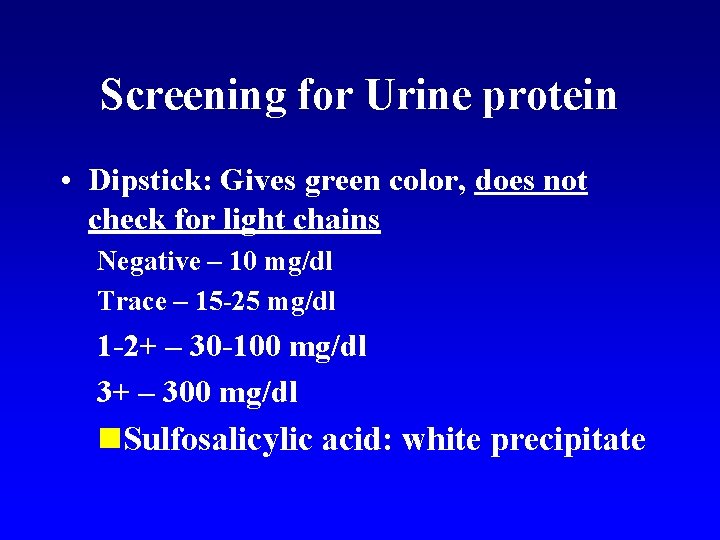
Screening for Urine protein • Dipstick: Gives green color, does not check for light chains Negative – 10 mg/dl Trace – 15 -25 mg/dl 1 -2+ – 30 -100 mg/dl 3+ – 300 mg/dl n. Sulfosalicylic acid: white precipitate
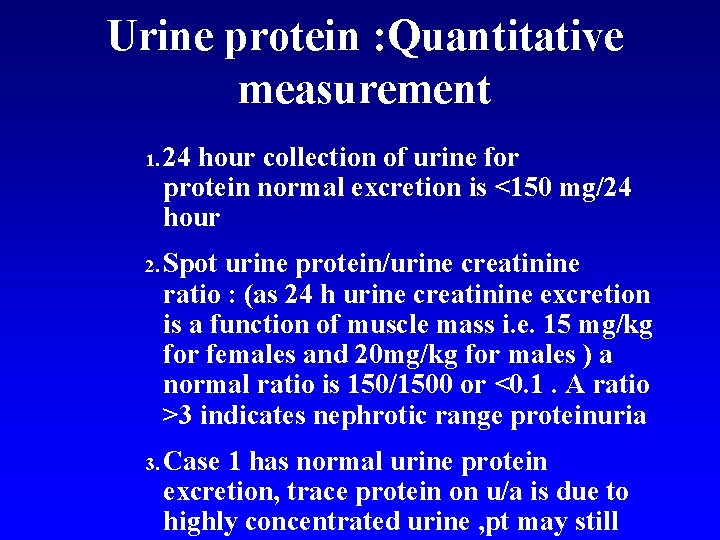
Urine protein : Quantitative measurement 1. 24 hour collection of urine for protein normal excretion is <150 mg/24 hour 2. Spot urine protein/urine creatinine ratio : (as 24 h urine creatinine excretion is a function of muscle mass i. e. 15 mg/kg for females and 20 mg/kg for males ) a normal ratio is 150/1500 or <0. 1. A ratio >3 indicates nephrotic range proteinuria 3. Case 1 has normal urine protein excretion, trace protein on u/a is due to highly concentrated urine , pt may still
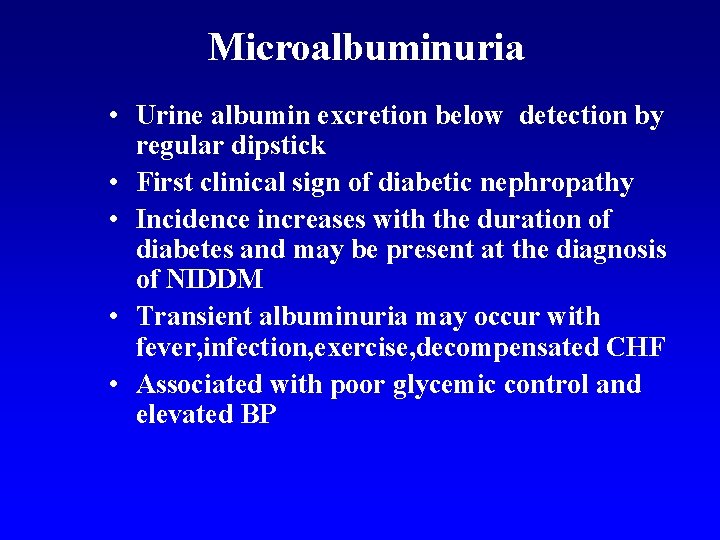
Microalbuminuria • Urine albumin excretion below detection by regular dipstick • First clinical sign of diabetic nephropathy • Incidence increases with the duration of diabetes and may be present at the diagnosis of NIDDM • Transient albuminuria may occur with fever, infection, exercise, decompensated CHF • Associated with poor glycemic control and elevated BP
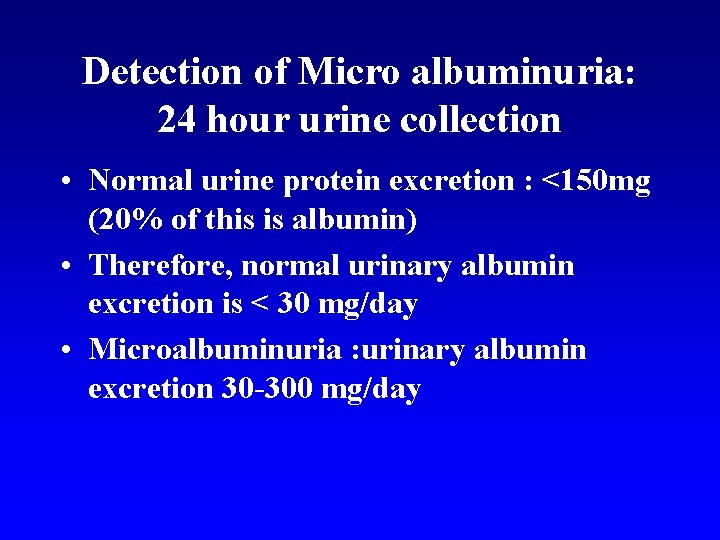
Detection of Micro albuminuria: 24 hour urine collection • Normal urine protein excretion : <150 mg (20% of this is albumin) • Therefore, normal urinary albumin excretion is < 30 mg/day • Microalbuminuria : urinary albumin excretion 30 -300 mg/day
Microalbuminuria : Detection by Spot Urine Albumin to Urine Creatinine ratio • Easier than cumbersome 24 hr. collection • If we assume daily creatinine excretion to be 1000 mg and normal urine albumin excretion <30 mg; albumin / creatinine ratio should be less than 0. 03 or 30 mg/g creatinine • Thus case 1 has micro albuminuria which is likely due to diabetic nephropathy. How would you manage him now?

Why and When to Screen Patients for Microalbuminuria ? • BP control with Ace_I and ARB’s have been known to reduce microalbuminuria and delay the progression of kidney disease in diabetics • IDDM patients should be screened yearly, beginning 5 years after the onset of disease • Patients with NIDDM should be screened at presentation
Proteinuria Case 2 A 70 year- old male is referred for chronic azotemia PMH: unremarkable GPE: BP 120/60 , LE edema Labs: U/A SG 1. 010 p. H 6. 0 , protein neg, glucose 2+, Uprotein /U creatinine ratio 4 BUN 30 mg/dl creat. 3. 0, Blood Sugar 78 mg/dl albumin 2. 8, Hb 10 gm What other tests would you order to diagnose cause of his renal dysfunction ? UPEP, why?
Clinical Assessment of Renal Function: Glomerular Filtration Rate(GFR) • Parameters used Blood urea nitrogen Serum creatinine Endogenous creatinine clearance
Case 3 Azotemia • A 55 year old diabetic female is admitted with intractable vomiting and low urine output • Exam: BP 120/60 with postural hypotension • Labs: BUN 60, Creat. 2. 0 mg/dl ( baseline 1. 0 mg/dl), Hb 16 gm • , U/A: SG 1. 020, sediment: hyaline casts, UNa: 10 mmol/L, UOsm: 600 mosm/kg, Ucreat. 150 mg/dl , Fe Na < 0. 5 • Q. What is the cause of her high BUN to creatinine ratio and her renal failure? What are the other causes of high BUN to creatinine ratio
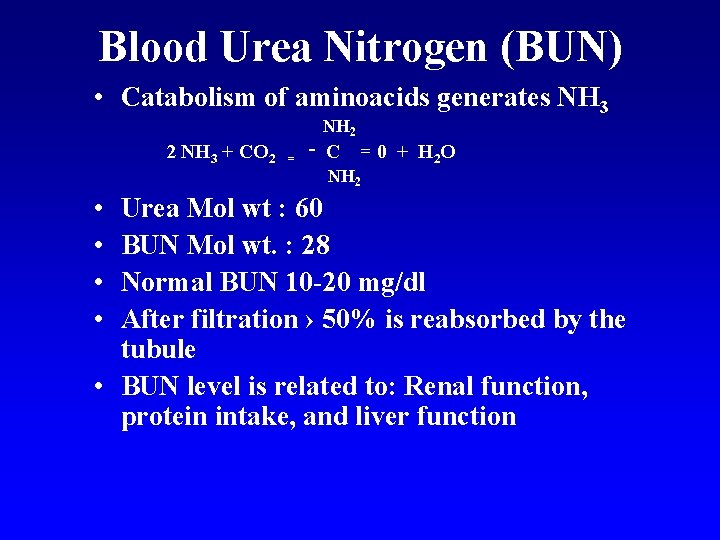
Blood Urea Nitrogen (BUN) • Catabolism of aminoacids generates NH 3 NH 2 2 NH 3 + CO 2 = C = 0 + H 2 O NH 2 • • Urea Mol wt : 60 BUN Mol wt. : 28 Normal BUN 10 -20 mg/dl After filtration › 50% is reabsorbed by the tubule • BUN level is related to: Renal function, protein intake, and liver function
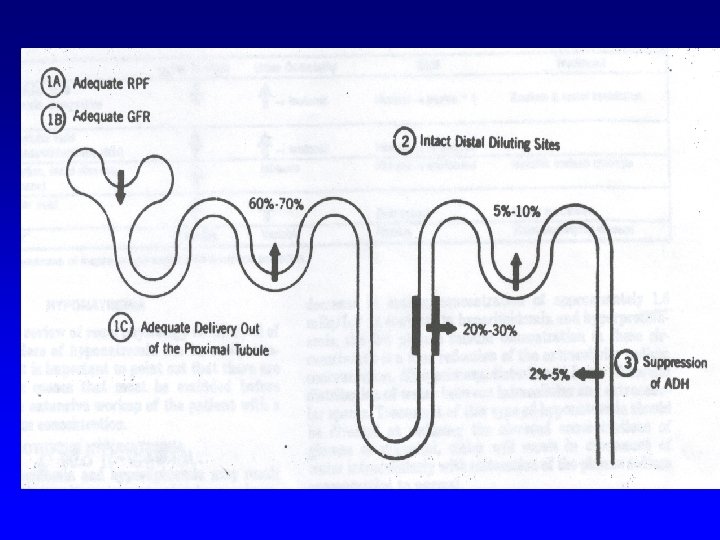
Creatinine • Formed at a constant rate by dehydration of muscle creatine • Normally 1– 2% of muscle creatine is broken into creatinine • Mol. Wt. 113 • Creatinine is freely filtered by the glomerulii and is not reabsorbed 10– 15% is secreted into proximal tubule
Creatinine • Normal serum level 1– 2 mg/dl • 24 hour creatinine excretion 20 mg/kg/day for males 15 mg/kg/day for females • Children, females, elderly, spinal cord injured have low serum and urine creatinine
BUN/Creatinine ratio 10: 1 • Normal • Chronic renal failure
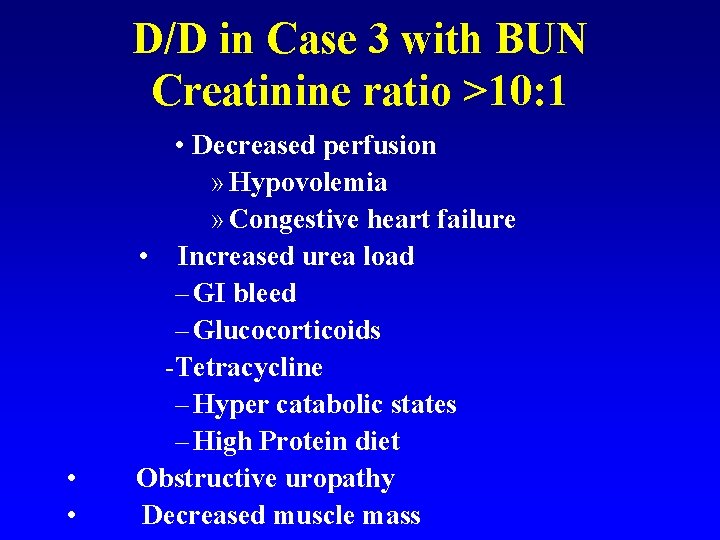
D/D in Case 3 with BUN Creatinine ratio >10: 1 • • • Decreased perfusion » Hypovolemia » Congestive heart failure • Increased urea load – GI bleed – Glucocorticoids -Tetracycline – Hyper catabolic states – High Protein diet Obstructive uropathy Decreased muscle mass
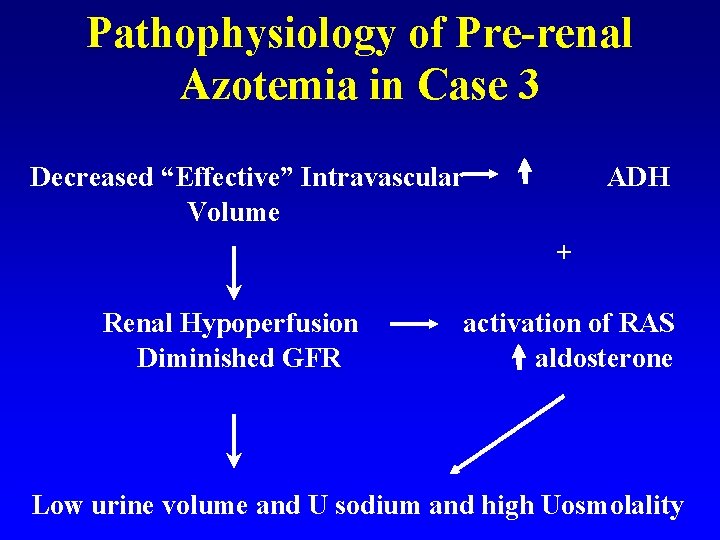
Pathophysiology of Pre-renal Azotemia in Case 3 Decreased “Effective” Intravascular Volume ADH + Renal Hypoperfusion Diminished GFR activation of RAS aldosterone Low urine volume and U sodium and high Uosmolality
Case 3 : Diabetic patient continued. . • • Vomiting stopped , BP improved and BUN/creat lowered to 35/1. 8 mg/dl. 24 hours later she developed UTI, trimethaprim/sulfamethoxazole was started Next day 24 hr urine output 800 m. L Exam: Unremarkable BUN: 20 mg/dl Creat: 3. 0 mg/dl Uosm: 600 mosm/kg , UNa: 10 mom/l, Fe. Na: <1% Urine Sediment: Hyaline casts What is the cause of < 10: 1 , BUN to creat ratio now?
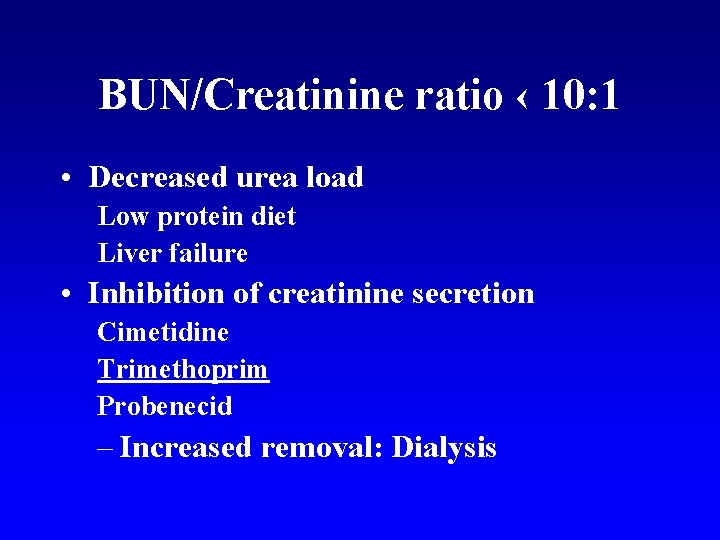
BUN/Creatinine ratio ‹ 10: 1 • Decreased urea load Low protein diet Liver failure • Inhibition of creatinine secretion Cimetidine Trimethoprim Probenecid – Increased removal: Dialysis

BUN/Creatinine ratio ‹ 10: 1 • Increased creatinine load Ingestion of cooked meat Rhabdomyolysis • Interference with creatinine measurement Ketosis Cefoxitin • Increased muscle mass Anabolic steroids Muscular development
Case 3 continued… 6 months later • Pt was discharged with normal BUN and creatinine, 6 months later she is admitted with vague abdominal pain, an US done shows 6 cm abdominal aortic aneurysm, she undergoes resection with cross-clamping of aorta for 2 hours. • Post surgery she is oliguric (u/o less than 70 ml in 8 hours). On exam well hydrated. • U/A: SG 1. 015 , ”Dirty brown sediment “U Na 40 m. Eq /L U osmolality 350 m. Osm/l , Fe Na 2% • What is your diagnosis after reviewing the lab data ? How would you manage?
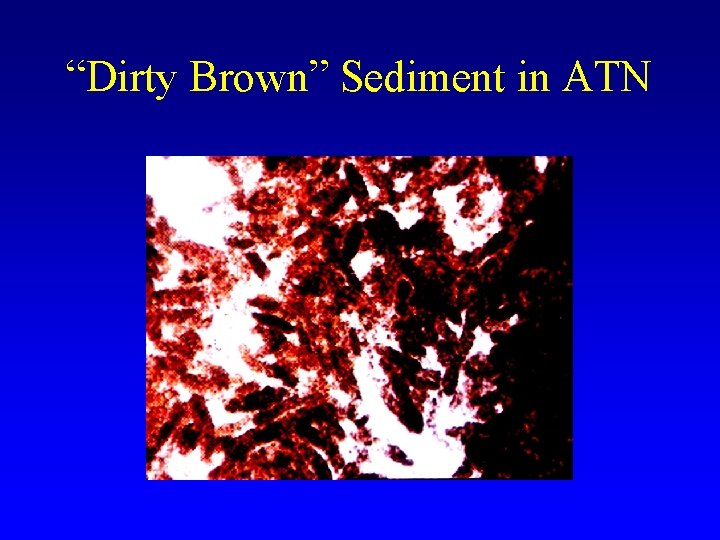
“Dirty Brown” Sediment in ATN
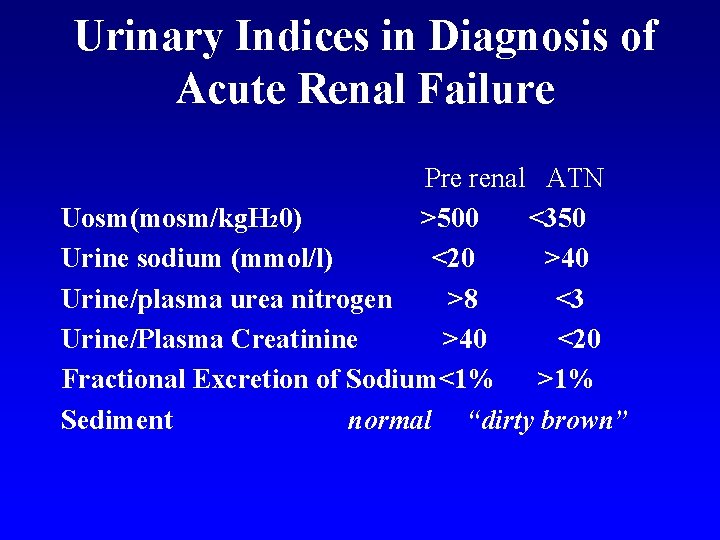
Urinary Indices in Diagnosis of Acute Renal Failure Pre renal ATN Uosm(mosm/kg. H 20) >500 <350 Urine sodium (mmol/l) <20 >40 Urine/plasma urea nitrogen >8 <3 Urine/Plasma Creatinine >40 <20 Fractional Excretion of Sodium<1% >1% Sediment normal “dirty brown”
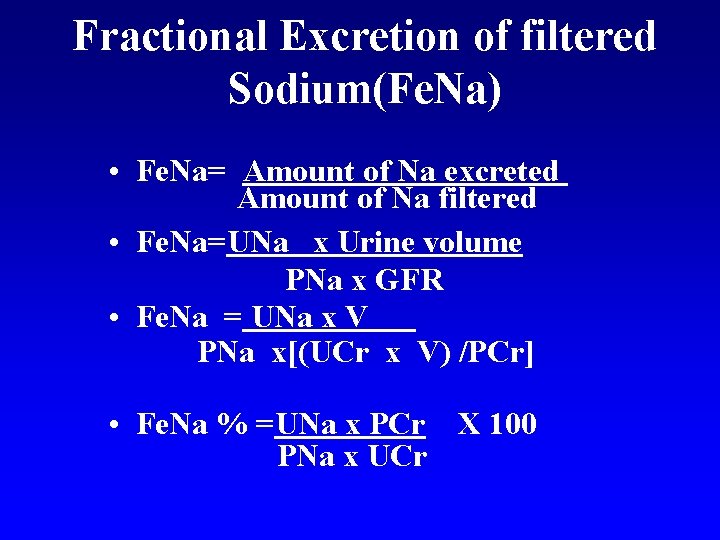
Fractional Excretion of filtered Sodium(Fe. Na) • Fe. Na= Amount of Na excreted Amount of Na filtered • Fe. Na=UNa x Urine volume PNa x GFR • Fe. Na = UNa x V PNa x[(UCr x V) /PCr] • Fe. Na % =UNa x PCr X 100 PNa x UCr
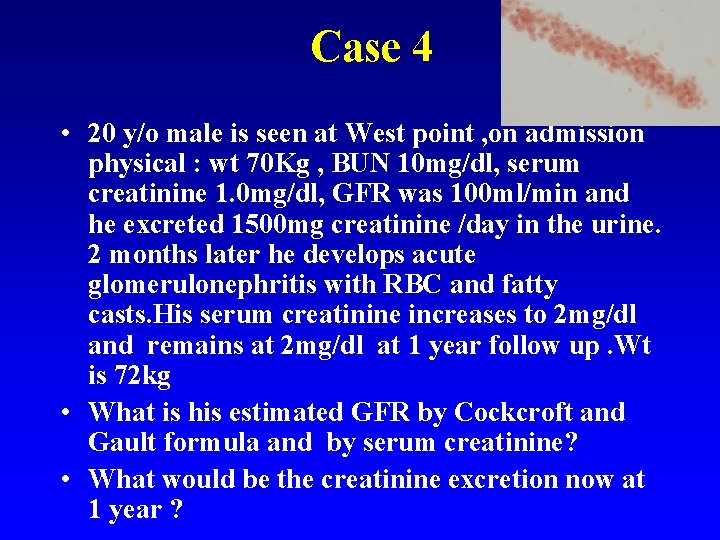
Case 4 • 20 y/o male is seen at West point , on admission physical : wt 70 Kg , BUN 10 mg/dl, serum creatinine 1. 0 mg/dl, GFR was 100 ml/min and he excreted 1500 mg creatinine /day in the urine. 2 months later he develops acute glomerulonephritis with RBC and fatty casts. His serum creatinine increases to 2 mg/dl and remains at 2 mg/dl at 1 year follow up. Wt is 72 kg • What is his estimated GFR by Cockcroft and Gault formula and by serum creatinine? • What would be the creatinine excretion now at 1 year ?
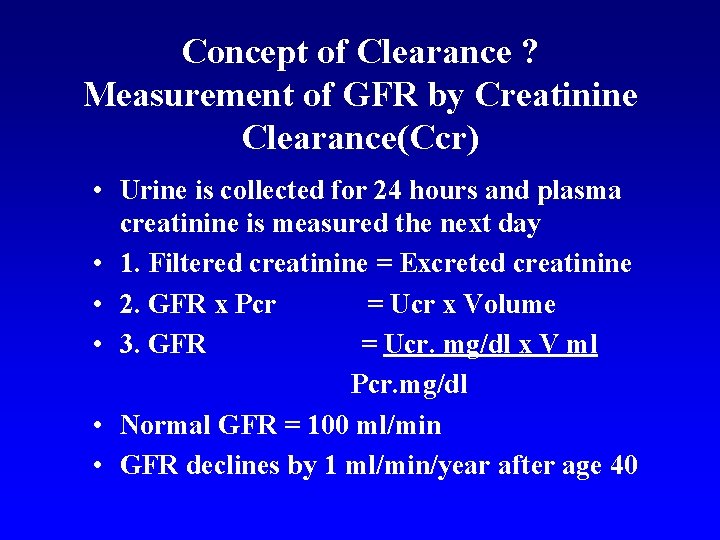
Concept of Clearance ? Measurement of GFR by Creatinine Clearance(Ccr) • Urine is collected for 24 hours and plasma creatinine is measured the next day • 1. Filtered creatinine = Excreted creatinine • 2. GFR x Pcr = Ucr x Volume • 3. GFR = Ucr. mg/dl x V ml Pcr. mg/dl • Normal GFR = 100 ml/min • GFR declines by 1 ml/min/year after age 40
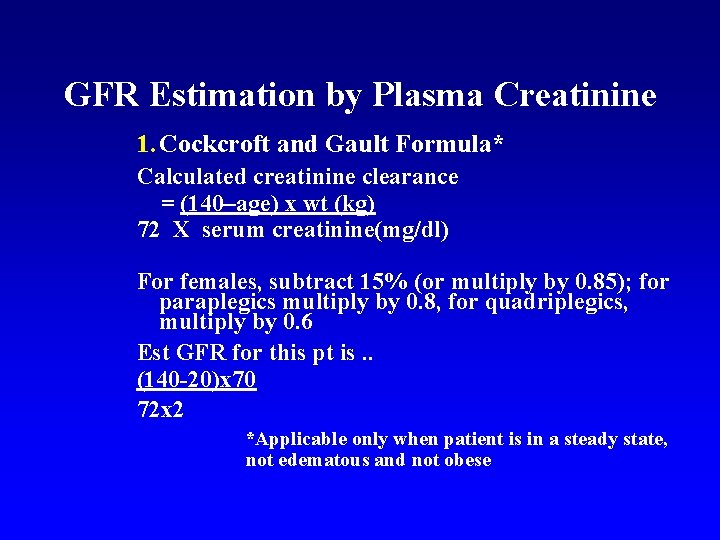
GFR Estimation by Plasma Creatinine 1. Cockcroft and Gault Formula* Calculated creatinine clearance = (140–age) x wt (kg) 72 X serum creatinine(mg/dl) For females, subtract 15% (or multiply by 0. 85); for paraplegics multiply by 0. 8, for quadriplegics, multiply by 0. 6 Est GFR for this pt is. . (140 -20)x 70 72 x 2 *Applicable only when patient is in a steady state, not edematous and not obese
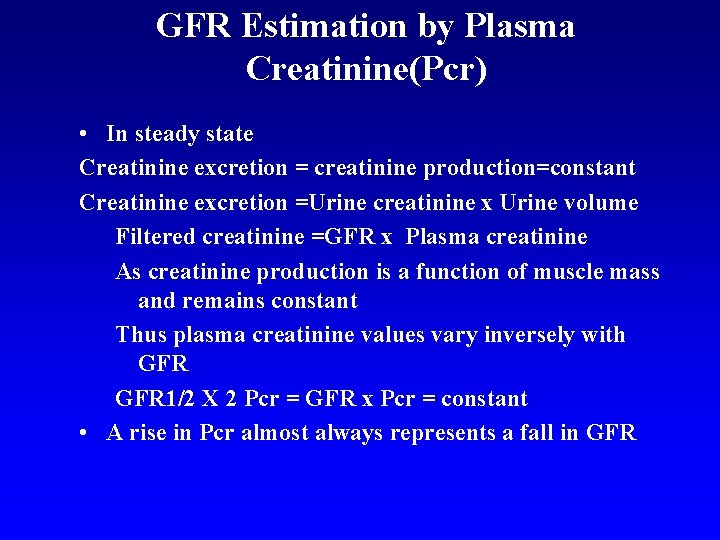
GFR Estimation by Plasma Creatinine(Pcr) • In steady state Creatinine excretion = creatinine production=constant Creatinine excretion =Urine creatinine x Urine volume Filtered creatinine =GFR x Plasma creatinine As creatinine production is a function of muscle mass and remains constant Thus plasma creatinine values vary inversely with GFR 1/2 X 2 Pcr = GFR x Pcr = constant • A rise in Pcr almost always represents a fall in GFR
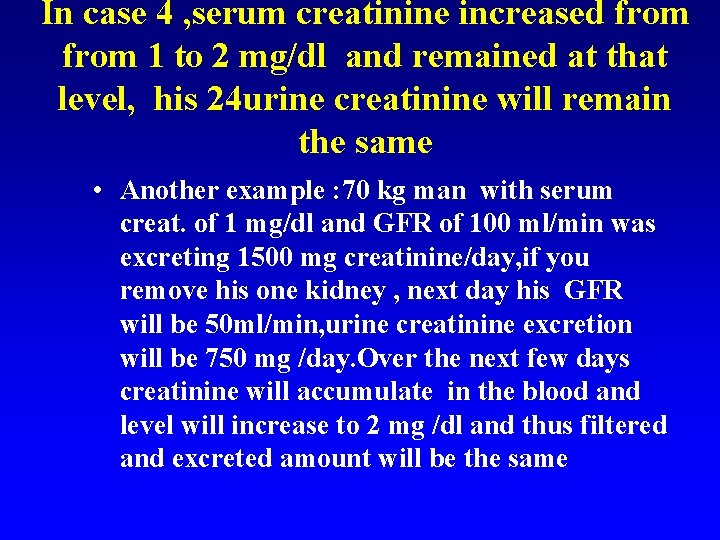
In case 4 , serum creatinine increased from 1 to 2 mg/dl and remained at that level, his 24 urine creatinine will remain the same • Another example : 70 kg man with serum creat. of 1 mg/dl and GFR of 100 ml/min was excreting 1500 mg creatinine/day, if you remove his one kidney , next day his GFR will be 50 ml/min, urine creatinine excretion will be 750 mg /day. Over the next few days creatinine will accumulate in the blood and level will increase to 2 mg /dl and thus filtered and excreted amount will be the same
Summary • How to evaluate a patient with renal disease • How to interpret u/a, urine protein to creatinine ratios • Interpretation of urea nitrogen and creatinine ratios • Estimation and measurement of GFR& to see when a patient would need renal replacement therapy • Interpret urine indices in evaluation of various causes of ARF
- Slides: 33