
Laboratory Emergency Planning Response and Management Sandia is
Laboratory Emergency Planning, Response, and Management Sandia is a multi-program laboratory operated by Sandia Corporation, a Lockheed Martin Company, for the United States Department of Energy’s National Nuclear Security Administration 1 under contract DE-AC 04 -94 AL 85000.
Video – Explosion and Fire at T 2 Lab 2

Emergency Planning and Response is based on principles of: • Anticipation • Recognition • Evaluation • Control 3
Preparing For Emergencies § Emergencies - potentially life threatening - occur suddenly without warning § Quick response will: - make difference between life and death - minimize damage - prevent panic, timely control § Emergency responders - organize, stabilize, administer § Adequate preparation requires - planning, practice, evaluation, adjustment 4
Emergency Management § Mitigate - eliminate / reduce occurrence or effects of an emergency § Preparedness - plan how to respond; resources § Response - assist victims, reduce damage § Recovery - return to normal and assess 5
Planning & Preparation Anticipate types of emergencies: – Step-by-step procedures – Assess resources available – Coordinate with all responding agencies – Chain of command – Roles & assignments - Clearly spelled out and understood – Accident prevention strategies – First aid – inspect, date, replacements – Site maps – update – Train & practice – Evaluate & improve 6
Emergency Response Plan Include all situations and conditions: – Weather emergencies: – Security breaches – Distraught employees – Medical Emergencies – Student unrest – Political unrest – Explosion – Evacuation – Terrorism �Flood �Tidal waves �Cyclones �Heavy rains �High winds ◦ Fire ◦ Earthquakes Prepare for and expect the unexpected 7
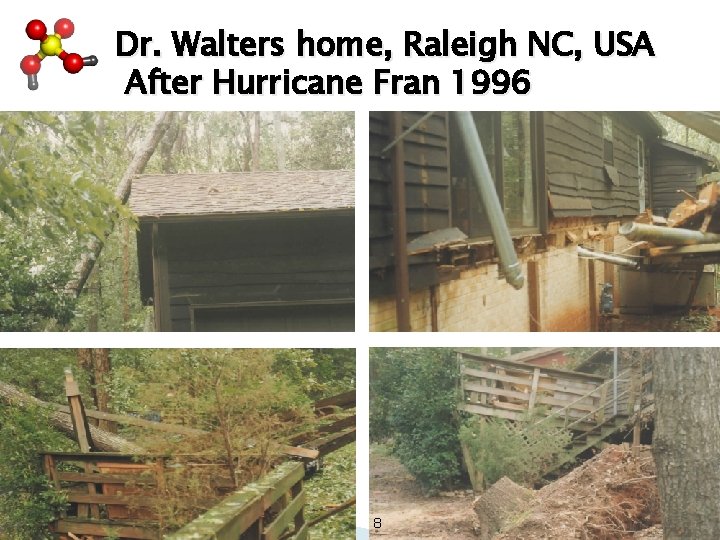
Dr. Walters home, Raleigh NC, USA After Hurricane Fran 1996 8
Emergency Action Plan • Have a written plan and distribute it to all employees, • • especially new employees: - Emergency escape/evacuation procedures & routes - Critical process emergency shutdown procedures - Procedures to account for evacuated employees - Rescue or medical duties if employees required to perform them - Procedure for reporting emergencies - Contact information for Q&A Alarm systems Training 9
Emergency Response Plan • Comprehensive employee training • • - General employee training Specialized & emergency responders Annual refresher training or drills Untrained personnel should not participate Spill & emergency response plans Contingency plans Medical response/first aid Personal Protective Equipment Safety Data Sheet’s Site maps Clean up procedures Decontamination techniques 10
Include: Fire Prevention Plan • Written plan - • • • List major fire hazards Proper handling and storage procedures Potential ignition sources & controls Type of fire prevention systems Contact information for those responsible for system maintenance - Contact information for Q&A Housekeeping requirements Training Maintenance requirements 11
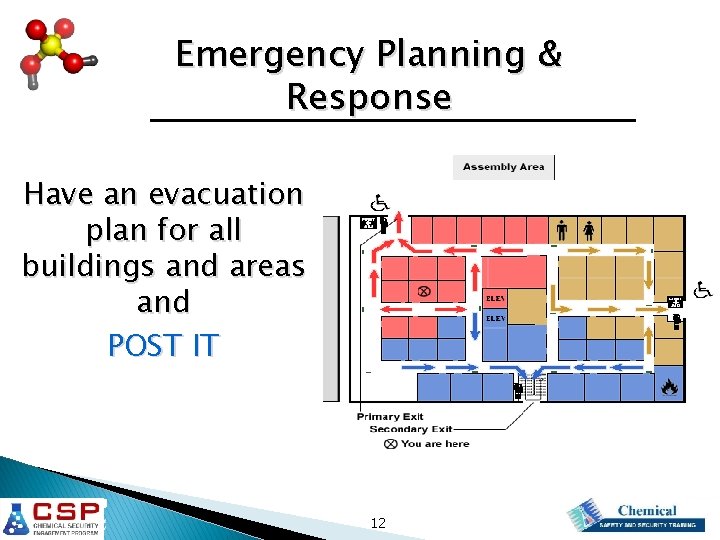
Emergency Planning & Response Have an evacuation plan for all buildings and areas and POST IT 12
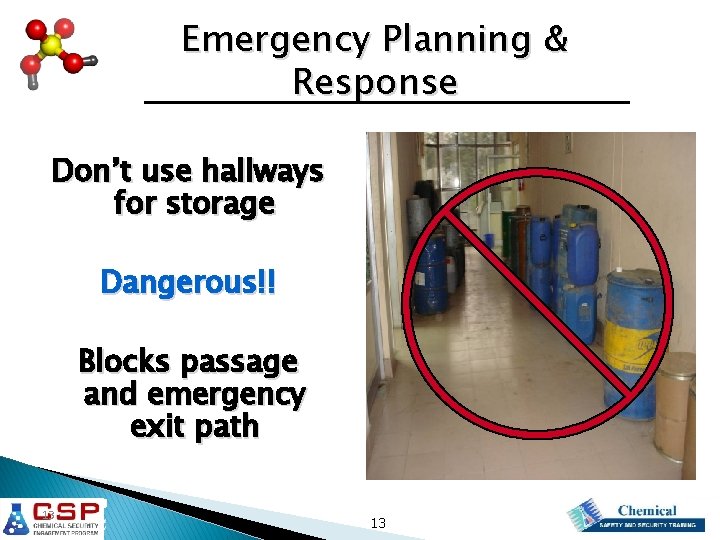
Emergency Planning & Response Don’t use hallways for storage Dangerous!! Blocks passage and emergency exit path 13 13

Emergency Planning & Response Label and keep all exits clearly. Keep unlocked or equipped with panic bars. 14
Emergency Planning & Response § Have routine, unannounced evacuation drills. § Test and maintain alarms. § Designate person for each area to ensure bathrooms, etc. are evacuated. § Locate outside staging areas sufficient distance from building. § Designate person to meet/direct emergency vehicles. 15
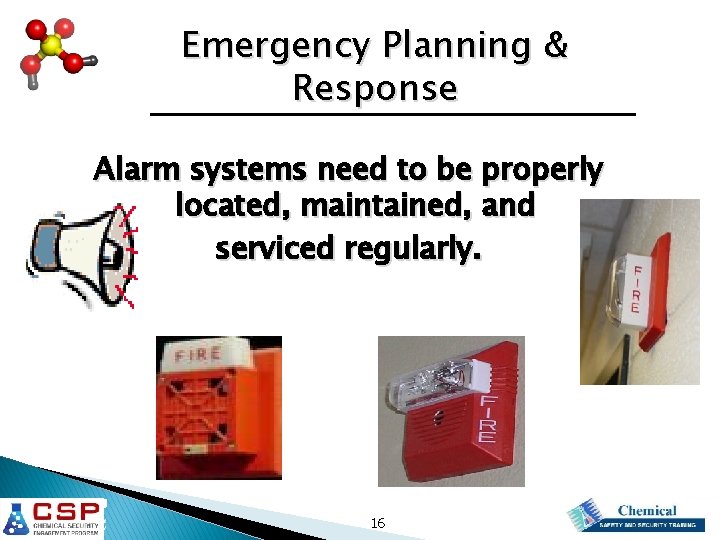
Emergency Planning & Response Alarm systems need to be properly located, maintained, and serviced regularly. 16
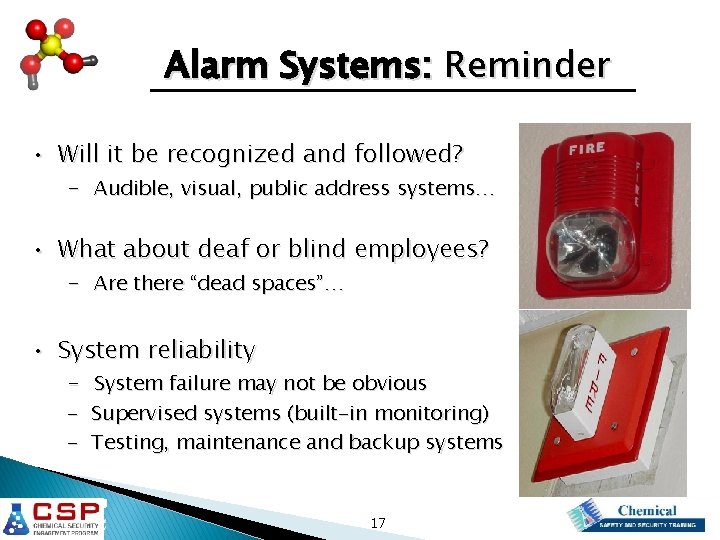
Alarm Systems: Reminder • Will it be recognized and followed? - Audible, visual, public address systems… • What about deaf or blind employees? - Are there “dead spaces”… • System reliability - System failure may not be obvious - Supervised systems (built-in monitoring) - Testing, maintenance and backup systems 17
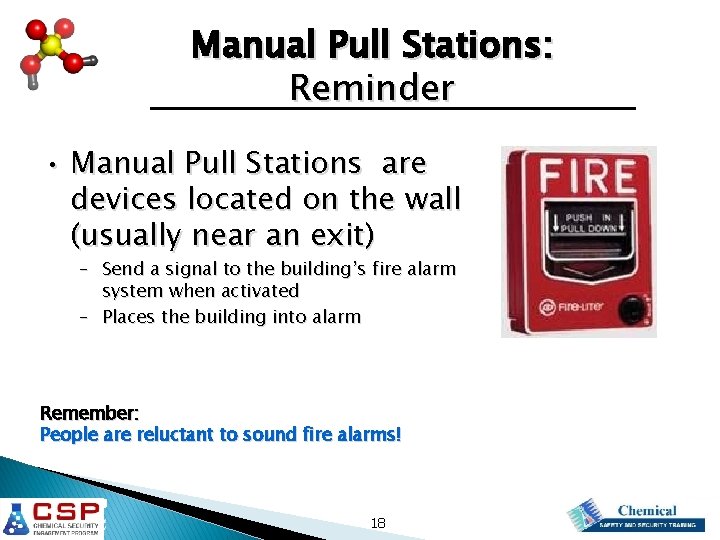
Manual Pull Stations: Reminder • Manual Pull Stations are devices located on the wall (usually near an exit) – Send a signal to the building’s fire alarm system when activated – Places the building into alarm Remember: People are reluctant to sound fire alarms! 18
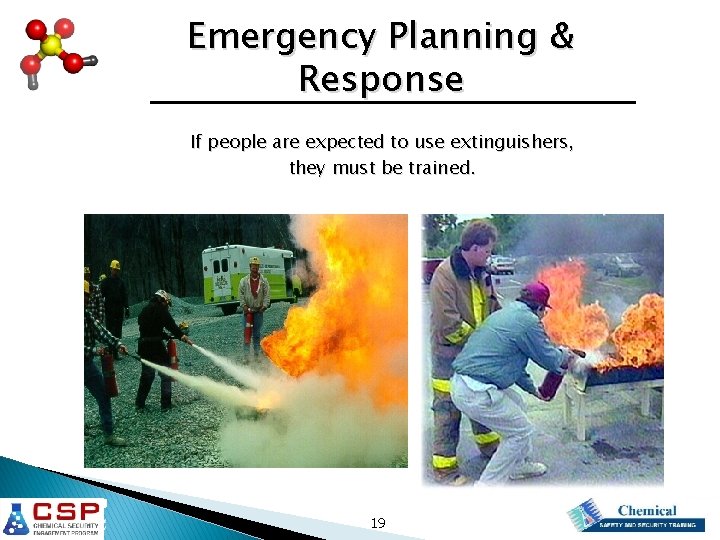
Emergency Planning & Response If people are expected to use extinguishers, they must be trained. 19
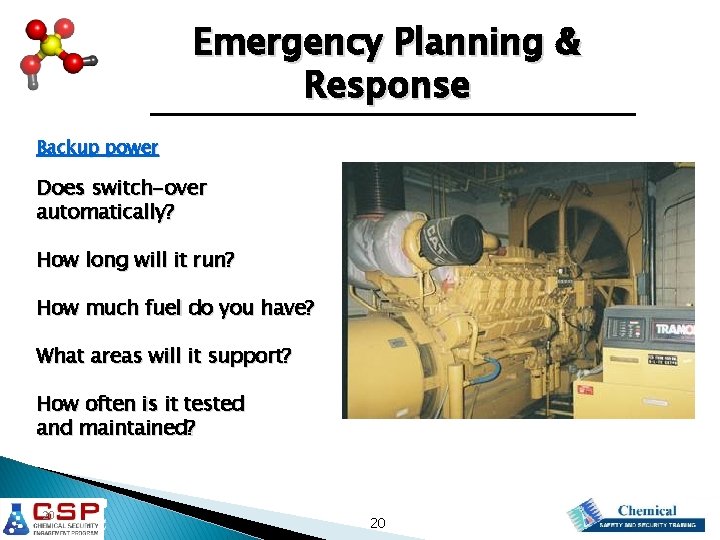
Emergency Planning & Response Backup power Does switch-over automatically? How long will it run? How much fuel do you have? What areas will it support? How often is it tested and maintained? 20 20
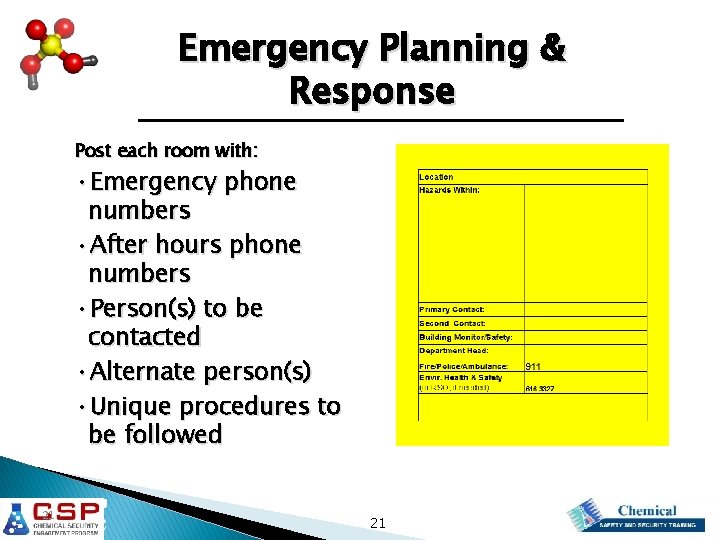
Emergency Planning & Response Post each room with: • Emergency phone numbers • After hours phone numbers • Person(s) to be contacted • Alternate person(s) • Unique procedures to be followed 21 21
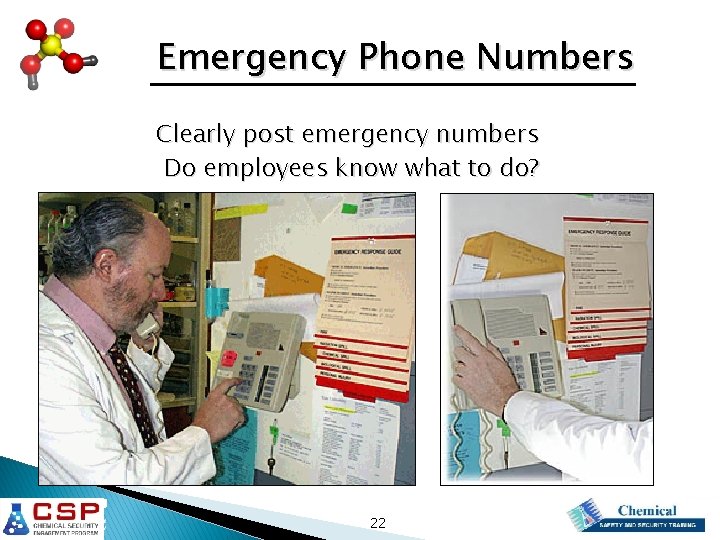
Emergency Phone Numbers Clearly post emergency numbers Do employees know what to do? 22
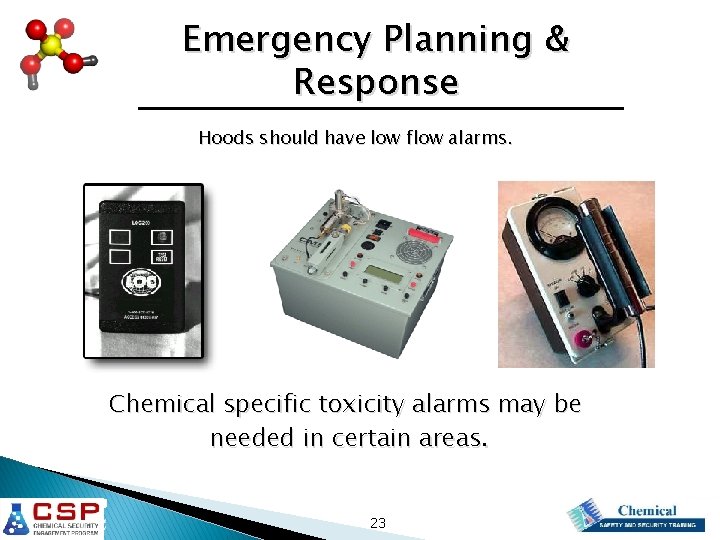
Emergency Planning & Response Hoods should have low flow alarms. Chemical specific toxicity alarms may be needed in certain areas. 23
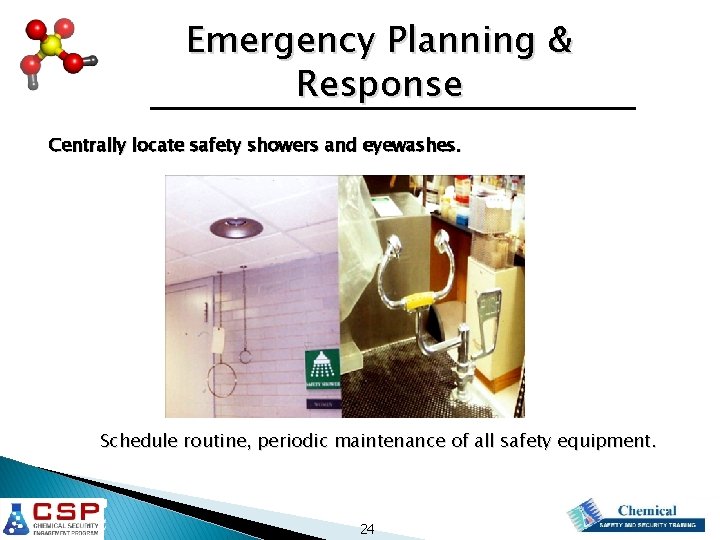
Emergency Planning & Response Centrally locate safety showers and eyewashes. Schedule routine, periodic maintenance of all safety equipment. 24
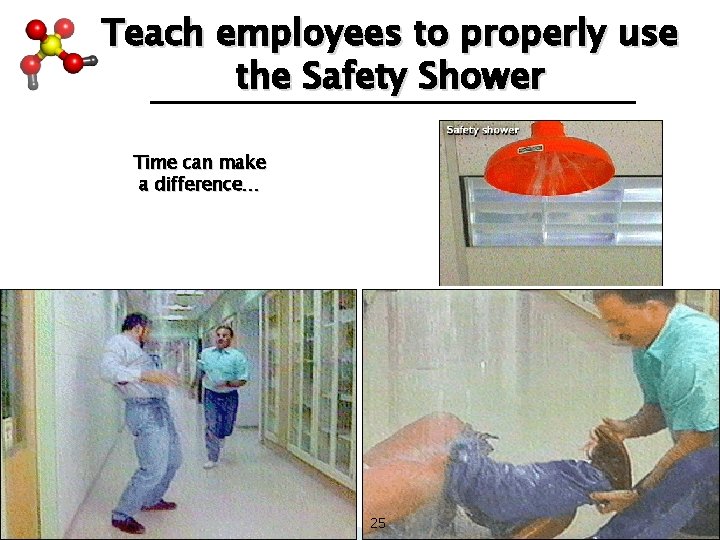
Teach employees to properly use the Safety Shower Time can make a difference… 25
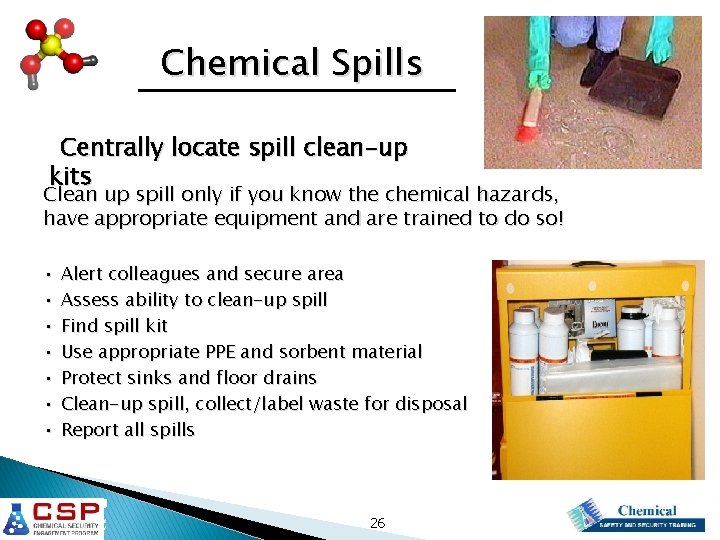
Chemical Spills Centrally locate spill clean-up kits Clean up spill only if you know the chemical hazards, have appropriate equipment and are trained to do so! • Alert colleagues and secure area • Assess ability to clean-up spill • Find spill kit • Use appropriate PPE and sorbent material • Protect sinks and floor drains • Clean-up spill, collect/label waste for disposal • Report all spills 26
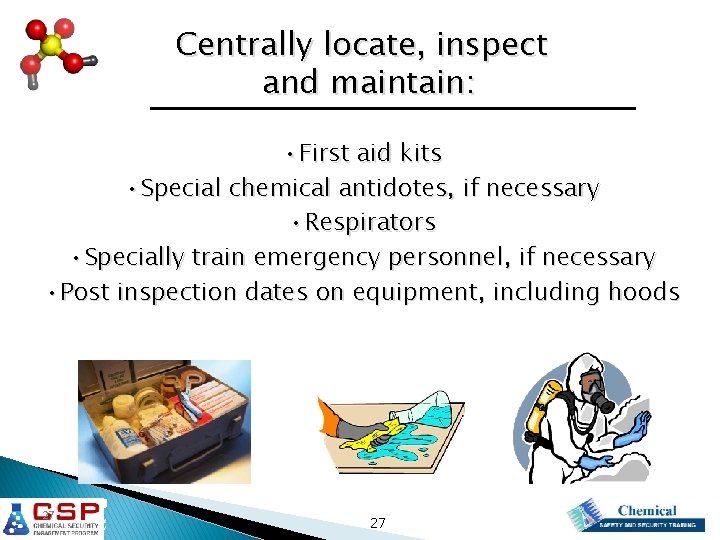
Centrally locate, inspect and maintain: • First aid kits • Special chemical antidotes, if necessary • Respirators • Specially train emergency personnel, if necessary • Post inspection dates on equipment, including hoods 27 27
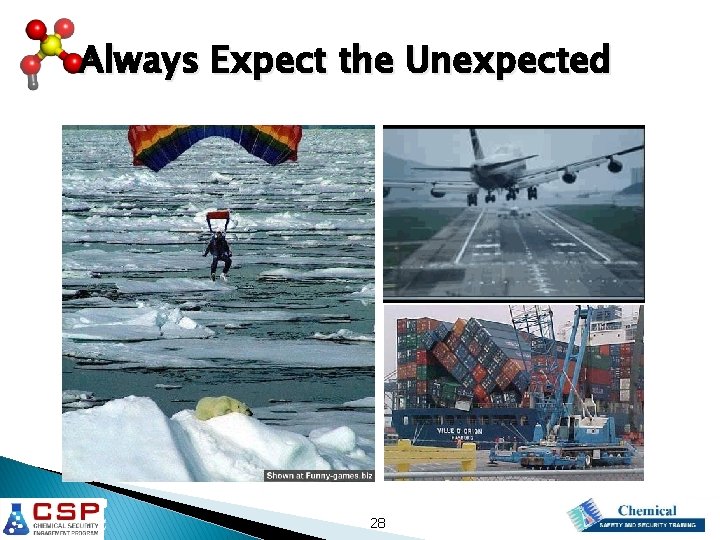
Always Expect the Unexpected 28
- Slides: 28