
Laboratory Diagnosis of Vaginitis Termonology and Pathogenesis Vulvovaginitis
Laboratory Diagnosis of Vaginitis
Termonology and Pathogenesis Vulvovaginitis, vulvitis, and vaginitis Are general terms that refer to the inflammation of the vagina and/or vulva Normal flora Lactobacilli Changes in the vaginal acidity or disturb the normal bacteria in the vagina may predispose to an infection.
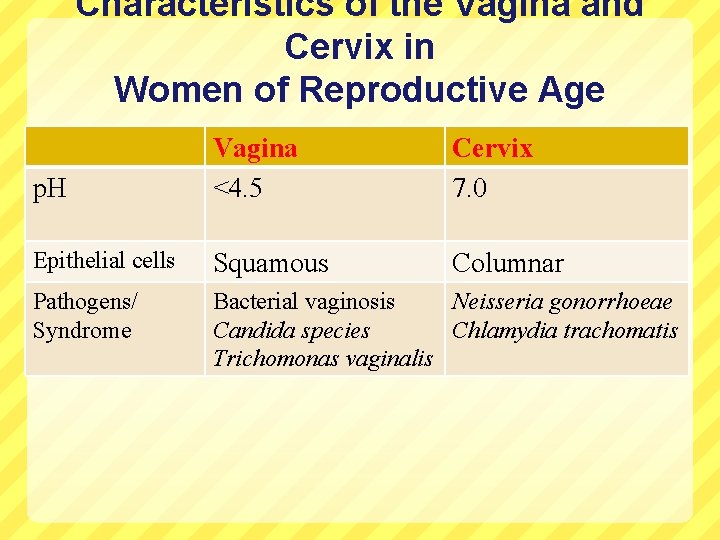
Characteristics of the Vagina and Cervix in Women of Reproductive Age p. H Vagina <4. 5 Cervix 7. 0 Epithelial cells Squamous Columnar Pathogens/ Syndrome Bacterial vaginosis Neisseria gonorrhoeae Candida species Chlamydia trachomatis Trichomonas vaginalis
VAGINOSIS /VAGINITIS Most common reason for patient visit to OB/GYN. Three primary infections in order of prevalence: ØBacterial vaginosis ØCandidiasis ØTrichomoniasis
Causes of vulvovaginitis Bacterial : Bacterial vaginosis (40%) Fungal : Candida vulvovaginitis (25%) Parasitic : trichomonal vulvovaginitis (25%) Low estrogen levels (called "atrophic vaginitis") Allergic or irritation or injury response from spermicidal products, condoms, soaps, and bubble bath called “contact vulvovaginitis”.
History • General gyneclogical • history • Menstrual history • Pregnancy • Sexual Hx • Contraception • • Sexual relationship • Prior infection • General medical Hx – Allergies – DM – Malignancies – Immunodeficiecy Medication OCP<steroids, duches Symptoms
Bacterial Vaginosis Most common of vaginal syndrome A change in the balance of normal vaginal bacteria. Very high numbers of bacteria such as Gardnerella vaginalis, Mycoplasma hominis, Bacteroides species and Mobiluncus species. In contrast, Lactobacillus bacteria are in very low numbers or completely absent.

Clinical Features Itching and burning. Fishy-smelling (specially after sexual intercourse and menses) thin, milkywhite or gray vaginal discharge.
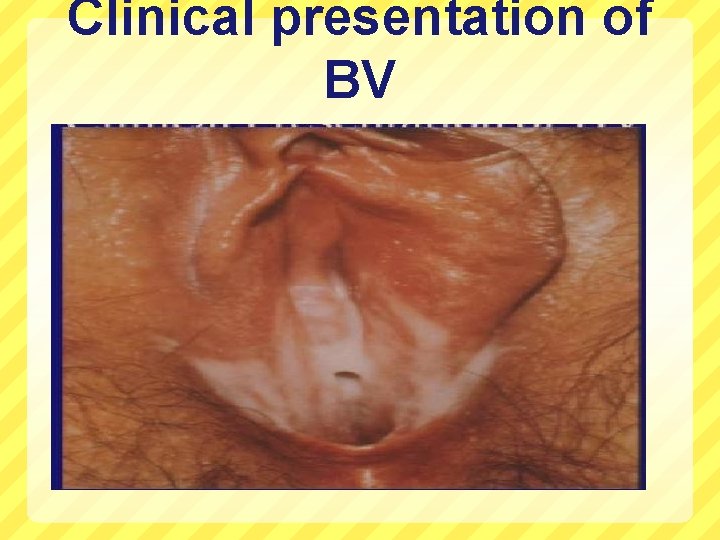
Clinical presentation of BV
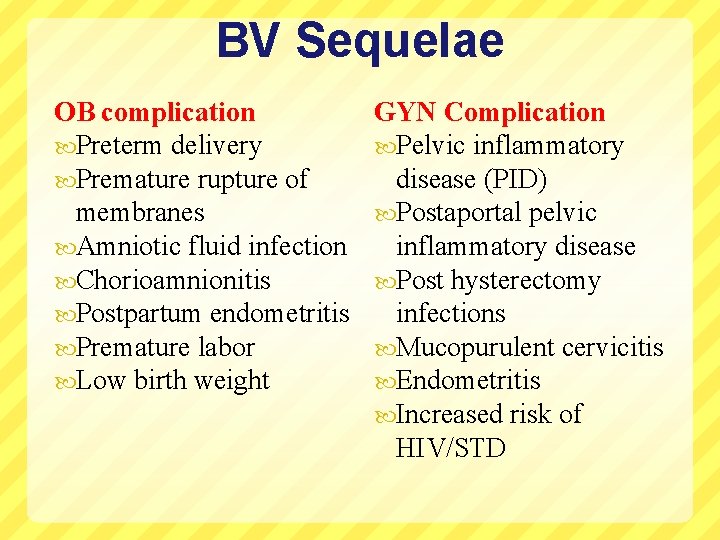
BV Sequelae OB complication Preterm delivery Premature rupture of membranes Amniotic fluid infection Chorioamnionitis Postpartum endometritis Premature labor Low birth weight GYN Complication Pelvic inflammatory disease (PID) Postaportal pelvic inflammatory disease Post hysterectomy infections Mucopurulent cervicitis Endometritis Increased risk of HIV/STD
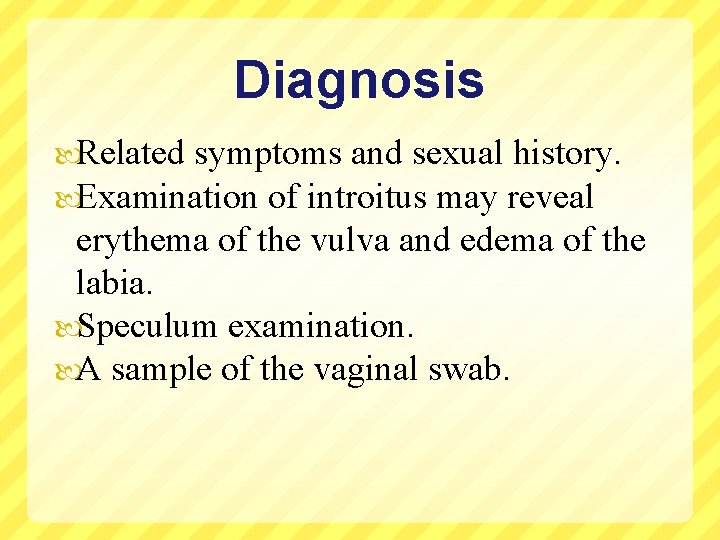
Diagnosis Related symptoms and sexual history. Examination of introitus may reveal erythema of the vulva and edema of the labia. Speculum examination. A sample of the vaginal swab.
Office Diagnostics for Vaginitis Empiric diagnoses often inaccurate and lead to incorrect treatment and management. Need for rapid, accurate and inexpensive diagnostic tests.
OFFICE-BASED TESTS FOR VAGINITIS ARE UNDERUTLIZED Simple, inexpensive, office-based tests were underutilized. v Microscopy v PH measurement v. Whiff amine test
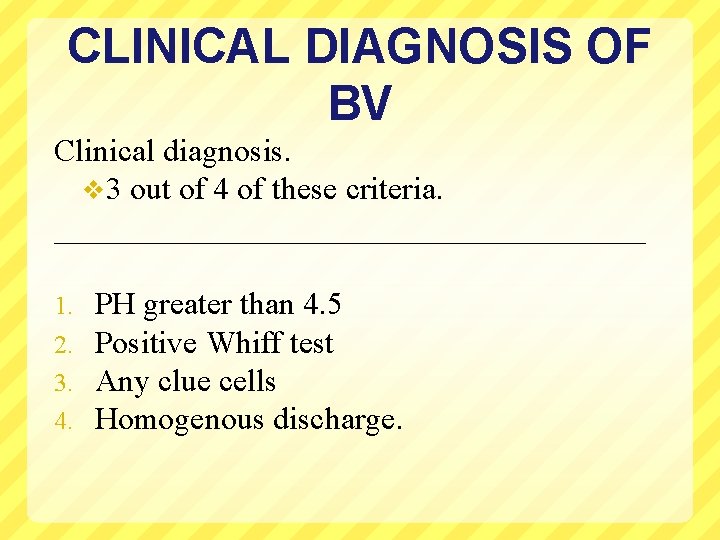
CLINICAL DIAGNOSIS OF BV Clinical diagnosis. v 3 out of 4 of these criteria. ___________________ 1. 2. 3. 4. PH greater than 4. 5 Positive Whiff test Any clue cells Homogenous discharge.
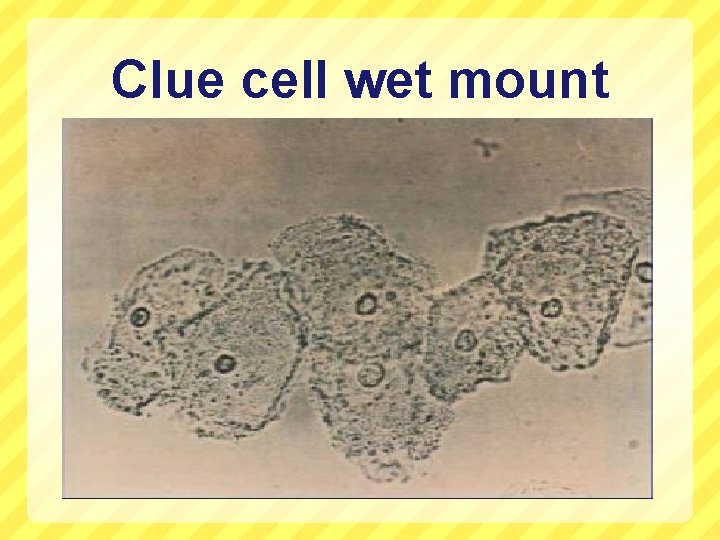
Clue cell wet mount
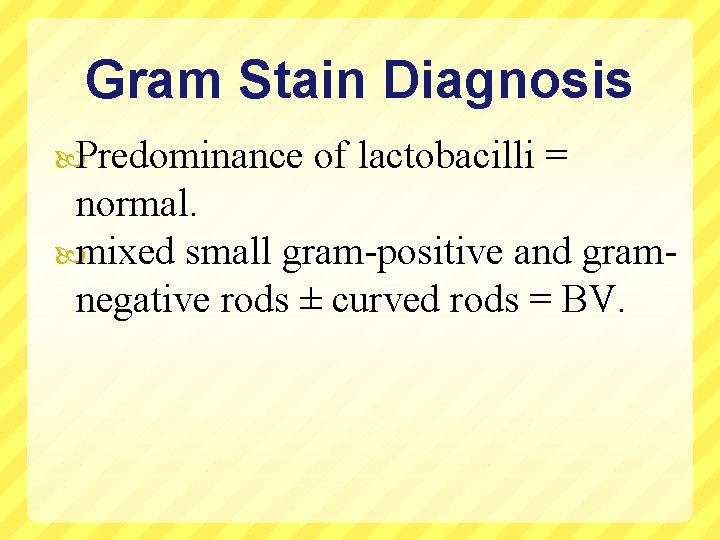
Gram Stain Diagnosis Predominance of lactobacilli = normal. mixed small gram-positive and gramnegative rods ± curved rods = BV.
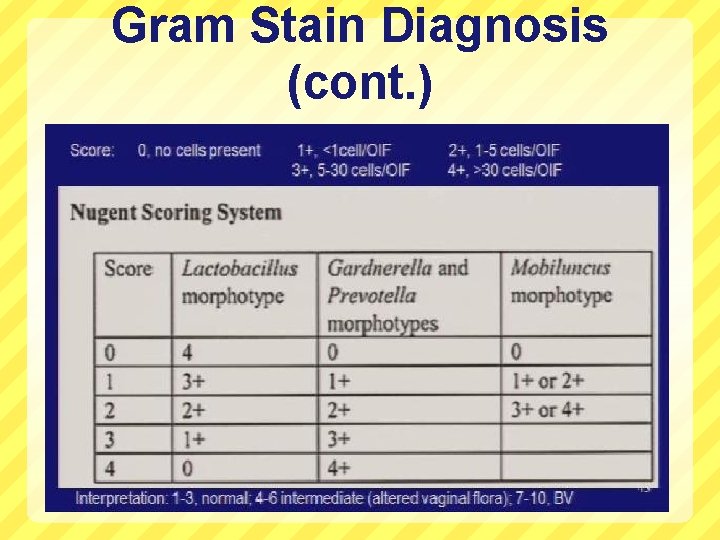
Gram Stain Diagnosis (cont. )
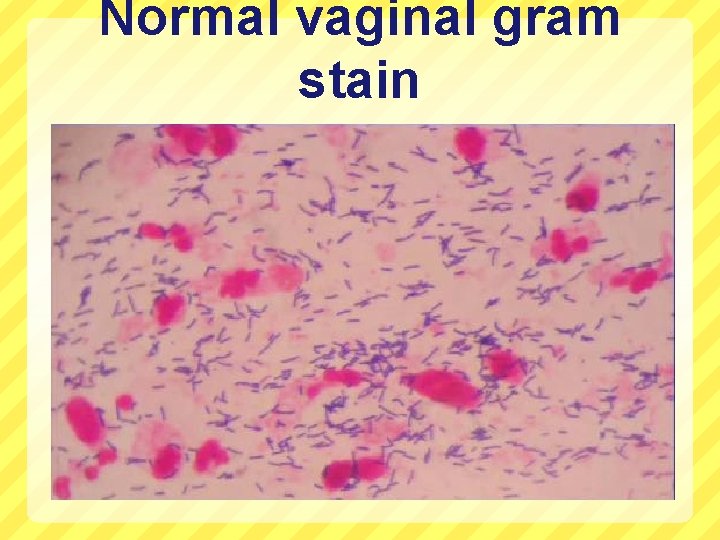
Normal vaginal gram stain
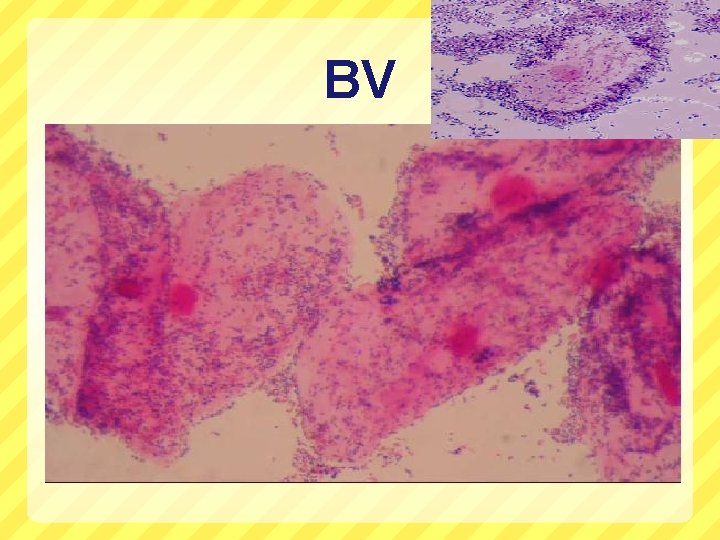
BV
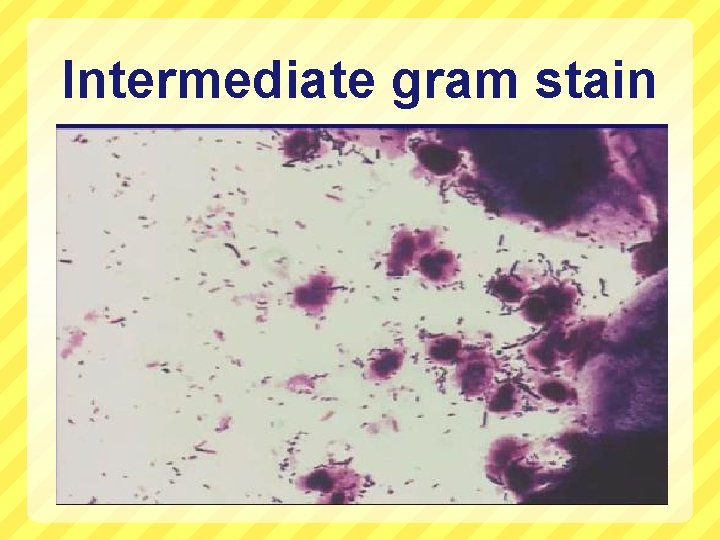
Intermediate gram stain
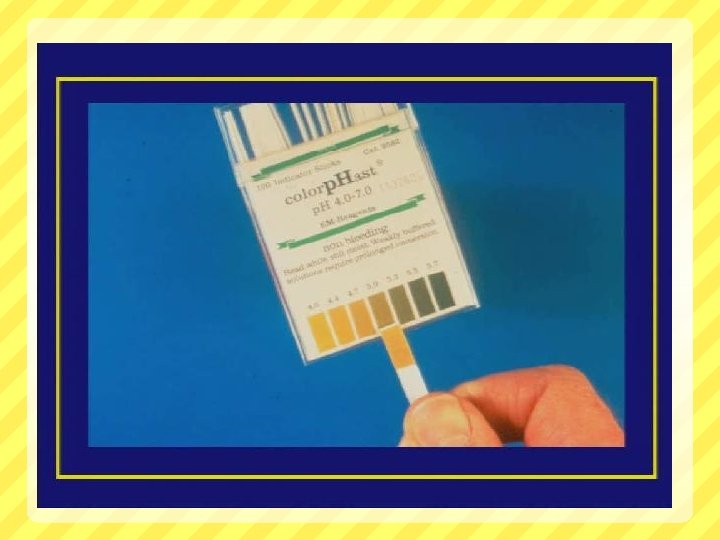
PH TEST PH indicator strips: p. H 3. 5 - 7. 0 Place sample of vaginal secretion on test strip: read while still moist. PH>4. 5 indicates abnormality (i. e. BVTrichomonas- or menstrual blood). Be careful not to sample the cervix; cervical secretions and blood have a PH 7. 0
KOH "WHIFF" TEST Sample of vaginal secretions are placed in a test tube with 10% KOH alkalizes amines produced by anaerobic bacteria-results in a sharp "fishy odor"
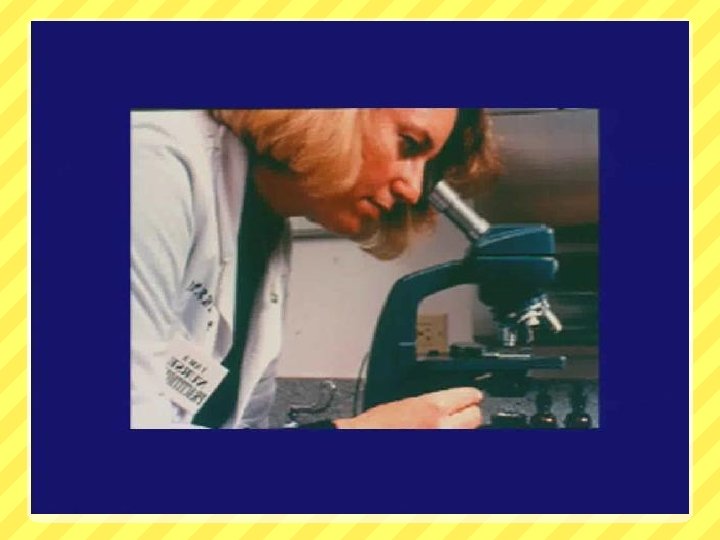
WET MOUNT PREPARATION Vaginal secretion sample from the anterior fornix and lateral wall Place swab in test tube with small amount of normal saline and place sample on glass slide with cover slip Visualize at both low and high power Clue cells, yeast, Trichomonas, WBC, bacteria.
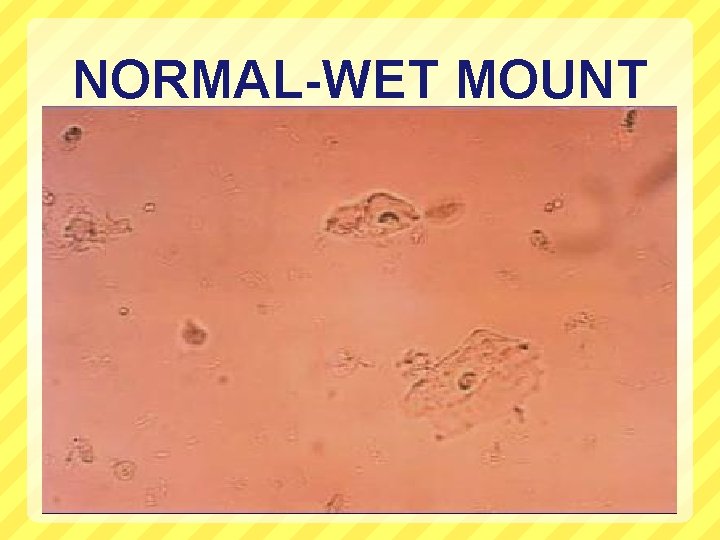
NORMAL-WET MOUNT
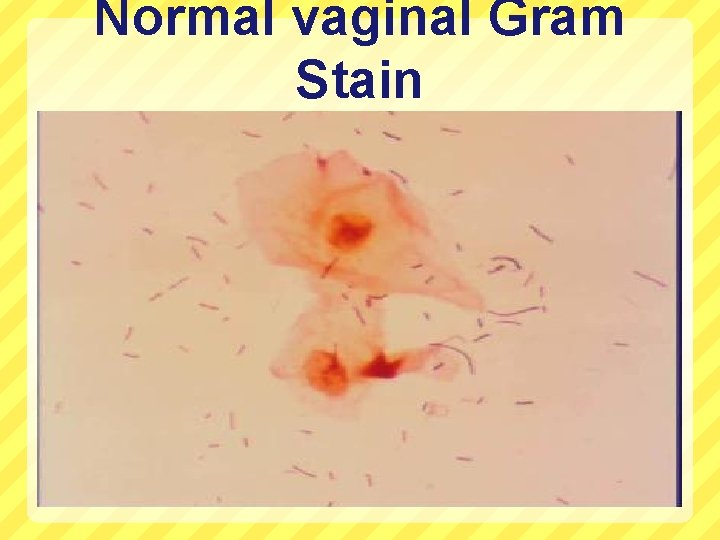
Normal vaginal Gram Stain

CANDIDIASIS Overgrowth of a normal inhabitant of the vagina. Predisposing factors: Pregnancy , DM, Immunocompramized conditions, antibacterial treatment. Clinical Presentation : Irritation, pruritus, soreness, painful sexual intercourse burring on passing urine, and a thick, curdy, white (like cottage cheese) vaginal discharge.
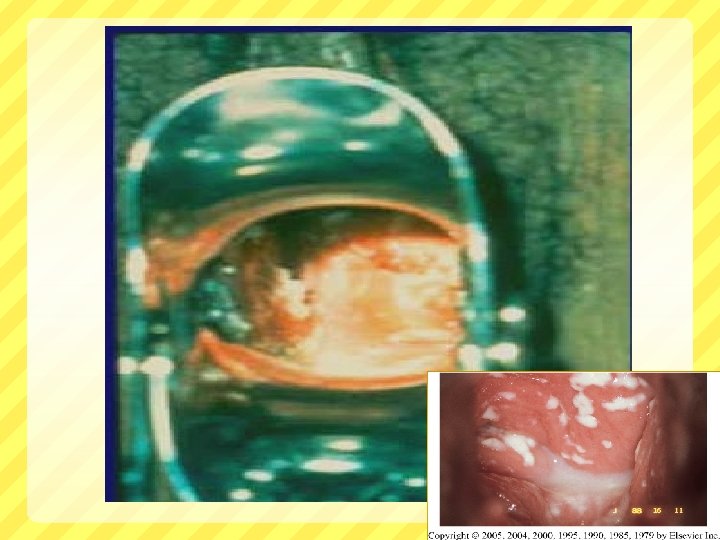
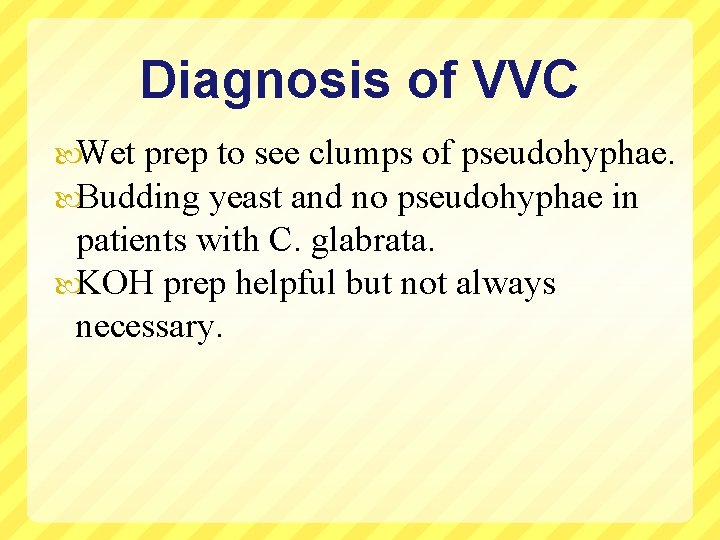
Diagnosis of VVC Wet prep to see clumps of pseudohyphae. Budding yeast and no pseudohyphae in patients with C. glabrata. KOH prep helpful but not always necessary.
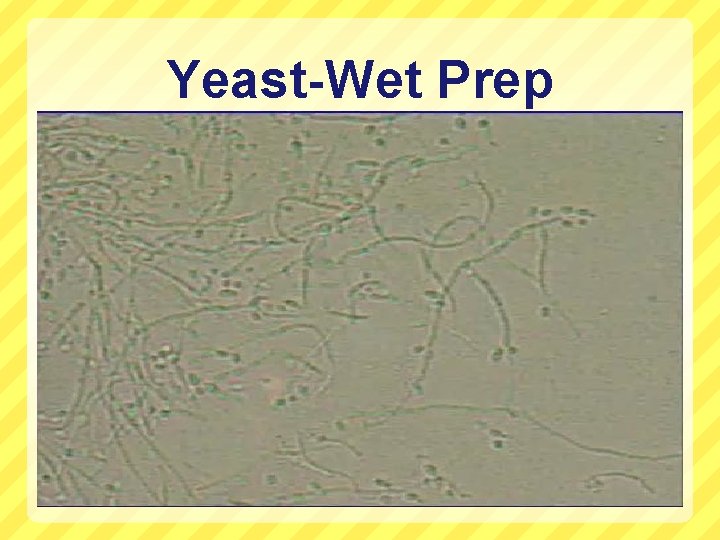
Yeast-Wet Prep

Candidiasis
Vaginal Yeast Cultures Probably not routinely indicated - many women are colonized with Candida If obtained must correlate with patient signs and symptoms For recurrent infections culture and susceptibility testing may be helpful
TRICHOMONIASIS Sexually transmitted parasite Trichomonas is the most prevalent non-viral sexually transmitted disease (STD) agent.
Clinical Features q. Vaginal discharge, pruritus in females, but may be asymptomatic. Painful urination, Painful sexual intercourse A malodorous smelling yellow-green to gray, sometimes frothy, vaginal discharge. q. Males usually asymptomatic, but can cause Non-gonococcal urethritis.
Trichomonas Complications Trichomonas associated with: o Premature rupture of membranes o Preterm labor and birth o Low birth weight o Increased transmission of other STDs including HIV
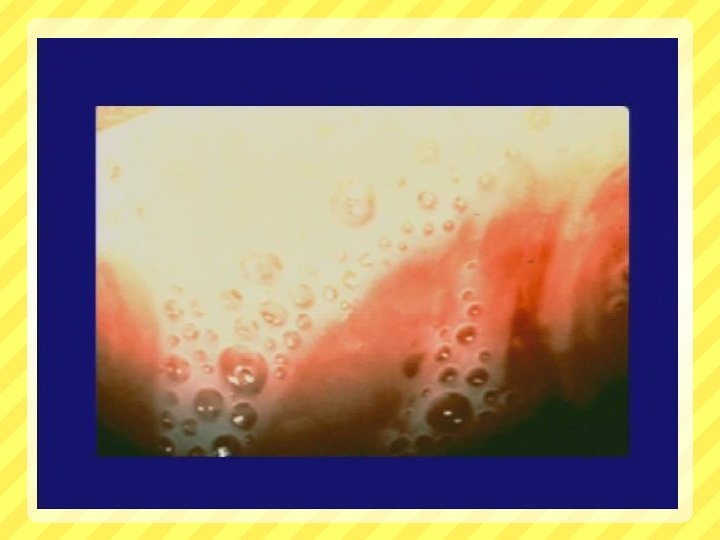

Trichomonas Wet Prep
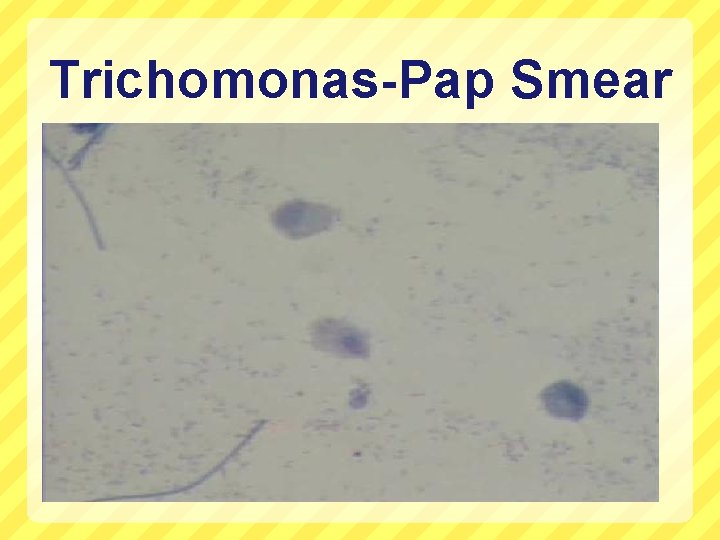
Trichomonas-Pap Smear
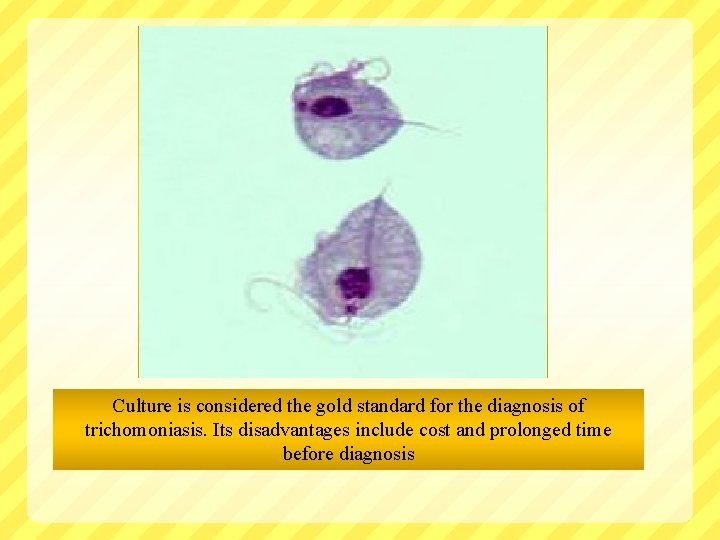
Culture is considered the gold standard for the diagnosis of trichomoniasis. Its disadvantages include cost and prolonged time before diagnosis
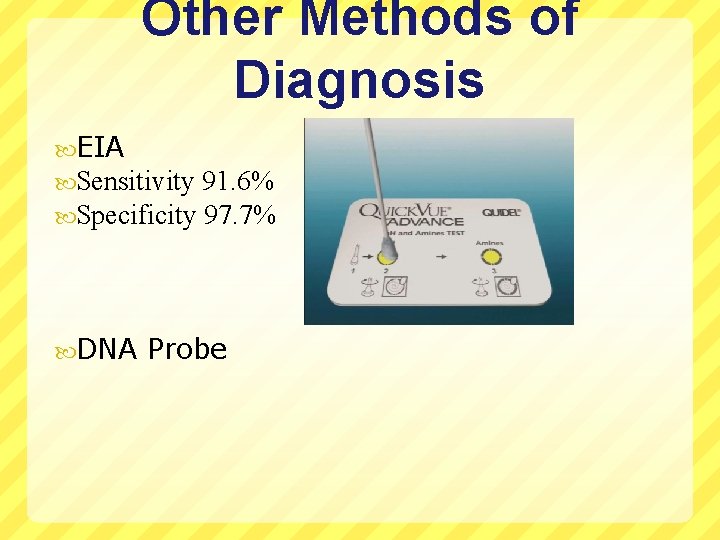
Other Methods of Diagnosis EIA Sensitivity 91. 6% Specificity 97. 7% DNA Probe
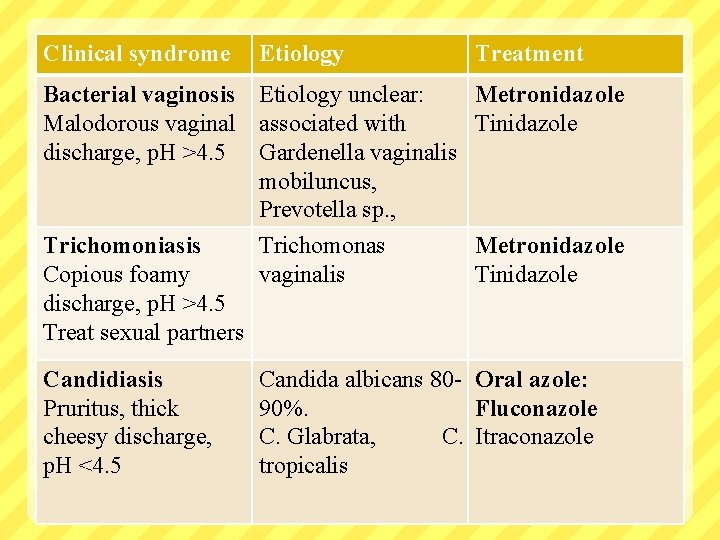
Clinical syndrome Etiology Treatment Bacterial vaginosis Etiology unclear: Metronidazole Malodorous vaginal associated with Tinidazole discharge, p. H >4. 5 Gardenella vaginalis mobiluncus, Prevotella sp. , Trichomoniasis Trichomonas Copious foamy vaginalis discharge, p. H >4. 5 Treat sexual partners Candidiasis Pruritus, thick cheesy discharge, p. H <4. 5 Metronidazole Tinidazole Candida albicans 80 - Oral azole: 90%. Fluconazole C. Glabrata, C. Itraconazole tropicalis
- Slides: 42