
Laboratory Capacity biosafety and biosecurity in Africa Gaps
Laboratory Capacity , biosafety, and biosecurity in Africa: Gaps, goals, needs and Progress Willy Tonui, Ph. D Founder Member and President, African Biological Safety Association (Af. BSA)
Discussion Format �Status of Biosafety and Biosecurity in Africa �Laboratory Capacity in Africa �Common Challenges among laboratories �Needs and recommendations �Role of Af. BSA in implementation of Biosafety and Biosecurity in Africa �Brief about IFBA
Status of Biosafety & Biosecurity in Africa
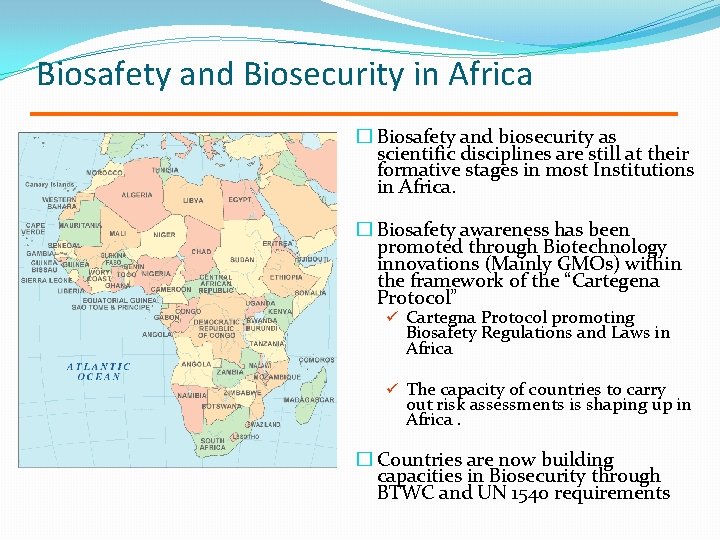
Biosafety and Biosecurity in Africa � Biosafety and biosecurity as scientific disciplines are still at their formative stages in most Institutions in Africa. � Biosafety awareness has been promoted through Biotechnology innovations (Mainly GMOs) within the framework of the “Cartegena Protocol” ü Cartegna Protocol promoting Biosafety Regulations and Laws in Africa ü The capacity of countries to carry out risk assessments is shaping up in Africa. � Countries are now building capacities in Biosecurity through BTWC and UN 1540 requirements
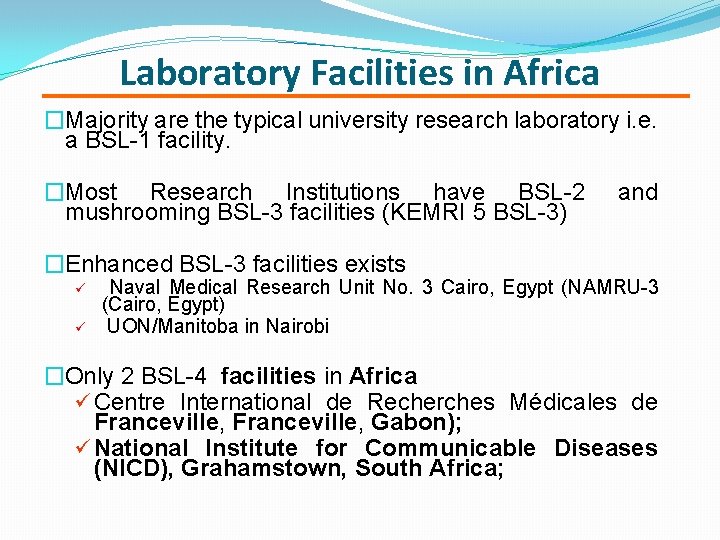
Laboratory Facilities in Africa �Majority are the typical university research laboratory i. e. a BSL-1 facility. �Most Research Institutions have BSL-2 mushrooming BSL-3 facilities (KEMRI 5 BSL-3) and �Enhanced BSL-3 facilities exists ü ü Naval Medical Research Unit No. 3 Cairo, Egypt (NAMRU-3 (Cairo, Egypt) UON/Manitoba in Nairobi �Only 2 BSL-4 facilities in Africa ü Centre International de Recherches Médicales de Franceville, Gabon); ü National Institute for Communicable Diseases (NICD), Grahamstown, South Africa;
Common Challenges on Laboratory Biosafety and Biosecurity in Laboratories
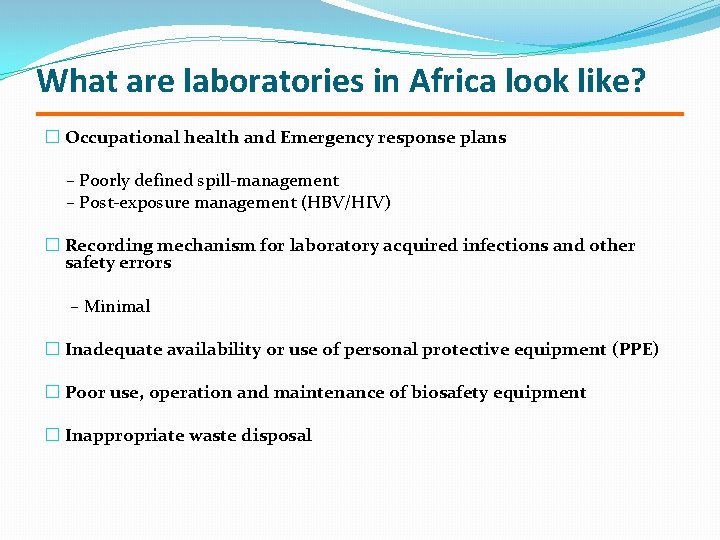
What are laboratories in Africa look like? � Occupational health and Emergency response plans – Poorly defined spill-management – Post-exposure management (HBV/HIV) � Recording mechanism for laboratory acquired infections and other safety errors – Minimal � Inadequate availability or use of personal protective equipment (PPE) � Poor use, operation and maintenance of biosafety equipment � Inappropriate waste disposal
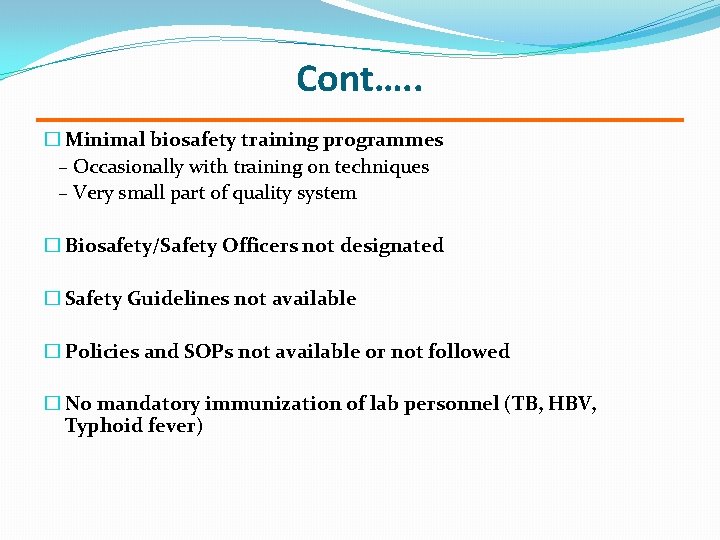
Cont…. . � Minimal biosafety training programmes – Occasionally with training on techniques – Very small part of quality system � Biosafety/Safety Officers not designated � Safety Guidelines not available � Policies and SOPs not available or not followed � No mandatory immunization of lab personnel (TB, HBV, Typhoid fever)

Common Challenges 1. 2. 3. 4. 5. 6. Regulations, Legislation National policy at the laboratory level Laboratory Biosecurity Laboratory Management Physical environment in containment laboratories Dual Use Research
Constraints for improvement � Lack of awareness at highest level – Policy / standards / regulations � Inadequate resources and infrastructure � Lack of sufficient technical expertise – Practices – Construction – Validation – Documentation � Inadequate emphasis on training courses or exclusive training courses � Lack of budgetary resources to run and maintain containment laboratories

Needs and Recommendations
At National levels �Awareness raising on Biosafety and Biosecurity including Dual Use Research should be done in countries and Institutions �Implementation of Biological and Toxins Weapons Convention & UN 1540 Regulations in Countries �Sensitization of policy makers and Institutional Management (to support lab needs)
At Laboratory level �There is need for guidelines and clear regulations on Biorisk management including hazardous Waste management in most countries �Need for expertise and waste management facilities in Africa �Need for Training and Capacity building in Biosafety & Biosecurity including on Hazardous waste management in Africa

Progress Made
Positive outcomes and opportunities for progress �International Partnerships is encouraging Laboratory programmes to establishing and maintaining Laboratory quality systems. ü ü ü WHO accreditation and surveillance systems CLIA’ 88 and CAP Certification by American Partners (CDC etc) ISO Systems (ISO 9001; 17027; 15189; 14001 and 18001
Af. BSA: Bridging Gaps Among the opportunities that Af. BSA has to address the gaps include: �Promote International partnerships towards reducing the risk of biological threats by collaborating with governments to develop biosafety and biosecurity standards that are consistent with national and international guidelines, norms and requirements. �Enhance collaboration and networking between laboratories in areas of biosafety and biosecurity, including risk assessment on implementation of these principles among African laboratories. �Design and implement training programmes that increase knowledge and skills towards biosafety and biosecurity in Africa.
Brief about Af. BSA

About Af. BSA �The African Biological Safety Association (Af. BSA) is a professional association formed to congregate practitioners of biological safety for the promotion of Biosafety and Biosecurity and to facilitate the sharing of Biosafety and Biosecurity information in the African region. �Established May 31, 2007 Website: www. afbsa. org E-mail: afbsa@afbsa. org
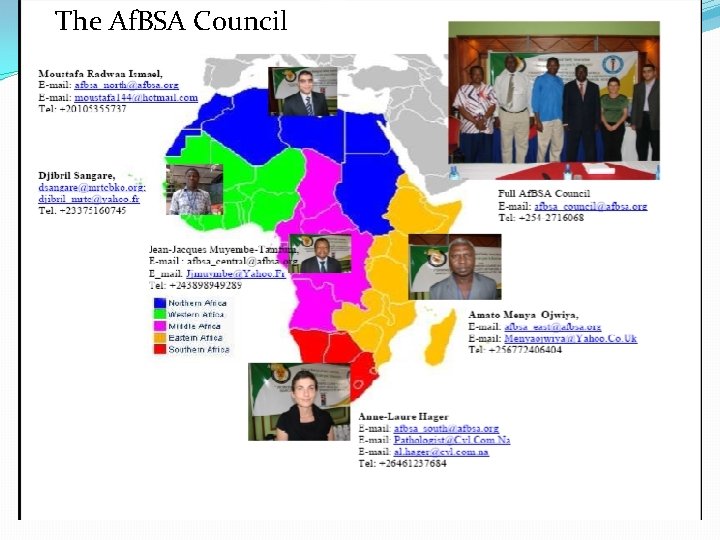
The Af. BSA Council
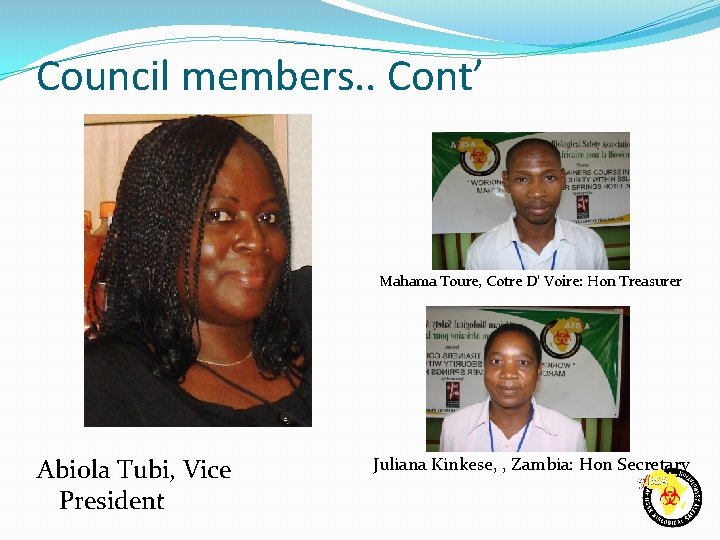
Council members. . Cont’ Mahama Toure, Cotre D’ Voire: Hon Treasurer Abiola Tubi, Vice President Juliana Kinkese, , Zambia: Hon Secretary
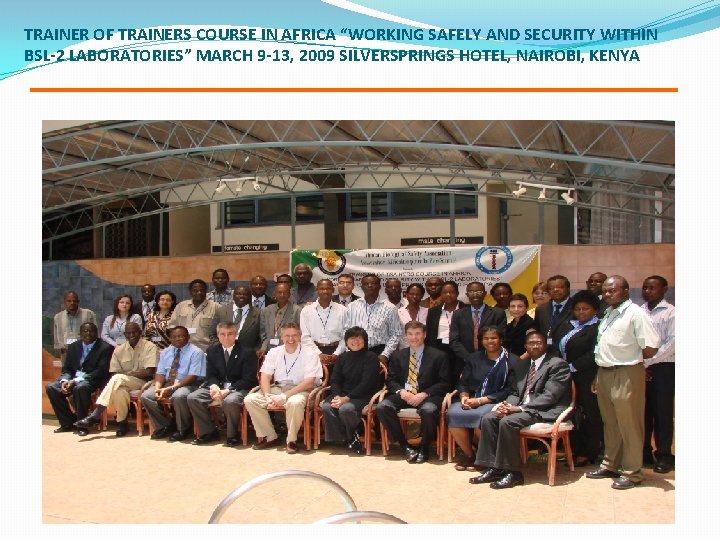
TRAINER OF TRAINERS COURSE IN AFRICA “WORKING SAFELY AND SECURITY WITHIN BSL-2 LABORATORIES” MARCH 9 -13, 2009 SILVERSPRINGS HOTEL, NAIROBI, KENYA
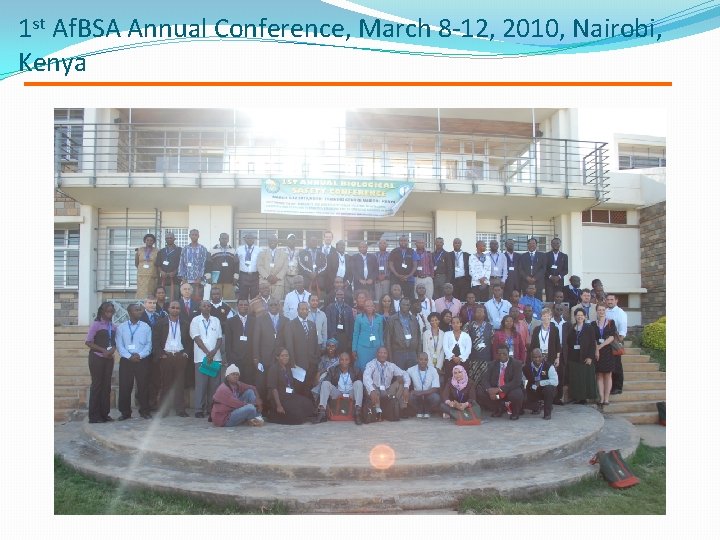
1 st Af. BSA Annual Conference, March 8 -12, 2010, Nairobi, Kenya
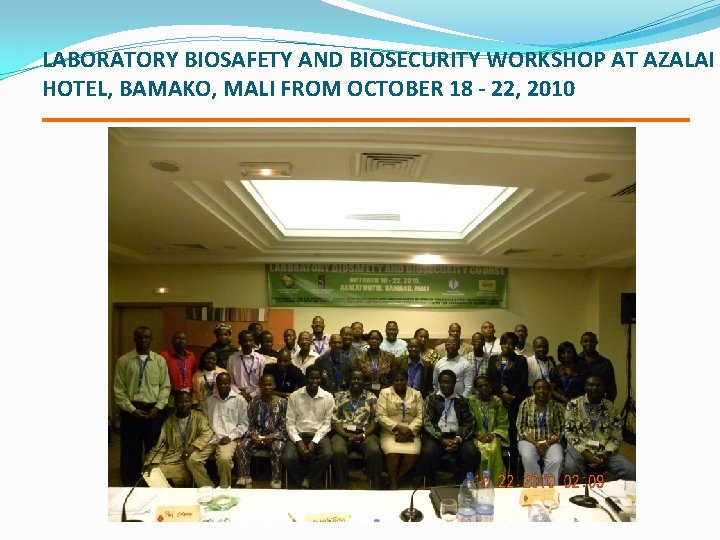
LABORATORY BIOSAFETY AND BIOSECURITY WORKSHOP AT AZALAI HOTEL, BAMAKO, MALI FROM OCTOBER 18 - 22, 2010
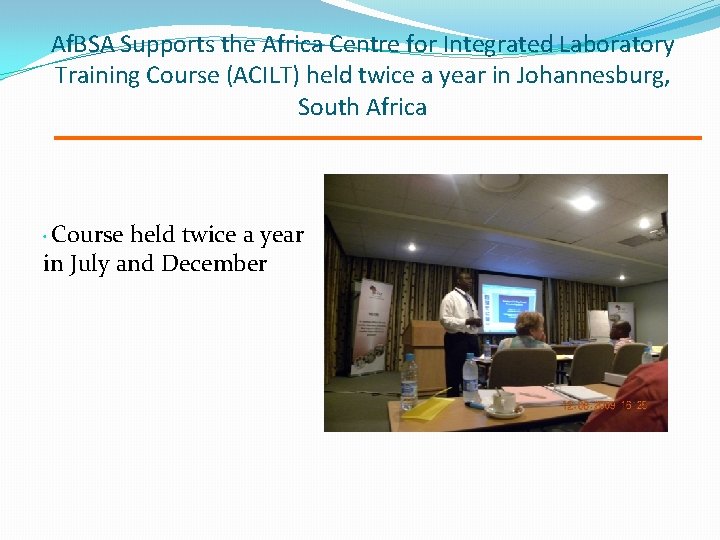
Af. BSA Supports the Africa Centre for Integrated Laboratory Training Course (ACILT) held twice a year in Johannesburg, South Africa Course held twice a year in July and December •
Associations Already formed in Africa �Egyptian Biosafety Association �Assocaition Moroccaine Biosecurite (AMBS) �Moroccan Biosafety Association (MOBSA) �Nigerian Biosafety Association �Many others are in process (Mali, Cameroon, Ghana, Ethiopia)
Brief about IFBA
About IFBA �Not-for-profit, NGO that works with national and international public and animal health authorities and international agencies (e. g. WHO, OIE, FAO) to enhance biosafety, biosecurity and Biocontainment laboratory capacity within the greater framework of strengthening health systems.
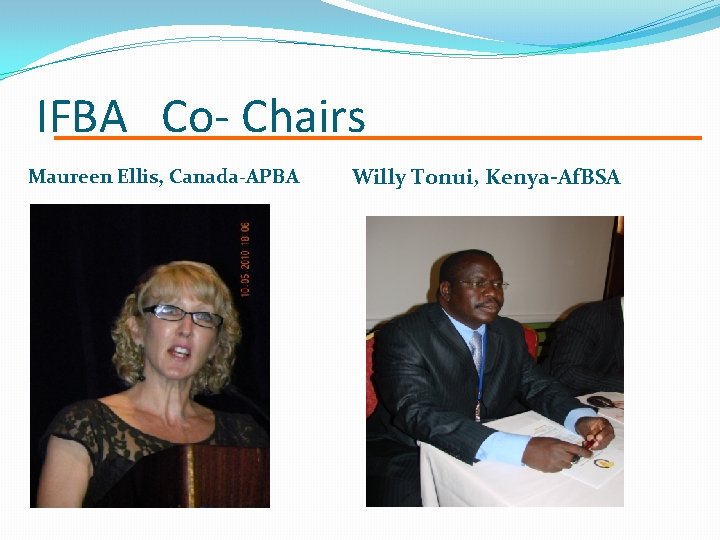
IFBA Co- Chairs Maureen Ellis, Canada-APBA Willy Tonui, Kenya-Af. BSA
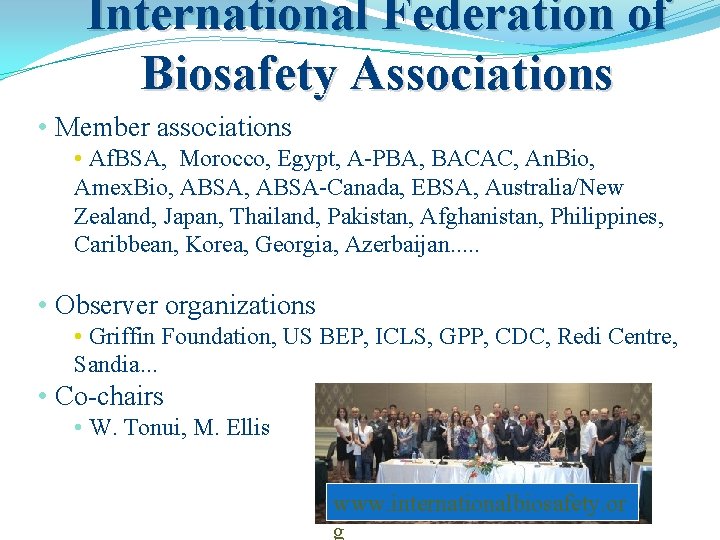
International Federation of Biosafety Associations • Member associations • Af. BSA, Morocco, Egypt, A-PBA, BACAC, An. Bio, Amex. Bio, ABSA-Canada, EBSA, Australia/New Zealand, Japan, Thailand, Pakistan, Afghanistan, Philippines, Caribbean, Korea, Georgia, Azerbaijan. . . • Observer organizations • Griffin Foundation, US BEP, ICLS, GPP, CDC, Redi Centre, Sandia. . . • Co-chairs • W. Tonui, M. Ellis www. internationalbiosafety. or g
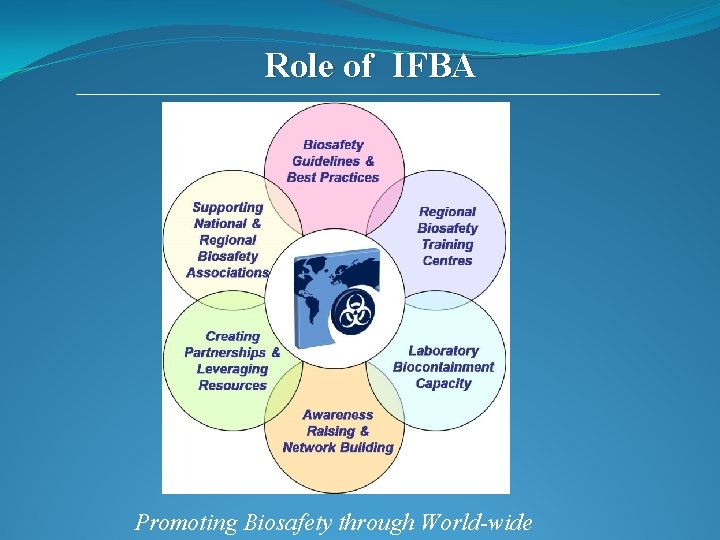
Role of IFBA Promoting Biosafety through World-wide
IFBA Programmes The IFBA has developed comprehensive biosafety programs across the full spectrum of biological threats including: � Biosafety guidelines & policies - Developing national biosafety guidelines and policies and adapting international best practices (e. g WHO Laboratory Biosafety Manual) to local needs and conditions. � Diagnostic laboratories infrastructure - Designing, equipping and operating diagnostic laboratories to safely handle and contain infectious diseases. � Training & awareness raising - Establishing and supporting regional biosafety training Centre's, train-the-trainer programs, and twinning and mentoring programs. � Associations & network building – Supporting nascent biosafety associations, facilitating the twinning of associations and integration of national associations into the international biosafety community.
2011 – The Year of Building International Biosafety Communities • Developed in collaboration with Elizabeth R. Griffin Foundation as a result of discussions held during biosafety associations workshop at 2010 APBA conference in Korea • Provoke dialogue and action among governments, international organizations, private industry and other stakeholders • Empower biosafety associations to grow in a meaningful and sustainable manner
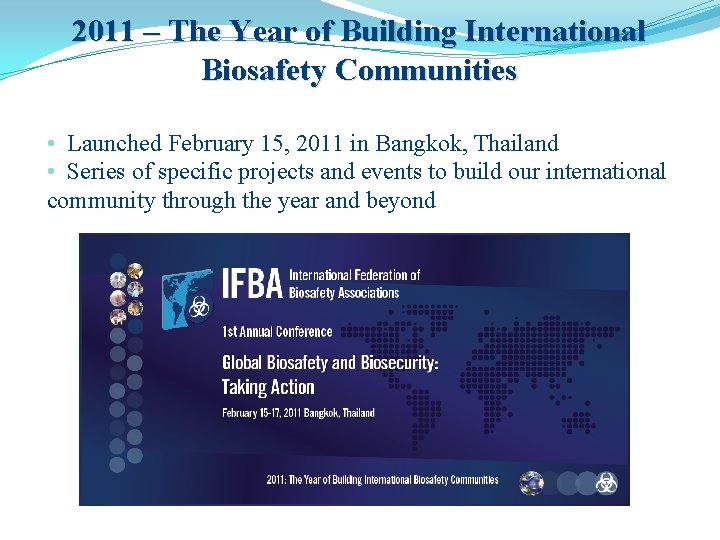
2011 – The Year of Building International Biosafety Communities • Launched February 15, 2011 in Bangkok, Thailand • Series of specific projects and events to build our international community through the year and beyond
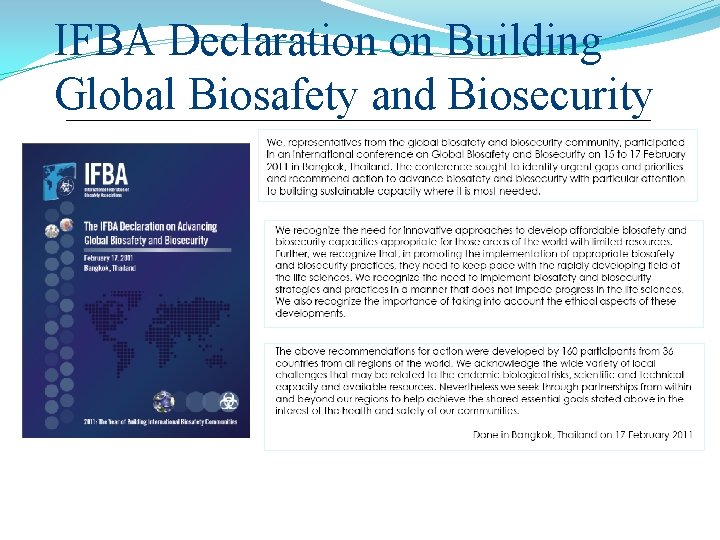
IFBA Declaration on Building Global Biosafety and Biosecurity
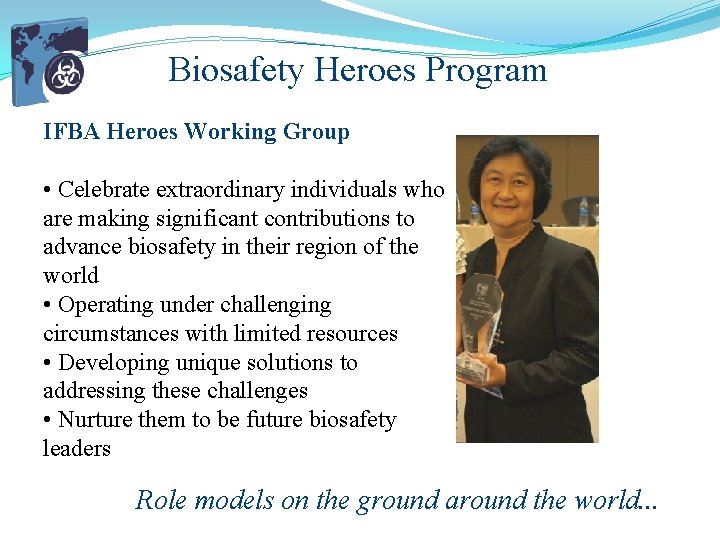
Biosafety Heroes Program IFBA Heroes Working Group • Celebrate extraordinary individuals who are making significant contributions to advance biosafety in their region of the world • Operating under challenging circumstances with limited resources • Developing unique solutions to addressing these challenges • Nurture them to be future biosafety leaders Role models on the ground around the world. . .
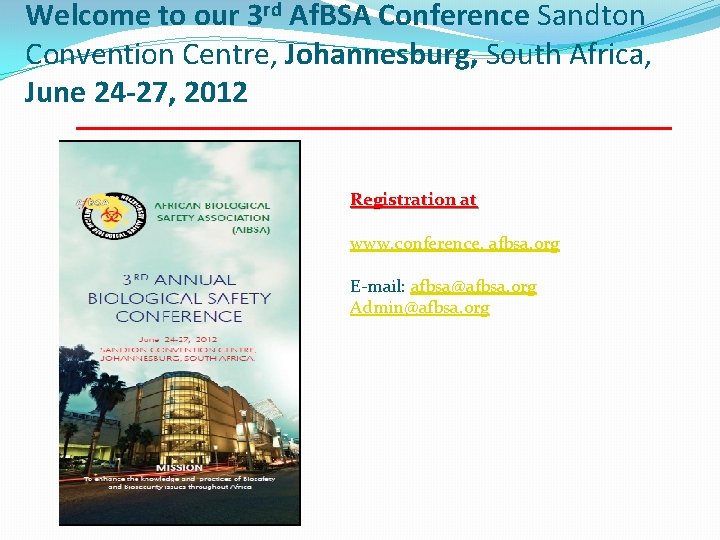
Welcome to our 3 rd Af. BSA Conference Sandton Convention Centre, Johannesburg, South Africa, June 24 -27, 2012 Registration at www. conference. afbsa. org E-mail: afbsa@afbsa. org Admin@afbsa. org
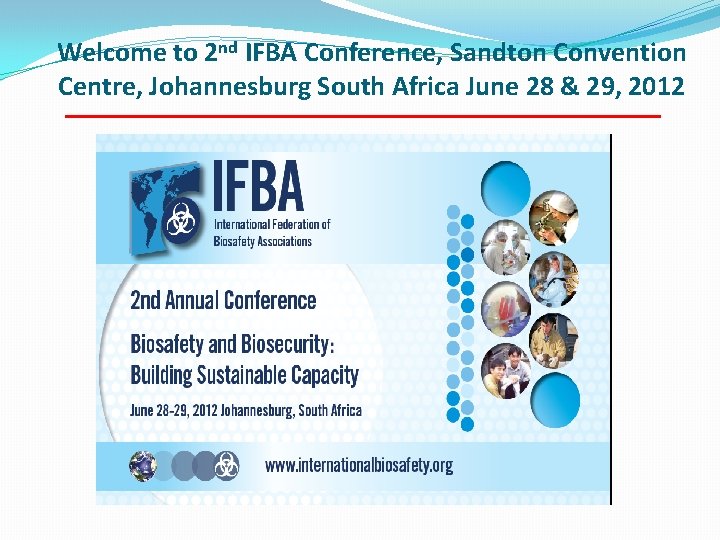
Welcome to 2 nd IFBA Conference, Sandton Convention Centre, Johannesburg South Africa June 28 & 29, 2012

Thank You
- Slides: 38