
Laboratory Calibration Week 7 Vernier Callipers Last Week
Laboratory Calibration Week 7 – Vernier Callipers
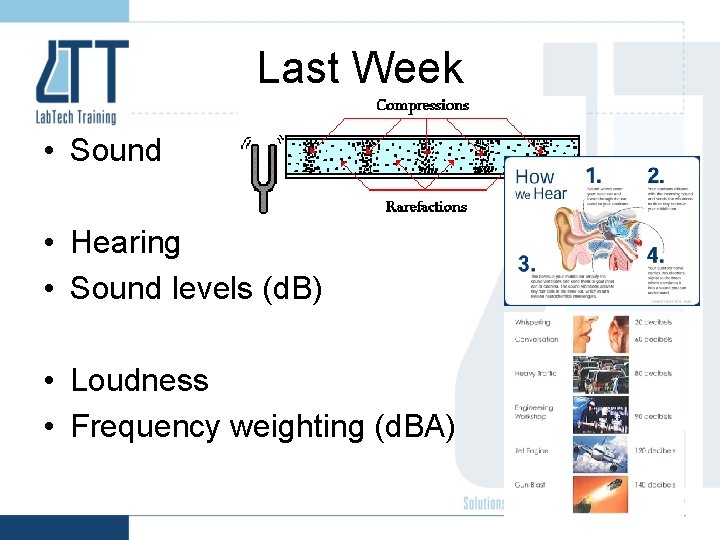
Last Week • Sound • Hearing • Sound levels (d. B) • Loudness • Frequency weighting (d. BA)
This Lesson • Using Vernier Calipers • How to read the Vernier scale • Measuring objects of different lengths
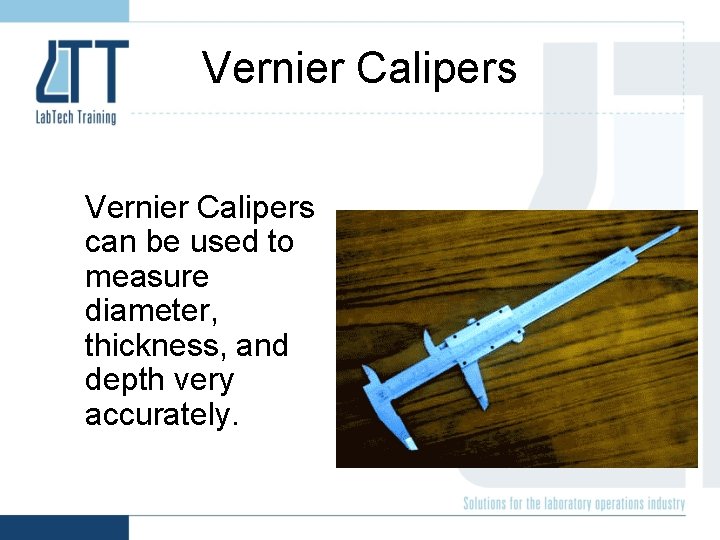
Vernier Calipers can be used to measure diameter, thickness, and depth very accurately.
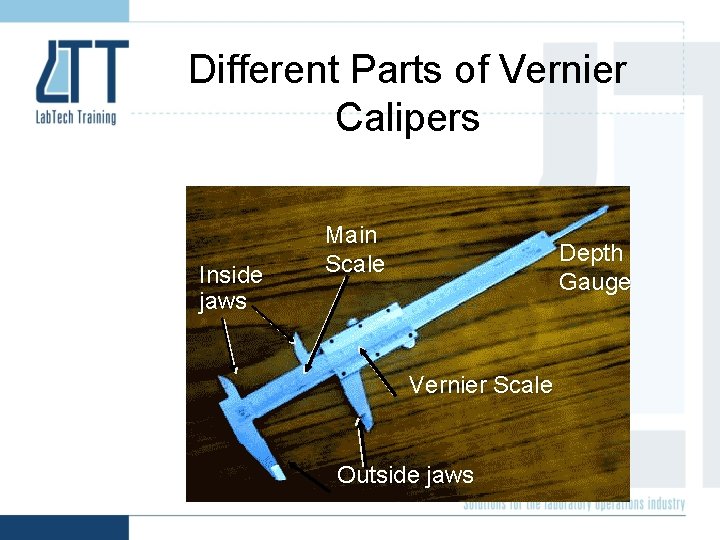
Different Parts of Vernier Calipers Inside jaws Main Scale Depth Gauge Vernier Scale Outside jaws

Different Parts of Vernier Calipers Clamping screw Clamp screw for fine adjustment Adjusting screw for fine adjustment
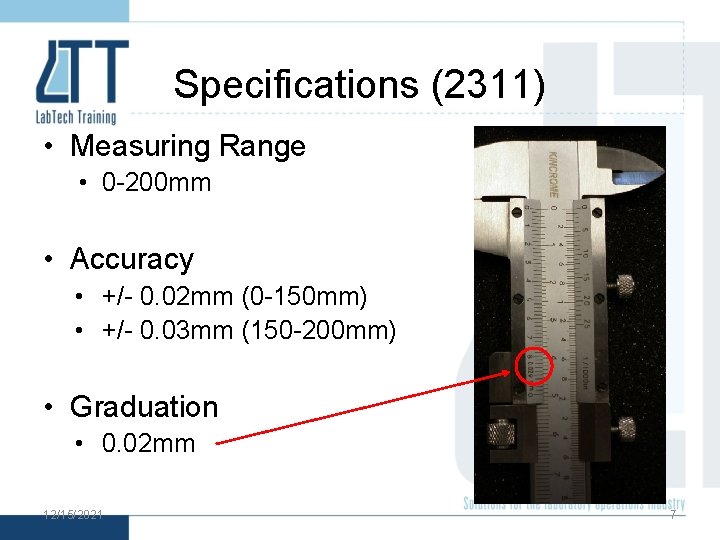
Specifications (2311) • Measuring Range • 0 -200 mm • Accuracy • +/- 0. 02 mm (0 -150 mm) • +/- 0. 03 mm (150 -200 mm) • Graduation • 0. 02 mm 12/15/2021 7
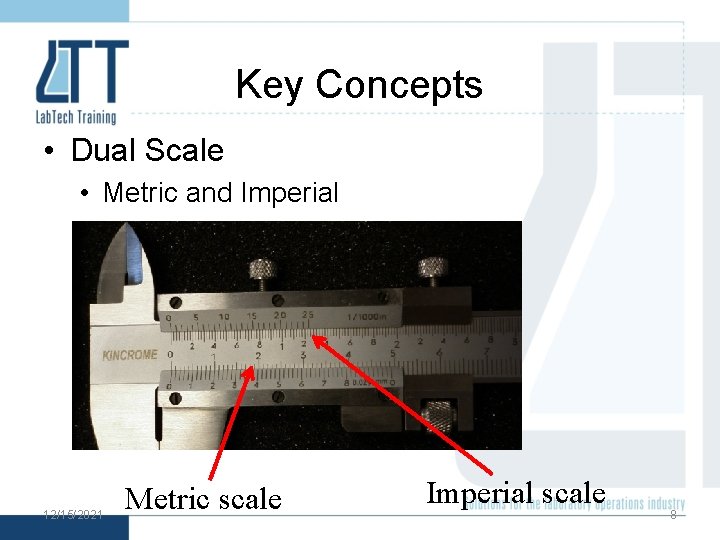
Key Concepts • Dual Scale • Metric and Imperial 12/15/2021 Metric scale Imperial scale 8
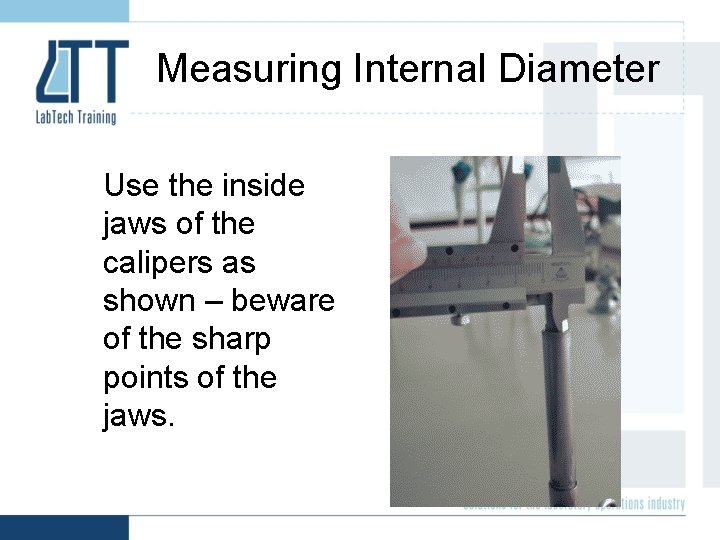
Measuring Internal Diameter Use the inside jaws of the calipers as shown – beware of the sharp points of the jaws.
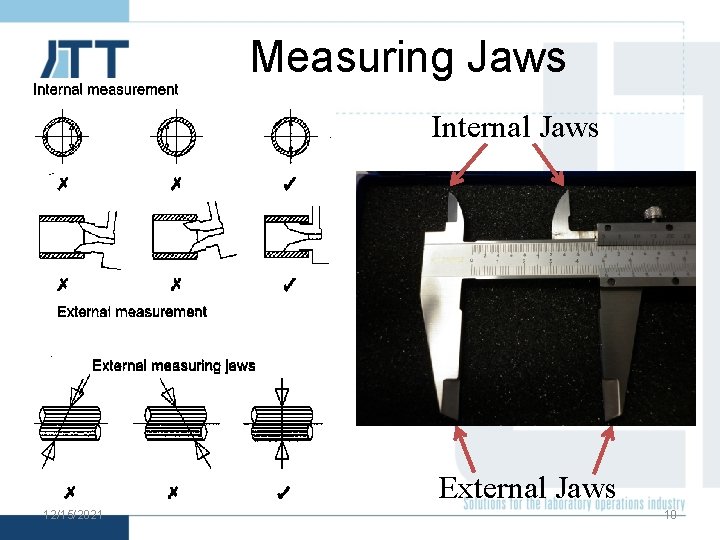
Measuring Jaws Internal Jaws External Jaws 12/15/2021 10
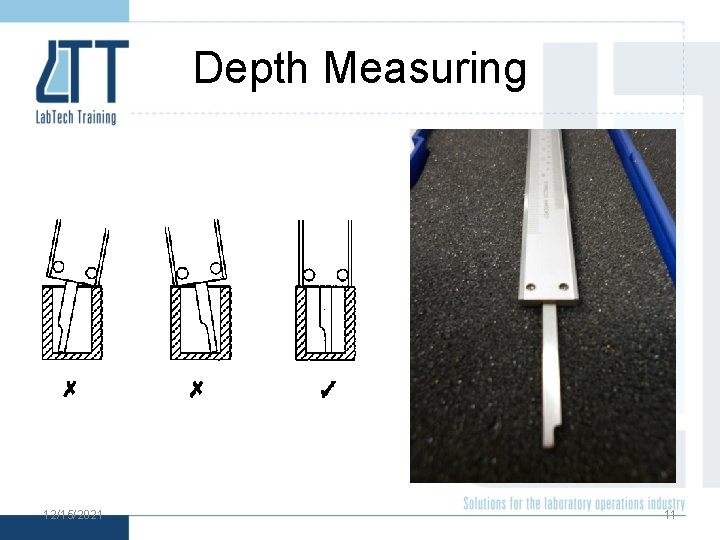
Depth Measuring 12/15/2021 11
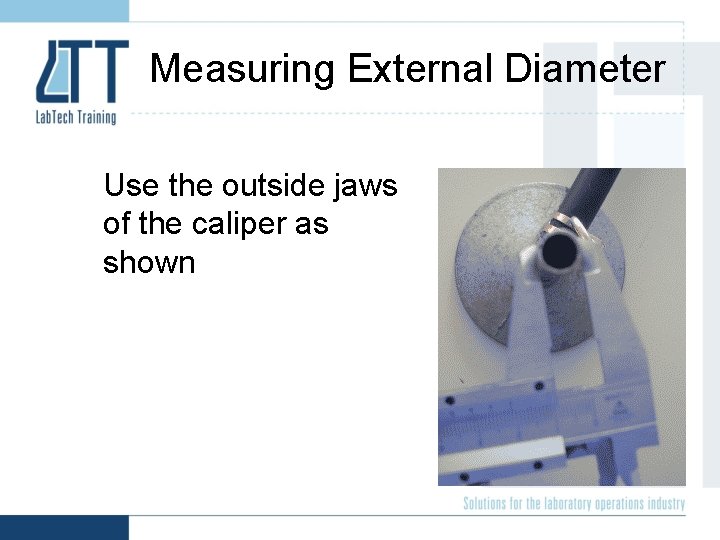
Measuring External Diameter Use the outside jaws of the caliper as shown
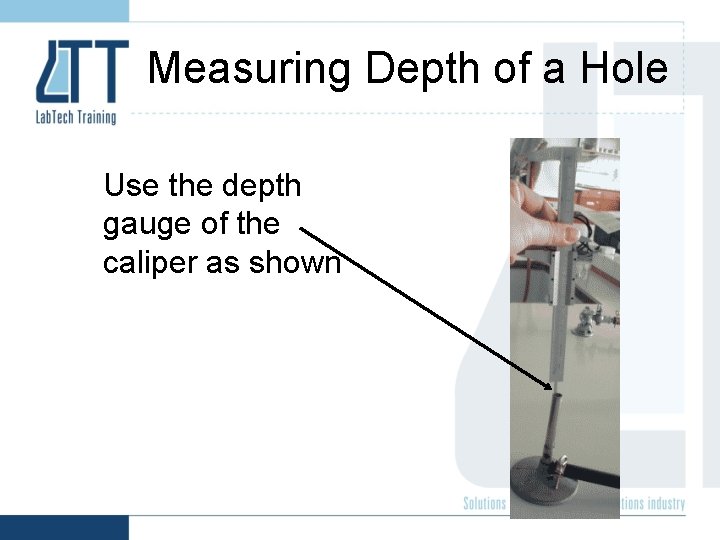
Measuring Depth of a Hole Use the depth gauge of the caliper as shown
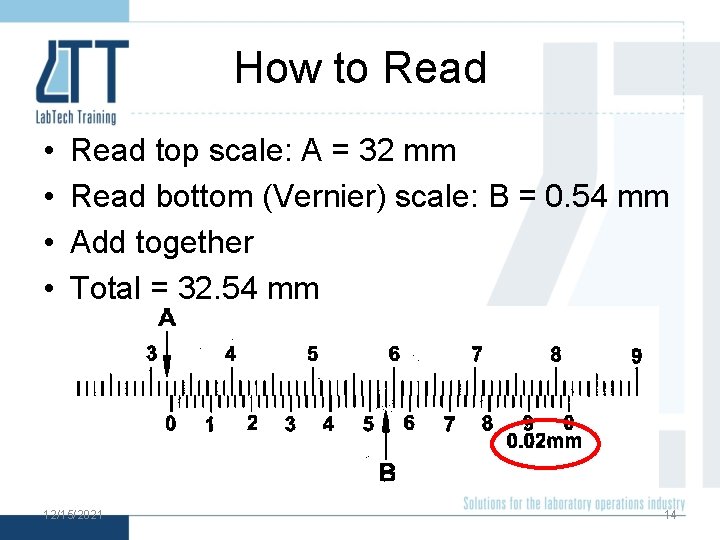
How to Read • • Read top scale: A = 32 mm Read bottom (Vernier) scale: B = 0. 54 mm Add together Total = 32. 54 mm 12/15/2021 14
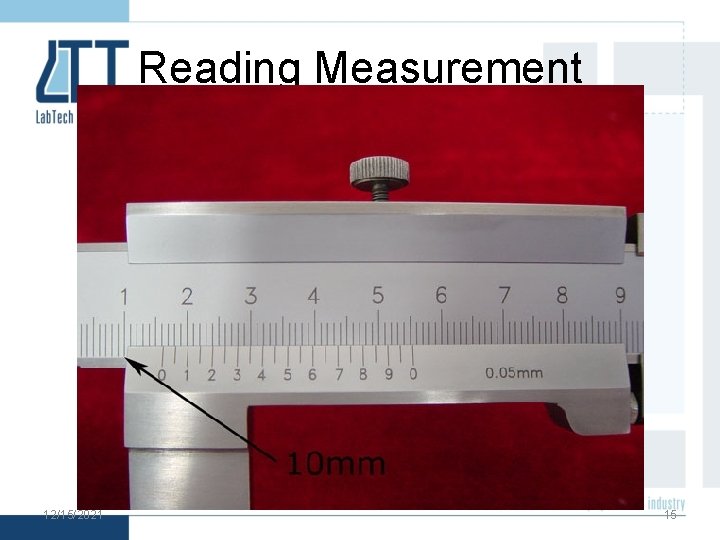
Reading Measurement 12/15/2021 15
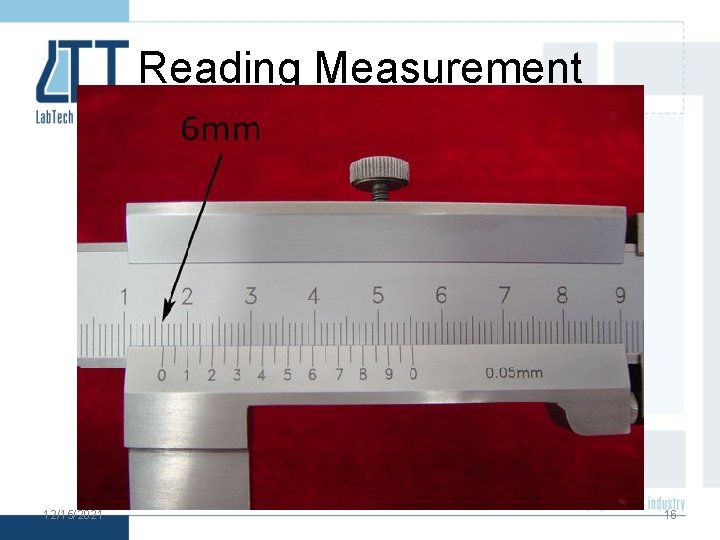
Reading Measurement 12/15/2021 16
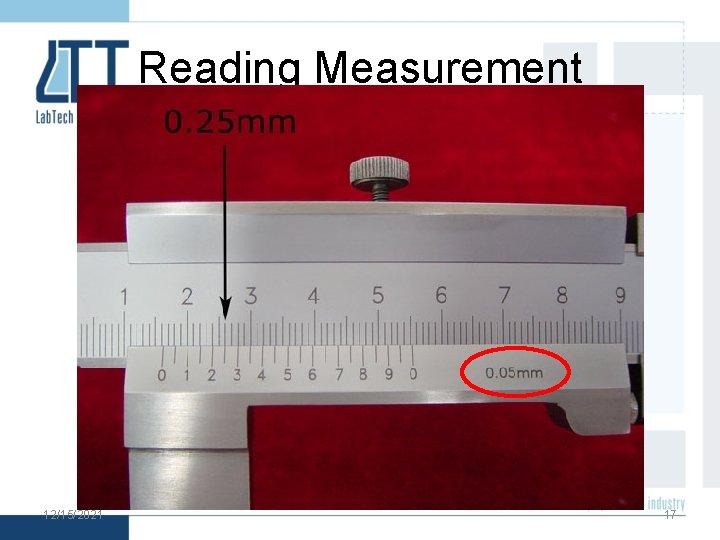
Reading Measurement 12/15/2021 17
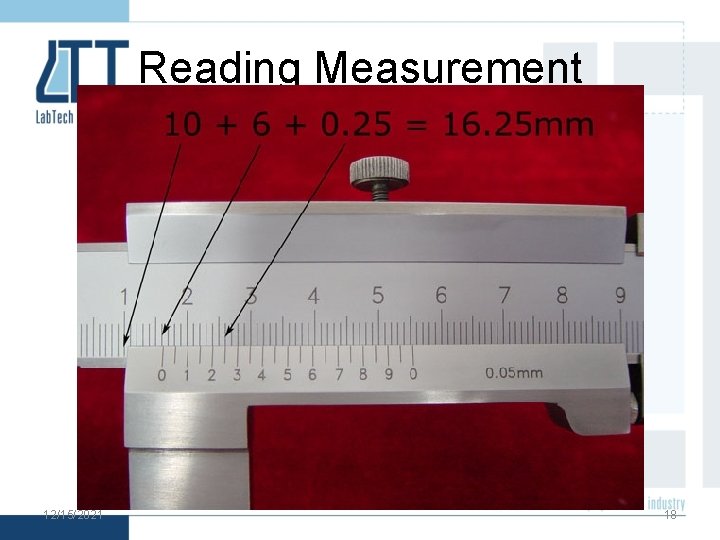
Reading Measurement 12/15/2021 18
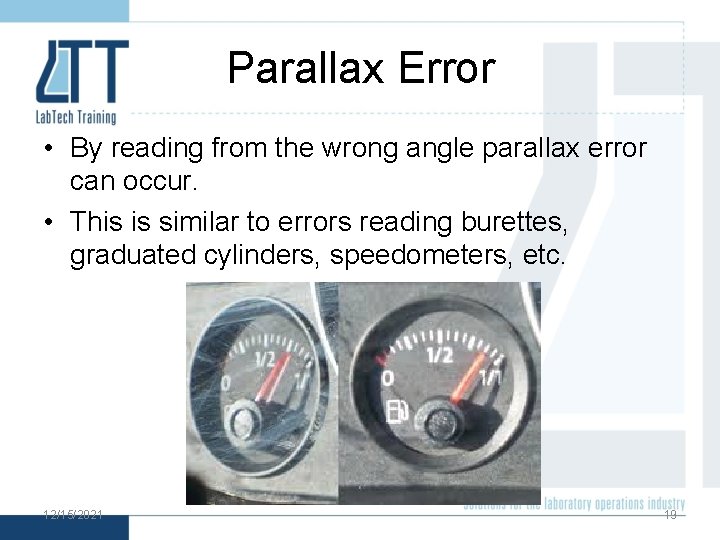
Parallax Error • By reading from the wrong angle parallax error can occur. • This is similar to errors reading burettes, graduated cylinders, speedometers, etc. 12/15/2021 19
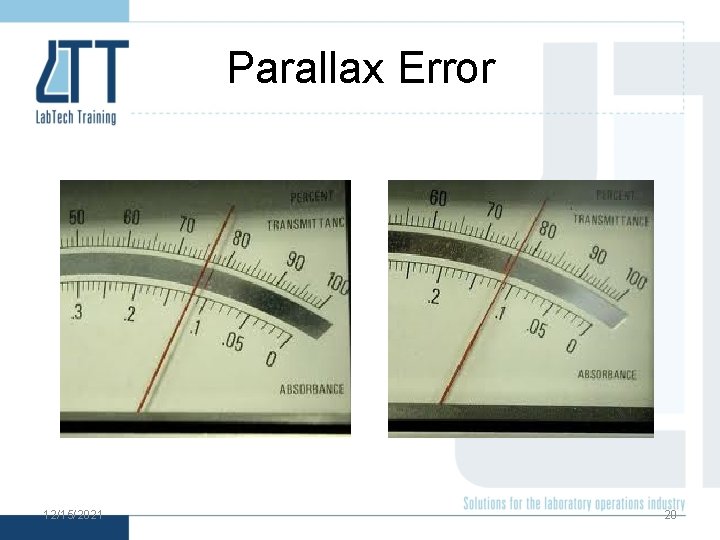
Parallax Error 12/15/2021 20
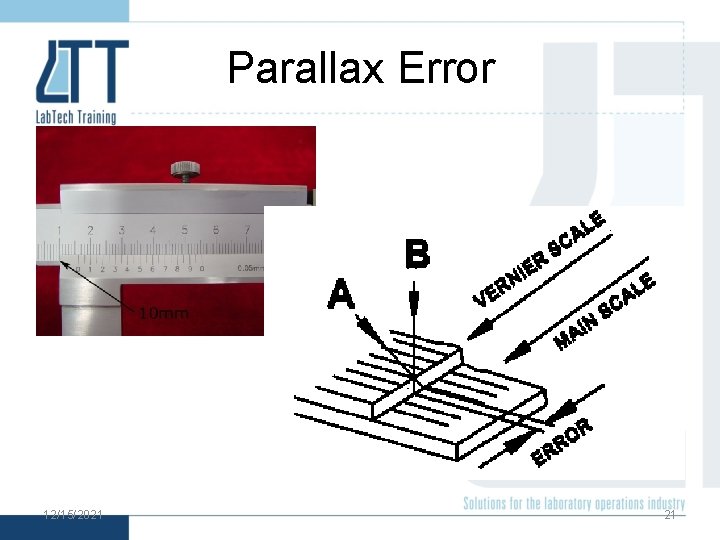
Parallax Error 12/15/2021 21
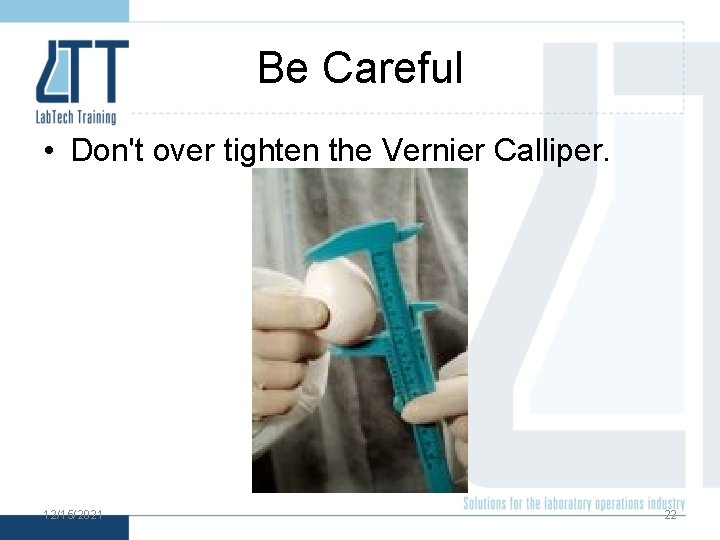
Be Careful • Don't over tighten the Vernier Calliper. 12/15/2021 22
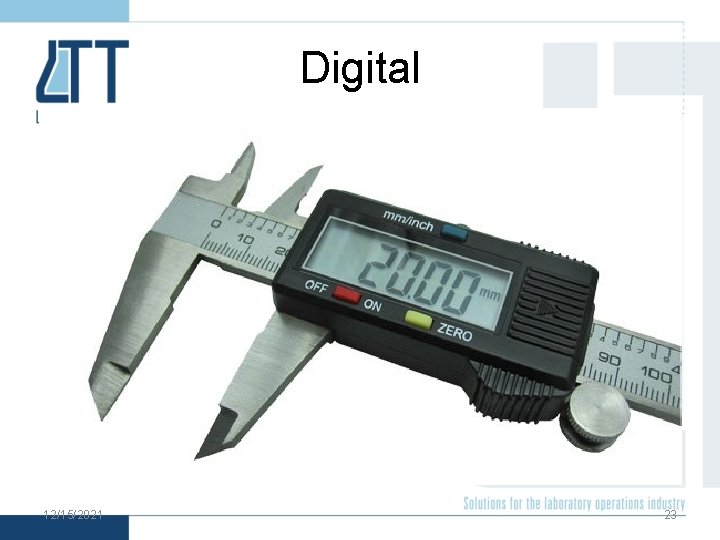
Digital 12/15/2021 23
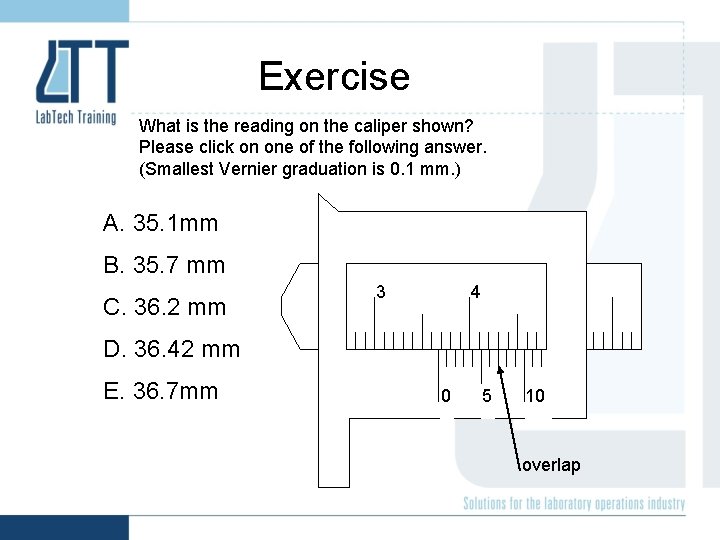
Exercise What is the reading on the caliper shown? Please click on one of the following answer. (Smallest Vernier graduation is 0. 1 mm. ) A. 35. 1 mm B. 35. 7 mm C. 36. 2 mm 3 3. 5 4 D. 36. 42 mm E. 36. 7 mm 0 5 10 overlap
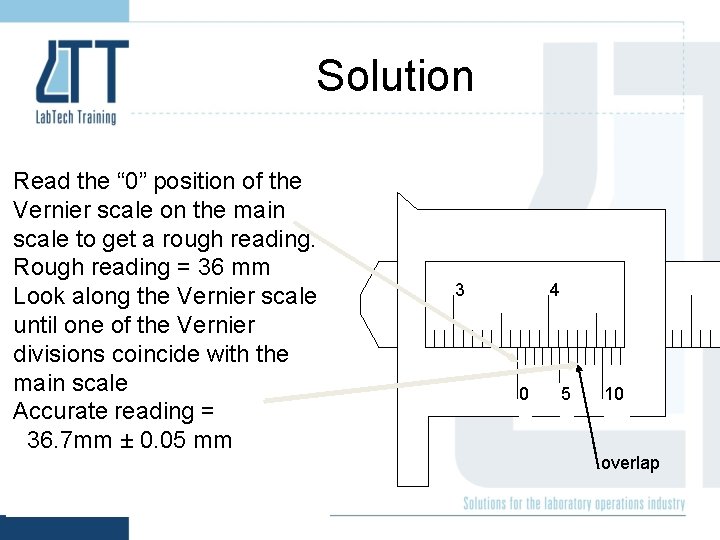
Solution Read the “ 0” position of the Vernier scale on the main scale to get a rough reading. Rough reading = 36 mm Look along the Vernier scale until one of the Vernier divisions coincide with the main scale Accurate reading = 36. 7 mm ± 0. 05 mm 3 4 0 5 10 overlap
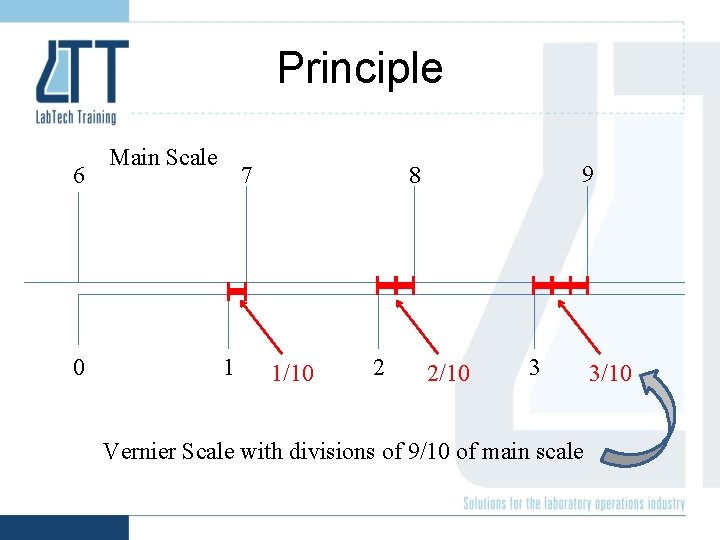
Principle 6 0 Main Scale 7 1 9 8 1/10 2 2/10 3 Vernier Scale with divisions of 9/10 of main scale 3/10
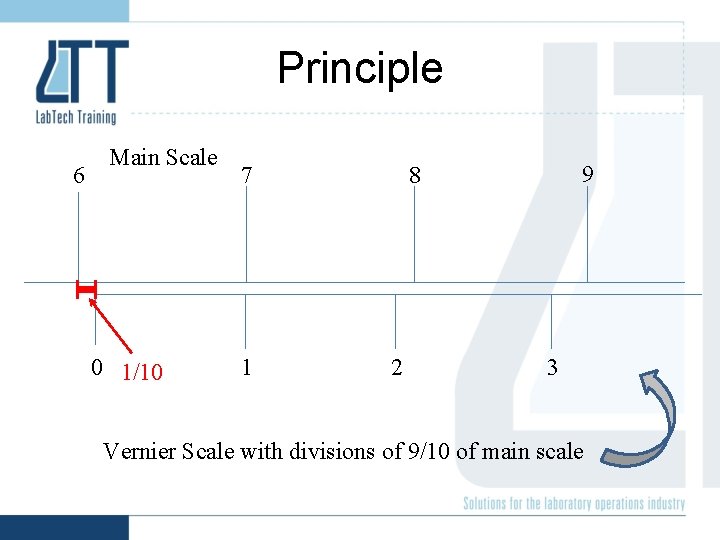
Principle 6 Main Scale 0 1/10 7 1 9 8 2 3 Vernier Scale with divisions of 9/10 of main scale
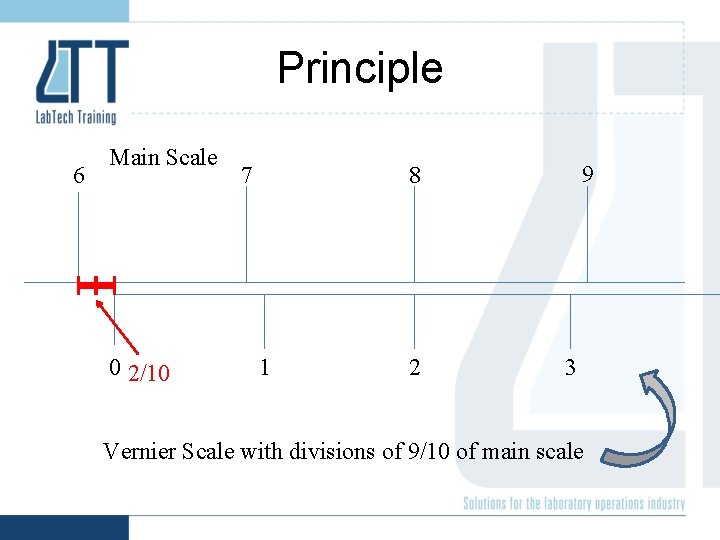
Principle 6 Main Scale 0 2/10 7 9 8 1 2 3 Vernier Scale with divisions of 9/10 of main scale
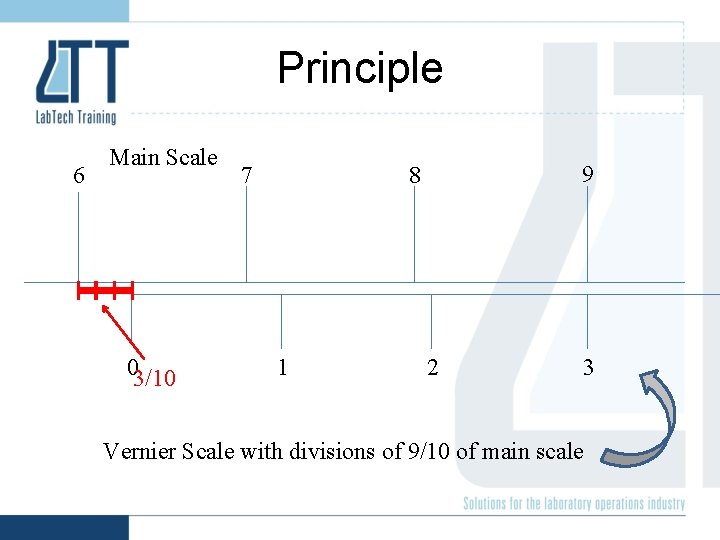
Principle 6 Main Scale 03/10 7 9 8 1 2 3 Vernier Scale with divisions of 9/10 of main scale
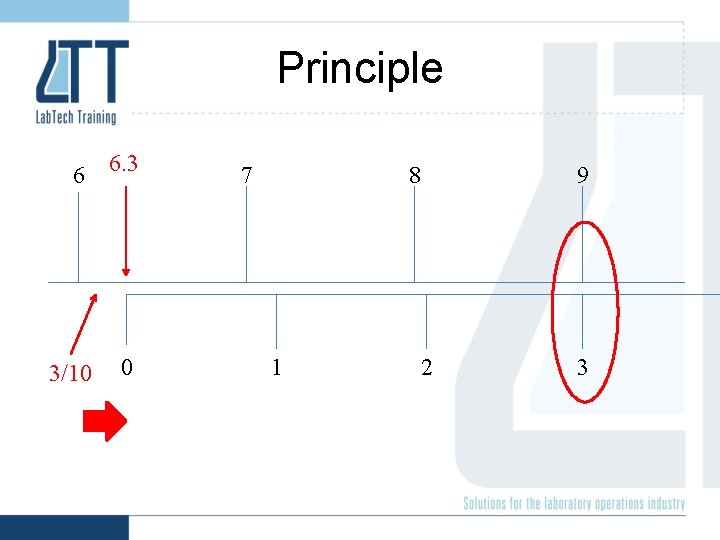
Principle 6 6. 3 3/10 0 7 8 1 9 2 3
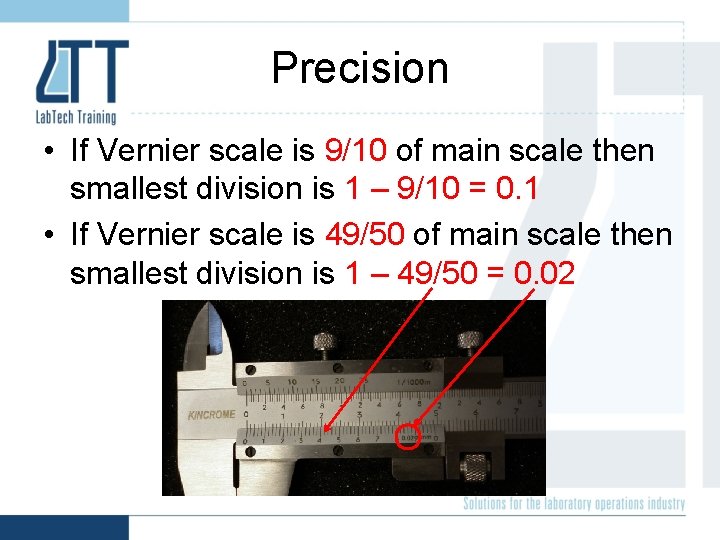
Precision • If Vernier scale is 9/10 of main scale then smallest division is 1 – 9/10 = 0. 1 • If Vernier scale is 49/50 of main scale then smallest division is 1 – 49/50 = 0. 02
Today’s practical • Today we are going use Vernier Callipers. • There are 5 metal cylinders which will be measured by each group using “working callipers”. • Each group will take turns measuring one of the cylinders using the “reference callipers”. • Results will be compared.
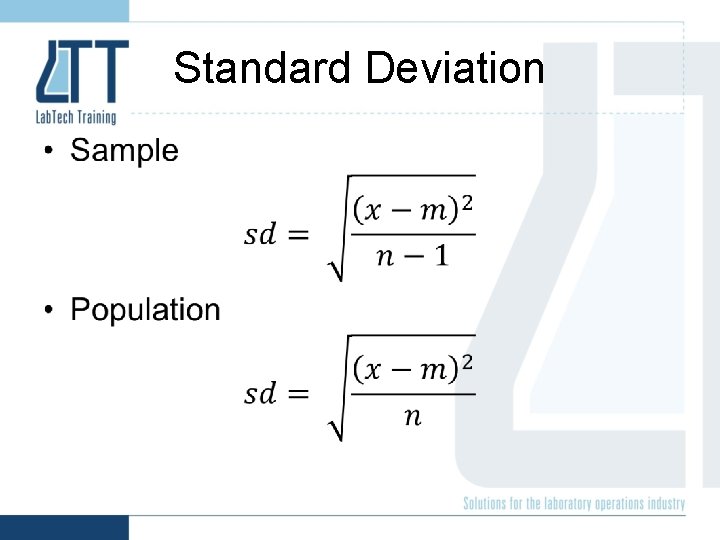
Standard Deviation •
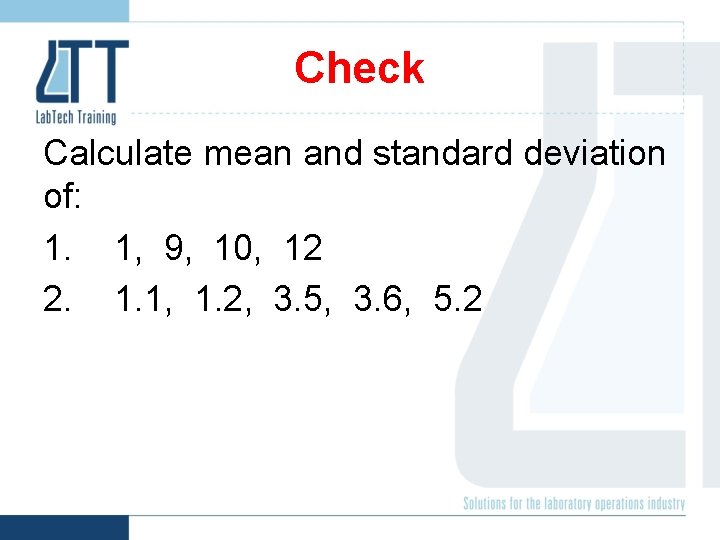
Check Calculate mean and standard deviation of: 1. 1, 9, 10, 12 2. 1. 1, 1. 2, 3. 5, 3. 6, 5. 2
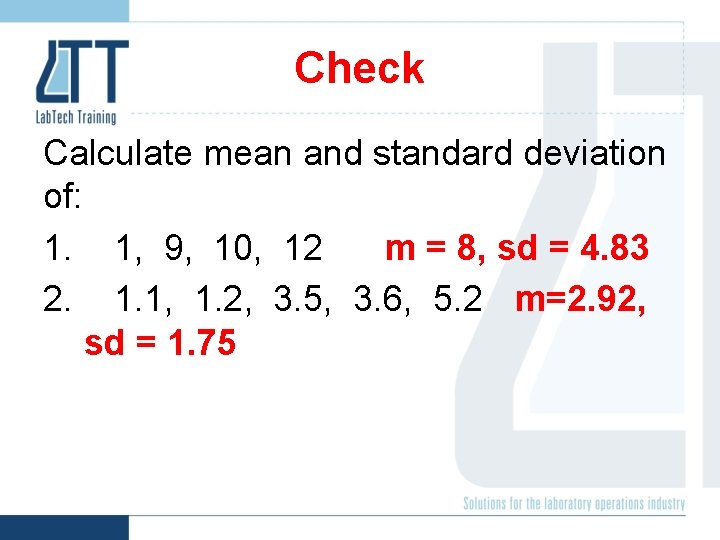
Check Calculate mean and standard deviation of: 1. 1, 9, 10, 12 m = 8, sd = 4. 83 2. 1. 1, 1. 2, 3. 5, 3. 6, 5. 2 m=2. 92, sd = 1. 75
- Slides: 35