
Labor Force Distribution 1870 1900 The Worker Immigrants

Labor Force Distribution 1870 -1900
The Worker – Immigrants • Former Farmers – Depression, Debt, Crop Prices • Irish and German (Pre 1880 s) – “Old Immigrants” • Eastern/Southern Europeans (Post 1880’s) – “New Immigrants” – Labor Contract Laws • Free Passage Deducted from paycheck Why do Industrialists encourage Immigration? What is this going to lead to?
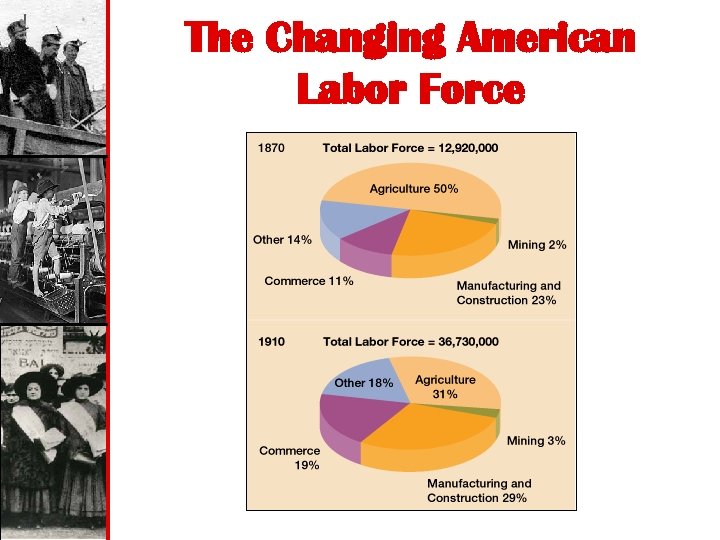
The Changing American Labor Force
The Worker – The Issues • Low Income – Avg. $450/yr “Poor Line” $600/yr • Women paid 20% less than men • Harsh Conditions – 10 -12 hrs/6 days per week – Little to no safety regulations • Child Labor – 15% of kids between 10 -15 yrs work • 60% in Agriculture – Early Child Labor Laws • Only set minimum of 12 yrs • Usually Ignored
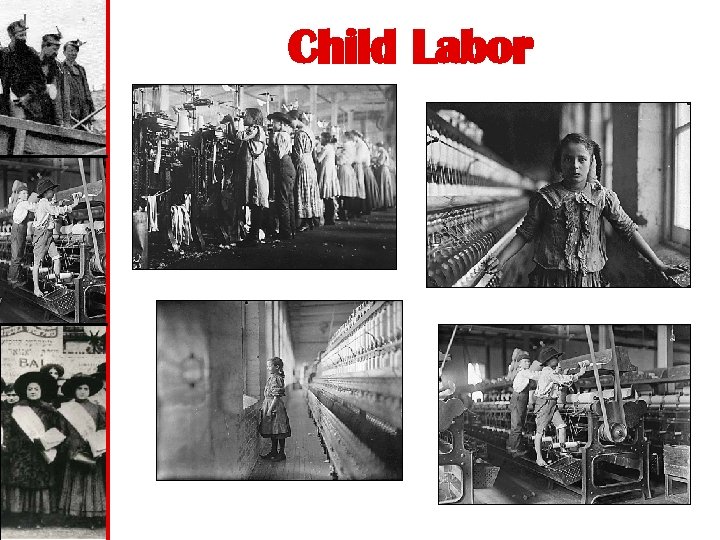
Child Labor
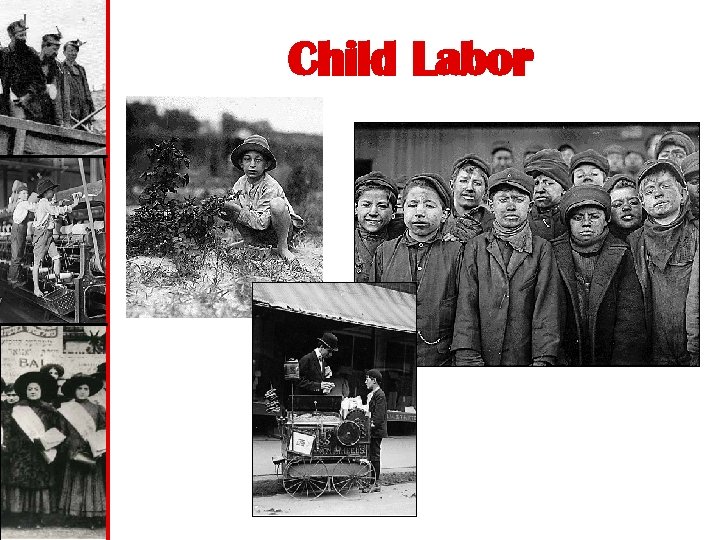
Child Labor
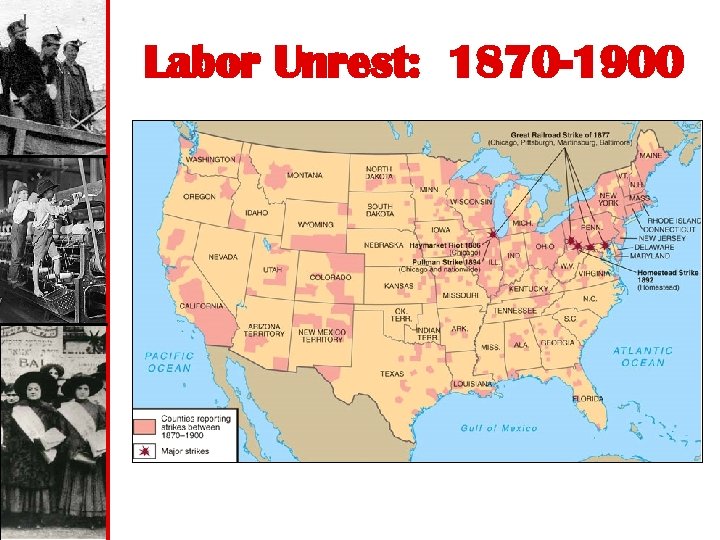
Labor Unrest: 1870 -1900
Emerging Unionism • Little success in early 19 th c. • Craft Unions – Grouped by specific skills – Too small and often isolated • Trade Unions – Often National Unions – Begin to grow in late 19 th c. – Usually looked down on due to violence
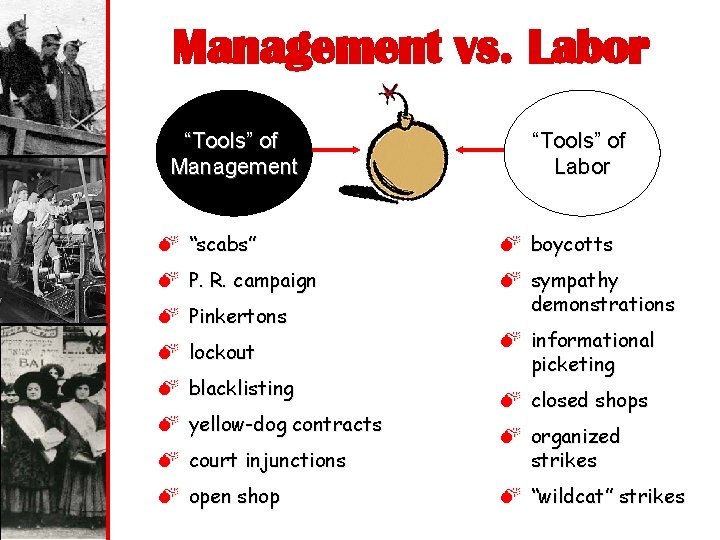
Management vs. Labor “Tools” of Management “Tools” of Labor M “scabs” M boycotts M P. R. campaign M sympathy demonstrations M Pinkertons M lockout M blacklisting M yellow-dog contracts M informational picketing M closed shops M court injunctions M organized strikes M open shop M “wildcat” strikes
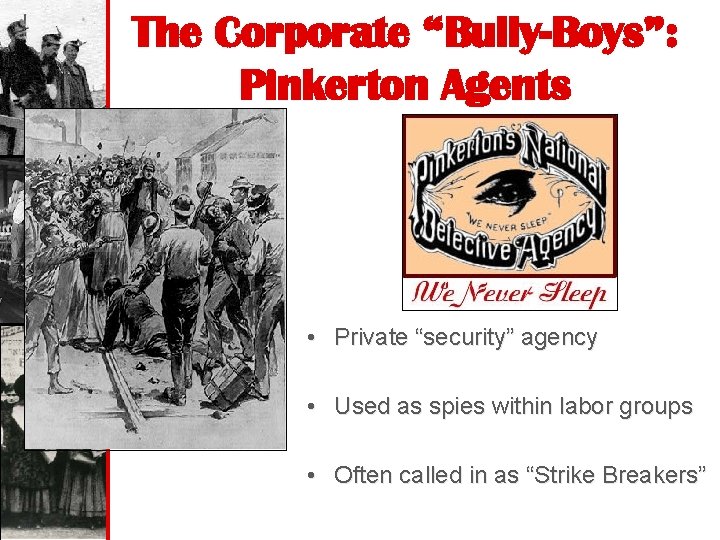
The Corporate “Bully-Boys”: Pinkerton Agents • Private “security” agency • Used as spies within labor groups • Often called in as “Strike Breakers”
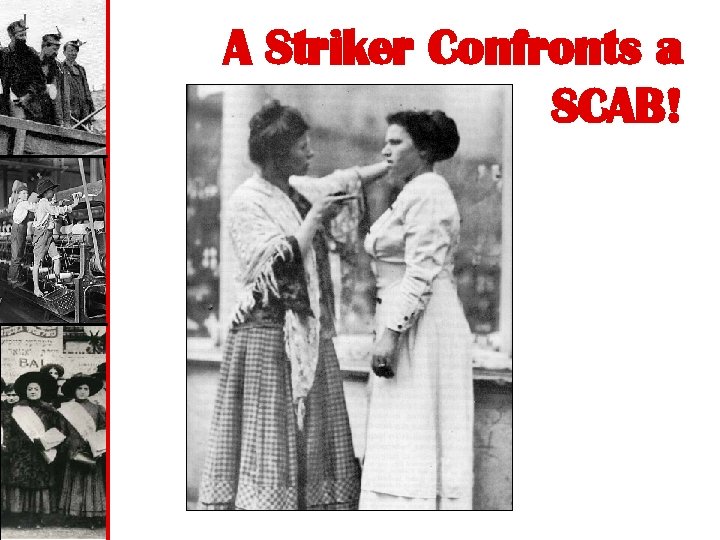
A Striker Confronts a SCAB!
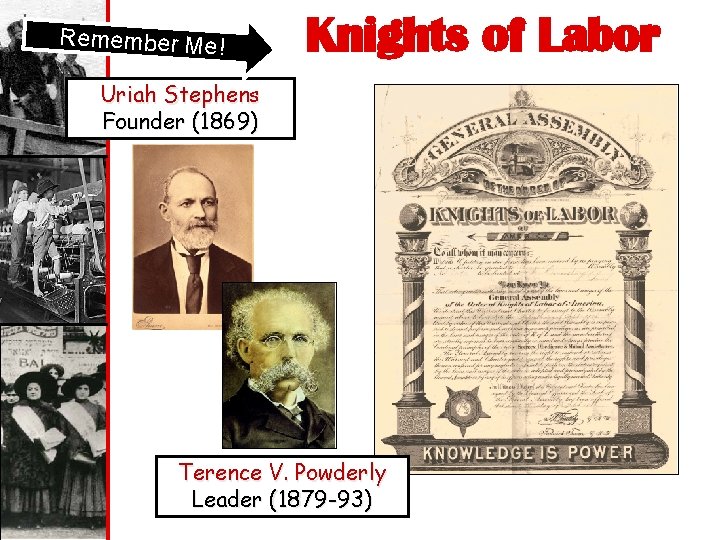
Remember Me! Knights of Labor Uriah Stephens Founder (1869) Terence V. Powderly Leader (1879 -93)
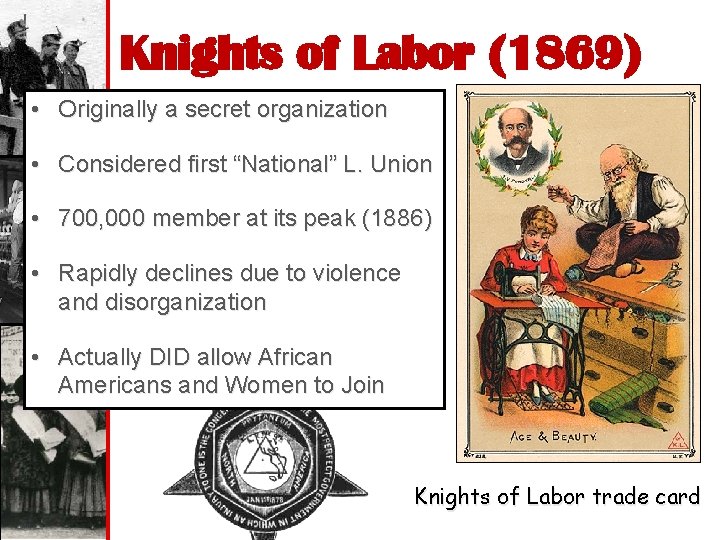
Knights of Labor (1869) • Originally a secret organization • Considered first “National” L. Union • 700, 000 member at its peak (1886) • Rapidly declines due to violence and disorganization • Actually DID allow African Americans and Women to Join Knights of Labor trade card
Goals of the Knights of Labor ù Health and Safety Regulations ù Weekly Pay in US $ ù Abolition of… ù Contract Labor ù Child Labor (under 15) ù Convict Labor ù Graduated Income Tax ù 8 Hour Workday ù Government Control of Railroads and Communication (Telegraphs/Telephones)
• That the public lands… be reserved for actual settlers; not another acre for railroads or speculators. • The adoption of measures providing for the health and safety of those engaged in mining and manufacturing, building industries • The enactment of laws to compel corporations to pay their employees weekly, in lawful money, • The prohibition by law of the employment of children under 15 years of age in workshops, mines and factories. • To prohibit the hiring out of convict labor. • That a graduated income tax be levied. • That the Government shall obtain possession, by purchase, under the right of eminent domain, of all telegraphs, telephones and railroads • To secure for both sexes equal pay for equal work.
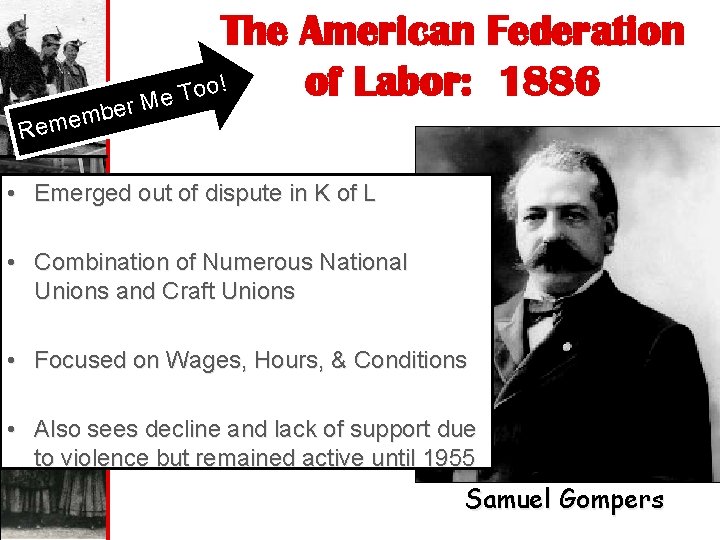
The American Federation of Labor: 1886 oo! T e r. M be m e Rem • Emerged out of dispute in K of L • Combination of Numerous National Unions and Craft Unions • Focused on Wages, Hours, & Conditions • Also sees decline and lack of support due to violence but remained active until 1955 Samuel Gompers
How the AF of L Would Help the Workers ù Primarily “Skilled” Laborers ù “Bread and Butter” Issues ù Higher Wages ù Better Conditions ù Shorter Working Hours ù Pushed for closed shops.
Major Labor Disputes and Violence • 1877 – Great Railroad Strike • 1886 – Haymarket Riot • 1892 – Homestead Strike • 1894 – Pullman Strike
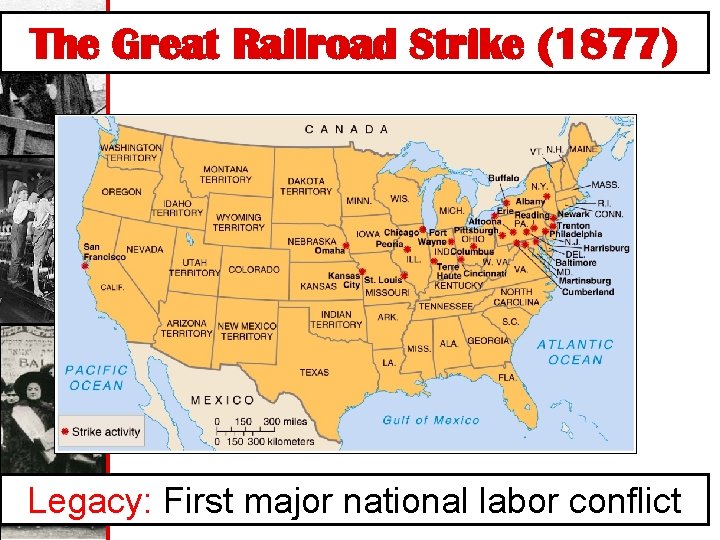
The Great Railroad Strike (1877) Legacy: First major national labor conflict
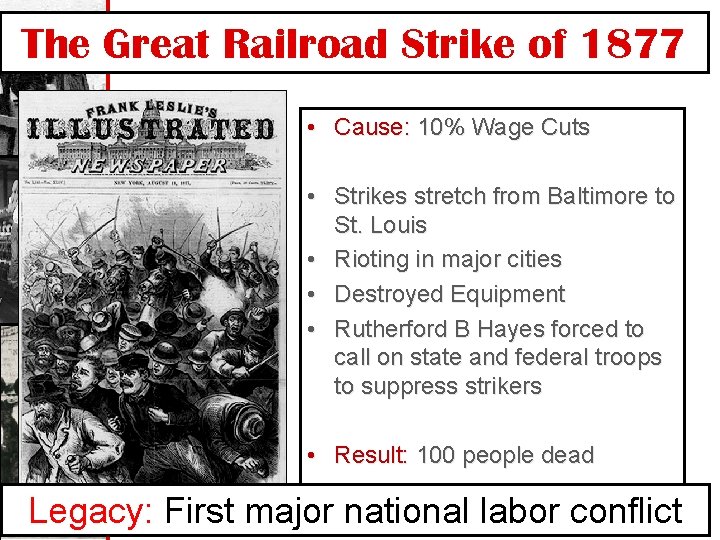
The Great Railroad Strike of 1877 • Cause: 10% Wage Cuts • Strikes stretch from Baltimore to St. Louis • Rioting in major cities • Destroyed Equipment • Rutherford B Hayes forced to call on state and federal troops to suppress strikers • Result: 100 people dead Legacy: First major national labor conflict
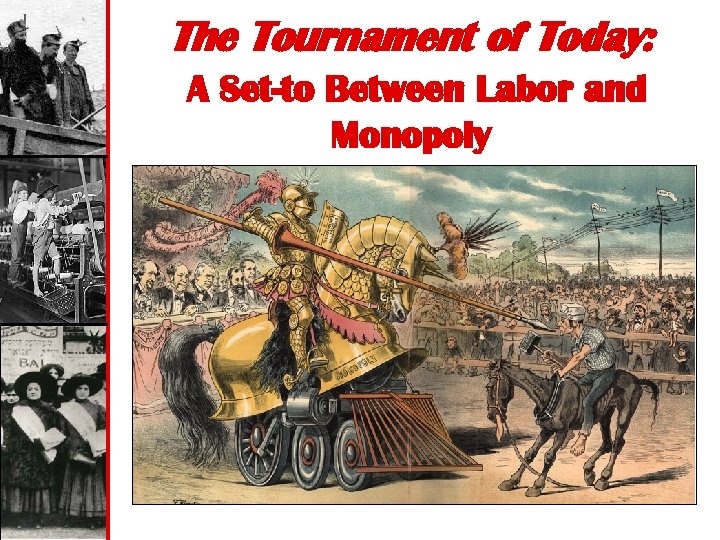
The Tournament of Today: A Set-to Between Labor and Monopoly
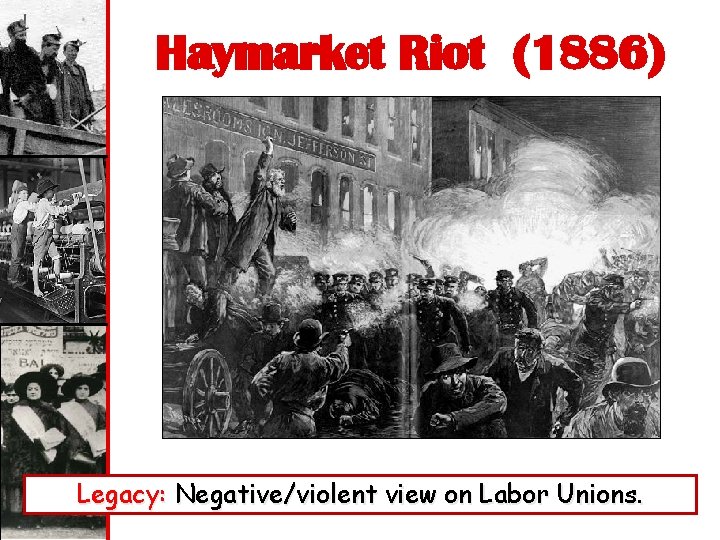
Haymarket Riot (1886) Legacy: Negative/violent view on Labor Unions.
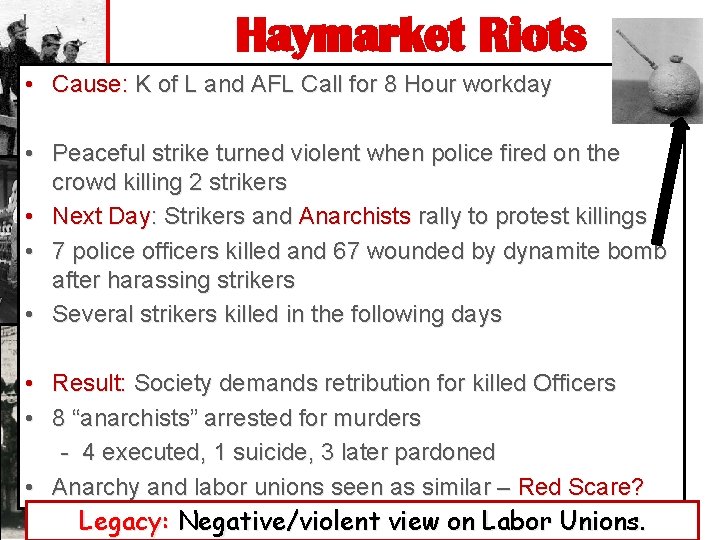
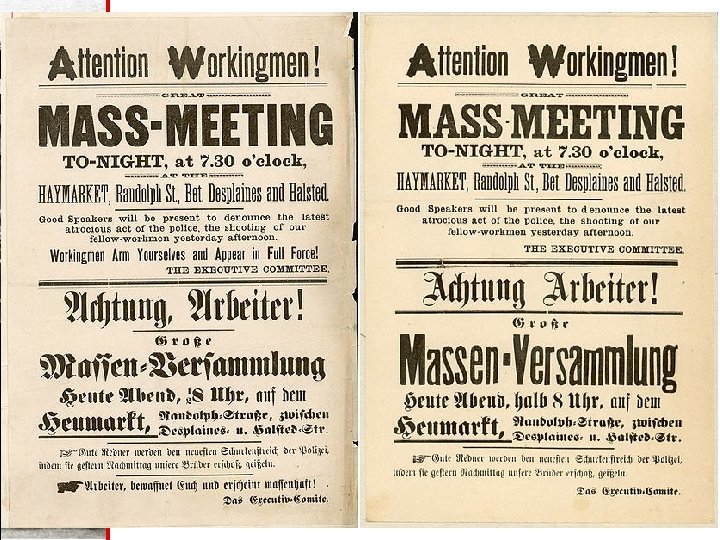
Haymarket Riots • Cause: K of L and AFL Call for 8 Hour workday • Peaceful strike turned violent when police fired on the crowd killing 2 strikers • Next Day: Strikers and Anarchists rally to protest killings • 7 police officers killed and 67 wounded by dynamite bomb after harassing strikers • Several strikers killed in the following days • Result: Society demands retribution for killed Officers • 8 “anarchists” arrested for murders - 4 executed, 1 suicide, 3 later pardoned • Anarchy and labor unions seen as similar – Red Scare? Legacy: Negative/violent view on Labor Unions.
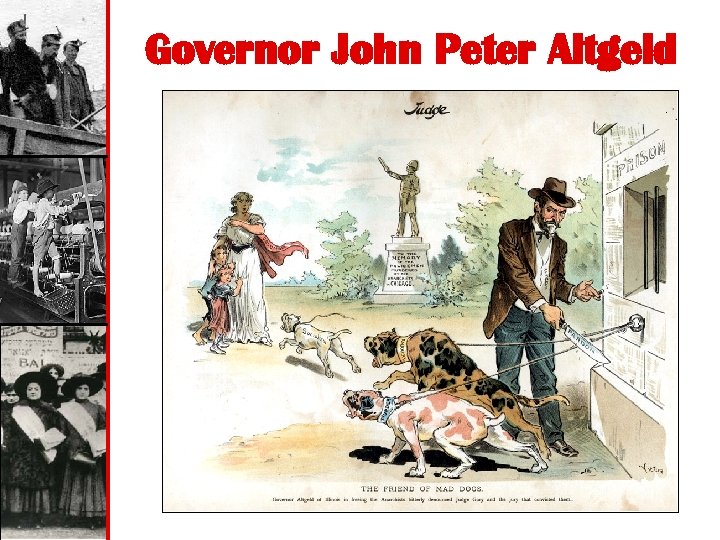
Governor John Peter Altgeld
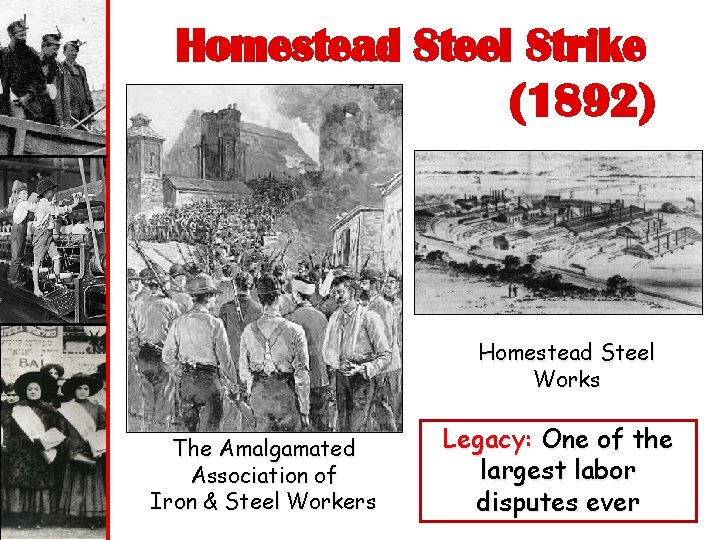
Homestead Steel Strike (1892) Homestead Steel Works The Amalgamated Association of Iron & Steel Workers Legacy: One of the largest labor disputes ever
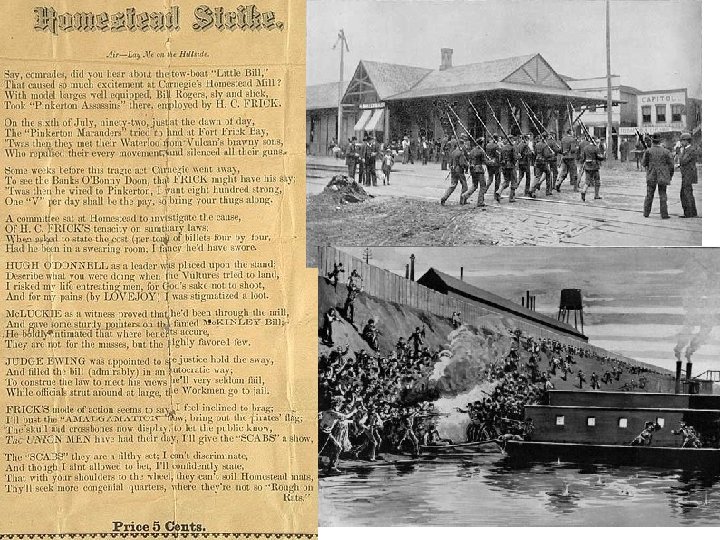
Homestead Strike • Cause: Carnegie Steel innovations put large number of skilled steel workers out of jobs • Carnegie orders Henry Clay Frick to cut wages in hope of forcing skilled workers to quit. • 300 Pinkertons called in to break strike • AA strikers refuse to let strike breakers through… Battle ensues • Result: After 3 agents and 10 strikers are killed, Pinkertons retreat • Soon after, Pennsylvania calls in state militia to end the strike (4 months) Legacy: One of the largest • AA gradually gives up. labor disputes ever
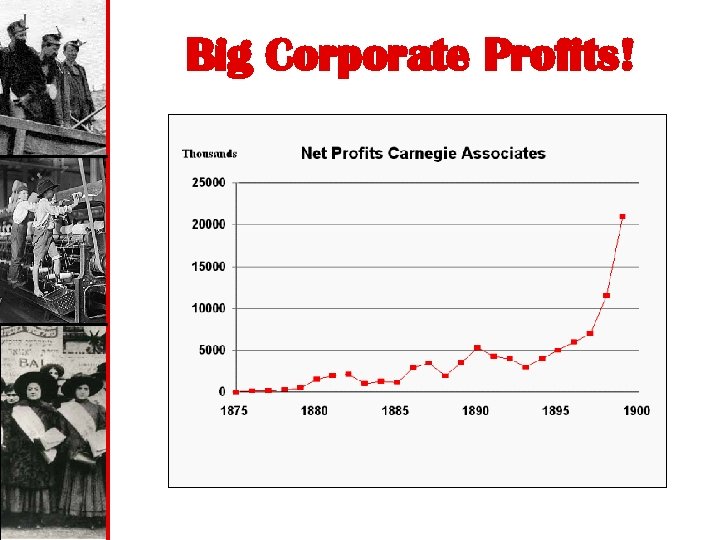
Big Corporate Profits!
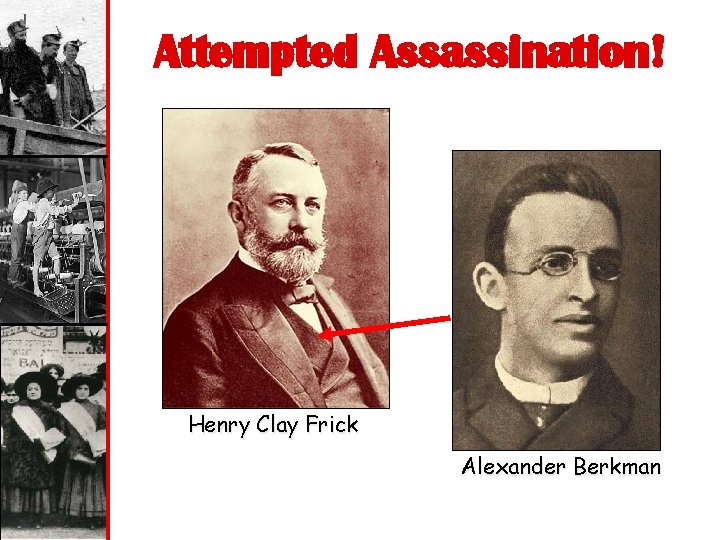
Attempted Assassination! Henry Clay Frick Alexander Berkman
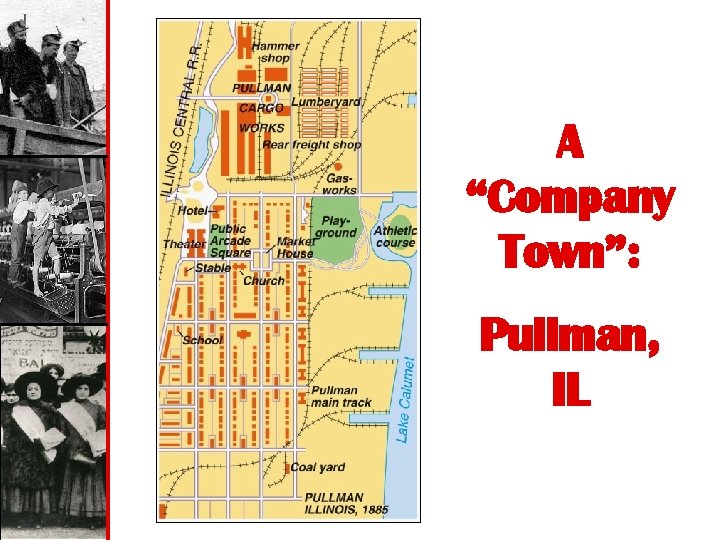
A “Company Town”: Pullman, IL
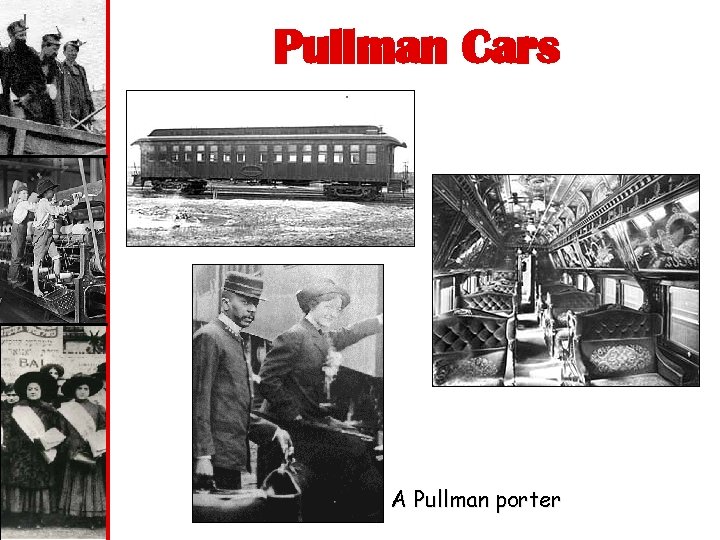
Pullman Cars A Pullman porter
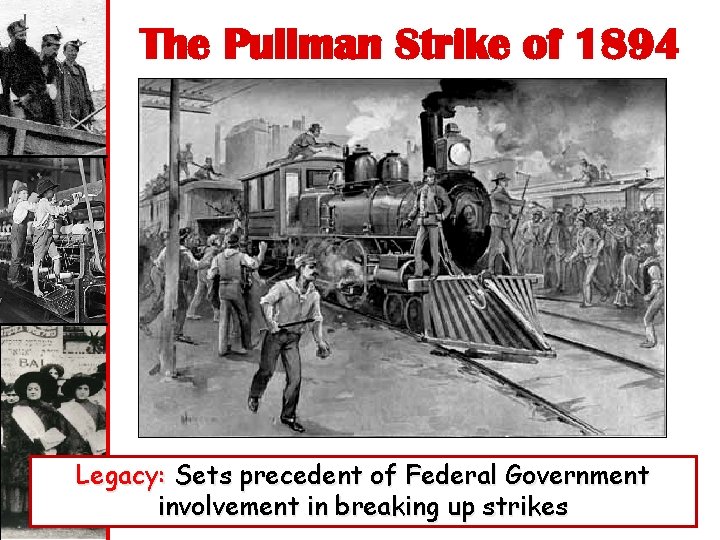
The Pullman Strike of 1894 Legacy: Sets precedent of Federal Government involvement in breaking up strikes
Pullman Strike • Cause: 25% wage cuts and high rent • Pullman Company gains support of American Railway Union (Led by Eugene Debs) • Strike centralized outside of Chicago but stretches across 27 states • Result: Debs and several strike leaders arrested after Federal troops are called in • Grover Cleveland claimed strike prevented the delivering of mail and was therefore a federal crime Legacy: Sets precedent of Federal Government involvement in breaking up strikes
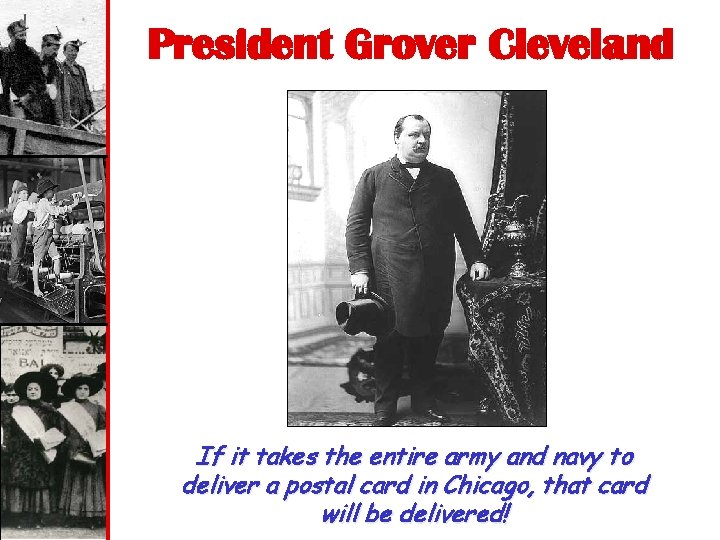
President Grover Cleveland If it takes the entire army and navy to deliver a postal card in Chicago, that card will be delivered!
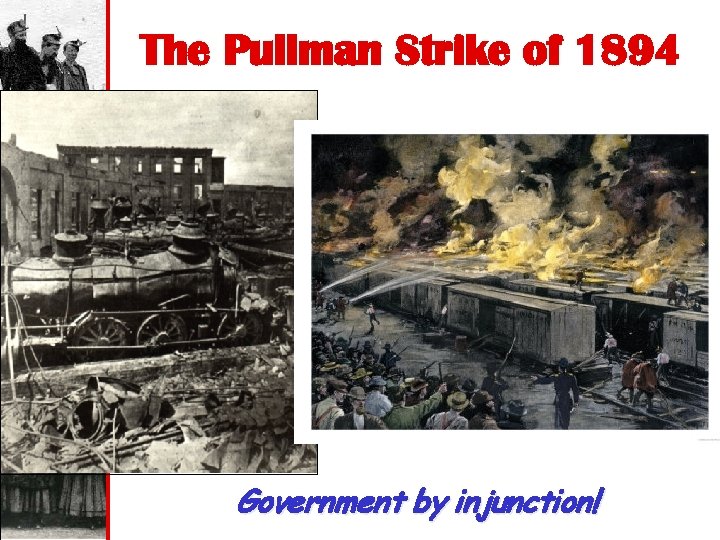
The Pullman Strike of 1894 Government by injunction!

th 19 Legacy of Century Labor Movement • Positives – 8 Hour workday for some workers – Abolition of Contract Labor – Some child labor laws – Some workers compensation

Legacy of 19 th Century Labor Movement • Negatives – Overall, little effectiveness • Many historians claim workers have less rights in 1900 than they did in 1860 • Labor Unions earn negative/violent name in middle and upper class America • Related to Anarchy and Socialism (Later, Communism) • Why? – Majority of workers not allowed in major unions • Immigrants, African Americans, Children, Women – Growing Corporations = Too much $ and power
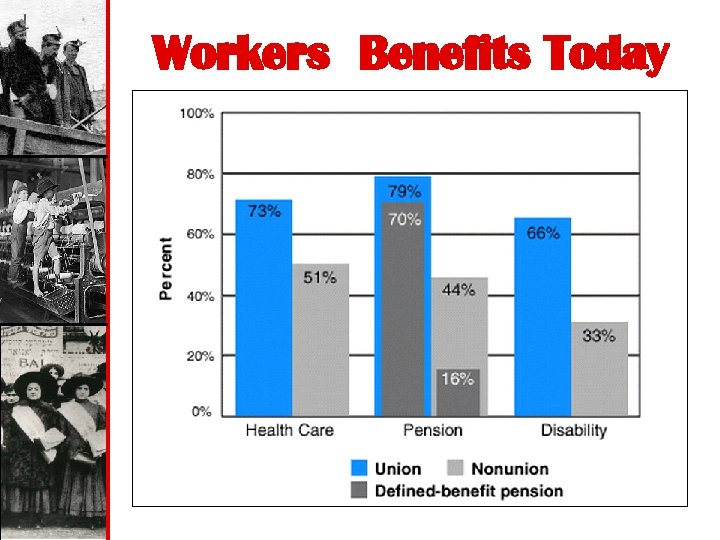
Workers Benefits Today

The Rise & Decline of Organized Labor
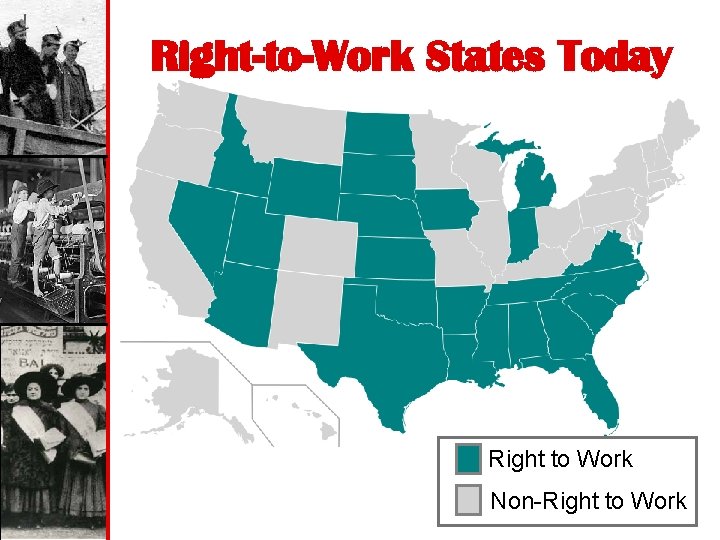
Right-to-Work States Today Right to Work Non-Right to Work
- Slides: 42