
Labor and Birth Physiologic Management of 2 nd
Labor and Birth Physiologic Management of 2 nd Stage Epidural Analgesia Pam Jordan, Ph. D, RNC Winter 2014

Promoting Comfort in Labor and Birth Created by Anna Rourke, BSN, RN
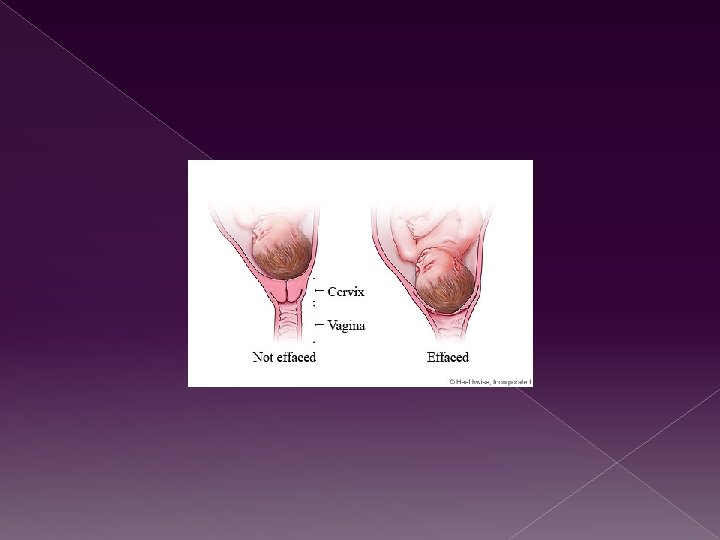
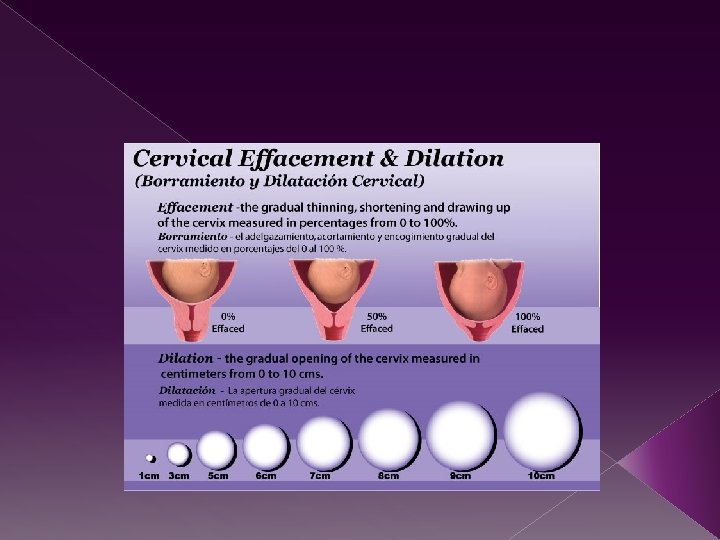
Labor is… • Uterine contractions that result in thinning [effacement] and opening [dilation] of the uterine cervix

Factors Affecting the Labor Process The 5 Ps
1. The Passenger (fetus) 1. The birth Passageway (pelvis & birth canal) 1. The Position of the fetus 1. The Physiologic forces of labor 1. The woman’s Psyche
Cervical Effacement • Estrogen stimulates uterine muscle contractions • Collagen fibers in the cervix are broken down • Upper uterine segment thickens and pulls up • Lower segment expands and thins out=effacement [reported as 0 to 100%]
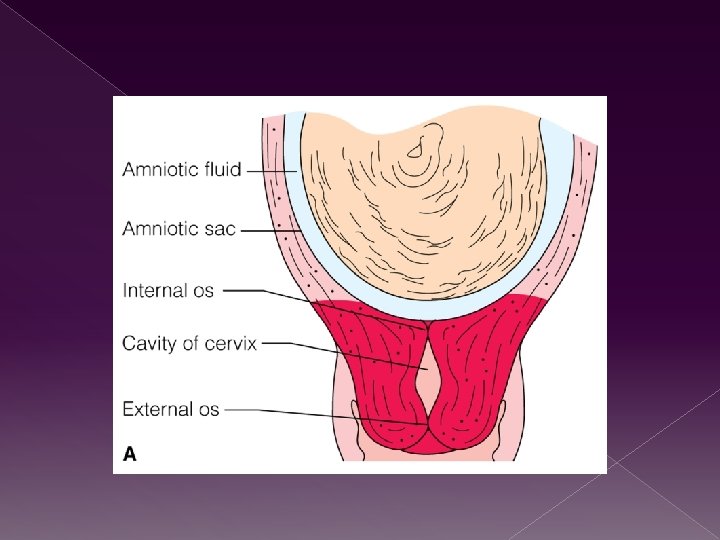
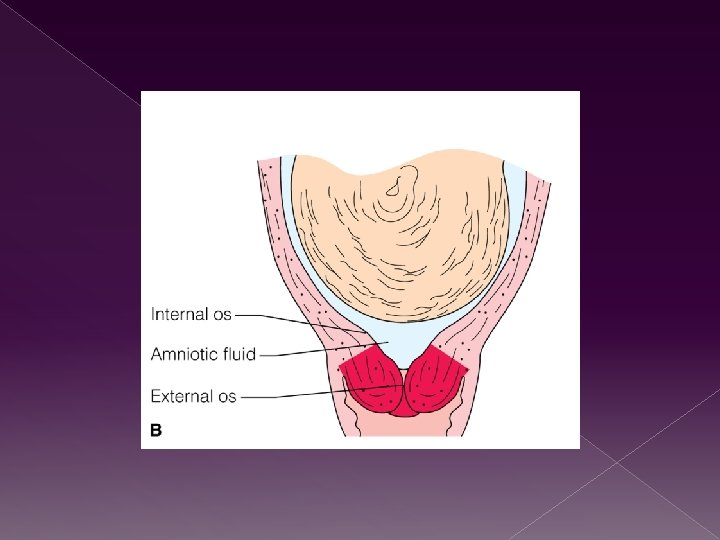
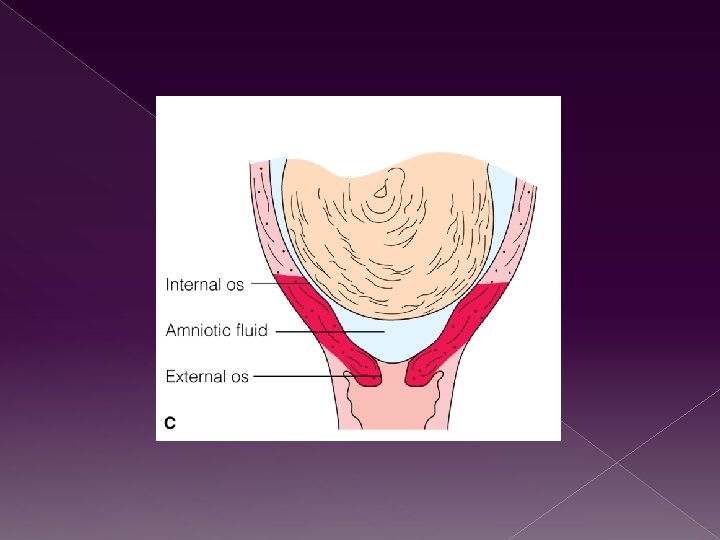
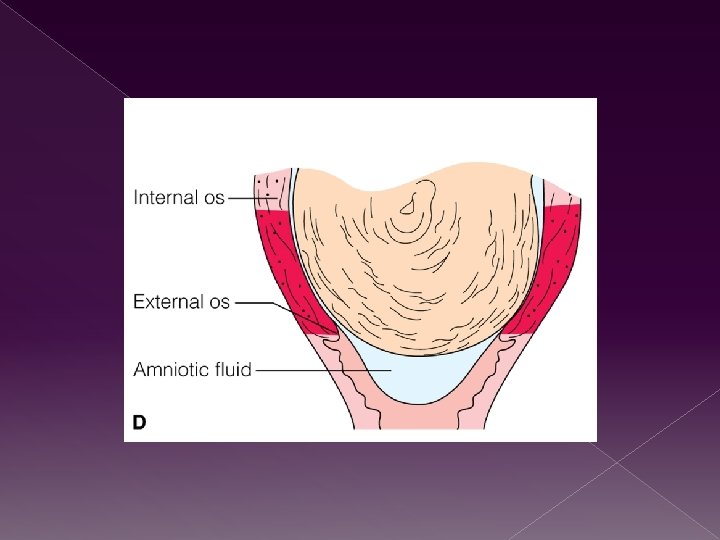

Like pulling a turtle neck over the baby’s head— think about how it shortens [effacement]and opens [dilates]
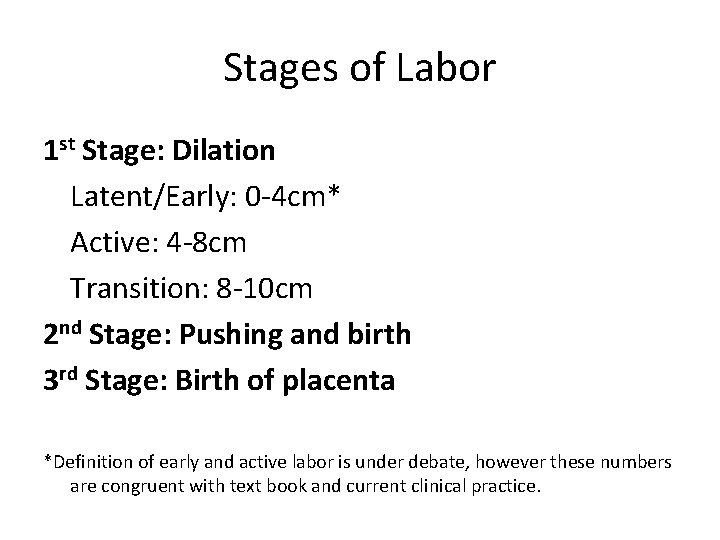
Stages of Labor 1 st Stage: Dilation Latent/Early: 0 -4 cm* Active: 4 -8 cm Transition: 8 -10 cm 2 nd Stage: Pushing and birth 3 rd Stage: Birth of placenta *Definition of early and active labor is under debate, however these numbers are congruent with text book and current clinical practice.
How Labor Can Start: Ctx Physical Sensations • Back ache • Menstrual-like cramps Emotions • Excitement • Relief • Confidence • Nervous Management • Labor at home until ctx are 4: 1 OR until SROM • Rest • Eat
How Labor Can Start: PROM Premature rupture of membranes occurs in 10% of women. This is defined as rupture of membranes before contractions begin. Management • Active labor must be established within 24 hours of PROM because of infection concerns. • Pt advised to come to hospital for monitoring and induction of labor. • No vaginal exams unless medically necessary.
First Stage: Early Labor • General Characteristics – Dilation from 0 -4 cm – Ctx: mild: 10 -30 min apart X 30 sec long. Moderate: 5 -7 min X 30 -40 sec. – Can last hours or days – Dilation is slow – Quality of discomfort: cramping – Location of discomfort: low abdomen, low back, hips, and/or thighs – Intensity of discomfort: varies widely, but mostly mild/moderate – Mood: excited, confident – Can walk and talk through ctx for the most part

Pain vs. Suffering Nurses can make all the difference!
First Stage: Early Labor • Comfort measures: Psychosocial – Establish rapport with patient by being yourself. Allow yourself to care while maintaining professionalism. – Be explicit with your patient that you are there to help them through the birth process. Encourage them to ask you for anything they need and/or to ask questions. – Match the mood/tone of the patient. – Normalize “slow” progress and provide encouragement.
Suggested Phrases: Early Labor During early labor, active coaching is not indicated for many patients. Silence is golden! • Good job • That’s the way • Good work
First Stage: Early Labor • Comfort measures: Physical – Positions • • • Walking Sitting Rocking on birth ball Rocking chair Side lying Slow dancing/swaying – Breathing • Slow, deep breaths – Massage • • Light touch on back Shoulder/neck Hips Sacral pressure if back painful with ctx – Heat/Ice • Heat on back • Ice on back • Heat on low abdomen
First Stage: Early Labor • Promoting Progress – Provide hydration and nutrition • PO: sips of clear liquid after every few ctx • IV: LR @ 150 m. L/h as ordered • Encourage snacking/meals as ordered and tolerated – Reduce stress • Provide for a calm, modest environment • Answer patient questions/explain interventions or plan – Balance Activity with Rest • Encourage restful positions and/or massage alternating with active positions
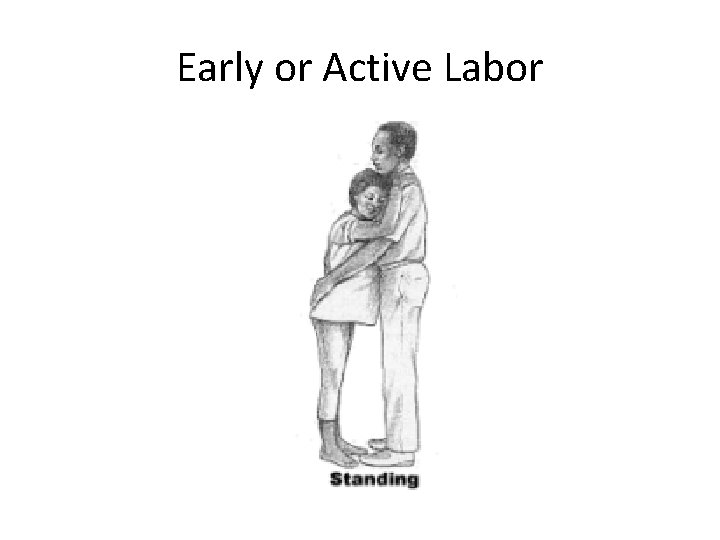
Early or Active Labor

Promoting Relaxation
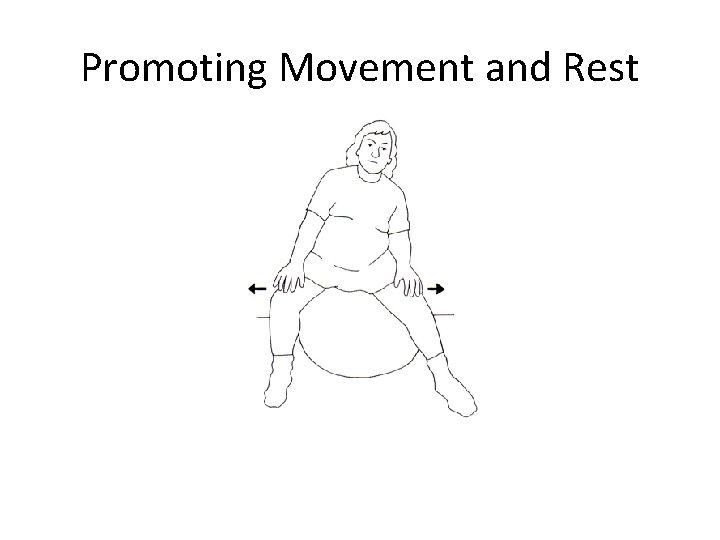
Promoting Movement and Rest
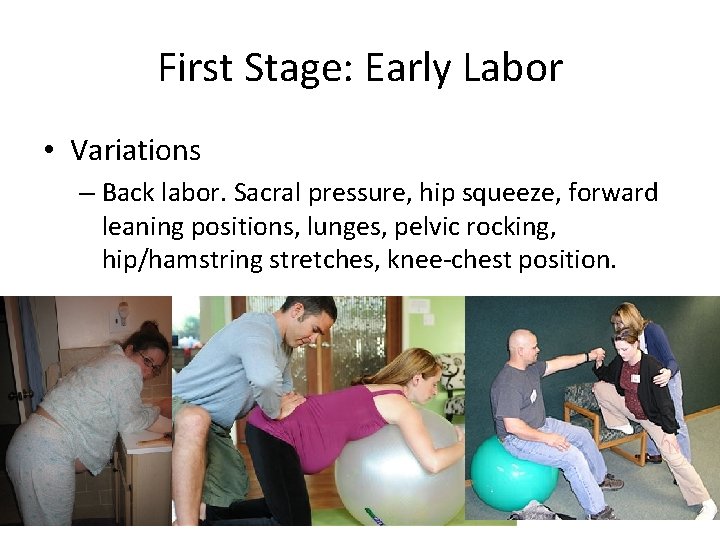
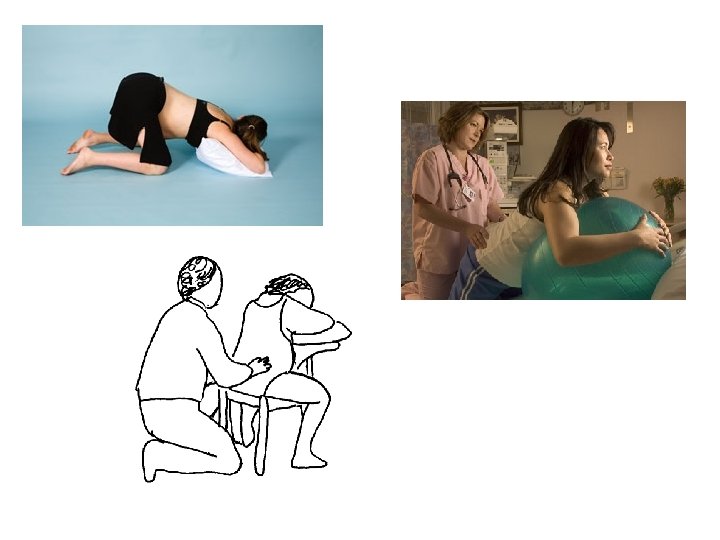
First Stage: Early Labor • Variations – Back labor. Sacral pressure, hip squeeze, forward leaning positions, lunges, pelvic rocking, hip/hamstring stretches, knee-chest position.
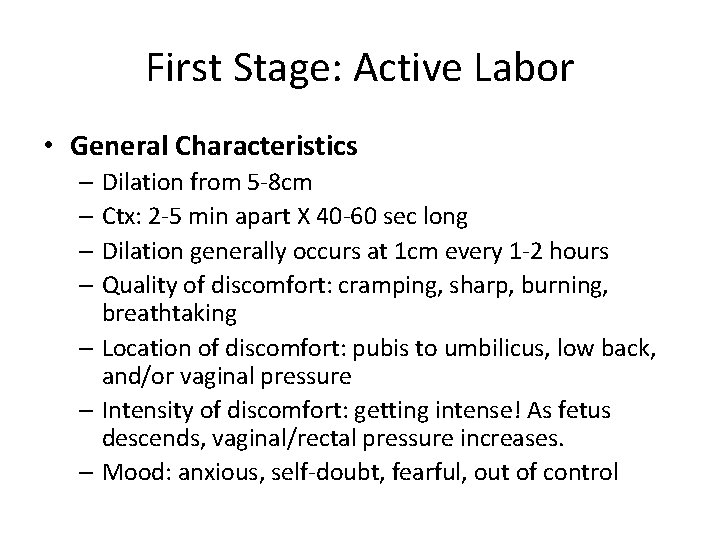
First Stage: Active Labor • General Characteristics – Dilation from 5 -8 cm – Ctx: 2 -5 min apart X 40 -60 sec long – Dilation generally occurs at 1 cm every 1 -2 hours – Quality of discomfort: cramping, sharp, burning, breathtaking – Location of discomfort: pubis to umbilicus, low back, and/or vaginal pressure – Intensity of discomfort: getting intense! As fetus descends, vaginal/rectal pressure increases. – Mood: anxious, self-doubt, fearful, out of control
First Stage: Active Labor • Comfort measures: Psychosocial – Provide assurance/encouragement through each ctx – Active coaching during ctx – Active relaxation between ctx – Give direction/suggestions, not choices – Give permission/encourage rhythmic noise and movement natural to the pt – Stay within 12 -24 inches of pt – Let pt know when ctx peaks
Suggested Phrases: Active Labor • • You’re doing it That’s the way That’s right Beautiful job Great job Excellent Deep breath and blow • • Blow Let your breath out Stay with it Just like that A few more breaths Let’s get through this one It’s coming down now
Fist Stage: Active Labor • Comfort measures: Physical – Positions • • Toilet Rocking chair Birth ball Forward leaning Hands/knees Supported squat Tub – Breathing • Slow, deep breaths • Breathe and blow – Massage • • Break popsicle sticks Deep pressure thumbs Hip squeeze Sacral pressure – Heat/Ice • Cold cloth on head • Heat on back
Fist Stage: Active Labor • Promoting Progress – Implement measures from slide 9 (early labor). – Change positions q 20 -30 min – If back labor or irregular ctx pattern, use supportive measures for back labor • Hands/knees, rocking chair, birth ball, lunge, hip squeeze, forward leaning postures, kneechest
First Stage: Transition • General Characteristics – Generally lasts 3 h for primips and less than 1 h for multips. – Ctx 1. 5 -3 minutes apart x 60 -90 seconds – Quality of discomfort: sharp, burning, splitting, pressure – Location of discomfort: entire abdomen, vaginal and rectal pressure – Intensity: very intense! – Mood: fearful, anxious, “checked out”, frustrated/angry, exhausted, wanting to give up
First Stage: Transition • Comfort measures: Psychosocial – Provide frequent and consistent encouragement, repeat yourself – Stay within 6 -12 inches of pt – Active coaching during ctx – Active relaxation between ctx – Give direction/suggestions, not choices – Give permission/encourage noise and movement natural to the pt – Normalize increasing rectal pressure – Encourage rhythmic movement/noise natural to the pt
Suggested Phrases: Transition • • • Relax your bottom Let it come Let it go Blow it away Let your baby move down Good movement/noises I want you to make peace with the pressure Accept the pressure Your baby is moving down
First Stage: Transition • Comfort measures: Physical – What patients prefer during transition is highly variable. Listen/watch for cues. Make peace with rejection. – Positions • • • Tub Side lying Toilet Ball Movement – Breathing • Slow, deep breaths • Breathe and blow • He he hoo – Massage • • Break popsicle sticks Deep pressure thumbs Hip squeeze Sacral pressure – Heat/Ice • Cold cloth on head • Ice on back (back labor)
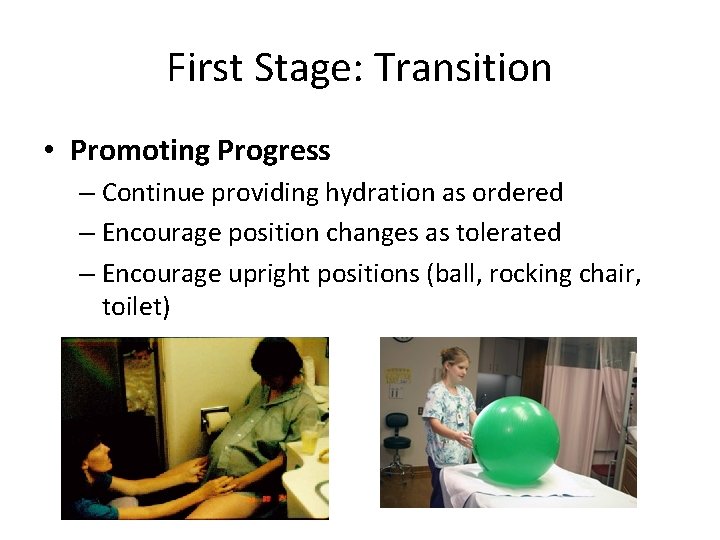
First Stage: Transition • Promoting Progress – Continue providing hydration as ordered – Encourage position changes as tolerated – Encourage upright positions (ball, rocking chair, toilet)
Second Stage: Pushing • General Characteristics – Can last 10 minutes to 4 -5 hours. Pushing may be limited in the clinical setting. – Ctx usually 2 -5 minutes apart – Location of discomfort: entire abdomen, vaginal and rectal pressure – Intensity: very intense! – Mood: renewed optimism (she can finally DO something), fear of pressure, skeptical about making progress
Second Stage: Pushing • Comfort measures: Psychosocial – Actively promote relaxation between ctx – Normalize rectal pressure – Offer a mirror – Encourage pt to touch head if she wishes – Reassure pt that she is making progress – Stay within 6 -12 inches of pt
Suggested Phrases: Pushing • • Let your body stretch Soften into the pressure Trust your body Listen to your body Your body knows what to do Let it go Bring your baby down Let your baby come
Second Stage • Comfort measures: Physical – Positions • • Side lying Squatting Hands/knees Back – Breathing • Hold breath • Grunt • Blow – Massage • Rub head • Run fingers through hair • Shoulder/neck – Heat/Ice • Cold cloth on head
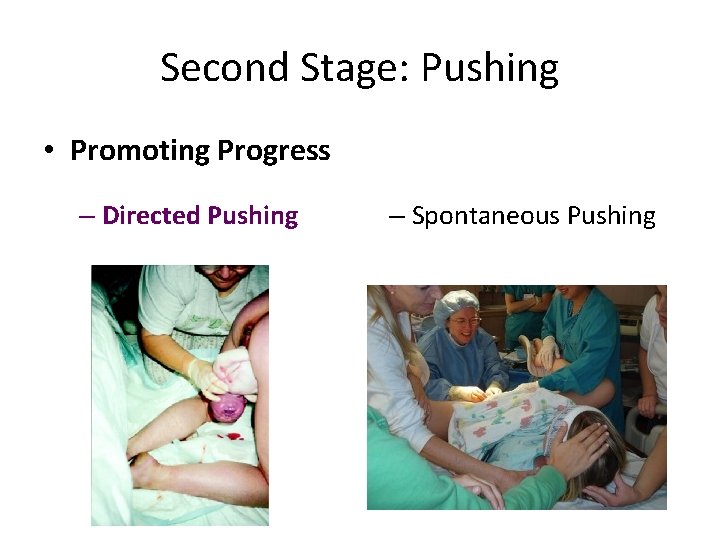
Second Stage: Pushing • Promoting Progress – Directed Pushing – Spontaneous Pushing
Physiologic Management of Second Stage 1. Laboring Down = waiting for fetal descent and onset of maternal urge to push before starting active pushing 2. Non-directed pushing = supporting the mother’s reflexive bearing down urges rather than requiring her to hold her breath and push to the count of 10 3. Allowing the mother to assume a variety of non-supine positions for pushing
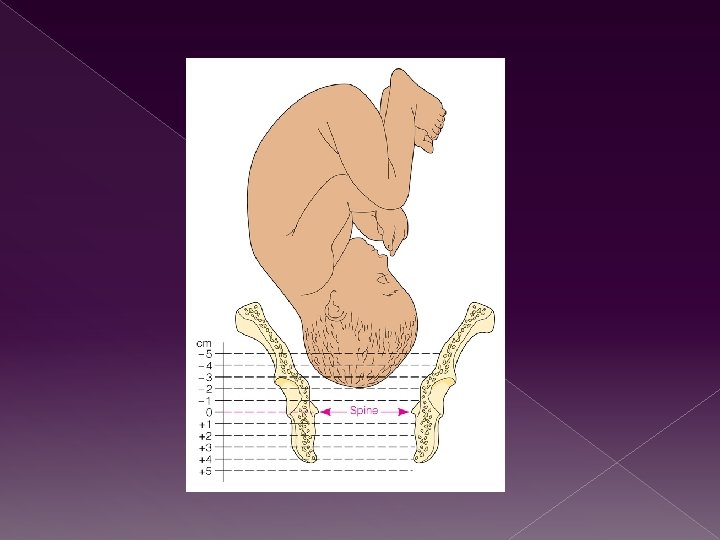
Physiologic Management of Second Stage ¡ When the presenting part of the fetus reaches +2 station or below, it stretches and puts pressure on the maternal pelvic floor muscles, which creates a strong reflex urge to bear down. ¡ This is known as the Ferguson Reflex and it is accompanied by a surge of endogenous oxytocin release which intensifies the contractions in preparation for expulsion of the fetus.
Physiologic Management of Second Stage ¡ Physiologic management allows active pushing to begin when obstetrical conditions are right for maternal expulsive efforts to be most effective. ¡ Epidurals may interfere with the normal oxytocin surge. ¡ Laboring down can help prevent maternal exhaustion and fetal stress.
Traditional Bearing Down aka ‘Purple Pushing’ ¡ When the mother holds her breath and bears down, it initiates a Valsalva maneuver, which increases intrathoracic pressure, causing a brief rise and then fall in BP, which reduces blood flow to the uteroplacental unit causing stress to the fetus. ¡ fetal hypoxemia, FHR decelerations, fetal acidemia ¡ There is no evidence to support this practice
Laboring Down vs. Traditional Bearing Down ¡May experience an increased length of second stage, but significantly shorter duration of pushing--even with an epidural ¡Reduced FHR decelerations ¡Higher rate of spontaneous vaginal births ¡Reduced maternal exhaustion ¡No differences in perineal lacerations
Supportive Verbalizations ¡“You’re doing so well! Just push that baby down when you’re ready. ” ¡“That’s great! If you feel the urge again, then push again. ” ¡“Strong and steady. ” ¡“Just relax in between. ” ¡“Don’t forget to breathe. ” Roberts, J. M. , Gonzalez, C. B. , & Sampselle, C. (2007). Why do supportive birth attendants become directive of maternal bearing down efforts in second stage labor? Journal of Midwifery and Women’s Health, 52, 134 -141.
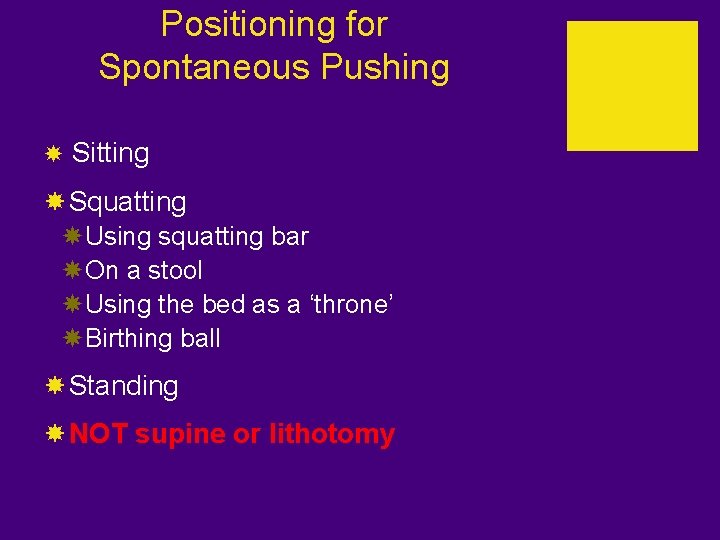
Positioning for Spontaneous Pushing Sitting Squatting Using squatting bar On a stool Using the bed as a ‘throne’ Birthing ball Standing NOT supine or lithotomy
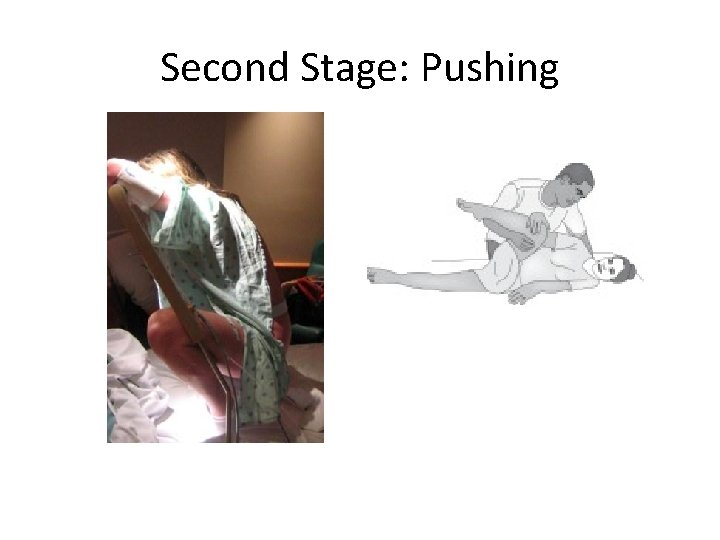
Second Stage: Pushing
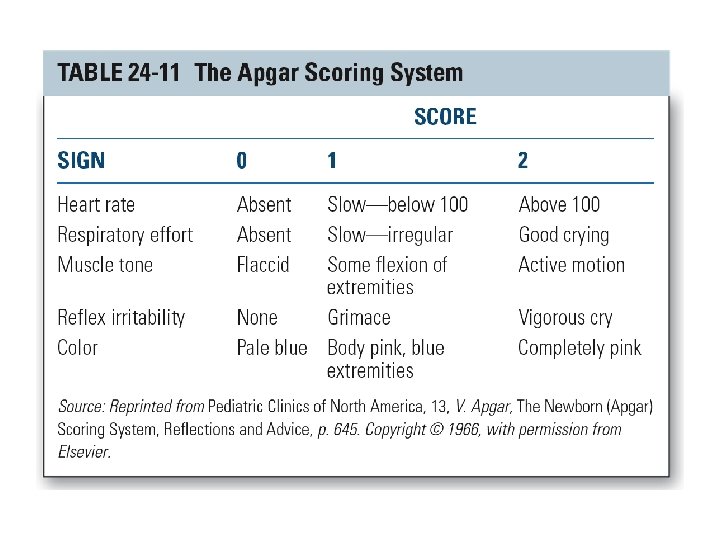
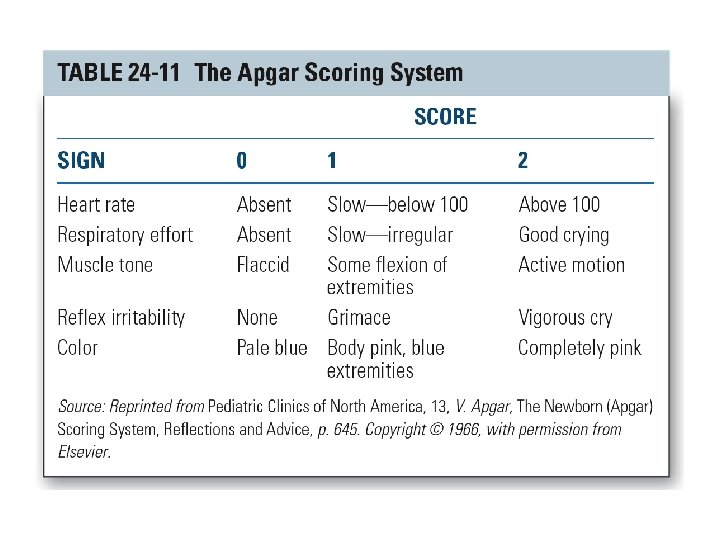
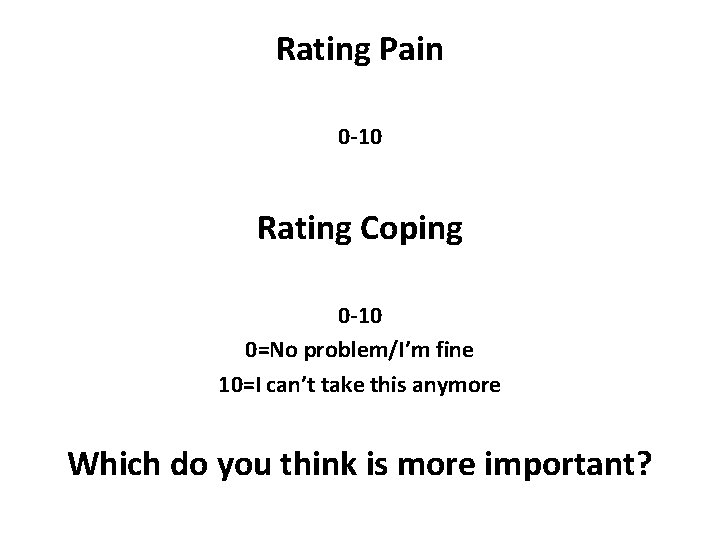
Rating Pain 0 -10 Rating Coping 0 -10 0=No problem/I’m fine 10=I can’t take this anymore Which do you think is more important?
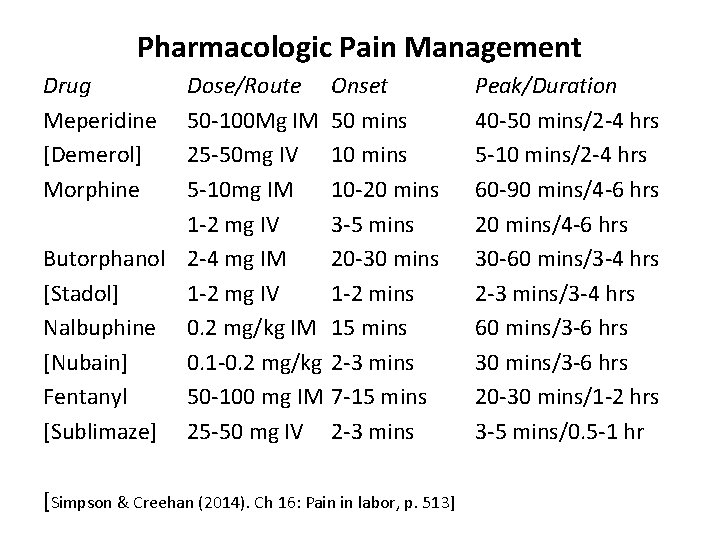
Pharmacologic Pain Management Drug Meperidine [Demerol] Morphine Dose/Route 50 -100 Mg IM 25 -50 mg IV 5 -10 mg IM 1 -2 mg IV Butorphanol 2 -4 mg IM [Stadol] 1 -2 mg IV Nalbuphine 0. 2 mg/kg IM [Nubain] 0. 1 -0. 2 mg/kg Fentanyl 50 -100 mg IM [Sublimaze] 25 -50 mg IV Onset 50 mins 10 -20 mins 3 -5 mins 20 -30 mins 1 -2 mins 15 mins 2 -3 mins 7 -15 mins 2 -3 mins [Simpson & Creehan (2014). Ch 16: Pain in labor, p. 513] Peak/Duration 40 -50 mins/2 -4 hrs 5 -10 mins/2 -4 hrs 60 -90 mins/4 -6 hrs 20 mins/4 -6 hrs 30 -60 mins/3 -4 hrs 2 -3 mins/3 -4 hrs 60 mins/3 -6 hrs 30 mins/3 -6 hrs 20 -30 mins/1 -2 hrs 3 -5 mins/0. 5 -1 hr
Labor progresses during the period of pain relief. When the medication wears off, the contractions are typically more frequent and more intense. You need to be ready to provide increased support, and may need to help the mom get back under control.

Epidural Analgesia •

Technique for lumbar epidural block. A, Proper position of insertion. . SOURCE: Bonica, J. J. (1972). Principles and practice of obstetric analgesia and anesthesia (p. 631). Philadelphia: Davis. •
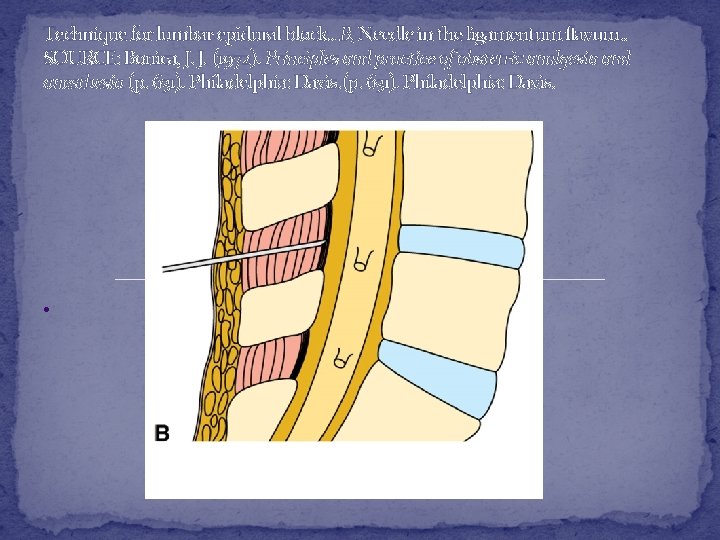
Technique for lumbar epidural block. . B, Needle in the ligamentum flavum. . SOURCE: Bonica, J. J. (1972). Principles and practice of obstetric analgesia and anesthesia (p. 631). Philadelphia: Davis. •
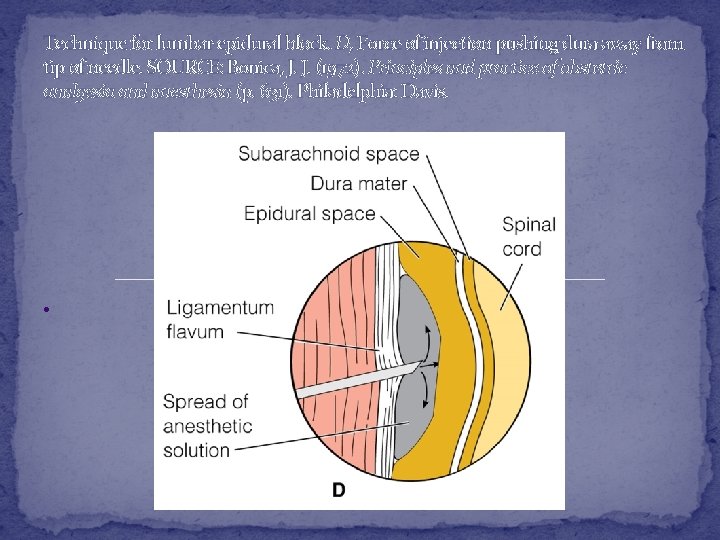
Technique for lumbar epidural block. D, Force of injection pushing dura away from tip of needle. SOURCE: Bonica, J. J. (1972). Principles and practice of obstetric analgesia and anesthesia (p. 631). Philadelphia: Davis. •
Epidural Analgesia �Involves the injection of a combination of local anesthetic [e. g. , bupivacaine] and an opioid [e. g. , fentanyl] into the epidural space �The local anesthetic causes sympathetic blockade, which results in vasodilatation and often fall in BP— the most common complication of epidurals �Preloading with 500 -1000 cc of LR may or may not be recommended/prevent hypotension �Treatment of hypotension includes fluid bolus, turn woman to her left side, and oxygen �May necessitate ephedrine or phenylephrine
Epidural Analgesia • Optimal analgesia for labor requires neural blockade at T 10–L 1 in the first stage of labor and T 10–S 4 in the second stage • Continuous lumbar epidural analgesia is the most versatile and most commonly employed technique, because it can be used for pain relief for the first stage of labor as well as analgesia/anesthesia for subsequent vaginal delivery or cesarean section, if necessary
Epidural Analgesia • Hypotension is the most common side effect of regional anesthetic techniques and must be treated aggressively with intravenous fluid boluses and/or ephedrine to prevent fetal compromise • Spinal anesthesia for cesarean section is easier to perform and results in more rapid and intense neural blockade than epidural anesthesia. Epidural anesthesia allows greater control over sensory level and results in a more gradual fall in arterial blood pressure.
Epidural Analgesia • Estimates are that epidurals are utilized in 80 -90% of • • • US labors/births Women don’t want to experience the pain of labor Women don’t understand that there is no guarantee of an epidural ‘working’ Activity restriction Bladder catheterization Increased risk of instrumental births: vacuum, forceps, and cesarean Hypotensive effects are greater in obese women
Assessing Epidural Level • Sharp object • Alcohol swab • Ice [temperature is last sensation to leave and first to return]
Nursing Responsibilities • Support informed consent • Ensure adequate IV access • Provide correct IV solution [not D 5] • Assess woman’s hydration level • Assess maternal vital signs [keep BP cuff in place] • Assess fetal heart rate • Assist woman into position for epidural placement • Step by step inform woman what to expect in conjunction with anesthesia care provider
Nursing Responsibilities continued • Assess maternal BP and HR and FHR after test dose • Continue to assess maternal BP and HR during and • • after epidural dosing Provide encouragement and support to woman and partner as needed Position woman for distribution of epidural dose Ensure safe anatomic positioning with generous use of pillows Continue diligent assessment of maternal and fetal status
Nursing Responsibilities continued • Assist woman with position changes at least every 30 mins • Just because woman is more comfortable doesn’t mean she should be left alone • Respond to significant changes in maternal or fetal status with intrauterine resuscitation measures as needed • Turn woman to her left side [use help!] • Increase IV infusion rate [make sure you know how to give a fluid bolus via the IV pump] • Administer oxygen by mask • Continue diligent assessment of maternal and fetal status
Nursing Responsibilities continued • Use creative positioning for laboring down and pushing • Change position frequently • Provide physical and emotional support • Stay within normal joint range of motion when assisting with positioning for birth [permanent nurse damage has been done by pulling back too severely on legs with the woman in the lithotomy position] • Remember that after birth the woman continues to have impaired sensation and mobility
Nursing Responsibilities continued • Be very careful when getting the woman up for the first time post epidural [prevent a fall!] Consider using a walker or rolling chair First elevate the head of the bed Next have the woman sit on the edge of the bed Have the woman stand at the bedside If she is steady and not light headed, proceed to walking • Assume she is NOT steady on her legs until proven otherwise! • • • Women often experience backaches post epidural • Analgesics may be necessary • Often warm packs or a K pad are effective
- Slides: 70