
Lab Safety Why Should We Be Safe So

Lab Safety
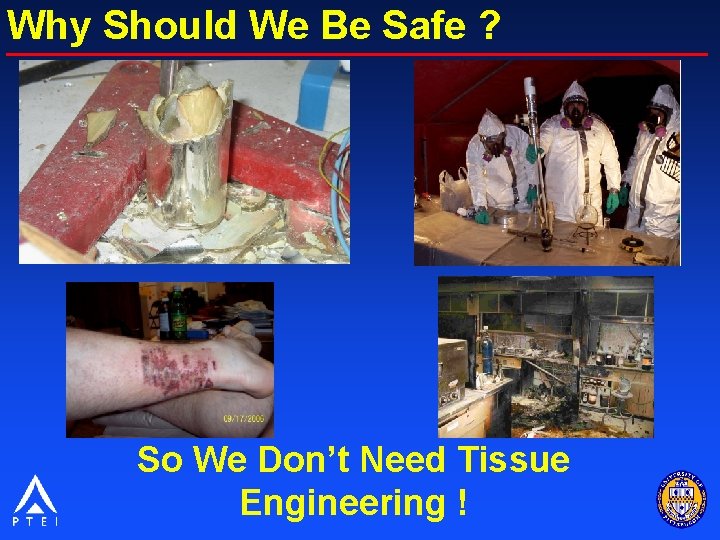
Why Should We Be Safe ? So We Don’t Need Tissue Engineering !
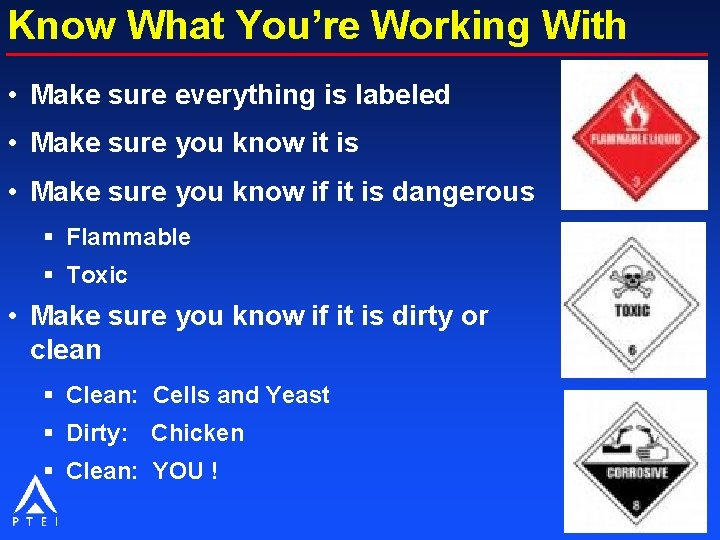
Know What You’re Working With • Make sure everything is labeled • Make sure you know it is • Make sure you know if it is dangerous § Flammable § Toxic • Make sure you know if it is dirty or clean § Clean: Cells and Yeast § Dirty: Chicken § Clean: YOU !
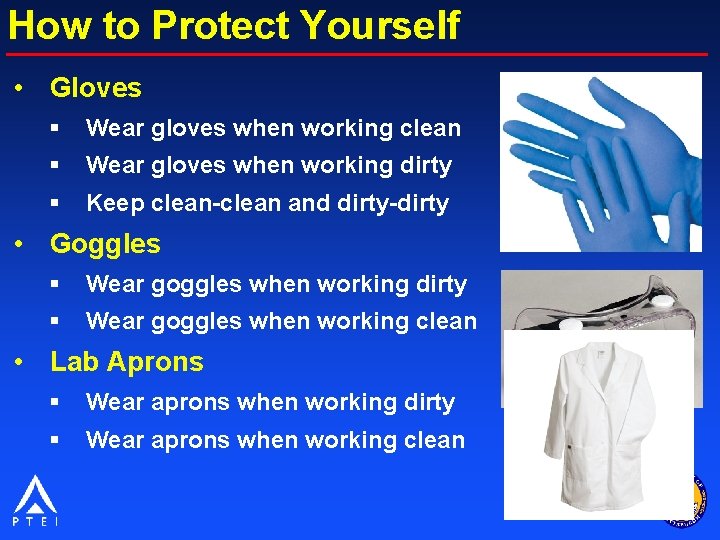
How to Protect Yourself • Gloves § Wear gloves when working clean § Wear gloves when working dirty § Keep clean-clean and dirty-dirty • Goggles § Wear goggles when working dirty § Wear goggles when working clean • Lab Aprons § Wear aprons when working dirty § Wear aprons when working clean
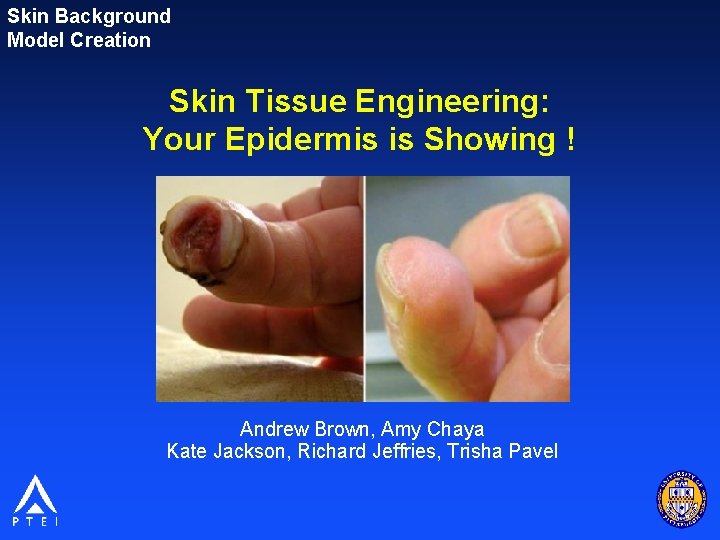
Skin Background Model Creation Skin Tissue Engineering: Your Epidermis is Showing ! Andrew Brown, Amy Chaya Kate Jackson, Richard Jeffries, Trisha Pavel
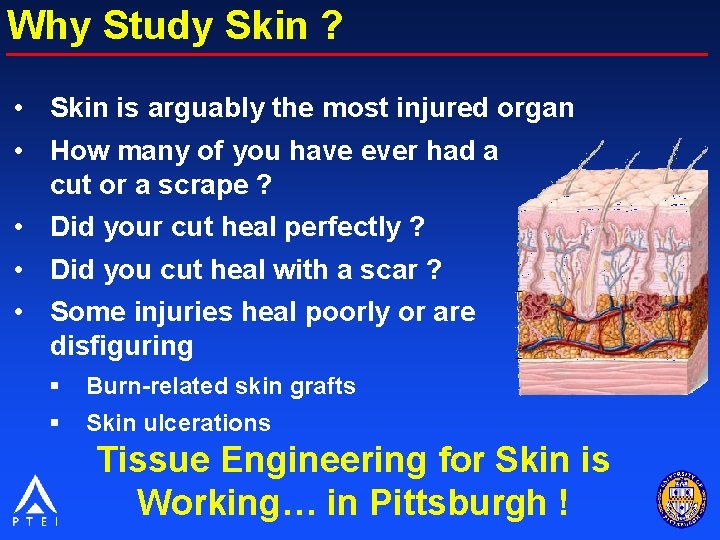
Why Study Skin ? • Skin is arguably the most injured organ • How many of you have ever had a cut or a scrape ? • Did your cut heal perfectly ? • Did you cut heal with a scar ? • Some injuries heal poorly or are disfiguring § Burn-related skin grafts § Skin ulcerations Tissue Engineering for Skin is Working… in Pittsburgh !
What’s Cool About Skin ? Skin serves many functions: • Physical barrier from outside environment • Protects body from UV radiation ( sunlight ) • Protects body from infection • Protects underlying tissue from mechanical shocks • Prevents water loss • Regulates body temperature Skin has many different components: • Epidermis – hair shaft, sweat pores • Dermis – hair follicle, sweat gland, blood vessels • Subcutaneous – fatty tissue
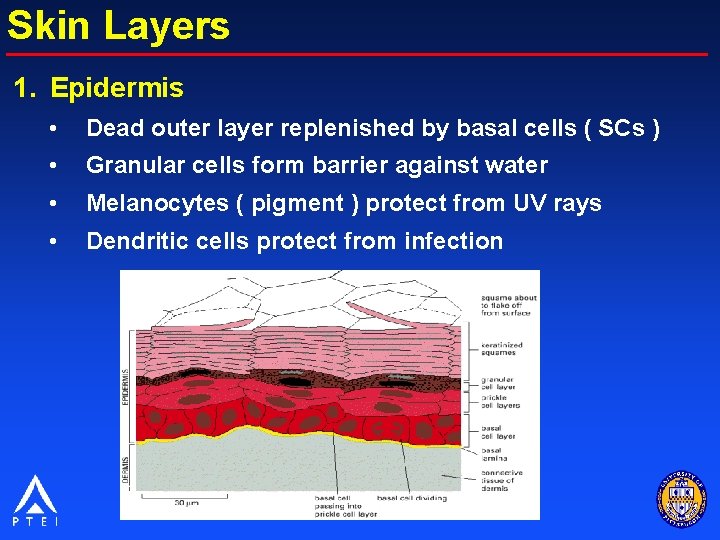
Skin Layers 1. Epidermis • Dead outer layer replenished by basal cells ( SCs ) • Granular cells form barrier against water • Melanocytes ( pigment ) protect from UV rays • Dendritic cells protect from infection
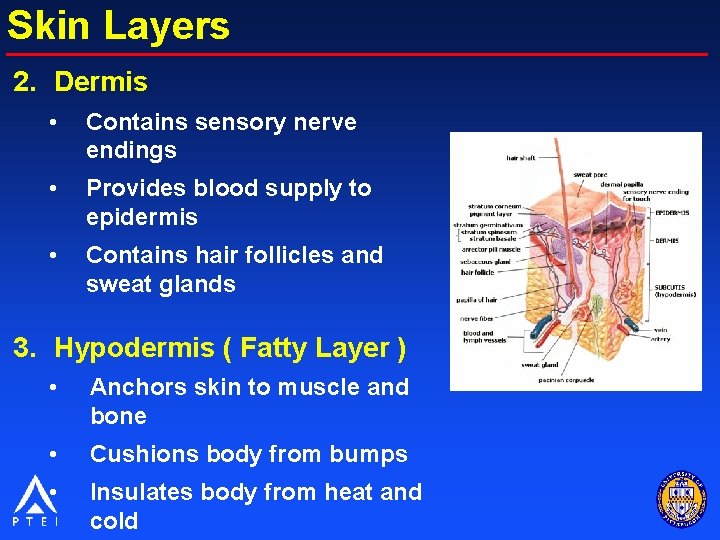
Skin Layers 2. Dermis • Contains sensory nerve endings • Provides blood supply to epidermis • Contains hair follicles and sweat glands 3. Hypodermis ( Fatty Layer ) • Anchors skin to muscle and bone • Cushions body from bumps • Insulates body from heat and cold
Properties of Skin What else is skin tissue made up of ? EXTRACELLULAR MATRIX • Collagen – strong structural support • Elastin – elasticity and flexibility • Keratin – tough waterproof fibers Which layer do you think contains more collagen ? Which layer do you think contains more elastin?
Activity Skin Epidermal Layer Synthesis
Problem Your tissue engineering company needs to develop a skin model to allow early-stage testing of TE scaffolds prior to use in humans Using the principles we discussed keep in mind what is important for skin to carry out its many important functions
Procedure 1. Put on gloves !!! 2. Part A and Part B of ECM material and several growth factors have been provided 3. Add your desired growth factors to Part A of your ECM ( A little goes a long way ) 4. Add the appropriate cellular components and blood vessels to Part A 5. Pour Part B into Part A and mix very thoroughly 6. After mixing for two minutes pour into the plastic containers provided
Activity Skin Dermal Layer Synthesis
Procedure 1. Put on gloves !!! 2. Part A and Part B of ECM material and several growth factors have been provided 3. Add your desired growth factors to Part A of your ECM ( A little goes a long way ) 4. Pour Part B into Part A and mix very thoroughly 5. After mixing for two minutes pour into the plastic containers provided 6. Add hair to your epidermal layer
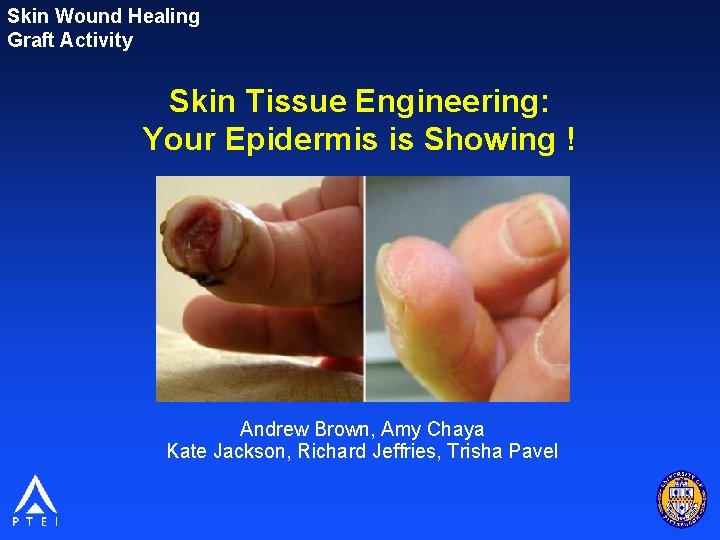
Skin Wound Healing Graft Activity Skin Tissue Engineering: Your Epidermis is Showing ! Andrew Brown, Amy Chaya Kate Jackson, Richard Jeffries, Trisha Pavel
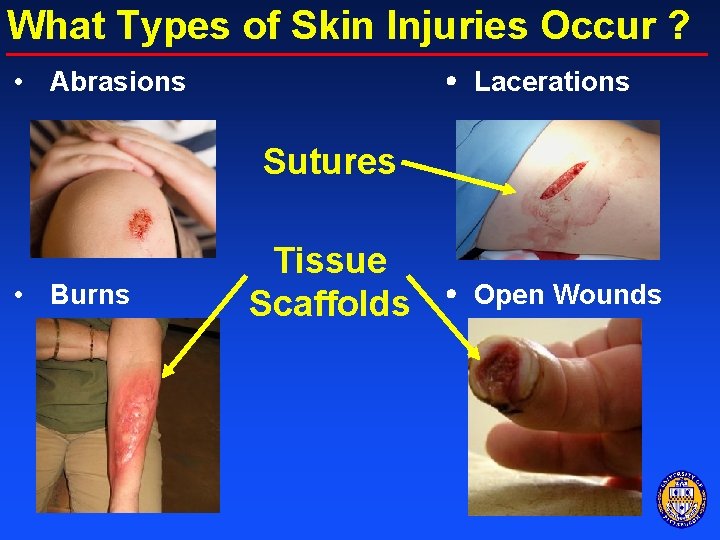
What Types of Skin Injuries Occur ? • Abrasions Lacerations Sutures • Burns Tissue Scaffolds Open Wounds
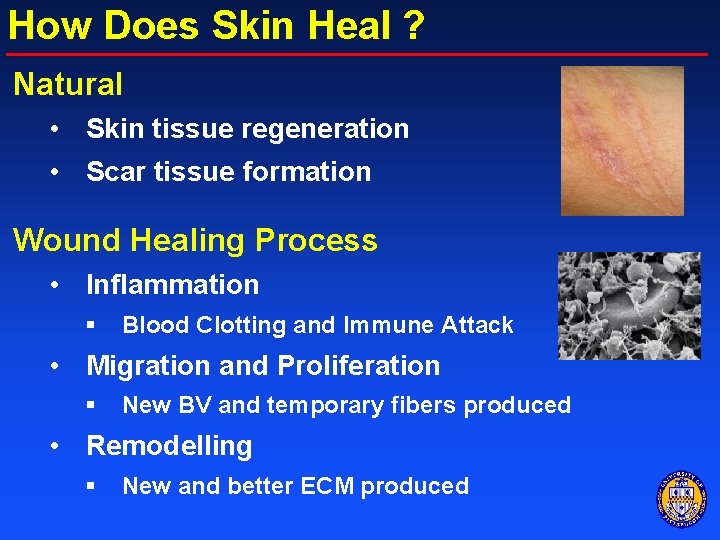
How Does Skin Heal ? Natural • Skin tissue regeneration • Scar tissue formation Wound Healing Process • Inflammation § Blood Clotting and Immune Attack • Migration and Proliferation § New BV and temporary fibers produced • Remodelling § New and better ECM produced
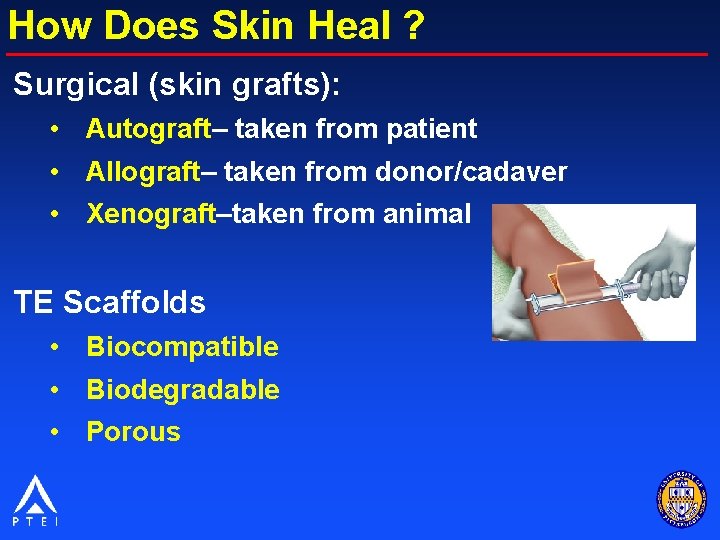
How Does Skin Heal ? Surgical (skin grafts): • Autograft– taken from patient • Allograft– taken from donor/cadaver • Xenograft–taken from animal TE Scaffolds • Biocompatible • Biodegradable • Porous
When is Skin Grafting Necessary ? Skin grafting can be used to treat: • Extensive wounding or trauma • Burns • Areas of prior infection with extensive skin loss • Specific surgeries that may require skin grafts for healing to occur Tissue Engineering
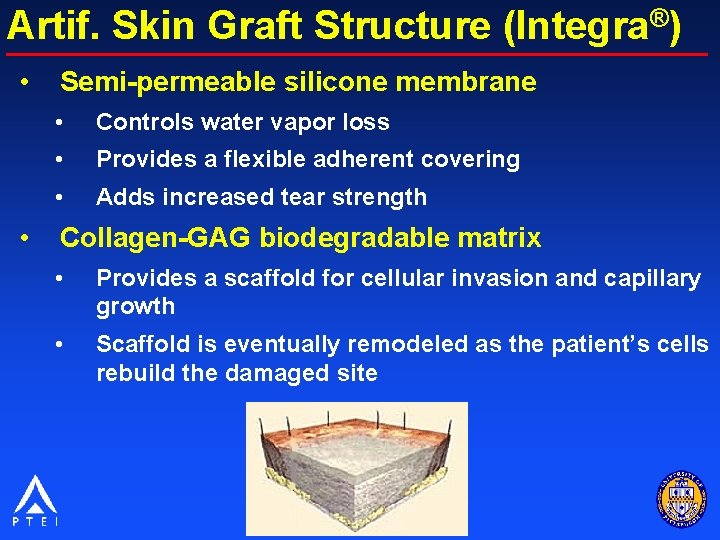
Artif. Skin Graft Structure (Integra®) • • Semi-permeable silicone membrane • Controls water vapor loss • Provides a flexible adherent covering • Adds increased tear strength Collagen-GAG biodegradable matrix • Provides a scaffold for cellular invasion and capillary growth • Scaffold is eventually remodeled as the patient’s cells rebuild the damaged site
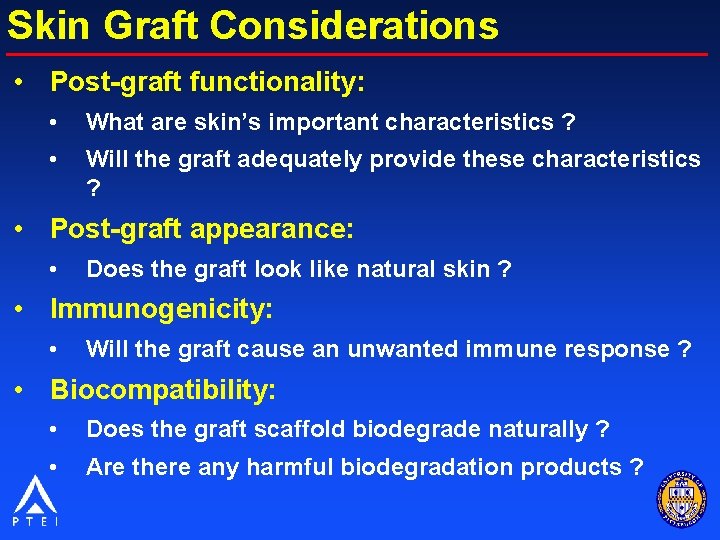
Skin Graft Considerations • Post-graft functionality: • What are skin’s important characteristics ? • Will the graft adequately provide these characteristics ? • Post-graft appearance: • Does the graft look like natural skin ? • Immunogenicity: • Will the graft cause an unwanted immune response ? • Biocompatibility: • Does the graft scaffold biodegrade naturally ? • Are there any harmful biodegradation products ?
Activity Skin Grafting Surgery
Problem Your company now needs to test a TE scaffold in the model you developed prior to implantation in Lebron James Using the principles we discussed, keep in mind what is important for a TE scaffold to allow regeneration of the skin
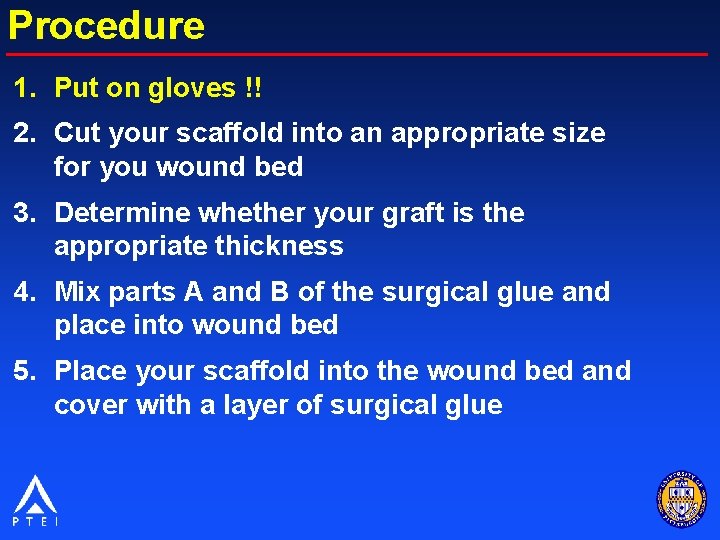
Procedure 1. Put on gloves !! 2. Cut your scaffold into an appropriate size for you wound bed 3. Determine whether your graft is the appropriate thickness 4. Mix parts A and B of the surgical glue and place into wound bed 5. Place your scaffold into the wound bed and cover with a layer of surgical glue
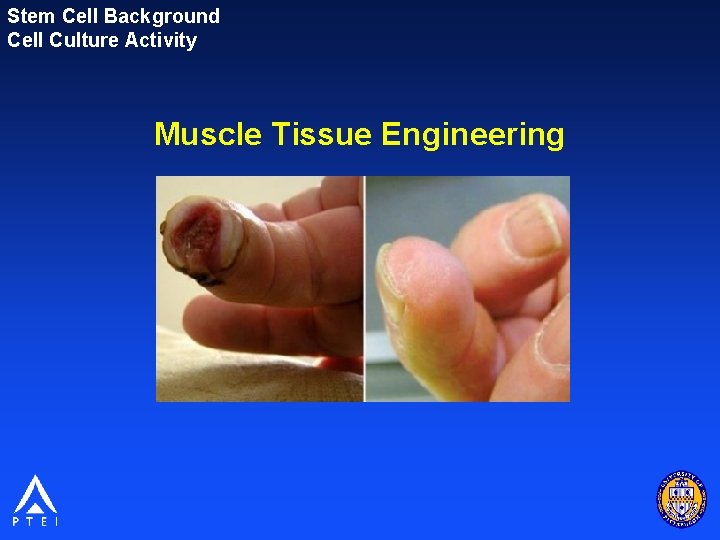
Stem Cell Background Cell Culture Activity Muscle Tissue Engineering
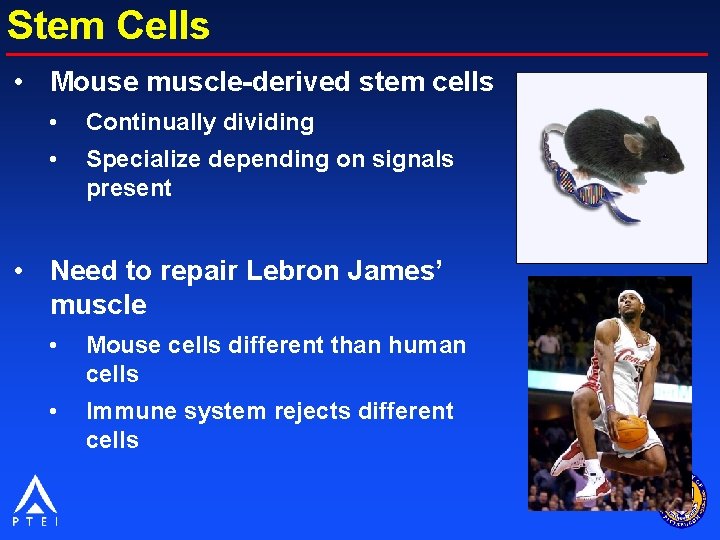
Stem Cells • Mouse muscle-derived stem cells • Continually dividing • Specialize depending on signals present • Need to repair Lebron James’ muscle • Mouse cells different than human cells • Immune system rejects different cells
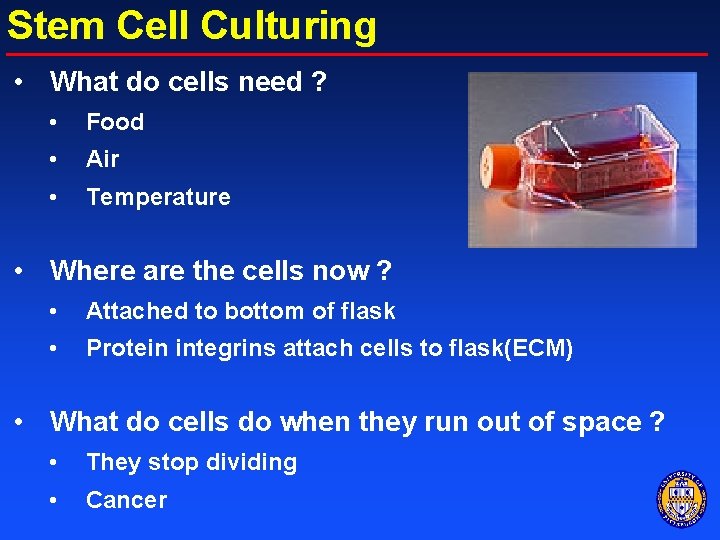
Stem Cell Culturing • What do cells need ? • Food • Air • Temperature • Where are the cells now ? • Attached to bottom of flask • Protein integrins attach cells to flask(ECM) • What do cells do when they run out of space ? • They stop dividing • Cancer
Activity Stem Cell Culturing
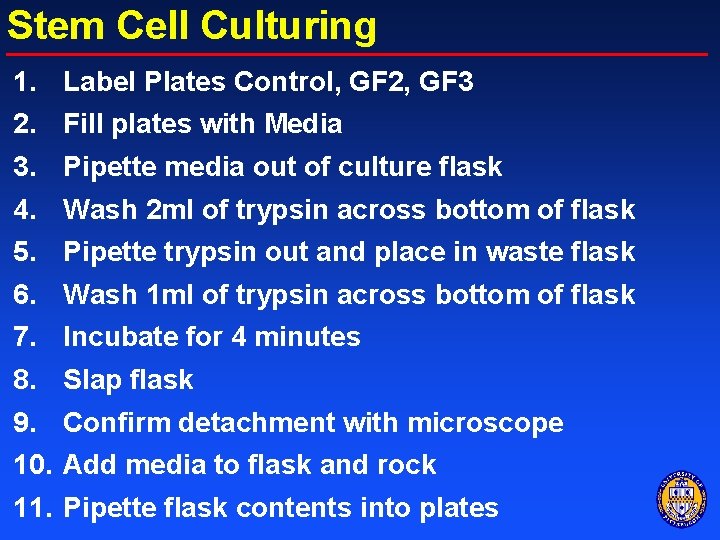
Stem Cell Culturing 1. 2. 3. 4. 5. 6. 7. 8. 9. 10. 11. Label Plates Control, GF 2, GF 3 Fill plates with Media Pipette media out of culture flask Wash 2 ml of trypsin across bottom of flask Pipette trypsin out and place in waste flask Wash 1 ml of trypsin across bottom of flask Incubate for 4 minutes Slap flask Confirm detachment with microscope Add media to flask and rock Pipette flask contents into plates
- Slides: 30