
Lab Safety Study lab procedures prior to the
Lab Safety

• Study lab procedures prior to the lab • Know the dangers associated with all materials you will use • Know the proper way of using all the materials • Know all the protective measures you must use during the exercise
Why lab safety • Safe working protects: – You – Other lab workers – Your work
Primary safety • Be responsible for yourself • Protect yourself. • How?
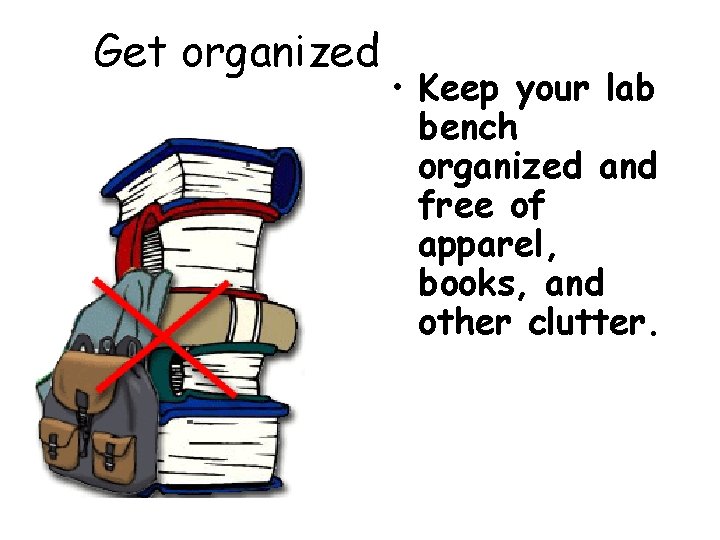
Get organized • Keep your lab bench organized and free of apparel, books, and other clutter.
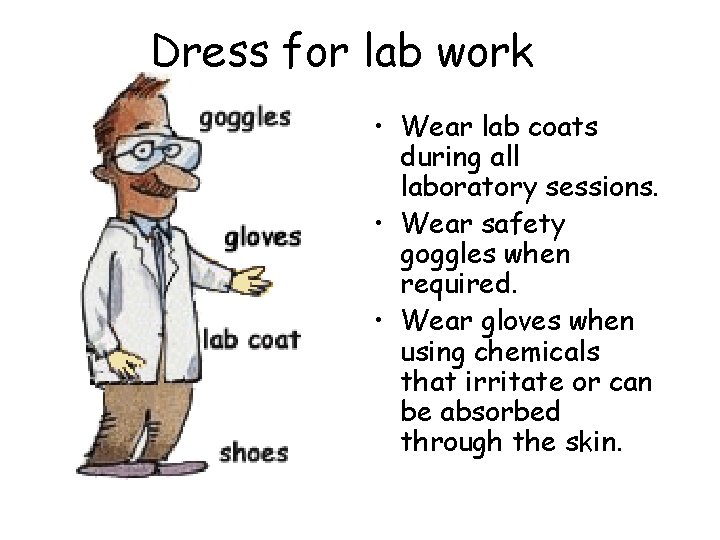
Dress for lab work • Wear lab coats during all laboratory sessions. • Wear safety goggles when required. • Wear gloves when using chemicals that irritate or can be absorbed through the skin.
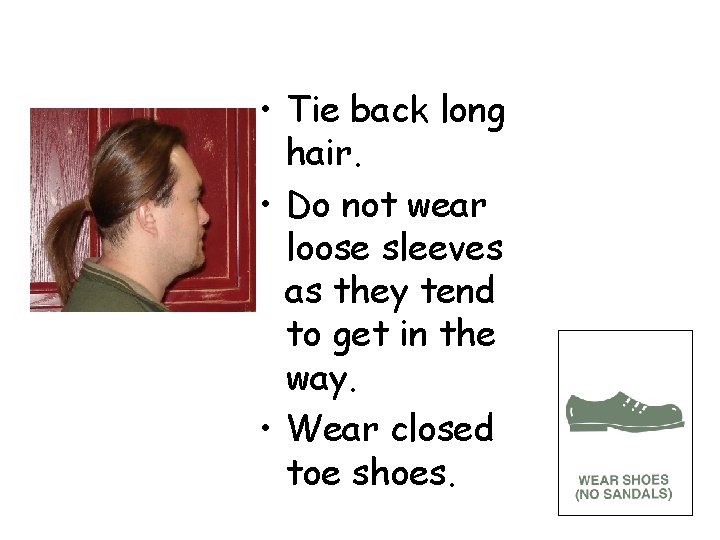
• Tie back long hair. • Do not wear loose sleeves as they tend to get in the way. • Wear closed toe shoes.
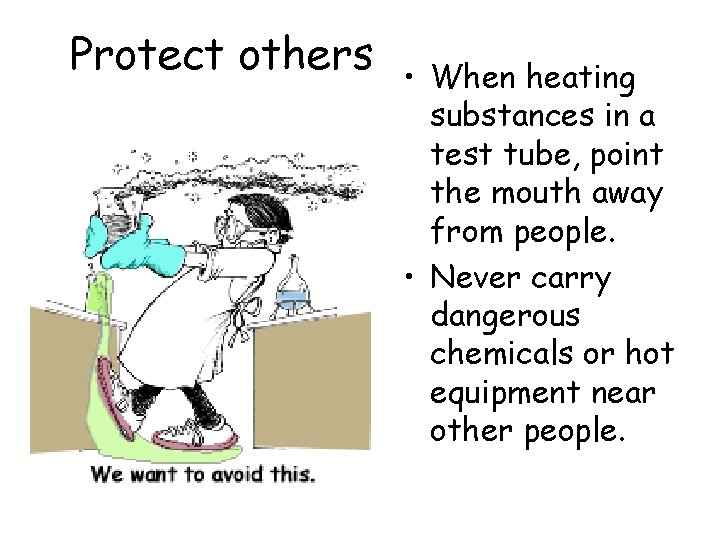
Protect others • When heating substances in a test tube, point the mouth away from people. • Never carry dangerous chemicals or hot equipment near other people.
• Clear up spillage promptly • If a glass container gets broken, get the shards off the floor/bench into the bin • Dispose of any hazardous material as toxic waste
General Precautions
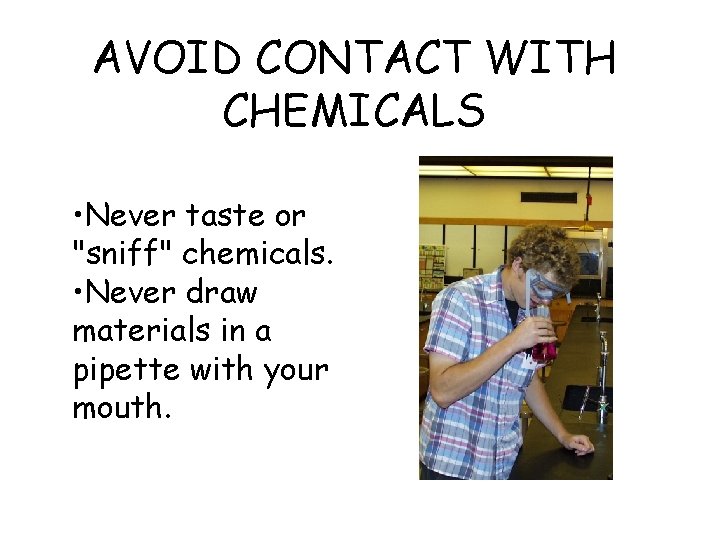
AVOID CONTACT WITH CHEMICALS • Never taste or "sniff" chemicals. • Never draw materials in a pipette with your mouth.
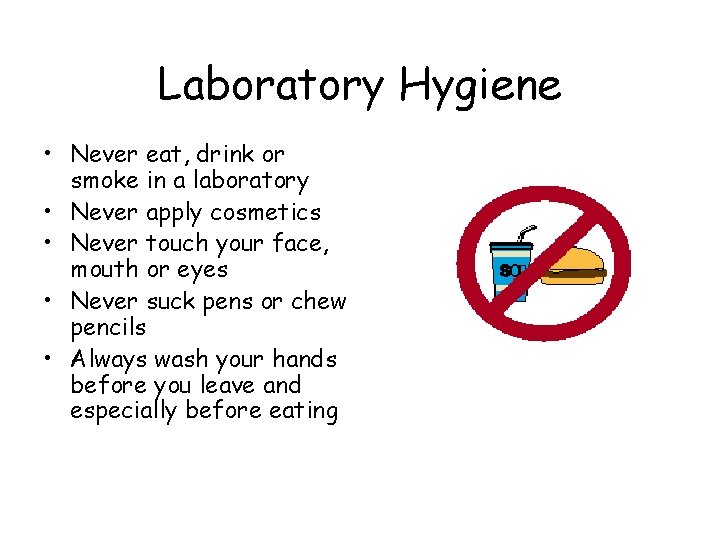
Laboratory Hygiene • Never eat, drink or smoke in a laboratory • Never apply cosmetics • Never touch your face, mouth or eyes • Never suck pens or chew pencils • Always wash your hands before you leave and especially before eating
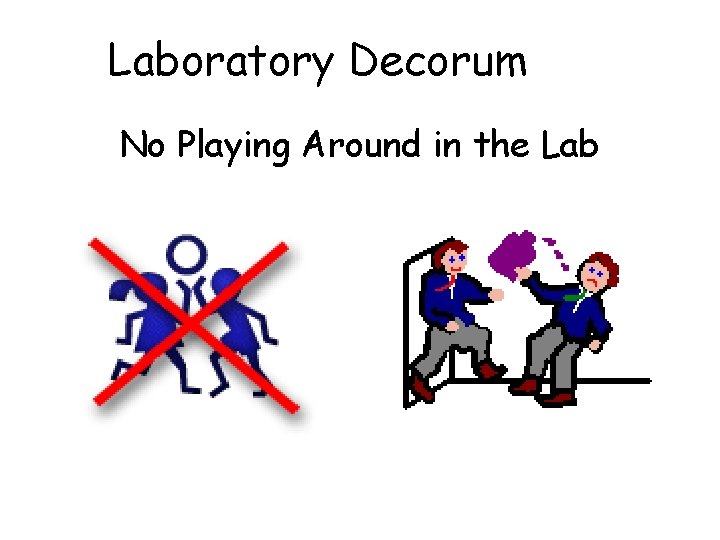
Laboratory Decorum No Playing Around in the Lab
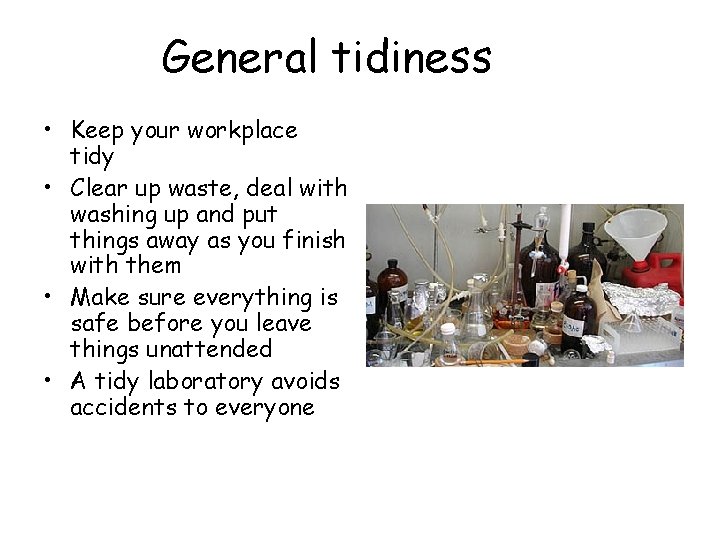
General tidiness • Keep your workplace tidy • Clear up waste, deal with washing up and put things away as you finish with them • Make sure everything is safe before you leave things unattended • A tidy laboratory avoids accidents to everyone
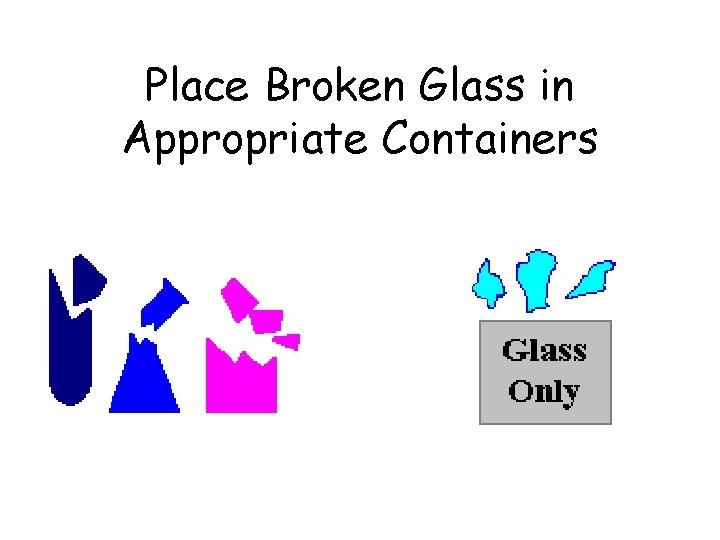
Place Broken Glass in Appropriate Containers
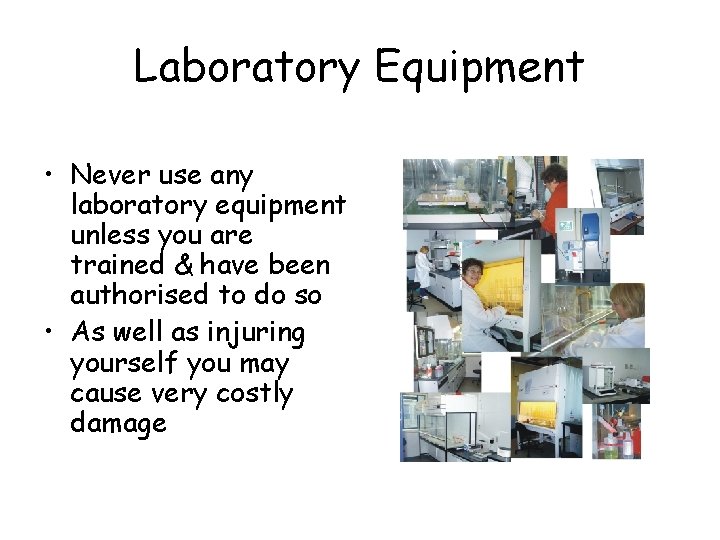
Laboratory Equipment • Never use any laboratory equipment unless you are trained & have been authorised to do so • As well as injuring yourself you may cause very costly damage
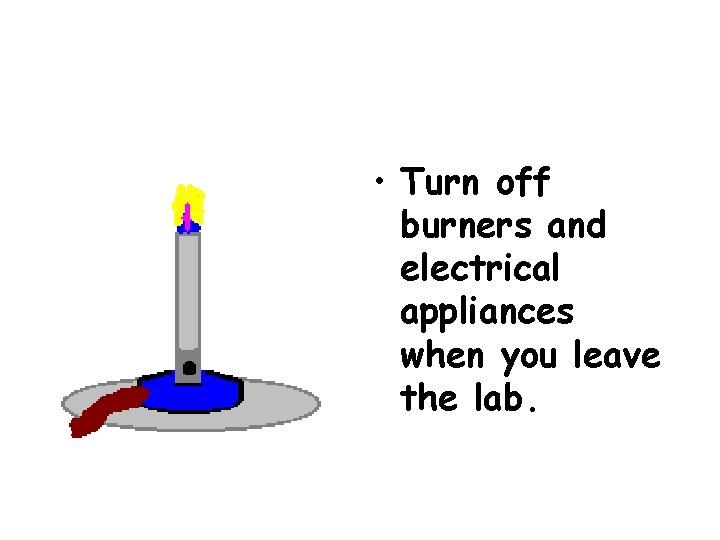
• Turn off burners and electrical appliances when you leave the lab.
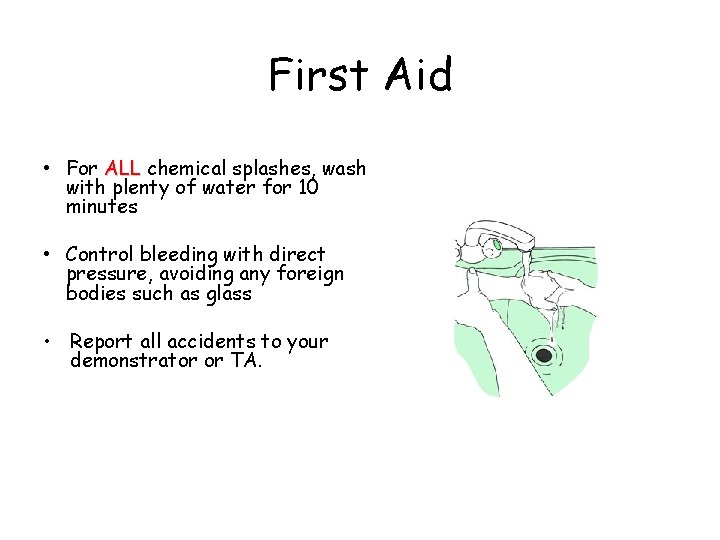
First Aid • For ALL chemical splashes, wash with plenty of water for 10 minutes • Control bleeding with direct pressure, avoiding any foreign bodies such as glass • Report all accidents to your demonstrator or TA.
Your health matters • If you have an allergy to lab materials or suffer from a medical condition which may affect you in the laboratory ensure that your supervisor knows.
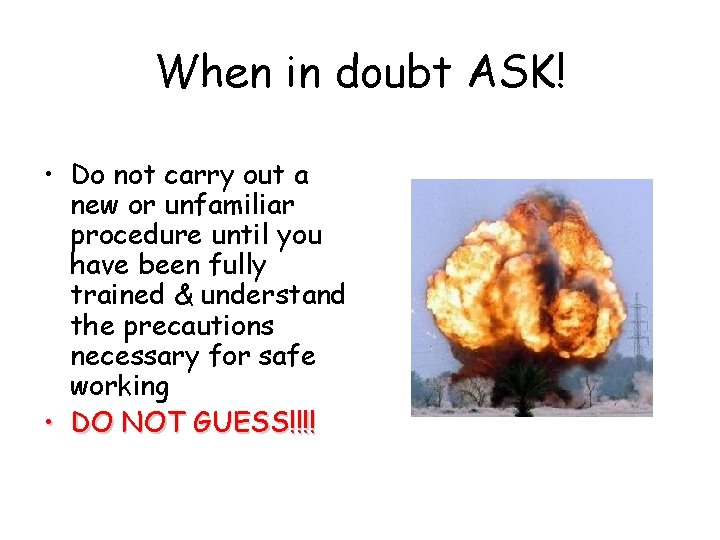
When in doubt ASK! • Do not carry out a new or unfamiliar procedure until you have been fully trained & understand the precautions necessary for safe working • DO NOT GUESS!!!!
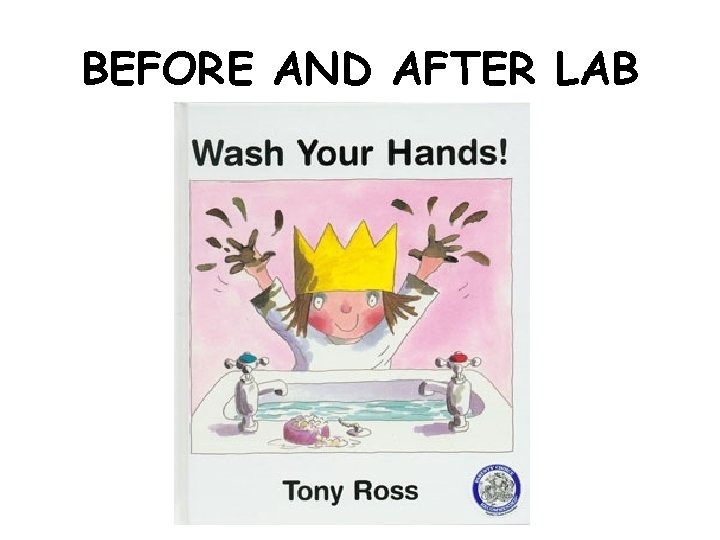
BEFORE AND AFTER LAB
- Slides: 22