
Lab Safety Rules Equipment Safety First 1 Wear
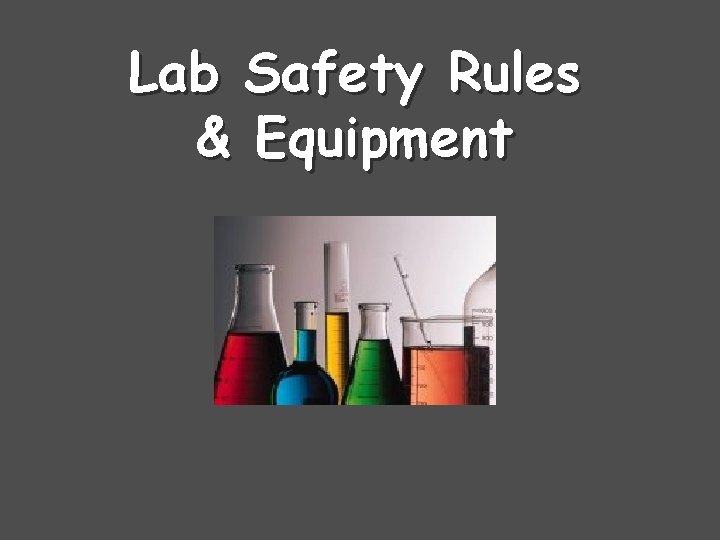
Lab Safety Rules & Equipment
Safety First! 1. Wear Safety Goggles at ALL times! Glasses are not a substitution!
Safety First! 2. No eating or drinking in the lab!
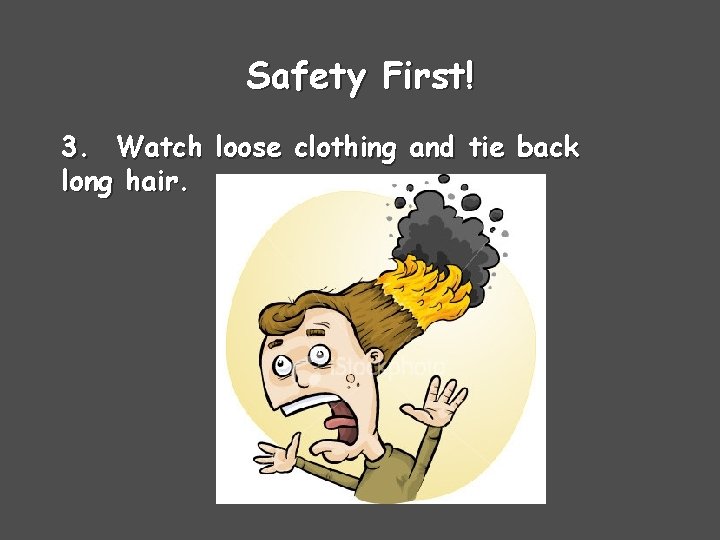
Safety First! 3. Watch loose clothing and tie back long hair.
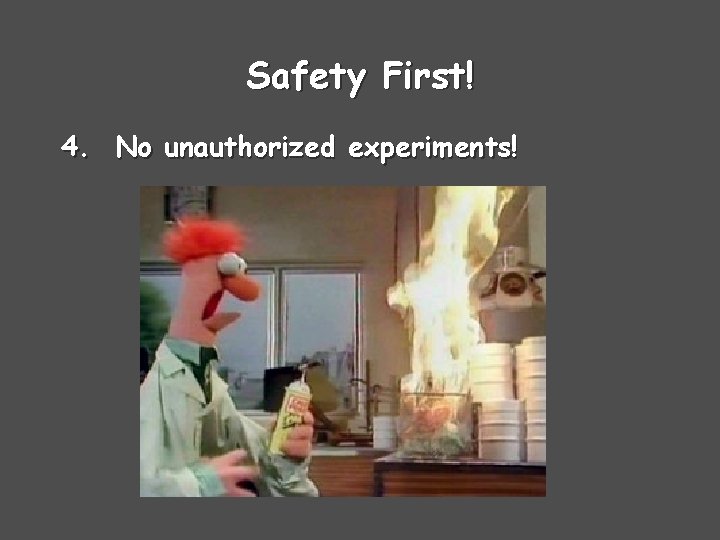
Safety First! 4. No unauthorized experiments!
Safety First! 5. Report all injuries. 6. Report broken glass!
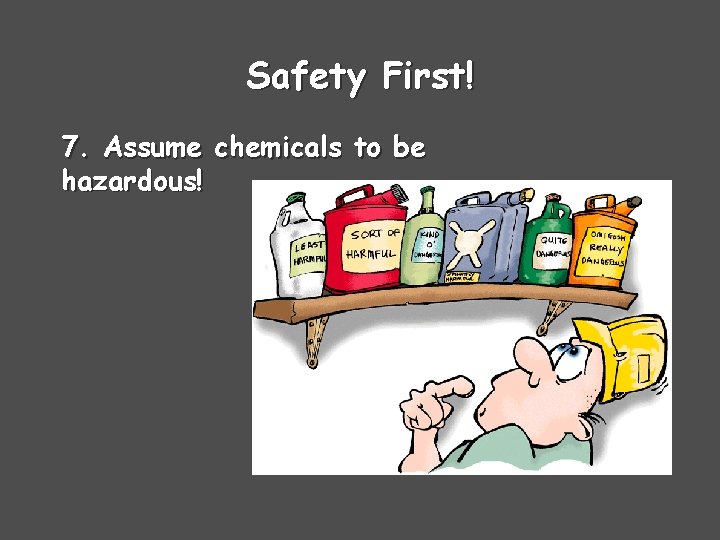
Safety First! 7. Assume chemicals to be hazardous!
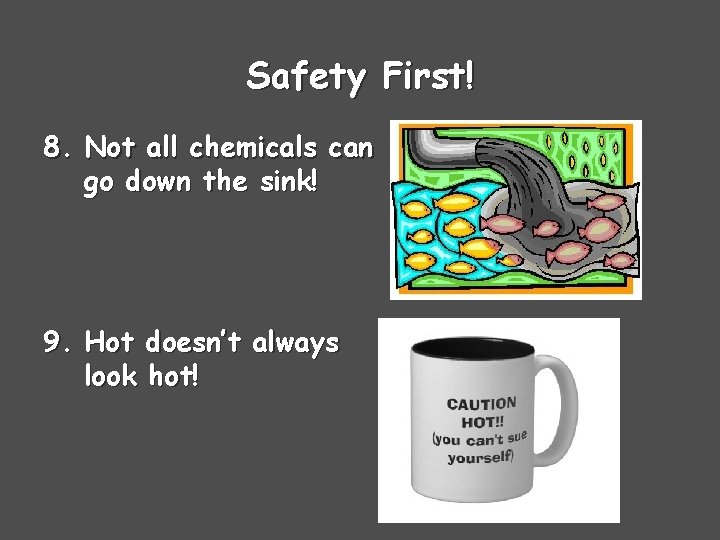
Safety First! 8. Not all chemicals can go down the sink! 9. Hot doesn’t always look hot!
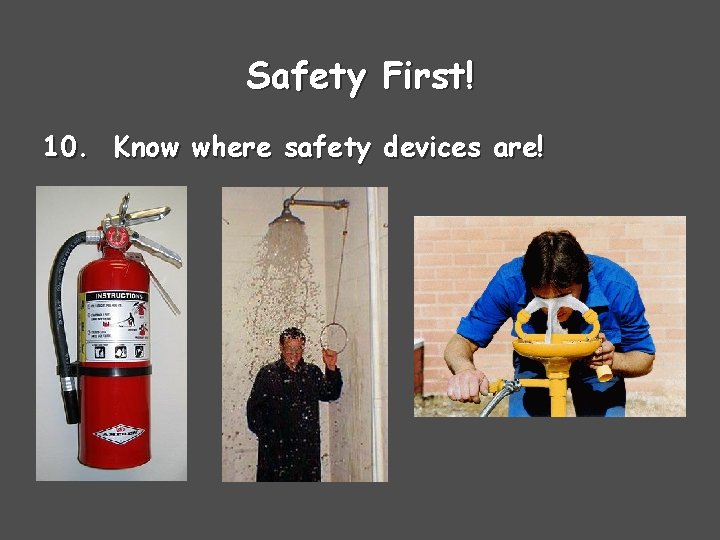
Safety First! 10. Know where safety devices are!
Safety First! • ** The most important rule for laboratory safety is appropriate behavior in the lab! Fooling around in the lab can cause serious injury and will not be tolerated. Anyone engaged in inappropriate behavior will be asked to leave the lab and will be given a zero on the lab assignment.
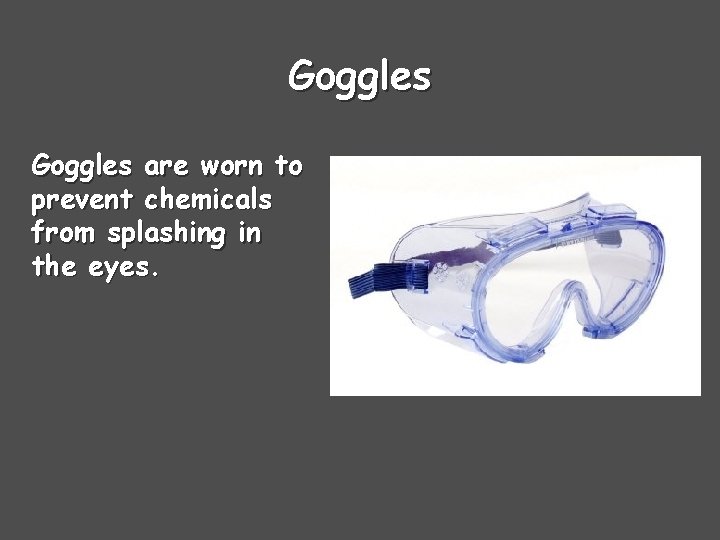
Goggles are worn to prevent chemicals from splashing in the eyes.
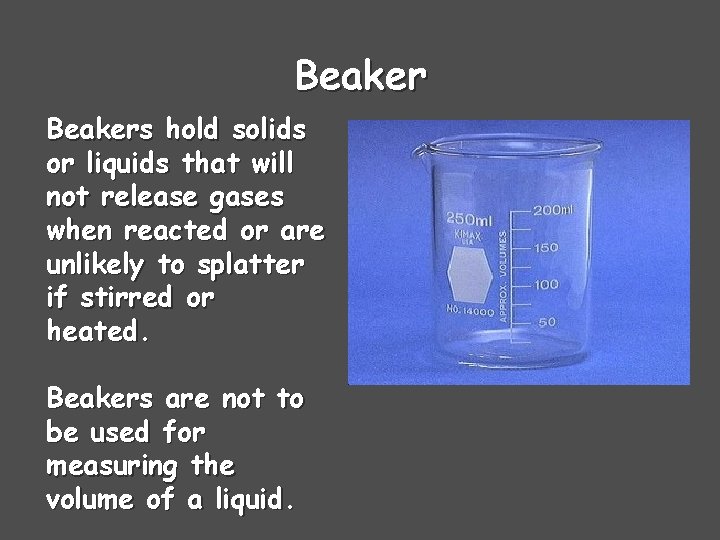
Beakers hold solids or liquids that will not release gases when reacted or are unlikely to splatter if stirred or heated. Beakers are not to be used for measuring the volume of a liquid.
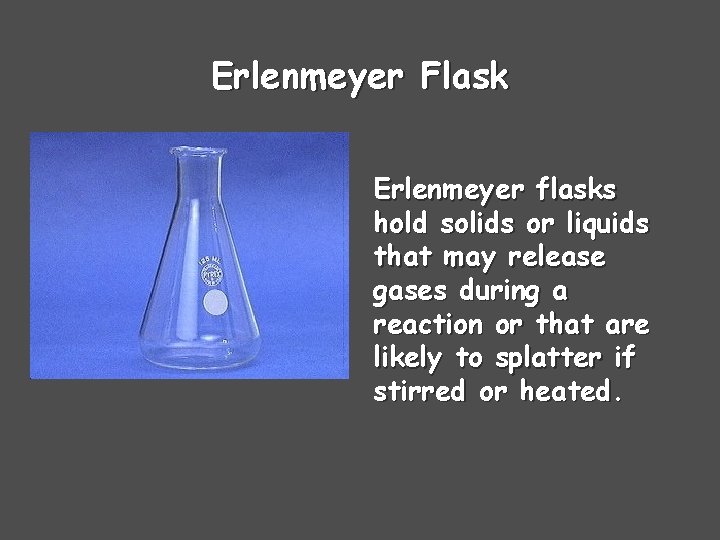
Erlenmeyer Flask Erlenmeyer flasks hold solids or liquids that may release gases during a reaction or that are likely to splatter if stirred or heated.
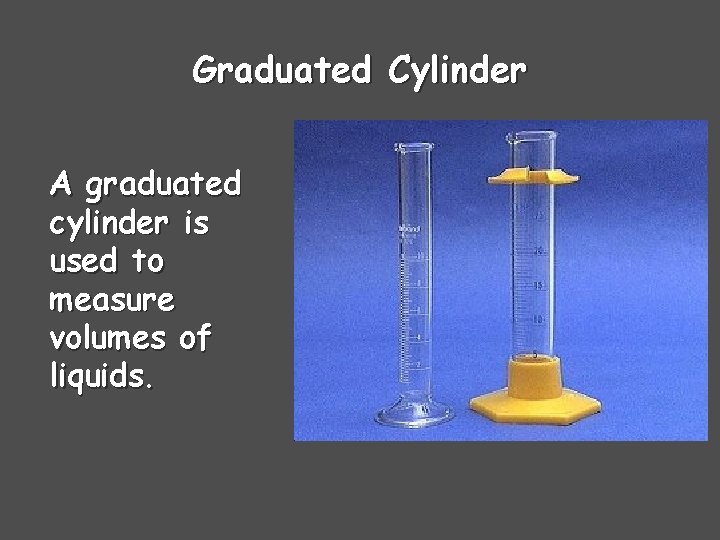
Graduated Cylinder A graduated cylinder is used to measure volumes of liquids.
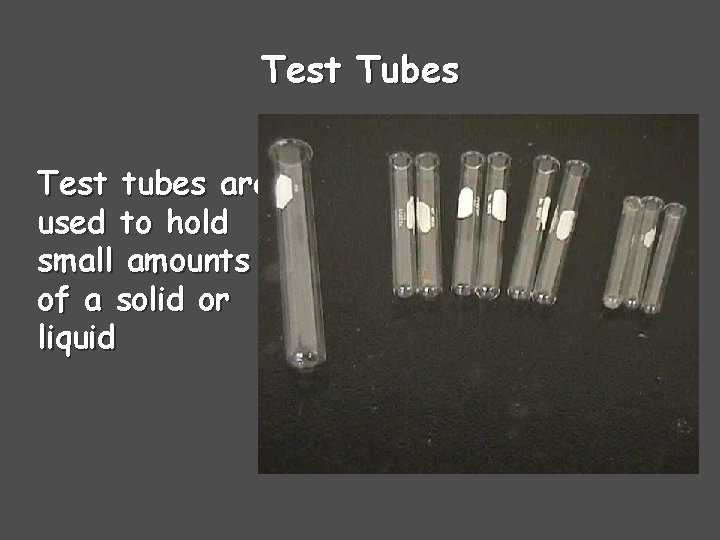
Test Tubes Test tubes are used to hold small amounts of a solid or liquid

Test Tube Holder A test tube holder is useful for holding a test tube which is too hot to handle.
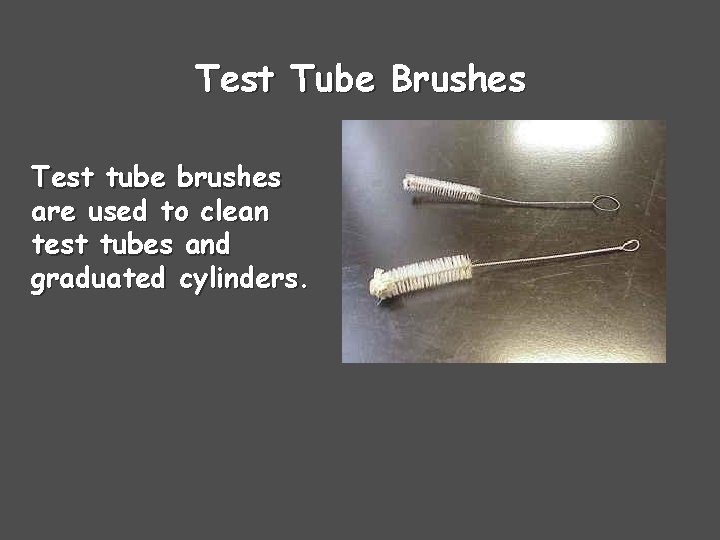
Test Tube Brushes Test tube brushes are used to clean test tubes and graduated cylinders.
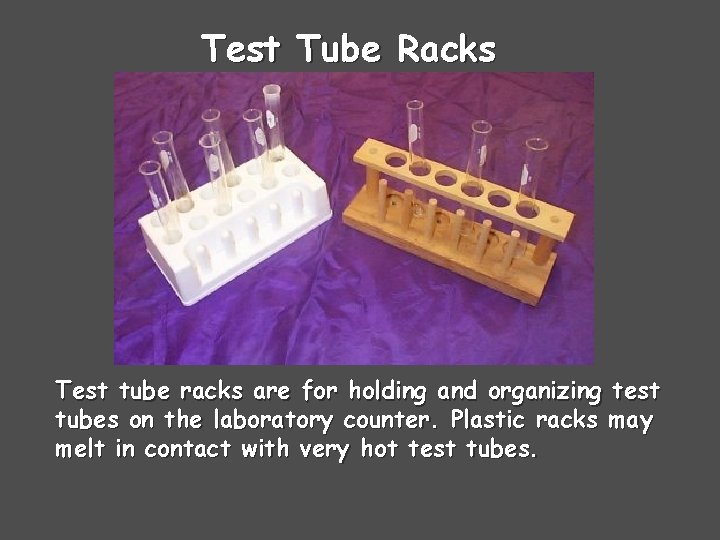
Test Tube Racks Test tube racks are for holding and organizing test tubes on the laboratory counter. Plastic racks may melt in contact with very hot test tubes.
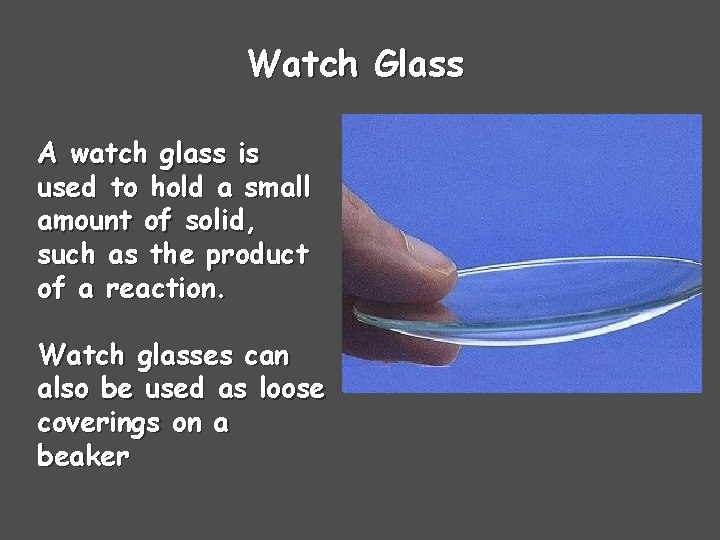
Watch Glass A watch glass is used to hold a small amount of solid, such as the product of a reaction. Watch glasses can also be used as loose coverings on a beaker
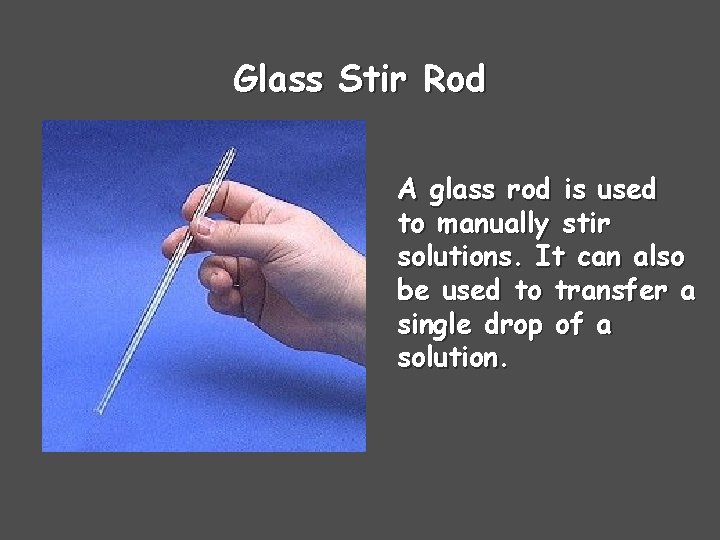
Glass Stir Rod A glass rod is used to manually stir solutions. It can also be used to transfer a single drop of a solution.
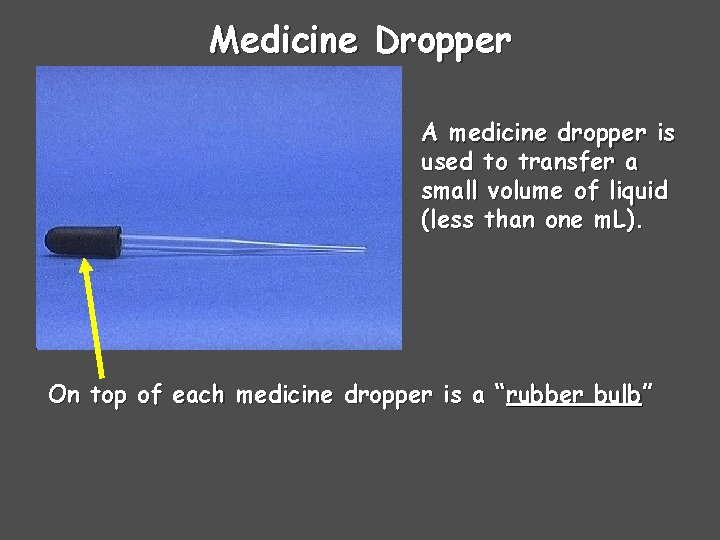
Medicine Dropper A medicine dropper is used to transfer a small volume of liquid (less than one m. L). On top of each medicine dropper is a “rubber bulb”
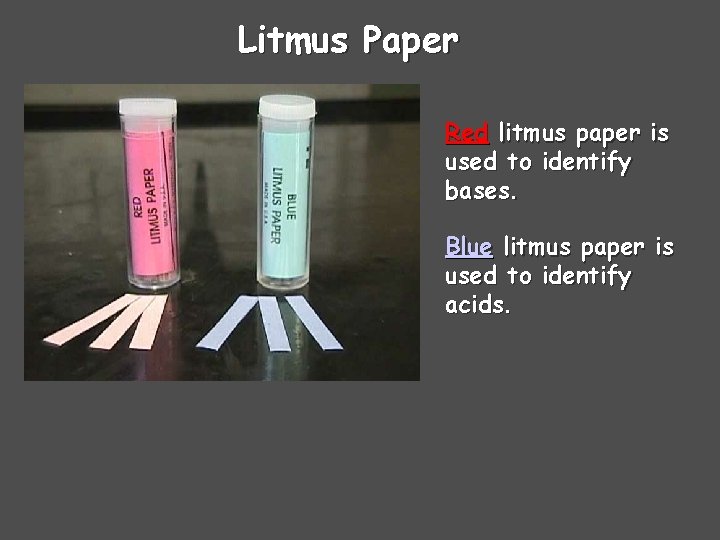
Litmus Paper Red litmus paper is used to identify bases. Blue litmus paper is used to identify acids.
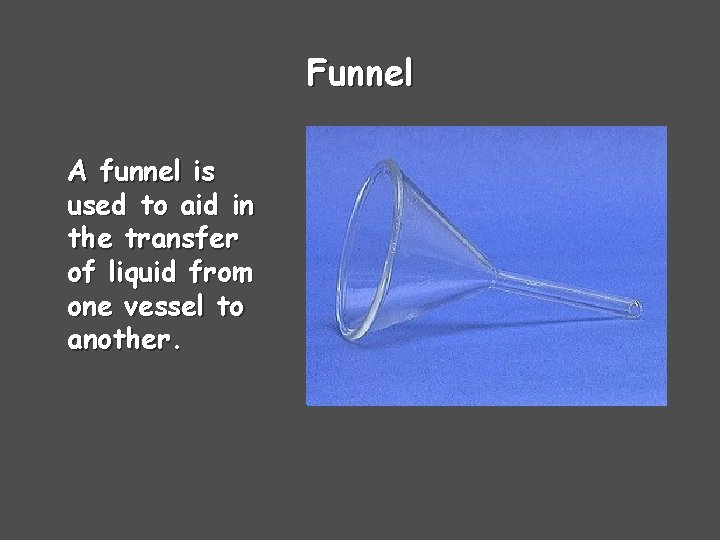
Funnel A funnel is used to aid in the transfer of liquid from one vessel to another.
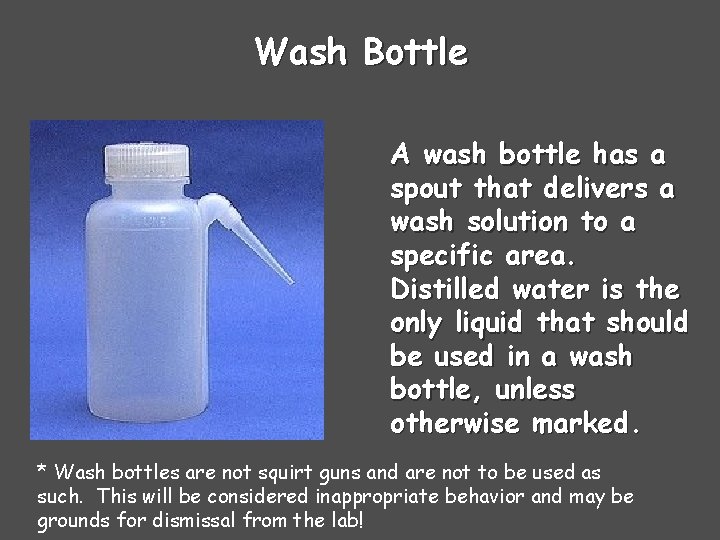
Wash Bottle A wash bottle has a spout that delivers a wash solution to a specific area. Distilled water is the only liquid that should be used in a wash bottle, unless otherwise marked. * Wash bottles are not squirt guns and are not to be used as such. This will be considered inappropriate behavior and may be grounds for dismissal from the lab!
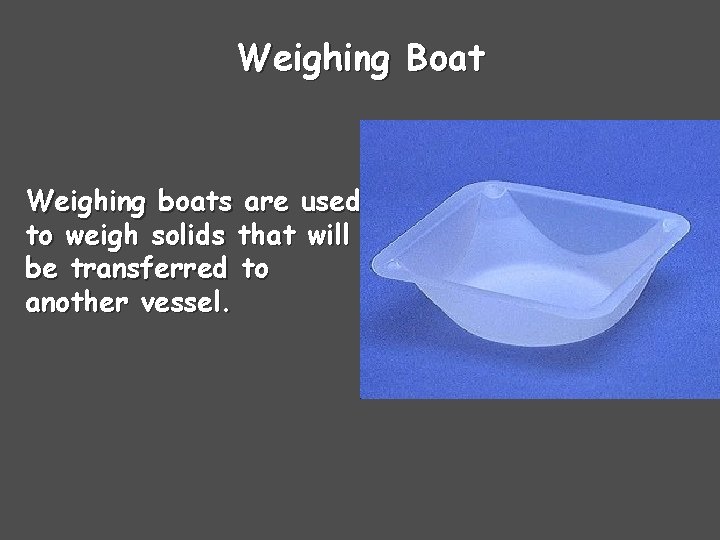
Weighing Boat Weighing boats are used to weigh solids that will be transferred to another vessel.
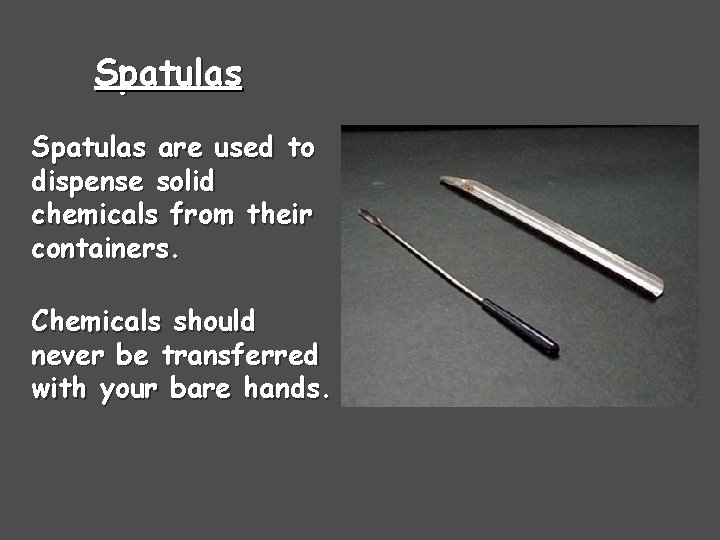
Spatulas are used to dispense solid chemicals from their containers. Chemicals should never be transferred with your bare hands.
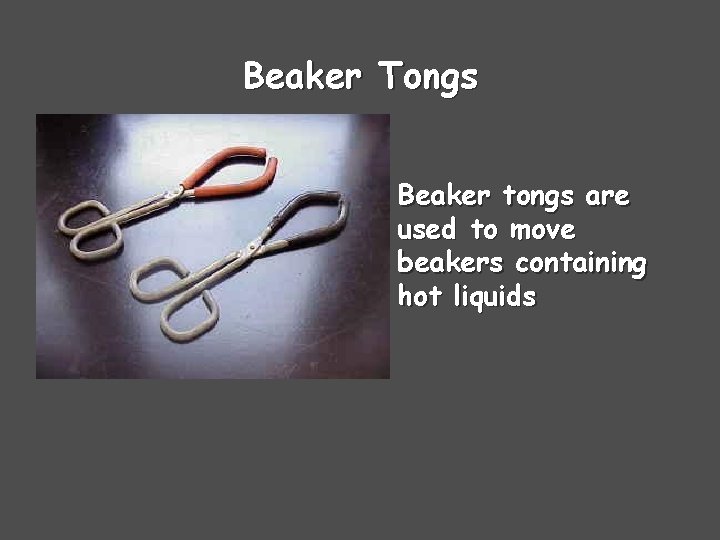
Beaker Tongs Beaker tongs are used to move beakers containing hot liquids
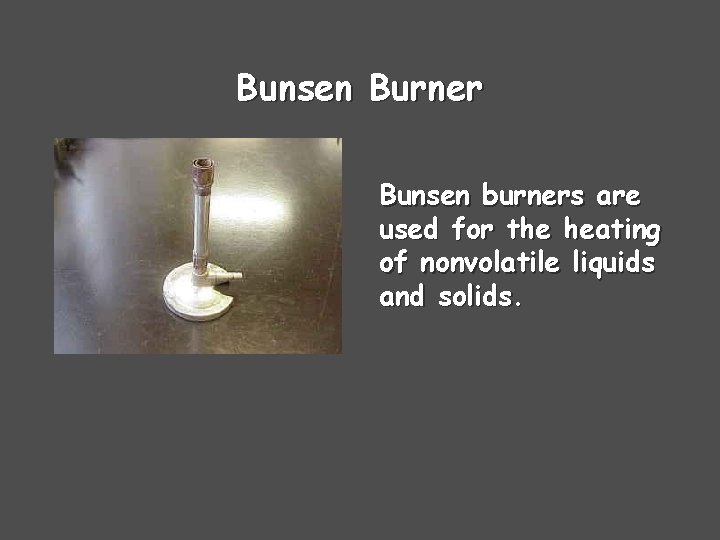
Bunsen Burner Bunsen burners are used for the heating of nonvolatile liquids and solids.
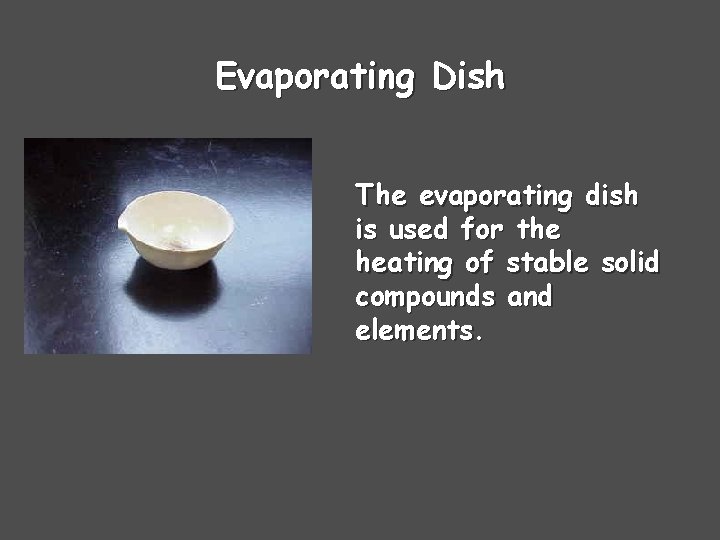
Evaporating Dish The evaporating dish is used for the heating of stable solid compounds and elements.
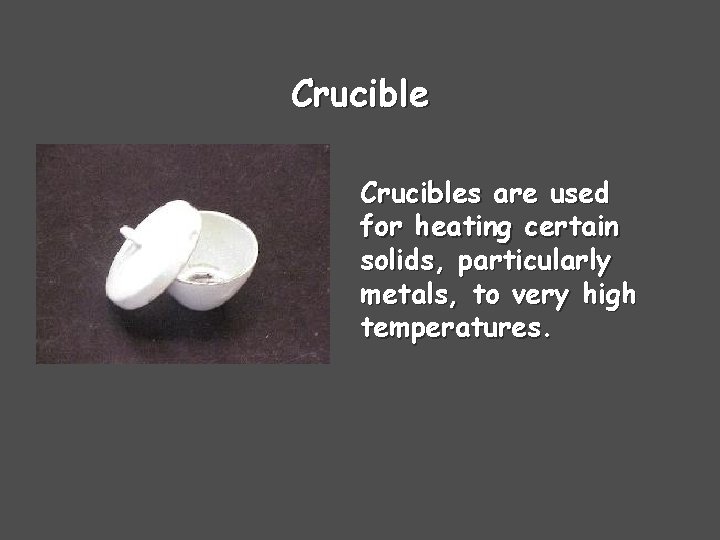
Crucibles are used for heating certain solids, particularly metals, to very high temperatures.
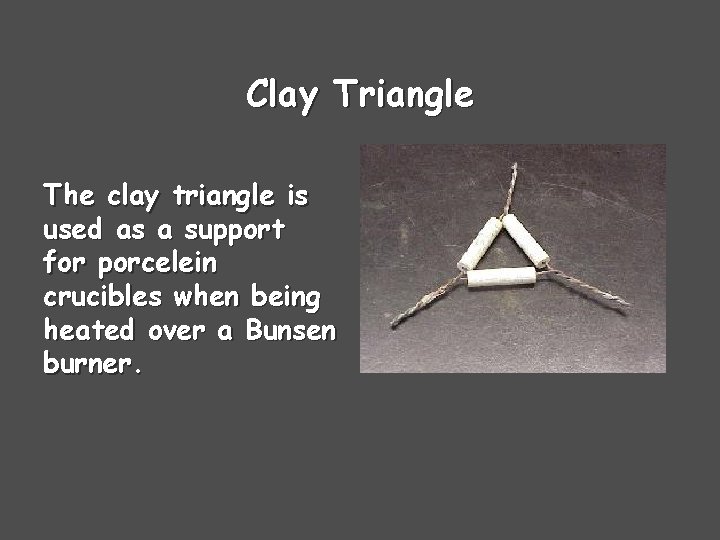
Clay Triangle The clay triangle is used as a support for porcelein crucibles when being heated over a Bunsen burner.
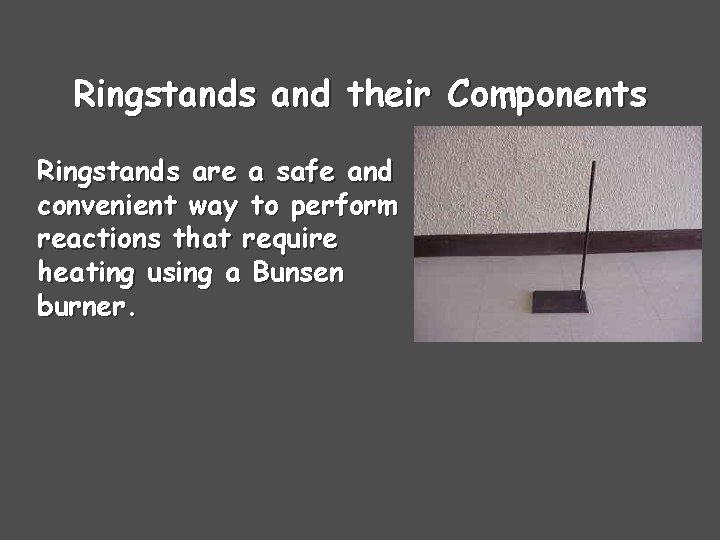
Ringstands and their Components Ringstands are a safe and convenient way to perform reactions that require heating using a Bunsen burner.
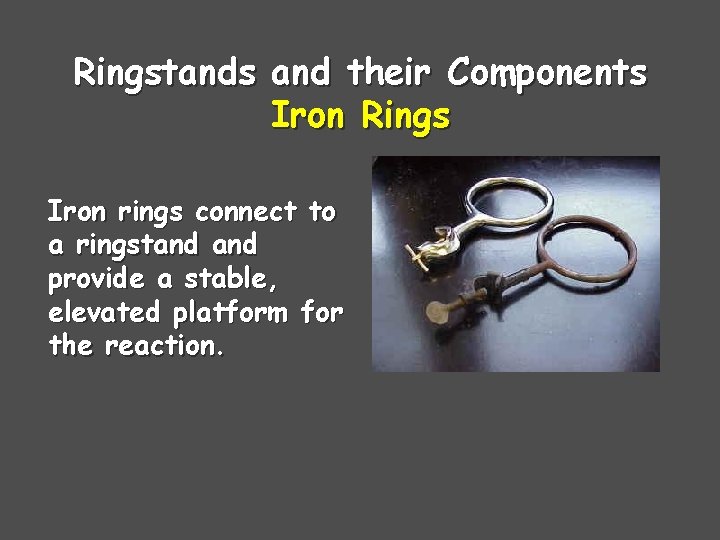
Ringstands and their Components Iron Rings Iron rings connect to a ringstand provide a stable, elevated platform for the reaction.
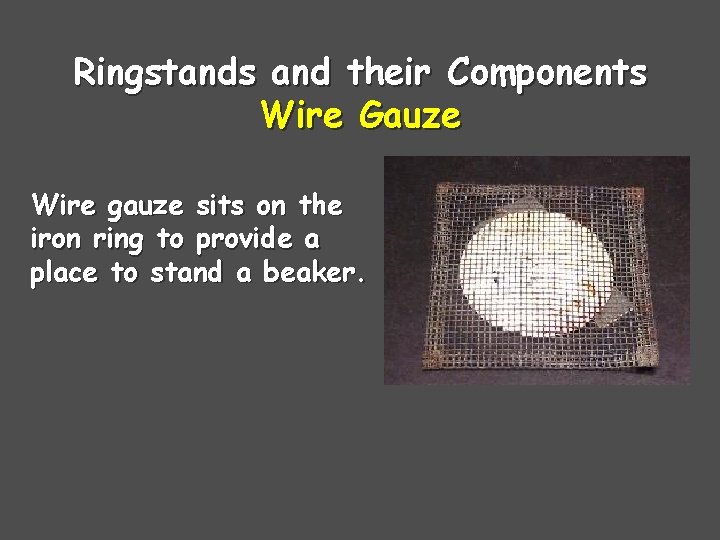
Ringstands and their Components Wire Gauze Wire gauze sits on the iron ring to provide a place to stand a beaker.
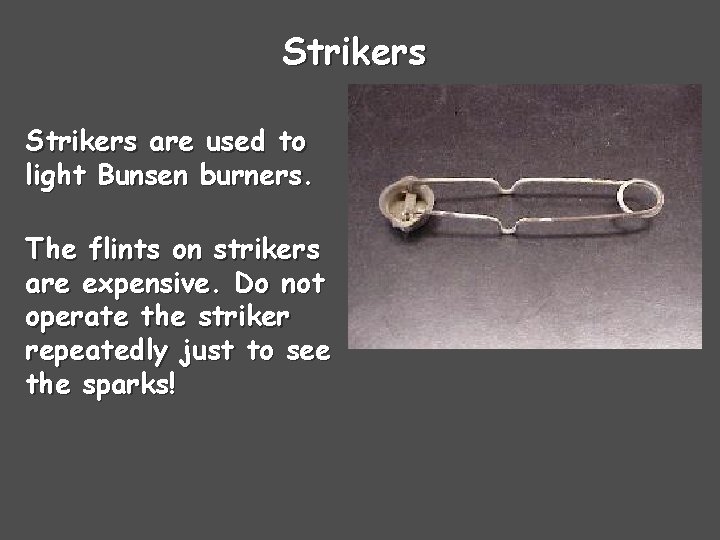
Strikers are used to light Bunsen burners. The flints on strikers are expensive. Do not operate the striker repeatedly just to see the sparks!
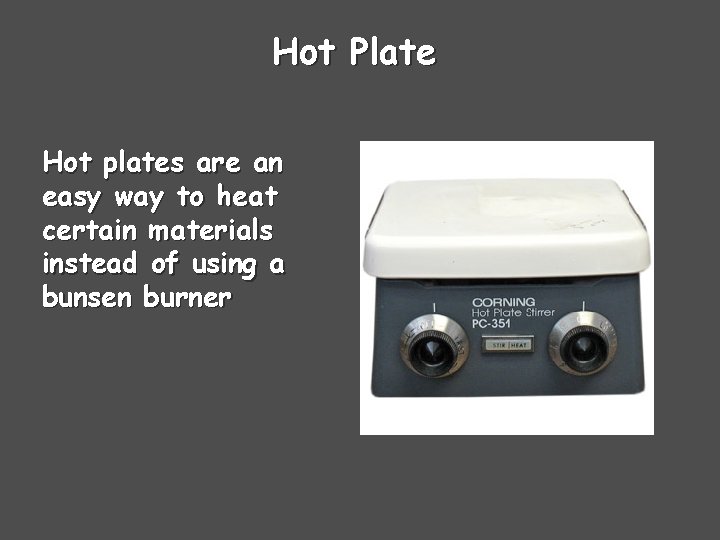
Hot Plate Hot plates are an easy way to heat certain materials instead of using a bunsen burner
- Slides: 36