
Lab Safety Microscope Use Learning Goal 1 I
Lab Safety & Microscope Use
Learning Goal 1. I will remind myself how to act safely in a lab 2. I will learn how to use and focus a compound and dissecting microscope 3. I will learn how to calculate the Field of View of a microscope 4. I will learn how to calculate the magnification of a specimen drawing
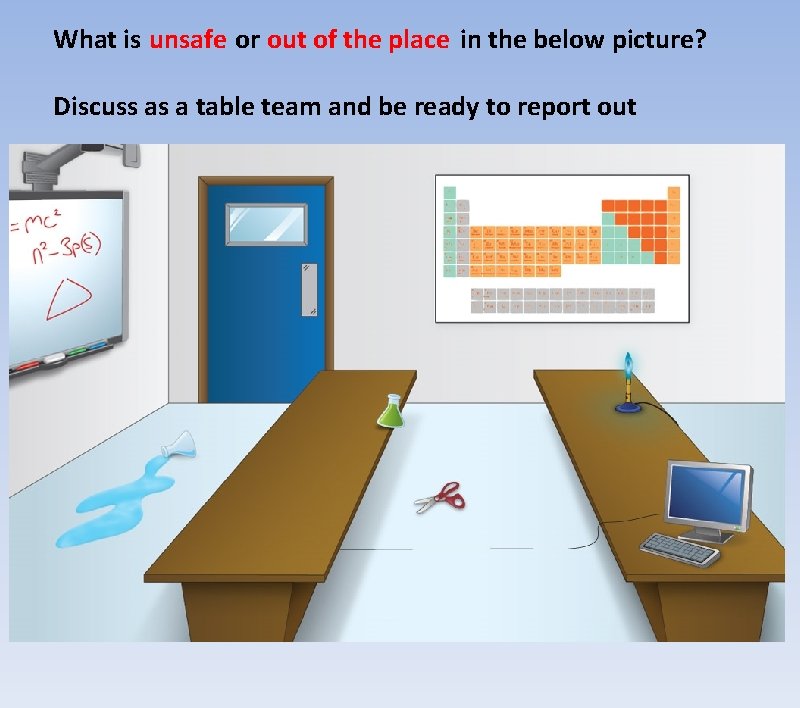
What is unsafe or out of the place in the below picture? Discuss as a table team and be ready to report out
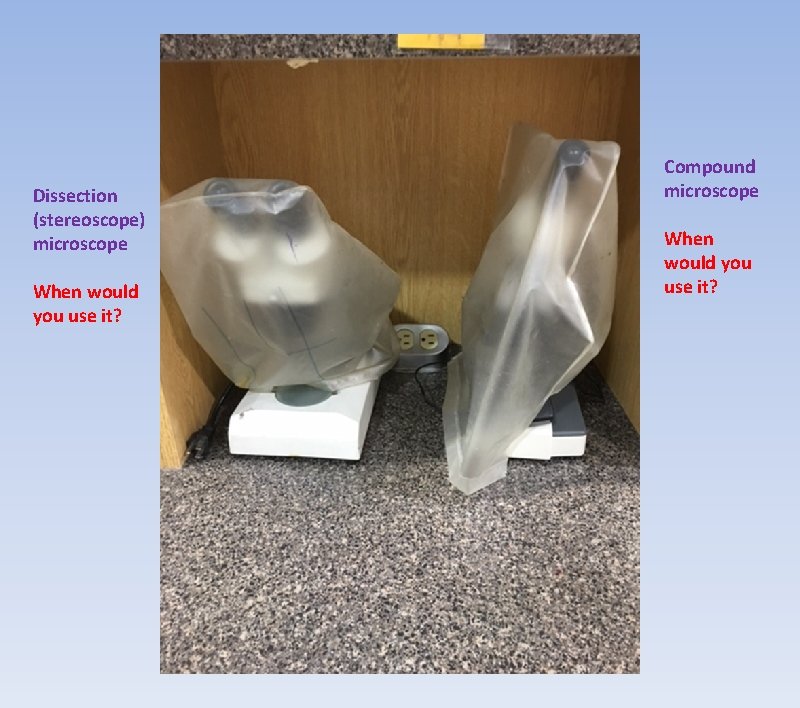
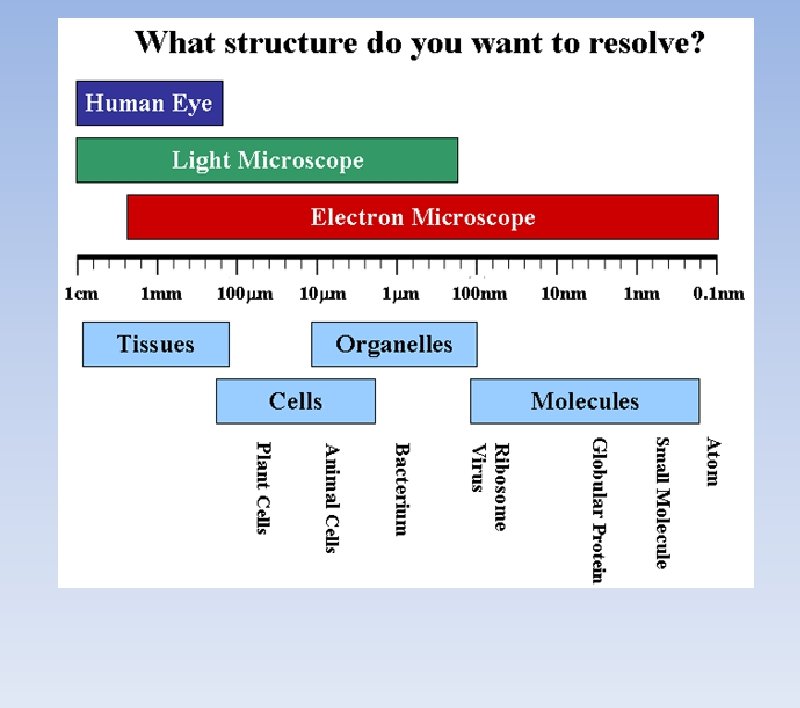
Dissection (stereoscope) microscope When would you use it? Compound microscope When would you use it?
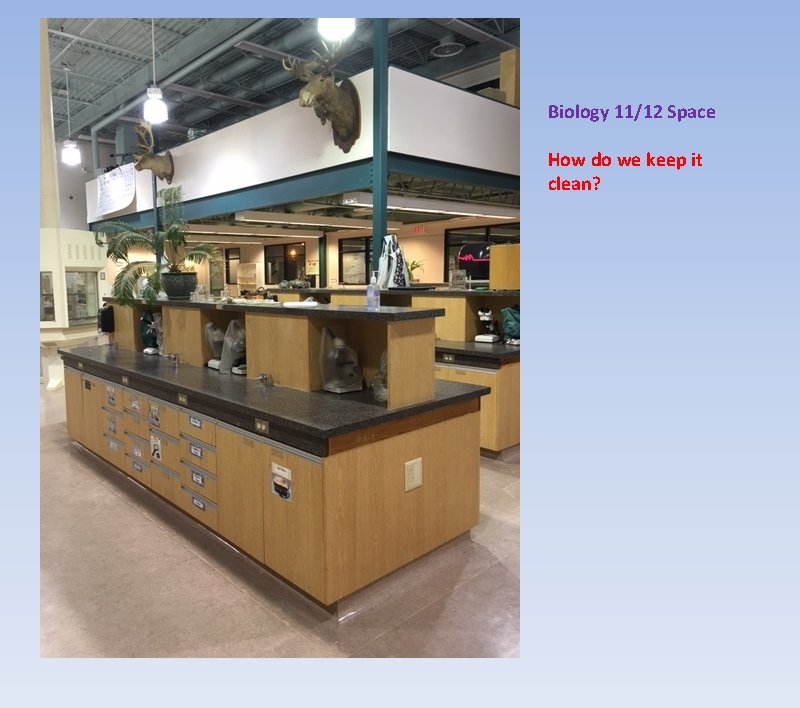
Biology 11/12 Space How do we keep it clean?
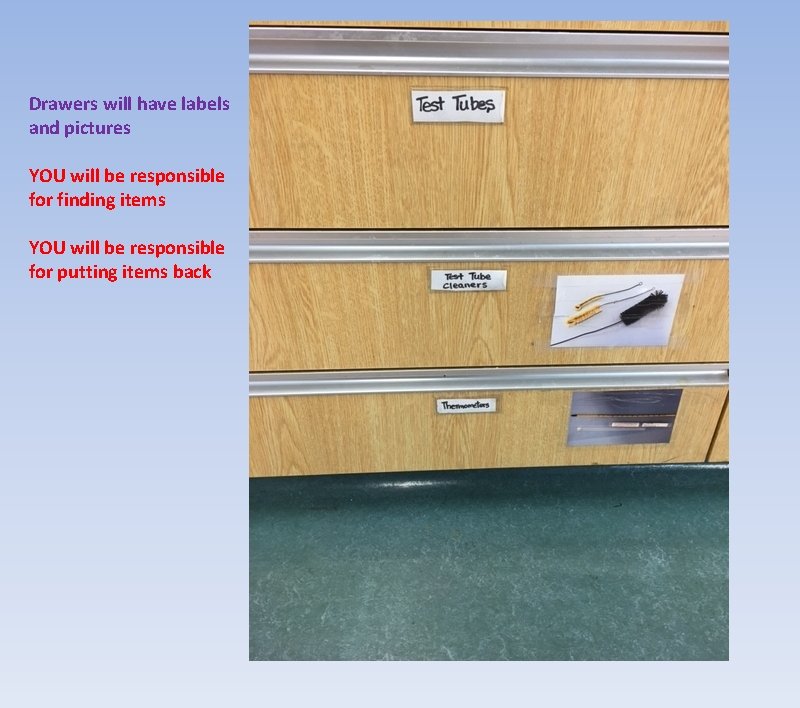
Drawers will have labels and pictures YOU will be responsible for finding items YOU will be responsible for putting items back
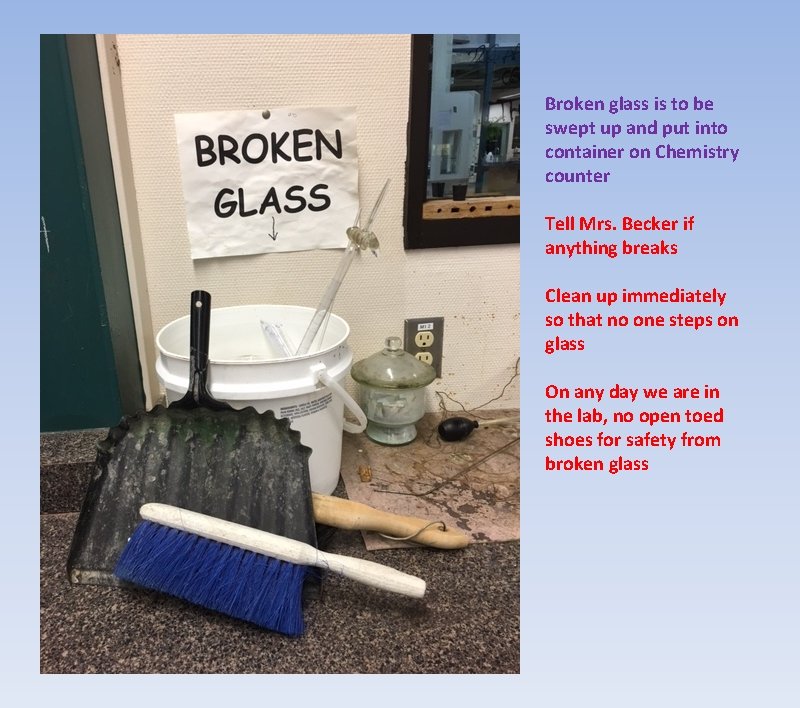
Broken glass is to be swept up and put into container on Chemistry counter Tell Mrs. Becker if anything breaks Clean up immediately so that no one steps on glass On any day we are in the lab, no open toed shoes for safety from broken glass
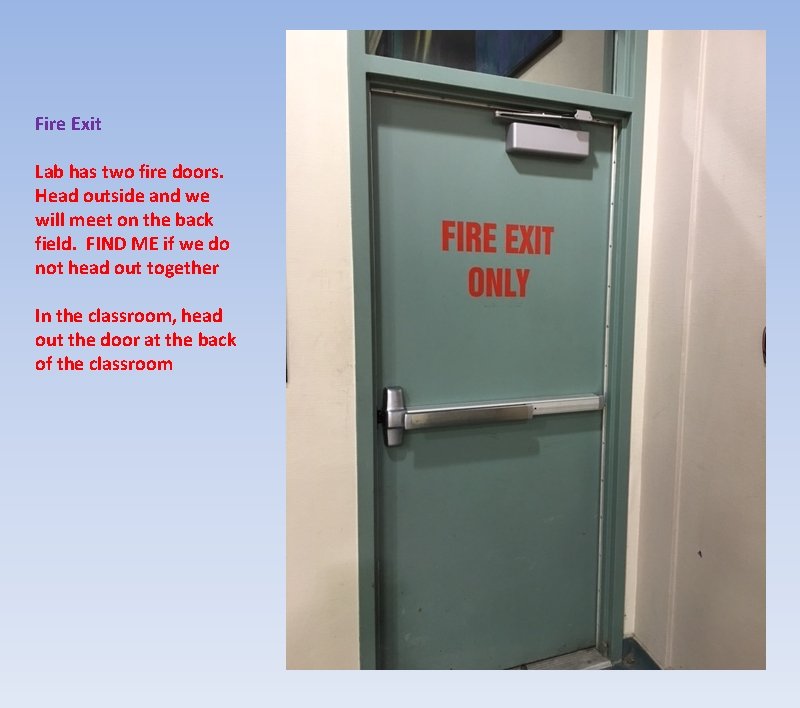
Fire Exit Lab has two fire doors. Head outside and we will meet on the back field. FIND ME if we do not head out together In the classroom, head out the door at the back of the classroom
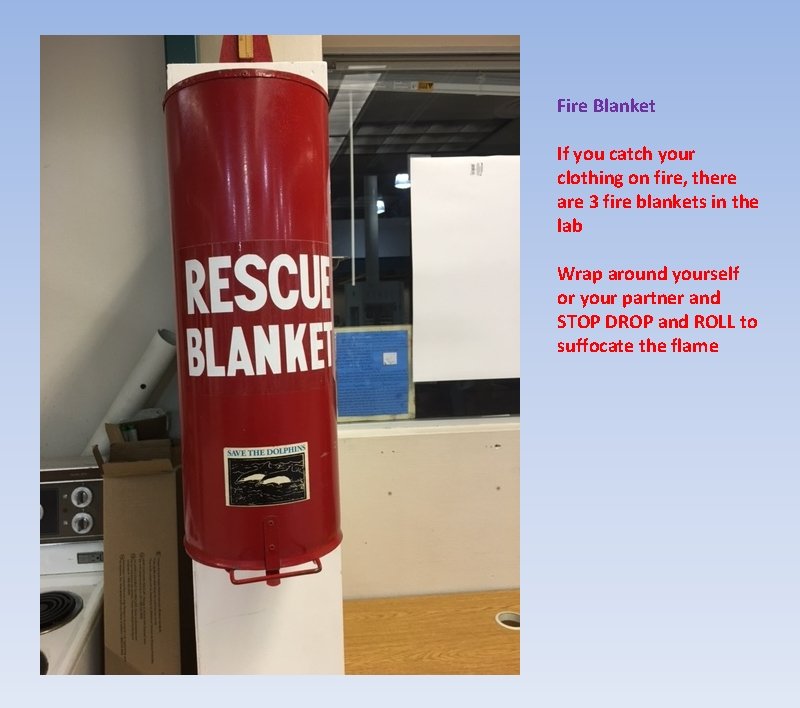
Fire Blanket If you catch your clothing on fire, there are 3 fire blankets in the lab Wrap around yourself or your partner and STOP DROP and ROLL to suffocate the flame
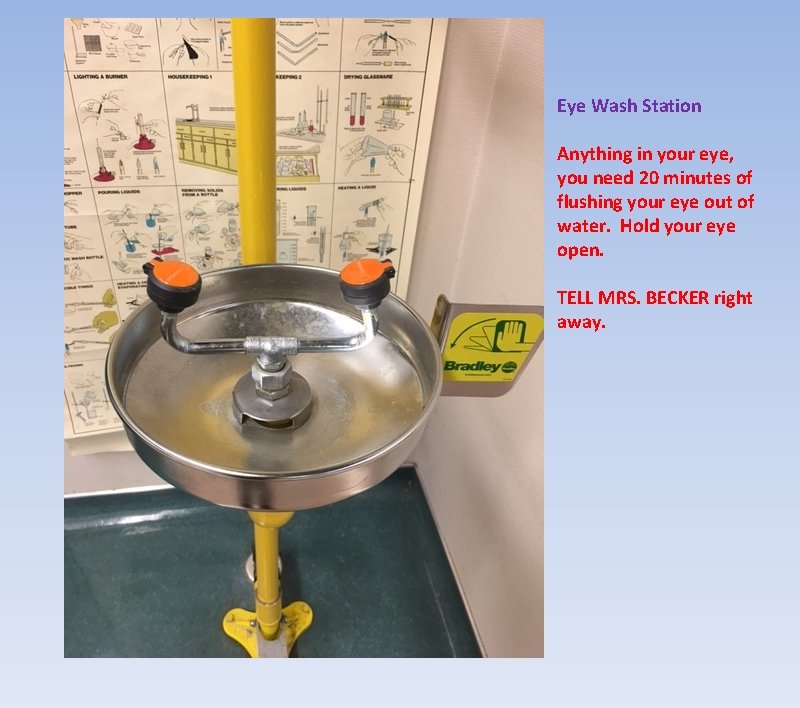
Eye Wash Station Anything in your eye, you need 20 minutes of flushing your eye out of water. Hold your eye open. TELL MRS. BECKER right away.
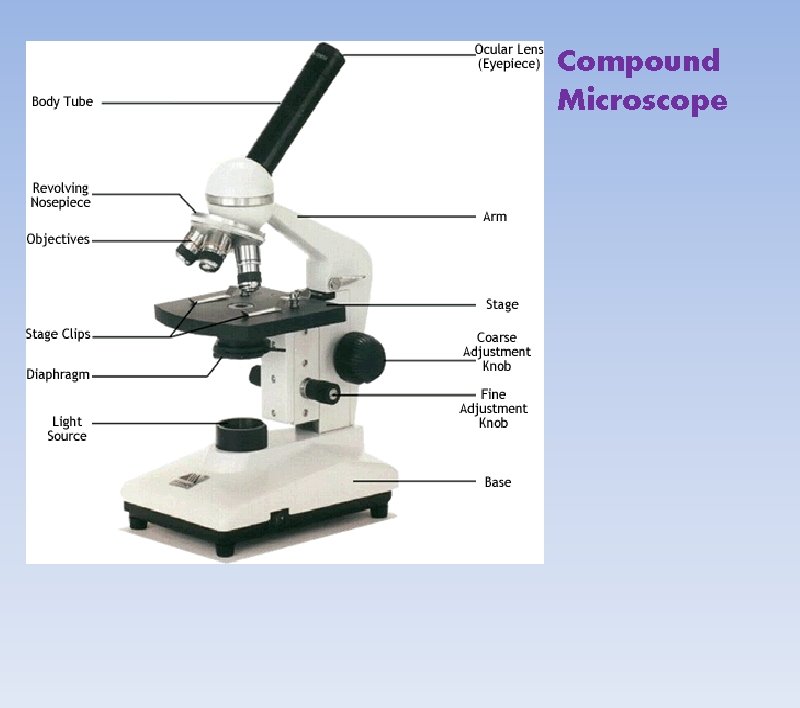
Compound Microscope
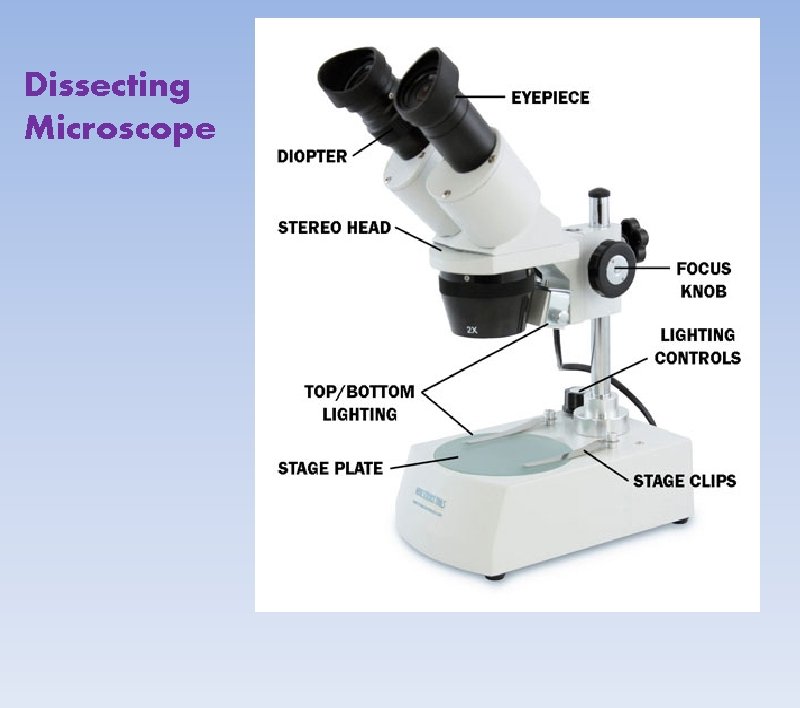
Dissecting Microscope

Exercise #1: Magnification Scanning Power Low Power High Power Oil Immersion
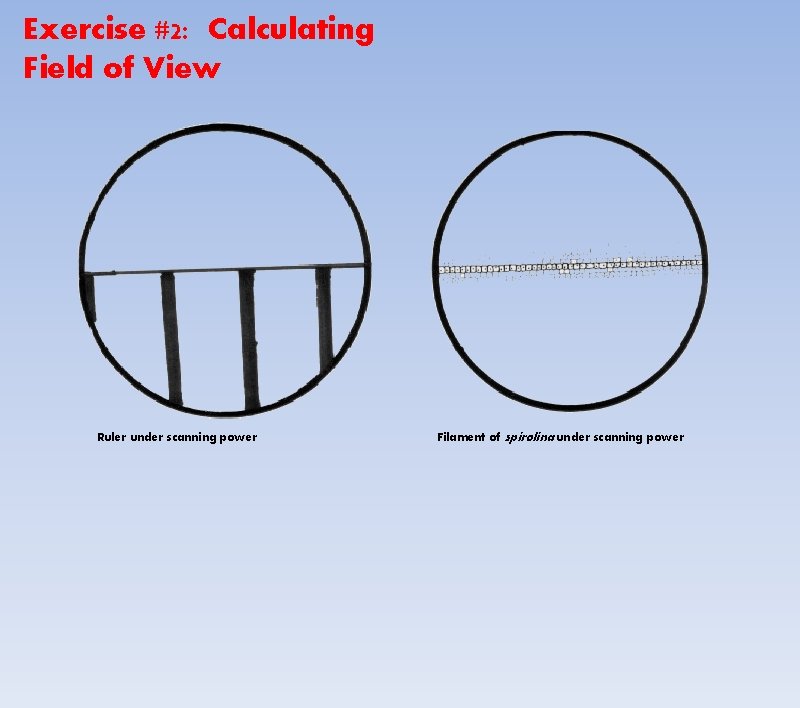
Exercise #2: Calculating Field of View Ruler under scanning power Filament of spirolina under scanning power
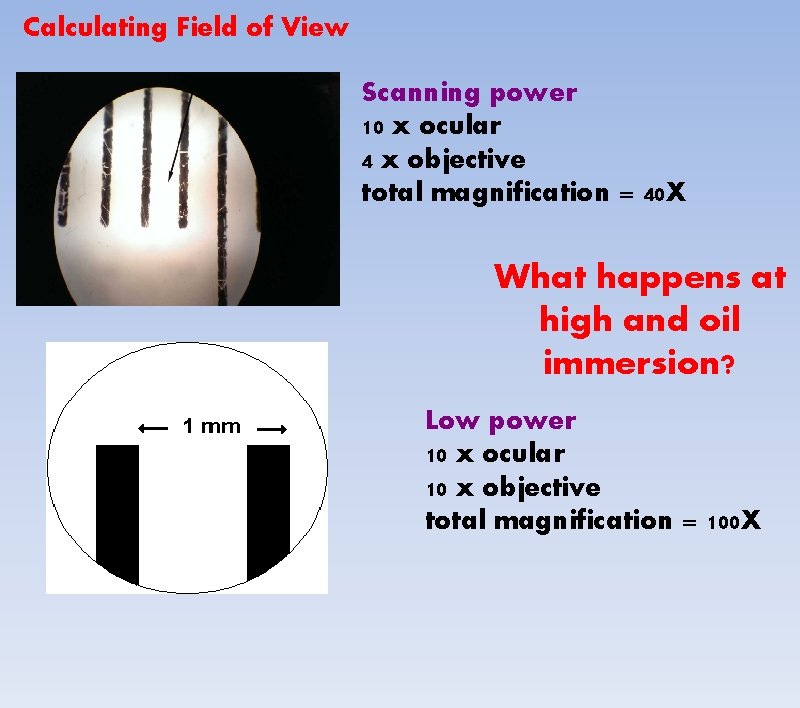
Calculating Field of View Scanning power 10 x ocular 4 x objective total magnification = 40 X What happens at high and oil immersion? Low power 10 x ocular 10 x objective total magnification = 100 X
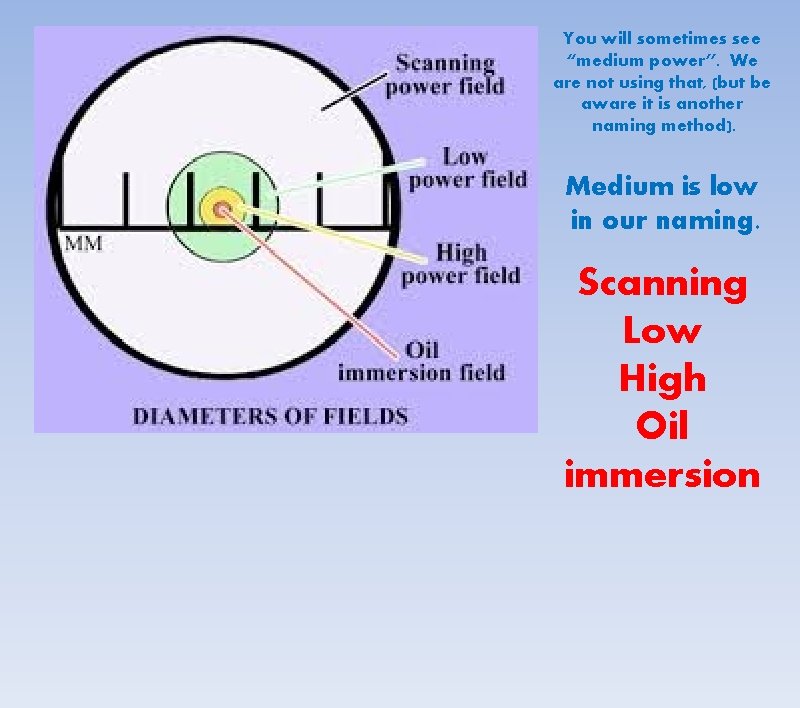
You will sometimes see “medium power”. We are not using that, (but be aware it is another naming method). Medium is low in our naming. Scanning Low High Oil immersion
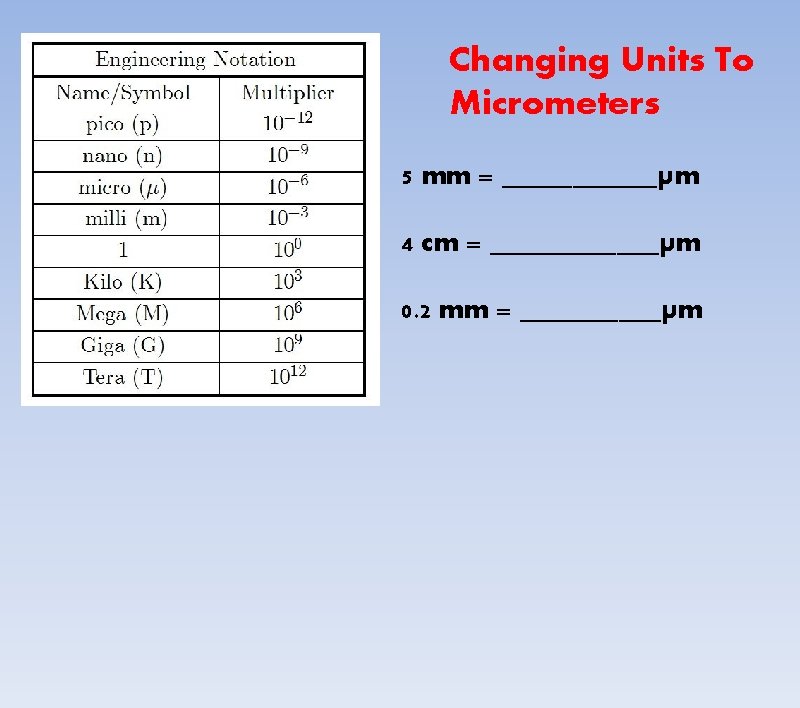
Changing Units To Micrometers 5 mm = ______µm 4 cm = ______µm 0. 2 mm = _____µm
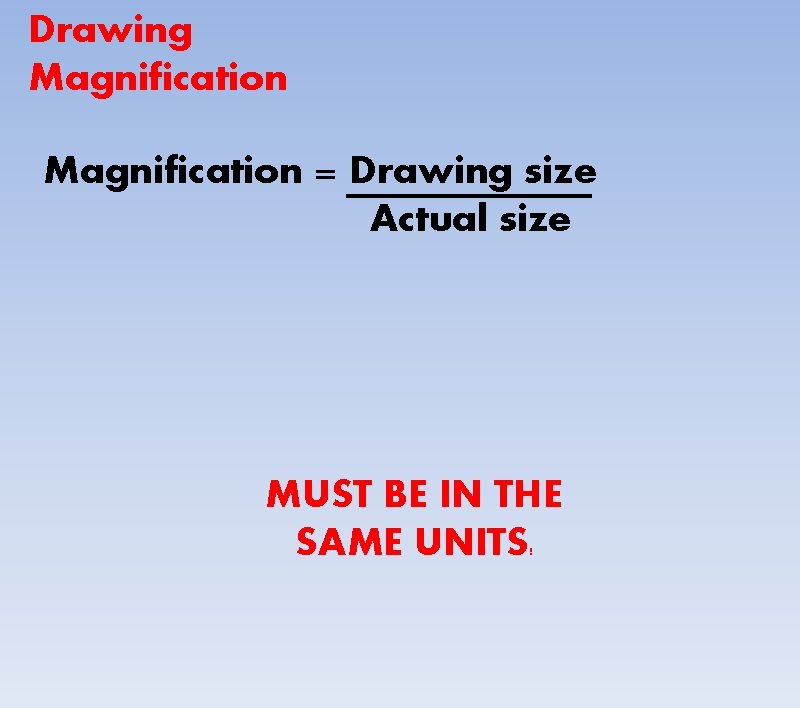
Drawing Magnification = Drawing size Actual size MUST BE IN THE SAME UNITS !
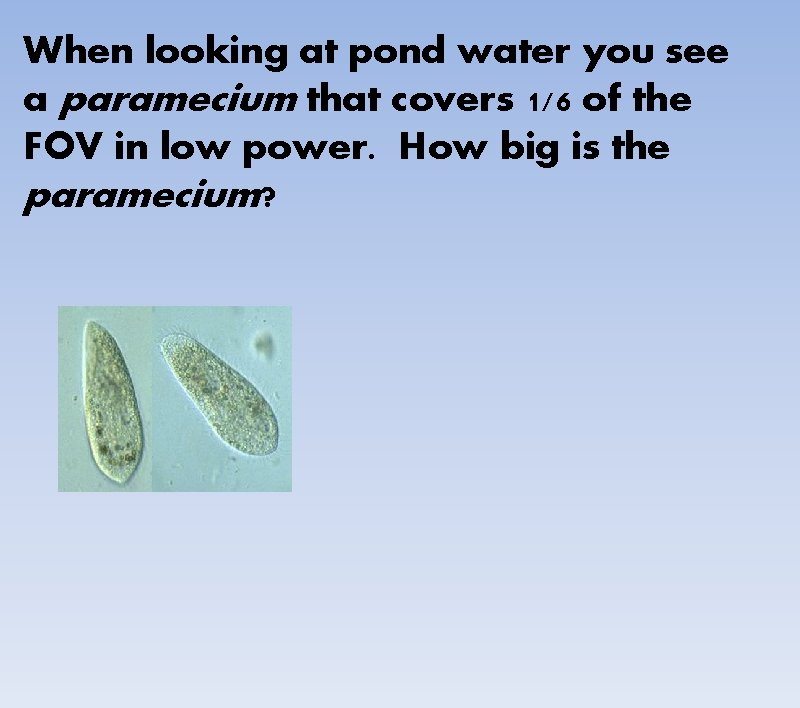
When looking at pond water you see a paramecium that covers 1/6 of the FOV in low power. How big is the paramecium?
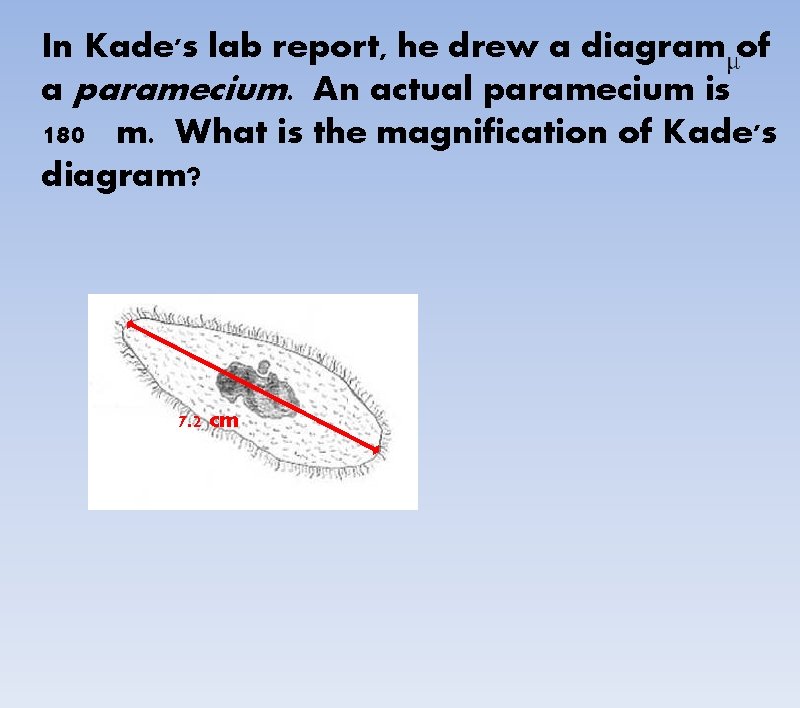
In Kade's lab report, he drew a diagram of a paramecium. An actual paramecium is 180 m. What is the magnification of Kade's diagram? 7. 2 cm
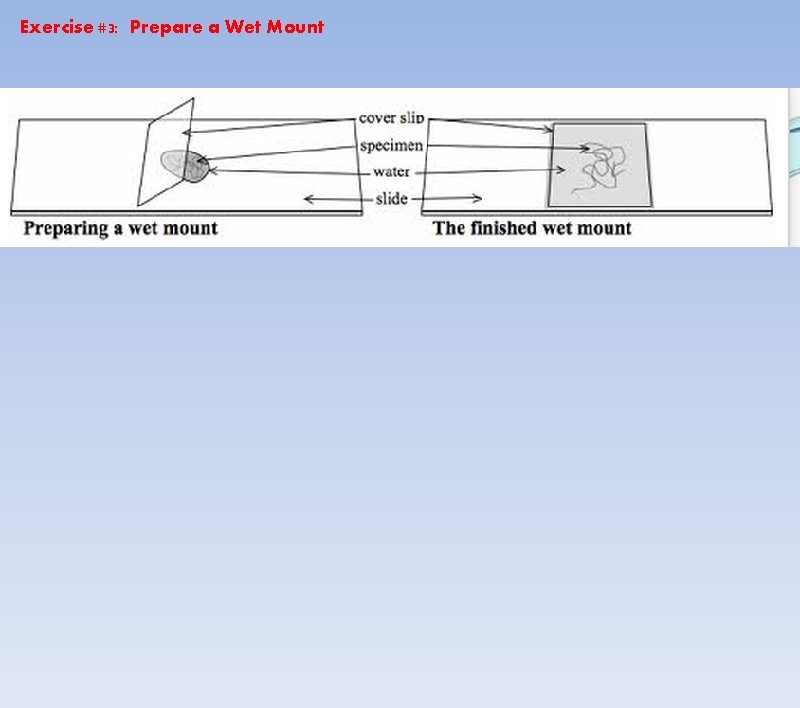
Exercise #3: Prepare a Wet Mount
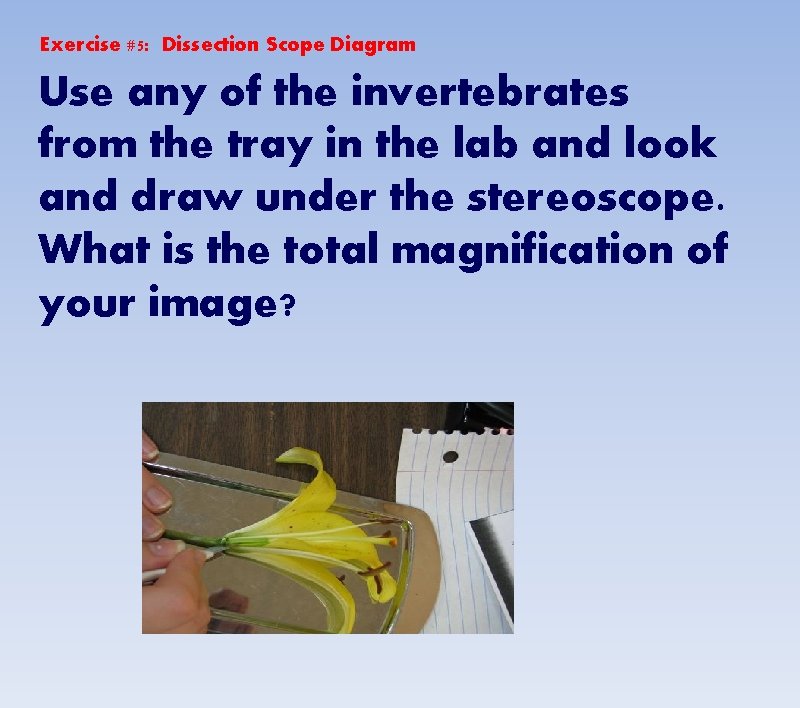
Exercise #5: Dissection Scope Diagram Use any of the invertebrates from the tray in the lab and look and draw under the stereoscope. What is the total magnification of your image?
Today's To Do List: 1. Work through exercise #1 - 5 with your partner 2. Answer the questions at end of lab at home this evening
- Slides: 24