
Lab Safety Course Mrs Bordeaux Instructor Objectives The
Lab Safety Course Mrs. Bordeaux Instructor
Objectives: • The learner will recognize potential hazards in Science Laboratory Activities. • The learner will use appropriate behavior in the Science Lab
General Safety Guidelines:
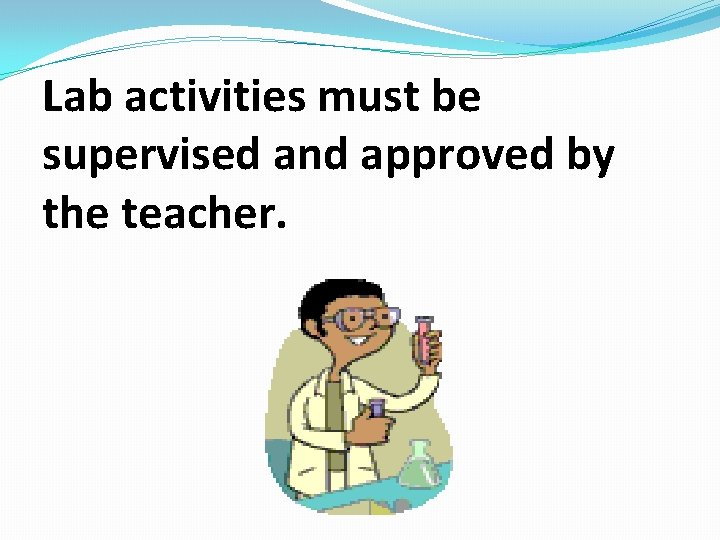
Lab activities must be supervised and approved by the teacher.
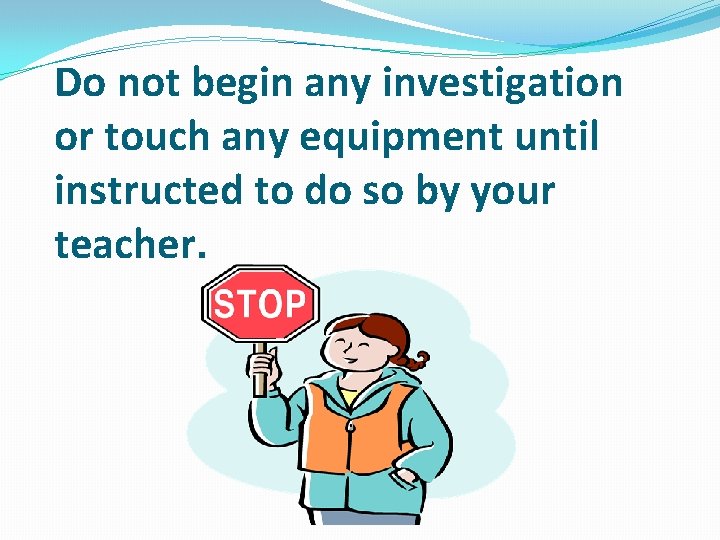
Do not begin any investigation or touch any equipment until instructed to do so by your teacher.
Read all directions and make sure you understand them before beginning a lab or activity.
Don’t be afraid to ask how to use equipment or for help with directions.
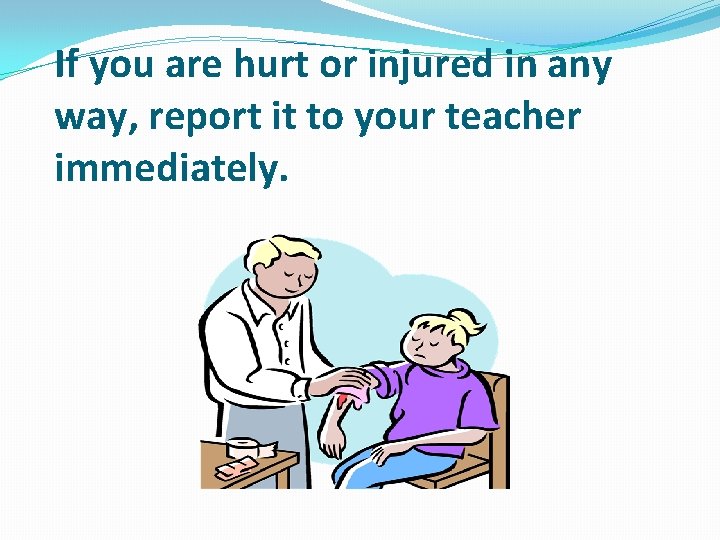
If you are hurt or injured in any way, report it to your teacher immediately.
Keep your voices down so that you can hear instructions and other important information.
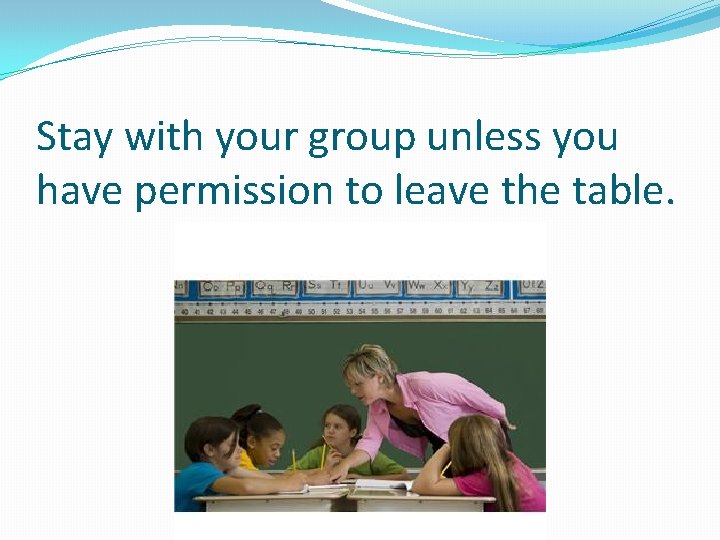
Stay with your group unless you have permission to leave the table.
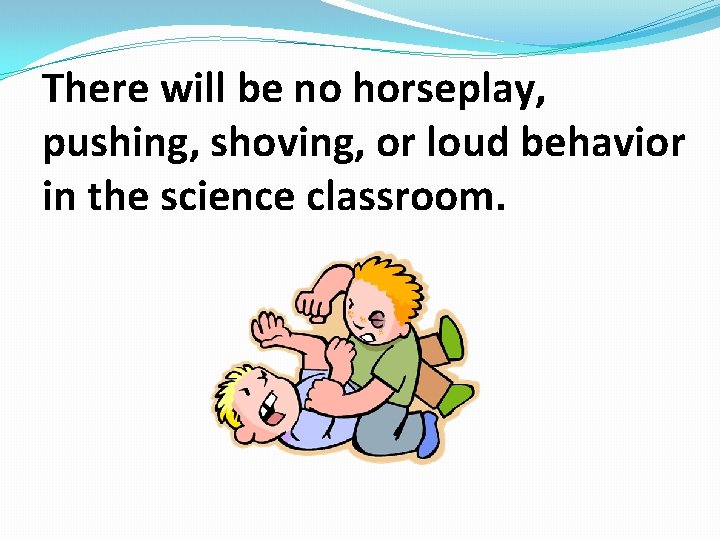
There will be no horseplay, pushing, shoving, or loud behavior in the science classroom.
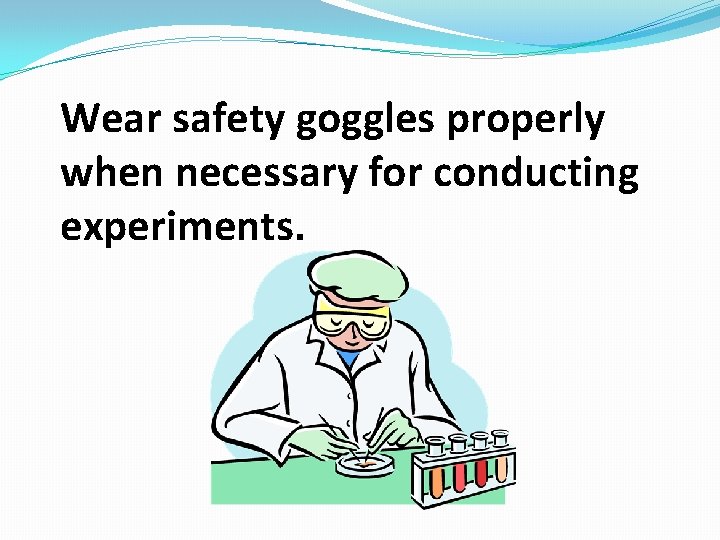
Wear safety goggles properly when necessary for conducting experiments.
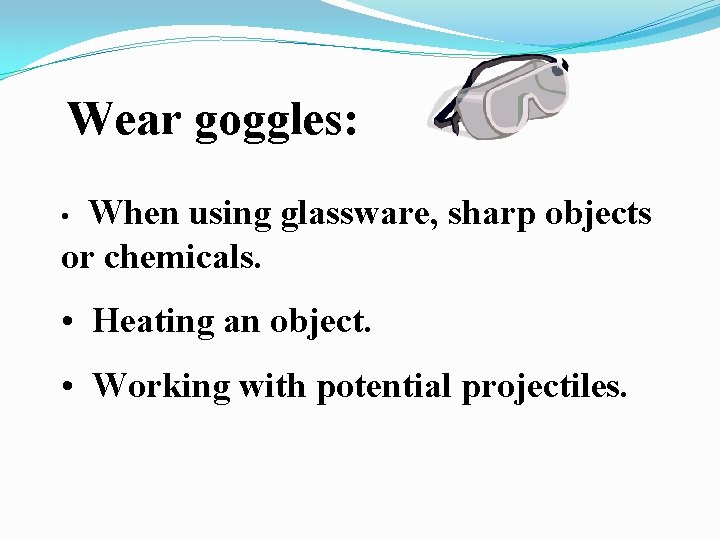
Wear goggles: When using glassware, sharp objects or chemicals. • • Heating an object. • Working with potential projectiles.
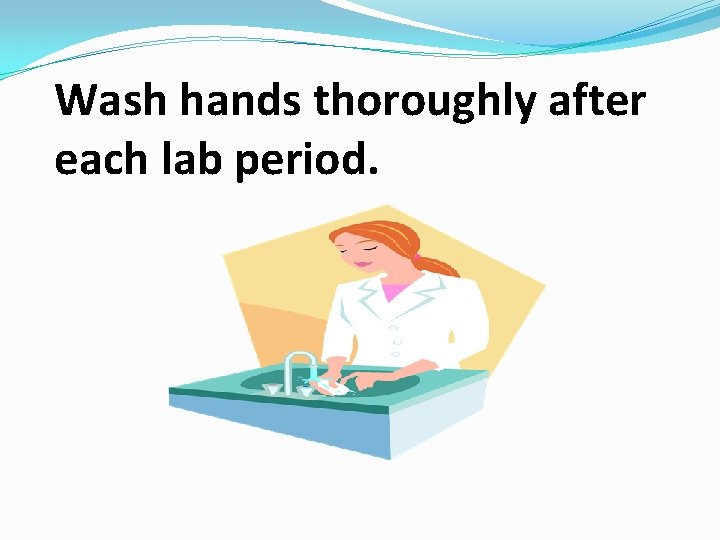
Wash hands thoroughly after each lab period.
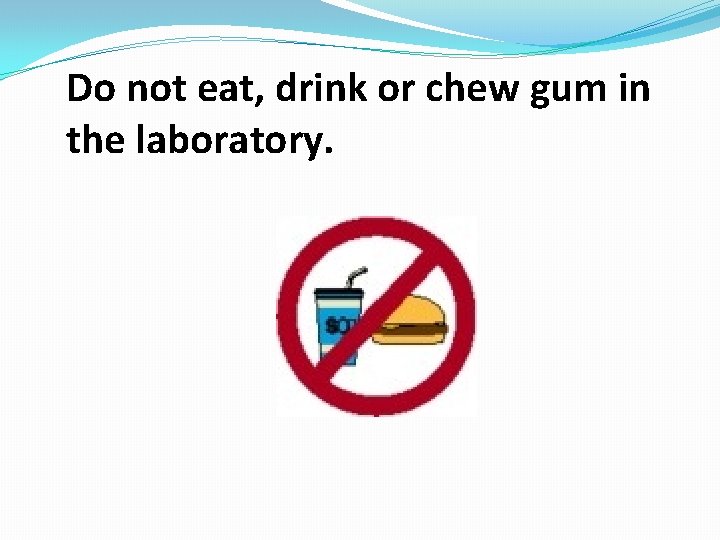
Do not eat, drink or chew gum in the laboratory.
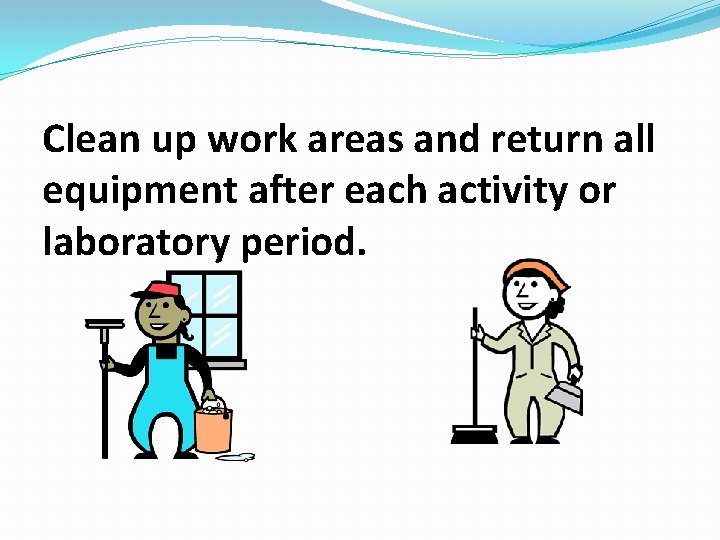
Clean up work areas and return all equipment after each activity or laboratory period.
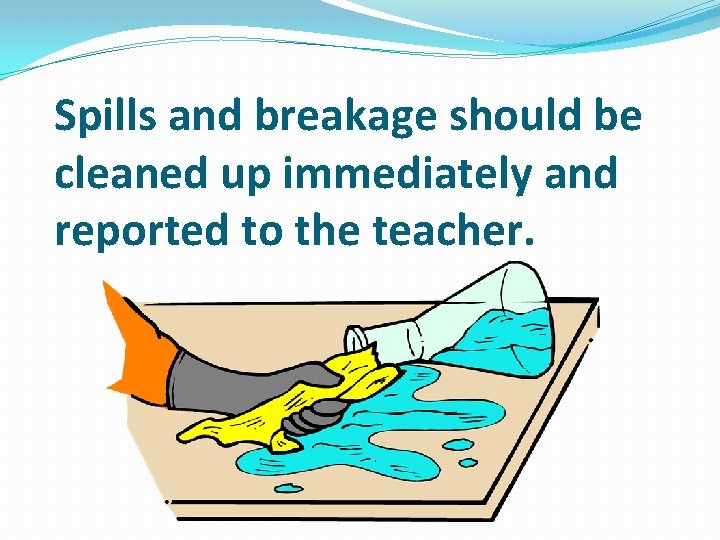
Spills and breakage should be cleaned up immediately and reported to the teacher.
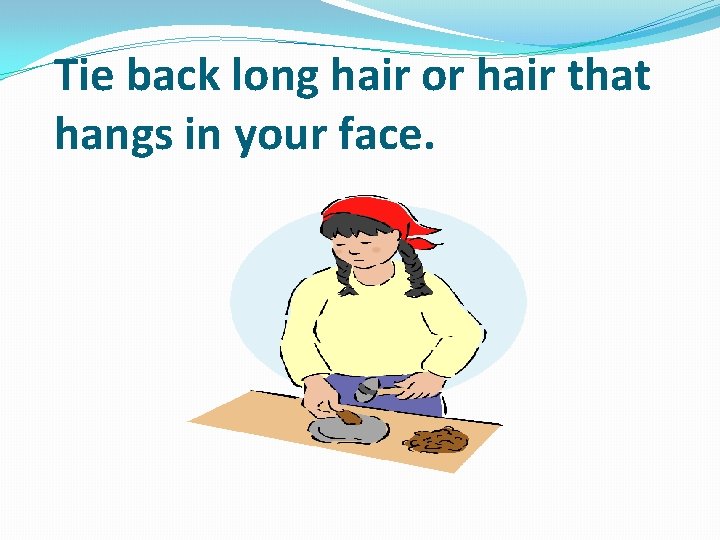
Tie back long hair or hair that hangs in your face.
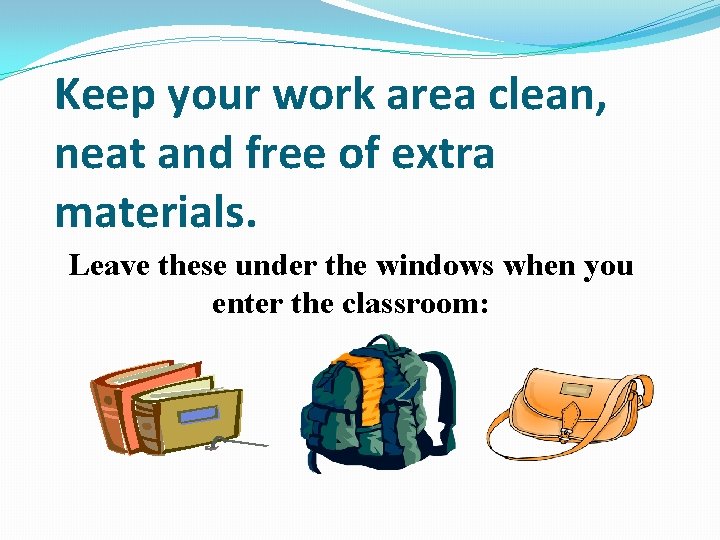
Keep your work area clean, neat and free of extra materials. Leave these under the windows when you enter the classroom:
Heating and Fire Safety:
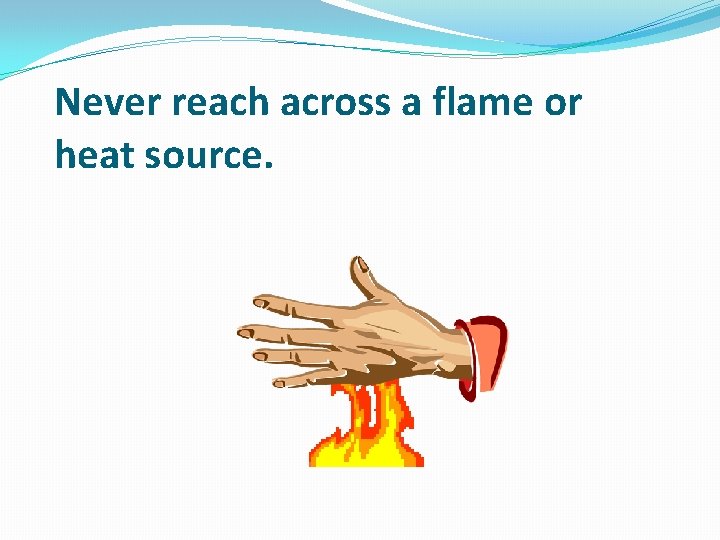
Never reach across a flame or heat source.
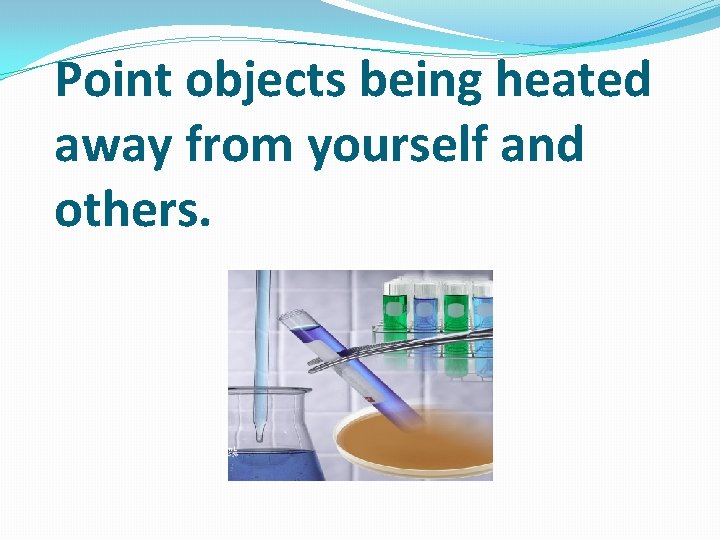
Point objects being heated away from yourself and others.
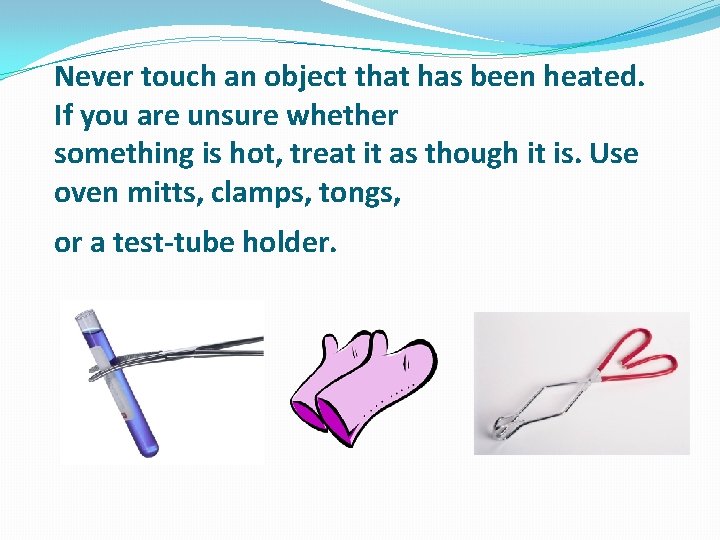
Never touch an object that has been heated. If you are unsure whether something is hot, treat it as though it is. Use oven mitts, clamps, tongs, or a test-tube holder.
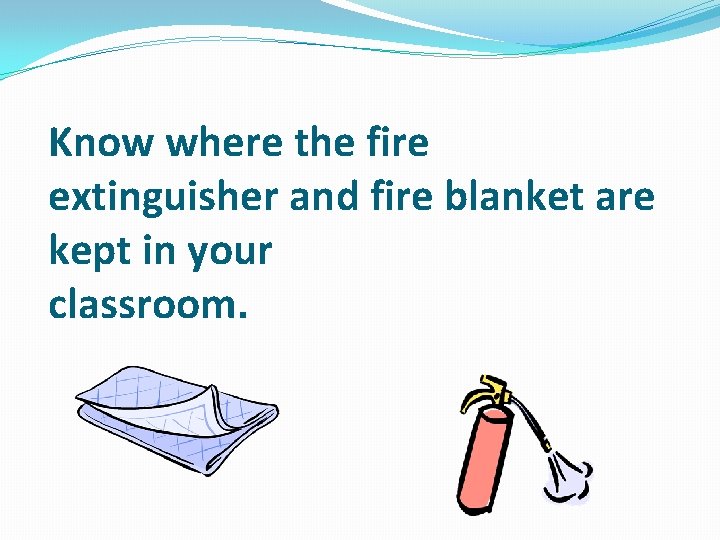
Know where the fire extinguisher and fire blanket are kept in your classroom.
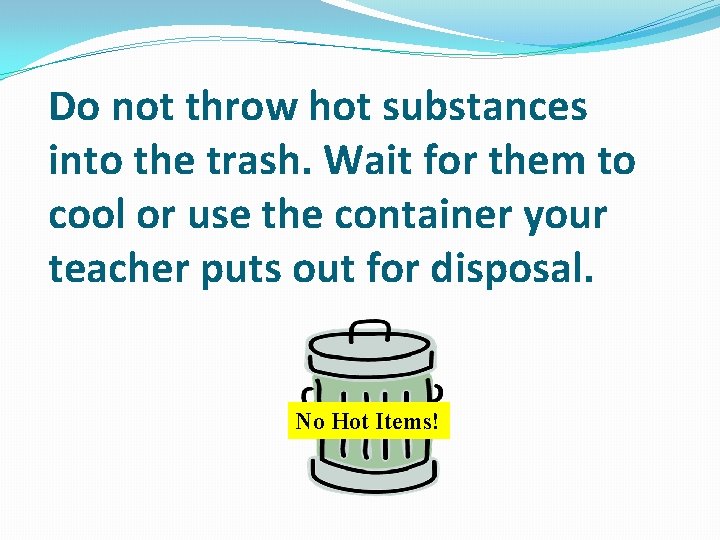
Do not throw hot substances into the trash. Wait for them to cool or use the container your teacher puts out for disposal. No Hot Items!
Electrical Safety:
• Whenever possible, make sure no cord is lying on the floor where someone can trip. • Do not let a cord hang over the side of a counter or table. • Never let cords hang into sinks or other places where water can be found. • Never try to fix electrical problems. Inform your teacher of any problems immediately.
Chemical Safety:
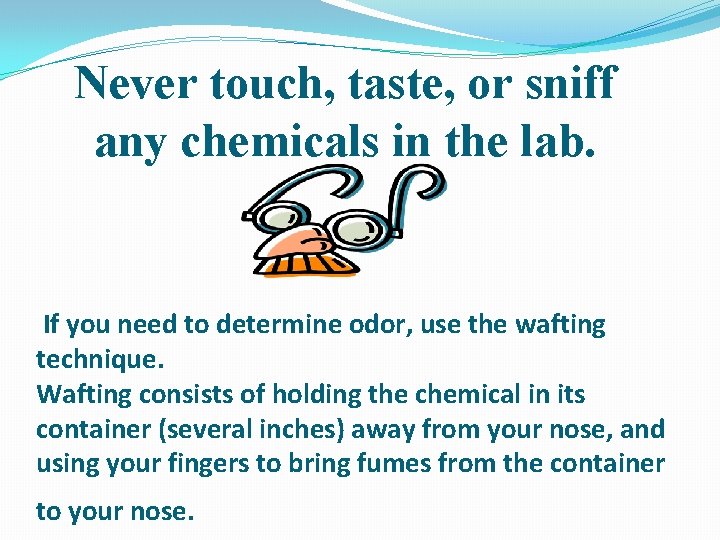
Never touch, taste, or sniff any chemicals in the lab. If you need to determine odor, use the wafting technique. Wafting consists of holding the chemical in its container (several inches) away from your nose, and using your fingers to bring fumes from the container to your nose.
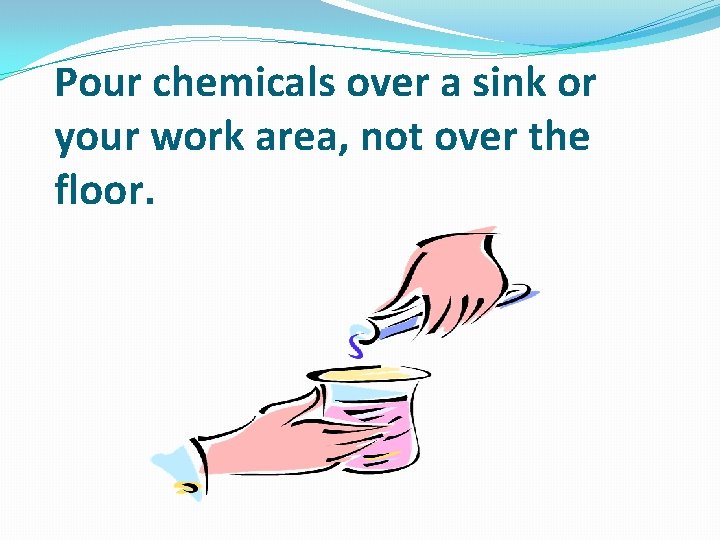
Pour chemicals over a sink or your work area, not over the floor.
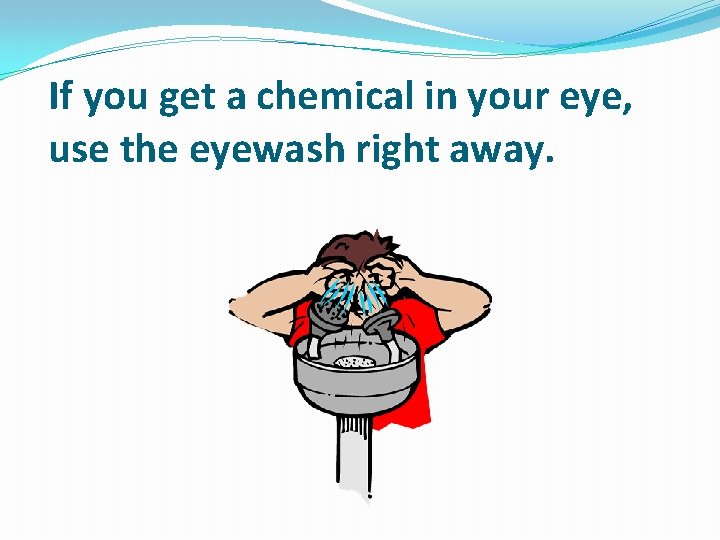
If you get a chemical in your eye, use the eyewash right away.
Glassware and Sharp Object Safety:
�Never use cracked or broken glassware. Report it to your teacher. �Hold sharp objects such as knives and scalpels away from yourself and others. �If you break a piece of glassware, tell your teacher immediately. �Always clean up broken glass with a broom and dustpan, never use your hands!
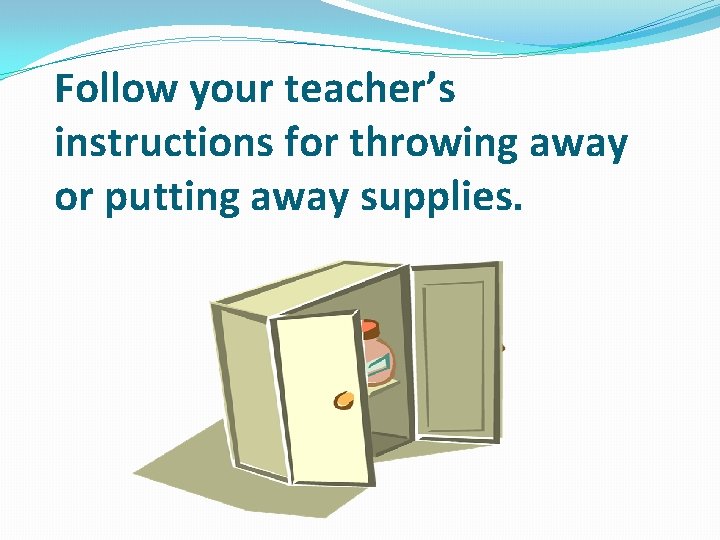
Follow your teacher’s instructions for throwing away or putting away supplies.
Hazardous Materials Vocabulary: �Carcinogen: a substance capable of causing cancer or cancerous growths in mammals. �Mutagen: a substance capable of causing changes in the genetic material of a cell, which can be transmitted during cell division. �Highly Toxic: Agents or substances that when inhaled, absorbed or ingested in small amounts can cause death, disablement, or severe illness.
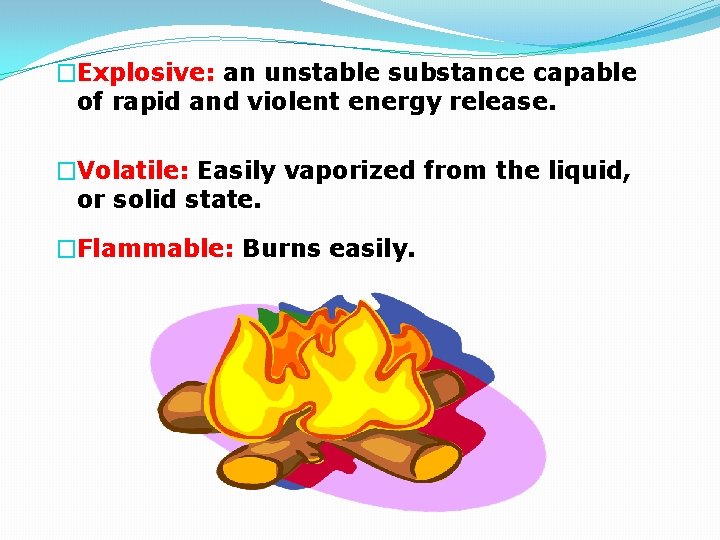
�Explosive: an unstable substance capable of rapid and violent energy release. �Volatile: Easily vaporized from the liquid, or solid state. �Flammable: Burns easily.
�Corrosive: a substance that causes destruction of tissue by chemical action on contact. �Irritant: a substance that on immediate, prolonged, or repeated contact with normal tissue will induce a local inflammatory reaction.
- Slides: 37