
Lab Safety Chemistry Lab Safety Personal protective equipment
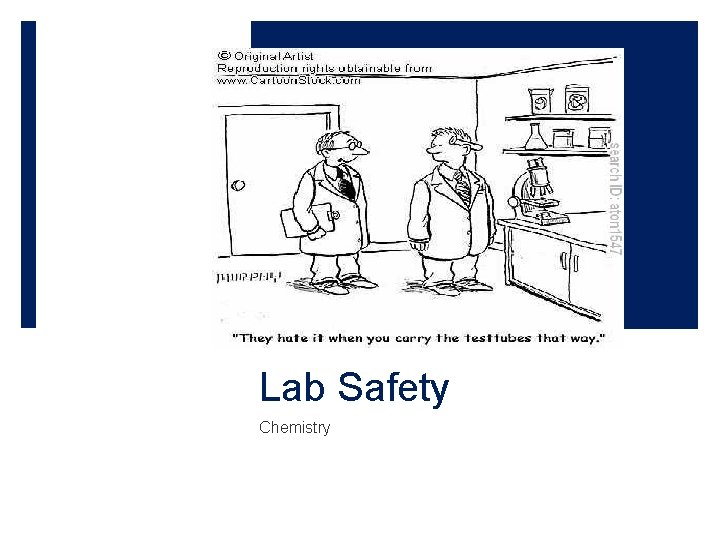
Lab Safety Chemistry
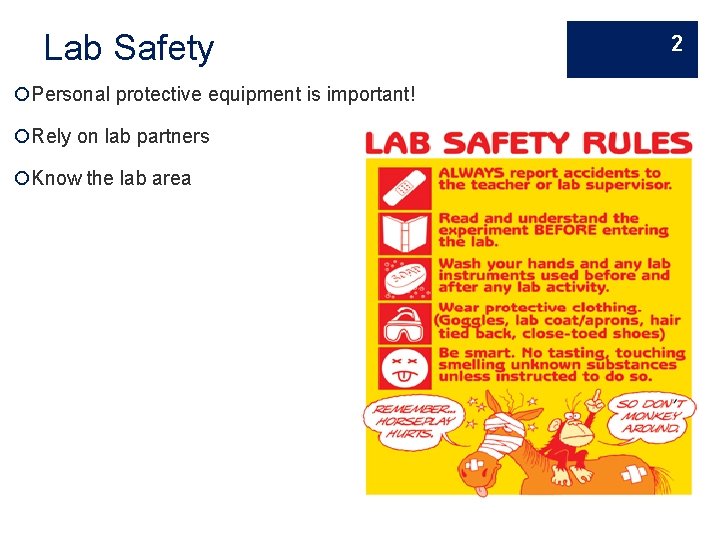
Lab Safety Personal protective equipment is important! Rely on lab partners Know the lab area 2
Partner Time!! Which of these lab safety rules do you think is the most important?
4
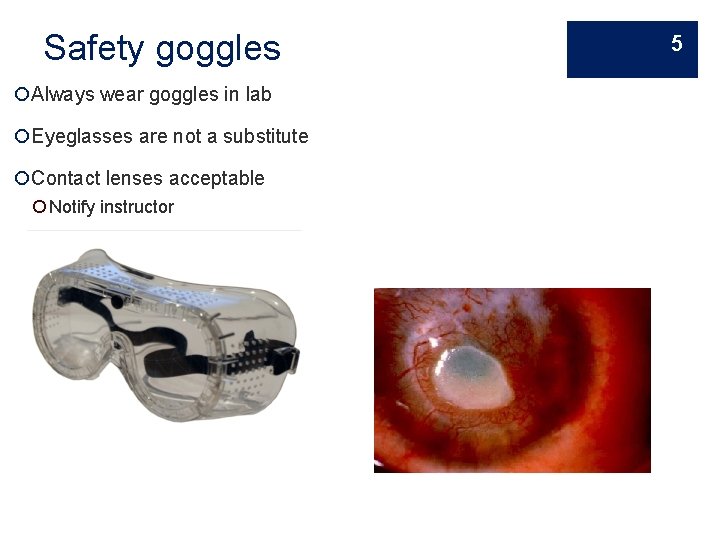
Safety goggles Always wear goggles in lab Eyeglasses are not a substitute Contact lenses acceptable Notify instructor 5
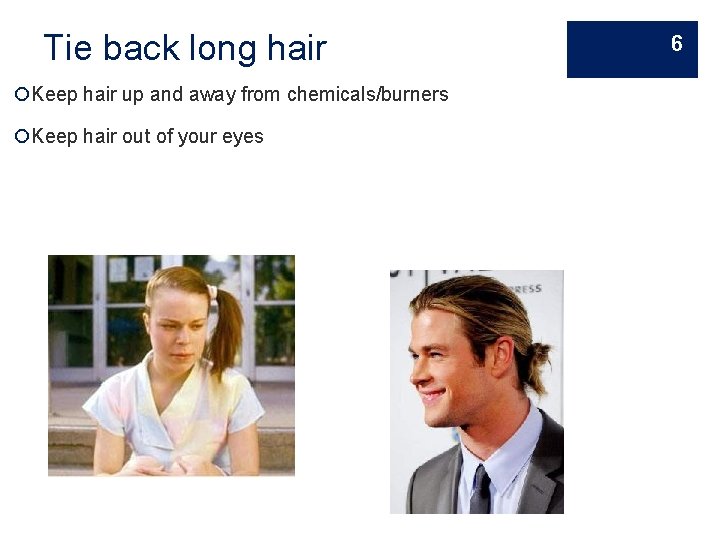
Tie back long hair Keep hair up and away from chemicals/burners Keep hair out of your eyes 6
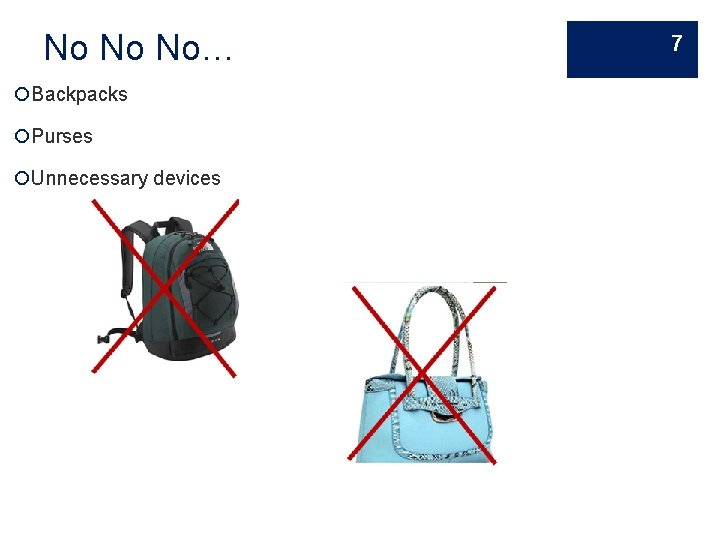
No No No… Backpacks Purses Unnecessary devices 7
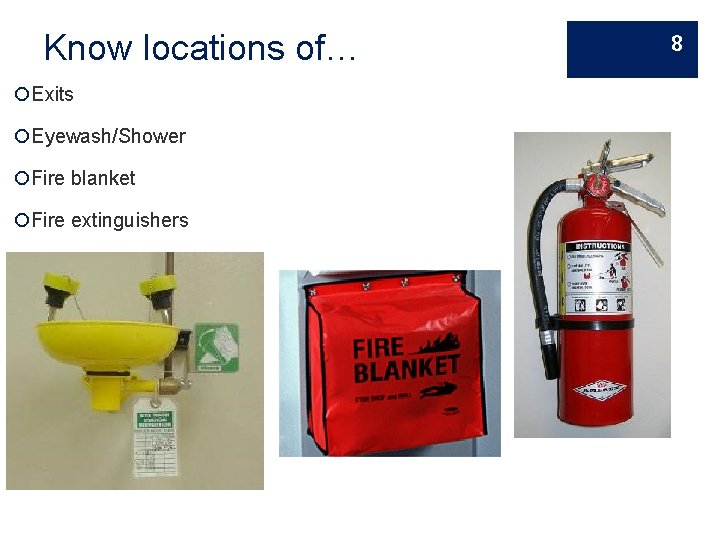
Know locations of… Exits Eyewash/Shower Fire blanket Fire extinguishers 8
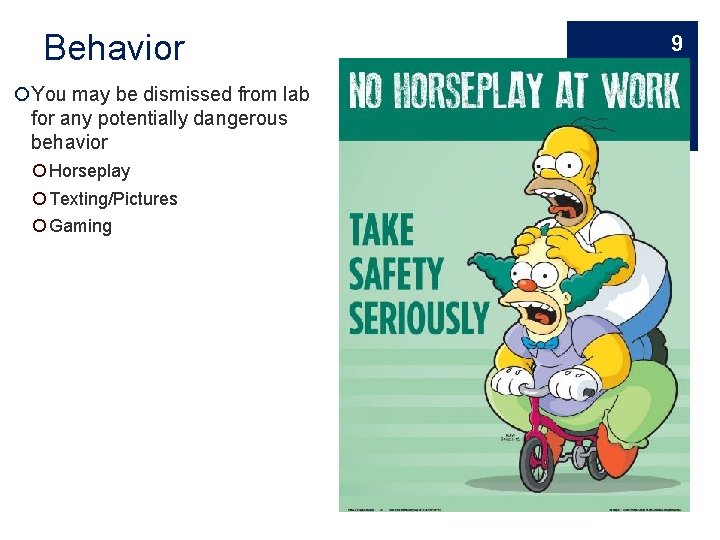
Behavior You may be dismissed from lab for any potentially dangerous behavior Horseplay Texting/Pictures Gaming 9
No unauthorized experiments Only work on assigned lab during lab time Ask if further experiments are needed or warranted 10
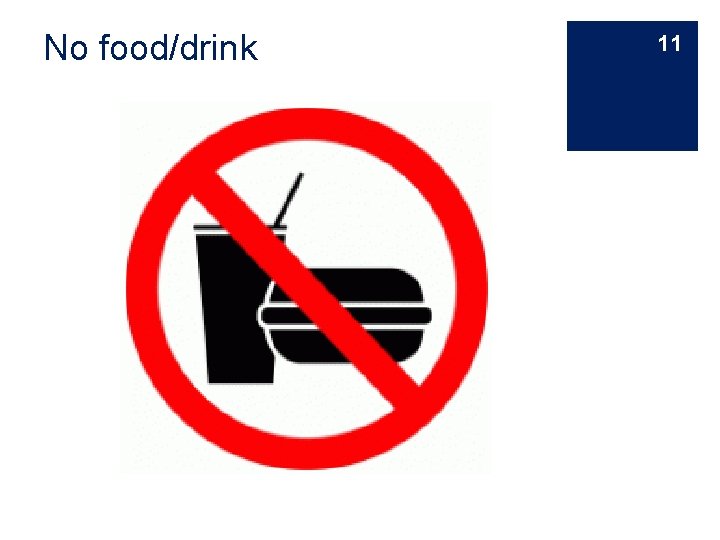
No food/drink 11
Never remove chemicals from lab 12

Unlabeled container Never use chemicals from an unlabeled container WHY? 13
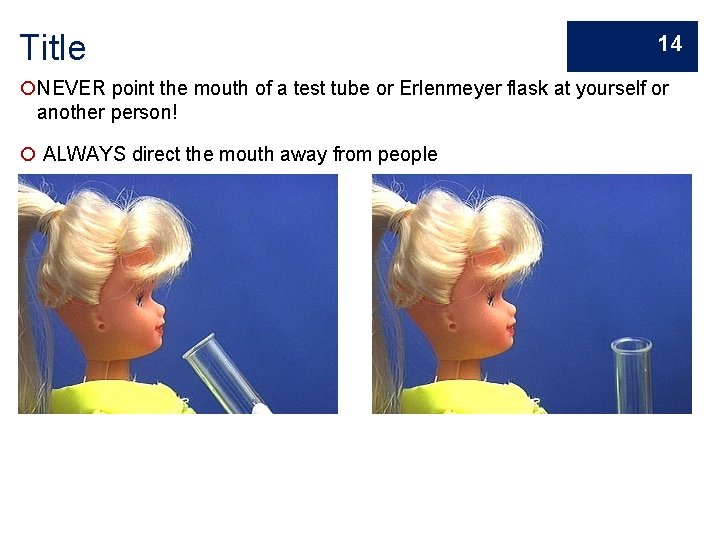
Title 14 NEVER point the mouth of a test tube or Erlenmeyer flask at yourself or another person! ALWAYS direct the mouth away from people
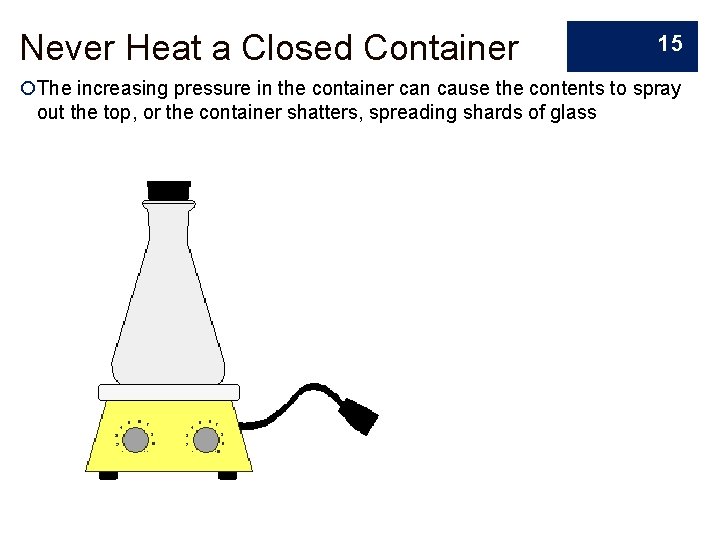
Never Heat a Closed Container 15 The increasing pressure in the container can cause the contents to spray out the top, or the container shatters, spreading shards of glass
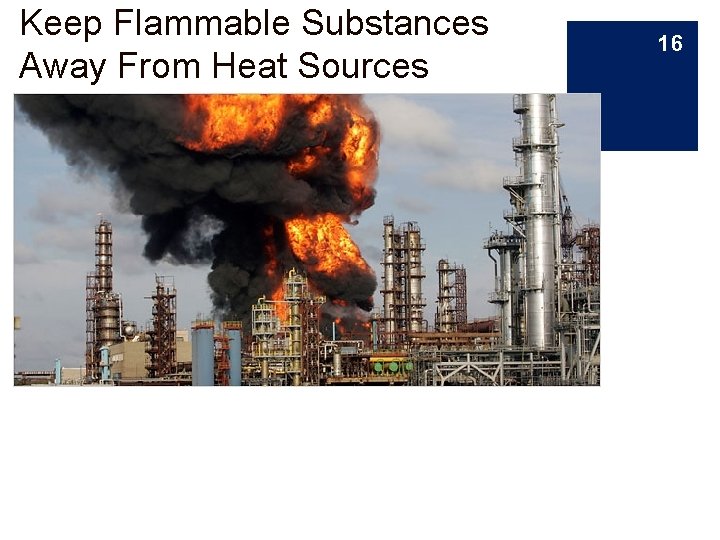
Keep Flammable Substances Away From Heat Sources 16
What if you spill something? What do you think you should do first? Brainstrom with your partner 17
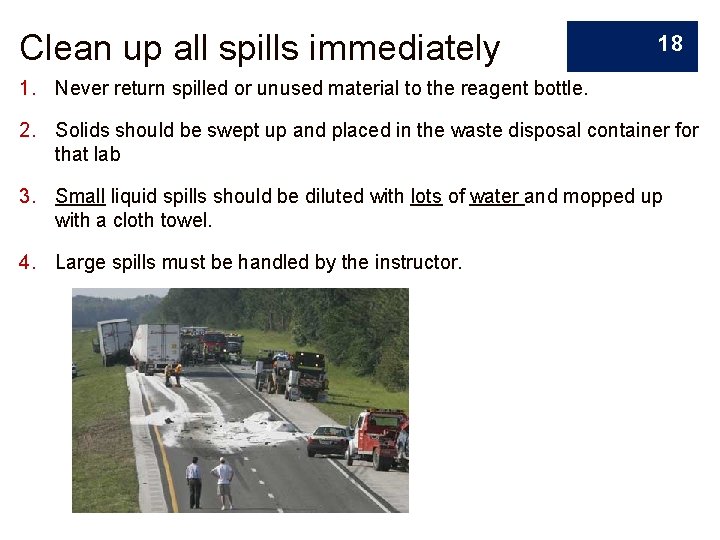
Clean up all spills immediately 18 1. Never return spilled or unused material to the reagent bottle. 2. Solids should be swept up and placed in the waste disposal container for that lab 3. Small liquid spills should be diluted with lots of water and mopped up with a cloth towel. 4. Large spills must be handled by the instructor.
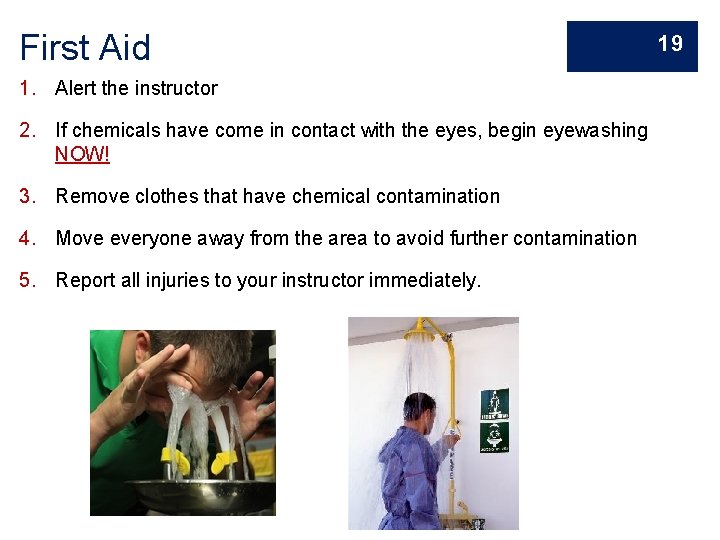
First Aid 1. Alert the instructor 2. If chemicals have come in contact with the eyes, begin eyewashing NOW! 3. Remove clothes that have chemical contamination 4. Move everyone away from the area to avoid further contamination 5. Report all injuries to your instructor immediately. 19
Lab Equipment Used for measurements of: Volume Temperature Used for transferring chemicals Heating/Cooling safely 20
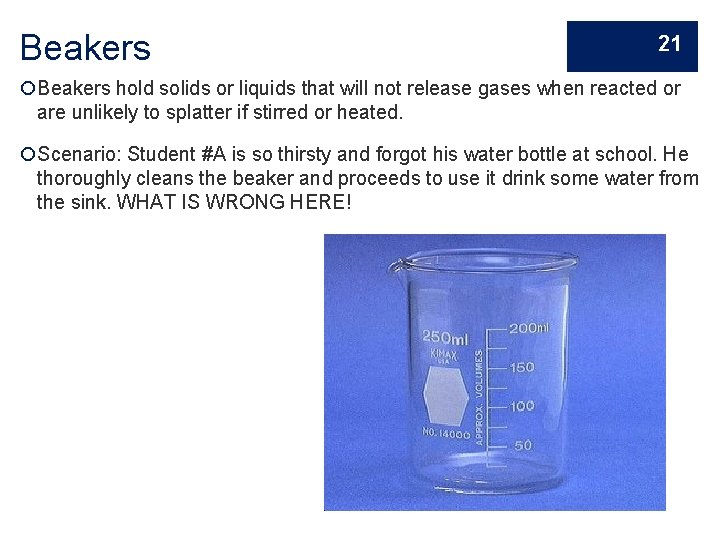
Beakers 21 Beakers hold solids or liquids that will not release gases when reacted or are unlikely to splatter if stirred or heated. Scenario: Student #A is so thirsty and forgot his water bottle at school. He thoroughly cleans the beaker and proceeds to use it drink some water from the sink. WHAT IS WRONG HERE!
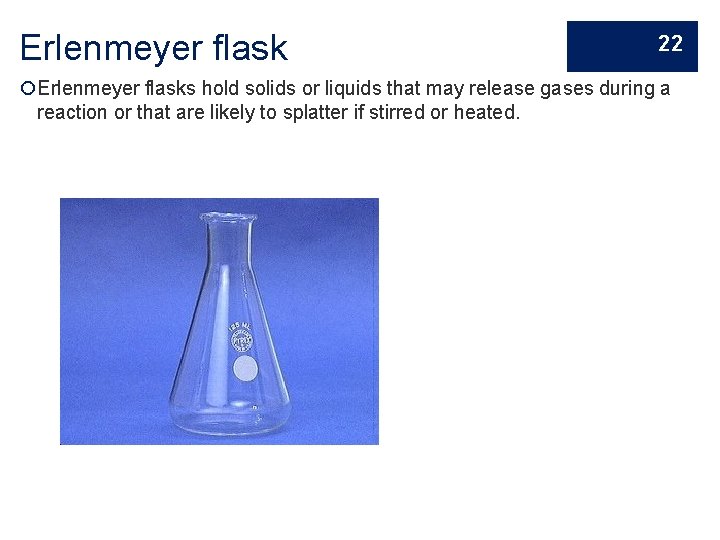
Erlenmeyer flask 22 Erlenmeyer flasks hold solids or liquids that may release gases during a reaction or that are likely to splatter if stirred or heated.
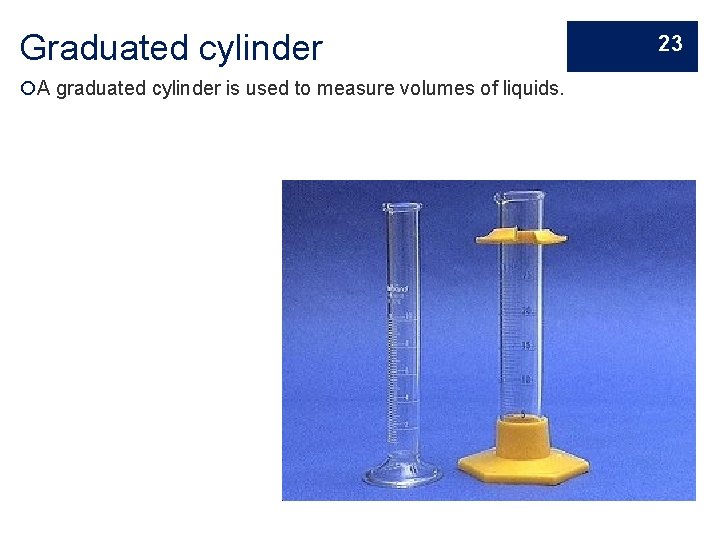
Graduated cylinder A graduated cylinder is used to measure volumes of liquids. 23
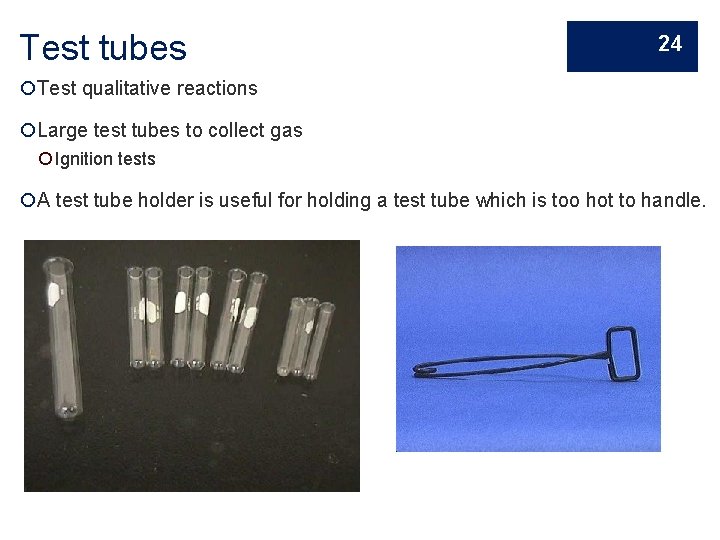
Test tubes 24 Test qualitative reactions Large test tubes to collect gas Ignition tests A test tube holder is useful for holding a test tube which is too hot to handle.
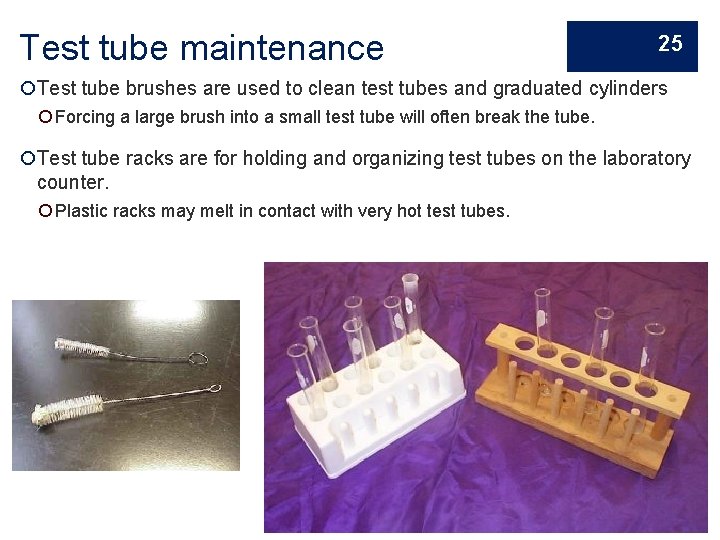
Test tube maintenance 25 Test tube brushes are used to clean test tubes and graduated cylinders Forcing a large brush into a small test tube will often break the tube. Test tube racks are for holding and organizing test tubes on the laboratory counter. Plastic racks may melt in contact with very hot test tubes.
26 What can you put in a test tube? Illustrate your ideas and share it with a partner
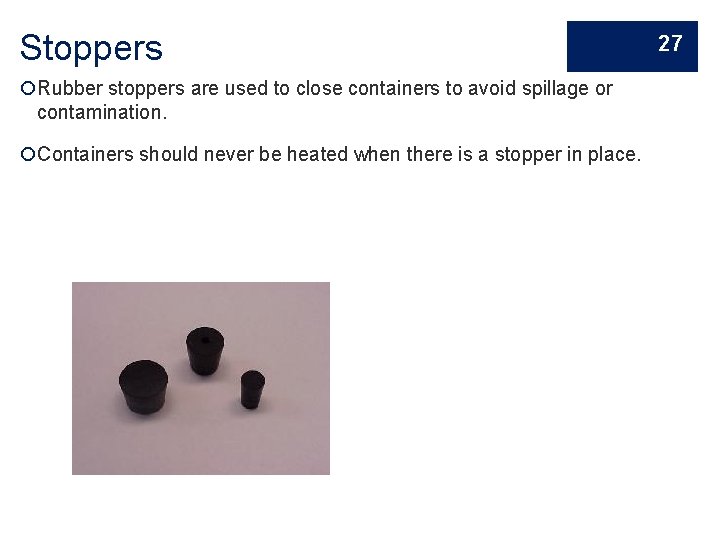
Stoppers Rubber stoppers are used to close containers to avoid spillage or contamination. Containers should never be heated when there is a stopper in place. 27
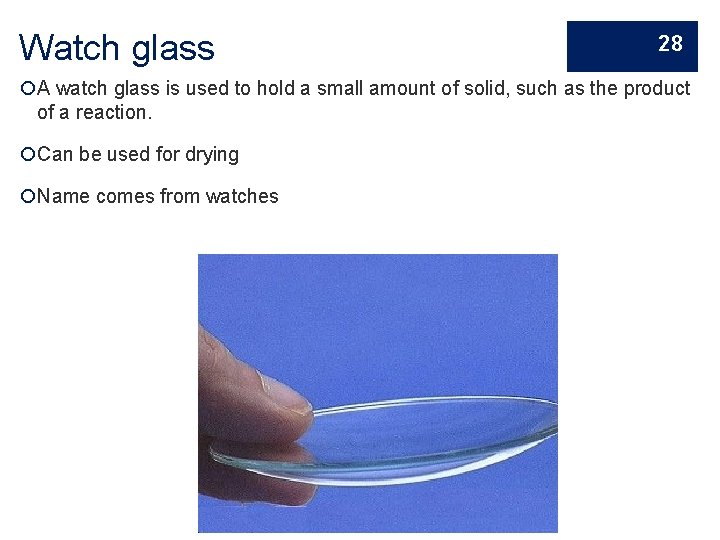
Watch glass 28 A watch glass is used to hold a small amount of solid, such as the product of a reaction. Can be used for drying Name comes from watches
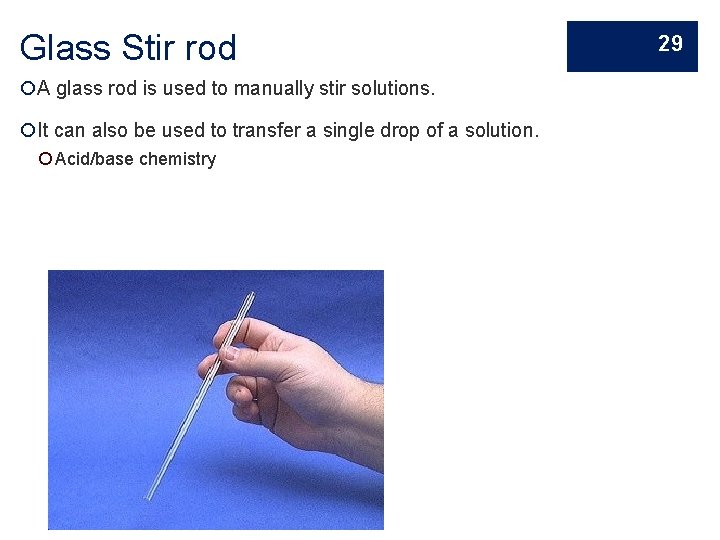
Glass Stir rod A glass rod is used to manually stir solutions. It can also be used to transfer a single drop of a solution. Acid/base chemistry 29
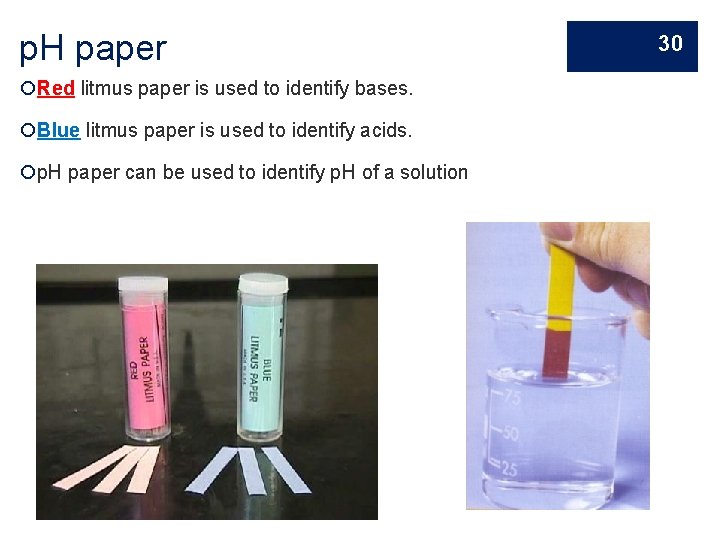
p. H paper Red litmus paper is used to identify bases. Blue litmus paper is used to identify acids. p. H paper can be used to identify p. H of a solution 30
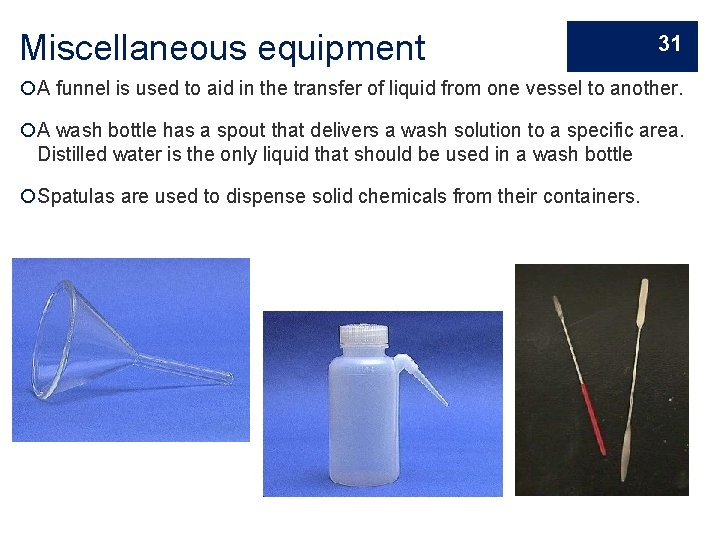
Miscellaneous equipment 31 A funnel is used to aid in the transfer of liquid from one vessel to another. A wash bottle has a spout that delivers a wash solution to a specific area. Distilled water is the only liquid that should be used in a wash bottle Spatulas are used to dispense solid chemicals from their containers.
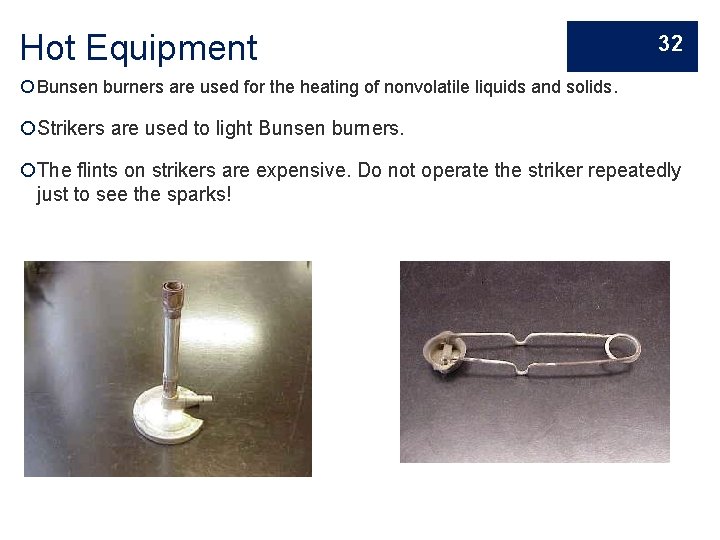
Hot Equipment 32 Bunsen burners are used for the heating of nonvolatile liquids and solids. Strikers are used to light Bunsen burners. The flints on strikers are expensive. Do not operate the striker repeatedly just to see the sparks!

Hot Equipment 33
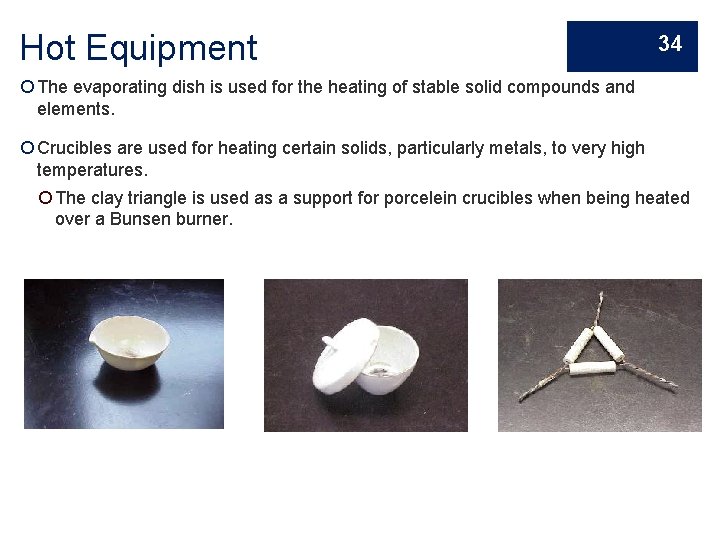
Hot Equipment 34 The evaporating dish is used for the heating of stable solid compounds and elements. Crucibles are used for heating certain solids, particularly metals, to very high temperatures. The clay triangle is used as a support for porcelein crucibles when being heated over a Bunsen burner.
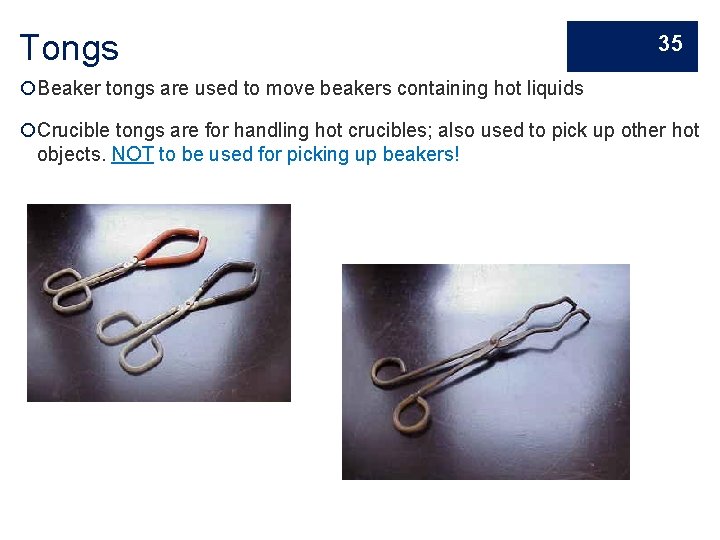
Tongs 35 Beaker tongs are used to move beakers containing hot liquids Crucible tongs are for handling hot crucibles; also used to pick up other hot objects. NOT to be used for picking up beakers!
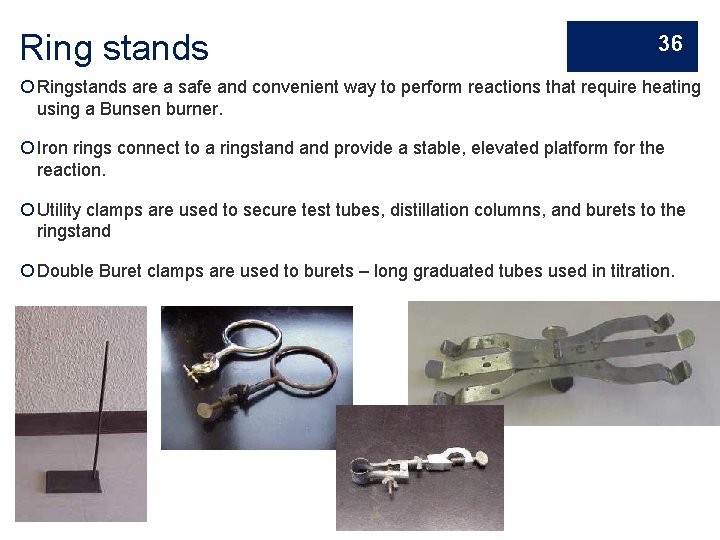
Ring stands 36 Ringstands are a safe and convenient way to perform reactions that require heating using a Bunsen burner. Iron rings connect to a ringstand provide a stable, elevated platform for the reaction. Utility clamps are used to secure test tubes, distillation columns, and burets to the ringstand Double Buret clamps are used to burets – long graduated tubes used in titration.
Lab Safety Video 37
38 Agenda Lab question Finish glassware slides Measurement (reading) Stations Activity Kahoot (graded) Use your name or initials
Question 39 Discuss with your partner: What is one question/issue/scenario NOT addressed by the Flinn Lab Safety Contract or the Crash Course Chemistry video?
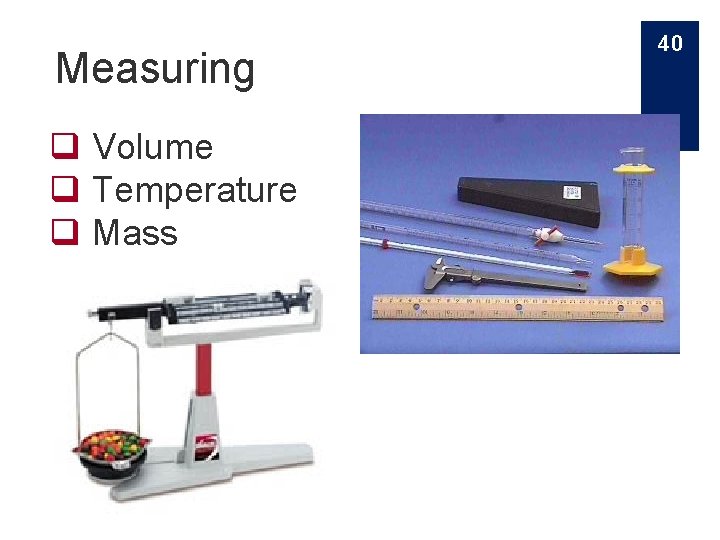
Measuring q Volume q Temperature q Mass 40
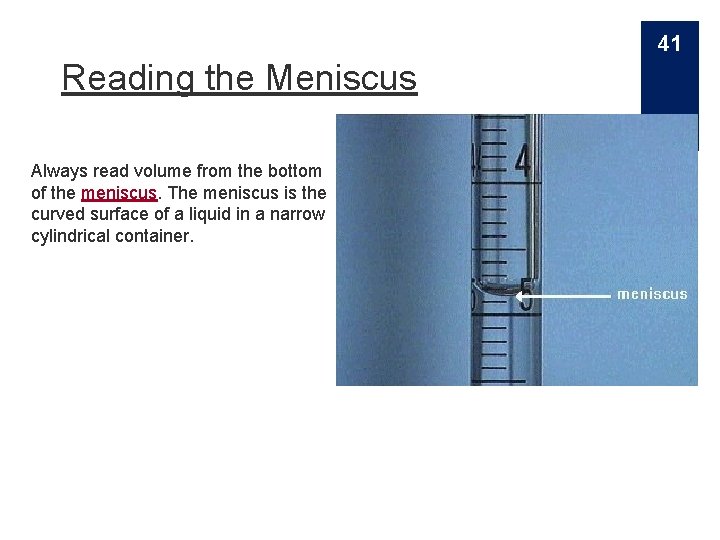
41 Reading the Meniscus Always read volume from the bottom of the meniscus. The meniscus is the curved surface of a liquid in a narrow cylindrical container.
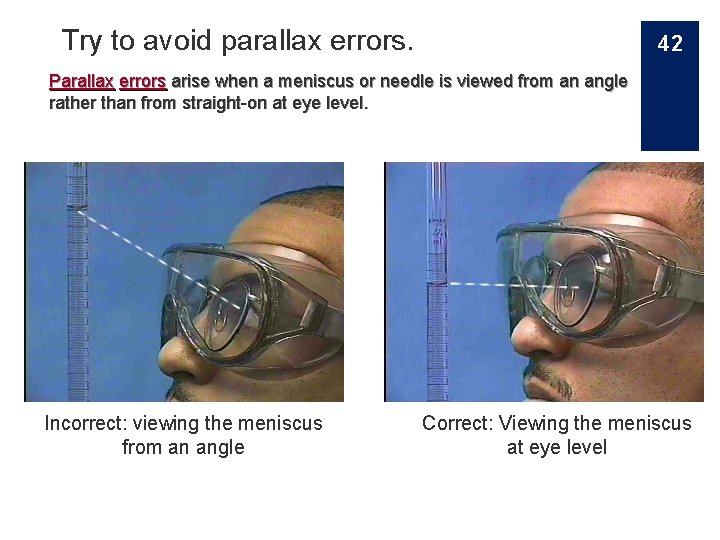
Try to avoid parallax errors. 42 Parallax errors arise when a meniscus or needle is viewed from an angle rather than from straight-on at eye level. Incorrect: viewing the meniscus from an angle Correct: Viewing the meniscus at eye level
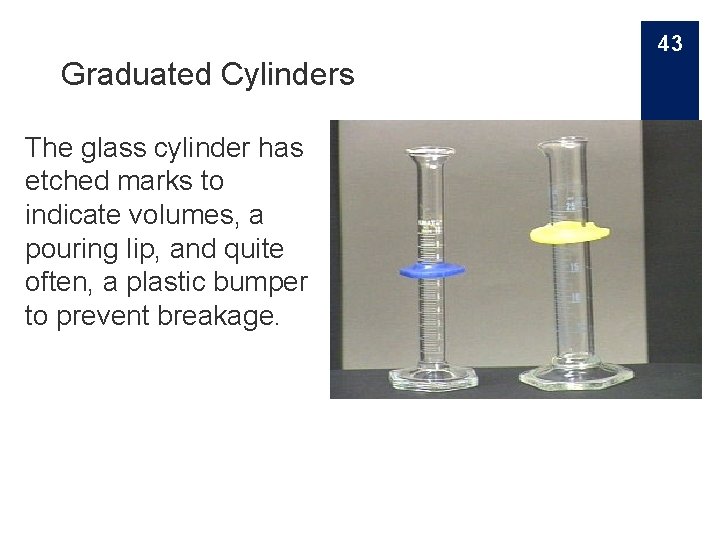
43 Graduated Cylinders The glass cylinder has etched marks to indicate volumes, a pouring lip, and quite often, a plastic bumper to prevent breakage.
Measuring Volume 44 Ø Determine the volume contained in a graduated cylinder by reading the bottom of the meniscus at eye level. Ø Read the volume using all certain digits and one uncertain digit. Ø Certain digits are determined from the calibration marks on the cylinder. ØThe uncertain digit (the last digit of the reading) is estimated.
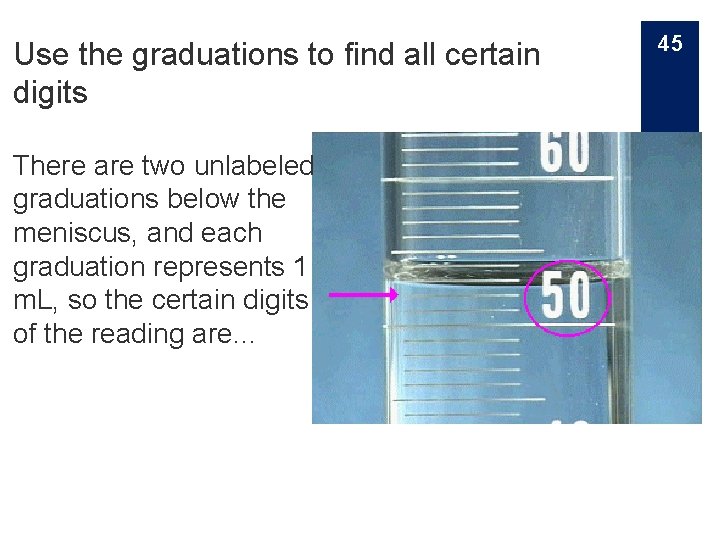
Use the graduations to find all certain digits There are two unlabeled graduations below the meniscus, and each graduation represents 1 m. L, so the certain digits of the reading are… 45
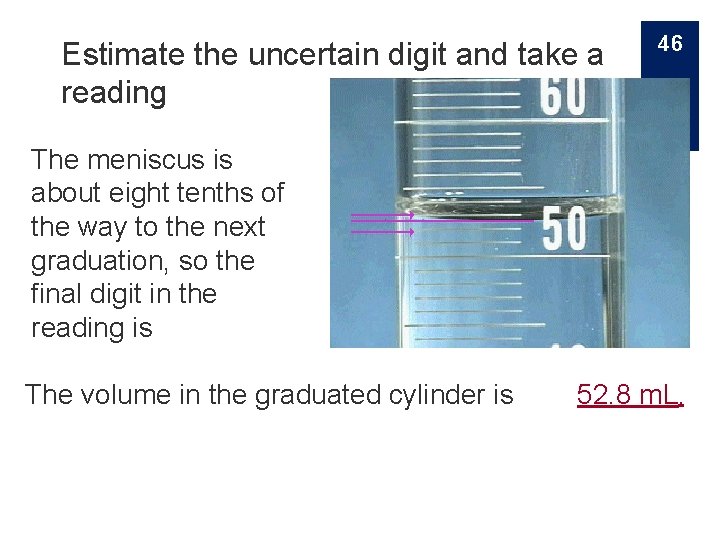
Estimate the uncertain digit and take a reading 46 The meniscus is about eight tenths of the way to the next graduation, so the final digit in the reading is The volume in the graduated cylinder is 52. 8 m. L.
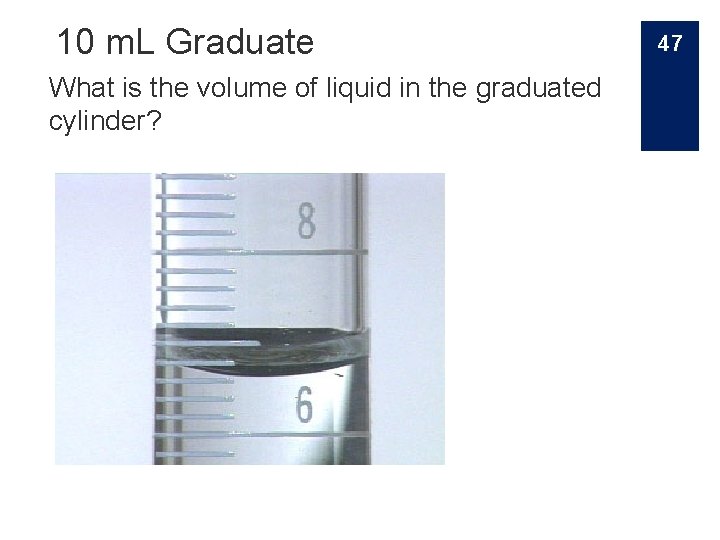
10 m. L Graduate What is the volume of liquid in the graduated cylinder? 47
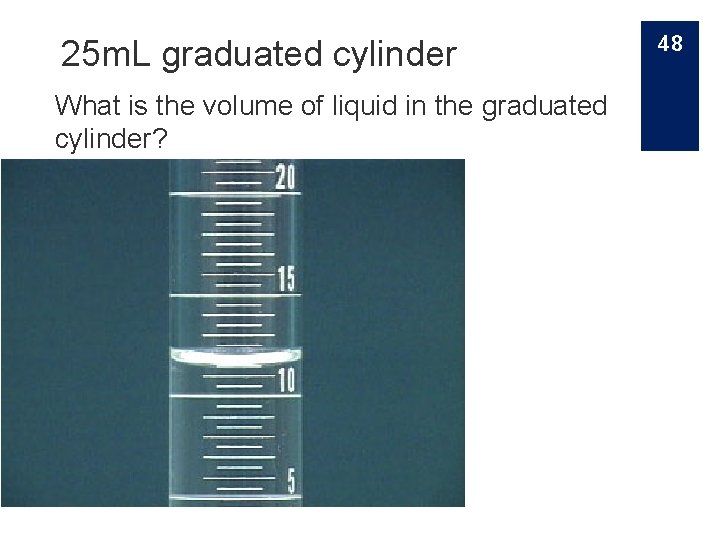
25 m. L graduated cylinder What is the volume of liquid in the graduated cylinder? 48
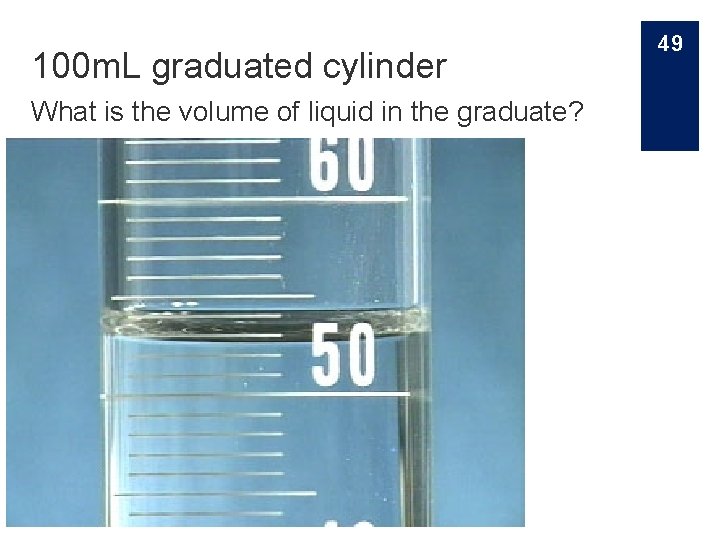
100 m. L graduated cylinder What is the volume of liquid in the graduate? 49
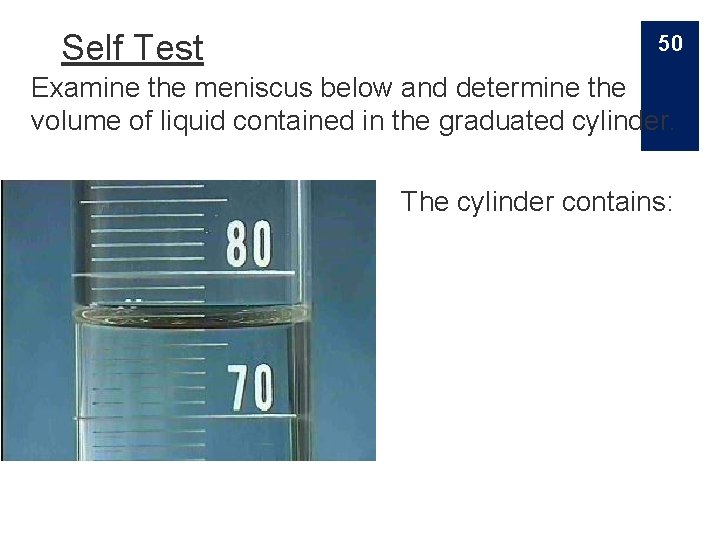
Self Test 50 Examine the meniscus below and determine the volume of liquid contained in the graduated cylinder. The cylinder contains:
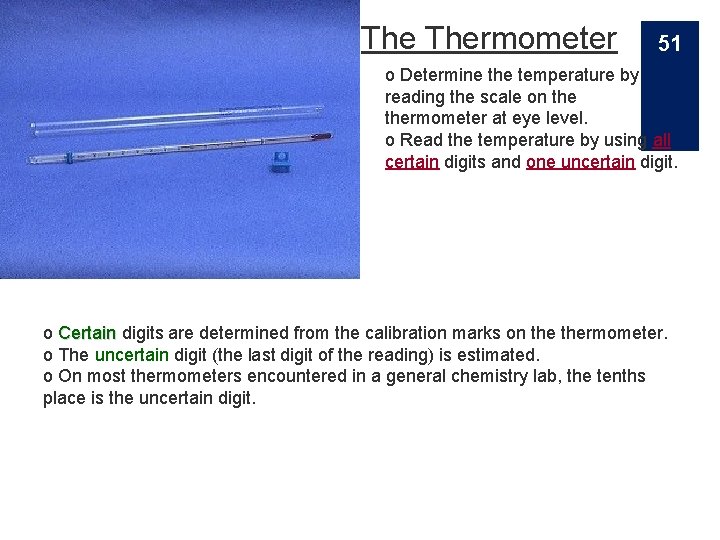
The Thermometer 51 o Determine the temperature by reading the scale on thermometer at eye level. o Read the temperature by using all certain digits and one uncertain digit. o Certain digits are determined from the calibration marks on thermometer. o The uncertain digit (the last digit of the reading) is estimated. o On most thermometers encountered in a general chemistry lab, the tenths place is the uncertain digit.
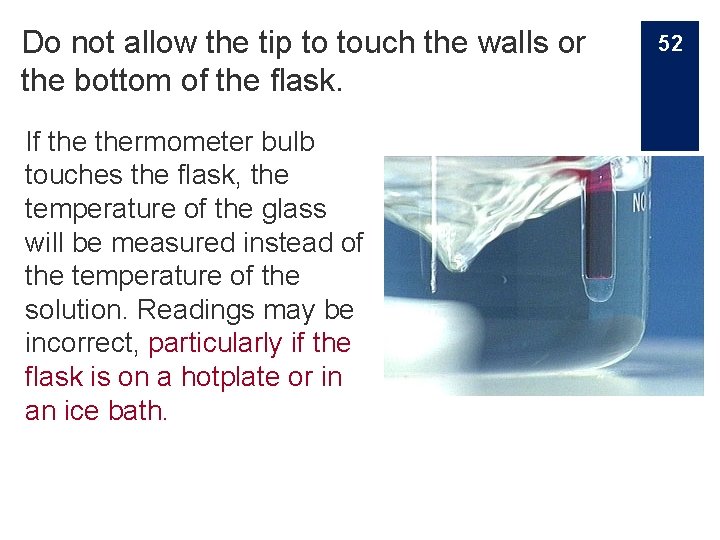
Do not allow the tip to touch the walls or the bottom of the flask. If thermometer bulb touches the flask, the temperature of the glass will be measured instead of the temperature of the solution. Readings may be incorrect, particularly if the flask is on a hotplate or in an ice bath. 52
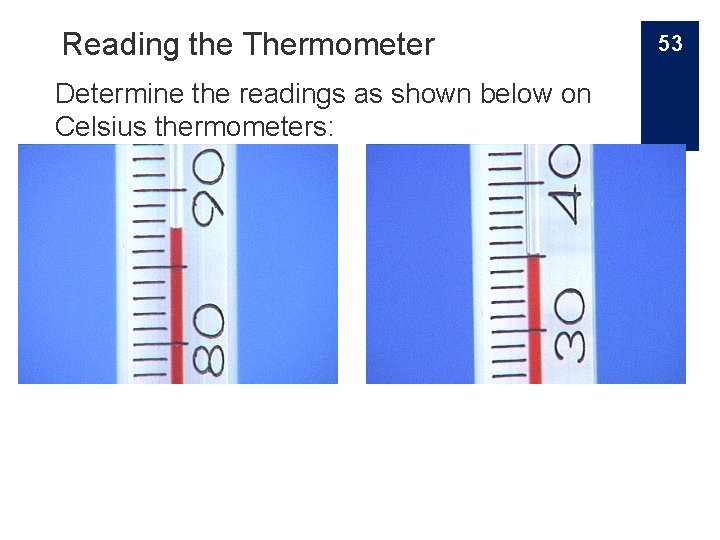
Reading the Thermometer Determine the readings as shown below on Celsius thermometers: 53
54 End of Show
- Slides: 54