
Lab Practical Practice REVIEW Mineral Properties Identification Luster

Lab Practical & Practice REVIEW
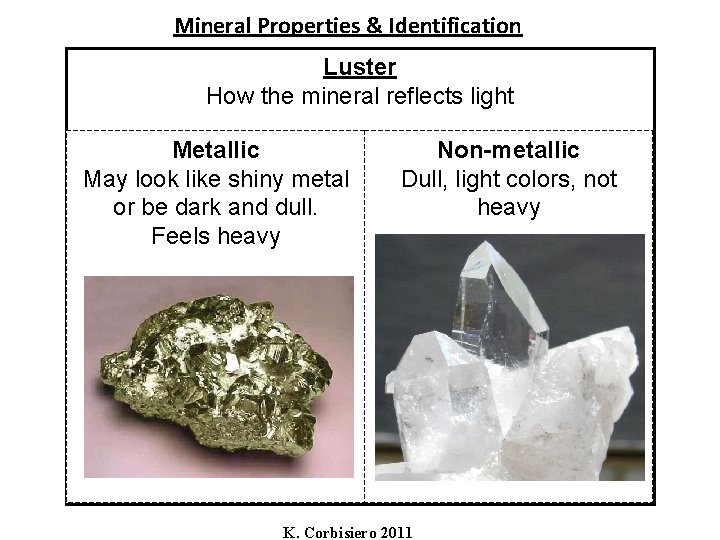
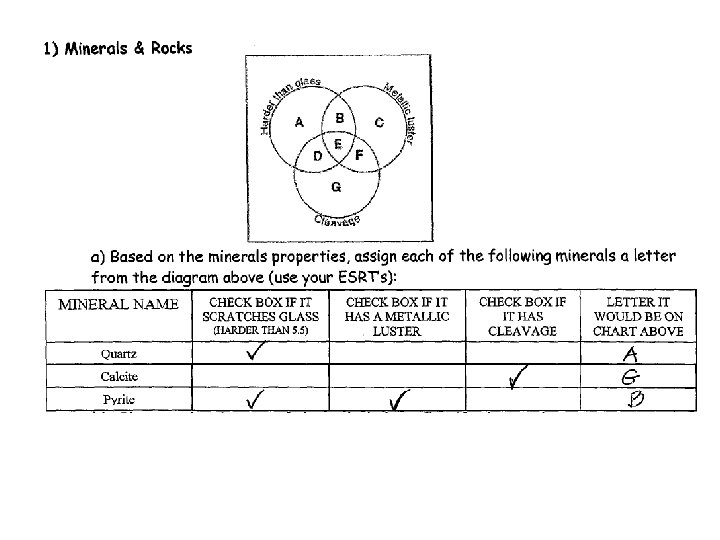
Mineral Properties & Identification Luster How the mineral reflects light Metallic May look like shiny metal or be dark and dull. Feels heavy Non-metallic Dull, light colors, not heavy K. Corbisiero 2011
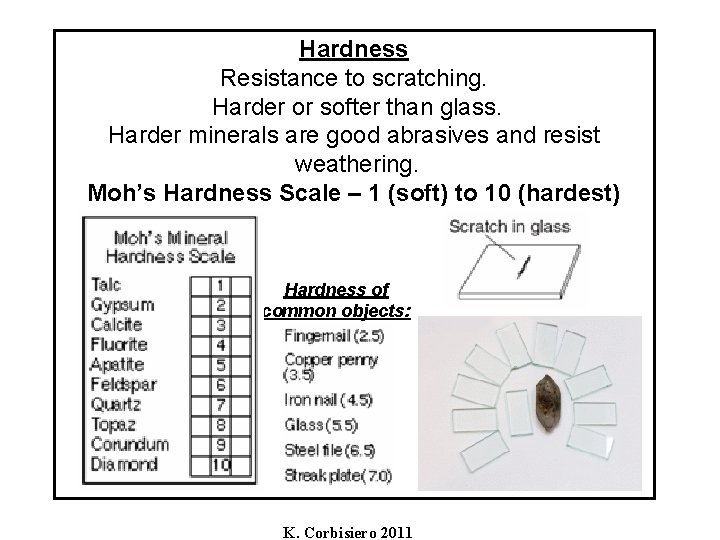
Hardness Resistance to scratching. Harder or softer than glass. Harder minerals are good abrasives and resist weathering. Moh’s Hardness Scale – 1 (soft) to 10 (hardest) Hardness of common objects: K. Corbisiero 2011
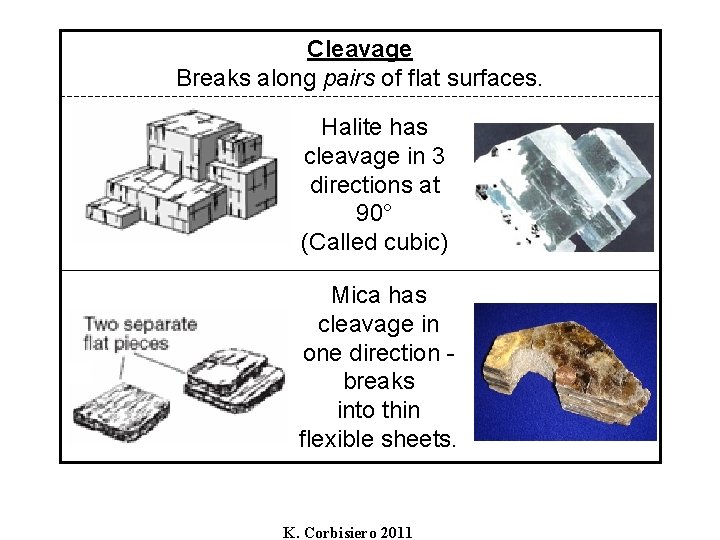
Cleavage Breaks along pairs of flat surfaces. Halite has cleavage in 3 directions at 90° (Called cubic) Mica has cleavage in one direction breaks into thin flexible sheets. K. Corbisiero 2011
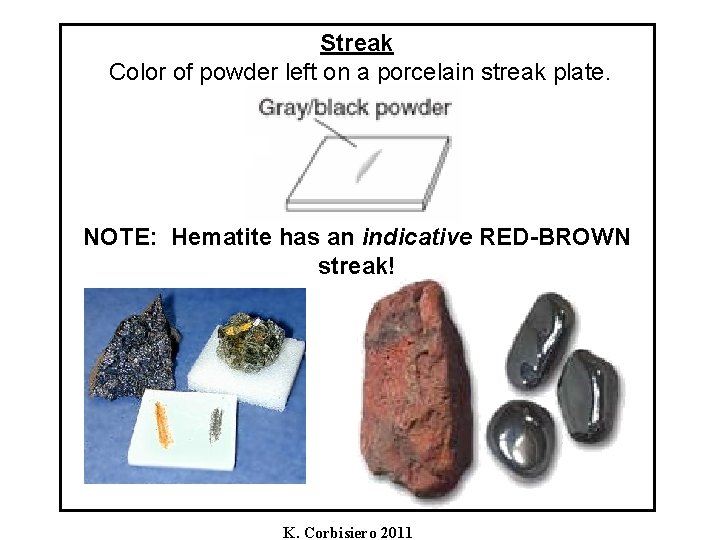
Streak Color of powder left on a porcelain streak plate. NOTE: Hematite has an indicative RED-BROWN streak! K. Corbisiero 2011
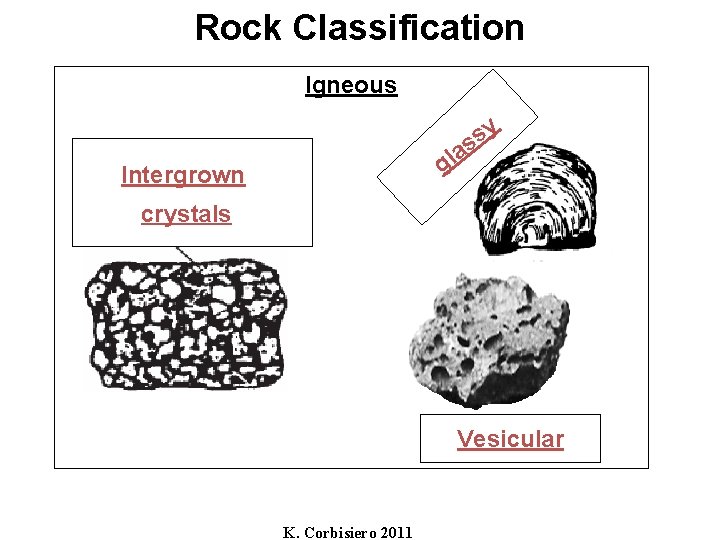
Rock Classification Igneous y s s a gl Intergrown crystals Vesicular K. Corbisiero 2011
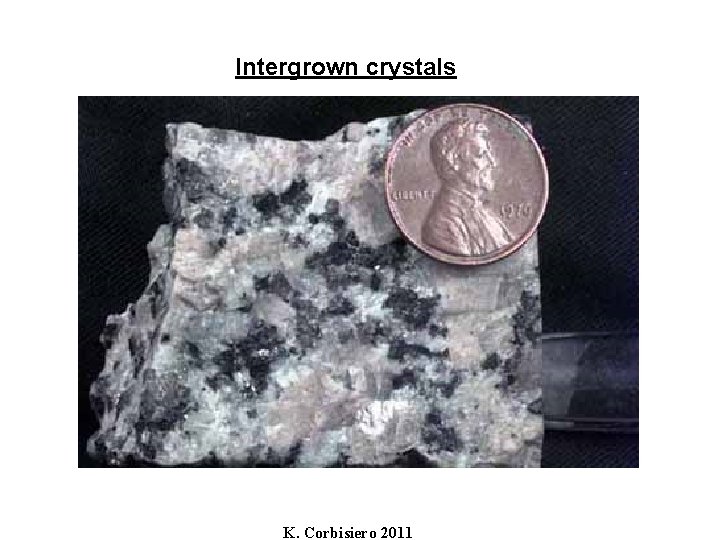
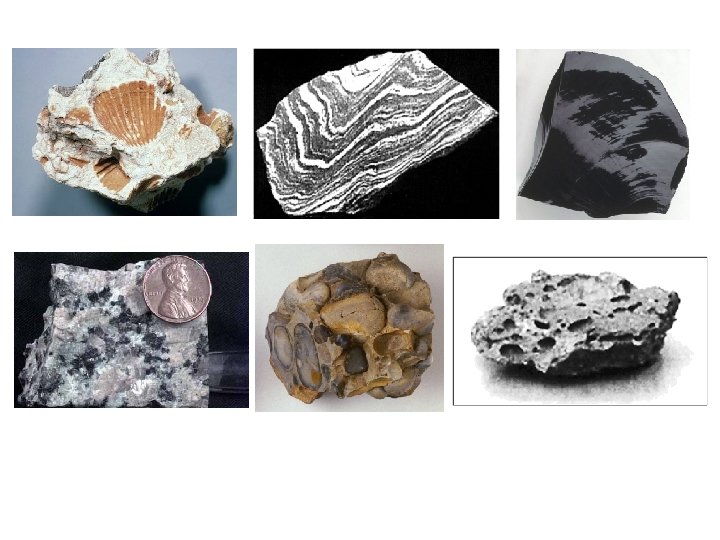
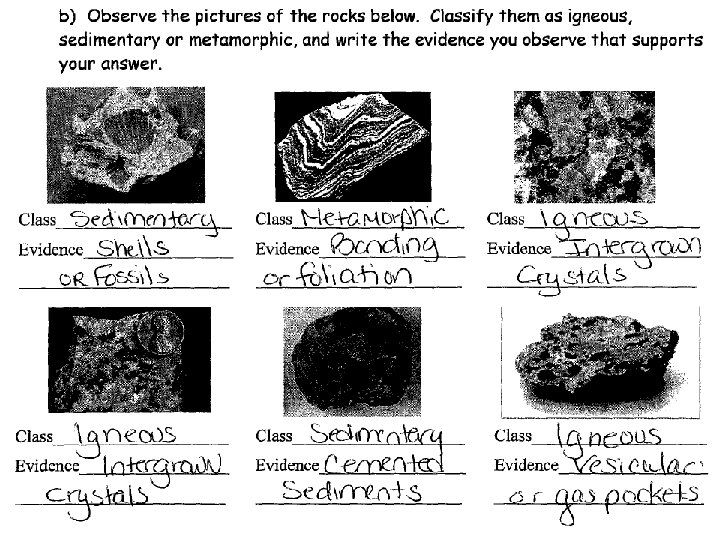
Intergrown crystals K. Corbisiero 2011
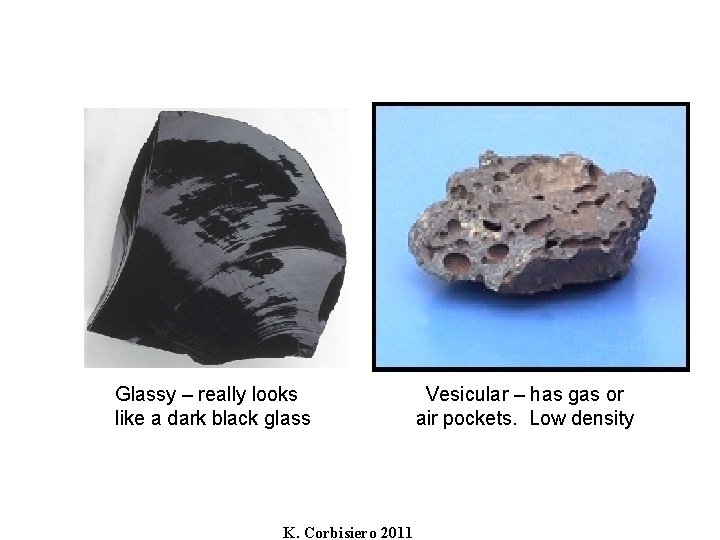
Glassy – really looks like a dark black glass K. Corbisiero 2011 Vesicular – has gas or air pockets. Low density
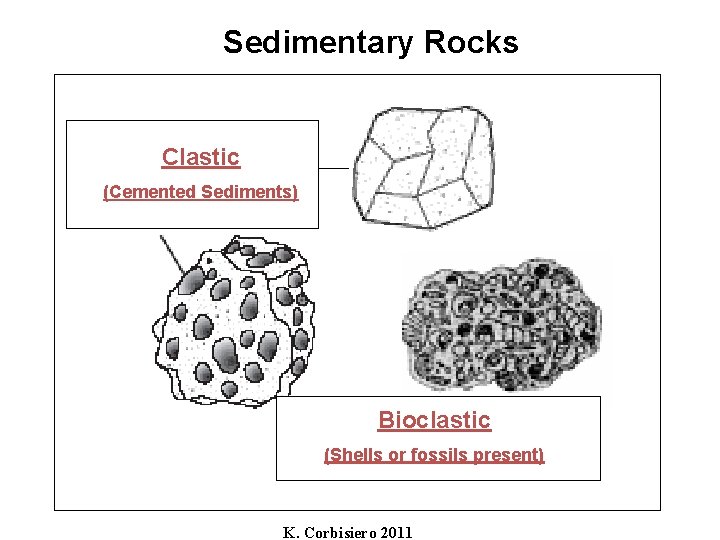
Sedimentary Rocks Clastic (Cemented Sediments) Bioclastic (Shells or fossils present) K. Corbisiero 2011
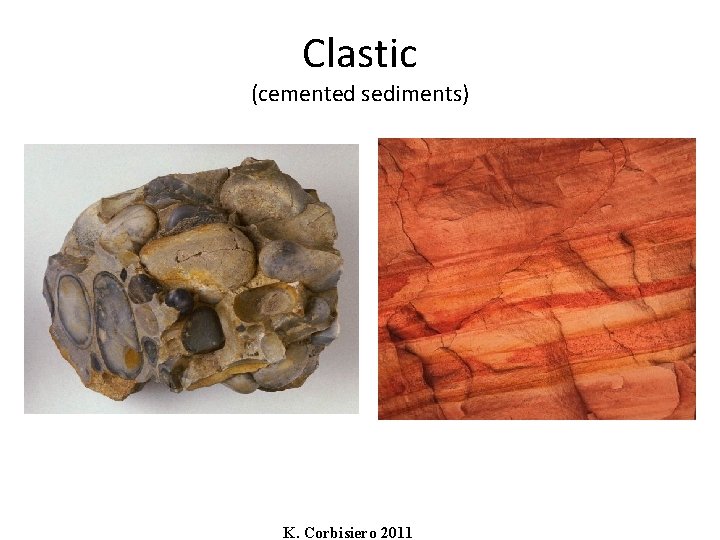
Clastic (cemented sediments) K. Corbisiero 2011
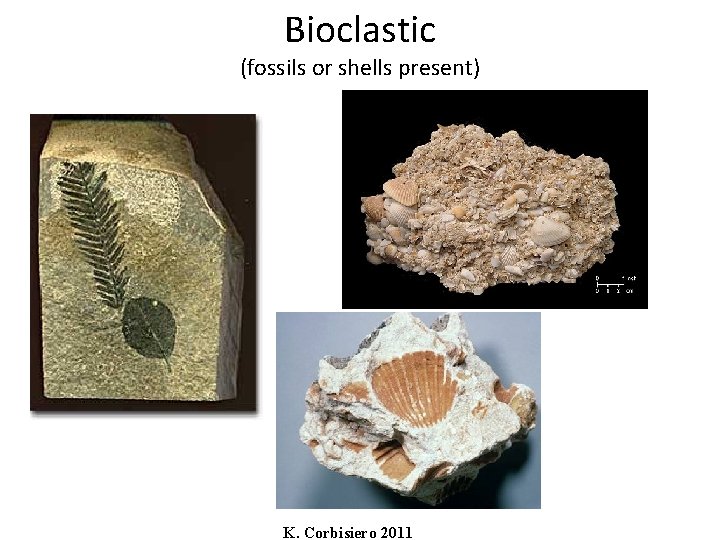
Bioclastic (fossils or shells present) K. Corbisiero 2011
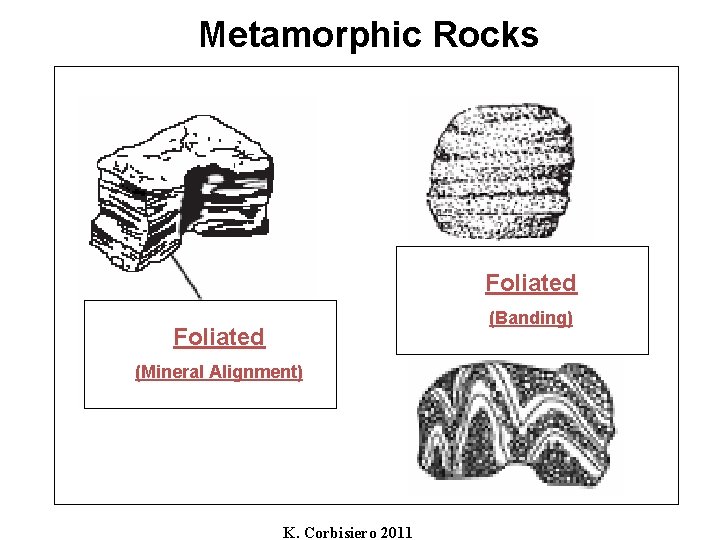
Metamorphic Rocks Foliated (Banding) Foliated (Mineral Alignment) K. Corbisiero 2011
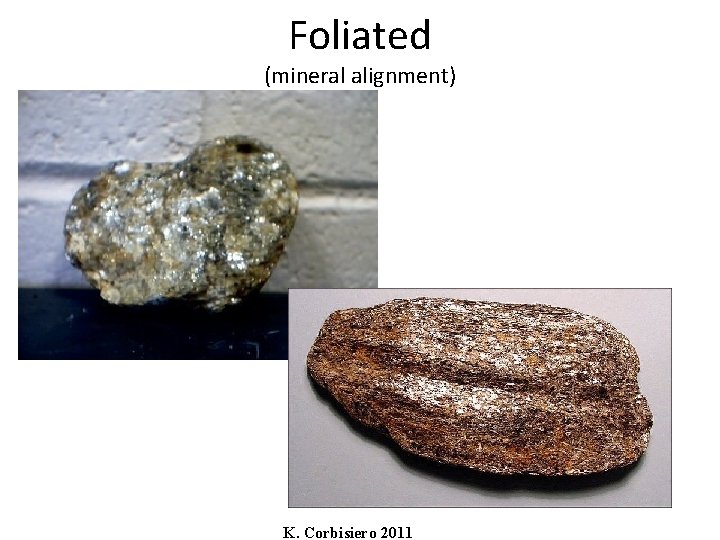
Foliated (mineral alignment) K. Corbisiero 2011

Foliated (Banding) K. Corbisiero 2011
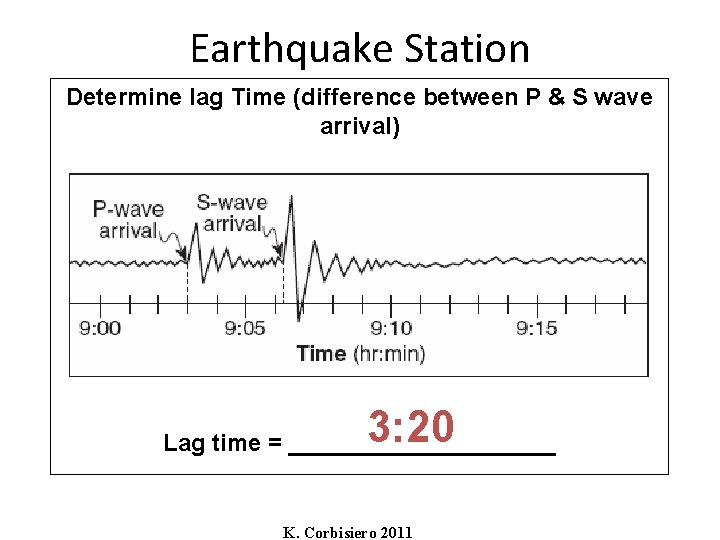
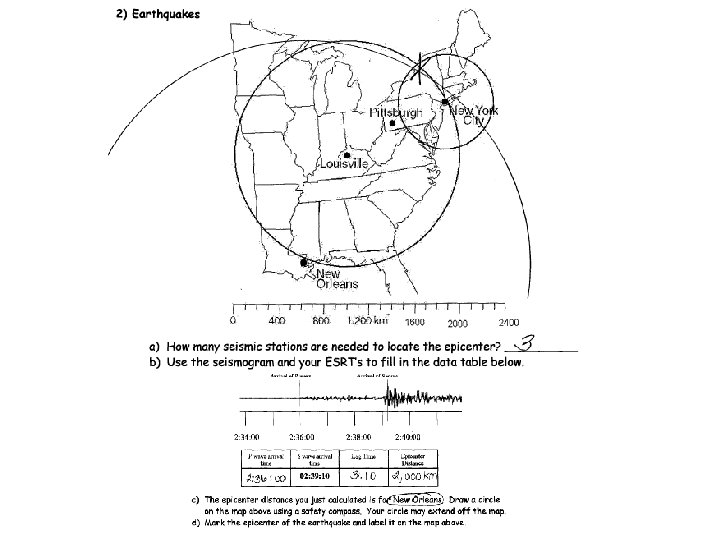
Earthquake Station Determine lag Time (difference between P & S wave arrival) 3: 20 Lag time = __________ K. Corbisiero 2011
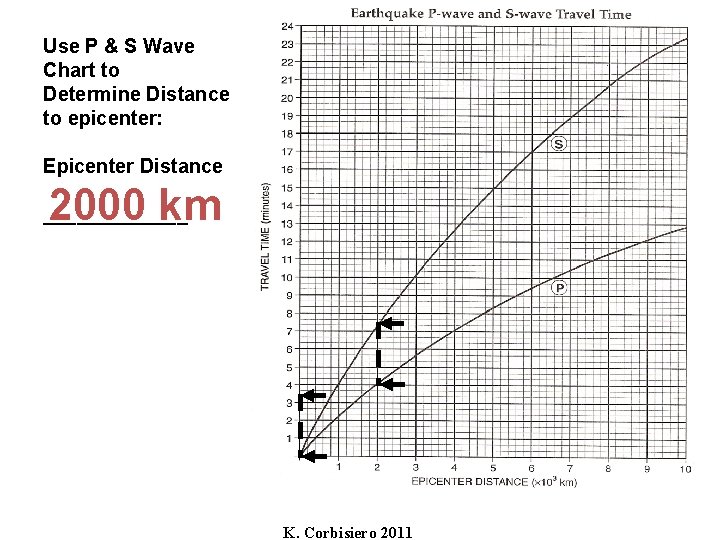
Use P & S Wave Chart to Determine Distance to epicenter: Epicenter Distance 2000 km _______ K. Corbisiero 2011
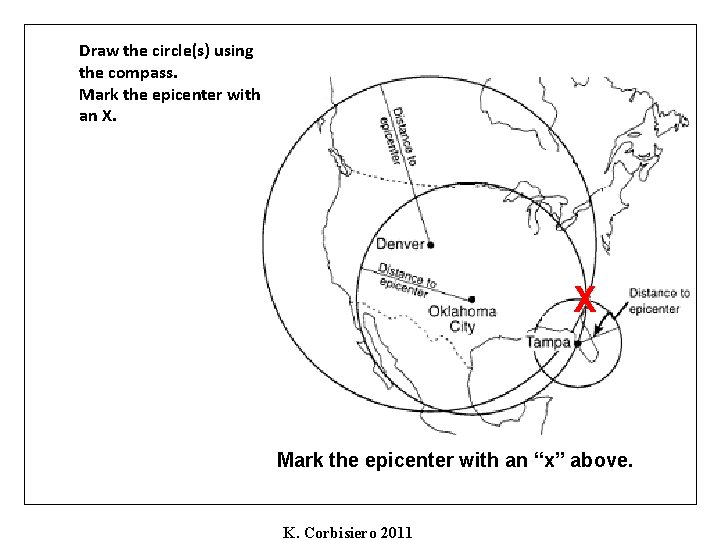
Draw the circle(s) using the compass. Mark the epicenter with an X. X Mark the epicenter with an “x” above. K. Corbisiero 2011
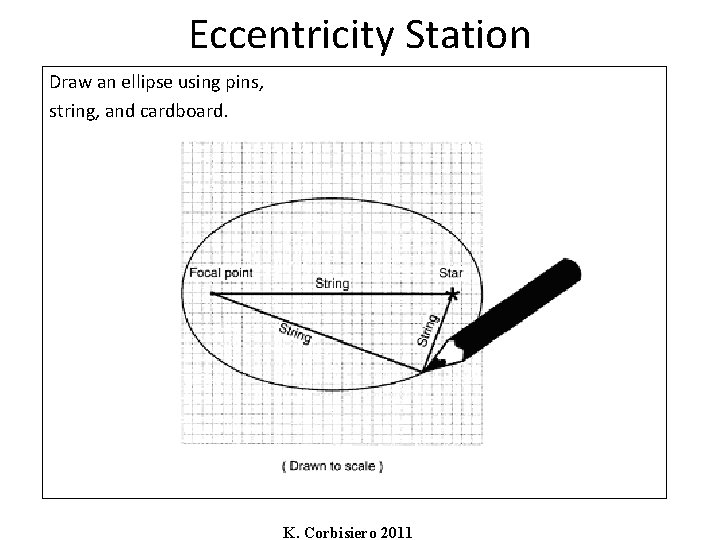
Eccentricity Station Draw an ellipse using pins, string, and cardboard. K. Corbisiero 2011
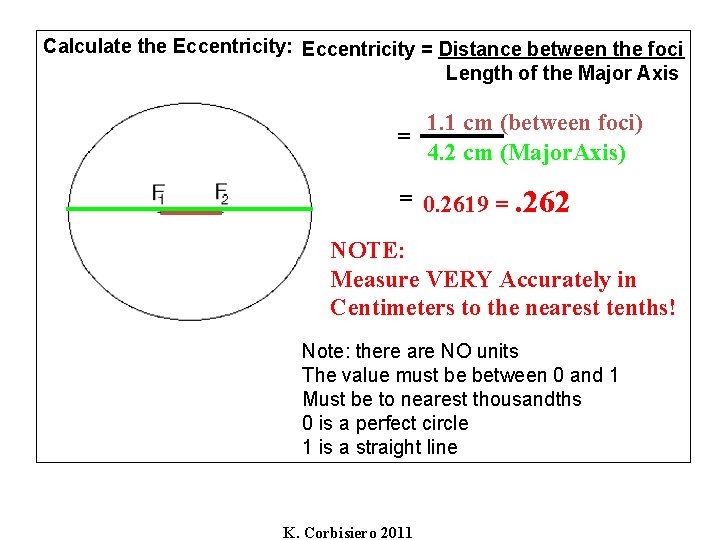
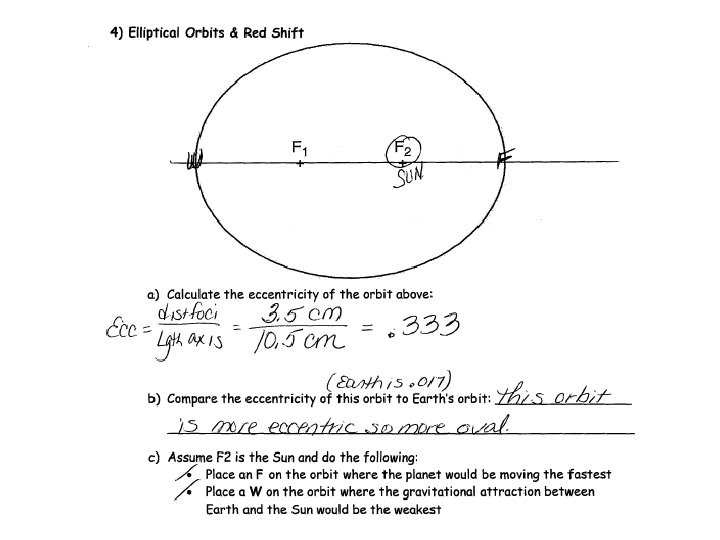
Calculate the Eccentricity: Eccentricity = Distance between the foci Length of the Major Axis = 1. 1 cm (between foci) 4. 2 cm (Major. Axis) = 0. 2619 =. 262 NOTE: Measure VERY Accurately in Centimeters to the nearest tenths! Note: there are NO units The value must be between 0 and 1 Must be to nearest thousandths 0 is a perfect circle 1 is a straight line K. Corbisiero 2011
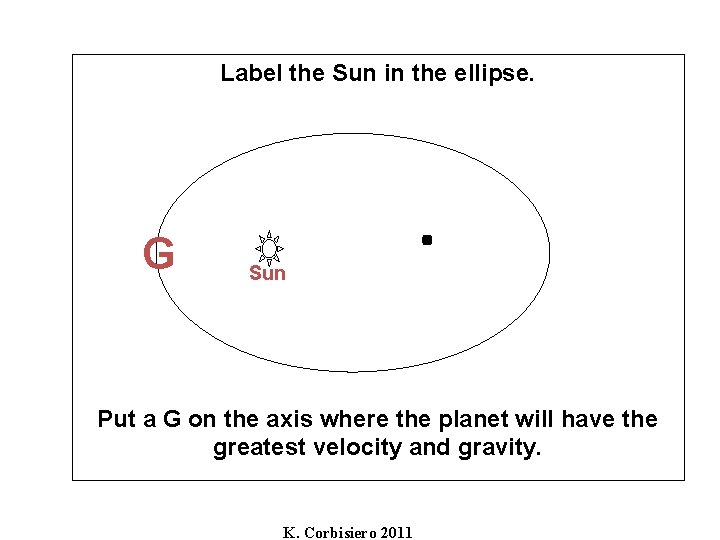
Label the Sun in the ellipse. G Sun . Put a G on the axis where the planet will have the greatest velocity and gravity. K. Corbisiero 2011
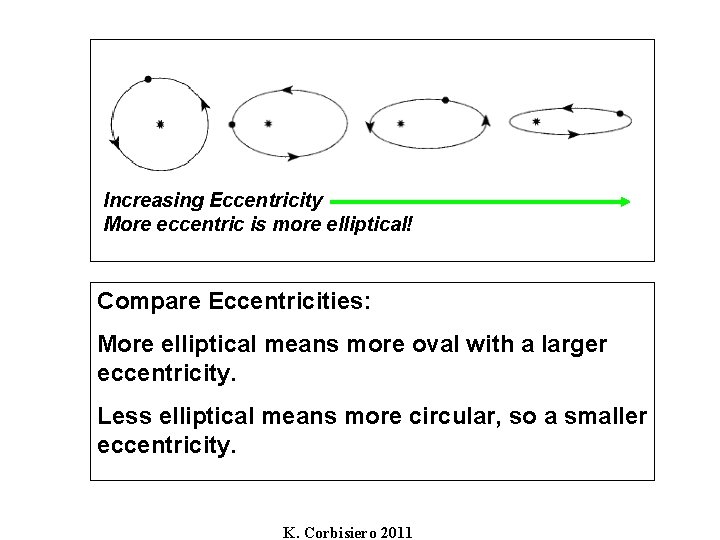
Increasing Eccentricity More eccentric is more elliptical! Compare Eccentricities: More elliptical means more oval with a larger eccentricity. Less elliptical means more circular, so a smaller eccentricity. K. Corbisiero 2011
Complete the Practice then check answers on the next few slides
The End
- Slides: 28