
Lab III Hill Reaction Photosynthesis in Isolated Chloroplasts
Lab III: Hill Reaction Photosynthesis in Isolated Chloroplasts
Transduction
“Light Reactions”
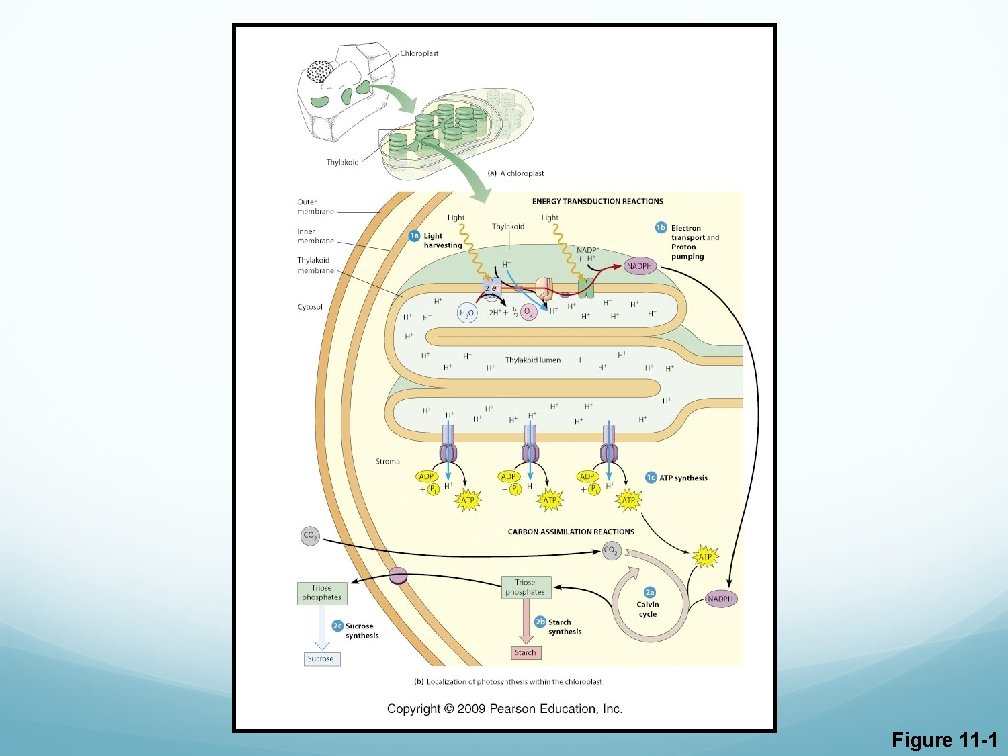
Figure 11 -1
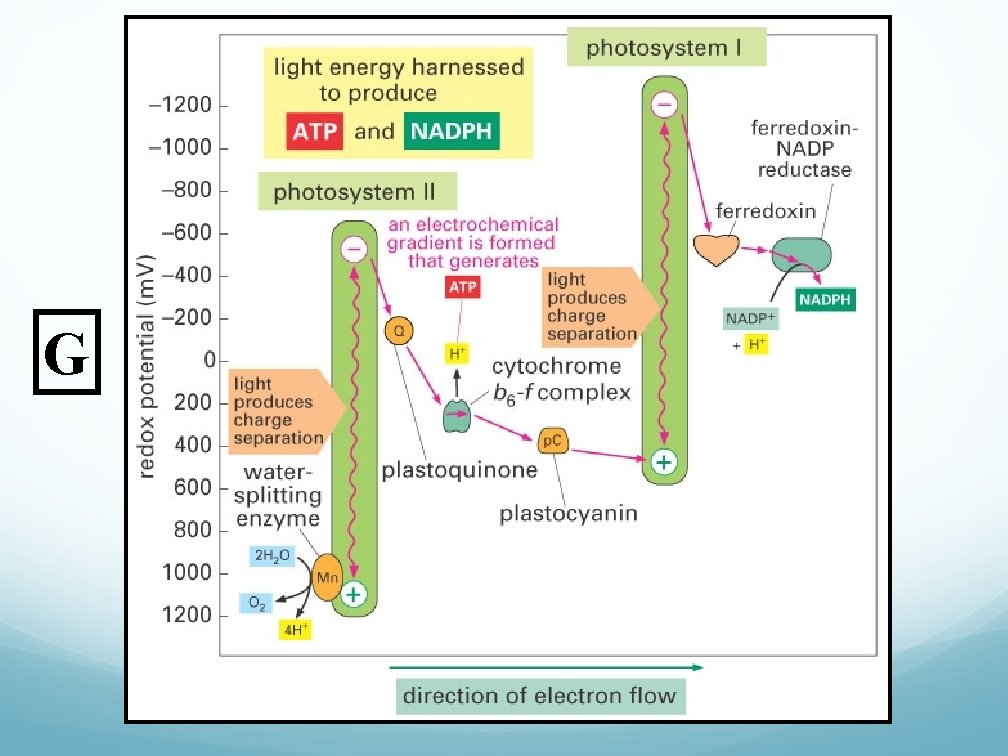
G
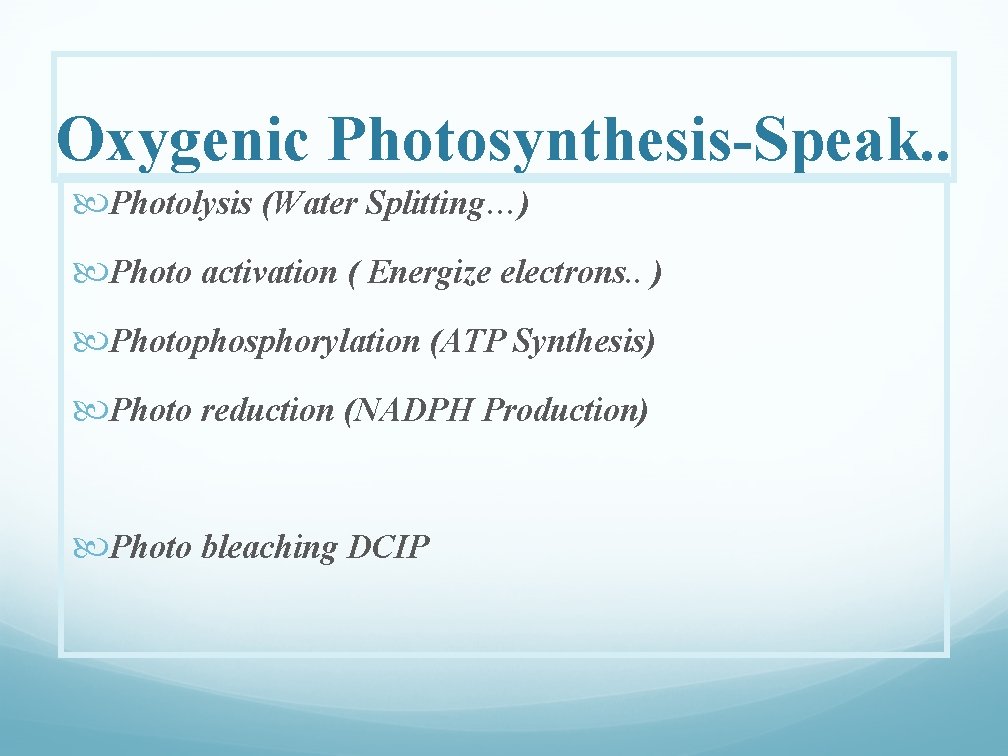
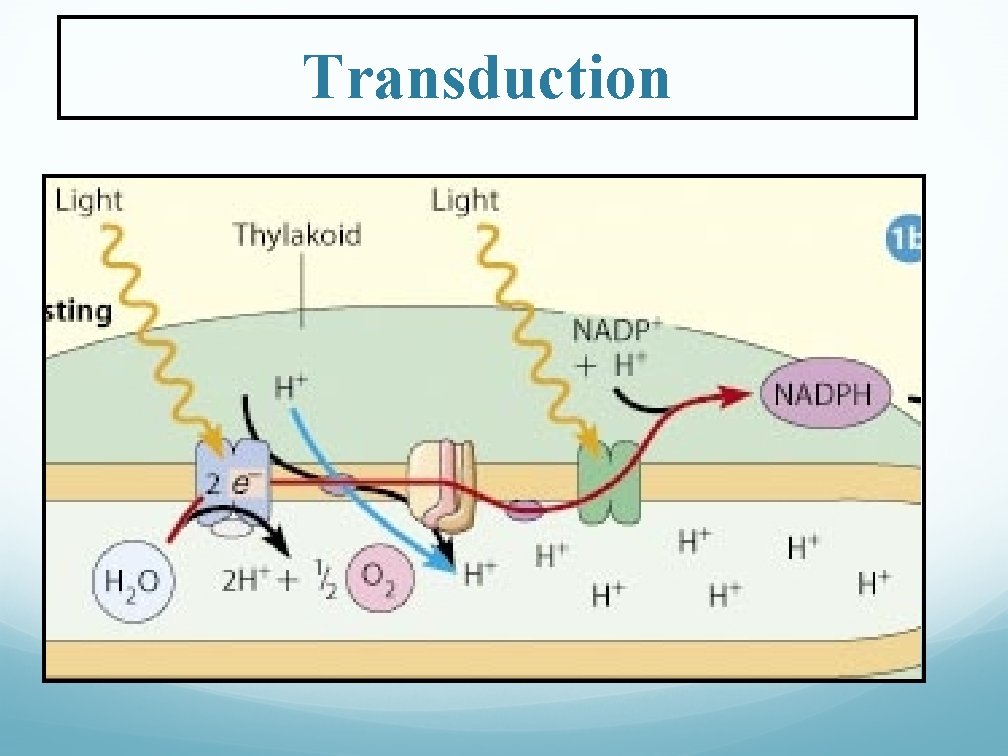
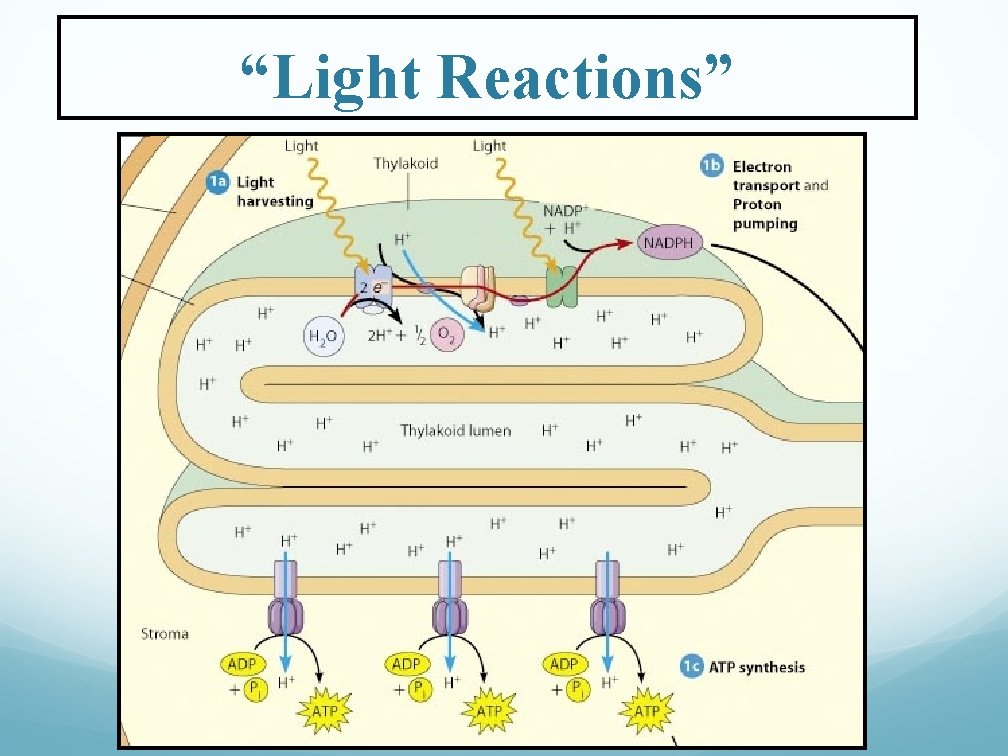
Oxygenic Photosynthesis-Speak. . Photolysis (Water Splitting…) Photo activation ( Energize electrons. . ) Photophosphorylation (ATP Synthesis) Photo reduction (NADPH Production) Photo bleaching DCIP
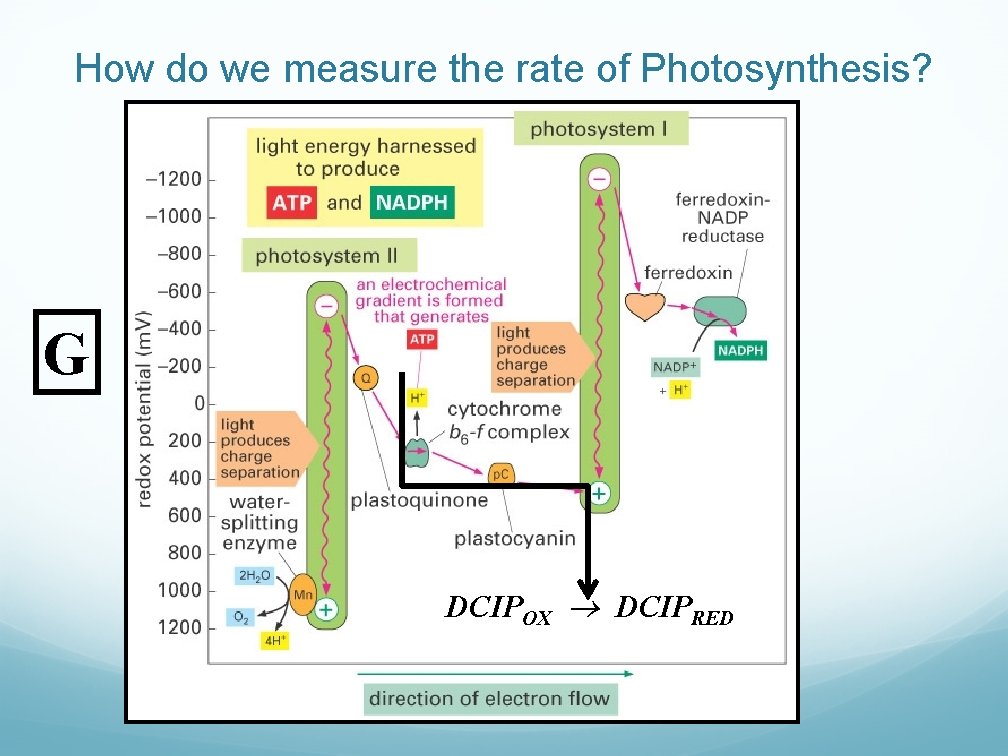
How do we measure the rate of Photosynthesis? G DCIPOX DCIPRED
You are lucky ducks… Chloroplast isolation has been done for you Gerry, our lab coordinator came in the lab early and isolated them for you. We start with Estimation of Chlorophyll Concentration. 1 person from each group will perform this, while rest of group prepares cuvettes for reactions 1 -7.
Chloroplast Concentration Remove 50 ul Chloroplast sample Add to 5 ml 90% Acetone (glass…!) Extract Chlorophyll Spin – pellet cell debris Recover supernatant Measure Chlorophyll: AND THAT’S IT! DON’T USE THIS SAMPLE FOR REST OF RXN!
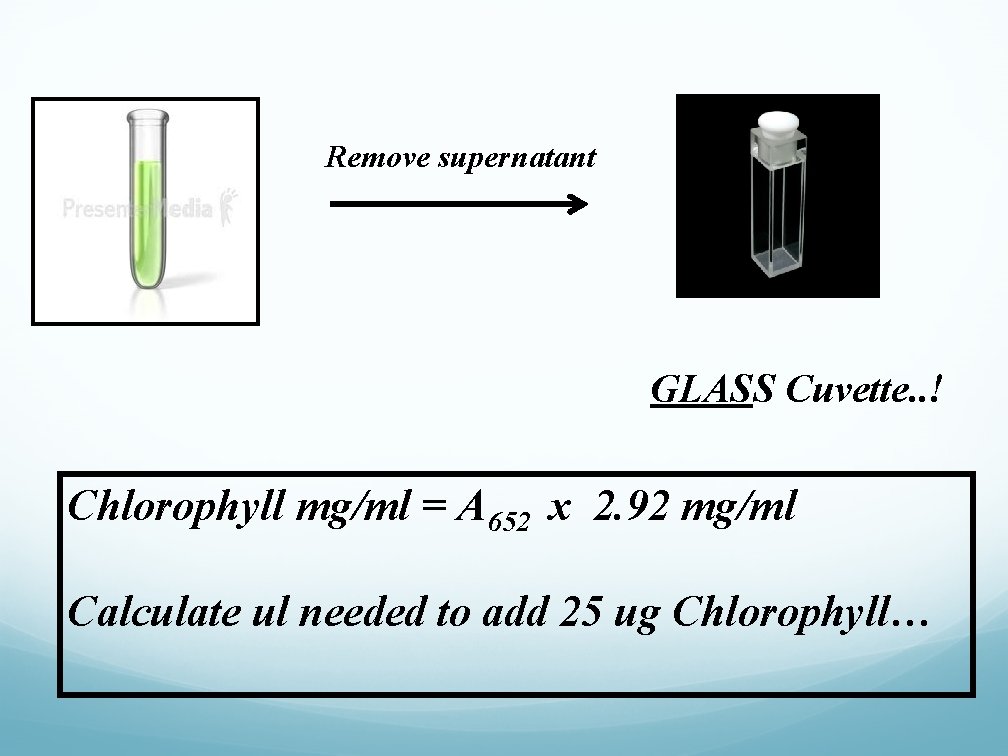
Remove supernatant GLASS Cuvette. . ! Chlorophyll mg/ml = A 652 x 2. 92 mg/ml Calculate ul needed to add 25 ug Chlorophyll…
Important notes on Acetone… 50µl chloroplast suspension + 5 ml acetone Why the acetone? Melts hydrophobics! Melts membranes to release chlorophyll Plastic cuvettes, plastic pipet tips, parafilm, etc
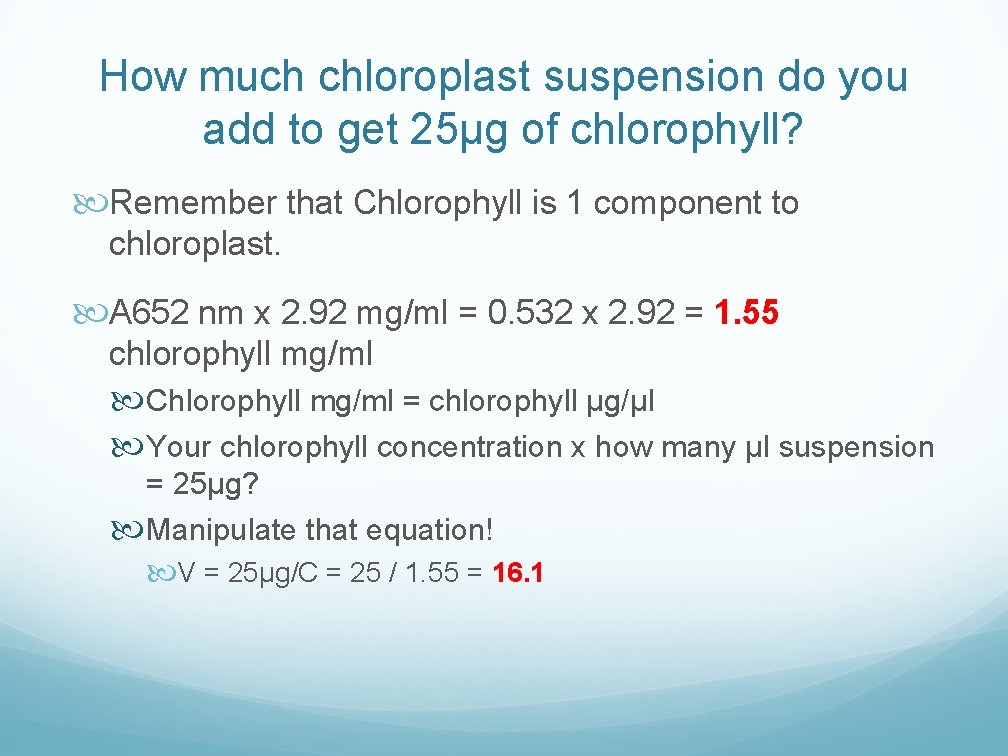
How much chloroplast suspension do you add to get 25µg of chlorophyll? Remember that Chlorophyll is 1 component to chloroplast. A 652 nm x 2. 92 mg/ml = 0. 532 x 2. 92 = 1. 55 chlorophyll mg/ml Chlorophyll mg/ml = chlorophyll µg/µl Your chlorophyll concentration x how many µl suspension = 25µg? Manipulate that equation! V = 25µg/C = 25 / 1. 55 = 16. 1
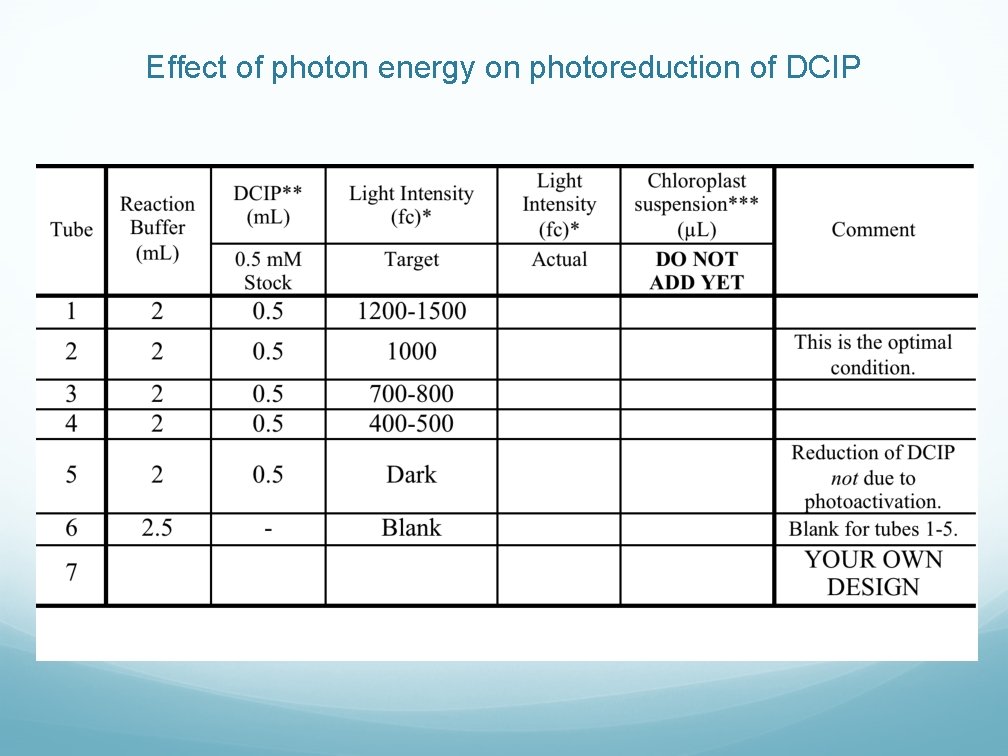
Effect of photon energy on photoreduction of DCIP
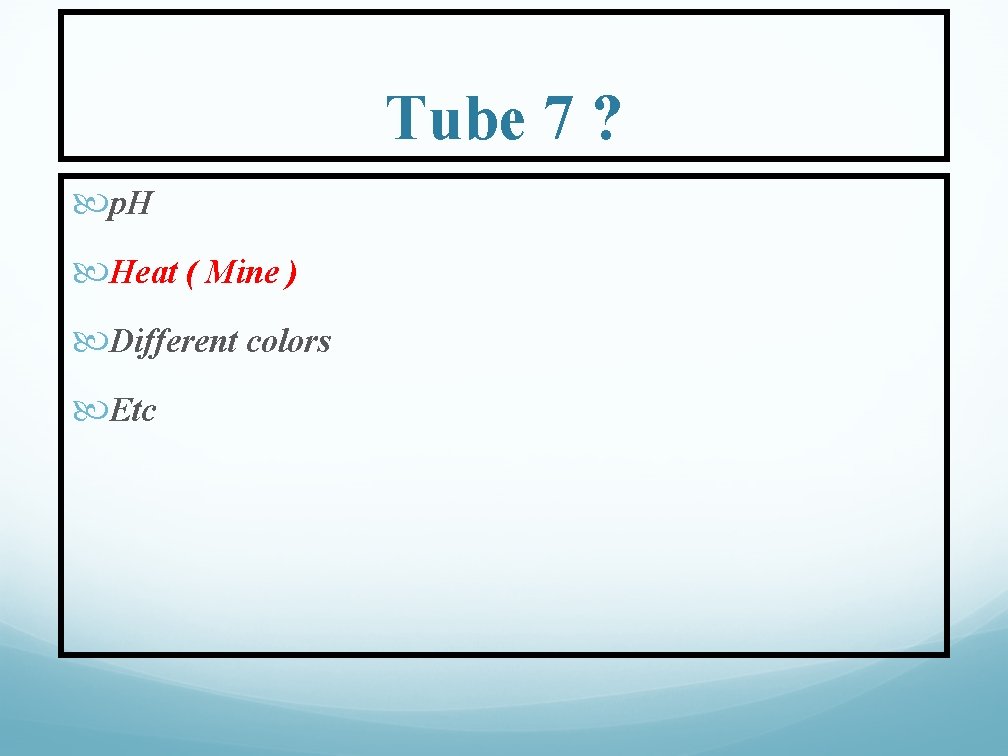
Tube 7 ? p. H Heat ( Mine ) Different colors Etc
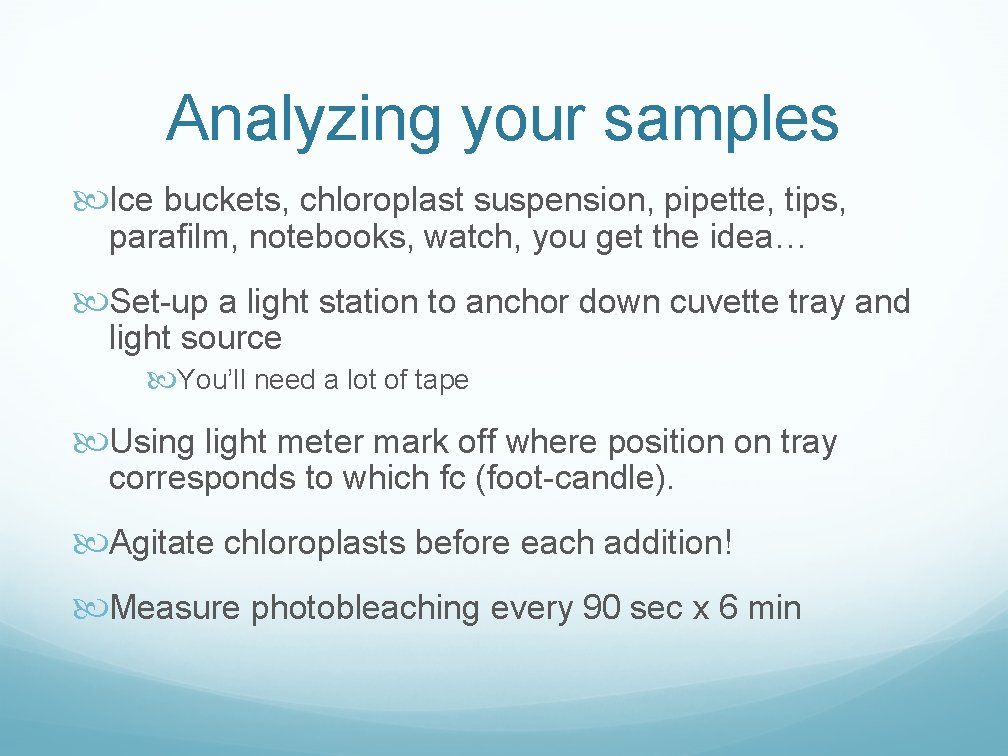
Analyzing your samples Ice buckets, chloroplast suspension, pipette, tips, parafilm, notebooks, watch, you get the idea… Set-up a light station to anchor down cuvette tray and light source You’ll need a lot of tape Using light meter mark off where position on tray corresponds to which fc (foot-candle). Agitate chloroplasts before each addition! Measure photobleaching every 90 sec x 6 min
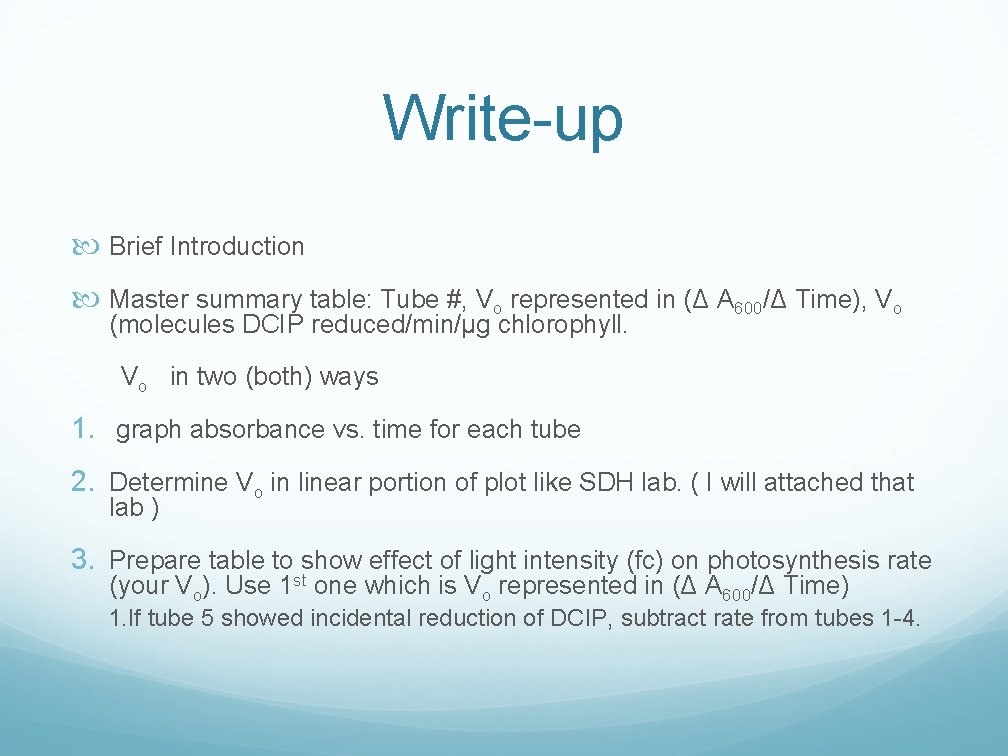
Write-up Brief Introduction Master summary table: Tube #, Vo represented in (Δ A 600/Δ Time), Vo (molecules DCIP reduced/min/µg chlorophyll. Vo in two (both) ways 1. graph absorbance vs. time for each tube 2. Determine Vo in linear portion of plot like SDH lab. ( I will attached that lab ) 3. Prepare table to show effect of light intensity (fc) on photosynthesis rate (your Vo). Use 1 st one which is Vo represented in (Δ A 600/Δ Time) 1. If tube 5 showed incidental reduction of DCIP, subtract rate from tubes 1 -4.
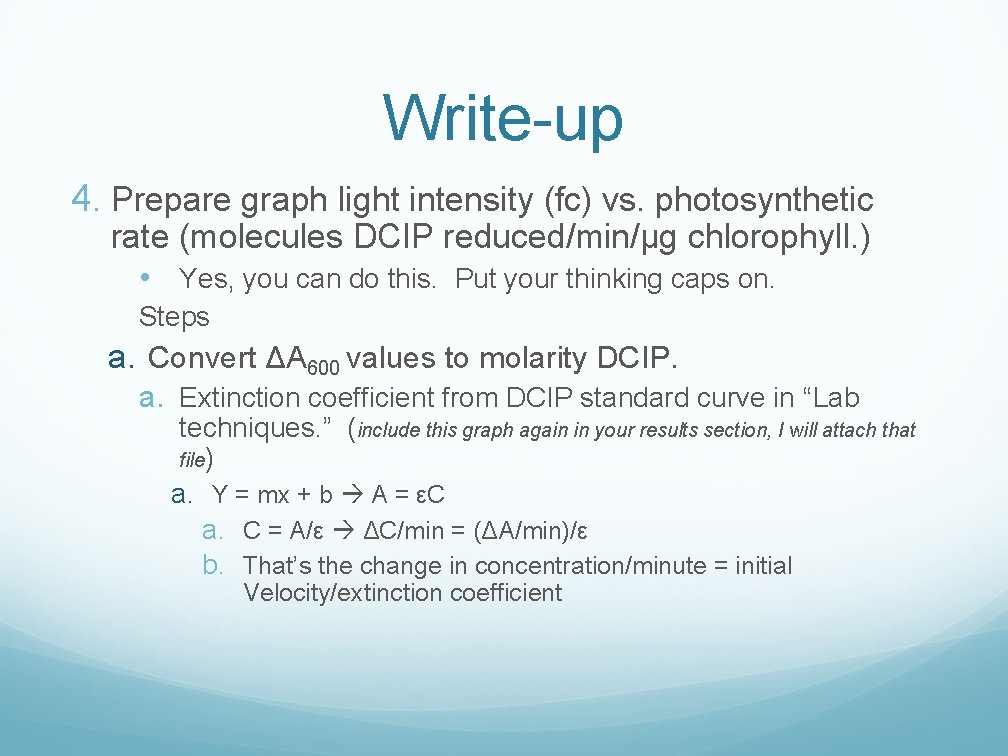
Write-up 4. Prepare graph light intensity (fc) vs. photosynthetic rate (molecules DCIP reduced/min/µg chlorophyll. ) • Yes, you can do this. Put your thinking caps on. Steps a. Convert ΔA 600 values to molarity DCIP. a. Extinction coefficient from DCIP standard curve in “Lab techniques. ” (include this graph again in your results section, I will attach that file) a. Y = mx + b A = εC a. C = A/ε ΔC/min = (ΔA/min)/ε b. That’s the change in concentration/minute = initial Velocity/extinction coefficient
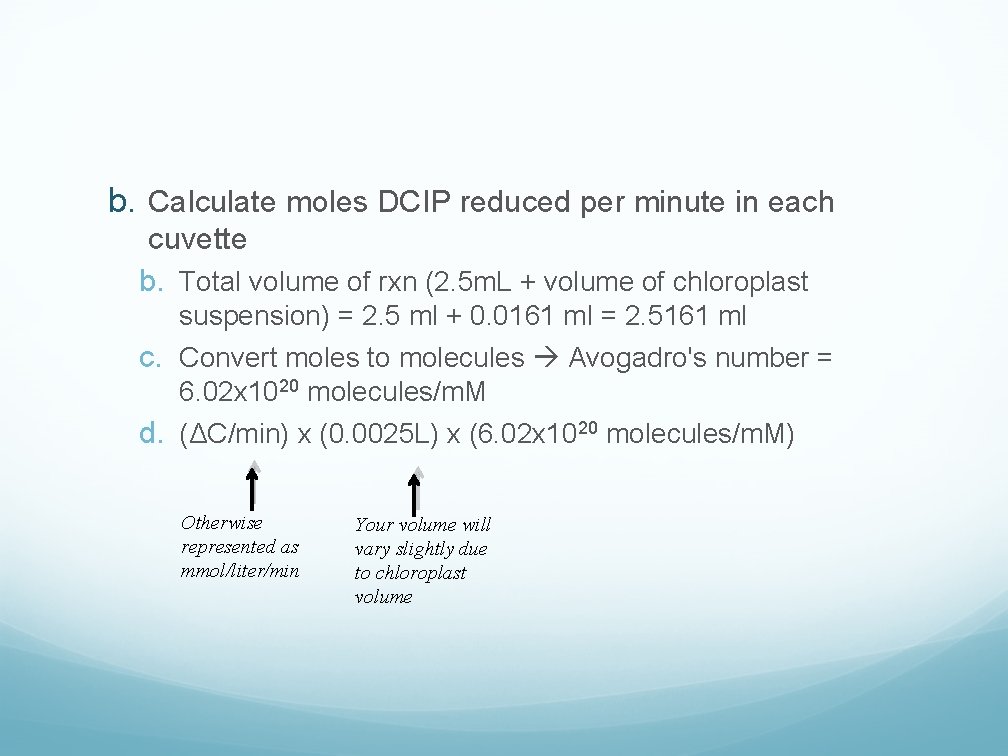
b. Calculate moles DCIP reduced per minute in each cuvette b. Total volume of rxn (2. 5 m. L + volume of chloroplast suspension) = 2. 5 ml + 0. 0161 ml = 2. 5161 ml c. Convert moles to molecules Avogadro's number = 6. 02 x 1020 molecules/m. M d. (ΔC/min) x (0. 0025 L) x (6. 02 x 1020 molecules/m. M) Otherwise represented as mmol/liter/min Your volume will vary slightly due to chloroplast volume
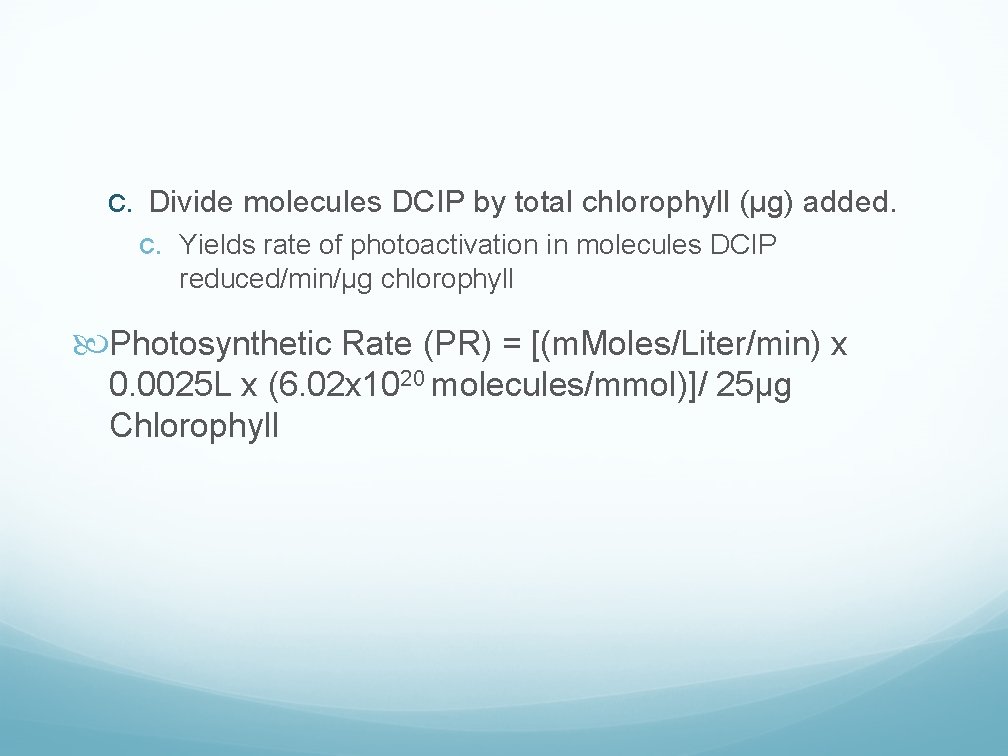
c. Divide molecules DCIP by total chlorophyll (µg) added. c. Yields rate of photoactivation in molecules DCIP reduced/min/µg chlorophyll Photosynthetic Rate (PR) = [(m. Moles/Liter/min) x 0. 0025 L x (6. 02 x 1020 molecules/mmol)]/ 25µg Chlorophyll
5. prepare a table and graph to show the effects of your independent investigation. ( Heat Shock ) • Identify the variable in the table and figure title/legend • Initial V • Compare to control (tube 2) • Kinetic trace not Sufficient ! Remember that this is Results & Discussion What do your results mean? Interpret them. You’ve performed all these calculations, what do they tell you? How do they support your conclusions?
- Slides: 21