
Lab Exercise 33 Endocrine System 1 Major Endocrine
Lab Exercise 33 Endocrine System 1
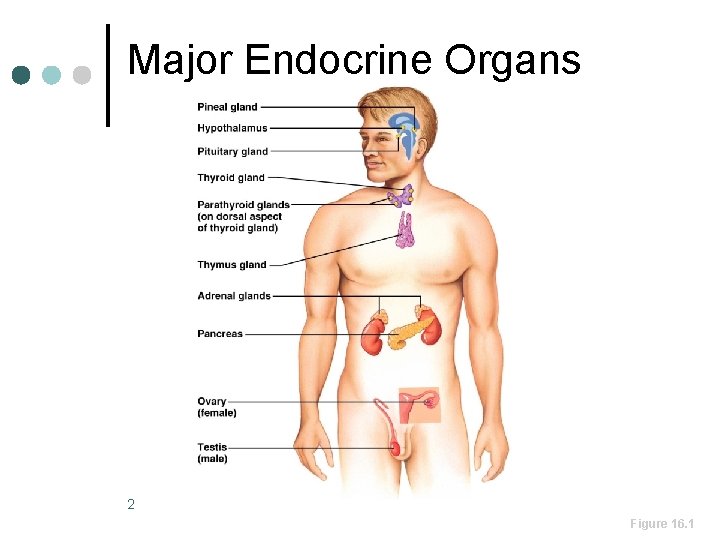
Major Endocrine Organs 2 Figure 16. 1
Hormones ¢ ¢ 3 Hormones – chemical substances secreted by cells into the extracellular fluids l Regulate the metabolic function of other cells The precise response depends on the type of the target cell
Target Cell Specificity ¢ ¢ 4 Hormones circulate to all tissues but only activate cells referred to as target cells Target cells must have specific receptors to which the hormone binds
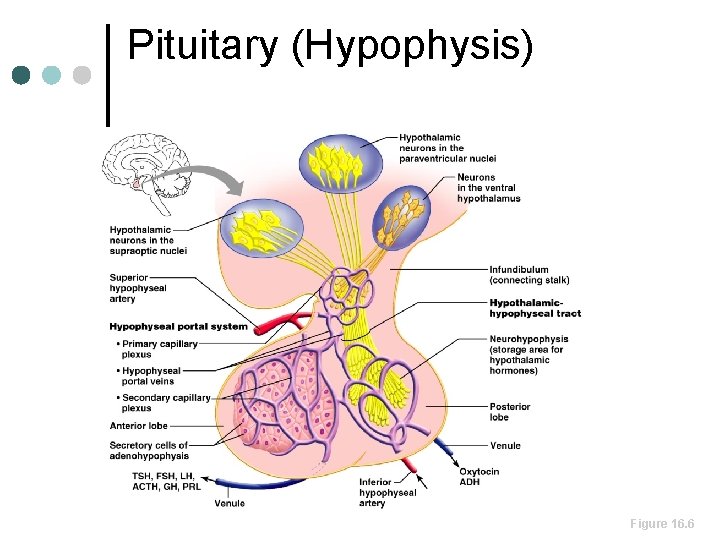
Gross Anatomy -Hypophysis ¢ ¢ ¢ Pituitary gland – two-lobed organ that secretes nine major hormones Neurohypophysis – posterior lobe (neural tissue) and the infundibulum l Receives, stores, and releases hormones from the hypothalamus Adenohypophysis – anterior lobe, made up of glandular tissue l Synthesizes and secretes a number of hormones 5
Pituitary (Hypophysis) 7 Figure 16. 6
Pituitary-Anterior Lobe ¢ 8 There is a vascular connection, the hypophyseal portal system, consisting of: l The primary capillary plexus l The hypophyseal portal veins l The secondary capillary plexus
Adenophypophyseal Hormones ¢ 9 The six hormones of the adenohypophysis: l Abbreviated as GH, TSH, ACTH, FSH, LH, and PRL
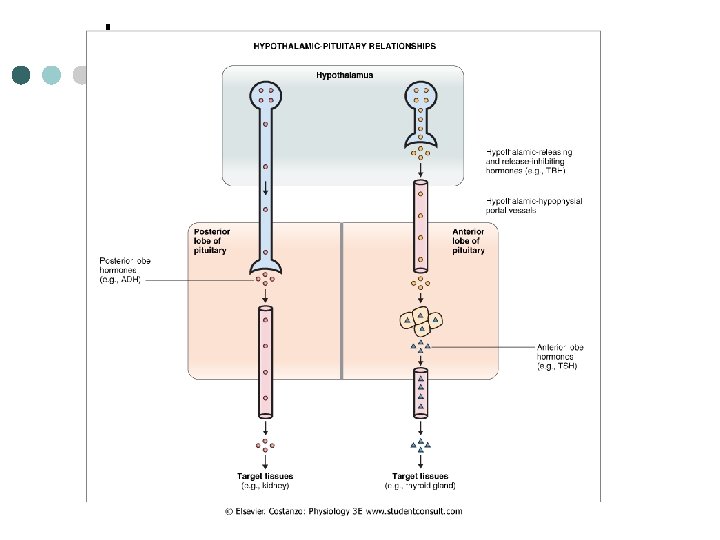
Activity of the Adenophypophysis ¢ 10 The hypothalamus sends a chemical stimulus to the anterior pituitary l Releasing hormones stimulate the synthesis and release of hormones l Inhibiting hormones shut off the synthesis and release of hormones
Activity of the Adenophypophysis ¢ 11 The tropic hormones l Stimulates an endocrine gland instead of a target organ. They are: l Thyroid-stimulating hormone (TSH) l Adrenocorticotropic hormone (ACTH) l Follicle-stimulating hormone (FSH) l Luteinizing hormone (LH)
Thyroid Stimulating Hormone (Thyrotropin) ¢ ¢ 12 Stimulates the normal development and secretory activity of the thyroid Triggered by hypothalamic thyrotropinreleasing hormone (TRH)
Adrenocorticotropic Hormone (Corticotropin) ¢ ¢ 13 Stimulates the adrenal cortex to release corticosteroids Triggered by hypothalamic corticotropinreleasing hormone (CRH) in a daily rhythm
Gonadotropins ¢ 14 Gonadotropins – follicle-stimulating hormone (FSH) and luteinizing hormone (LH) l Regulate the function of the ovaries and testes l FSH stimulates gamete (egg or sperm) production l Triggered by the hypothalamic gonadotropin-releasing hormone (Gn. RH)
Functions of Gonadotropins ¢ ¢ 15 In females l LH promotes synthesis and release of estrogens and progesterone In males l LH stimulates synthesis of testosterone by the testes
Adenohypophysis- Growth Hormone (GH) ¢ ¢ ¢ 16 Stimulate most cells, but target bone and skeletal muscle Promote protein synthesis and encourage the use of fats for fuel Dwarfism, gigantism, acromegaly
Prolactin (PRL) ¢ ¢ 17 In females, stimulates milk production by the breasts Regulated by the hypothalamic prolactinreleasing hormone (PRH) and prolactininhibitory hormone (PIH)
Pituitary - Posterior Lobe ¢ ¢ The posterior lobe is a downgrowth of hypothalamic neural tissue Has a neural connection with the hypothalamus (hypothalamic-hypophyseal tract) Nuclei of the hypothalamus synthesize oxytocin and antidiuretic hormone (ADH) These hormones are transported to the posterior pituitary 18
The Posterior Pituitary and Hypothalamic Hormones ¢ ¢ ADH stimulates reabsorption of water from the urine l Produced by the supraoptic nuclei of the hypothalamus Oxytocin stimulates smooth muscle contraction in breasts and uterus l Produced by the paraventricular nuclei of the hypothalamus 19
Thyroid Gland ¢ Consists of two lateral lobes connected by the isthmus 20
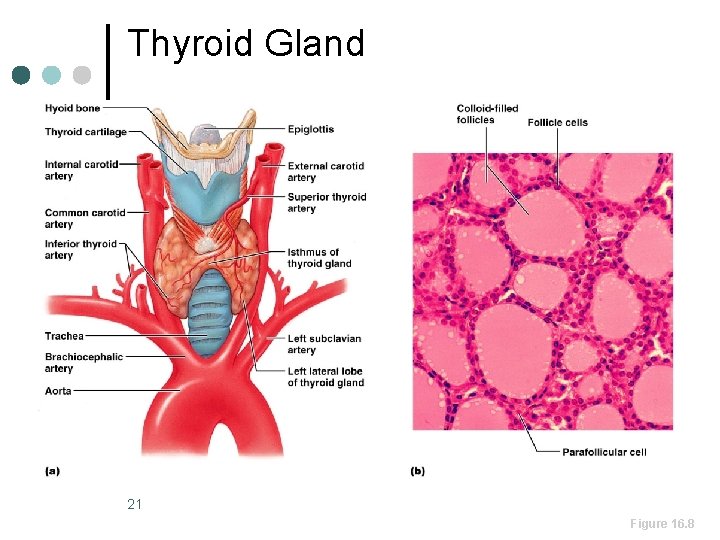
Thyroid Gland 21 Figure 16. 8
Thyroid Hormone ¢ 22 Consists of two related iodine-containing compounds l T 4 – thyroxine has four iodine atoms l T 3 – triiodothyronine; has three iodine atoms
Effects of Thyroid Hormone ¢ TH is concerned with: l Increasing metabolic rate l Heat production l Cellular oxidation ¢ Hyperthyroidism Hypothyroidism ¢ 23
Calcitonin ¢ ¢ ¢ 24 Produced by the parafollicular, or C, cells Lowers blood calcium levels Antagonist to parathyroid hormone (PTH)
PART 2 25
Parathyroid Glands ¢ ¢ 26 Tiny glands embedded in the posterior aspect of the thyroid PTH (parathormone) increases the level of calcium in the blood
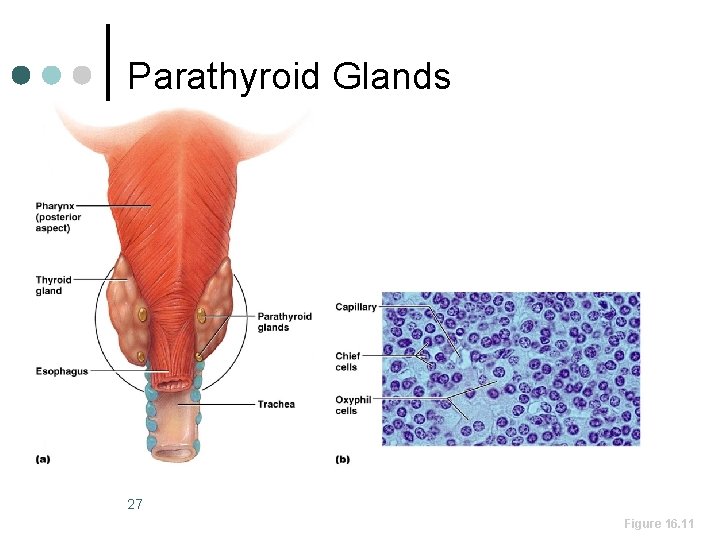
Parathyroid Glands 27 Figure 16. 11
Effects of Parathyroid Hormone ¢ ¢ ¢ 28 PTH release increases Ca 2+ in the blood as it: l Stimulates osteoclasts to digest bone matrix l Enhances the reabsorption of Ca 2+ and the secretion of phosphate by the kidneys l Increases absorption of Ca 2+ by intestinal mucosal Hyperparathyroidism Hypoparathyroidism
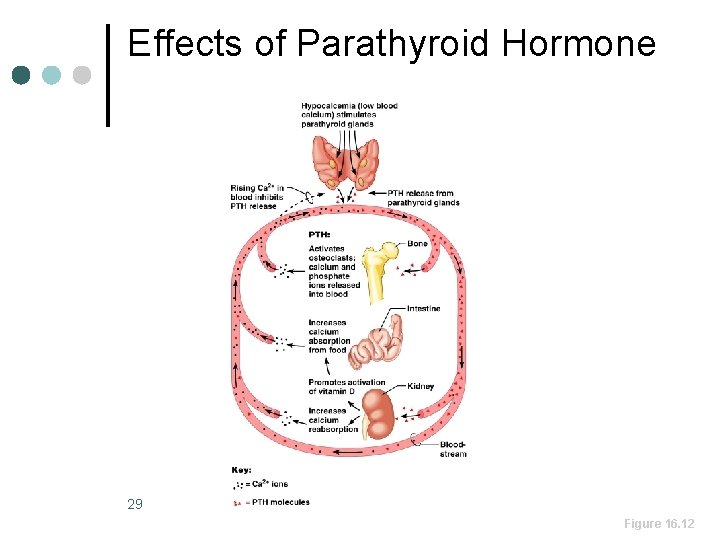
Effects of Parathyroid Hormone 29 Figure 16. 12
Adrenal (Suprarenal) Glands ¢ ¢ 30 Adrenal glands – paired, pyramid-shaped organs atop the kidneys Structurally and functionally, they are two glands in one l Adrenal medulla – neural tissue that acts as part of the SNS l Adrenal cortex – glandular tissue
Adrenal Cortex ¢ ¢ Synthesizes and releases steroid hormones called corticosteroids Different corticosteroids are produced in each of the three layers l Zona glomerulosa – mineralocorticoids (chiefly aldosterone) l Zona fasciculata – glucocorticoids (chiefly cortisol) l Zona reticularis – gonadocorticoids (chiefly androgens) 31
Aldosterone ¢ ¢ ¢ 32 Electrolyte balance in extracellular fluids Stimulates reabsorption of Na+ by the kidneys Stimulates secretion of K+ by the kidney
Glucocorticoids (Cortisol) ¢ ¢ 33 Help the body resist chronic stress by: l Keeping blood sugar levels relatively constant Cortisone, hydrocortisone, corticosterone: l Rises in blood glucose, fatty acids, and amino
Gonadocorticoids (Sex Hormones) ¢ ¢ 34 Most gonadocorticoids secreted are androgens (male sex hormones), and the most important one is testosterone Androgens contribute to: l The onset of puberty l The appearance of secondary sex characteristics l Sex drive in females
Adrenal Medulla ¢ ¢ 35 Secrete epinephrine and norepinephrine Secretion of these hormones causes: l Blood glucose levels to rise l Blood vessels to constrict l The heart to beat faster l Blood to be diverted to the brain, heart, and skeletal muscle
Pancreas ¢ ¢ Mixed gland, which has both exocrine and endocrine cells Acinar cells produce an enzyme-rich juice used for digestion (exocrine product) Pancreatic islets (islets of Langerhans) produce hormones (endocrine products) The islets contain two major cell types: l Alpha ( ) cells that produce glucagon l Beta ( ) cells that produce insulin 36
Insulin and Glucagon ¢ ¢ 37 Glucagon major target is the liver, where it promotes: l Release of glucose to the blood from liver cells Insulin: l Lowers blood glucose levels l Enhances transport of glucose into body cells
Gonads: Female ¢ ¢ 38 Paired ovaries in the abdominopelvic cavity produce estrogens and progesterone and the ova Estrogen: l Appearance of secondary sexual characteristics l Breast development and cyclic changes in the uterine mucosa
Gonads: Female ¢ 39 Progesterone: l Cycling changes of the uterine lining l Keeps pregnancy l Prepares breast for lactation
Gonads: Male ¢ ¢ 40 Testes located in an extra-abdominal sac (scrotum) produce testosterone Testosterone: l Initiates maturation of male reproductive organs l Causes appearance of secondary sexual characteristics and sex drive l Is necessary for sperm production l Maintains sex organs in their functional state
Pineal Gland ¢ ¢ ¢ 41 Small gland hanging from the roof of the third ventricle of the brain Secretory product is melatonin Melatonin is involved with: l Day/night cycles l Physiological processes that show rhythmic variations (body temperature, sleep, appetite)
Thymus ¢ ¢ ¢ 42 Lobulated gland located deep to the sternum Secrete thymosins These hormones are essential for the development of the T lymphocytes (T cells) of the immune system
Microscopic anatomy of the glands ¢ 43 Thyroid gland l Follicles – simple squamous or cuboidal cells • Colloid – contain thyroglobulin, T 3 and T 4 l Parafollicular cells (C cells) • Between follicles • Secrete calcitonin
Microscopic anatomy of the glands ¢ 44 Parathyroid l Fibrous capsule surrounds the organ l Chief cell • Small cells, round nuclei, arranged in clusters, secret PTH l Oxyphil cells • Lager than chief cells • Scattered • Unknown function
Microscopic anatomy of the glands ¢ 45 Pancreas l Exocrine acini • Darker cells l Endocrine with Islets of Langehans • Beta cells – located at the center and secrete insulin • Alpha cells – located at the periphery and secrete glucagon
Microscopic anatomy of the glands ¢ 46 Anterior Pituitary gland l Chromophils • Acidophils- reddish-brown. GH and PRL • Basophils – deep-blue. Tropic hormones l Chromophobes • Do not take collor (Pale) • Controversial role
Microscopic anatomy of the glands ¢ 47 Posterior pituitary gland l Nerve fibers l Pituicytes (glial cells)
Microscopic anatomy of the glands ¢ 48 Adrenal gland- cortex l Zona glomerulosa • outermost, spherical clusters of cells, secrete mineralocorticoids l Zona fasciculate • Next layer, cells arranged in parallel cords, secrete glucocorticoids l Zona reticularis • Inneremost, cells arranged in branches, produces mainly sex hormones
Microscopic anatomy of the glands ¢ 49 Adrenal gland – medulla l The core of the gland l Modified neurons l Secrete E and NE
Microscopic anatomy of the glands ¢ 50 Ovary l Vesicular follicle • Ovum
Microscopic anatomy of the glands ¢ 51 Testes l Seminiferous tubules • Produce sperm l Interstitial cells • Between seminiferous tubules. • Secrete testosterone
Cat’s Glands to Identify ¢ Thyroid ¢ Thymus ¢ Pancreas ¢ Adrenal ¢ Gonads l Testes l Ovaries 52
- Slides: 52