
Lab Exercise 26 Anatomy of the Digestive System
Lab Exercise 26 Anatomy of the Digestive System Portland Community College BI 233
Digestive System • Alimentary Canal: hollow tube extending from mouth to anus • Technically outside the body • Covered with mucous membrane • Accessory digestive organs – teeth, tongue, gallbladder, salivary glands, liver, and pancreas 2
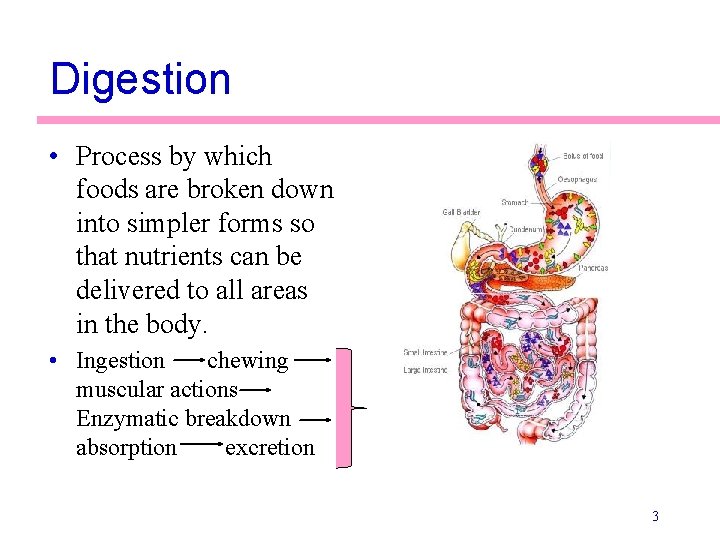
Digestion • Process by which foods are broken down into simpler forms so that nutrients can be delivered to all areas in the body. • Ingestion chewing muscular actions Enzymatic breakdown absorption excretion 3
Membranes • Parietal Peritoneum: Covers the wall of the abdominal cavity • Visceral Peritoneum: Covers the outside of all the abdominal organs • Mesentery: a fold of peritoneum attaching the small intestine to the posterior abdominal wall • Greater Omentum: Thick sheet of tissue (lots of fat) that hangs off the greater curvature of the stomach • Lesser Omentum: Anchors the liver to the lesser curvature of the stomach • Mesocolon: a fold of peritoneum attaching the colon to the posterior abdominal wall 4
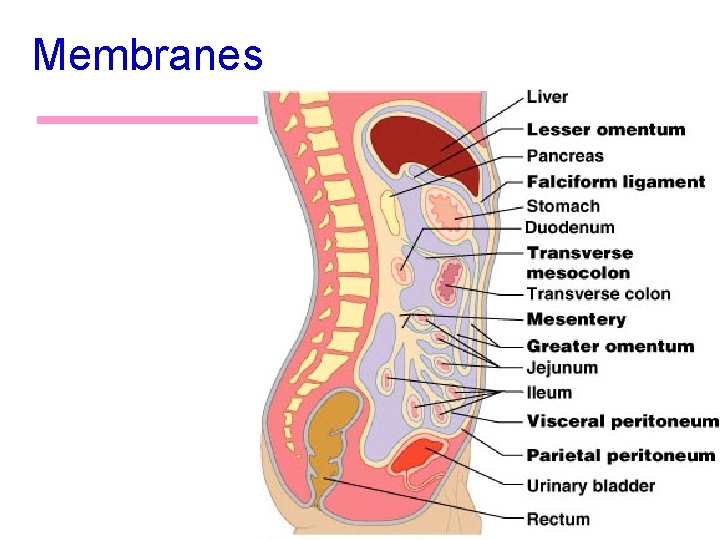
Membranes 5
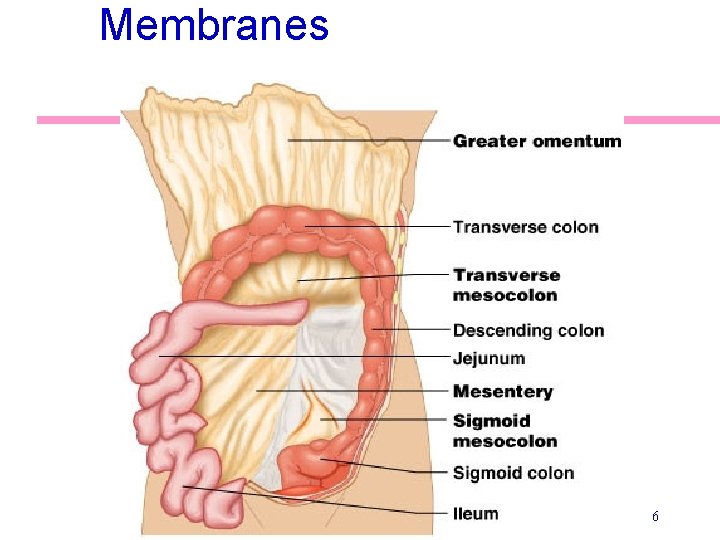
Membranes 6
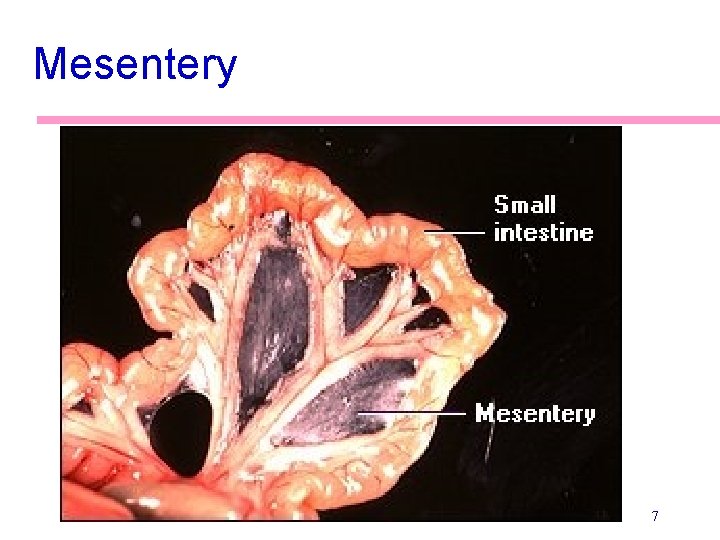
Mesentery 7
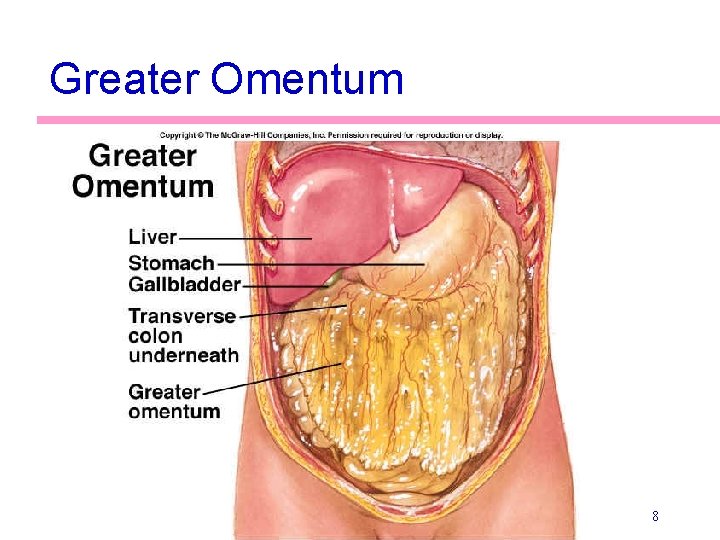
Greater Omentum 8
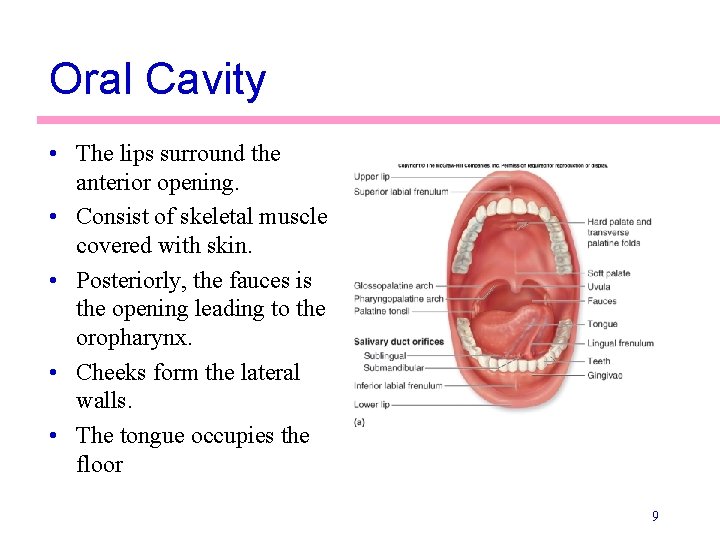
Oral Cavity • The lips surround the anterior opening. • Consist of skeletal muscle covered with skin. • Posteriorly, the fauces is the opening leading to the oropharynx. • Cheeks form the lateral walls. • The tongue occupies the floor 9
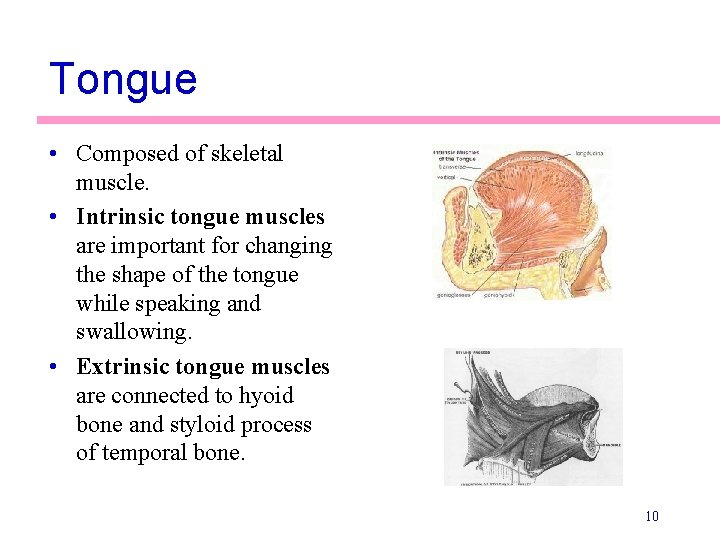
Tongue • Composed of skeletal muscle. • Intrinsic tongue muscles are important for changing the shape of the tongue while speaking and swallowing. • Extrinsic tongue muscles are connected to hyoid bone and styloid process of temporal bone. 10
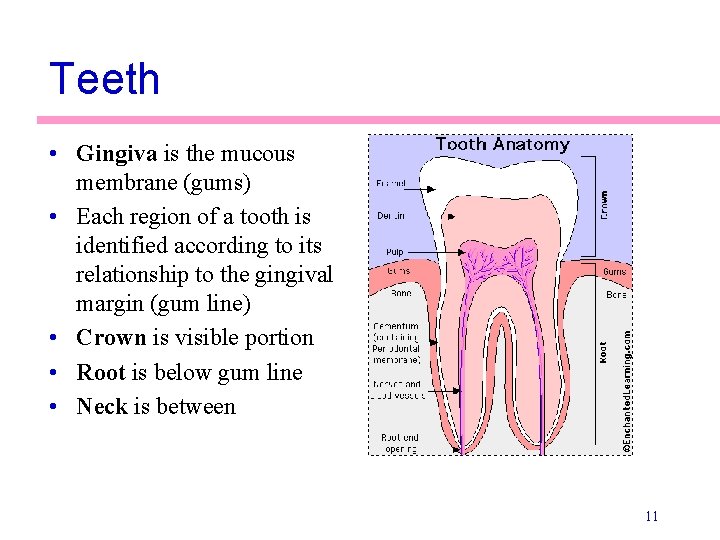
Teeth • Gingiva is the mucous membrane (gums) • Each region of a tooth is identified according to its relationship to the gingival margin (gum line) • Crown is visible portion • Root is below gum line • Neck is between 11
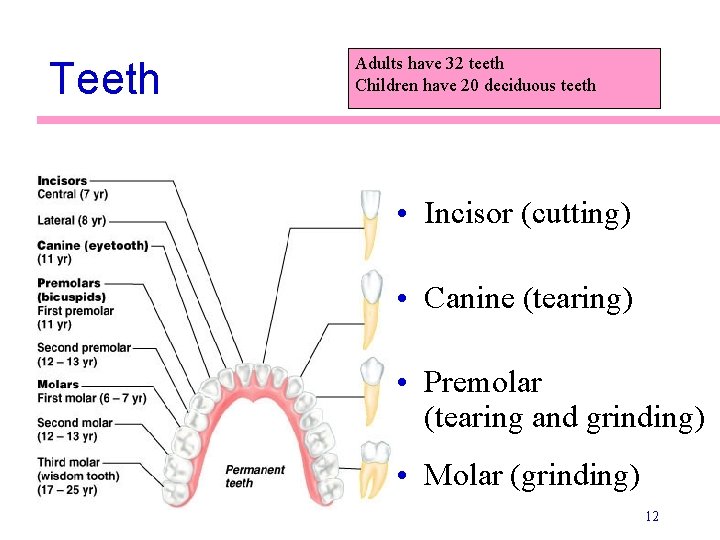
Teeth Adults have 32 teeth Children have 20 deciduous teeth • Incisor (cutting) • Canine (tearing) • Premolar (tearing and grinding) • Molar (grinding) 12
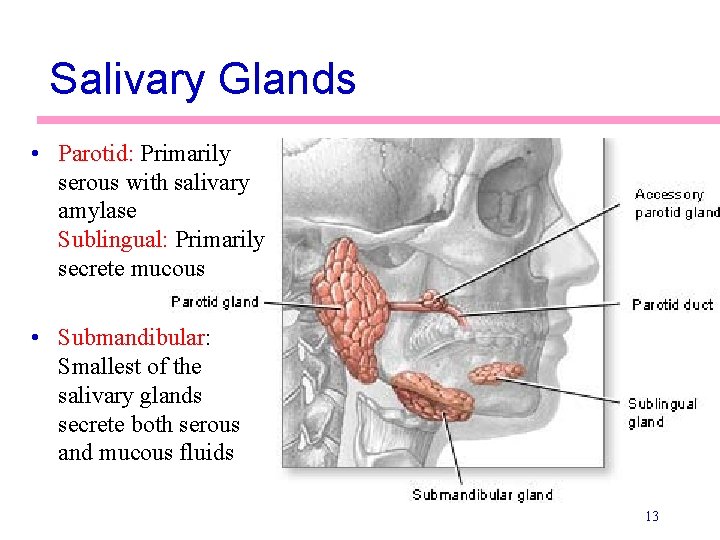
Salivary Glands • Parotid: Primarily serous with salivary amylase Sublingual: Primarily secrete mucous • Submandibular: Smallest of the salivary glands secrete both serous and mucous fluids 13
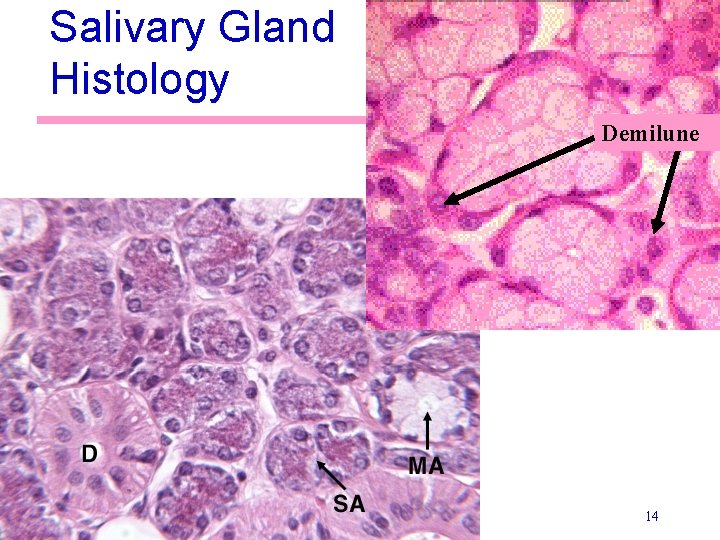
Salivary Gland Histology Demilune 14
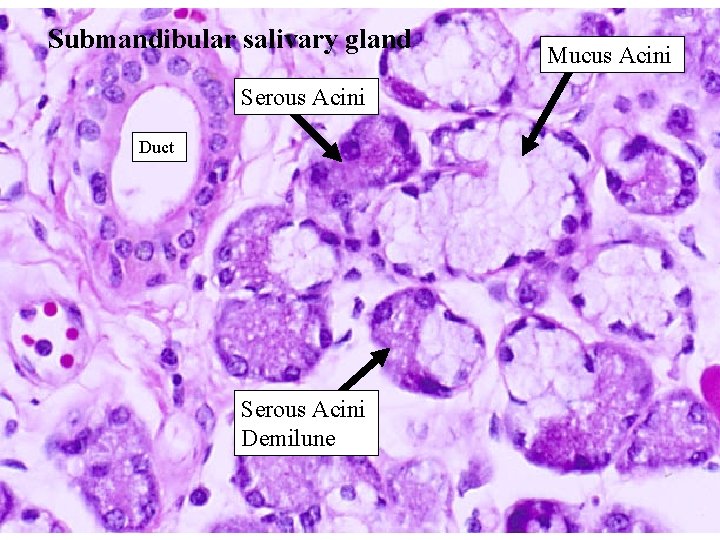
Submandibular salivary gland Mucus Acini Serous Acini Duct Serous Acini Demilune 15
16
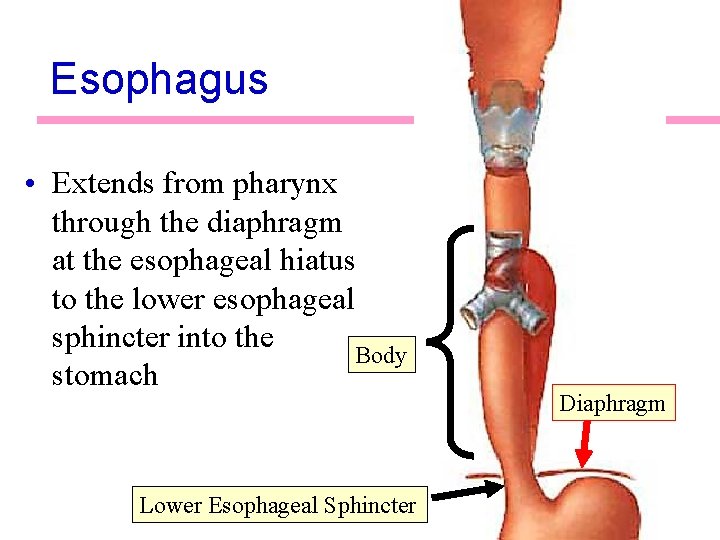
Esophagus • Extends from pharynx through the diaphragm at the esophageal hiatus to the lower esophageal sphincter into the Body stomach Lower Esophageal Sphincter Diaphragm 17
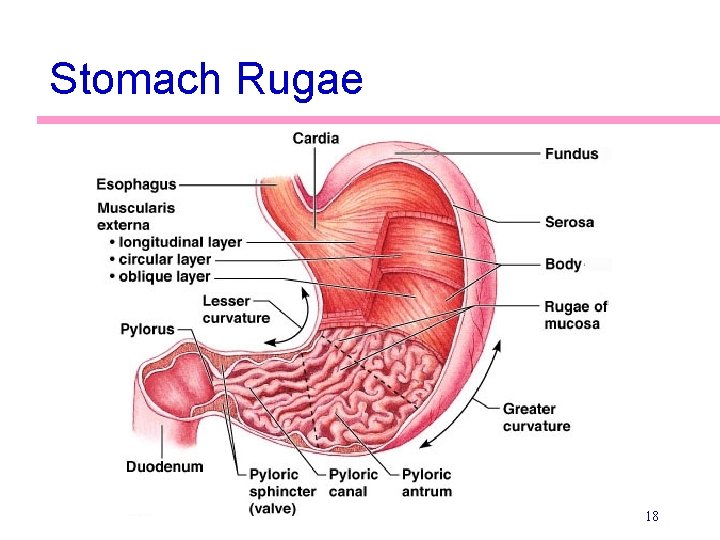
Stomach Rugae 18
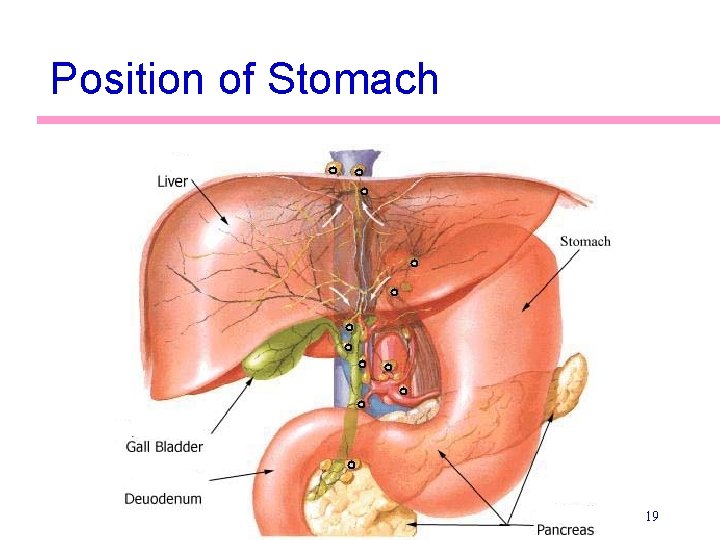
Position of Stomach 19
Small Intestine: Gross Anatomy • Runs from pyloric sphincter to the ileocecal valve • Has three subdivisions: duodenum, jejunum, and ileum • The bile duct and main pancreatic duct: • Join the duodenum at the hepatopancreatic ampulla • Are controlled by the sphincter of Oddi • The jejunum extends from the duodenum to the ileum • The ileum joins the large intestine at the ileocecal 20 valve
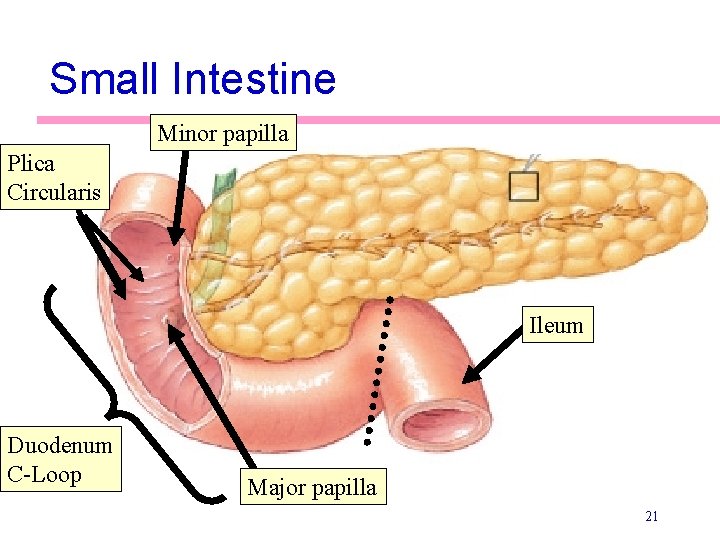
Small Intestine Minor papilla Plica Circularis Ileum Duodenum C-Loop Major papilla 21
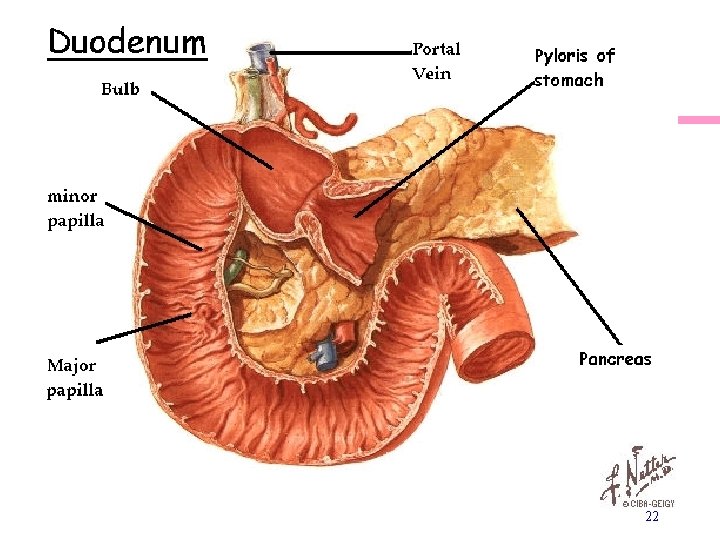
22
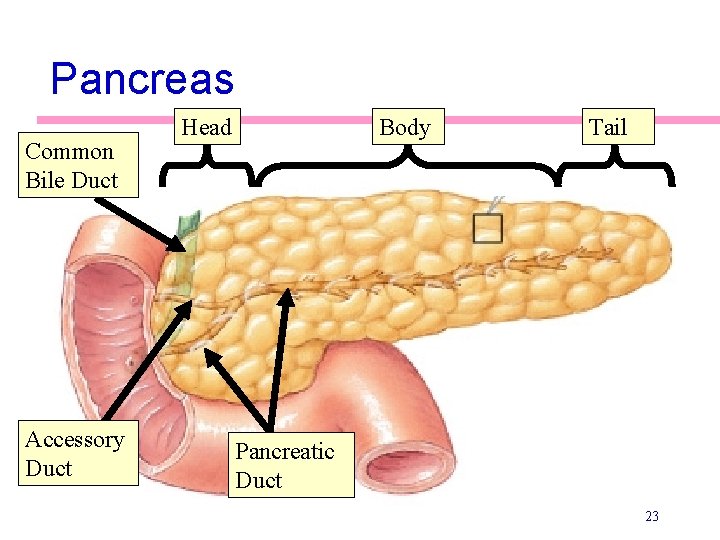
Pancreas Common Bile Duct Accessory Duct Head Body Tail Pancreatic Duct 23
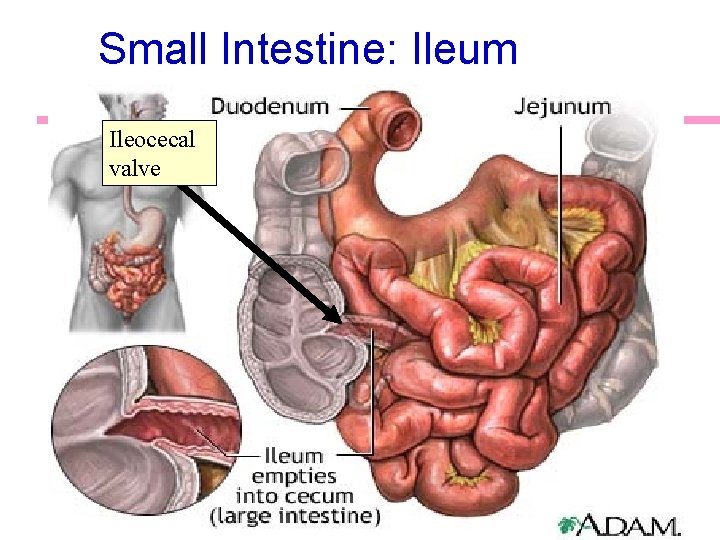
Small Intestine: Ileum Ileocecal valve 24
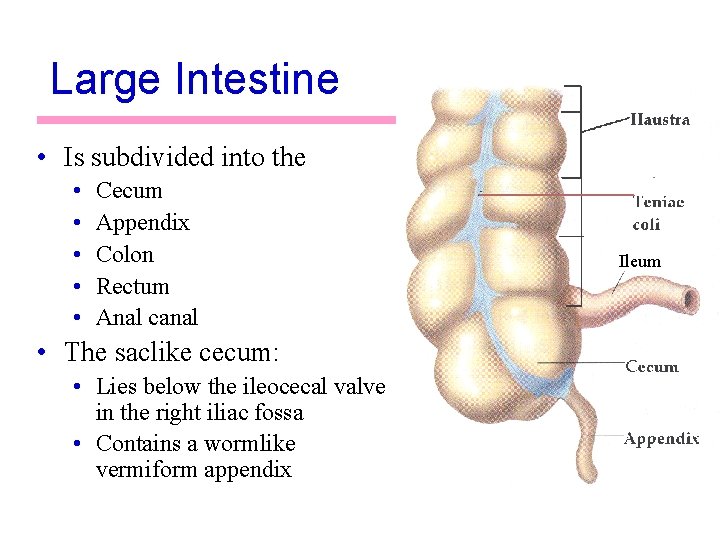
Large Intestine • Is subdivided into the • • • Cecum Appendix Colon Rectum Anal canal • The saclike cecum: • Lies below the ileocecal valve in the right iliac fossa • Contains a wormlike vermiform appendix Ileum
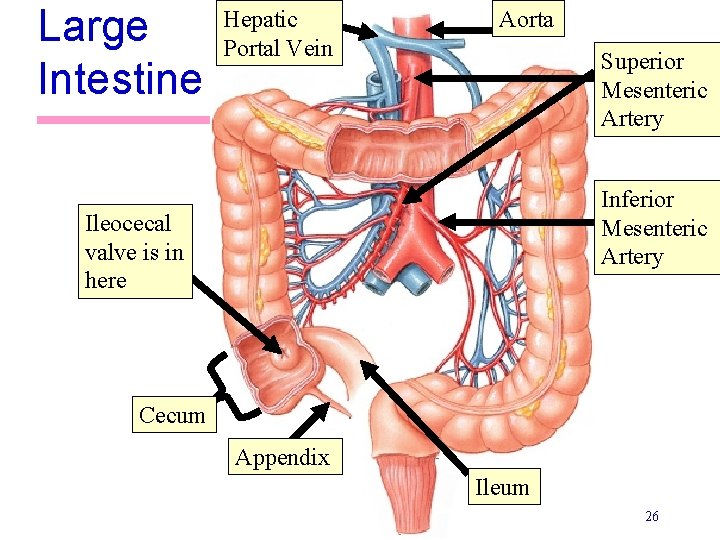
Large Intestine Hepatic Portal Vein Aorta Superior Mesenteric Artery Inferior Mesenteric Artery Ileocecal valve is in here Cecum Appendix Ileum 26
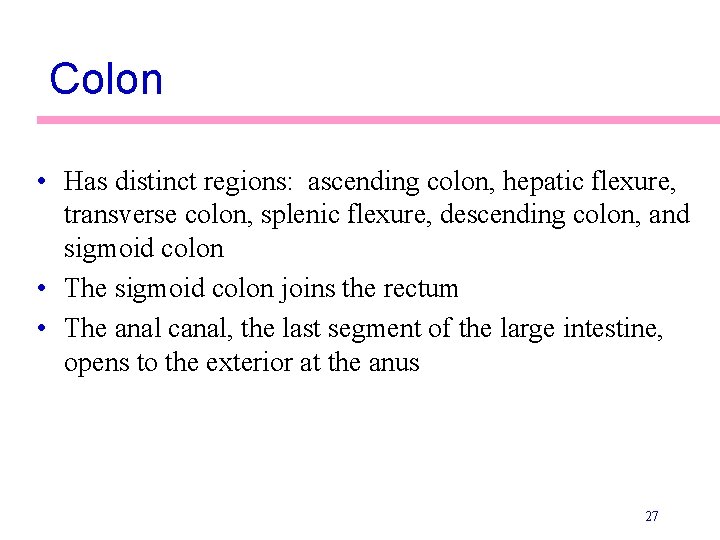
Colon • Has distinct regions: ascending colon, hepatic flexure, transverse colon, splenic flexure, descending colon, and sigmoid colon • The sigmoid colon joins the rectum • The anal canal, the last segment of the large intestine, opens to the exterior at the anus 27
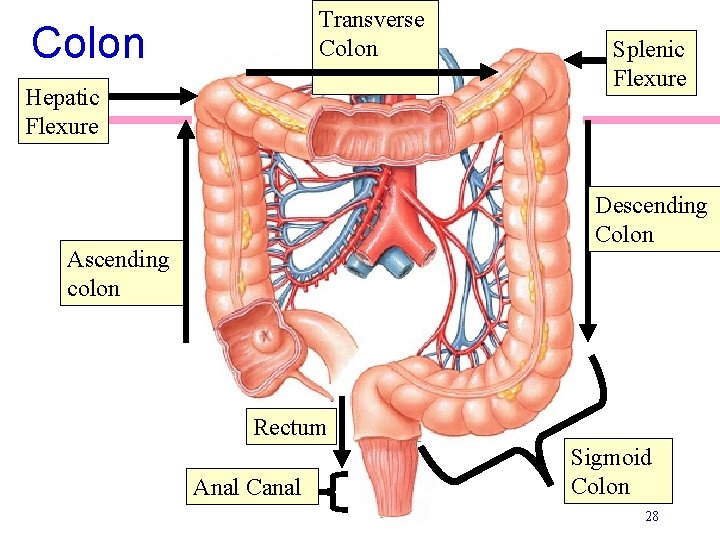
Transverse Colon Hepatic Flexure Splenic Flexure Descending Colon Ascending colon Rectum Anal Canal Sigmoid Colon 28
Valves and Sphincters of the Rectum and Anus • Three valves of the rectum stop feces from being passed with gas • The anus has two sphincters: • Internal anal sphincter composed of smooth muscle • External anal sphincter composed of skeletal muscle • These sphincters are closed except during defecation 29
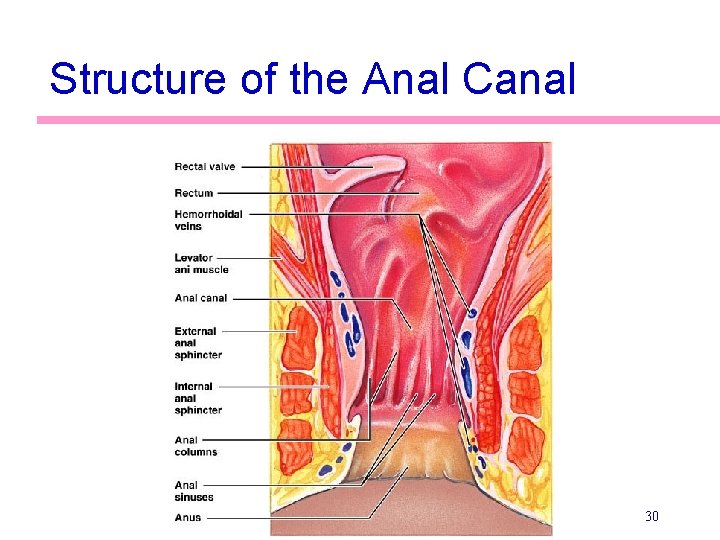
Structure of the Anal Canal 30
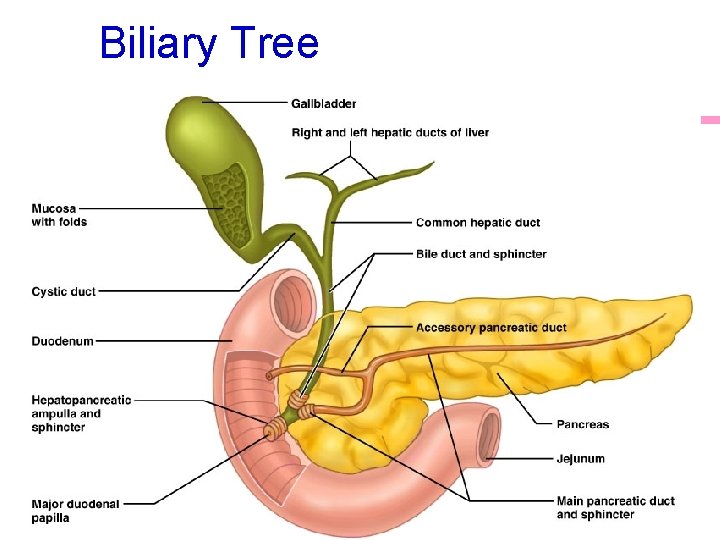
Biliary Tree 31
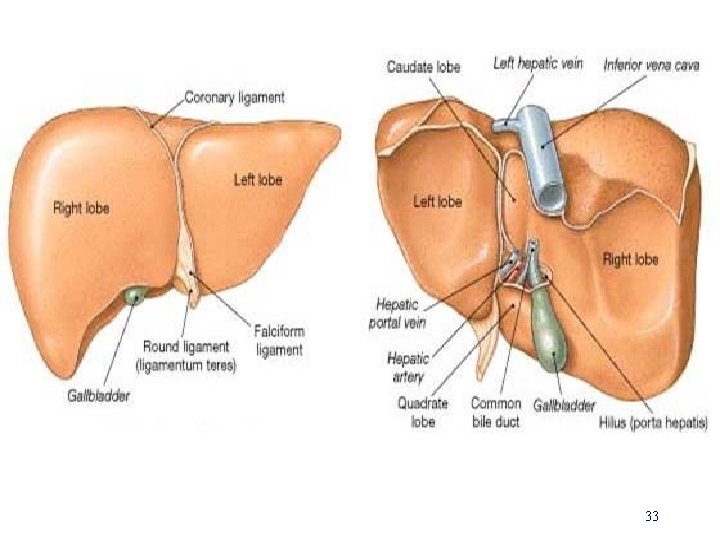
Liver • The largest gland in the body • Superficially has four lobes – right, left, caudate, and quadrate • The falciform ligament: • Separates the right and left lobes anteriorly • Suspends the liver from the diaphragm and anterior abdominal wall 32
33
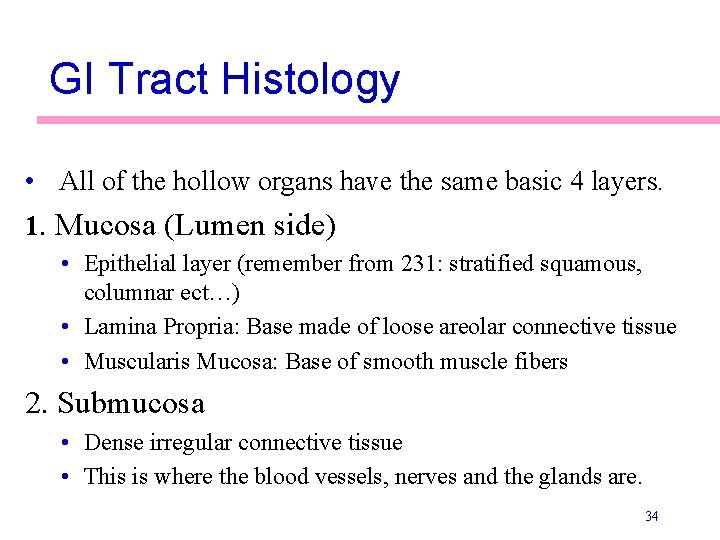
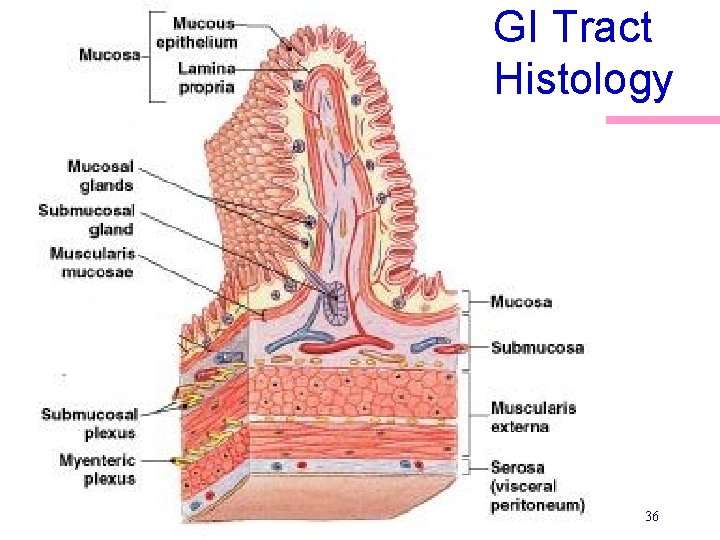
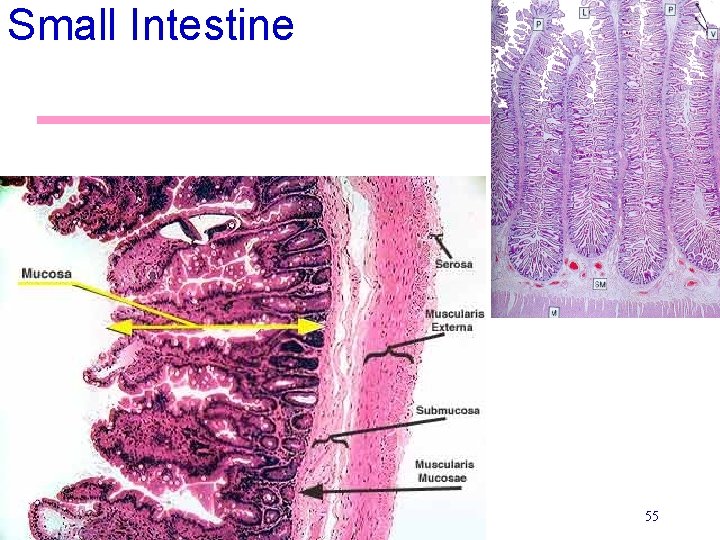
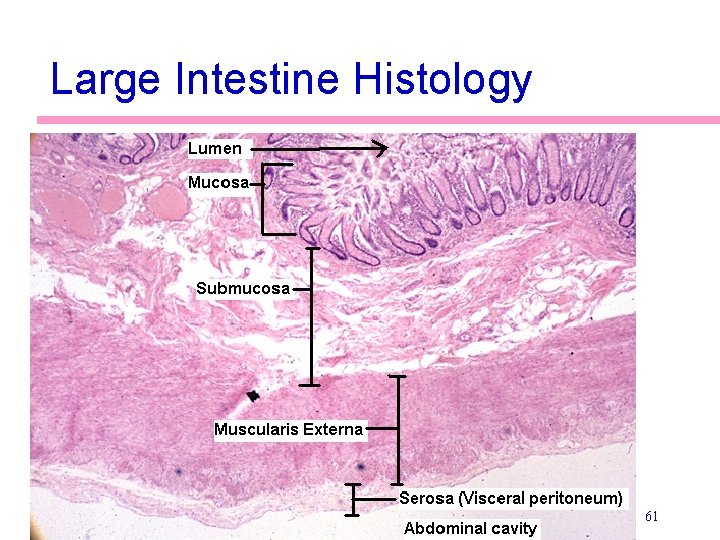
GI Tract Histology • All of the hollow organs have the same basic 4 layers. 1. Mucosa (Lumen side) • Epithelial layer (remember from 231: stratified squamous, columnar ect…) • Lamina Propria: Base made of loose areolar connective tissue • Muscularis Mucosa: Base of smooth muscle fibers 2. Submucosa • Dense irregular connective tissue • This is where the blood vessels, nerves and the glands are. 34
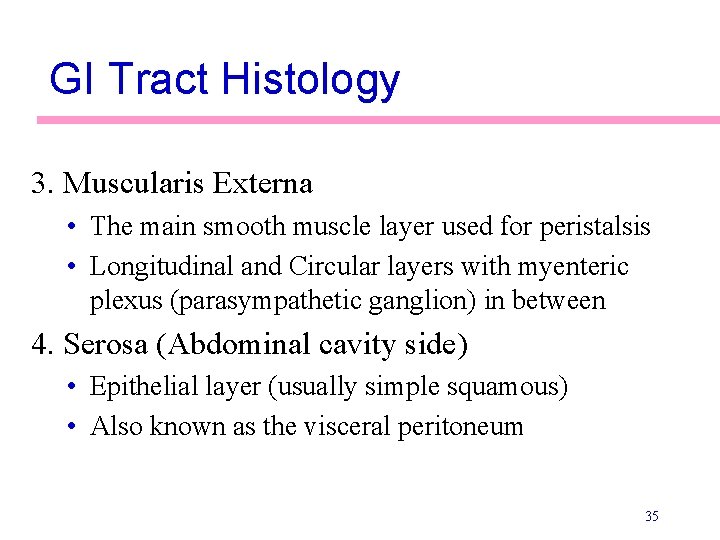
GI Tract Histology 3. Muscularis Externa • The main smooth muscle layer used for peristalsis • Longitudinal and Circular layers with myenteric plexus (parasympathetic ganglion) in between 4. Serosa (Abdominal cavity side) • Epithelial layer (usually simple squamous) • Also known as the visceral peritoneum 35
GI Tract Histology 36
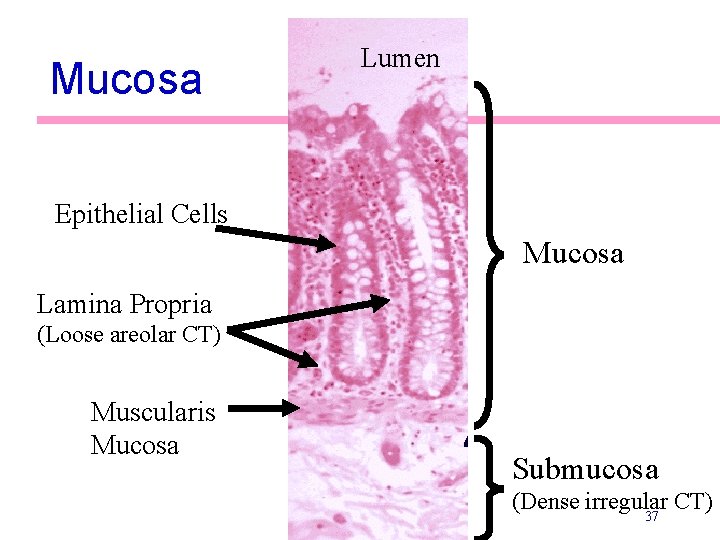
Mucosa Lumen Epithelial Cells Mucosa Lamina Propria (Loose areolar CT) Muscularis Mucosa Submucosa (Dense irregular CT) 37
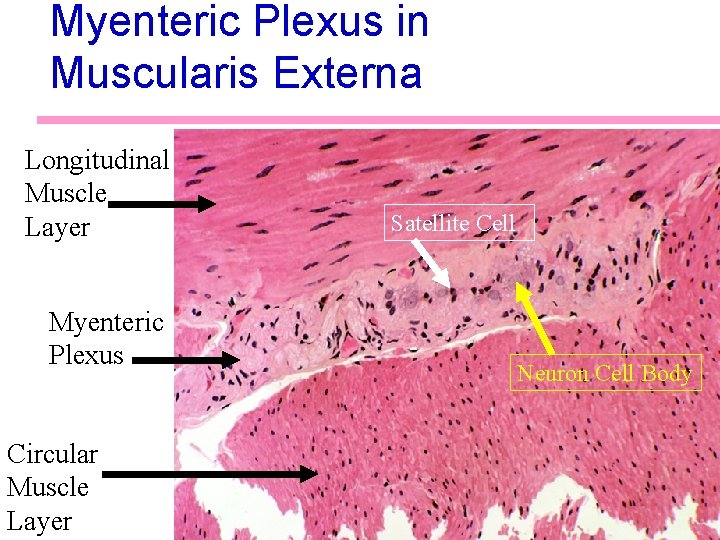
Myenteric Plexus in Muscularis Externa Longitudinal Muscle Layer Myenteric Plexus Circular Muscle Layer Satellite Cell Neuron Cell Body 38
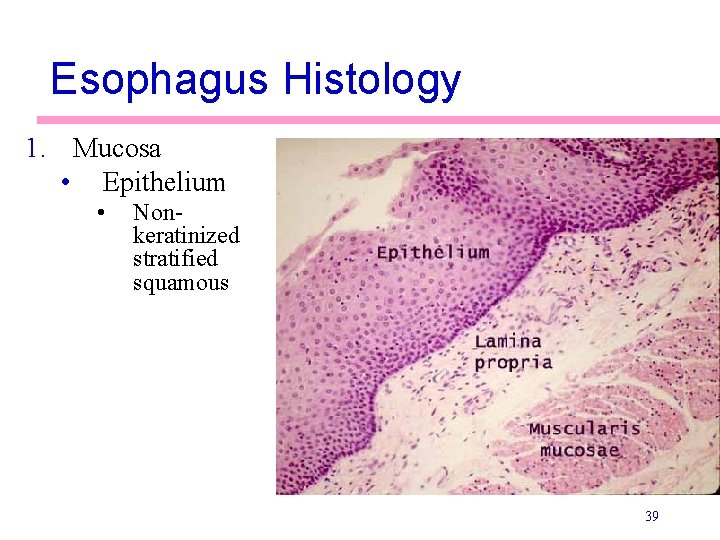
Esophagus Histology 1. Mucosa • Epithelium • Nonkeratinized stratified squamous 39
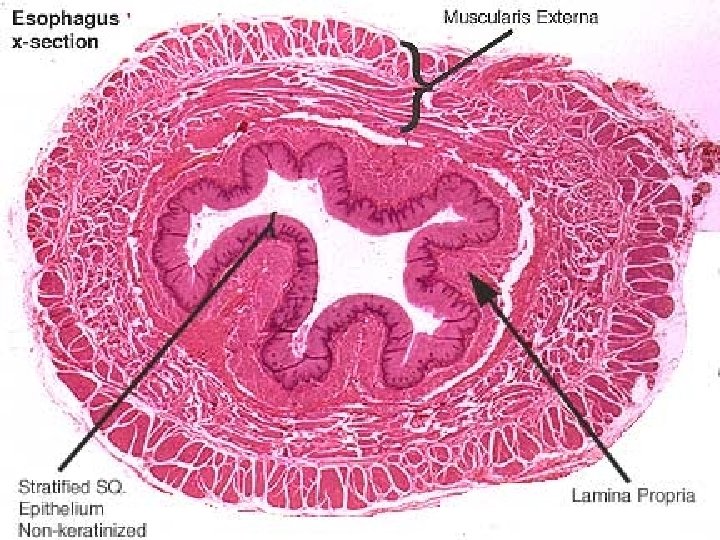
40
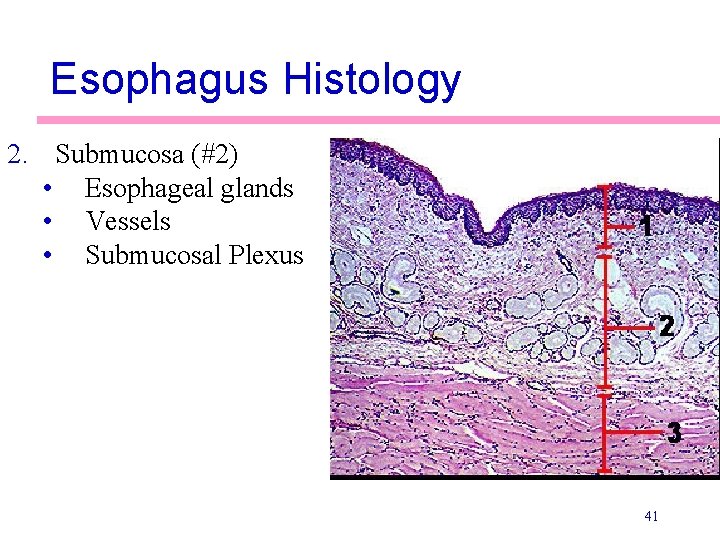
Esophagus Histology 2. Submucosa (#2) • Esophageal glands • Vessels • Submucosal Plexus 41
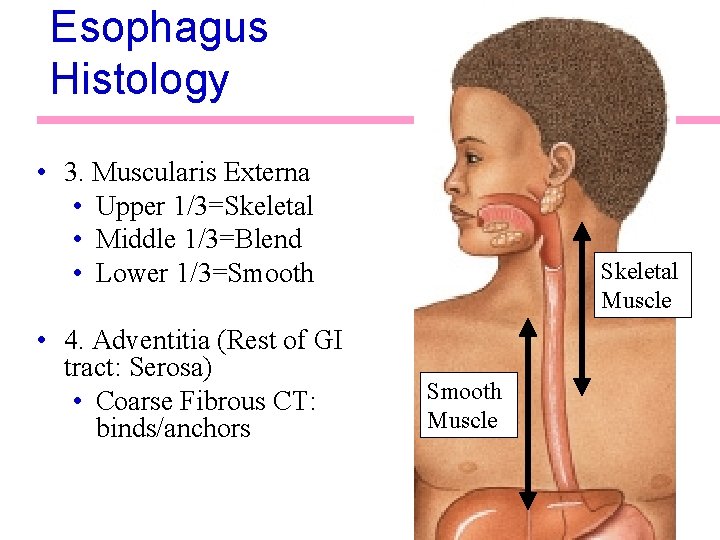
Esophagus Histology • 3. Muscularis Externa • Upper 1/3=Skeletal • Middle 1/3=Blend • Lower 1/3=Smooth • 4. Adventitia (Rest of GI tract: Serosa) • Coarse Fibrous CT: binds/anchors Skeletal Muscle Smooth Muscle 42
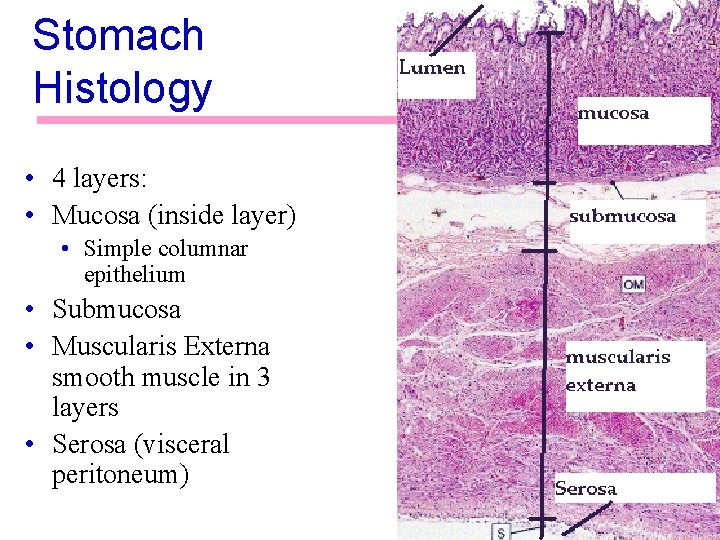
Stomach Histology • 4 layers: • Mucosa (inside layer) • Simple columnar epithelium • Submucosa • Muscularis Externa smooth muscle in 3 layers • Serosa (visceral peritoneum) 43
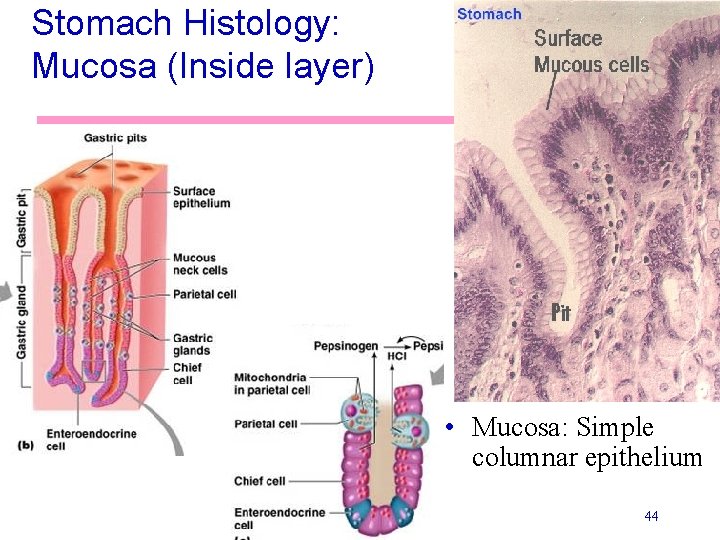
Stomach Histology: Mucosa (Inside layer) • Mucosa: Simple columnar epithelium 44
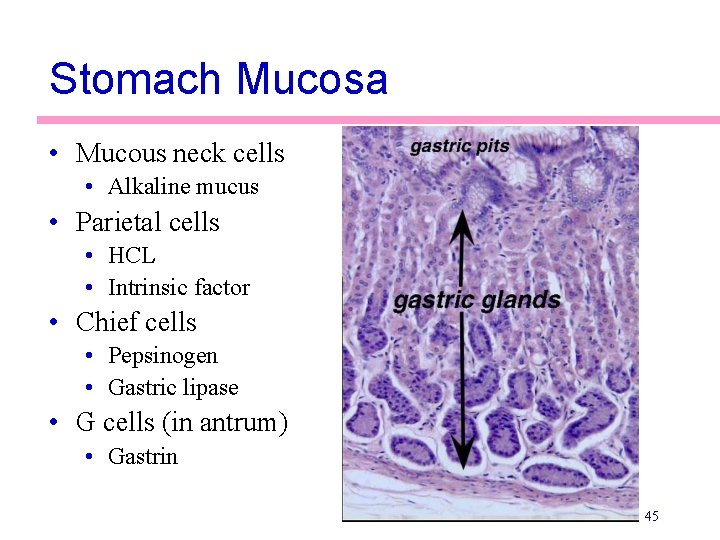
Stomach Mucosa • Mucous neck cells • Alkaline mucus • Parietal cells • HCL • Intrinsic factor • Chief cells • Pepsinogen • Gastric lipase • G cells (in antrum) • Gastrin 45
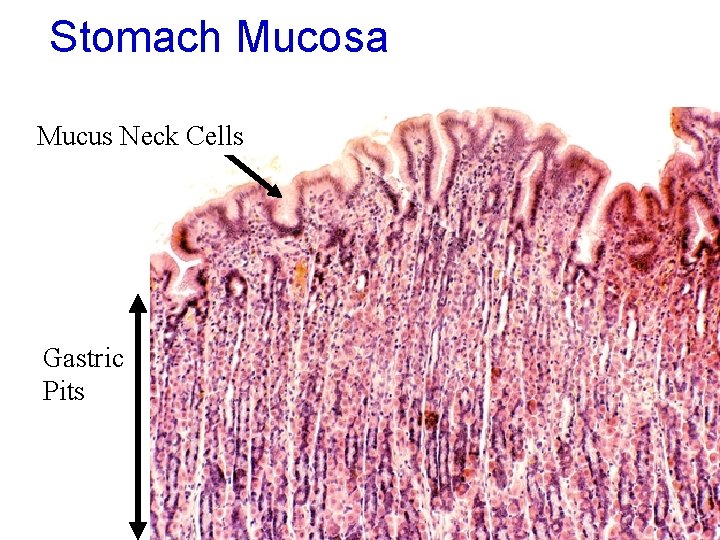
Stomach Mucosa Mucus Neck Cells Gastric Pits 46
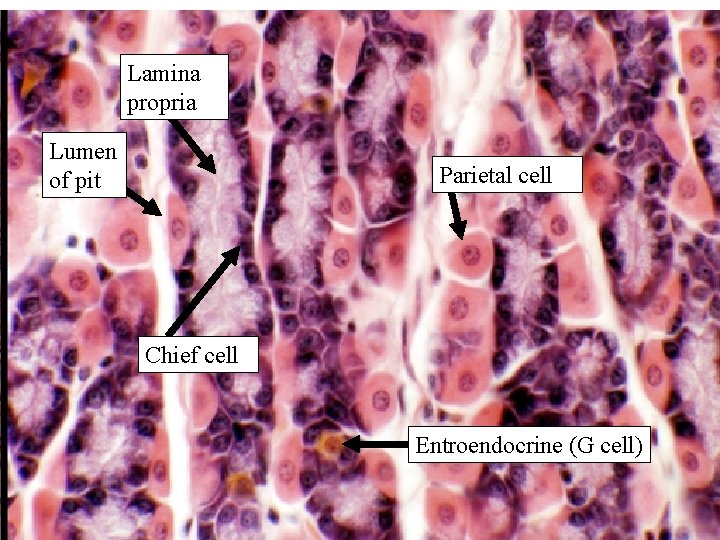
Lamina propria Lumen of pit Parietal cell Chief cell Entroendocrine (G cell) 47
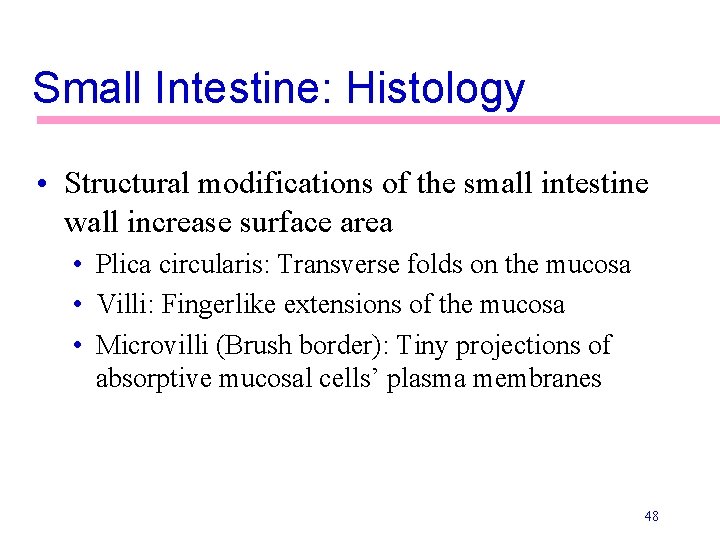
Small Intestine: Histology • Structural modifications of the small intestine wall increase surface area • Plica circularis: Transverse folds on the mucosa • Villi: Fingerlike extensions of the mucosa • Microvilli (Brush border): Tiny projections of absorptive mucosal cells’ plasma membranes 48
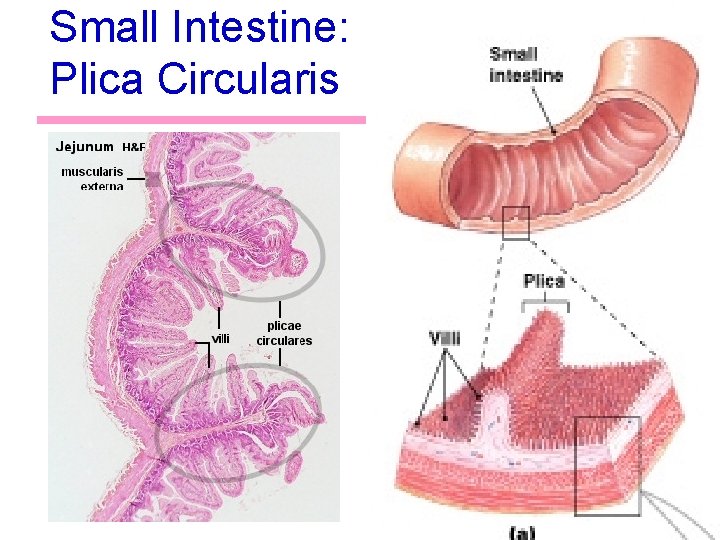
Small Intestine: Plica Circularis 49
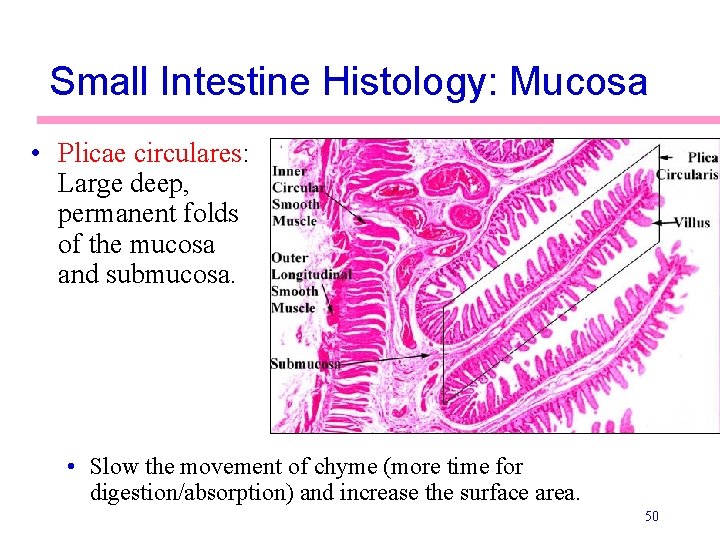
Small Intestine Histology: Mucosa • Plicae circulares: Large deep, permanent folds of the mucosa and submucosa. • Slow the movement of chyme (more time for digestion/absorption) and increase the surface area. 50
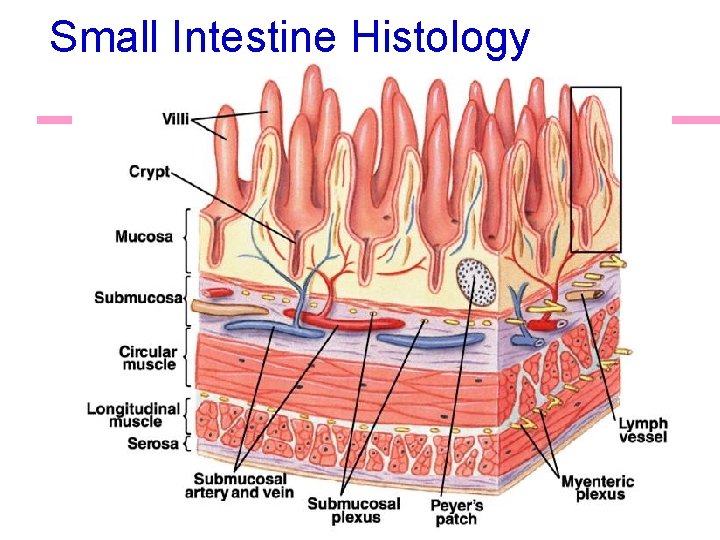
Small Intestine Histology 51
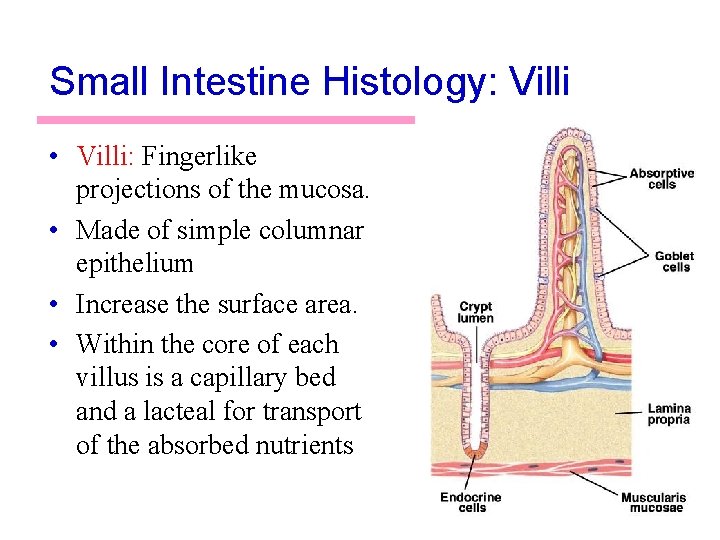
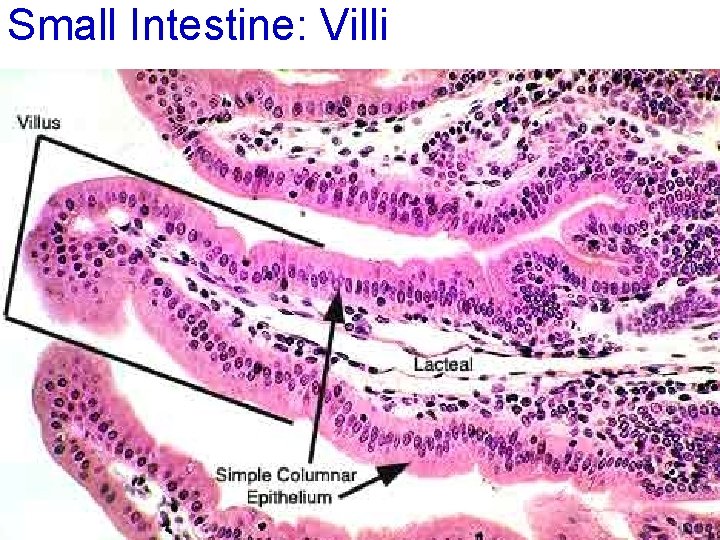
Small Intestine Histology: Villi • Villi: Fingerlike projections of the mucosa. • Made of simple columnar epithelium • Increase the surface area. • Within the core of each villus is a capillary bed and a lacteal for transport of the absorbed nutrients 52
Small Intestine: Villi 53
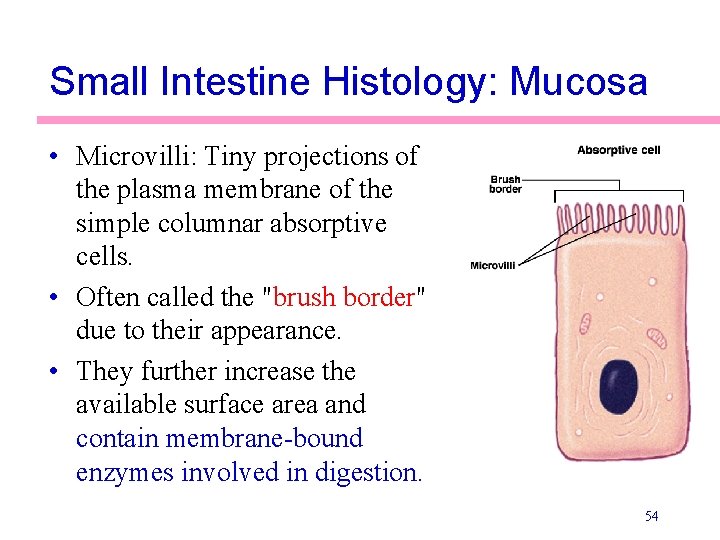
Small Intestine Histology: Mucosa • Microvilli: Tiny projections of the plasma membrane of the simple columnar absorptive cells. • Often called the "brush border" due to their appearance. • They further increase the available surface area and contain membrane-bound enzymes involved in digestion. 54
Small Intestine 55
Small Intestine 56
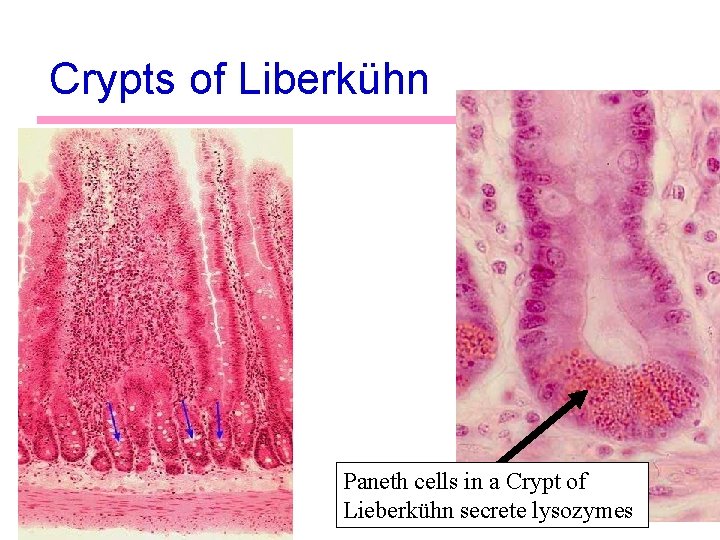
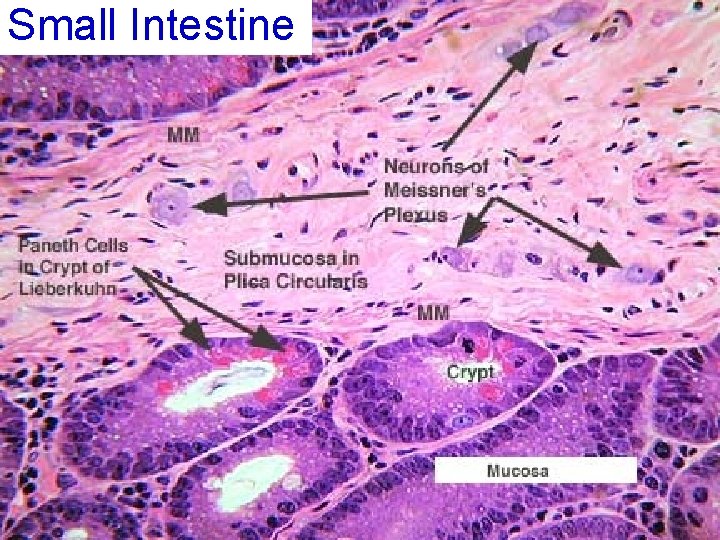
Crypts of Liberkühn Paneth cells in a Crypt of Lieberkühn secrete lysozymes 57
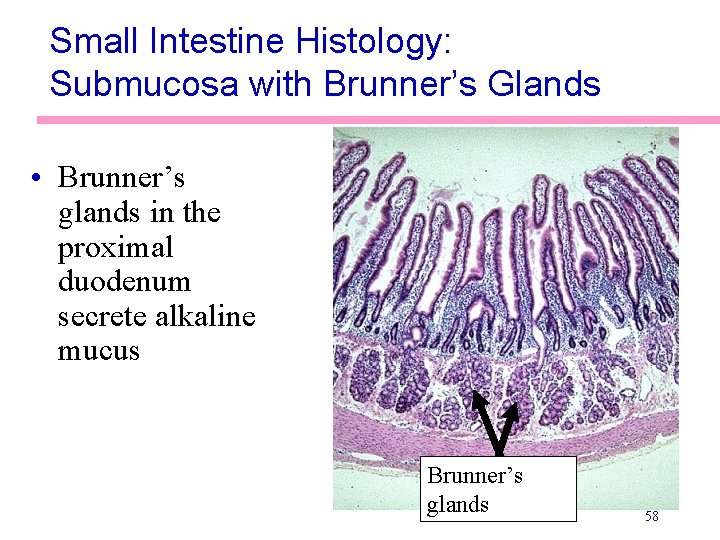
Small Intestine Histology: Submucosa with Brunner’s Glands • Brunner’s glands in the proximal duodenum secrete alkaline mucus Brunner’s glands 58
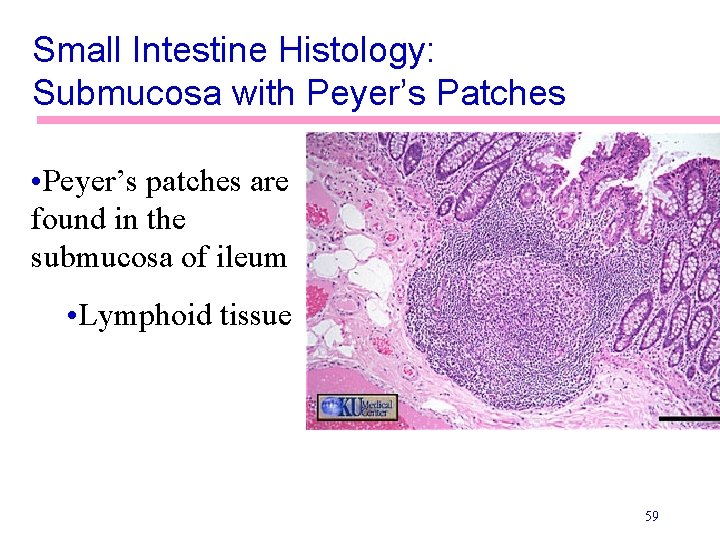
Small Intestine Histology: Submucosa with Peyer’s Patches • Peyer’s patches are found in the submucosa of ileum • Lymphoid tissue 59
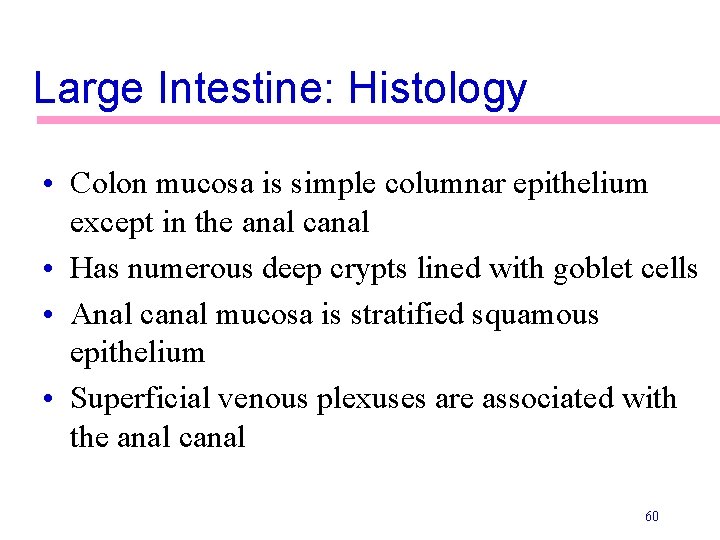
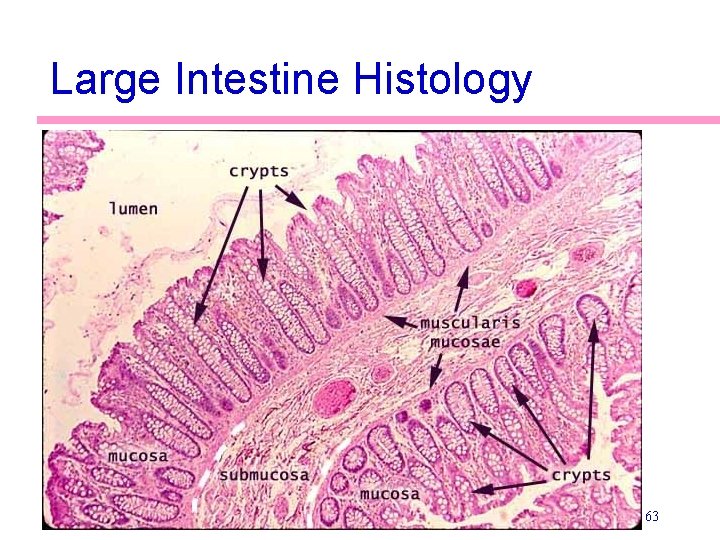
Large Intestine: Histology • Colon mucosa is simple columnar epithelium except in the anal canal • Has numerous deep crypts lined with goblet cells • Anal canal mucosa is stratified squamous epithelium • Superficial venous plexuses are associated with the anal canal 60
Large Intestine Histology 61
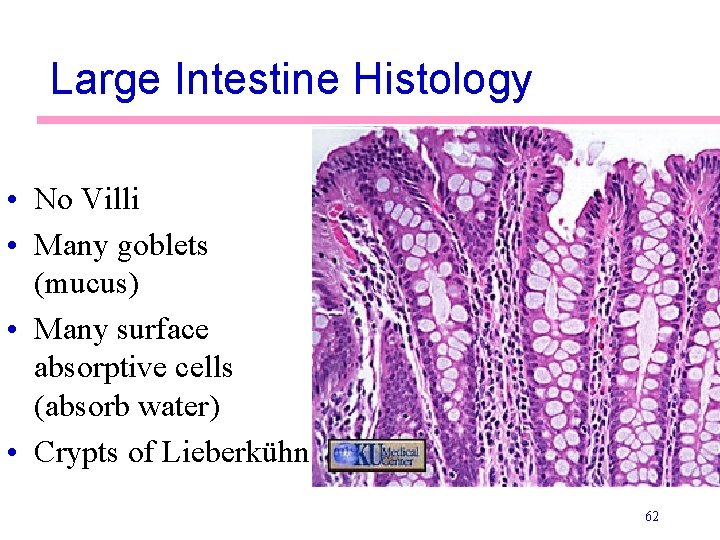
Large Intestine Histology • No Villi • Many goblets (mucus) • Many surface absorptive cells (absorb water) • Crypts of Lieberkühn 62
Large Intestine Histology 63
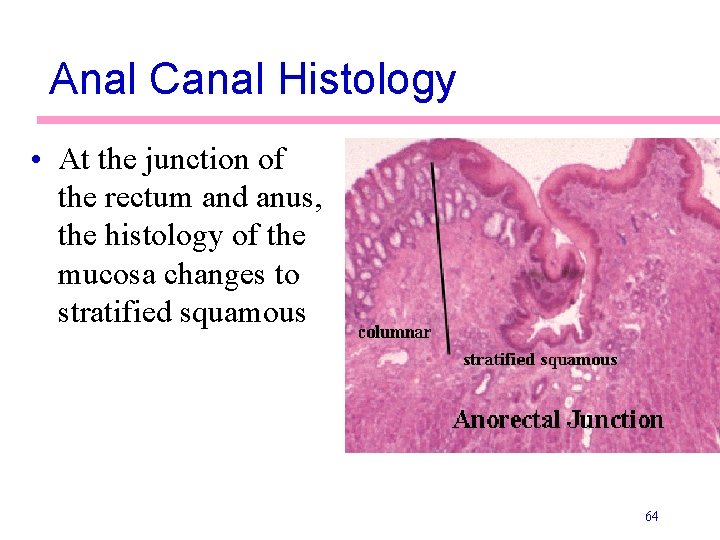
Anal Canal Histology • At the junction of the rectum and anus, the histology of the mucosa changes to stratified squamous 64
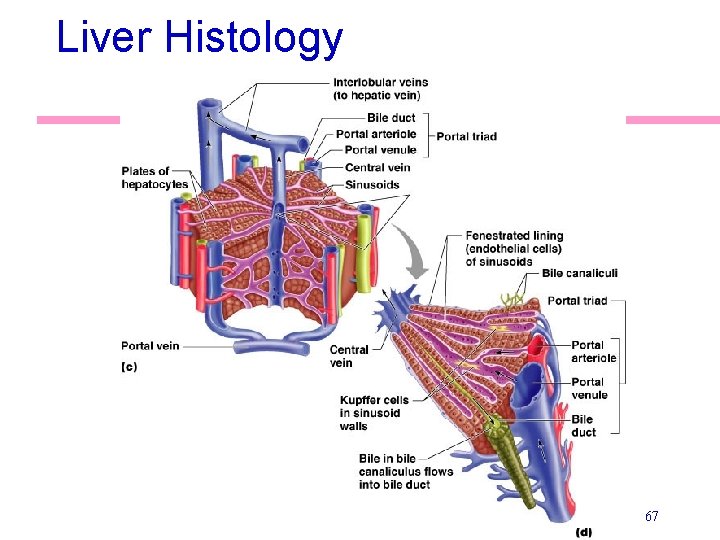
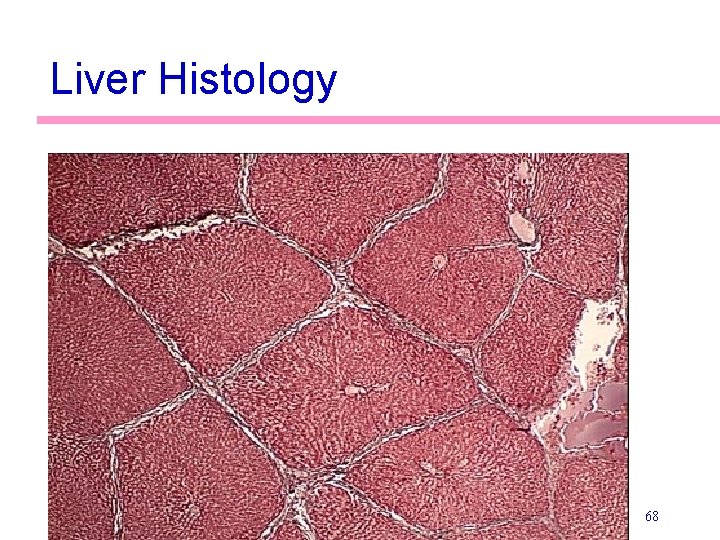
Liver Histology • Hexagonal-shaped liver lobules are the structural and functional units of the liver • Composed of hepatocyte (liver cell) plates radiating outward from a central vein (flows toward hepatic vein) • Portal triads are found at each of the six corners of each liver lobule • Portal triads • Bile duct • Hepatic artery – supplies oxygen-rich blood to the liver • Hepatic portal vein – carries venous blood with nutrients from digestive viscera 65
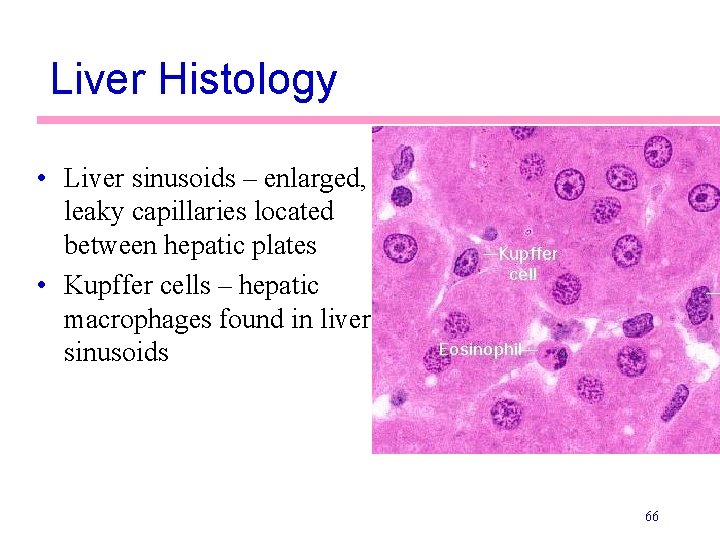
Liver Histology • Liver sinusoids – enlarged, leaky capillaries located between hepatic plates • Kupffer cells – hepatic macrophages found in liver sinusoids 66
Liver Histology 67
Liver Histology 68
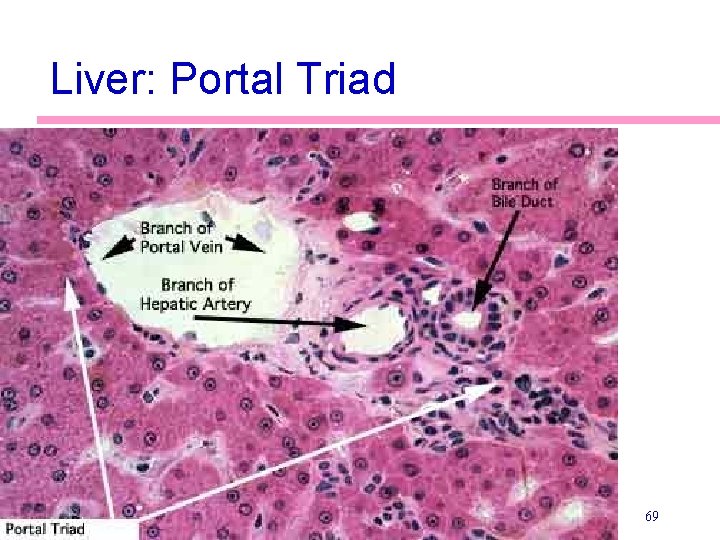
Liver: Portal Triad 69
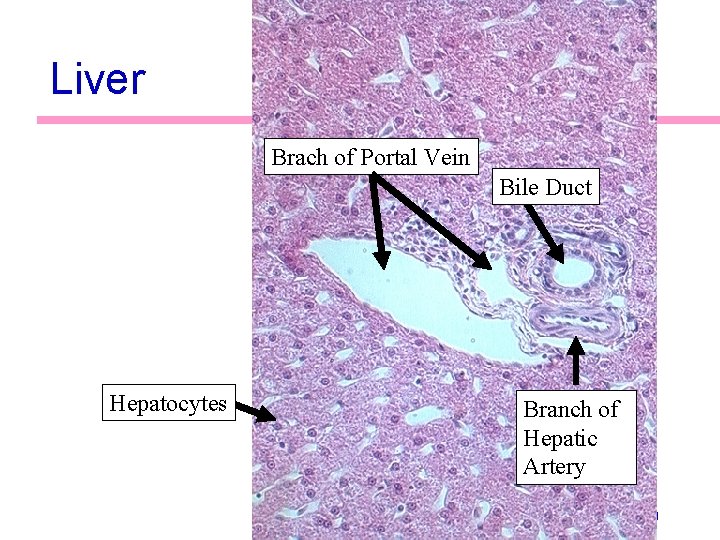
Liver Brach of Portal Vein Bile Duct Hepatocytes Branch of Hepatic Artery 70
Pancreas • Exocrine function: Acinar cells • Secretes pancreatic juice which breaks down all categories of foodstuff • Acini (clusters of secretory cells) contain zymogen granules with digestive enzymes • Endocrine function: Islets of Langerhans • Release of insulin and glucagon 71
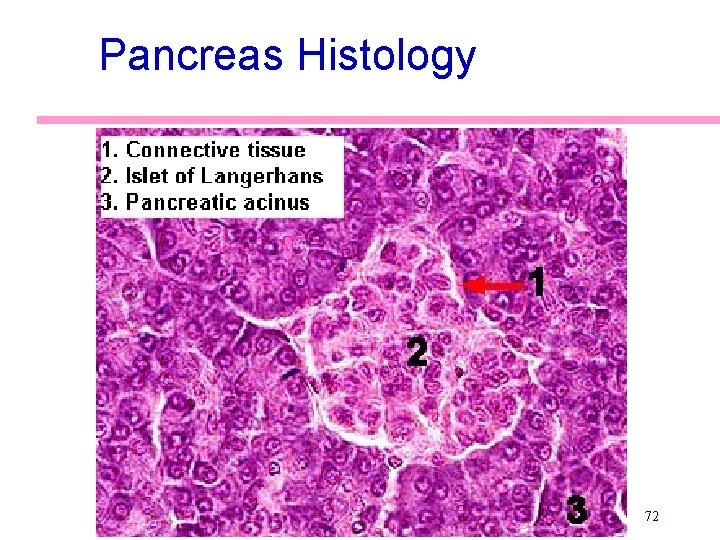
Pancreas Histology 72
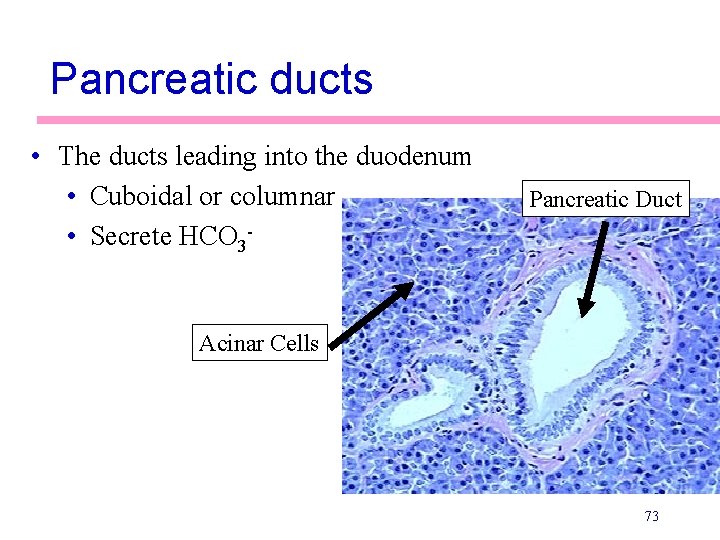
Pancreatic ducts • The ducts leading into the duodenum • Cuboidal or columnar • Secrete HCO 3 - Pancreatic Duct Acinar Cells 73

The End 74
- Slides: 74