
Lab Equipment Visuals Spellings and Uses The Right
Lab Equipment Visuals, Spellings, and Uses The Right tool for the job!
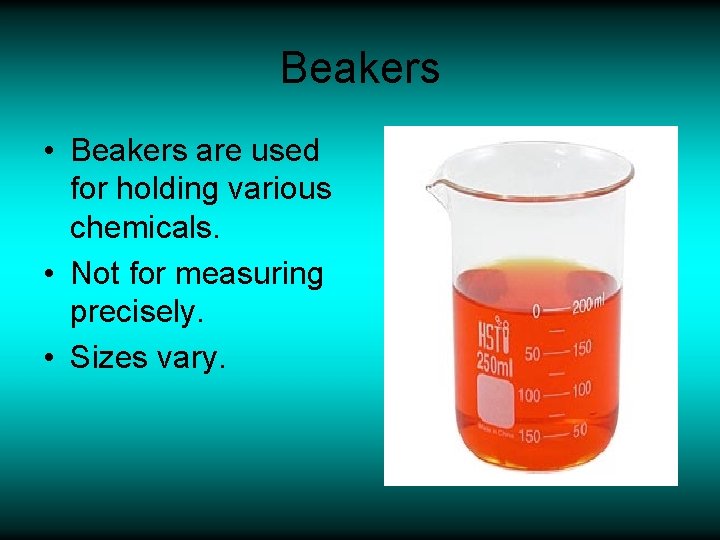
Beakers • Beakers are used for holding various chemicals. • Not for measuring precisely. • Sizes vary.
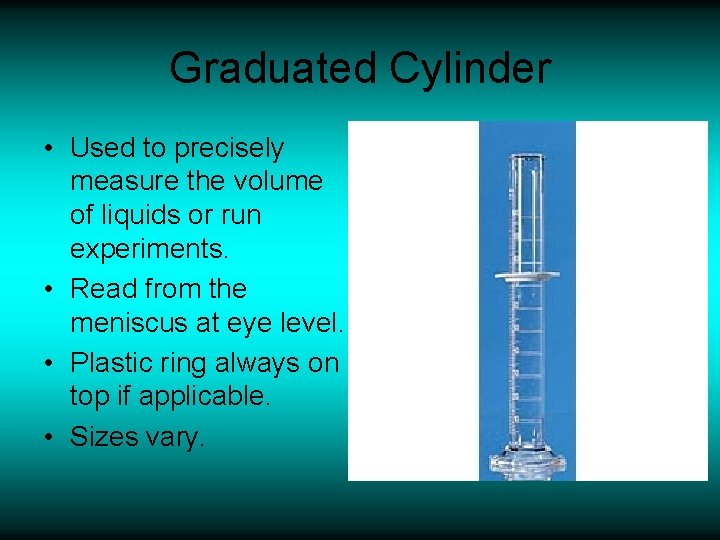
Graduated Cylinder • Used to precisely measure the volume of liquids or run experiments. • Read from the meniscus at eye level. • Plastic ring always on top if applicable. • Sizes vary.
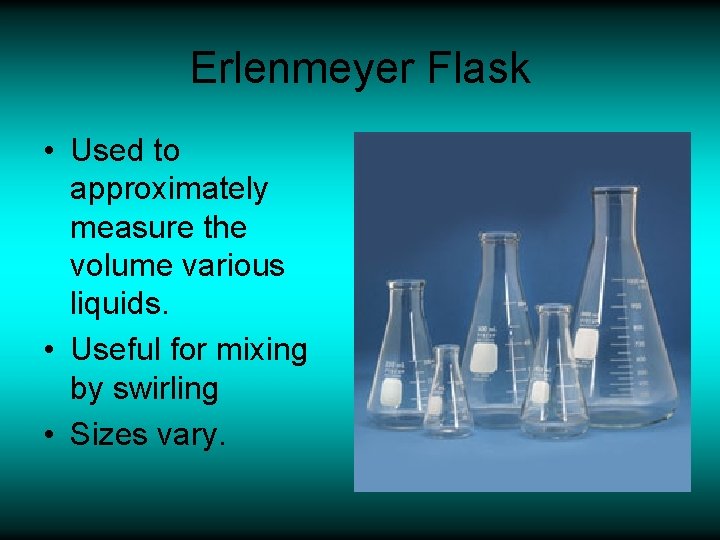
Erlenmeyer Flask • Used to approximately measure the volume various liquids. • Useful for mixing by swirling • Sizes vary.
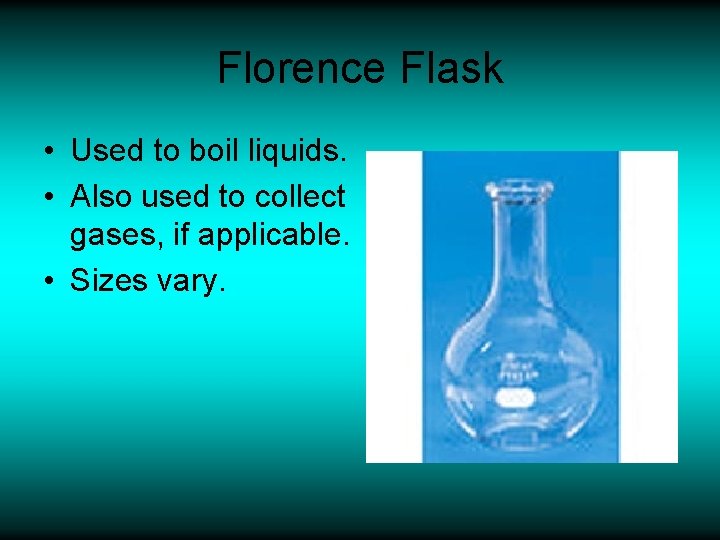
Florence Flask • Used to boil liquids. • Also used to collect gases, if applicable. • Sizes vary.
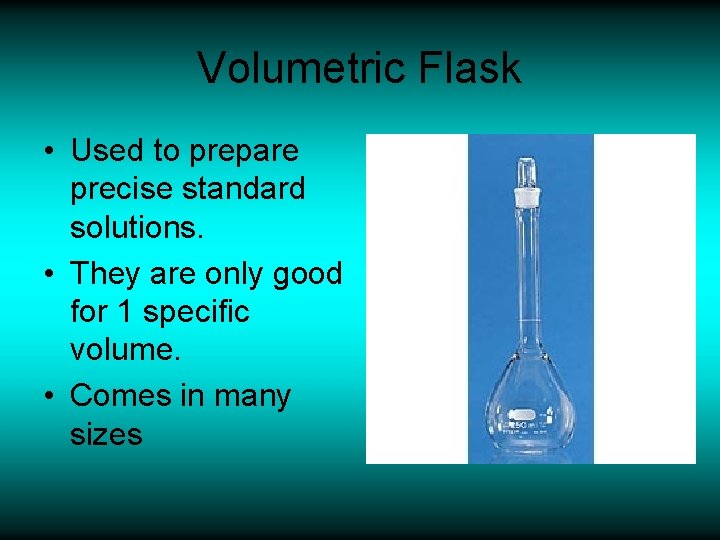
Volumetric Flask • Used to prepare precise standard solutions. • They are only good for 1 specific volume. • Comes in many sizes
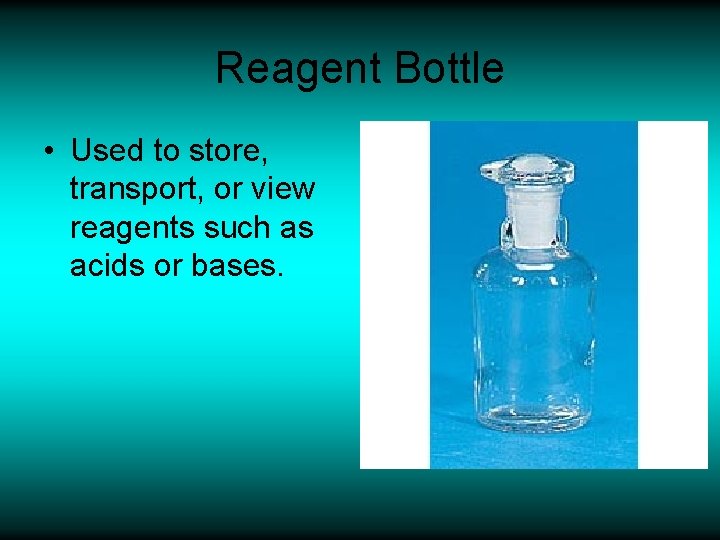
Reagent Bottle • Used to store, transport, or view reagents such as acids or bases.
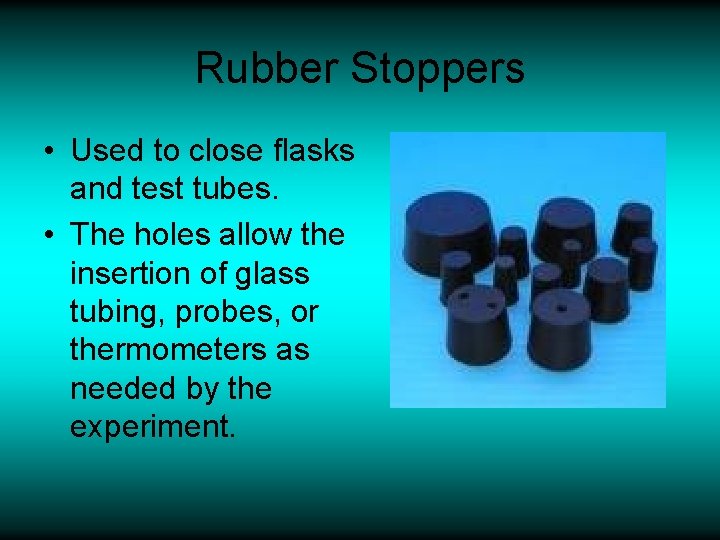
Rubber Stoppers • Used to close flasks and test tubes. • The holes allow the insertion of glass tubing, probes, or thermometers as needed by the experiment.
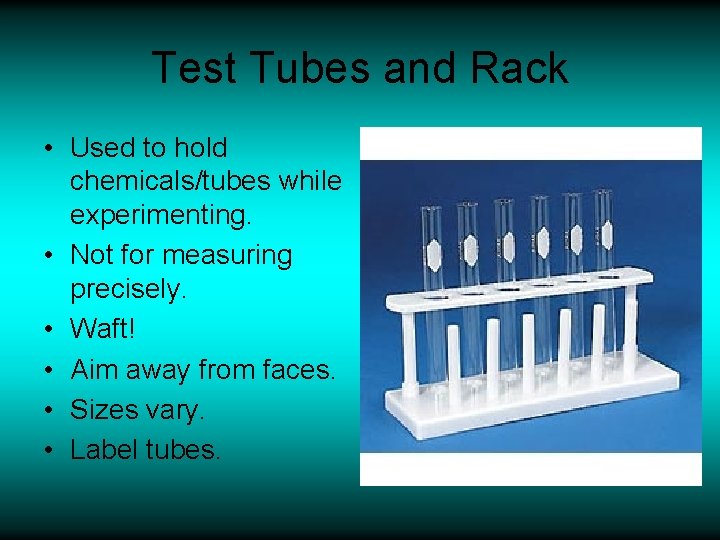
Test Tubes and Rack • Used to hold chemicals/tubes while experimenting. • Not for measuring precisely. • Waft! • Aim away from faces. • Sizes vary. • Label tubes.
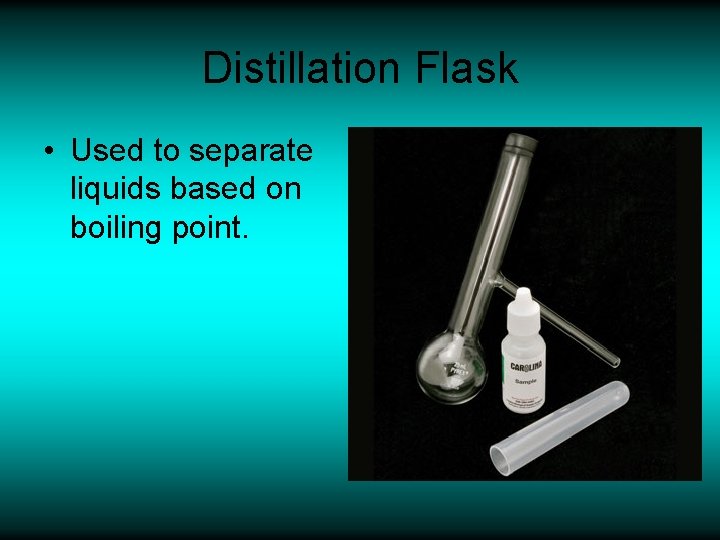
Distillation Flask • Used to separate liquids based on boiling point.
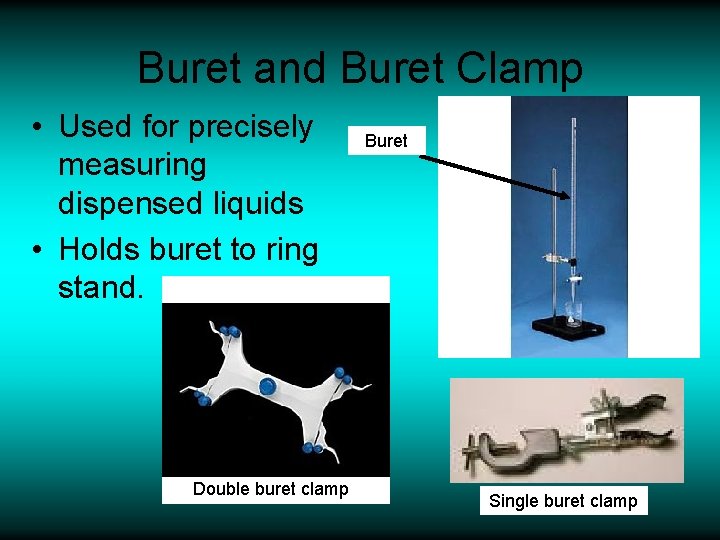
Buret and Buret Clamp • Used for precisely measuring dispensed liquids • Holds buret to ring stand. Double buret clamp Buret Single buret clamp

Ring Stand Ring Clamps • Base/Pole of set -up for experimenting. • Holds glassware in place for heating or evaporating.
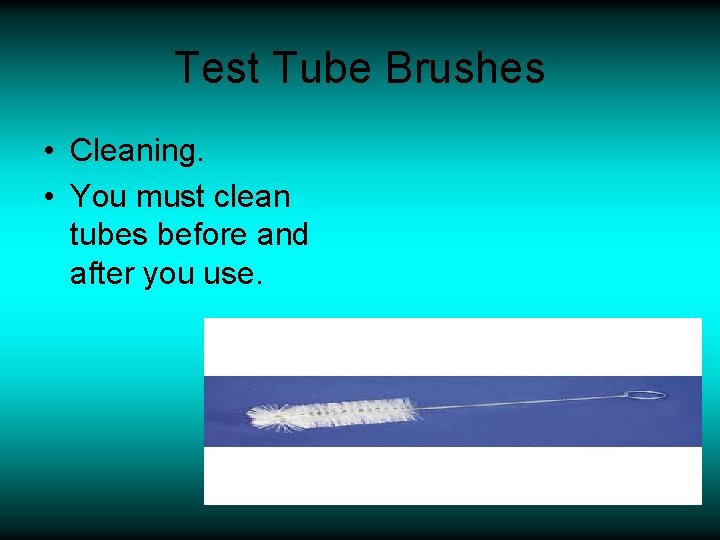
Test Tube Brushes • Cleaning. • You must clean tubes before and after you use.

Test Tube Holder • Used for carrying or holding hot test tubes.
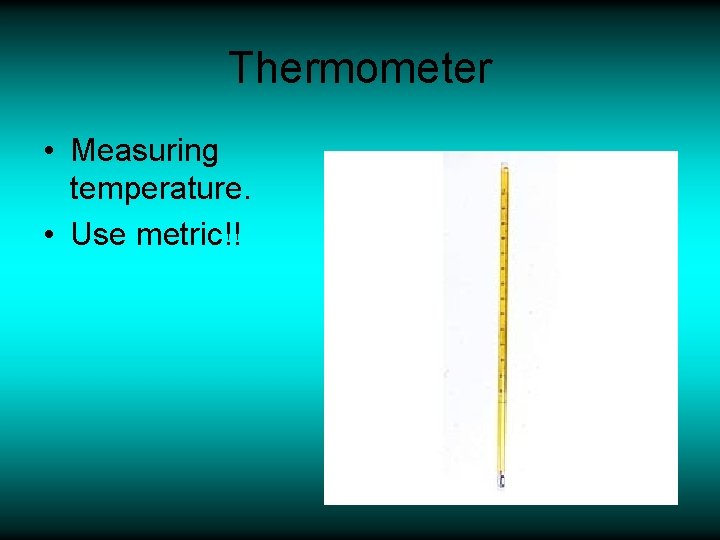
Thermometer • Measuring temperature. • Use metric!!
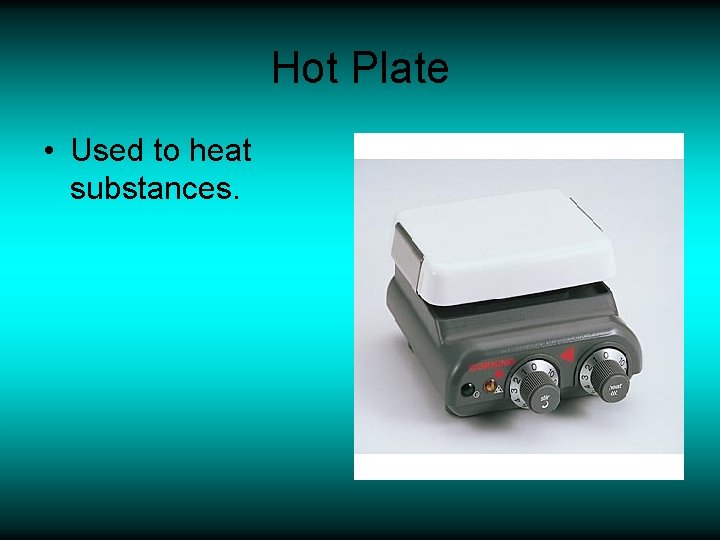
Hot Plate • Used to heat substances.
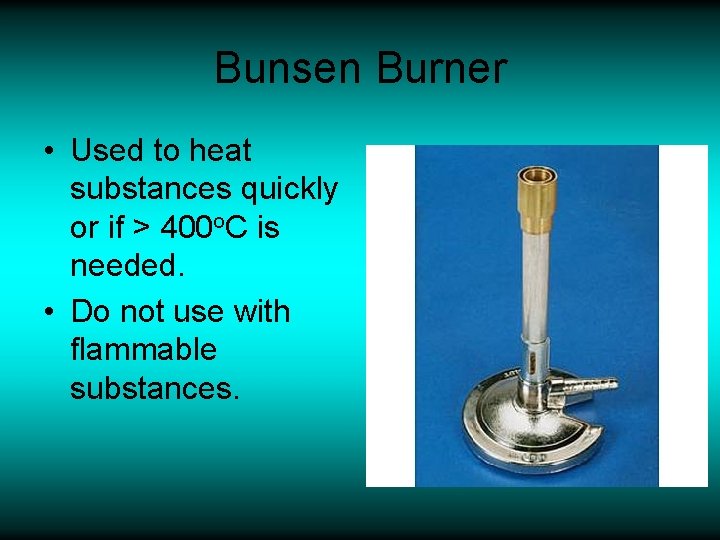
Bunsen Burner • Used to heat substances quickly or if > 400 o. C is needed. • Do not use with flammable substances.
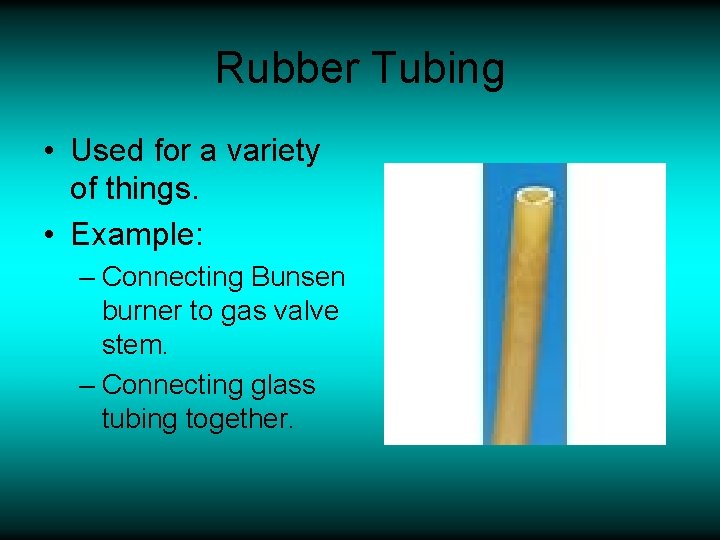
Rubber Tubing • Used for a variety of things. • Example: – Connecting Bunsen burner to gas valve stem. – Connecting glass tubing together.
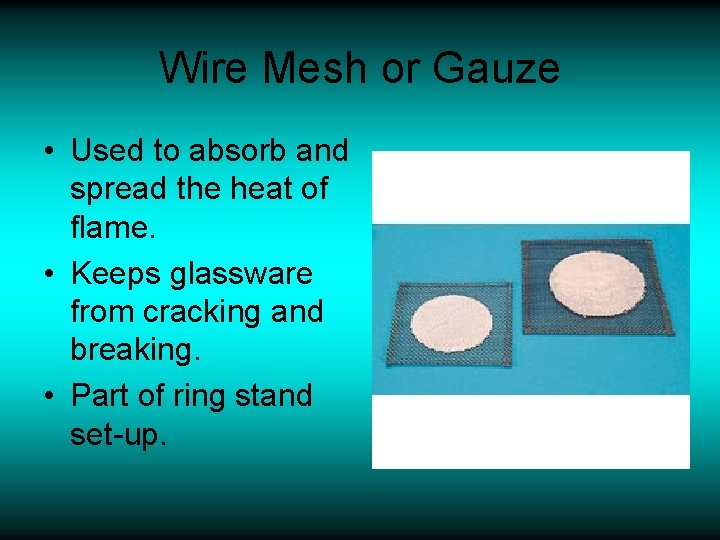
Wire Mesh or Gauze • Used to absorb and spread the heat of flame. • Keeps glassware from cracking and breaking. • Part of ring stand set-up.

Clay Triangle • Used to hold a crucible in place on a ring stand. • Also helps absorb and spread heat of flame. • Part of ring stand set-up.

Crucible and Cover • Used for heating substances. • Can withstand high direct heat.
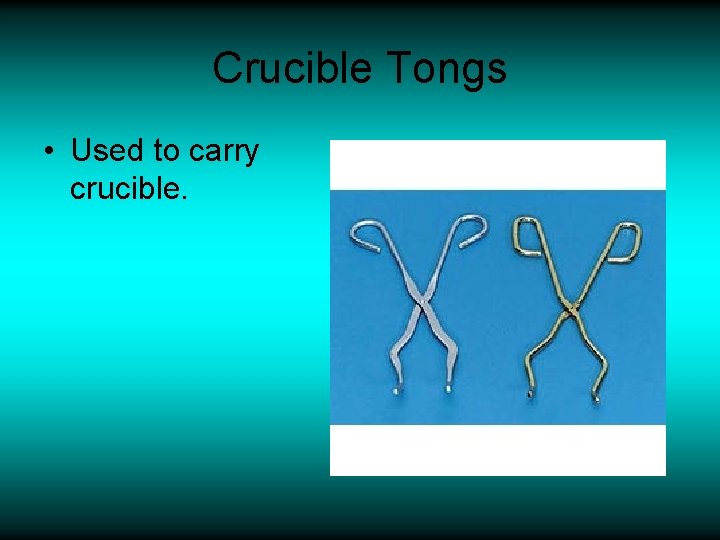
Crucible Tongs • Used to carry crucible.
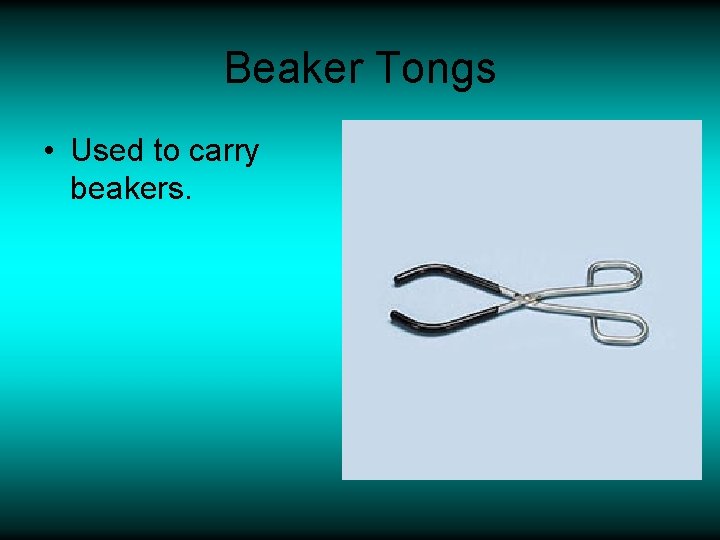
Beaker Tongs • Used to carry beakers.
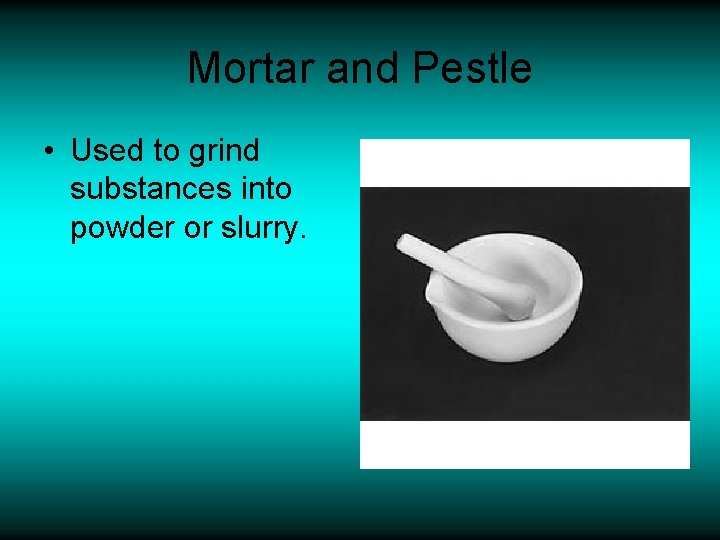
Mortar and Pestle • Used to grind substances into powder or slurry.

Scoopula • Used to scoop chemical powders. • Not a measuring instrument. • Ours do not have handles.
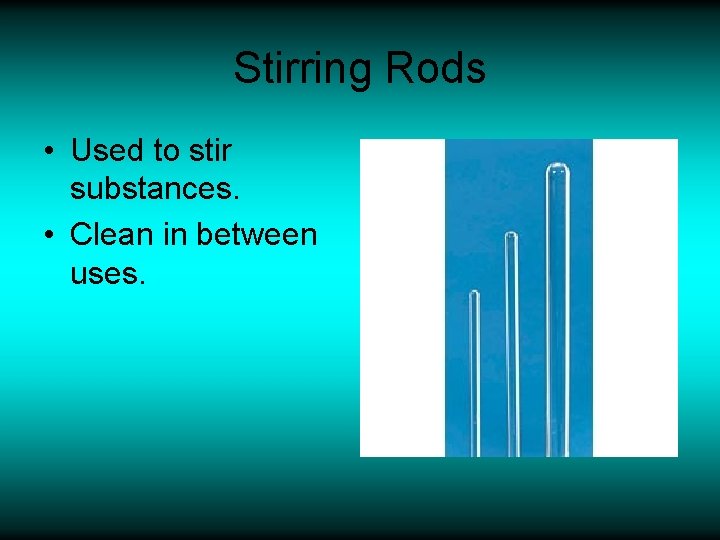
Stirring Rods • Used to stir substances. • Clean in between uses.
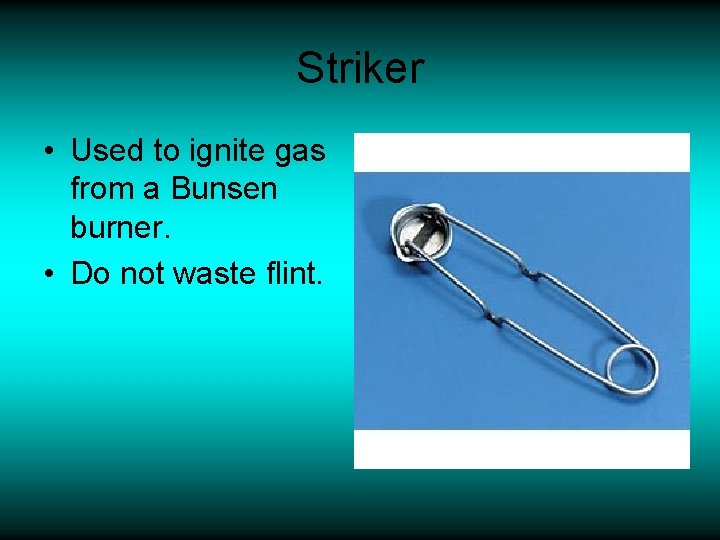
Striker • Used to ignite gas from a Bunsen burner. • Do not waste flint.
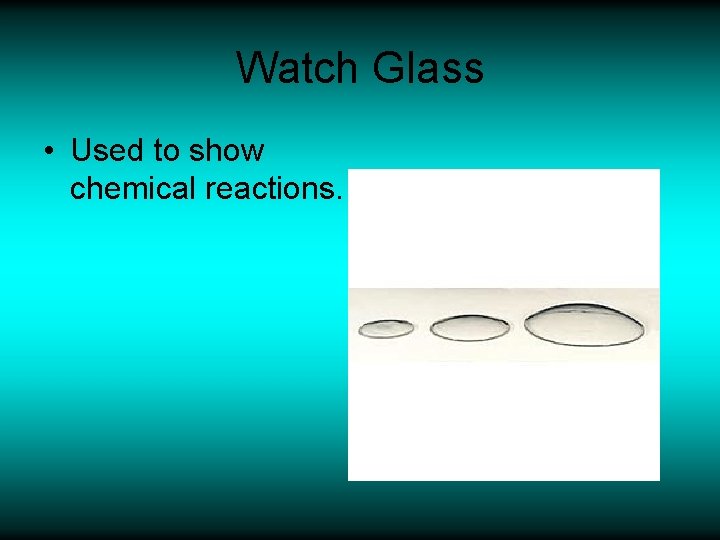
Watch Glass • Used to show chemical reactions.
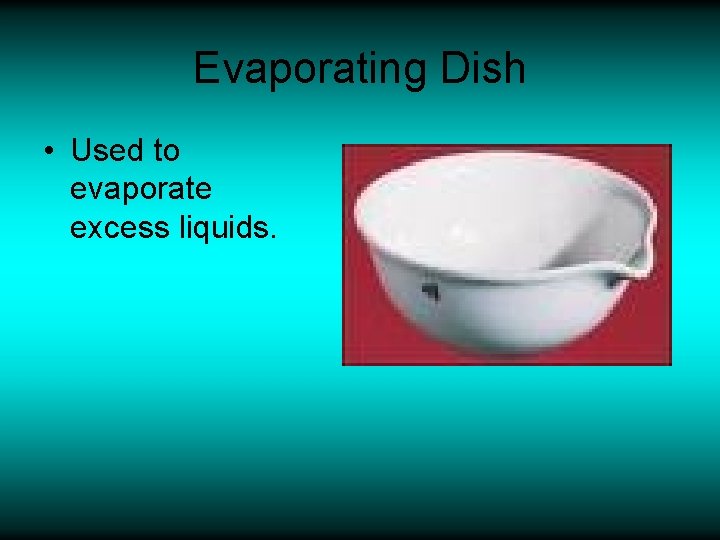
Evaporating Dish • Used to evaporate excess liquids.
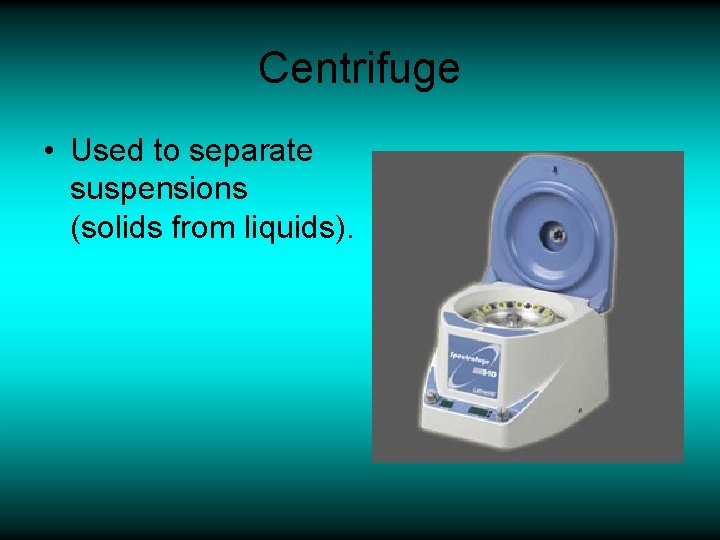
Centrifuge • Used to separate suspensions (solids from liquids).
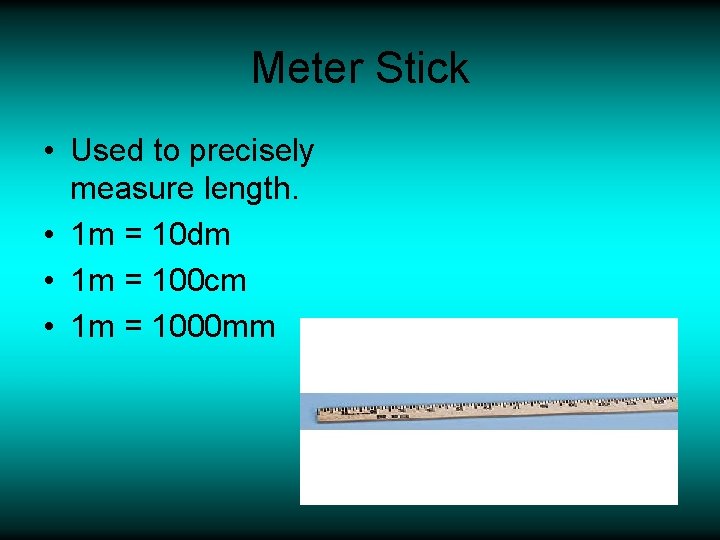
Meter Stick • Used to precisely measure length. • 1 m = 10 dm • 1 m = 100 cm • 1 m = 1000 mm
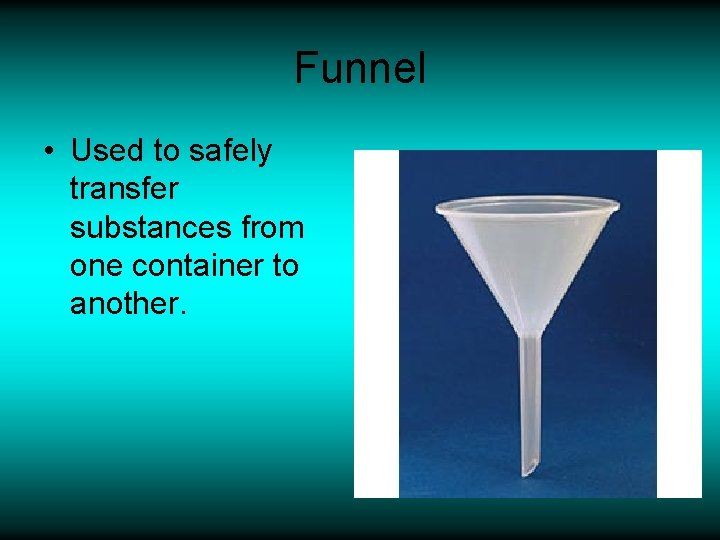
Funnel • Used to safely transfer substances from one container to another.
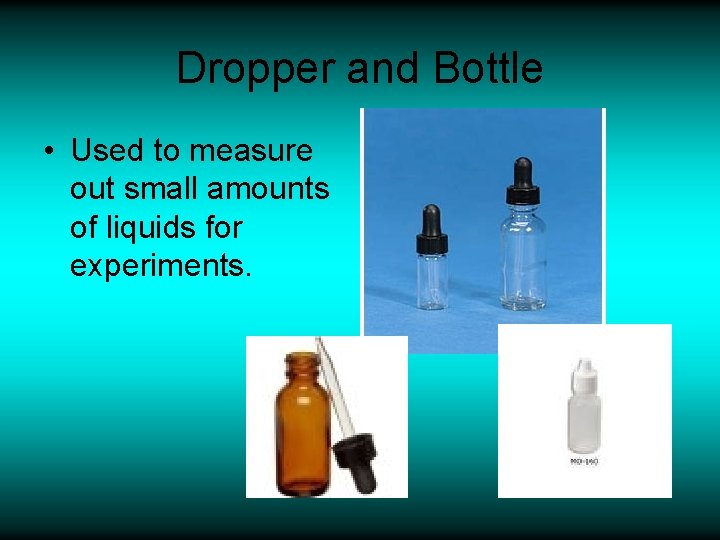
Dropper and Bottle • Used to measure out small amounts of liquids for experiments.
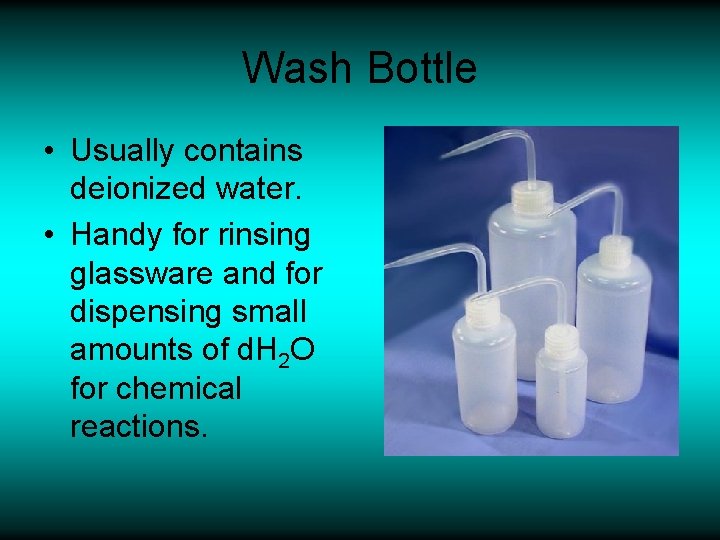
Wash Bottle • Usually contains deionized water. • Handy for rinsing glassware and for dispensing small amounts of d. H 2 O for chemical reactions.
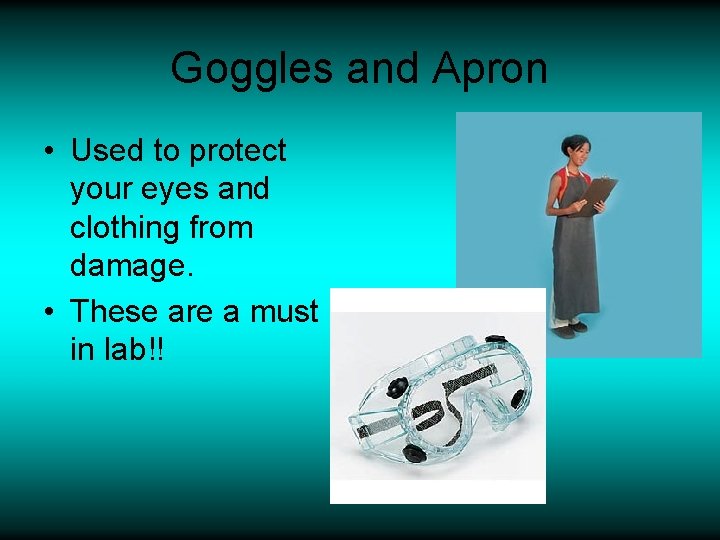
Goggles and Apron • Used to protect your eyes and clothing from damage. • These are a must in lab!!
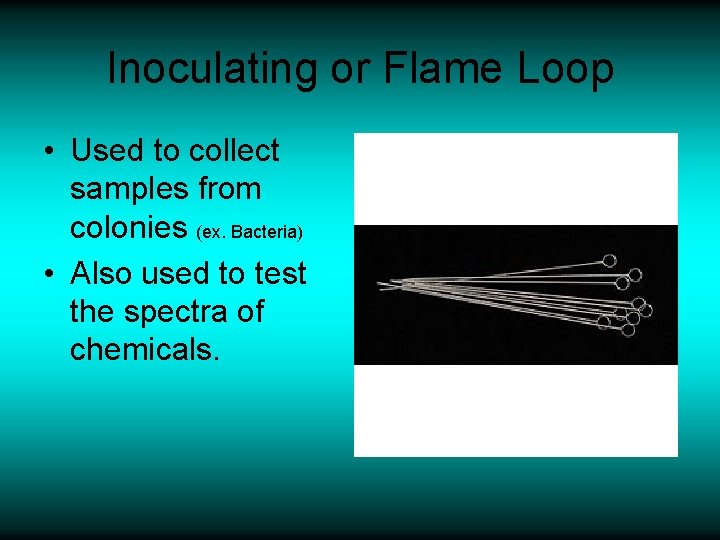
Inoculating or Flame Loop • Used to collect samples from colonies (ex. Bacteria) • Also used to test the spectra of chemicals.
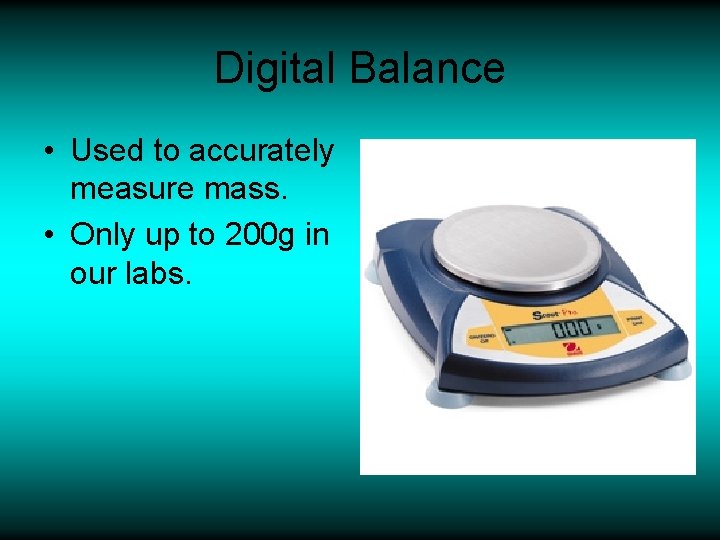
Digital Balance • Used to accurately measure mass. • Only up to 200 g in our labs.
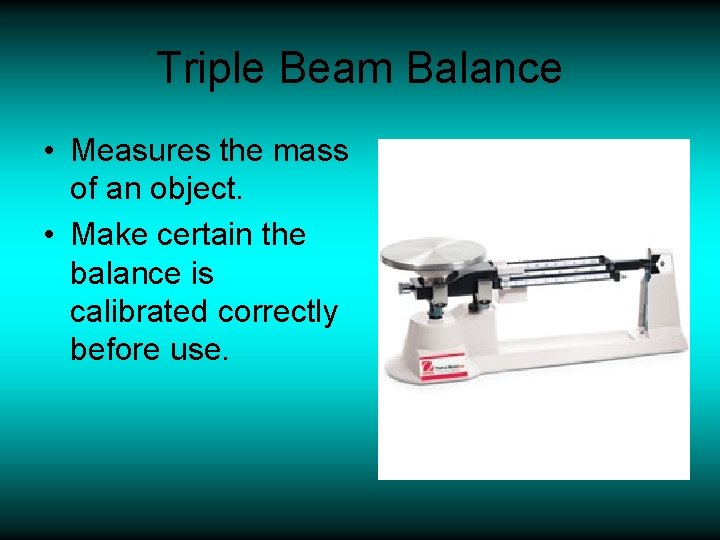
Triple Beam Balance • Measures the mass of an object. • Make certain the balance is calibrated correctly before use.
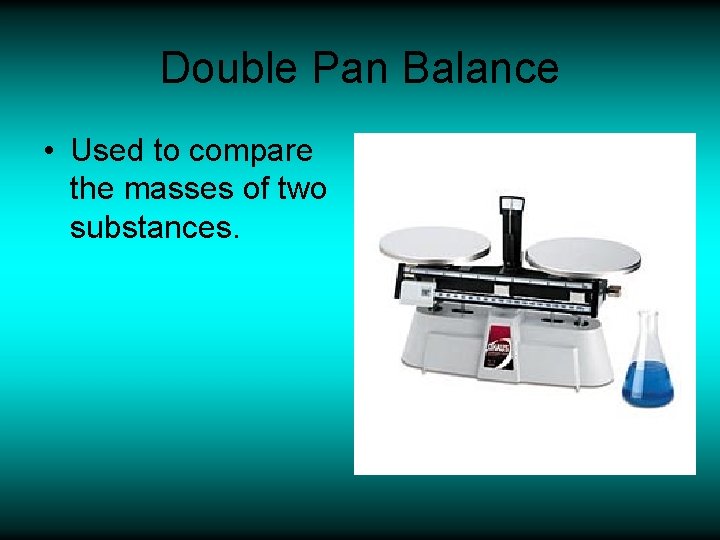
Double Pan Balance • Used to compare the masses of two substances.

Centigram Balance • Used to precisely measure the mass of a substance. • More precise than the triple beam balance.

Pipet, Pump, and Bulb • Used to precisely measure the volume of liquids in small amounts.
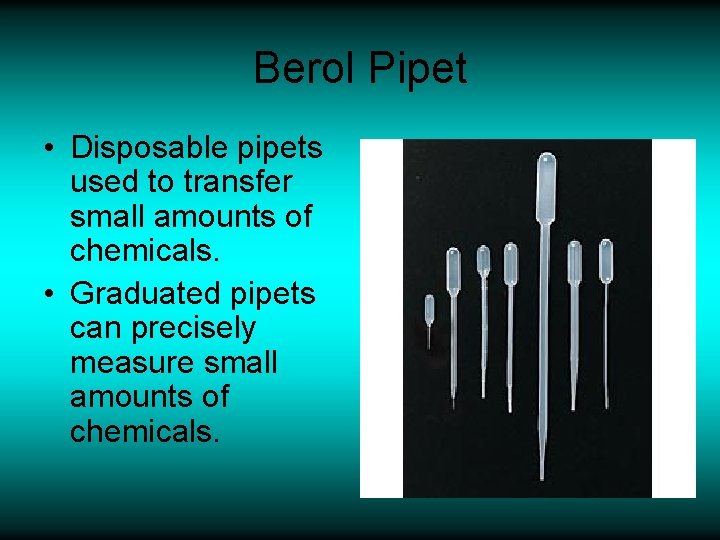
Berol Pipet • Disposable pipets used to transfer small amounts of chemicals. • Graduated pipets can precisely measure small amounts of chemicals.

Capillary Tubes • Used to collect liquid through the process of capillary action.
- Slides: 43