
Lab Activity 36 Principles of Heredity Portland Community
Lab Activity 36 Principles of Heredity Portland Community College BI 233
Terminology of Chromosomes • Homologous chromosomes: A pair, of which you get one from mom, and one from dad. • Example: the pair of chromosomes 21 are homologous to each other • Sex Chromosomes: The X and Y • These are homologous to each other • Autosomal Chromosomes: The other 22 pairs of chromosomes that do not determine gender • Karyotype: A chart of the chromosomes arranged in homologous pairs. 2

Karyotype of Human Chromosomes • 22 pairs of autosomes • 1 pair of sex chromosomes 3
4

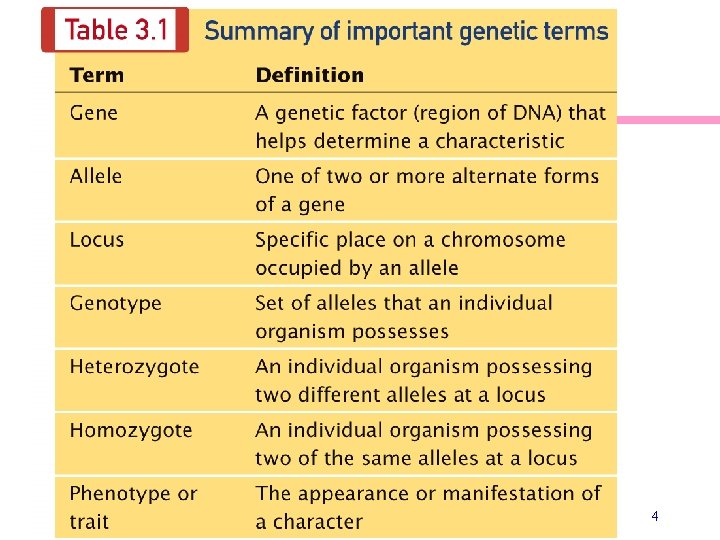
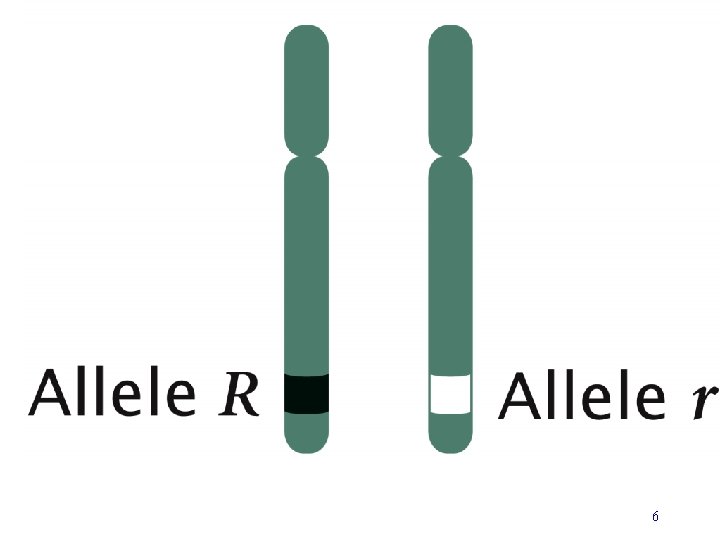
Terminology of Genes: Alleles • Allele: Alternative form of a gene at the same locus on homologous chromosomes • Homozygous: Two alleles controlling a single trait are the same • Heterozygous: The two alleles for a trait are different • Dominant: An allele masks or suppresses the expression of its partner • Recessive: The allele that is masked or suppressed 5
6
Terminology • Genotype: the genetic makeup • Phenotype: the way one’s genotype is expressed • Punnett square • Method of showing 4 possible genetic combinations in offspring of 2 individuals 7
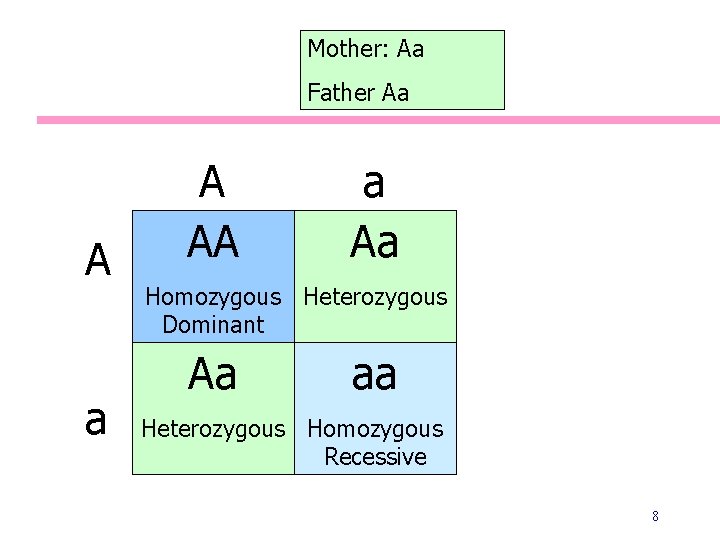
Mother: Aa Father Aa A AA a Aa Homozygous Heterozygous Dominant Aa aa Heterozygous Homozygous Recessive 8
Dominant and Recessive Genes • Homozygous: The person has 2 copies of the dominant or 2 copies of the recessive gene (gets one from each parent) • Heterozygous: The person has 1 copy of the dominant and 1 copy of the recessive gene • Genotype: Aa • Phenotype: Dominant Characteristic A 9

Example: Eye Color Dominant and Recessive • Dominant: Brown (B) • Recessive: Blue (b) • Parents: • Mom blue eyed (bb), • Dad: homozygous brown eyed (BB) • 100% of children will be heterozygous (Bb) with brown eyes B b Bb Bb 10

Example: Eye Color Dominant and Recessive • Dominant: Brown (B) • Recessive: Blue (b) • Parents: • Mom blue eyed (bb), • Dad: heterozygous brown eyed (Bb) • 50% of children will be heterozygous (Bb) with brown eyes • 50% will be homozygous recessive (bb) with blue eyes B b Bb b bb bb 11
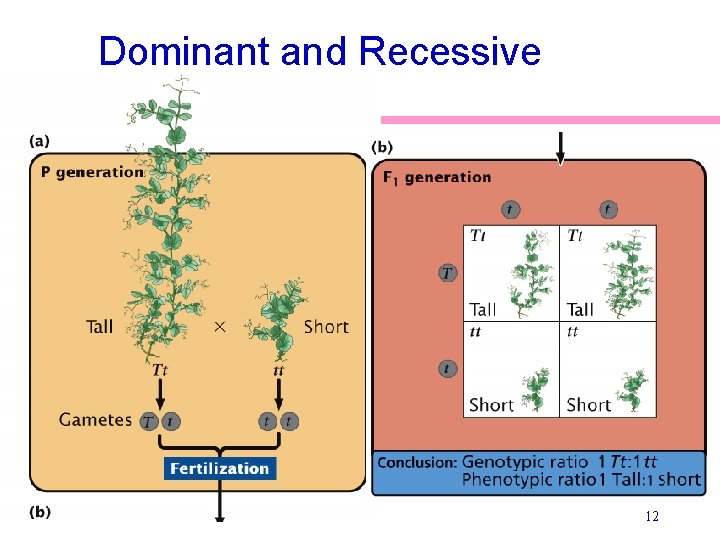
Dominant and Recessive 12
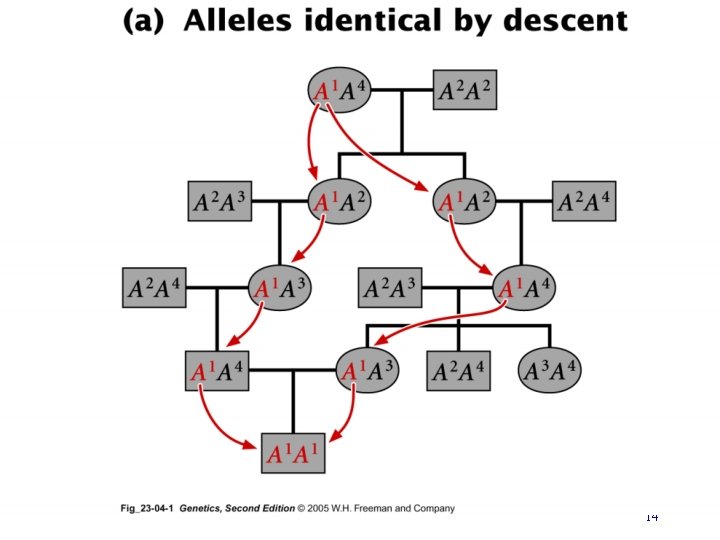
Why Marrying Your Cousin is Bad!!! • Inbreeding causes recessive alleles to become homozygous more often. • If the recessive allele contains a genetic disease, it will show up in these children at a higher rate than in the normal population. • Examples: • Tay-Sachs disease occurs primarily among Jews of Eastern European descent 13
14
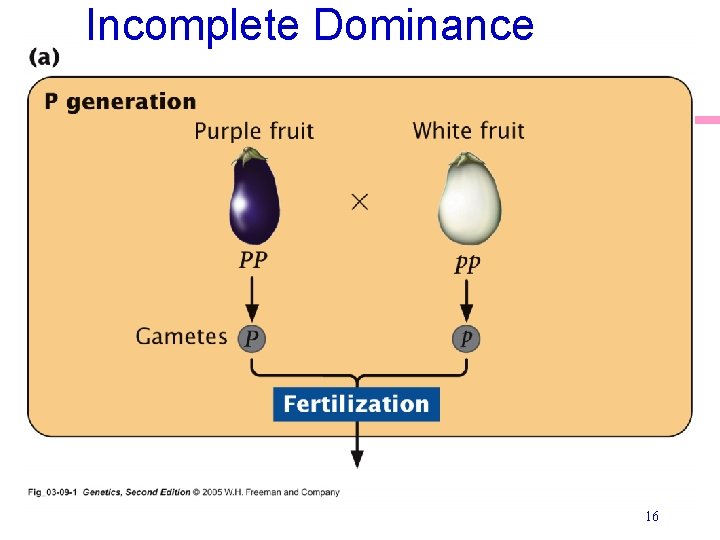
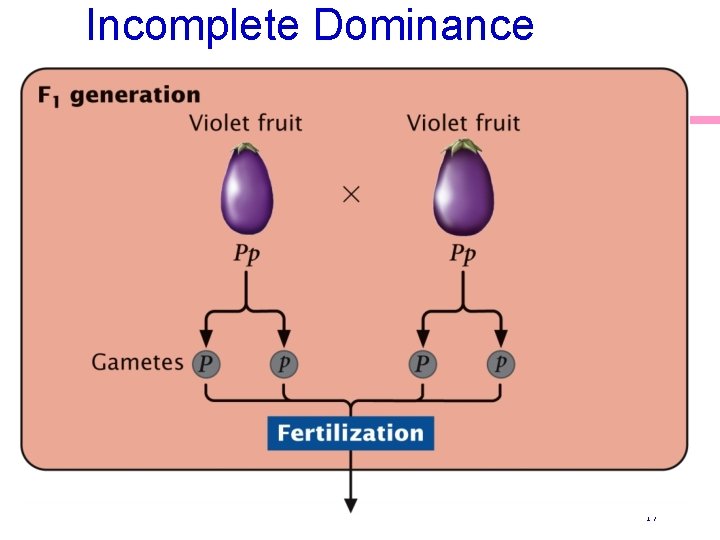
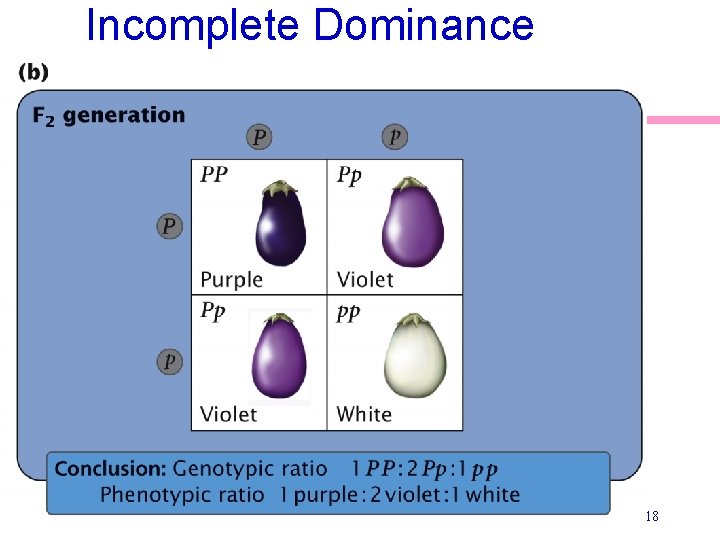
Incomplete Dominance • Heterozygous individuals have a phenotype intermediate between homozygous dominant and homozygous recessive • Sickling is a human example when aberrant hemoglobin (Hb) is made from the recessive allele (s) SS = normal Hb is made Ss = sickle-cell trait (both aberrant and normal Hb is made) ss = sickle-cell anemia (only aberrant Hb is made) 15
Incomplete Dominance 16
Incomplete Dominance 17
Incomplete Dominance 18
Multiple-Allele Inheritance • Genes that exhibit more than two alternate alleles • ABO blood grouping is an example • Three alleles (IA, IB, i) determine the ABO blood type in humans • IA and IB are codominant (both are expressed if present), and i is recessive • Rh factor is complete dominance 19
Sex-Linked Inheritance • Inherited traits determined by genes on the sex chromosomes • X chromosomes bear over 2500 genes; Y carries about 15 • X-linked genes are: • Found only on the X chromosome • Typically passed from mothers to sons • Never masked or damped in males since there is no Y counterpart 20
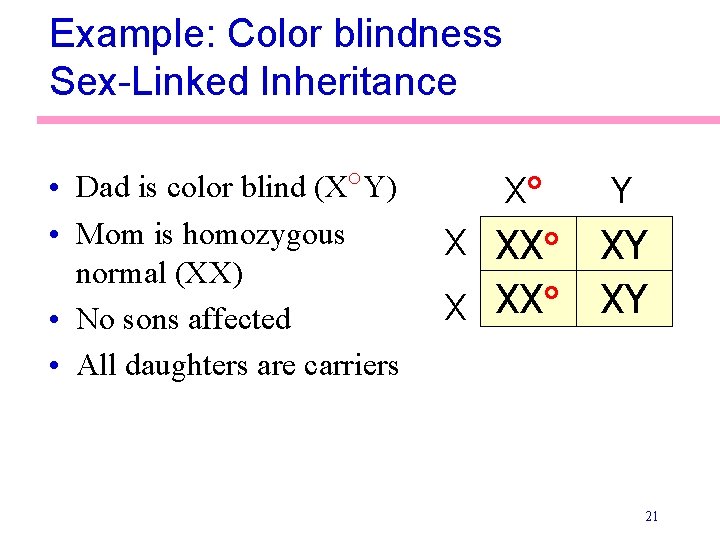
Example: Color blindness Sex-Linked Inheritance • Dad is color blind (X°Y) • Mom is homozygous normal (XX) • No sons affected • All daughters are carriers X° X XX° Y XY XY 21
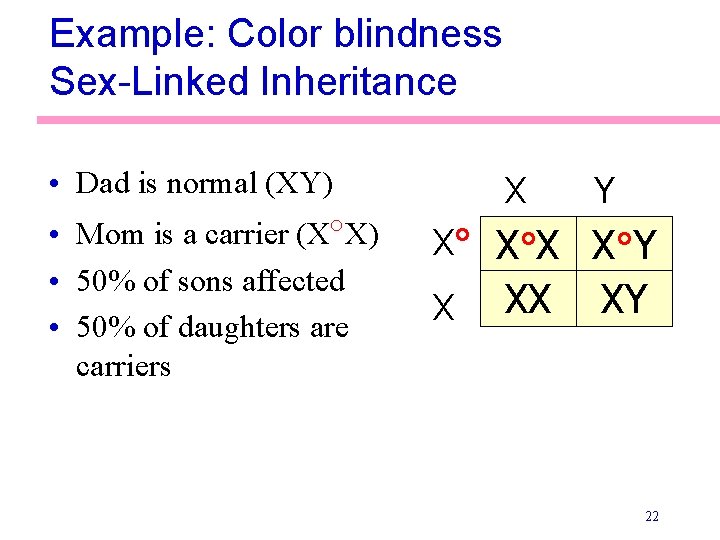
Example: Color blindness Sex-Linked Inheritance • Dad is normal (XY) • Mom is a carrier (X°X) • 50% of sons affected • 50% of daughters are carriers X Y X° X°X X°Y X XX XY 22
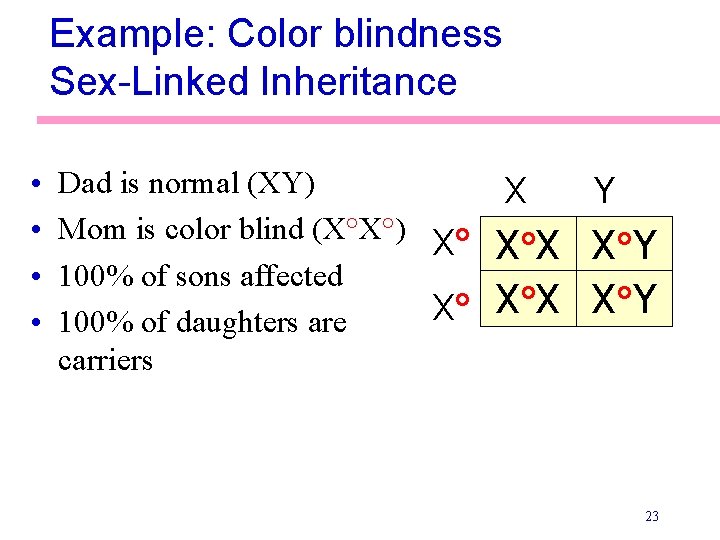
Example: Color blindness Sex-Linked Inheritance • • Dad is normal (XY) Mom is color blind (X°X°) X° 100% of sons affected X° 100% of daughters are carriers X Y X°X X°Y 23
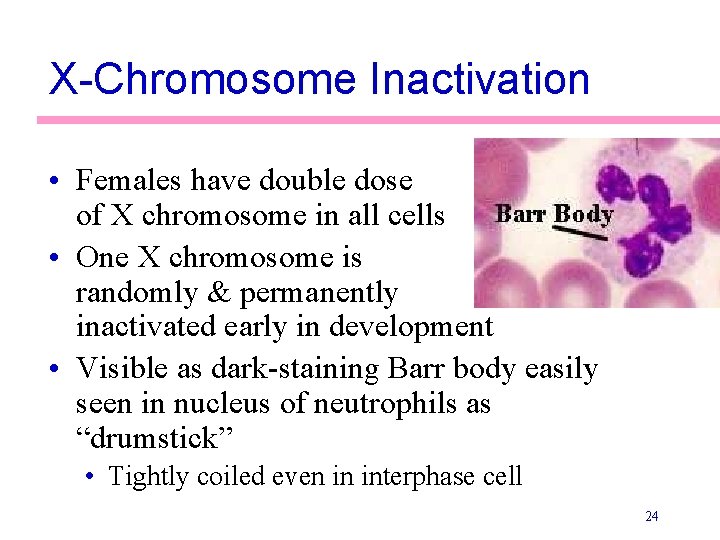
X-Chromosome Inactivation • Females have double dose of X chromosome in all cells • One X chromosome is randomly & permanently inactivated early in development • Visible as dark-staining Barr body easily seen in nucleus of neutrophils as “drumstick” • Tightly coiled even in interphase cell 24
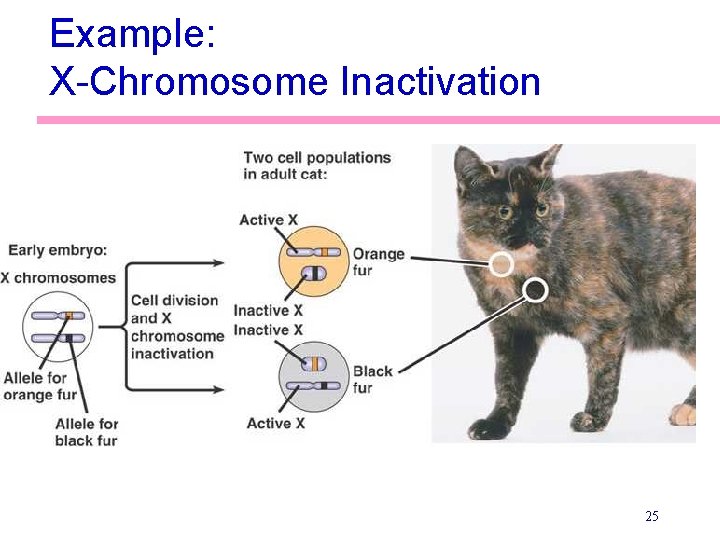
Example: X-Chromosome Inactivation 25
Polygenic Inheritance • Depends on several different gene pairs at different loci acting in tandem • Results in continuous phenotypic variation between two extremes • Examples: skin color, eye color, and height • Although we think of eye color as simple dominant/recessive, there are many genes that code for eye color, which is why your eyes are not usually the exactly the same color as either of your parents. 26
Genomic Imprinting • Genomic imprinting is the differential expression of a gene depending on whether it is inherited from the mother or the father • Examples: • Igf 2: Insulin-like growth factor 2 • Only the paternal gene is expressed • Affects birth weight of human infants • Prader-Willi and Angelman syndromes 27
Genomic Imprinting Prader-Willi and Angelman Syndromes • Caused by a small deletion on Chromosome 15 • Prader-Willi Syndrome: Paternal inheritance • Small hands and feet, Short stature • Voracious appetite • Mental retardation • Angelman Syndrome: Maternal inheritance • • • Uncontrolled muscle movement Feeding issues (poor eaters) Very happy demeanor (laugh all the time) Unusual seizures Mental retardation 28
Cytoplasmic Inheritance • A zygote inherits nuclear genes from both parents • Cytoplasmic organelles are inherited only from the mother • Mitochondria have their own DNA • Contains 37 genes (nuclear DNA has 30, 000 genes) • Always passed from mother to all children 29
Abnormal Chromosomes: Trisomy • Trisomy: Having 3 copies of a chromosome (or part of a chromosome) instead of 2 • Can be caused by nondisjunction during Meiosis II when the sister chromatids are supposed to separate. • Can happen during prophase I crossing over (partial duplication of a chromosome) • Can happen during mitosis • Usually lethal 30
Trisomy 21 • Down’s syndrome • Severe: 3 copies of chromosome 21 • Less severe: one chromosome 21 has an “extra” piece, so only some of the genes are in triplicate • Less severe: if the defect happened during mitosis in the early embryo resulting in only some cells carrying 3 copies 31
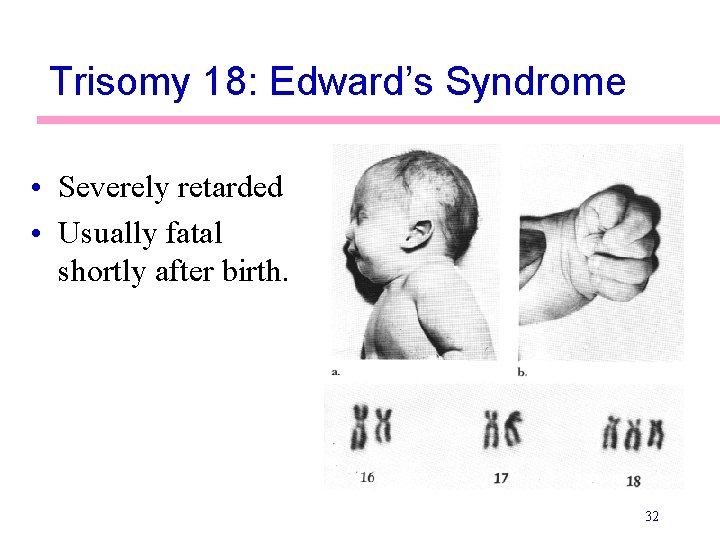
Trisomy 18: Edward’s Syndrome • Severely retarded • Usually fatal shortly after birth. 32
Trisomy XXX • 1 in 1, 000 newborn girls • Many girls and women with Triple X have no signs or symptoms. Signs and symptoms vary a lot between individuals, but can include: • • Increased space between the eyes Tall stature (height) Small head Learning disabilities Delayed puberty Infertility Mental retardation 33
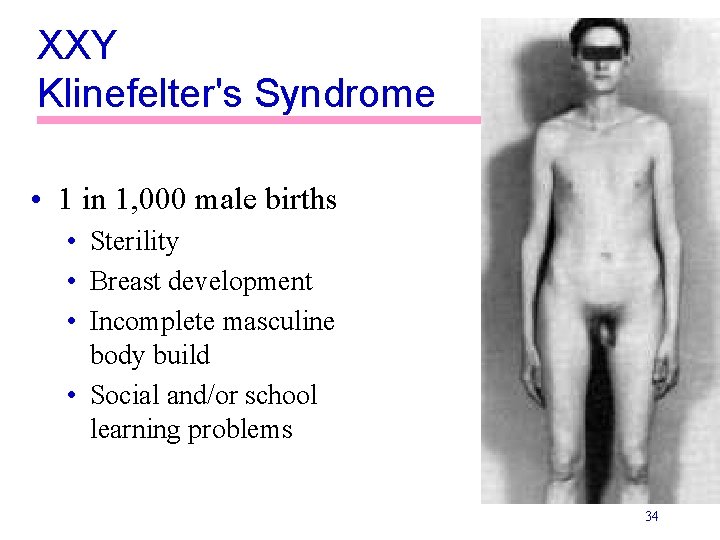
XXY Klinefelter's Syndrome • 1 in 1, 000 male births • Sterility • Breast development • Incomplete masculine body build • Social and/or school learning problems 34
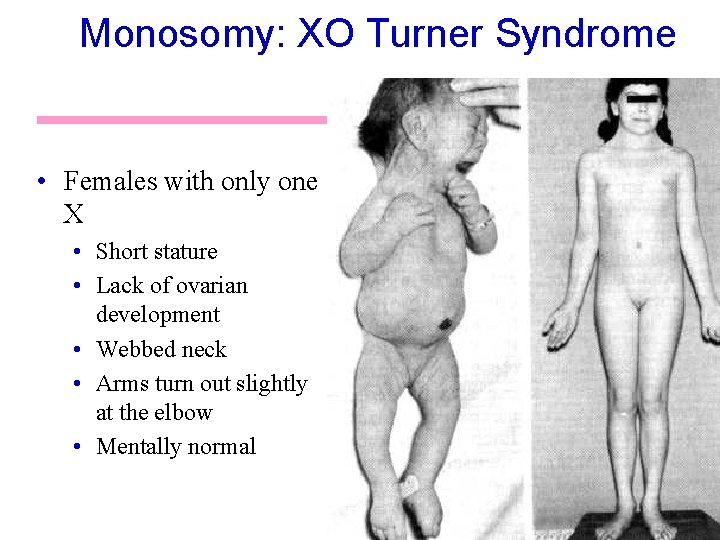
Monosomy: XO Turner Syndrome • Females with only one X • Short stature • Lack of ovarian development • Webbed neck • Arms turn out slightly at the elbow • Mentally normal 35
Pleiotropy • The control by a single gene of several distinct and seemingly unrelated phenotypic effects. • Example: PKU (phenylketonuria). • This disease causes mental retardation and reduced hair and skin pigmentation. • The cause is a mutation in a single gene that codes for the enzyme phenylalanine hydroxylase (PAH) that converts the phenylalanine to tyrosine • The mutation results in no or reduced conversion of phenylalanine to tyrosine, and phenylalanine concentrations increase to toxic levels, causing damage at several locations in the body. 36
Pedigree • A pedigree is a diagram of family relationships that uses symbols to represent people and lines to represent genetic relationships. • These diagrams make it easier to visualize relationships within families, particularly large extended families. • Pedigrees are often used to determine the mode of inheritance (dominant, recessive, etc. ) of genetic diseases. 37
Factors to Consider in Pedigrees • Is the trait located on a sex chromosome or an autosome? • Autosomal – not on a sex chromosome • Sex Linkage – located on one of the sex chromosomes • Y-linked - only males carry the trait. • X-linked (recessive) - sons inherit the disease from normal parents • How is the trait expressed? • Dominant - the trait is expressed in every generation. • Recessive - expression of the trait may skip generations. 38
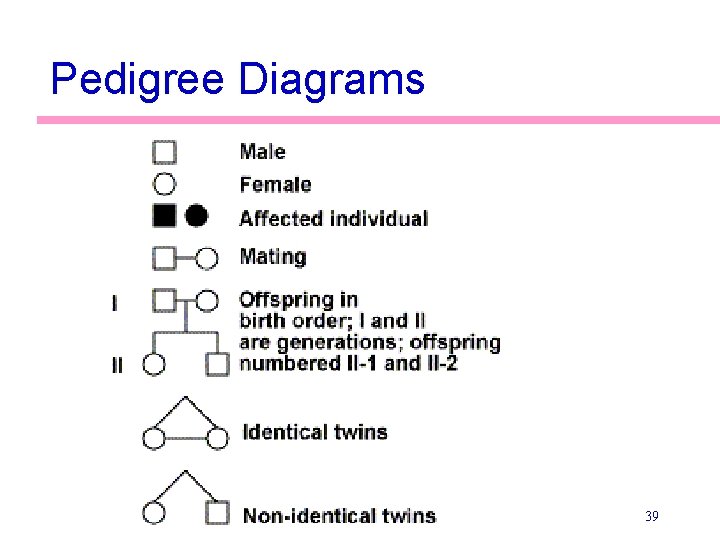
Pedigree Diagrams 39
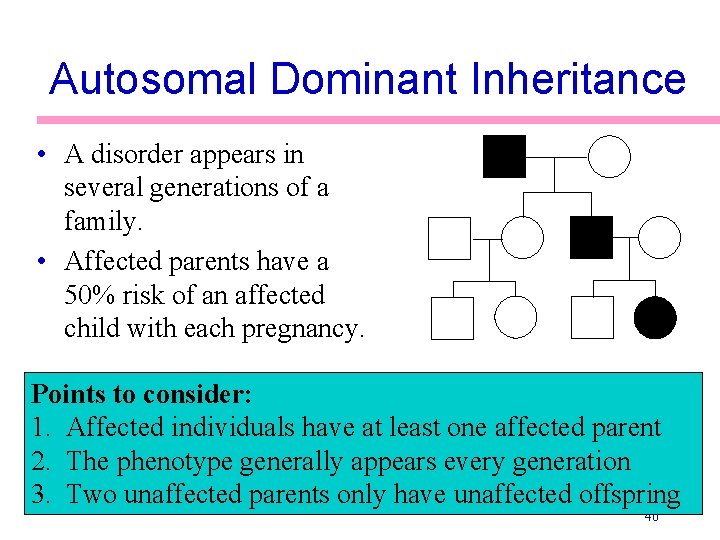
Autosomal Dominant Inheritance • A disorder appears in several generations of a family. • Affected parents have a 50% risk of an affected child with each pregnancy. Points to consider: 1. Affected individuals have at least one affected parent 2. The phenotype generally appears every generation 3. Two unaffected parents only have unaffected offspring 40
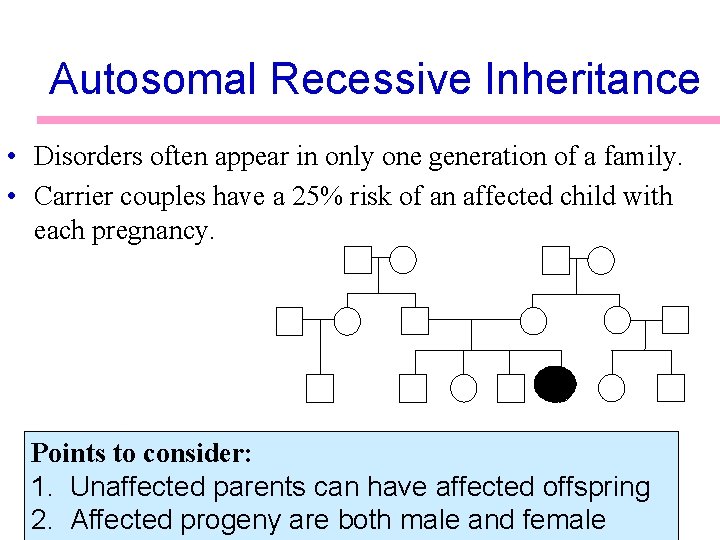
Autosomal Recessive Inheritance • Disorders often appear in only one generation of a family. • Carrier couples have a 25% risk of an affected child with each pregnancy. Points to consider: 1. Unaffected parents can have affected offspring 2. Affected progeny are both male and female 41
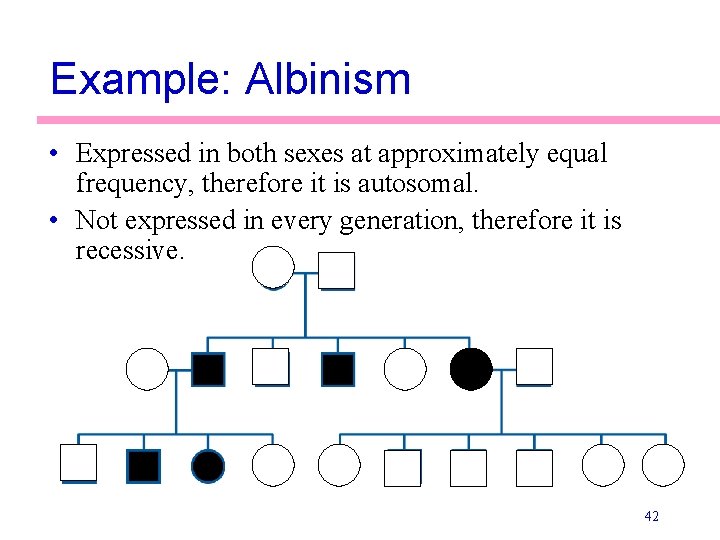
Example: Albinism • Expressed in both sexes at approximately equal frequency, therefore it is autosomal. • Not expressed in every generation, therefore it is recessive. 42
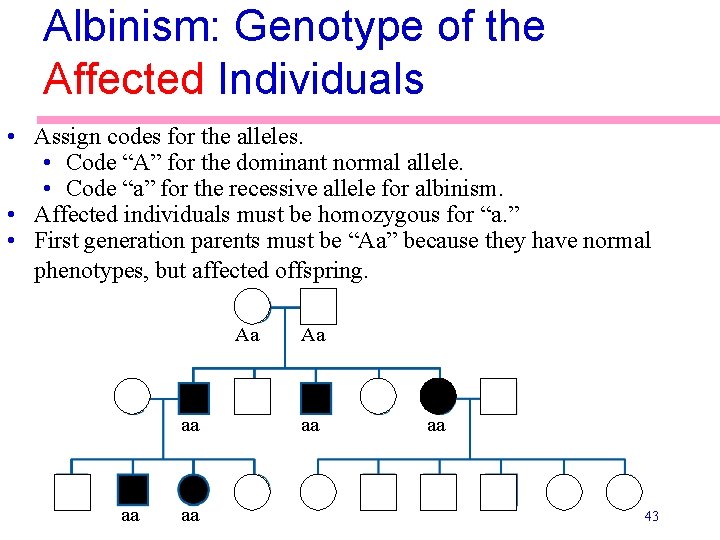
Albinism: Genotype of the Affected Individuals • Assign codes for the alleles. • Code “A” for the dominant normal allele. • Code “a” for the recessive allele for albinism. • Affected individuals must be homozygous for “a. ” • First generation parents must be “Aa” because they have normal phenotypes, but affected offspring. Aa aa aa aa Aa aa aa 43
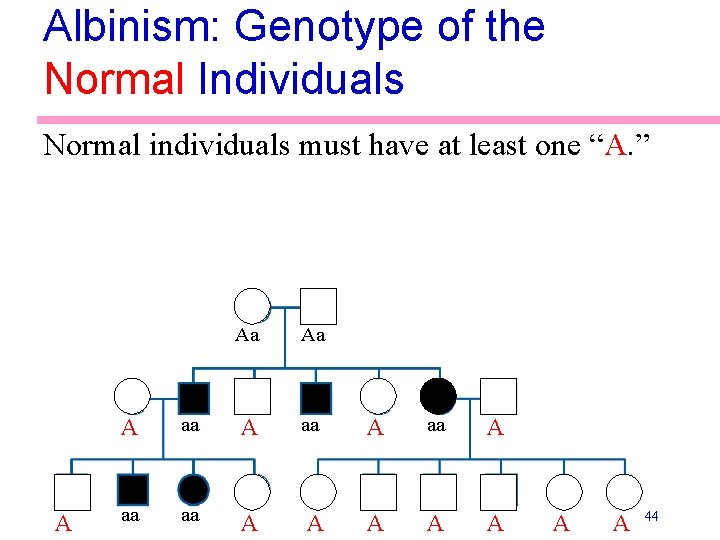
Albinism: Genotype of the Normal Individuals Normal individuals must have at least one “A. ” A Aa Aa A aa aa A A A A 44
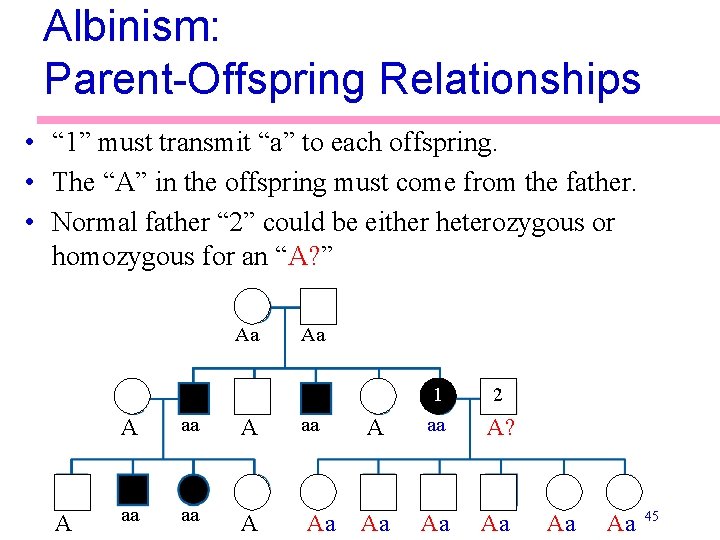
Albinism: Parent-Offspring Relationships • “ 1” must transmit “a” to each offspring. • The “A” in the offspring must come from the father. • Normal father “ 2” could be either heterozygous or homozygous for an “A? ” Aa A aa A 1 aa aa aa A Aa Aa Aa 2 A? Aa Aa Aa 45

X-linked Inheritance • X-linked diseases are almost always recessive • Male to male transmission of Xlinked disorders is not seen. • Carriers are designated with a dot. 46
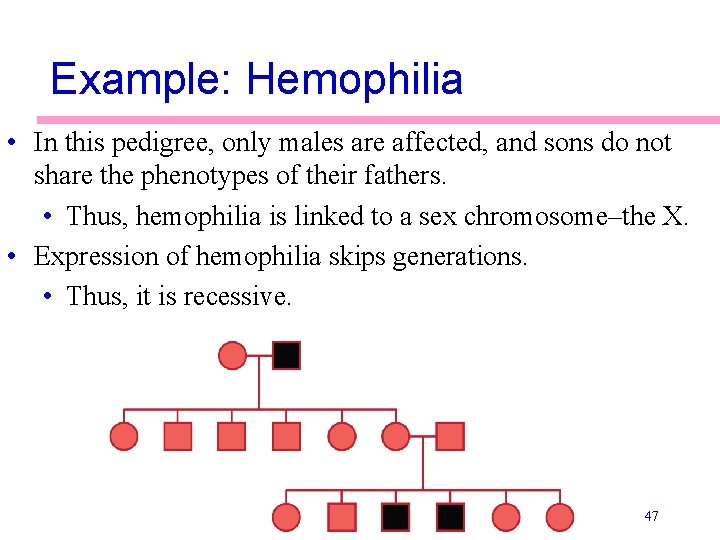
Example: Hemophilia • In this pedigree, only males are affected, and sons do not share the phenotypes of their fathers. • Thus, hemophilia is linked to a sex chromosome–the X. • Expression of hemophilia skips generations. • Thus, it is recessive. 47
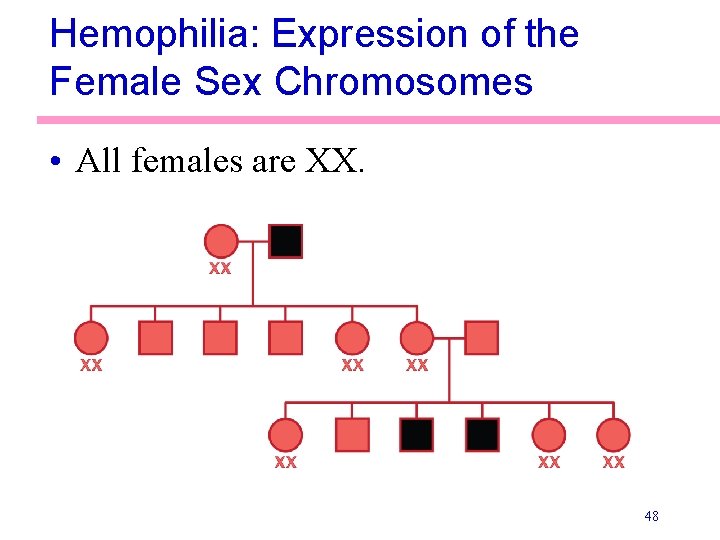
Hemophilia: Expression of the Female Sex Chromosomes • All females are XX. 48
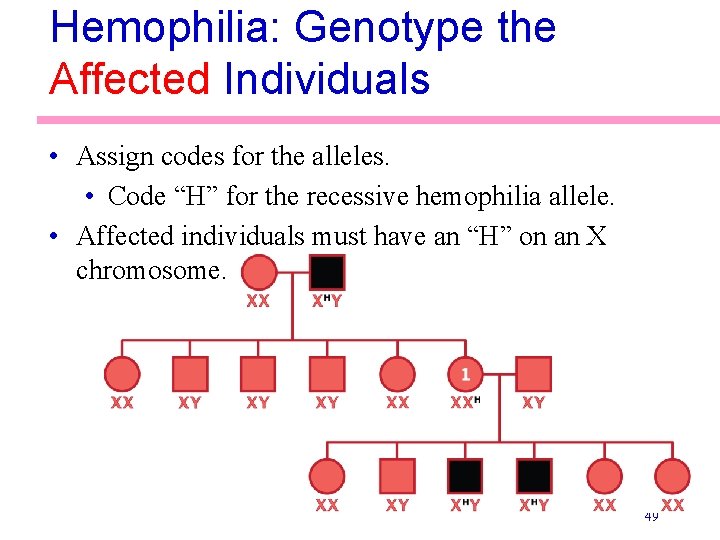
Hemophilia: Genotype the Affected Individuals • Assign codes for the alleles. • Code “H” for the recessive hemophilia allele. • Affected individuals must have an “H” on an X chromosome. 49
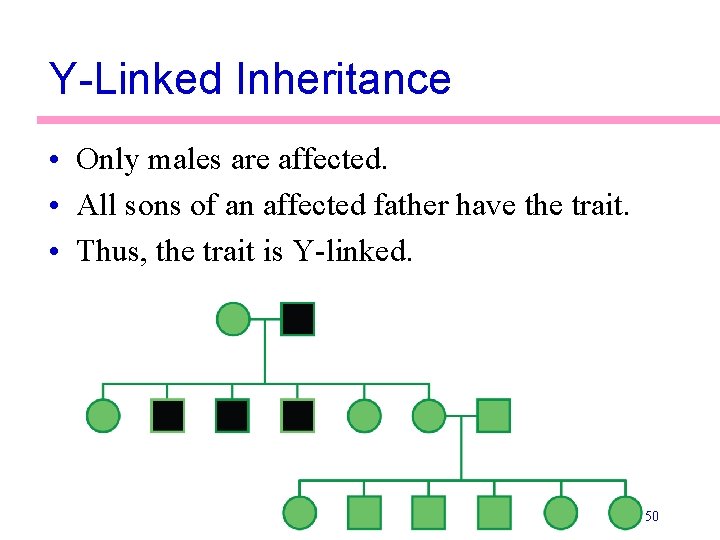
Y-Linked Inheritance • Only males are affected. • All sons of an affected father have the trait. • Thus, the trait is Y-linked. 50
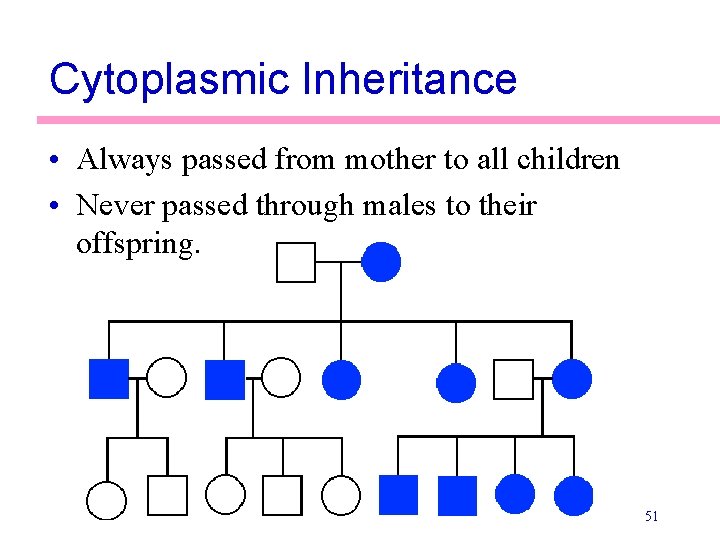
Cytoplasmic Inheritance • Always passed from mother to all children • Never passed through males to their offspring. 51
The End 52
- Slides: 52