
Lab 9 Bacterial Staining Bacterial cells are usually
Lab 9 Bacterial Staining
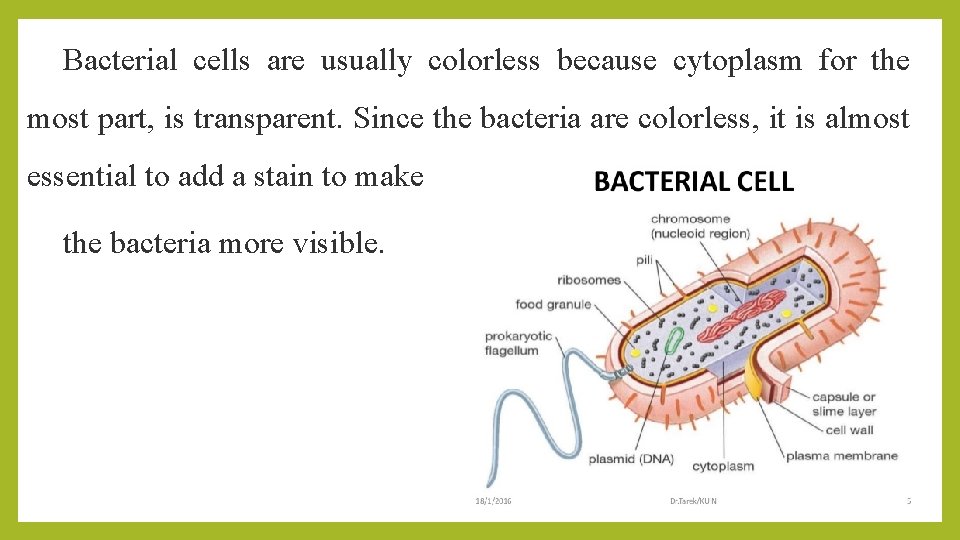
Bacterial cells are usually colorless because cytoplasm for the most part, is transparent. Since the bacteria are colorless, it is almost essential to add a stain to make the bacteria more visible.
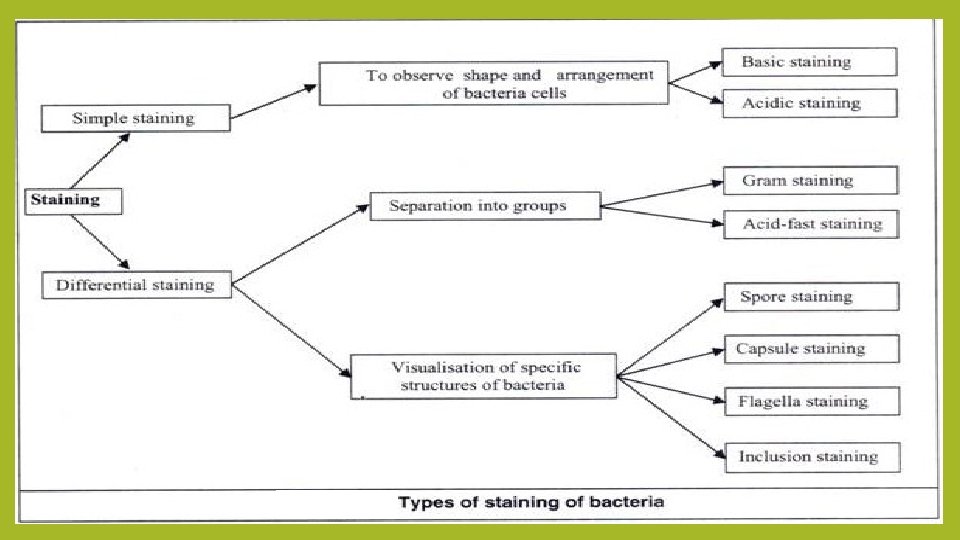

Simple stain techniques: Staining can be performed with basic dyes such as crystal violet or methylene blue, positively charged dyes that are attracted to the negatively charged materials of the microbial cytoplasm. Such a procedure is the positive stain procedure. An alternative is to use a dye such as nigrosine or Congo red, acidic, negatively charged dyes. They are repelled by the negatively charged cytoplasm and gather around the cells, leaving the cells clear and unstained. This technique is called the negative stain technique.
We most often use: 1 - Basic stains to examine bacteria. Basic stains, due to their positive charge will bind electrostatically to negatively charged molecules such as many polysaccharides, proteins and nucleic acids. Some commonly encountered basic stains are crystal violet, safranin (a red dye) and methylene blue. Basic stains may be used alone (a simple stain) or in combination (differential stain) depending on the experiment involved. 2 - Acid stains bind to positively charged molecules which are much less common, meaning acidic stains are used only for special purposes.
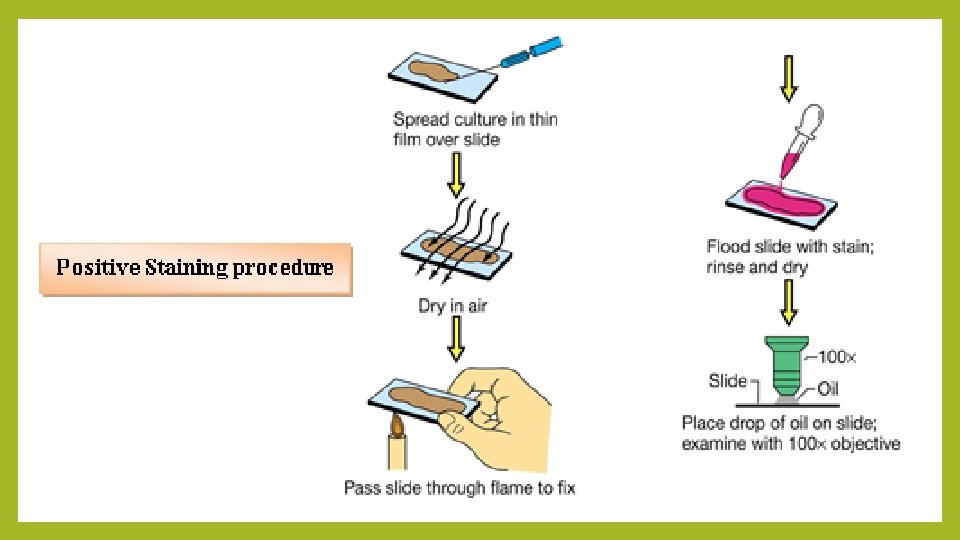


Bacterial staining Negative Staining Positive Staining

Next Lab Gram staining
- Slides: 9