
Lab 8 The Digestive System 1 Digestion has

Lab # 8 The Digestive System 1
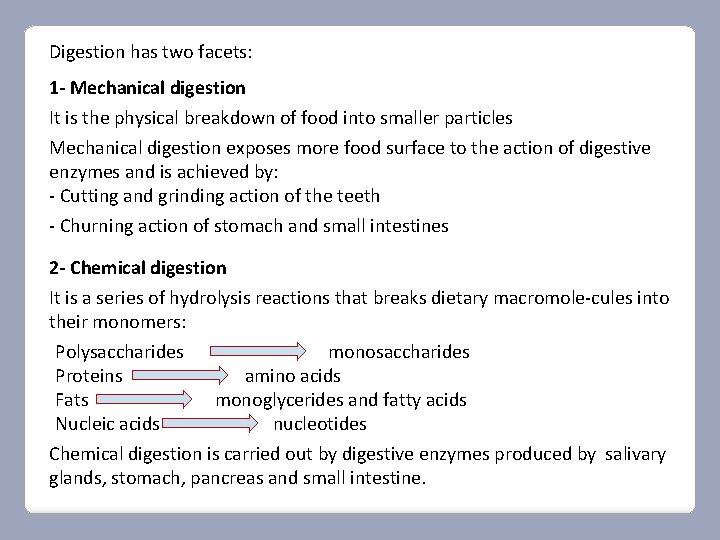
Digestion has two facets: 1 - Mechanical digestion It is the physical breakdown of food into smaller particles Mechanical digestion exposes more food surface to the action of digestive enzymes and is achieved by: - Cutting and grinding action of the teeth - Churning action of stomach and small intestines 2 - Chemical digestion It is a series of hydrolysis reactions that breaks dietary macromole-cules into their monomers: Polysaccharides monosaccharides Proteins amino acids Fats monoglycerides and fatty acids Nucleic acids nucleotides Chemical digestion is carried out by digestive enzymes produced by salivary glands, stomach, pancreas and small intestine.

1 - Carbohydrates Starch is the most digestible carbohydrate Cellulose and chitin are indigestible Digestion Monosaccharides Polysaccharides
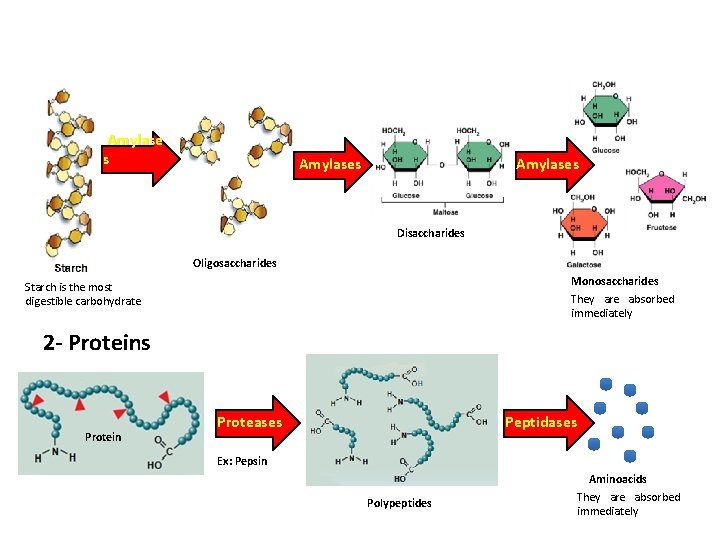
Amylase s Amylases Disaccharides Oligosaccharides Monosaccharides They are absorbed immediately Starch is the most digestible carbohydrate 2 - Proteins Protein Proteases Peptidases Ex: Pepsin Polypeptides Aminoacids They are absorbed immediately

3 - Lipids + Lipases Triglycerides Lip as es Glycerol Fatty acids + Monoglycerides Fatty acids
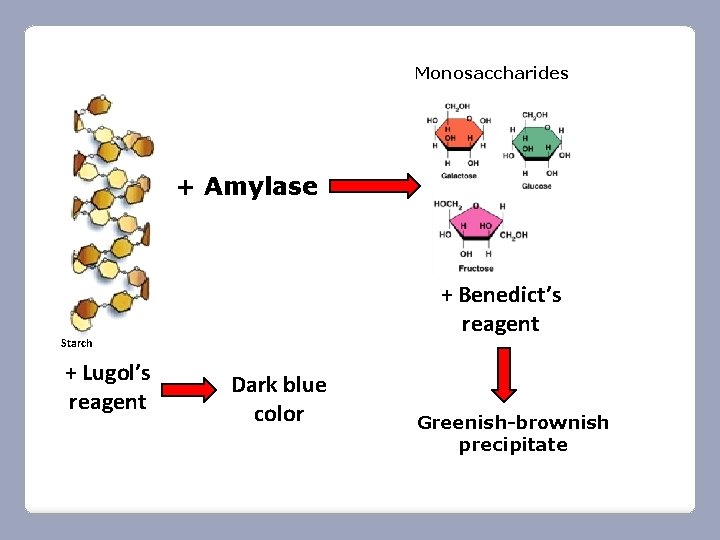
Monosaccharides + Amylase + Benedict’s reagent Starch + Lugol’s reagent Dark blue color Greenish-brownish precipitate

Test Protein Digestion Pepsin (active enzyme) Parietal cells HCl Partially digested proteins + Biuret reagent Pepsinogen Chief cells (zymogen) Removed peptide Lavender-pink color
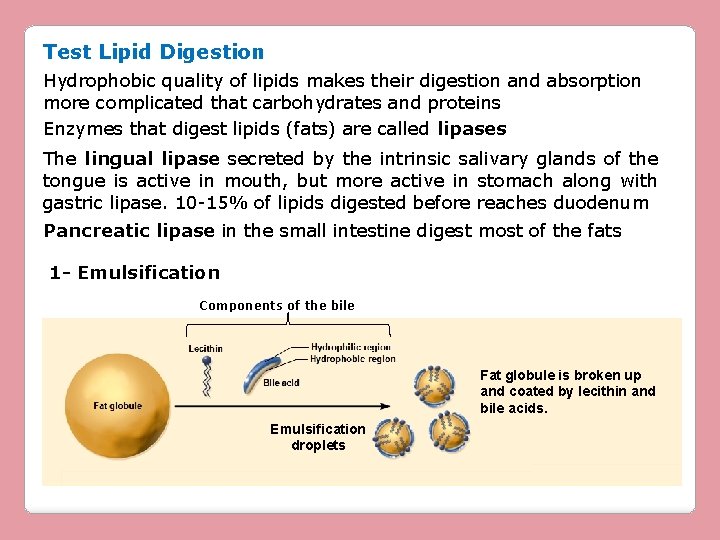
Test Lipid Digestion Hydrophobic quality of lipids makes their digestion and absorption more complicated that carbohydrates and proteins Enzymes that digest lipids (fats) are called lipases The lingual lipase secreted by the intrinsic salivary glands of the tongue is active in mouth, but more active in stomach along with gastric lipase. 10 -15% of lipids digested before reaches duodenum Pancreatic lipase in the small intestine digest most of the fats 1 - Emulsification Components of the bile Fat globule is broken up and coated by lecithin and bile acids. Emulsification droplets

2 - Fat Hydrolysis Pancreatic lipase acts on triglycerides. It removes the first and third fatty acids from glycerol backbone and leaves the middle one The product of lipase action are two free fatty acids (FFAs) and a monoglyceride Pancreatic lipase Free fatty acid p. H Emulsification droplets are acted upon by pancreatic lipase, which hydrolyzes the first and third fatty acids from triglycerides usually leaving the middle fatty acid.
- Slides: 9