
Lab 7 Polymerase Chain Reaction Technique PCR DNA
Lab. 7 Polymerase Chain Reaction Technique PCR (DNA Photocopier) 1
Objectives Students should able to know and explain: v What is PCR? v. What is the History of PCR? v. What is the Purpose of PCR? v. How is PCR Done? v. What are the Typical (Essential) PCR Reaction Components? v. What are Principle of PCR and Programming (The Basic Reaction of PCR)? 2 2
History OF PCR Ø The invention of the polymerase chain reaction (PCR) was first conceived by Mullis 1983 revolutionized the methodological repertoire of molecular biology. ØIn 1993 Kary Mullis was awarded the Nobel Prize in chemistry for this achievements. ØPCR is the oldest in theory and the most versatile in practice
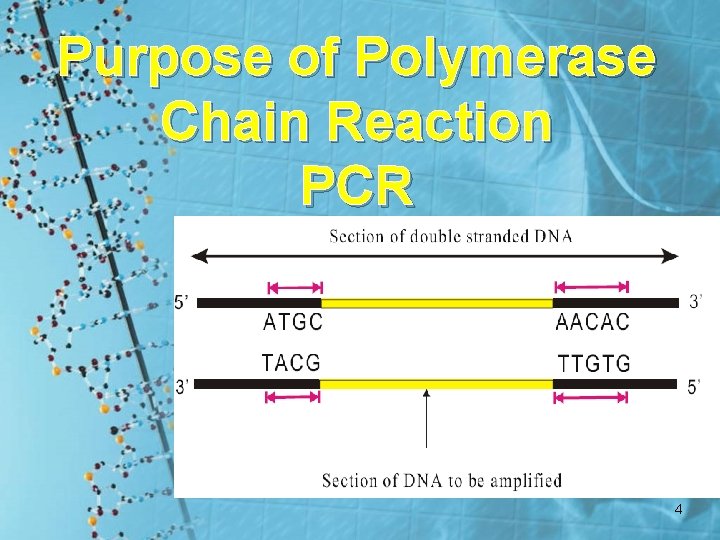
Purpose of Polymerase Chain Reaction PCR 4
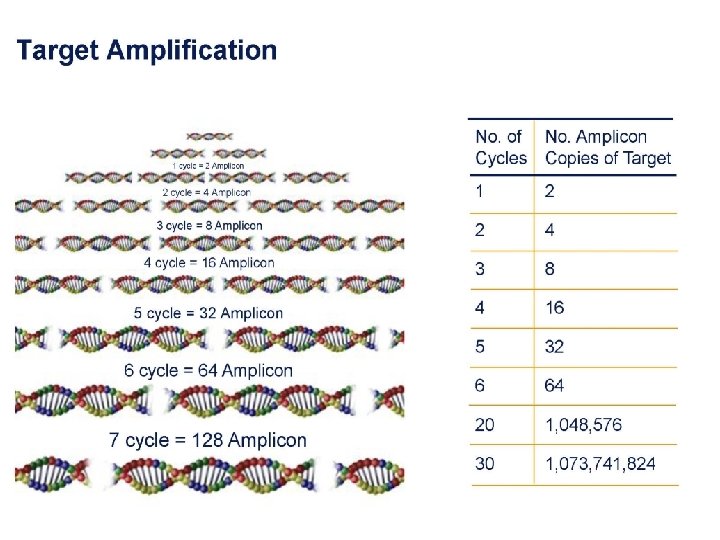
Definition PCR can be defined as an in vitro method for amplification of specific DNA sequences from a complex sequences mixture such as genomic DNA using short oligonucleotides (primers) of arbitrary or known sequences, d. NTPs and thermo stable polymerase such as Taq polymerase to make million copies of selected DNA segments in around an hour or so.
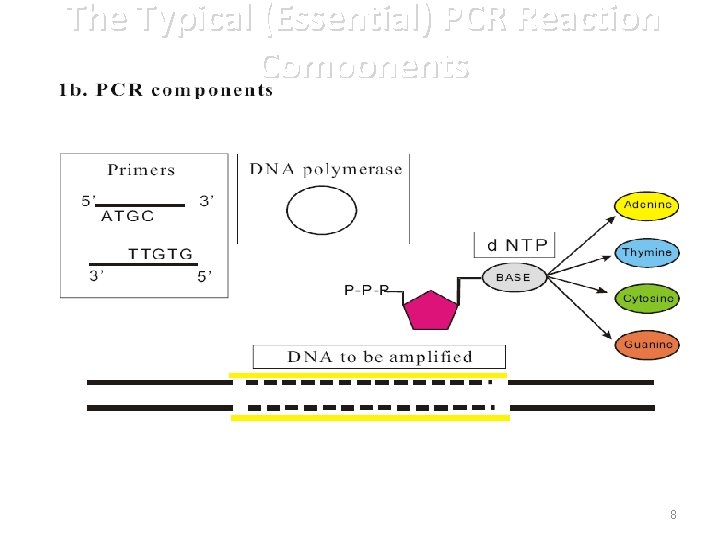
The Typical (Essential) PCR Reaction Components 1) Starting nucleic acid : Template DNA /RNA. (Tissue, cells, blood, hair root, saliva, semen). 2) Primers: (a pair of synthetic oligonucleotide to prime DNA synthesis) synthesis Primer design. 3) Heat-stable DNA polymerase: (to ( catalyze template-dependent synthesis of DNA or incorporation of d. NTPs into DNA). e. g. Taq Polymerase Thermus aquaticus DNA polymerase Thermophilic organism Enzymes resistant to high temperatures 72 -74ºC optimum 6
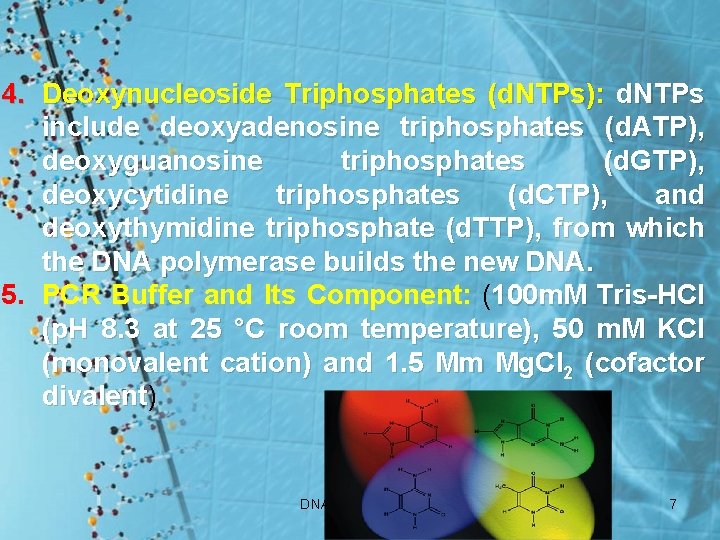
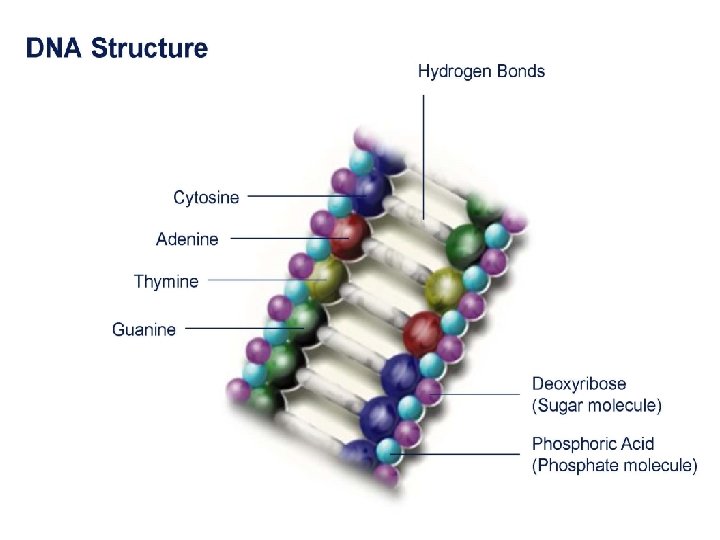
4. Deoxynucleoside Triphosphates (d. NTPs): d. NTPs include deoxyadenosine triphosphates (d. ATP), deoxyguanosine triphosphates (d. GTP), deoxycytidine triphosphates (d. CTP), and deoxythymidine triphosphate (d. TTP), from which the DNA polymerase builds the new DNA. 5. PCR Buffer and Its Component: (100 m. M Tris-HCl (p. H 8. 3 at 25 °C room temperature), 50 m. M KCl (monovalent cation) and 1. 5 Mm Mg. Cl 2 (cofactor divalent) divalent DNA Fingerprinting 7
The Typical (Essential) PCR Reaction Components 8
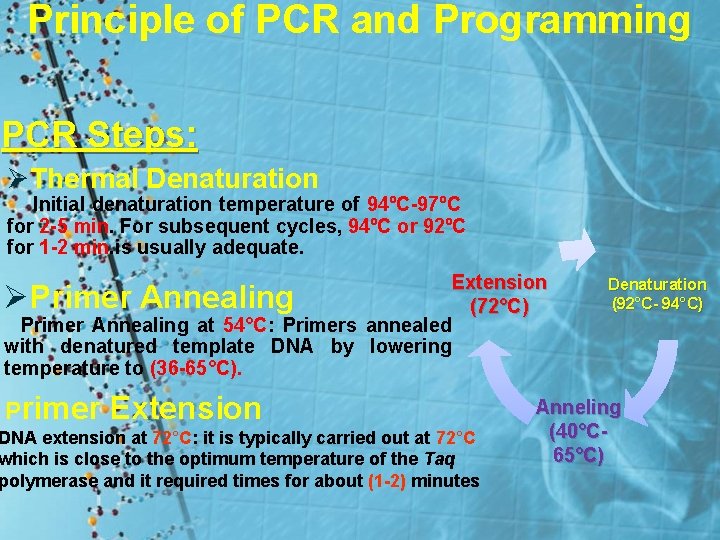
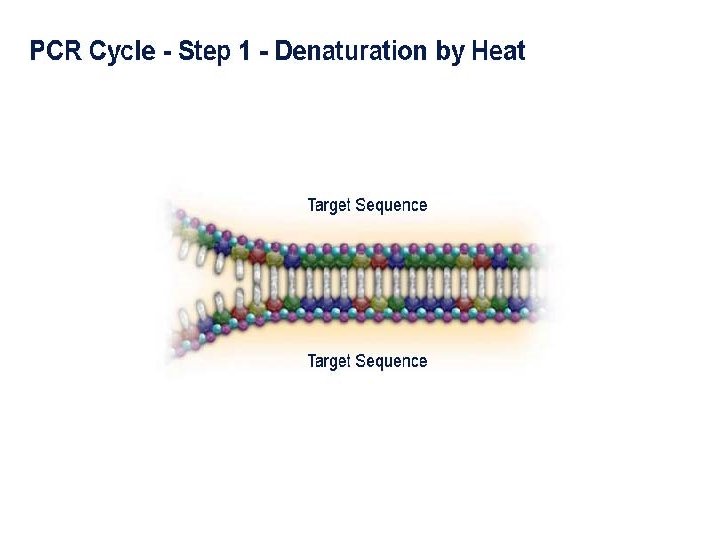
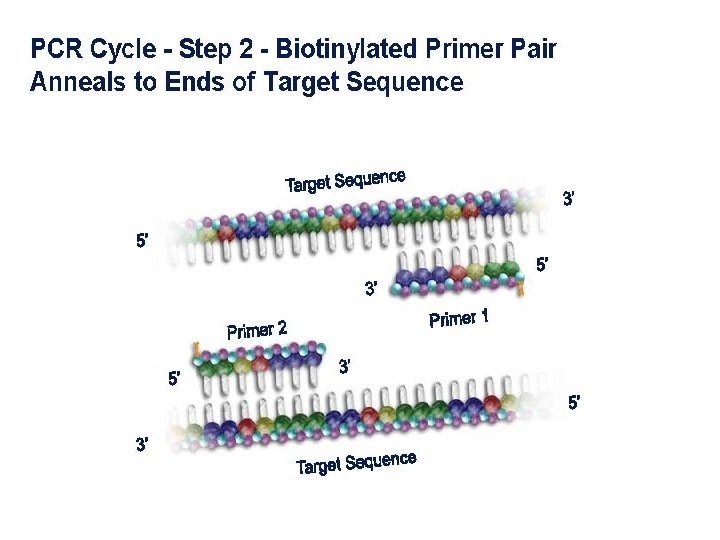
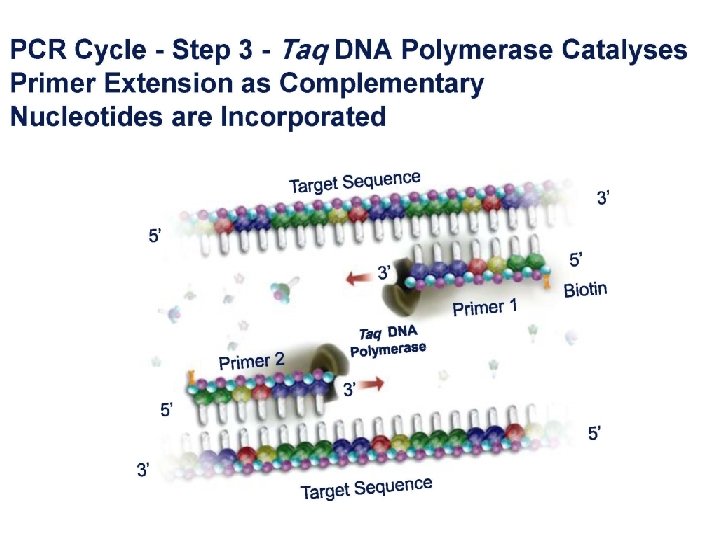
Principle of PCR and Programming PCR Steps: ØThermal Denaturation Initial denaturation temperature of 94ºC-97ºC for 2 -5 min. For subsequent cycles, 94ºC or 92ºC for 1 -2 min. is usually adequate. Extension (72°C) Primer Annealing at 54°C: Primers annealed with denatured template DNA by lowering temperature to (36 -65°C). ØPrimer Annealing Primer Extension DNA extension at 72°C: it is typically carried out at 72°C which is close to the optimum temperature of the Taq polymerase and it required times for about (1 -2) minutes Denaturation (92°C- 94°C) Anneling (40°C 65°C)
10
27/7/2010 DNA Fingerprinting 11
27/7/2010 DNA Fingerprinting 12
27/7/2010 DNA Fingerprinting 13
27/7/2010 DNA Fingerprinting 14
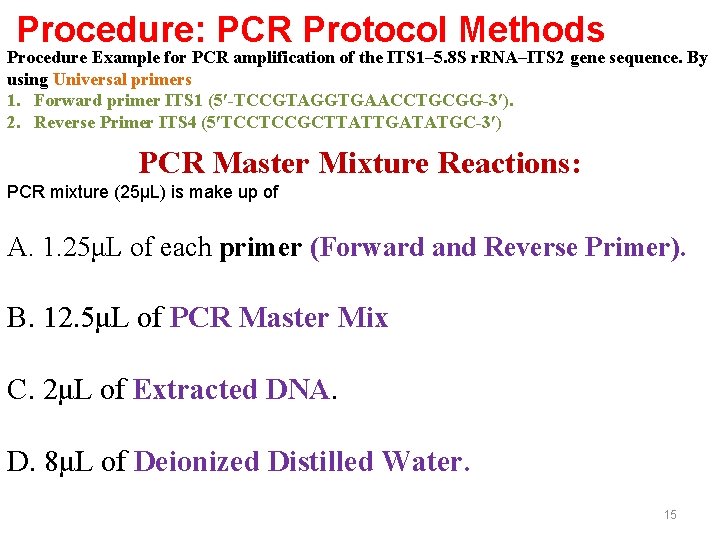
Procedure: PCR Protocol Methods Procedure Example for PCR amplification of the ITS 1– 5. 8 S r. RNA–ITS 2 gene sequence. By using Universal primers 1. Forward primer ITS 1 (5′-TCCGTAGGTGAACCTGCGG-3′). 2. Reverse Primer ITS 4 (5′TCCTCCGCTTATTGATATGC-3′) PCR Master Mixture Reactions: PCR mixture (25μL) is make up of A. 1. 25μL of each primer (Forward and Reverse Primer). B. 12. 5μL of PCR Master Mix C. 2μL of Extracted DNA. D. 8μL of Deionized Distilled Water. 15
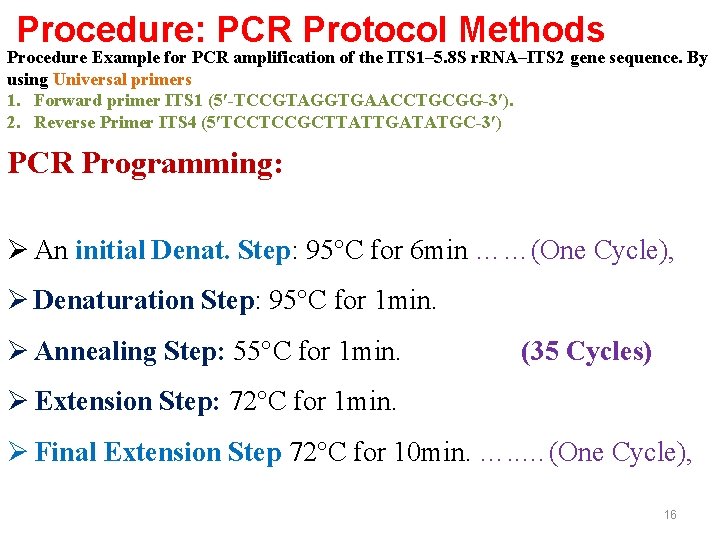
Procedure: PCR Protocol Methods Procedure Example for PCR amplification of the ITS 1– 5. 8 S r. RNA–ITS 2 gene sequence. By using Universal primers 1. Forward primer ITS 1 (5′-TCCGTAGGTGAACCTGCGG-3′). 2. Reverse Primer ITS 4 (5′TCCTCCGCTTATTGATATGC-3′) PCR Programming: Ø An initial Denat. Step: 95°C for 6 min ……(One Cycle), Ø Denaturation Step: 95°C for 1 min. Ø Annealing Step: 55°C for 1 min. (35 Cycles) Ø Extension Step: 72°C for 1 min. Ø Final Extension Step 72°C for 10 min. …. . …(One Cycle), 16
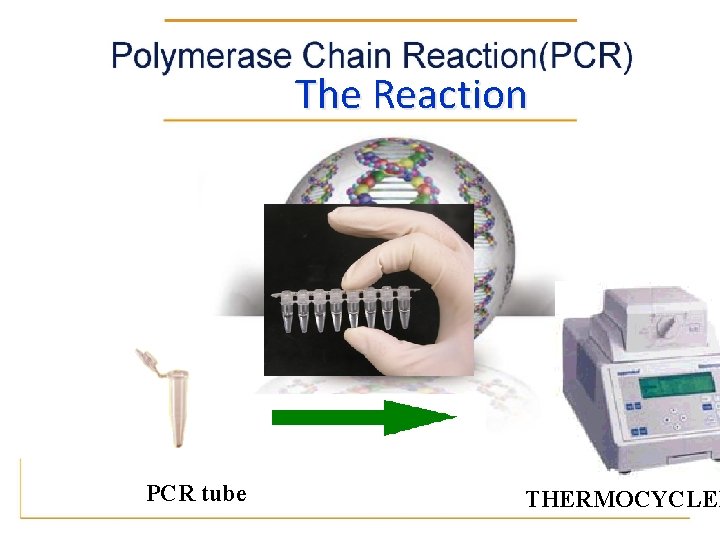
The Reaction PCR tube 27/7/2010 DNA Fingerprinting THERMOCYCLER 17
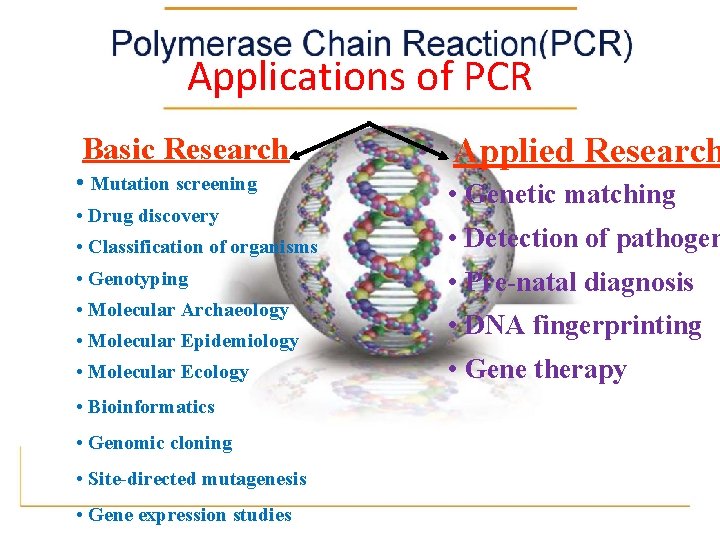
Applications of PCR Basic Research Applied Research • Mutation screening • Genetic matching • Drug discovery • Classification of organisms • Detection of pathogen • Genotyping • Pre-natal diagnosis • Molecular Archaeology • DNA fingerprinting • Molecular Epidemiology • Gene therapy • Molecular Ecology • Bioinformatics • Genomic cloning • Site-directed mutagenesis • Gene expression studies 27/7/2010 DNA Fingerprinting 18
- Slides: 18