
LAB 6 MUSCLE PHYSIOLOGY UNDERSTAND VOCABULARY KEY WORDS
LAB 6: MUSCLE PHYSIOLOGY
UNDERSTAND VOCABULARY KEY WORDS • • • Motor point Motor unit Myofibrils Actin Myosin Sarcomeres Muscle twitch Threshold stimulus Recruitment Muscle fatigue
MOTOR POINT • SENSITIVE SPOTS WHICH ELICIT A VERY STRONG RESPONSE • THESE ARE FOUND ON THE BELLY OF THE MUSCLE WHERE THE NERVE ENTERS • ONE OF THE MUSCLE YOU WILL BE STIMULATING TODAY IS ABDUCTOR DIGITI MINIMI • THE MOTOR POINT FOR THE ABDUCTOR DIGITI MINIMI IS FOUND ON THE MEDIAL SIDE OF THE HAND, JUST DISTAL TO THE WRIST
MOTOR UNIT • FUNCTIONAL UNIT IN SKELETAL MUSCLES • EACH MOTOR UNIT CONSISTS OF A SINGLE SOMATIC MOTOR NEURON THAT BRANCHES TO INNERVATE ONE OR MORE MUSCLE FIBERS BUT EACH MUSCLE FIBER IS INNERVATED BY ONLY ONE MOTOR NEURON. • FIGURE 11. 14 IN THE TEXTBOOK
MYOFIBRILS • A skeletal muscle is made up of many muscle fibers (muscle cells) that run the length of the muscle. • Each muscle fiber contains many myofibrils, which are bundles of actin and myosin which are the fiber’s contractile machinery.
ACTIN/ MYOSIN/SARCOMERES ACTIN Thin filaments in muscle fibers MYOSIN The contractile protein found in thick filaments SARCOMERES The fundamental repeating units that make up myofibrils FIGURE 2 AND 3 IN LAB MANUAL http: //www. youtube. com/watch? v=Cepe. YFvqmk 4
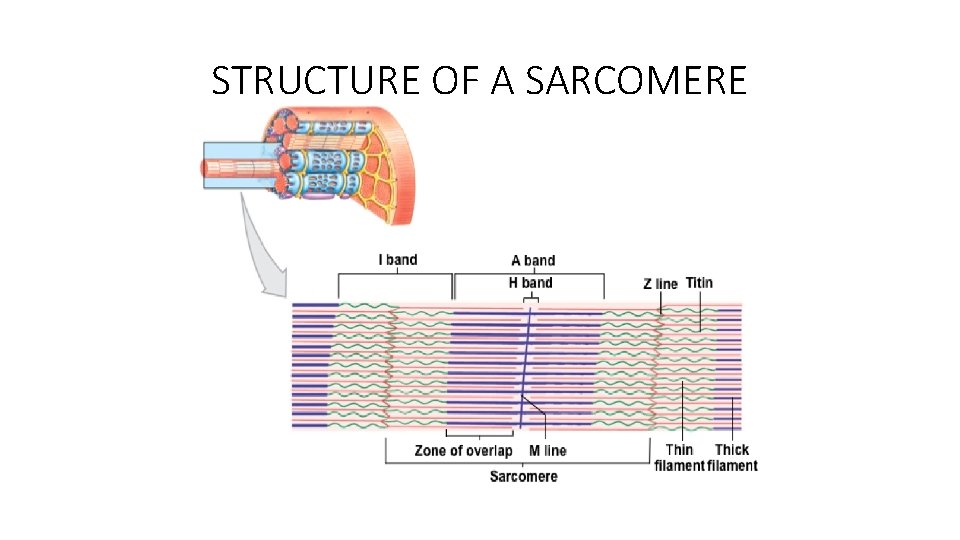
STRUCTURE OF A SARCOMERE
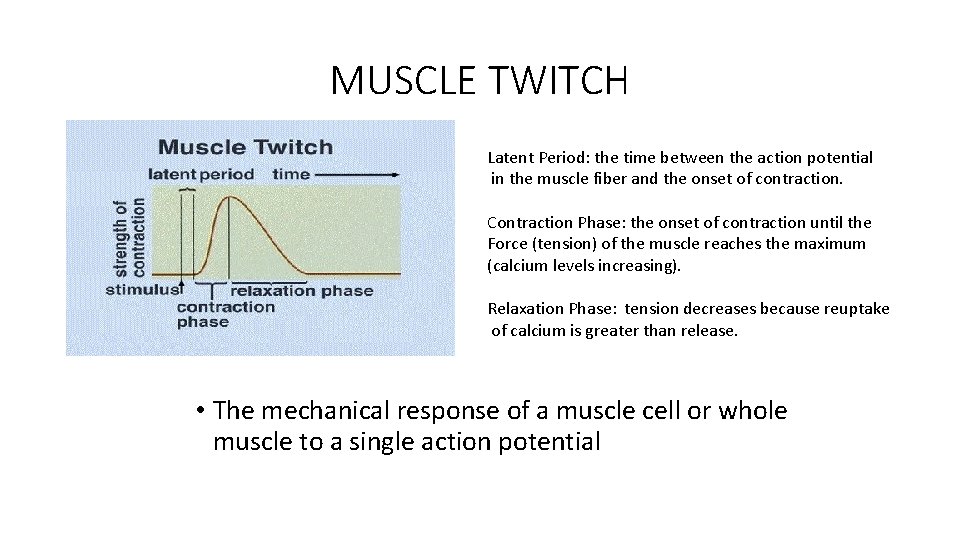
MUSCLE TWITCH Latent Period: the time between the action potential in the muscle fiber and the onset of contraction. Contraction Phase: the onset of contraction until the Force (tension) of the muscle reaches the maximum (calcium levels increasing). Relaxation Phase: tension decreases because reuptake of calcium is greater than release. • The mechanical response of a muscle cell or whole muscle to a single action potential
MUSCLE TWITCH • Latent Period (the events that result in a contraction take time) • • Depolarization Release of calcium ions into the sarcoplasm from the sarcoplasm reticulum Attachment of myosin crossbridges to actin Tightening of elastic elements within the muscle cell Two kinds of muscle twitches: Isometric and Isotonic Difference is based on whether the muscle shortens in length or not.
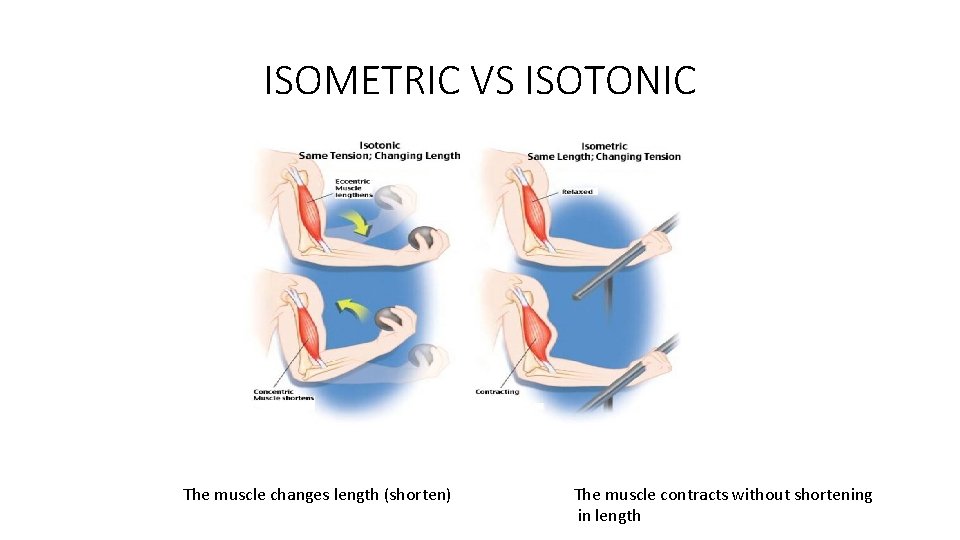
ISOMETRIC VS ISOTONIC The muscle changes length (shorten) The muscle contracts without shortening in length
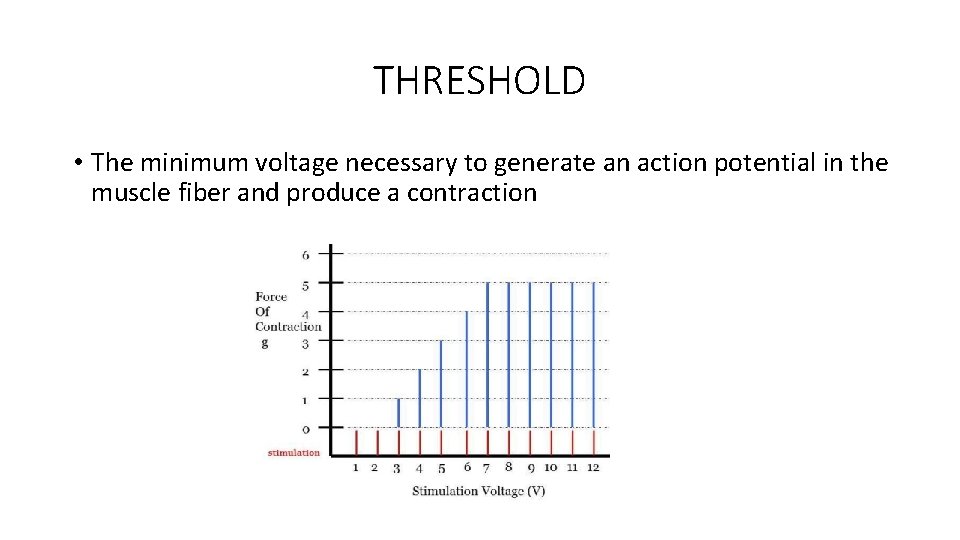
THRESHOLD • The minimum voltage necessary to generate an action potential in the muscle fiber and produce a contraction
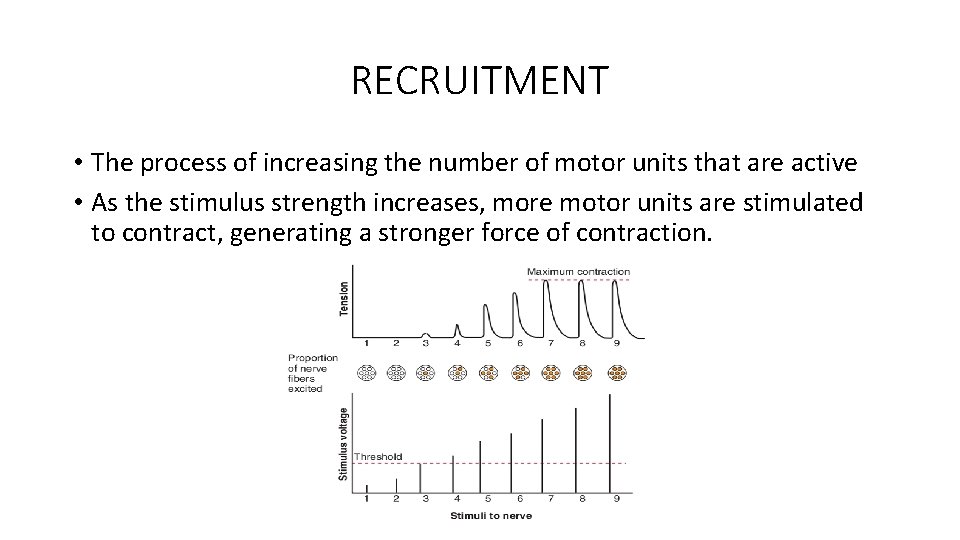
RECRUITMENT • The process of increasing the number of motor units that are active • As the stimulus strength increases, more motor units are stimulated to contract, generating a stronger force of contraction.
VARIABLES THAT ALTER THE FORCE THAT CAN BE GENERATED BY A MUSCLE 1. 2. 3. 4. Size/ number of fibers Type of fibers Starting Length Size of Load
MUSCLE FATIGUE • When a muscle fiber is frequently stimulated to contract, the tension produced eventually decreases. • Muscle fatigue is influenced by the type of exercise • High intensity exercise (Ex. Weight lifting), fast glycolytic fibers are recruited. These have a larger diameter which makes them stronger but are the quickest to fatigue. • In low intensity (Ex. Long duration exercise), slow oxidative and fast oxidative fibers are used. Slow oxidative fibers have smaller diameter which means less strength but are the slowest to fatigue. While the fast oxidative fibers have an intermediate strength as well as intermediate resistance to fatigue. • The order of stimulation goes slow oxidative fibers, fast oxidative fibers and fast glycolytic fibers.
- Slides: 14