
Lab 5 The Structure and Function of cells
Lab 5 The Structure and Function of cells Pg 53 in Lab book
This is a set of slides and images of things you would have observed in lab.
Lesson 1: Animal and plant cell structure Also refer to the animal and plant cell keys on course website.
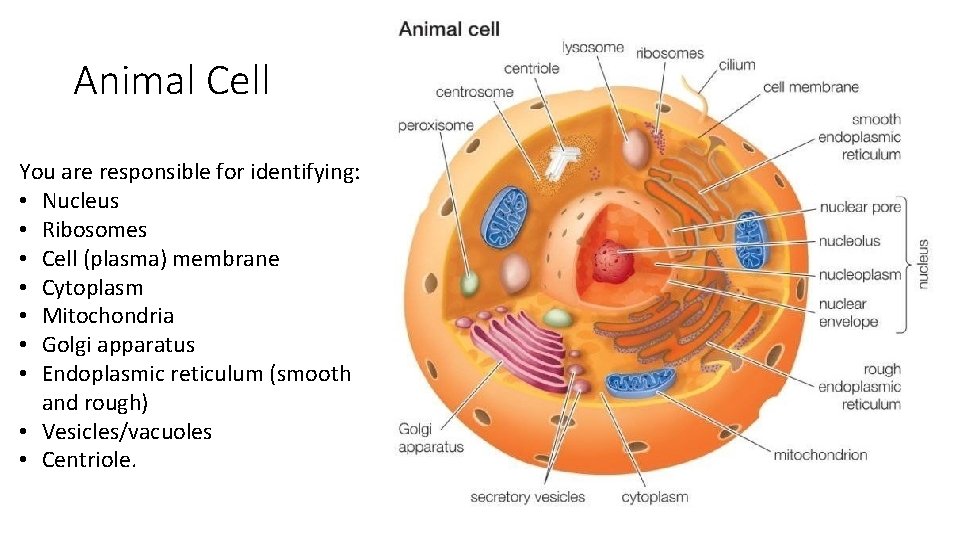
Animal Cell You are responsible for identifying: • Nucleus • Ribosomes • Cell (plasma) membrane • Cytoplasm • Mitochondria • Golgi apparatus • Endoplasmic reticulum (smooth and rough) • Vesicles/vacuoles • Centriole.
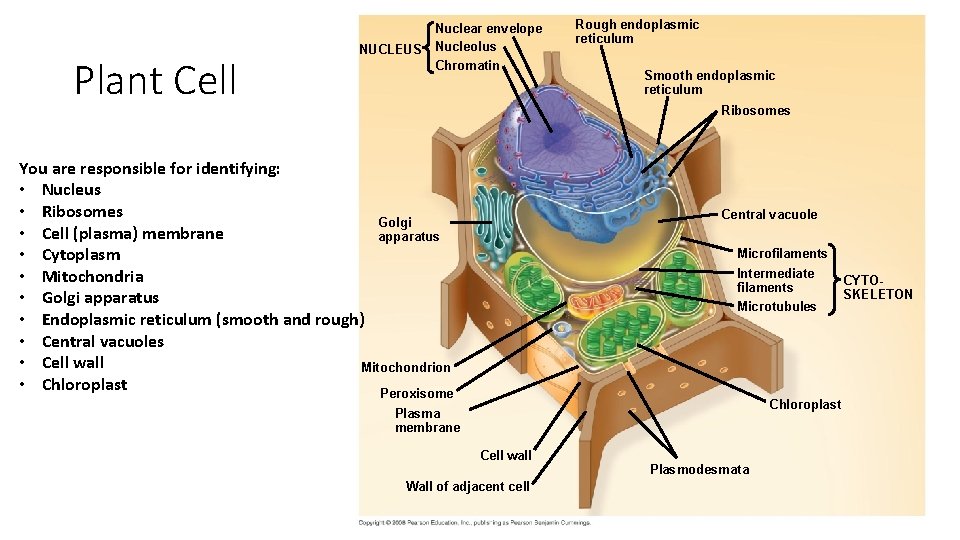
Plant Cell NUCLEUS Nuclear envelope Nucleolus Chromatin Rough endoplasmic reticulum Smooth endoplasmic reticulum Ribosomes You are responsible for identifying: • Nucleus • Ribosomes Golgi • Cell (plasma) membrane apparatus • Cytoplasm • Mitochondria • Golgi apparatus • Endoplasmic reticulum (smooth and rough) • Central vacuoles • Cell wall Mitochondrion • Chloroplast Peroxisome Central vacuole Microfilaments Intermediate filaments Microtubules Chloroplast Plasma membrane Cell wall Wall of adjacent cell Plasmodesmata CYTOSKELETON
Lesson 2: Observing Animal and Plant cells
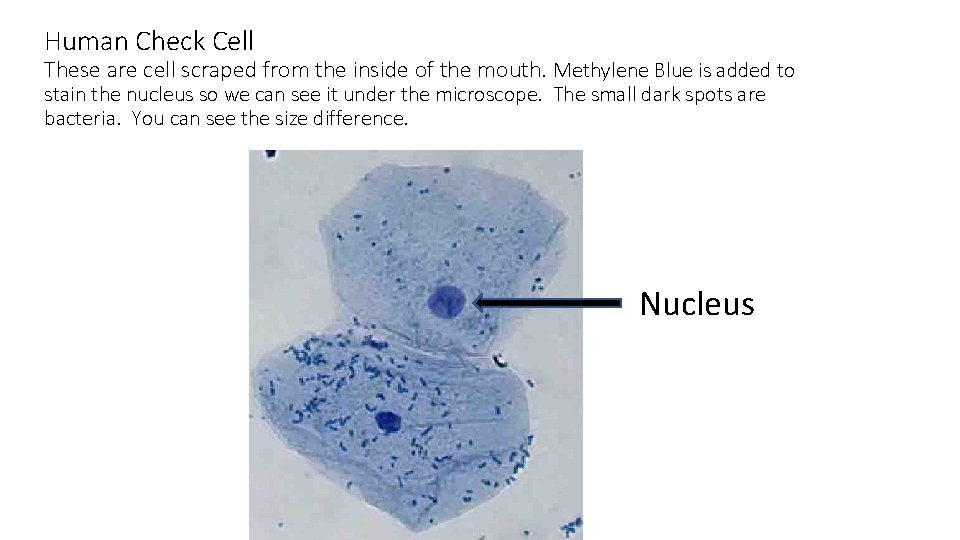
Human Check Cell These are cell scraped from the inside of the mouth. Methylene Blue is added to stain the nucleus so we can see it under the microscope. The small dark spots are bacteria. You can see the size difference. Nucleus

Elodea Leaf Chloroplast Cell wall
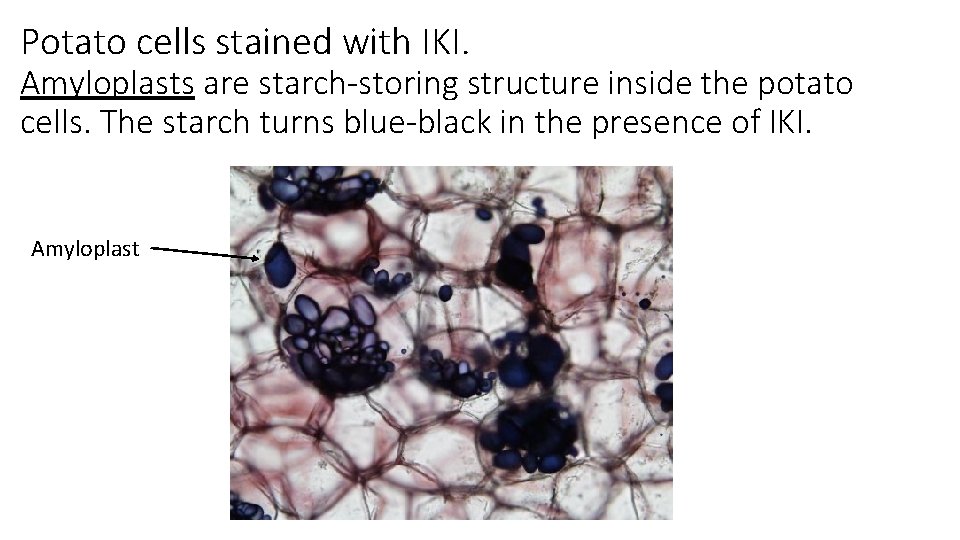
Potato cells stained with IKI. Amyloplasts are starch-storing structure inside the potato cells. The starch turns blue-black in the presence of IKI. Amyloplast
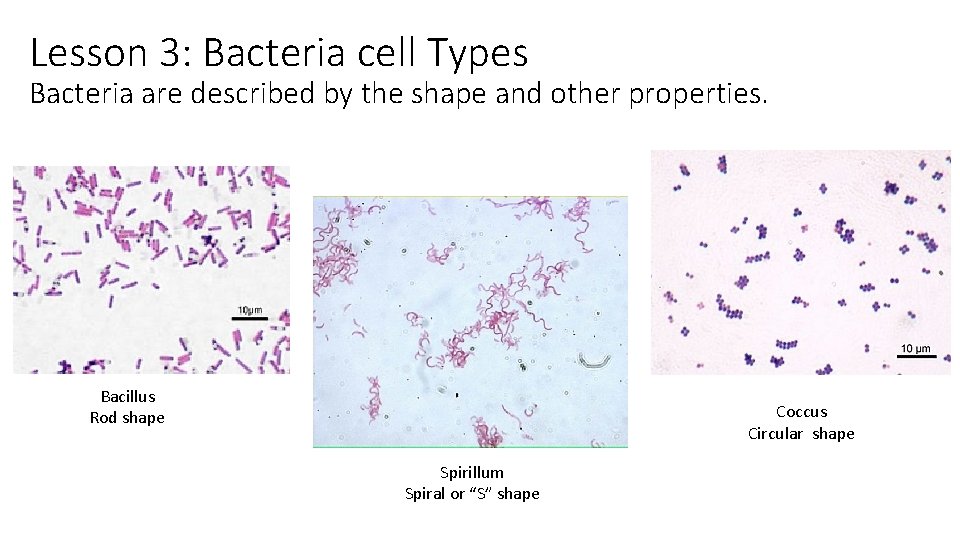
Lesson 3: Bacteria cell Types Bacteria are described by the shape and other properties. Bacillus Rod shape Coccus Circular shape Spirillum Spiral or “S” shape
- Slides: 10