
Lab 5 Mitosis and Meiosis Part 1 AP
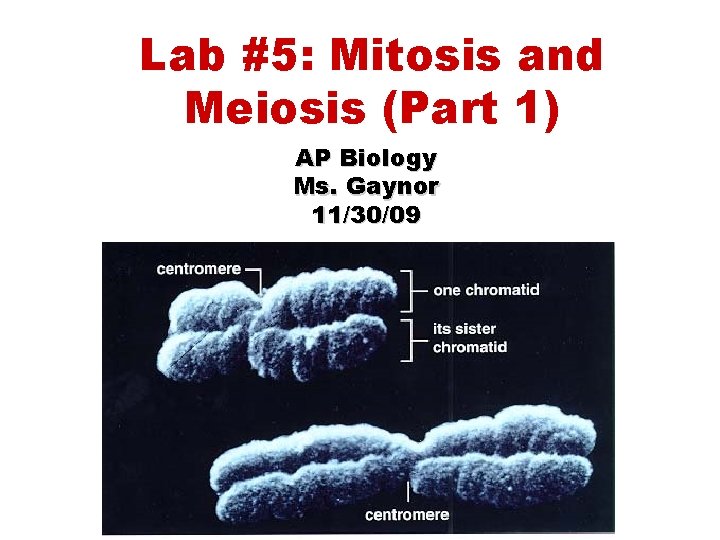
Lab #5: Mitosis and Meiosis (Part 1) AP Biology Ms. Gaynor 11/30/09
Objectives for Lab In this laboratory, you will: 1. Study the process of mitosis in plant and animal cells using slides of onion root tips and whitefish blastulae 2. Prepare microscope slides of mitotic cells using onion root tips cells 3. Investigate crossing over during meiosis in a fungus called Sordaria 4. Calculate the distance, in map units, btw a specific gene and the chromosome centromere
Mitosis • parent cell produce 2 "daughter cells" that are genetically identical • Mitosis occurs in diploid (2 n) • 1 division/ 1 karyokinesis event
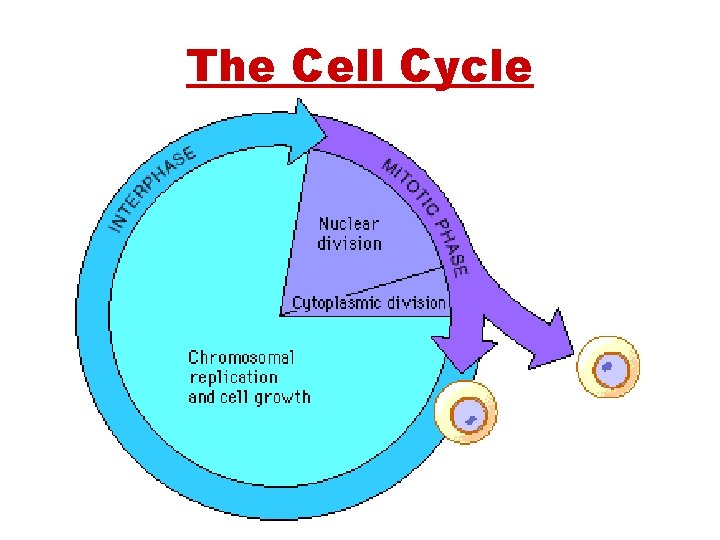
The Cell Cycle
Meiosis • diploid parent cell divide and produce gametes or spores that give rise to new individuals • The parent cell produces 4 haploid (1 n) daughter cells • 2 divisions/ 2 karyokinesis events • Synapsis, independent assortment and crossing over occur
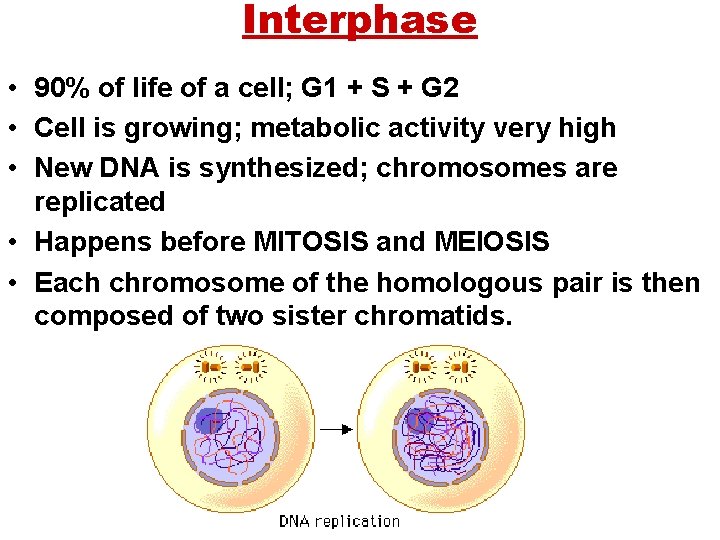
Interphase • 90% of life of a cell; G 1 + S + G 2 • Cell is growing; metabolic activity very high • New DNA is synthesized; chromosomes are replicated • Happens before MITOSIS and MEIOSIS • Each chromosome of the homologous pair is then composed of two sister chromatids.
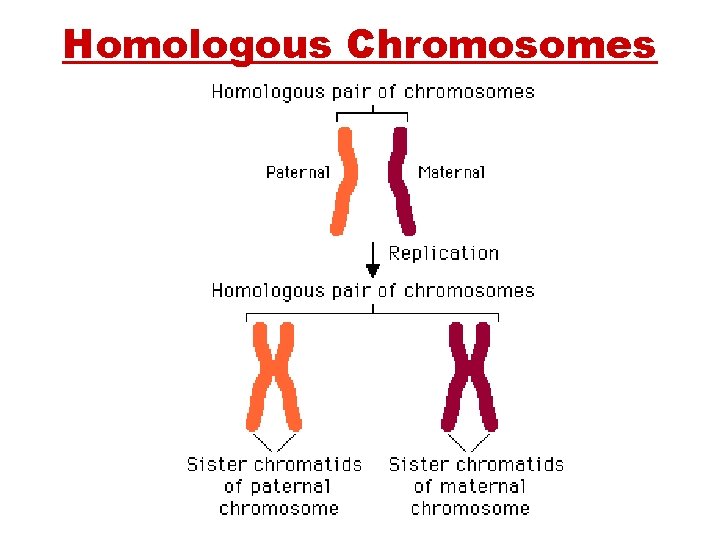
Homologous Chromosomes
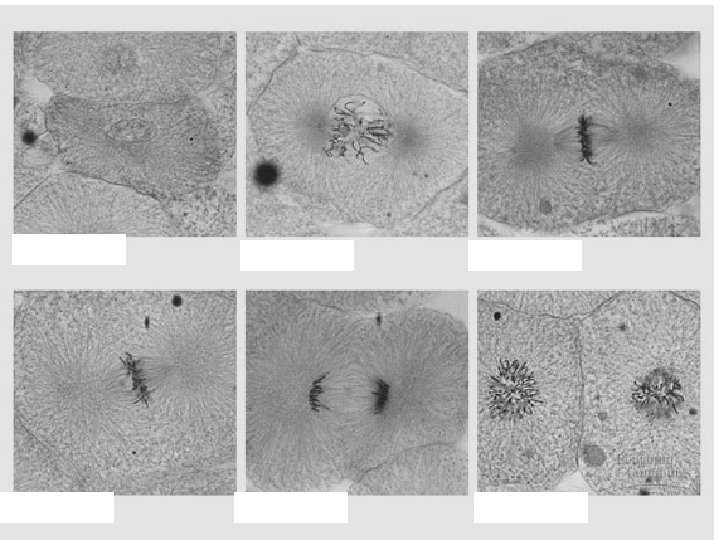
Part 1 Observing Mitosis A. Using Prepared Slides of animal & plant cells B. SKIP…. Using Wet Mounts and staining techniques and onion root tip cells – study and sketch the events of cell division in BOTH plant or animal cells, using a microscope slide of cells arrested at various stages in the process of division

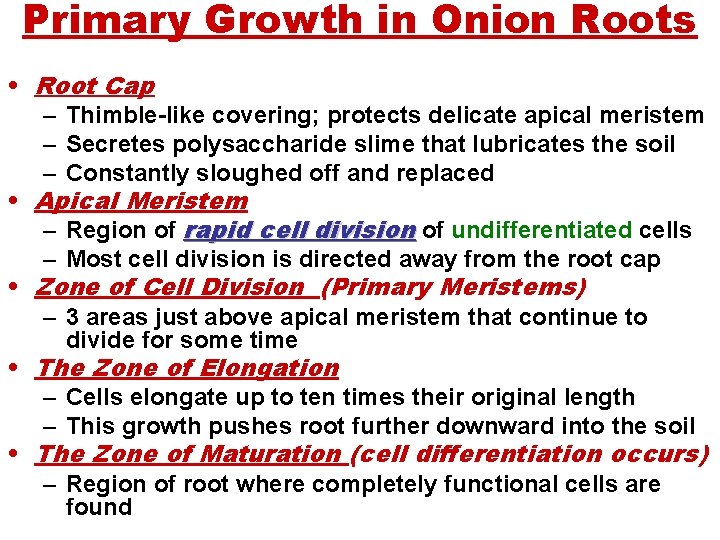
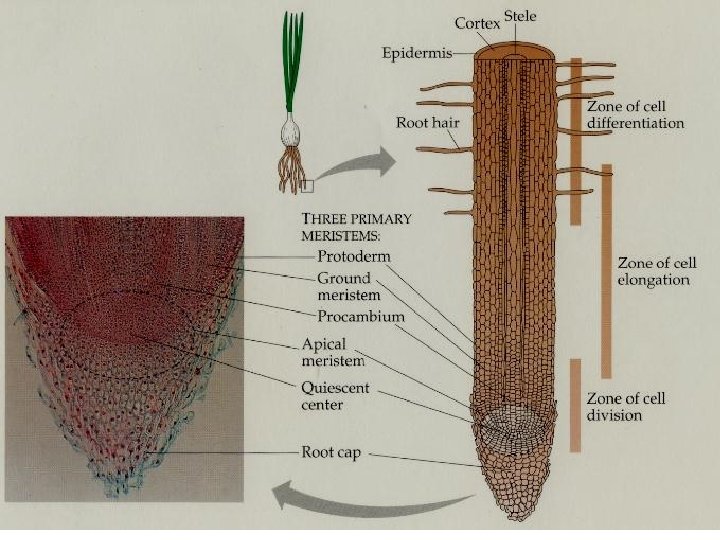
Primary Growth in Onion Roots • Root Cap – Thimble-like covering; protects delicate apical meristem – Secretes polysaccharide slime that lubricates the soil – Constantly sloughed off and replaced • Apical Meristem – Region of rapid cell division of undifferentiated cells – Most cell division is directed away from the root cap • Zone of Cell Division (Primary Meristems) – 3 areas just above apical meristem that continue to divide for some time • The Zone of Elongation – Cells elongate up to ten times their original length – This growth pushes root further downward into the soil • The Zone of Maturation (cell differentiation occurs) – Region of root where completely functional cells are found
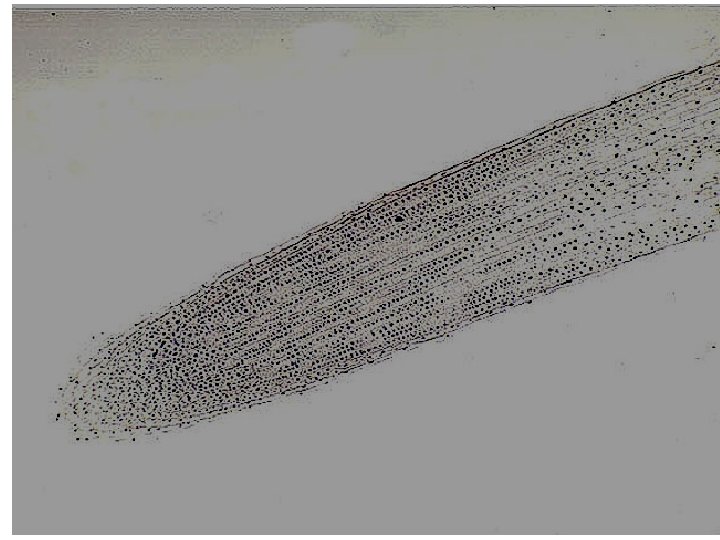
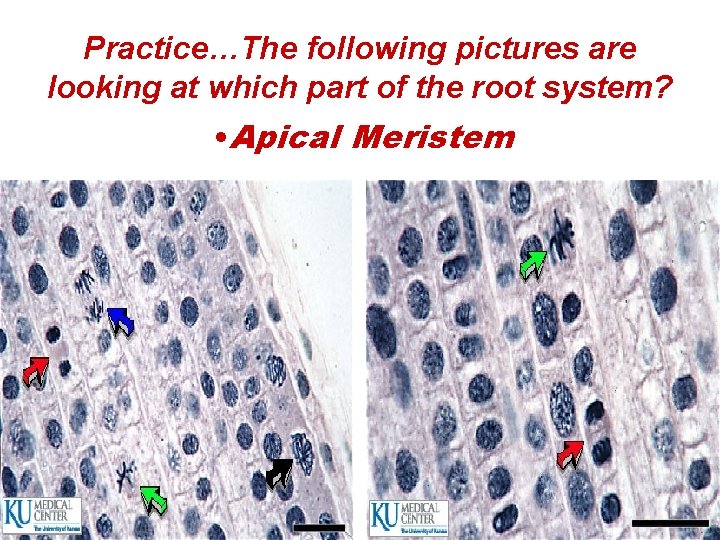
Practice…The following pictures are looking at which part of the root system? • Apical Meristem
Analysis of Results Part I Determine the Timing the Stages of Cell Division 1. Look at the slide, count and record the number of cells in the field of view that are in each phase. • Do this for AT LEAST 3 different fields of view (at least 400 cells) 2. Determine total number of cells counted and % of cells that are in each phase. 3. To calculate the time (in minutes) for each phase, multiply the percent of cells in that phase by the number of minutes for the whole cycle.
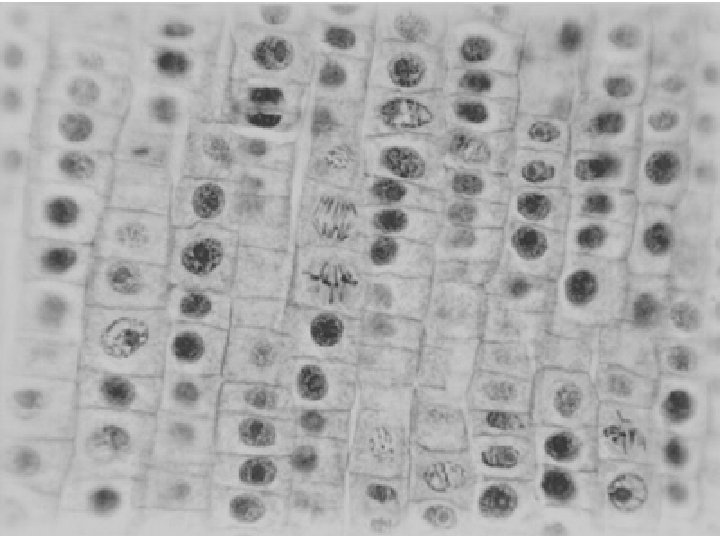
Calculations • The average time for onion root tip cells to complete the cell cycle is 24 hours = 1440 minutes. To calculate the time for each stage: • % of cells in the stage X 1440 minutes = number of minutes in the stage • Calculate the time for each stage and fill in the table • Now…We will practice with the slide of onion root cells below.
Part II: Meiosis • 1 DNA replication event 2 nuclear divisions (2 karyokinesis events) • Reduces chromosome number of the parent (germ) cell (2 n) four 1 n daughter cells (each with ½ the chromosome # of parent germ line cell) • Each daughter cell contains only 1 single copy chromosome from each homologous pair • Purpose produce genetic variation; make sure gamete only have 1 copy of each chromosome
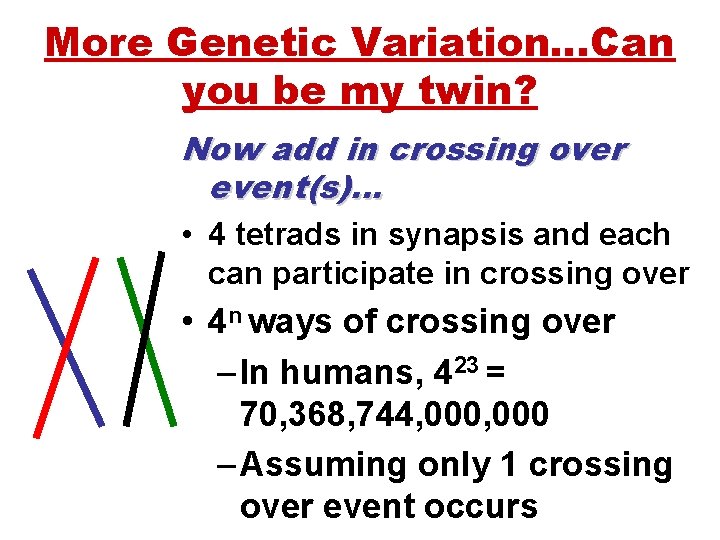
More Genetic Variation…Can you be my twin? Now add in crossing over event(s)… • 4 tetrads in synapsis and each can participate in crossing over • 4 n ways of crossing over – In humans, 423 = 70, 368, 744, 000 – Assuming only 1 crossing over event occurs
Fertilization also contributes to genetic variation • Fusion of gametes (syngamy) is RANDOM • 1 st diploid cell from syngamy = fertilization • (223 )2 = because there are 2 parents – In humans, (223 )2 = 70, 368, 744, 000
Now…Put it all TOGETHER!!! • With fertilization AND crossing over AND independent assortment…. • (423 )2 = 4, 951, 760, 200, 000, 000 combinations are possible • Most likely…you do NOT have a long lost twin
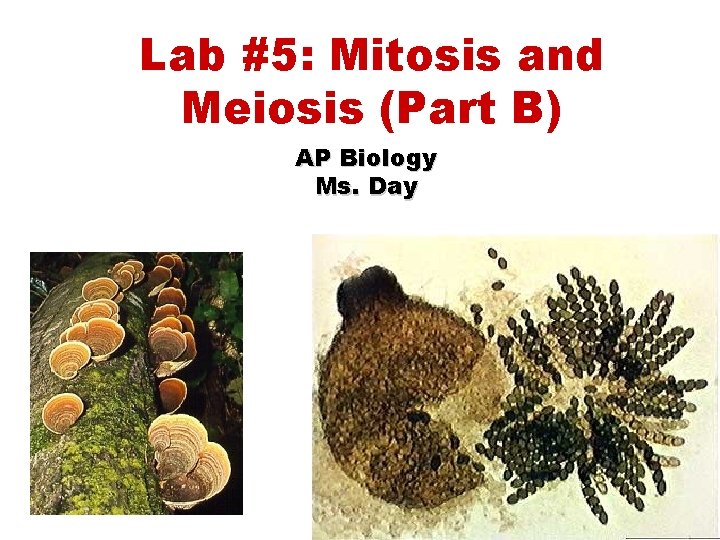
Lab #5: Mitosis and Meiosis (Part B) AP Biology Ms. Day

Watch this video… • https: //www. youtube. com/watch? v=g. XUx. H 1 a. FRp 0
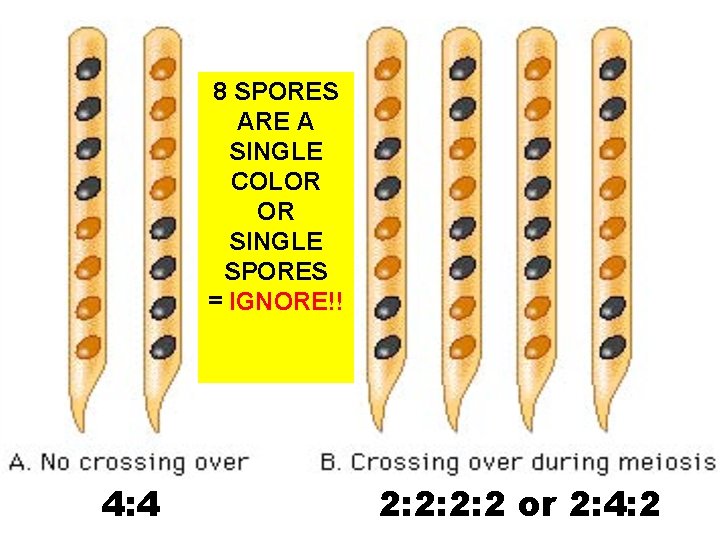
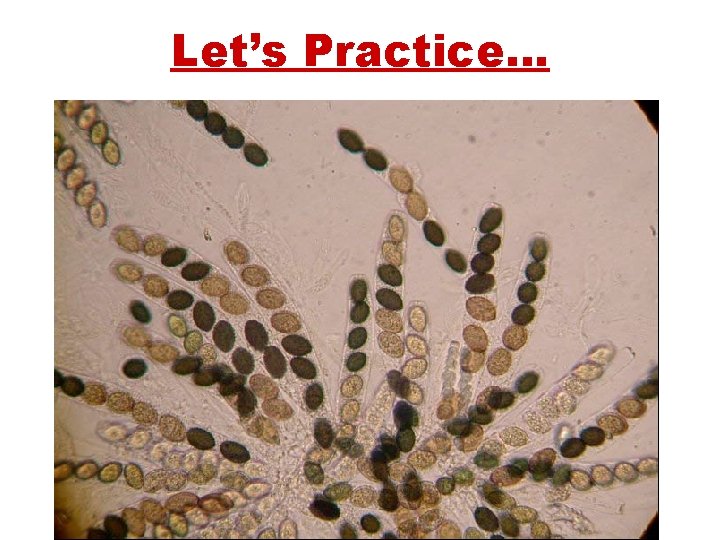
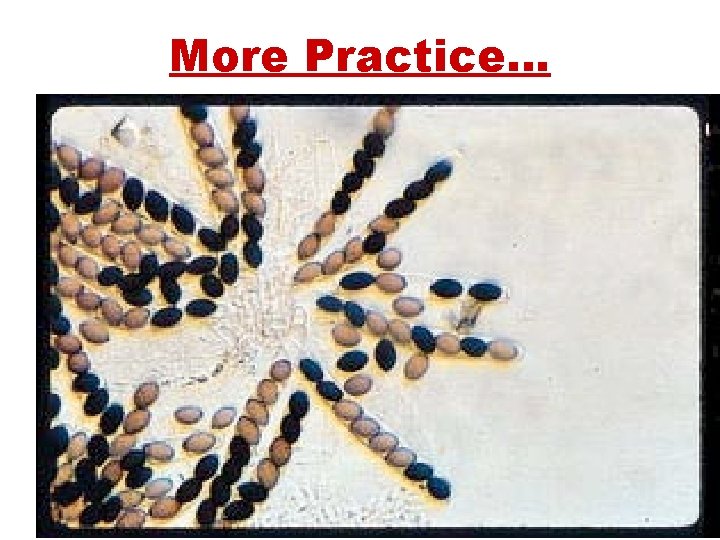
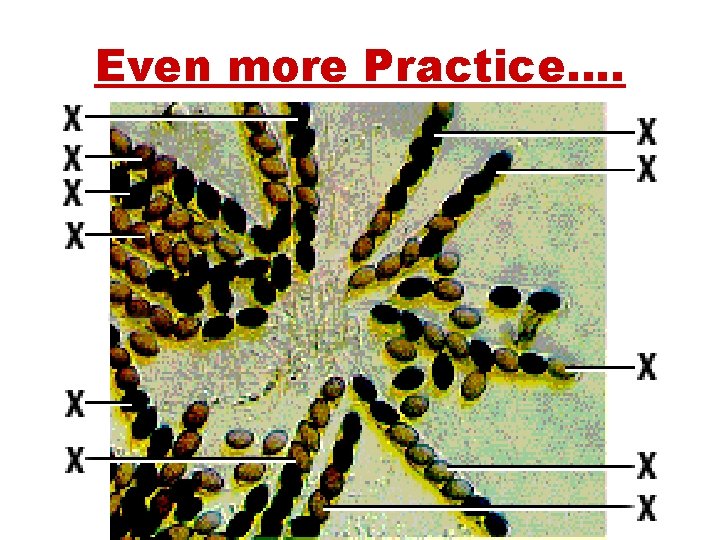
8 SPORES ARE A SINGLE COLOR OR SINGLE SPORES = IGNORE!! 4: 4 2: 2: 2: 2 or 2: 4: 2
Design of the Part 3: Meiosis in Sordaria • In this exercise, you observe the results of crossing over in a fungus called Sordaria. • A cross between two haploid strains of Sordaria produces spores of different colors. – Wildtype = black spores – Mutant = tan spores • Where growing filaments (called mycelia) mycelia of 2 strains meet, fertilization occurs zygotes form. • Meiosis occurs within fruiting bodies (called perithecia) perithecia to form haploid ascospores, spores contained in asci (special sacs). • Then one mitotic division doubles the number of ascospores to 8.
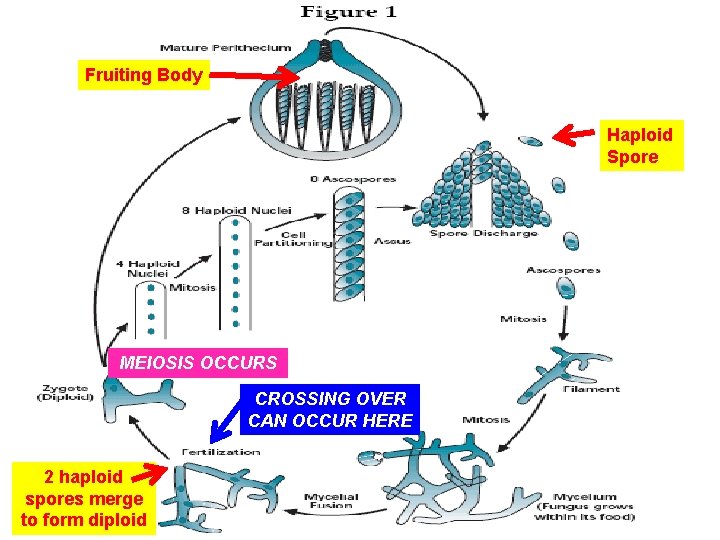
Fruiting Body Haploid Spore MEIOSIS OCCURS CROSSING OVER CAN OCCUR HERE 2 haploid spores merge to form diploid
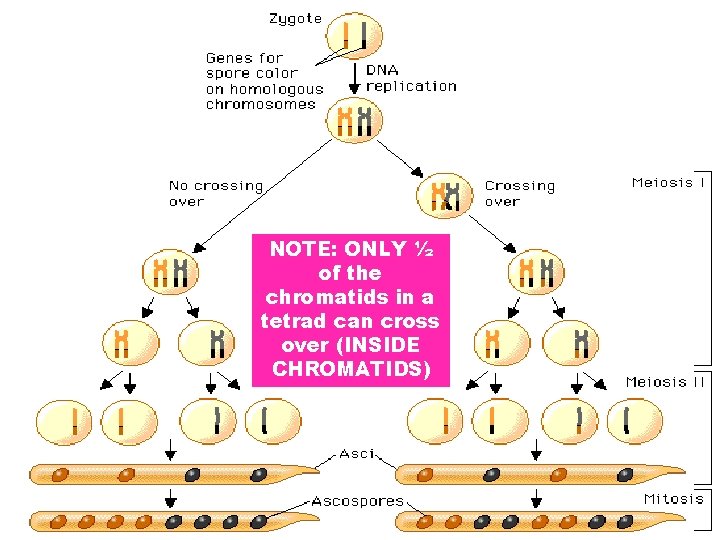
NOTE: ONLY ½ of the chromatids in a tetrad can cross over (INSIDE CHROMATIDS)
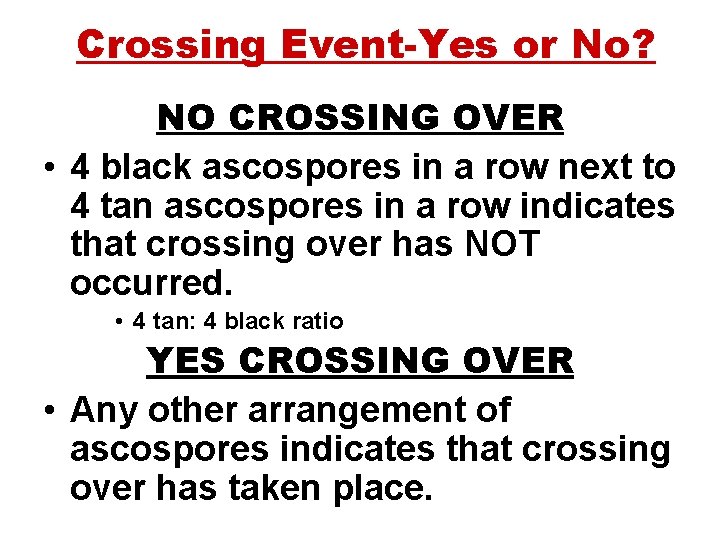
Crossing Event-Yes or No? NO CROSSING OVER • 4 black ascospores in a row next to 4 tan ascospores in a row indicates that crossing over has NOT occurred. • 4 tan: 4 black ratio YES CROSSING OVER • Any other arrangement of ascospores indicates that crossing over has taken place.
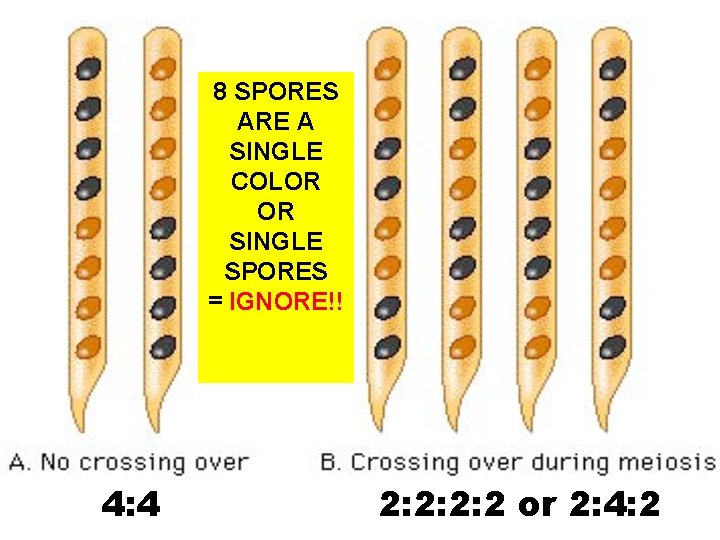
8 SPORES ARE A SINGLE COLOR OR SINGLE SPORES = IGNORE!! 4: 4 2: 2: 2: 2 or 2: 4: 2
Mapping a Chromosome Using Crossing Over • A map unit is a relative measure of the distance between a gene and the centromere. – The greater the number of crossovers, the greater the map distance (further apart the gene is from the centromere= more surface area to crossover!!) • From the crossing over data you gather from Sordaria, you will be able to calculate the map distance between the gene for spore color and the centromere.
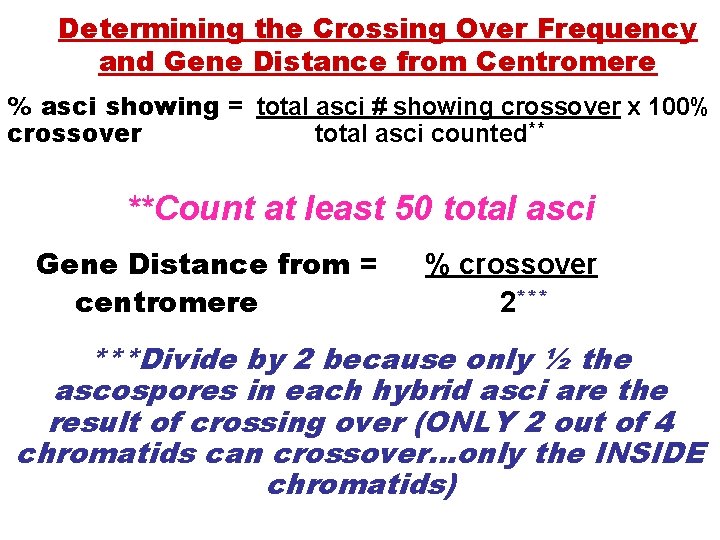
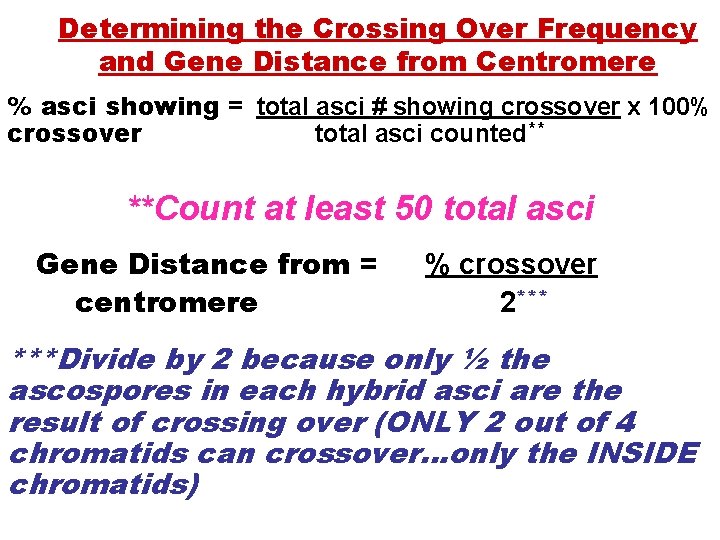
Determining the Crossing Over Frequency and Gene Distance from Centromere % asci showing = total asci # showing crossover x 100% crossover total asci counted** **Count at least 50 total asci Gene Distance from = centromere % crossover 2*** ***Divide by 2 because only ½ the ascospores in each hybrid asci are the result of crossing over (ONLY 2 out of 4 chromatids can crossover…only the INSIDE chromatids)
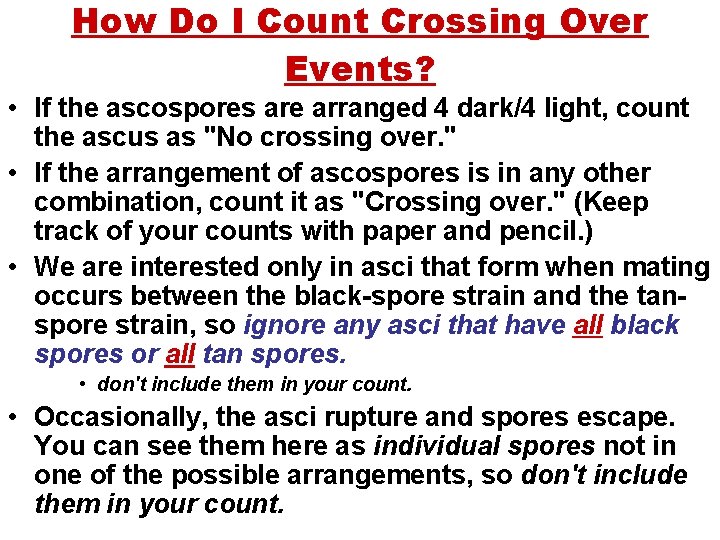
How Do I Count Crossing Over Events? • If the ascospores are arranged 4 dark/4 light, count the ascus as "No crossing over. " • If the arrangement of ascospores is in any other combination, count it as "Crossing over. " (Keep track of your counts with paper and pencil. ) • We are interested only in asci that form when mating occurs between the black-spore strain and the tanspore strain, so ignore any asci that have all black spores or all tan spores. • don't include them in your count. • Occasionally, the asci rupture and spores escape. You can see them here as individual spores not in one of the possible arrangements, so don't include them in your count.
Let’s Practice…
More Practice…
Even more Practice….
Mapping a Chromosome Using Crossing Over • A map unit is a relative measure of the distance between a gene and the centromere. – The greater the number of crossovers, the greater the map distance (further apart the gene is from the centromere!!) • From the crossing over data you gather from Sordaria, you will be able to calculate the map distance between the gene for spore color and the centromere.
Determining the Crossing Over Frequency and Gene Distance from Centromere % asci showing = total asci # showing crossover x 100% crossover total asci counted** **Count at least 50 total asci Gene Distance from = centromere % crossover 2*** ***Divide by 2 because only ½ the ascospores in each hybrid asci are the result of crossing over (ONLY 2 out of 4 chromatids can crossover…only the INSIDE chromatids)
- Slides: 37