
Lab 4 Vascular plants Biology Department Introduction Objectives
Lab 4 : Vascular plants Biology Department
Introduction
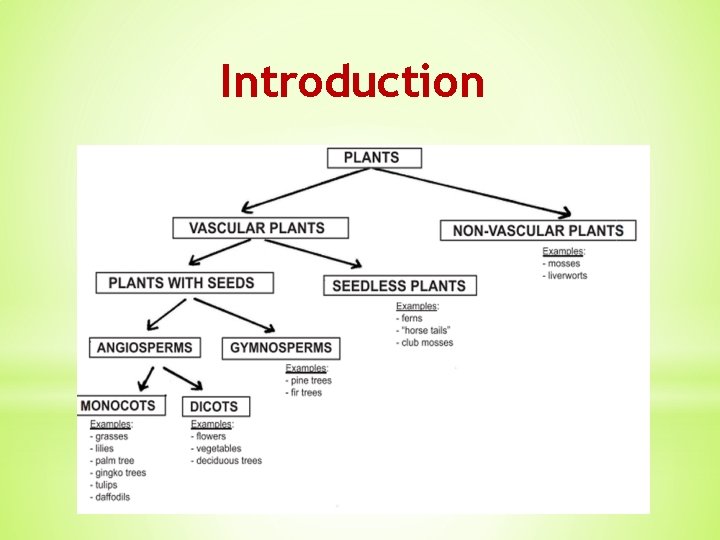
Objectives üIdentify some characteristics of seed vascular plants ( Gymnosperms & Angiosperms )
Seed vascular plant I. Gymnosperms Ø General characteristics : üare a group of plants that share one common characteristic: they bear seeds, but their seeds do not develop within an ovary (not enclosed in an ovary), but are exposed within any of a variety of structures, the most familiar being cones. ü The word "gymnosperm“ , meaning naked seeds üThe gymnosperms consist of four major, related groups: conifers, cycads, ginkgo, and gnetophytes. 4
Phylum Coniferophyta Ø General characteristic : üConifers are the largest group of gymnosperms. üAll living conifers are woody plants, and most are trees ü The size of mature conifers varies from less than one meter, to over 100 meters. üThe world's tallest, thickest, and oldest living trees are all conifers 5
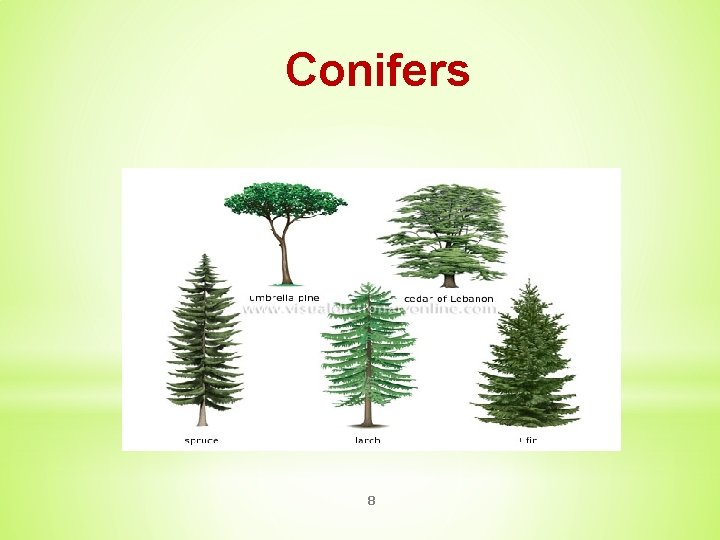
conifers üThey have naked seeds produced inside cones üThey include evergreen trees such as pine, cedar, spruce, fir, and redwood trees. Conifers leaves Leaves needlelike Leaves scalelike 6 Leaves flat, linear-shaped in a feather-like display
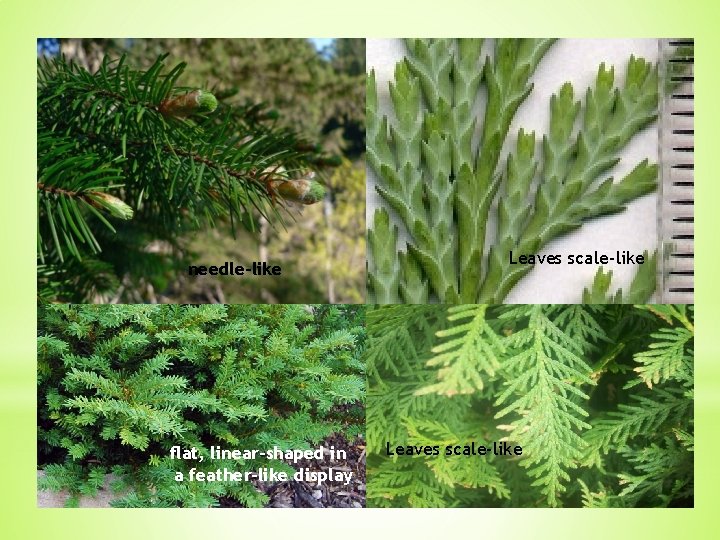
Leaves scale-like needle-like Leaves scale-like flat, linear-shaped in a feather-like display 7
Conifers 8
Note üneedle-like and are adapted for dry conditions üsuch as hot summers or freezing winters. üNeedles lose water slower than broad, flat leaves and therefore do not need to be shed during seasons when water is scarce, so most conifers are evergreen. 9
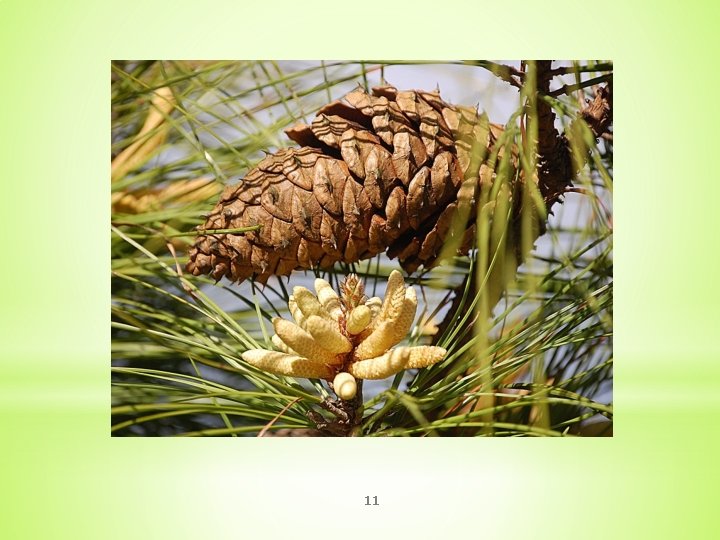
Conifer cone üCones (strobilus): is an organ on plant that contains the reproductive structures ( protective woody structures) üEvery conifer species has male and female cones. üMost conifer species produce male and female cones on the same individual (monoecious) But some appear on separate plants (Dioecious). üBoth female and male cones have a central shaft with scales or leaf-like projections called sporophylls that are specially shaped to bear sporangia (a reproductive unit).
11
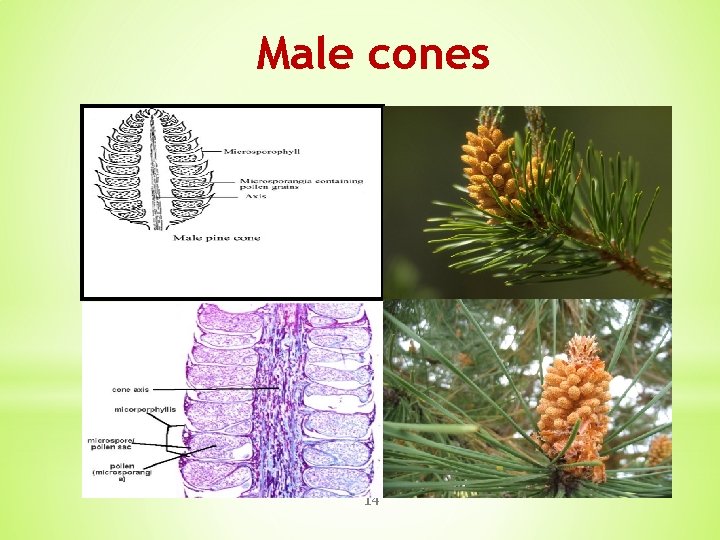
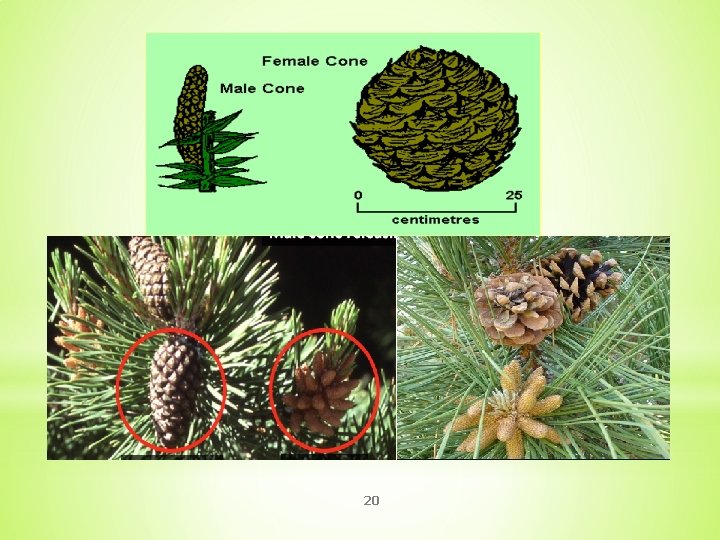
Conifer cone 1. The male cone (microstrobilus or pollen cone): § is structurally similar across all conifers, differing only in small ways (mostly in scale arrangement) from species to species. § the males do not grow to any appreciable size, and are shed from the plant soon after releasing pollen , & tend to grow on the lower branches of trees. § Extending out from a central axis are microsporophylls. § Under each microsporophyll is one or several microsporangia (pollen sacs).
Conifer cone § Within the microsporangia are cells which undergo meiotic division to produce haploid microspores § The gametophyte phase begins when the microspore, ( while still within the microsporangium), begins to germinate to form the male gametophyte. § A single microspore nucleus divides by mitosis to produce a few cells. § At this stage the male gametophyte microgametophyte (called a pollen grain : 1 n , yellow color ) is shed and transported by wind. 13
Male cones 14
Conifer cone 2. The female cones ( Seed cones , ovulate cones, megastrobili ) : § The female cone structure varies more markedly between the different conifer families, and is often crucial for the identification of many specious of conifers. § Female cones larger than male cones & tend to grow on the upper branches of trees 15
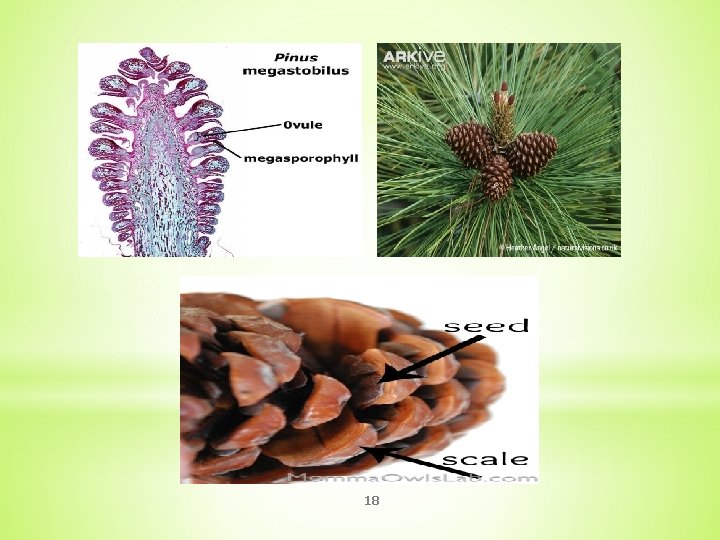
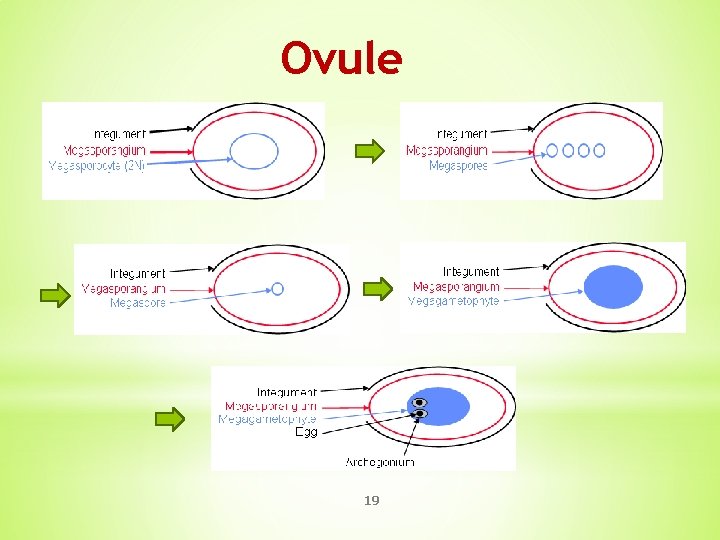
Conifer cone § A megastrobilus contains many scales, called megasporophylls, that contain megasporangia. § Within each megasporanium, a single cell undergoes meiotic division to produce four haploid megaspores, three of which typically degenerate. § The remaining megaspore undergoes mitosis to form the female gametophyte § Female gametophyte function to produce eggs 16
Conifer cone § Ovule ("small egg") : It consists of three parts: üThe integument forming its outer layer ü the nucellus (or remnant of the megasporangium) üfemale gametophyte (formed from haploid megaspore) in its center. üThe female gametophyte (The megagametophyte ) produces an egg cell (or several egg cells in some groups) for the purpose of fertilization. üAt this stage the ovule is ready to be fertilized. üAfter fertilization, the ovule develops into a seed. 17
18
Ovule 19
20
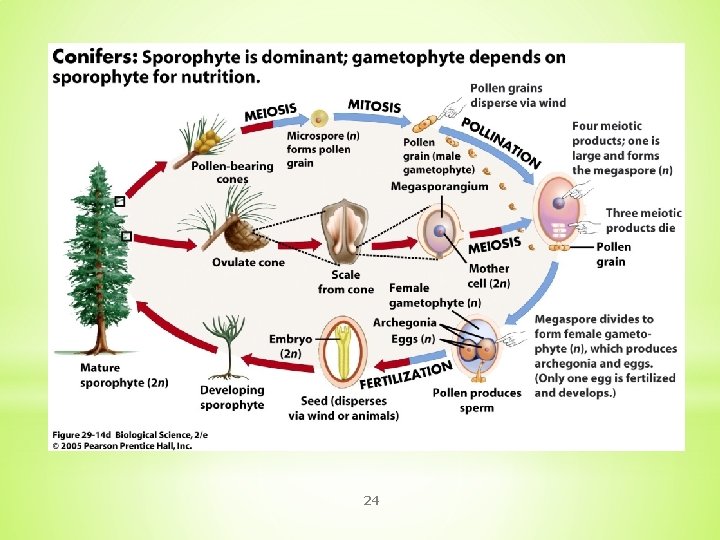
Pollination and Fertilization üBefore fertilization can take place, however, the pollen grain must be transported to the female gametophyte—the process of pollination. üIn many gymnosperms, a sticky “pollination droplet” oozes from a tiny hole in the female megasporangium to catch pollen grains. üIn other species, the pollen grain settles on the surface of the megasporangium, where the male gametophyte develops further. üWithin each pollen grain are two cells. One is called the "generative" cell and will generate two sperm while the other is a tube cell that will produce a pollen tube after pollination. 21
Pollination and Fertilization üA pollen tube emerges from the grain and grows through the megasporangium toward the multicellular egg-containing structure called the archegonium. üThe megaspore and pollen grain continue to mature, the nucleus of the latter undergoing additional divisions resulting in sperm. üThe sperm are not flagellated (usually ), so they remain within the tube cell and rely on the growth of a pollen tube to deliver them to the egg cell üBy the time the pollen tube reaches the archegonium, both the egg and sperm are fully mature, and the egg is ready to be fertilized. 22
Pollination and Fertilization üWhen the nuclei of the two sperm meet the egg cell, one nucleus dies and the other unites with the egg nucleus to form a diploid zygote. üThe fertilized egg undergoes mitosis to begin the development of a new sporophyte generation—the multicellular embryo of the seed. ü Food for the developing embryo is provided by the massive starch-filled female gametophyte that surrounds it üMature seed drops out of cone onto the ground. üSeed germinates and seedling grows into a mature plant. When the plant is mature, it produces cones and the cycle continues. 23
24
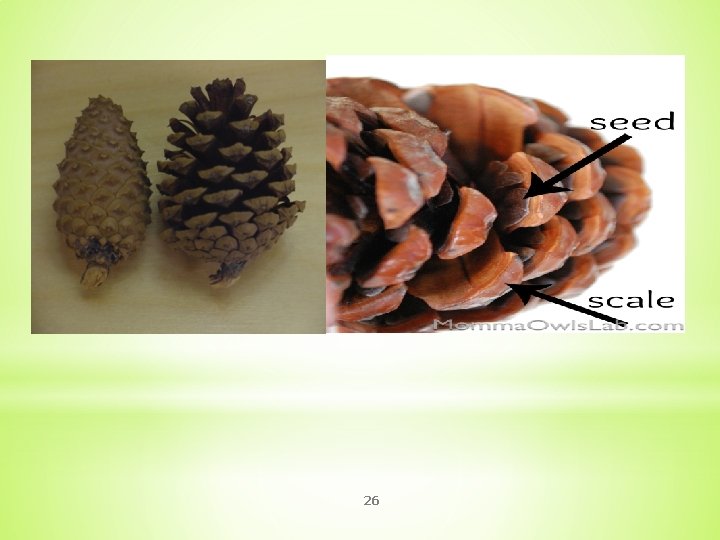
ü The time interval between pollination , fertilization & maturation of the embryo into a new sporophyte generation varies among different groups, ranging from a few months to over one year ü While developing, the scales of female cones are clasped together and usually held tight by resin. ü When the seeds between the scales reach maturity, the cone responds by changing color from green to brown, and separating its scales to expose the seeds that will soon fall out. ü For some species, the cones remain tightly closed until exposed to very warm temperatures. 25
26
27
II. Angiosperm (flowering plants) § General Characteristic : üThe largest and most diverse group within the kingdom Plantae üThe term "angiosperm" meaning "enclosed seeds” üOvule (egg) is fertilized and develops into a seed in an enclosed hollow ovary. üThe ovary itself is usually enclosed in a flower, that part of the angiospermous plant that contains the male or female reproductive organs or both. 28
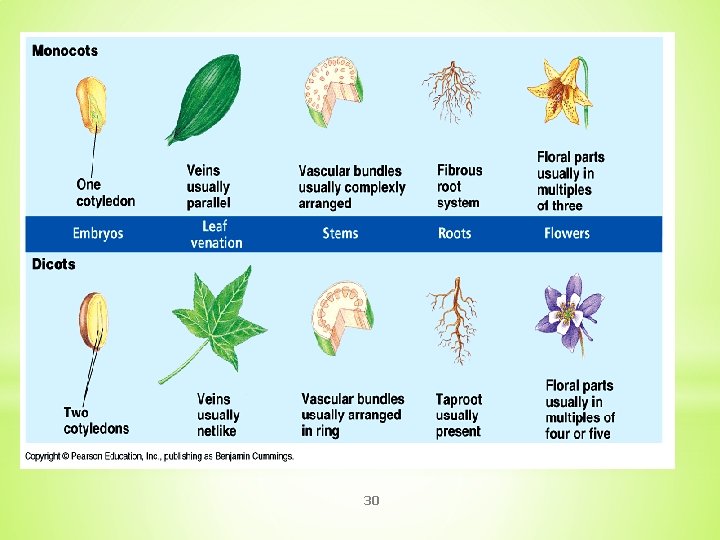
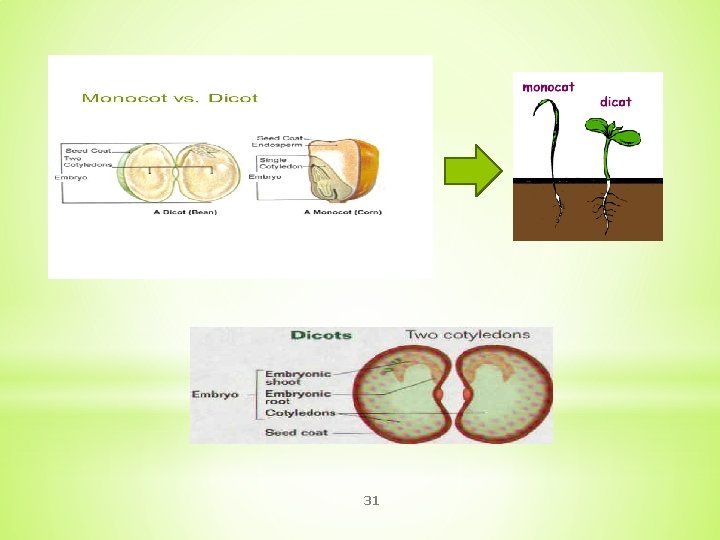
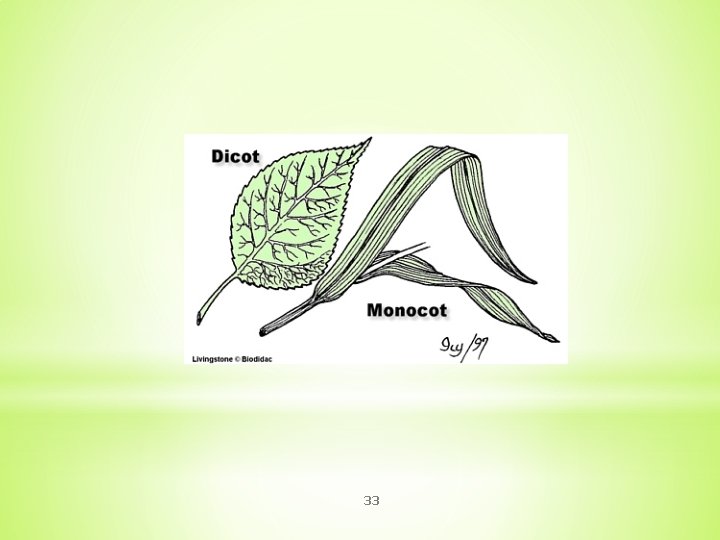
Angiosperm üFruits are derived from the maturing floral organs of the angiospermous plant and are therefore characteristic of angiosperms. üThe angiosperms have been divided into two groups: § Monocotyledons (monocots) : Rice, Wheat, Maize , lilies, grasses, Onion and palm trees. § Dicotyledons (dicots): Legumes , mint, lettuce, tomato and oak § Cotyledon( seed-leaf) is a significant part of the embryo within the seed of a plant § Upon germination, the cotyledon may become the embryonic first leaves of a seedling. § The number of cotyledons present is one characteristic used by botanists to classify the flowering plants (angiosperms) 29
30
31
32
33
- Slides: 33