
Lab 3 Histology The study of the tissues
Lab 3 – Histology The study of the tissues of the body
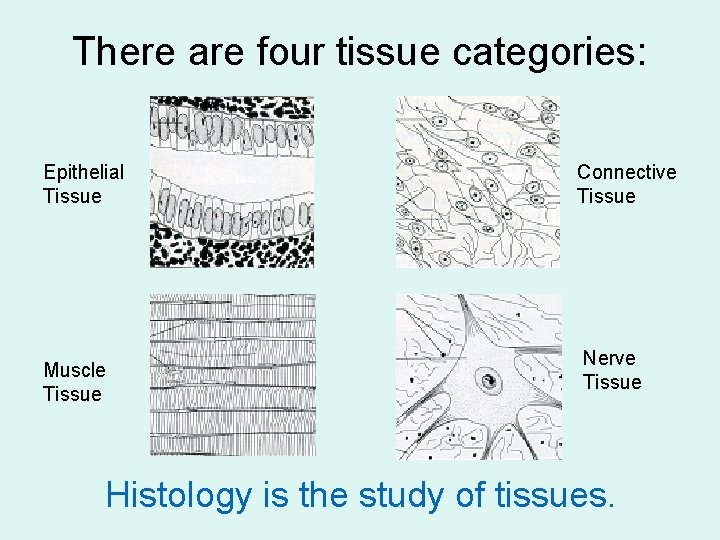
There are four tissue categories: Epithelial Tissue Muscle Tissue Connective Tissue Nerve Tissue Histology is the study of tissues.
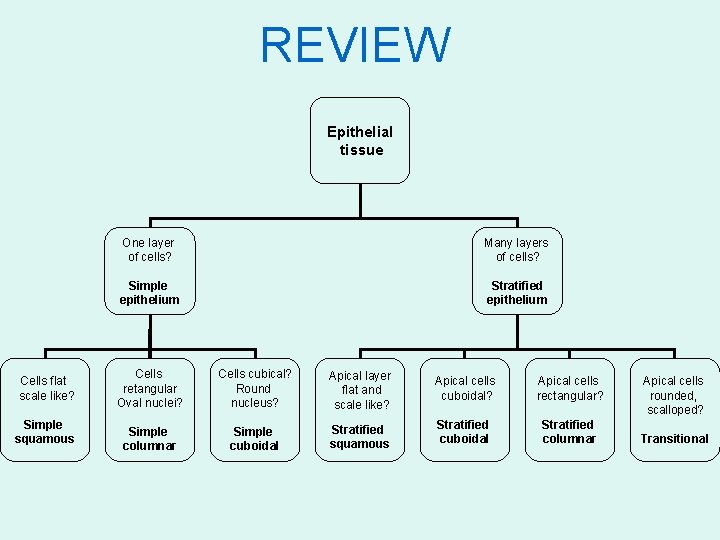
REVIEW Epithelial tissue Cells flat scale like? Simple squamous One layer of cells? Many layers of cells? Simple epithelium Stratified epithelium Cells retangular Oval nuclei? Cells cubical? Round nucleus? Apical layer flat and scale like? Apical cells cuboidal? Apical cells rectangular? Simple columnar Simple cuboidal Stratified squamous Stratified cuboidal Stratified columnar Apical cells rounded, scalloped? Transitional
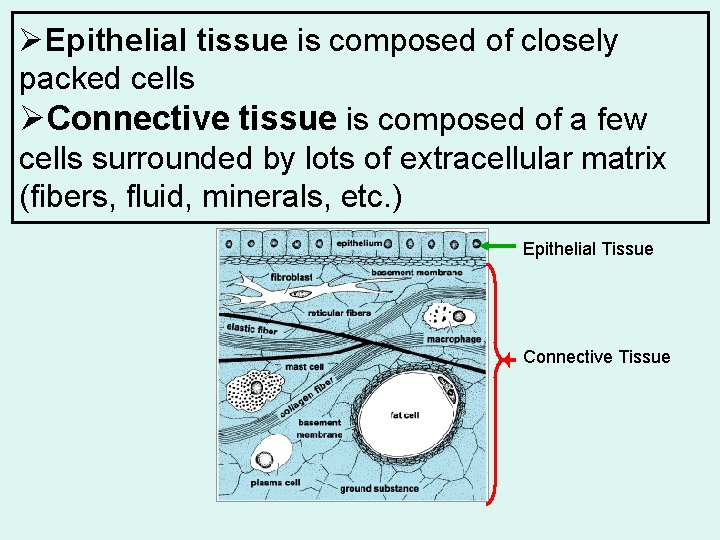
ØEpithelial tissue is composed of closely packed cells ØConnective tissue is composed of a few cells surrounded by lots of extracellular matrix (fibers, fluid, minerals, etc. ) Epithelial Tissue Connective Tissue
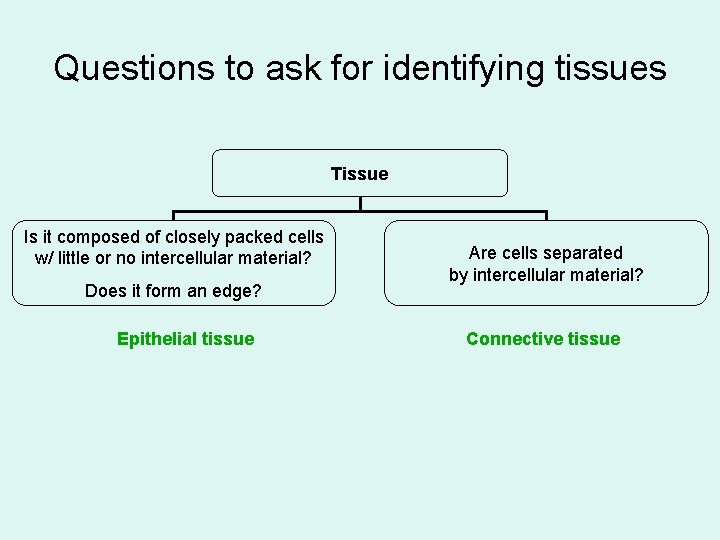
Questions to ask for identifying tissues Tissue Is it composed of closely packed cells w/ little or no intercellular material? Does it form an edge? Epithelial tissue Are cells separated by intercellular material? Connective tissue
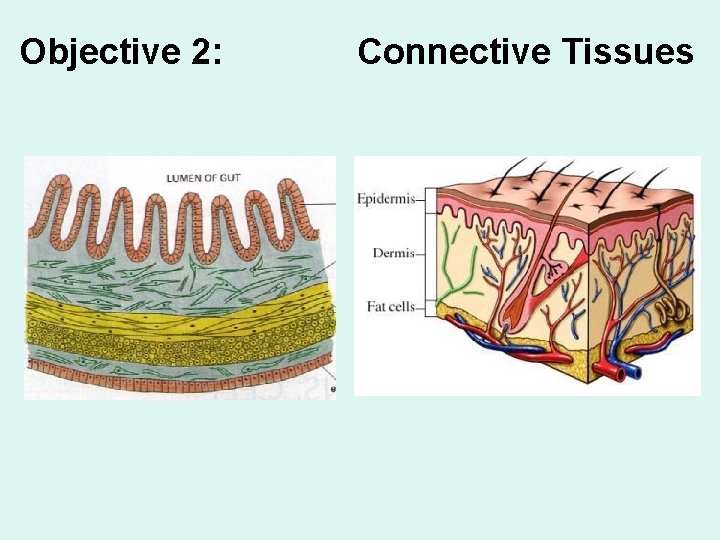
Objective 2: Connective Tissues
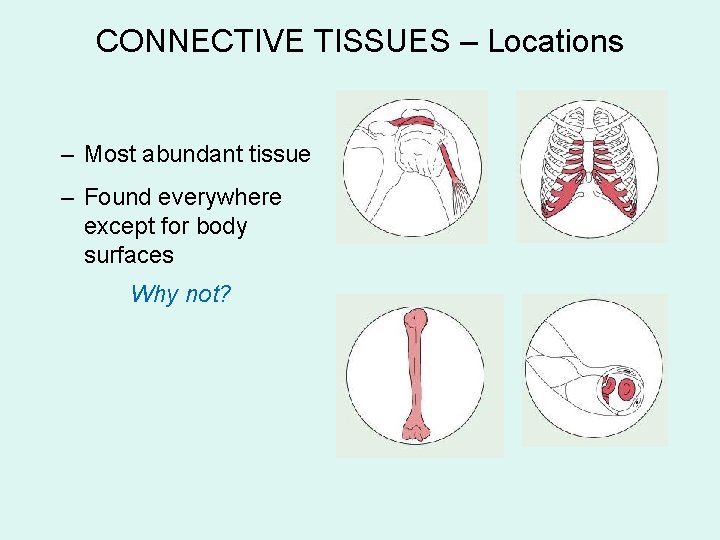
CONNECTIVE TISSUES – Locations – Most abundant tissue – Found everywhere except for body surfaces Why not?

CONNECTIVE TISSUES – Functions – – – Bind Support Protect Insulate Transport
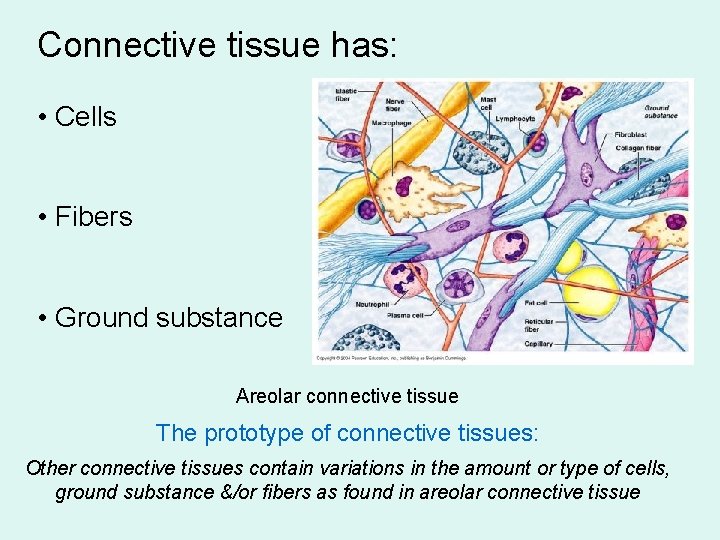
Connective tissue has: • Cells • Fibers • Ground substance Areolar connective tissue The prototype of connective tissues: Other connective tissues contain variations in the amount or type of cells, ground substance &/or fibers as found in areolar connective tissue
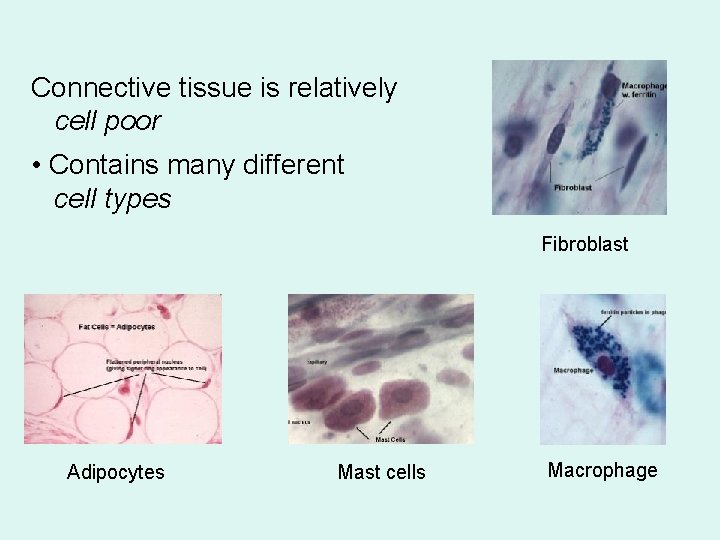
Connective tissue is relatively cell poor • Contains many different cell types Fibroblast Adipocytes Mast cells Macrophage
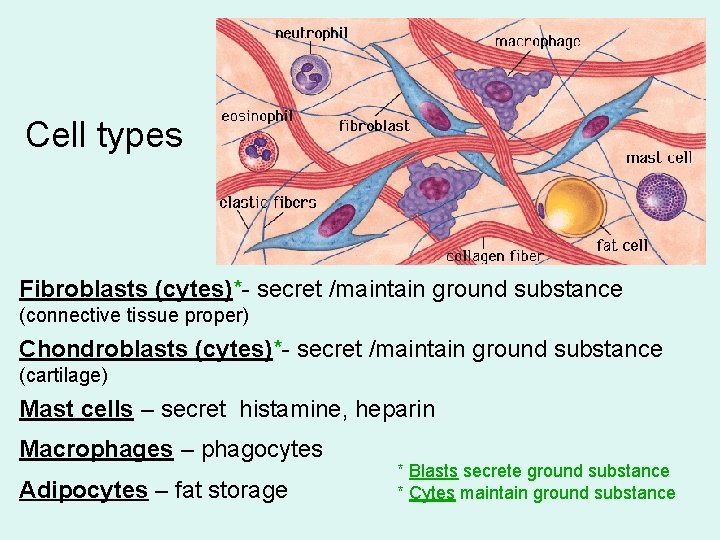
Cell types Fibroblasts (cytes)*- secret /maintain ground substance (connective tissue proper) Chondroblasts (cytes)*- secret /maintain ground substance (cartilage) Mast cells – secret histamine, heparin Macrophages – phagocytes Adipocytes – fat storage * Blasts secrete ground substance * Cytes maintain ground substance
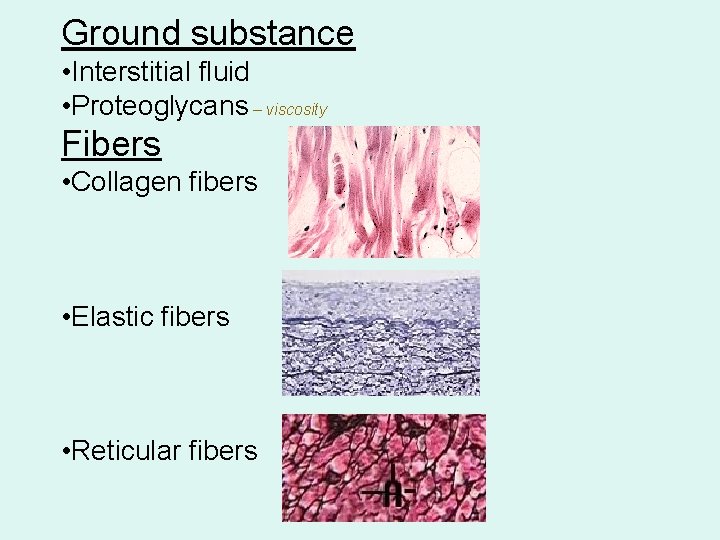
Ground substance • Interstitial fluid • Proteoglycans – viscosity Fibers • Collagen fibers • Elastic fibers • Reticular fibers
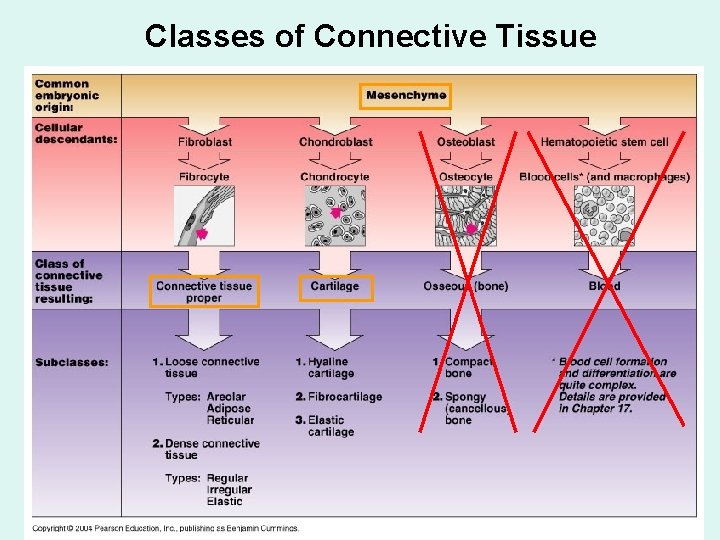
Classes of Connective Tissue
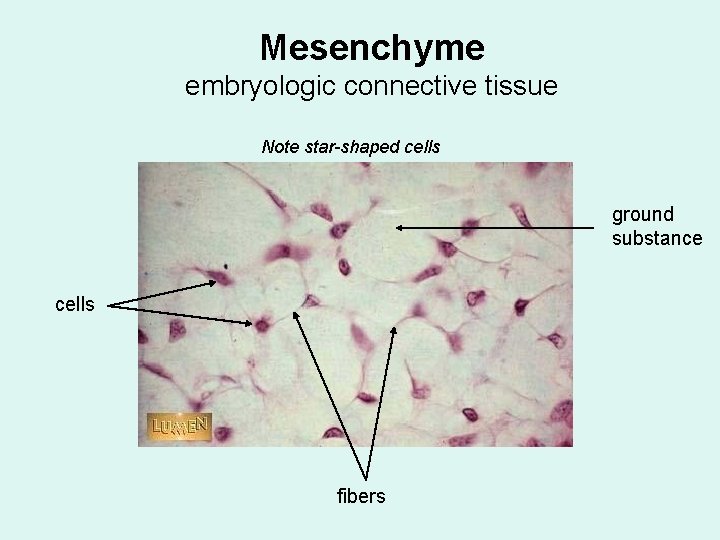
Mesenchyme embryologic connective tissue Note star-shaped cells ground substance cells fibers
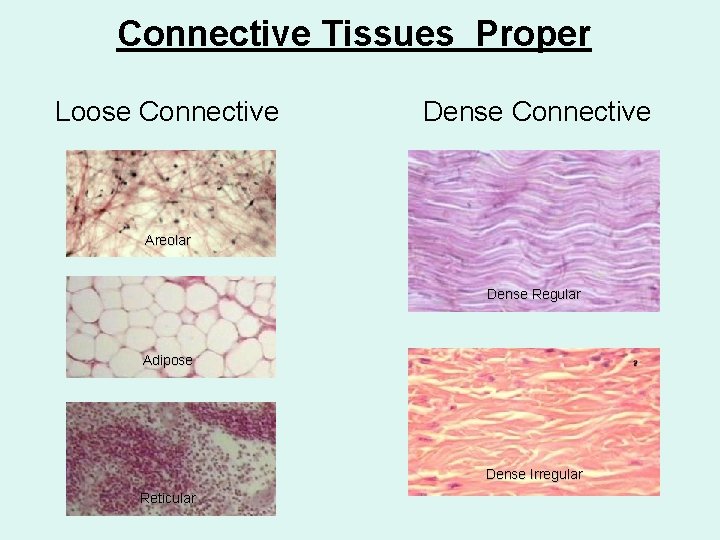
Connective Tissues Proper Loose Connective Dense Connective Areolar Dense Regular Adipose Dense Irregular Reticular
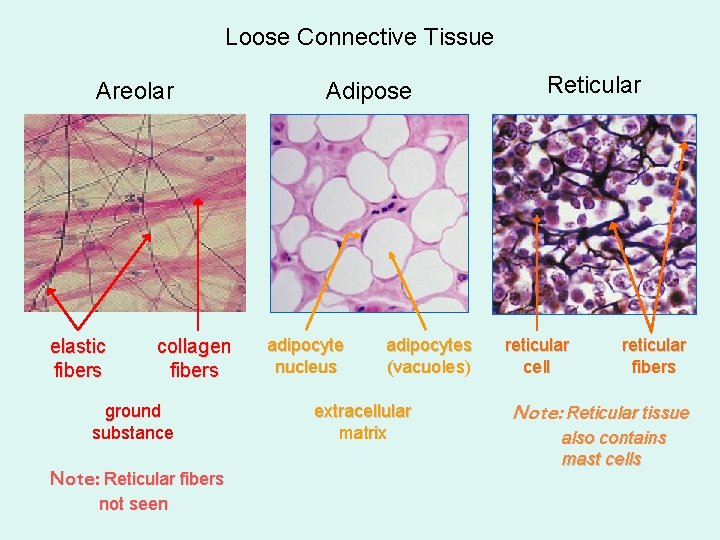
Loose Connective Tissue Areolar elastic fibers collagen fibers ground substance Note: Reticular fibers not seen Adipose adipocyte nucleus adipocytes (vacuoles) extracellular matrix Reticular reticular cell reticular fibers Note: Reticular tissue also contains mast cells
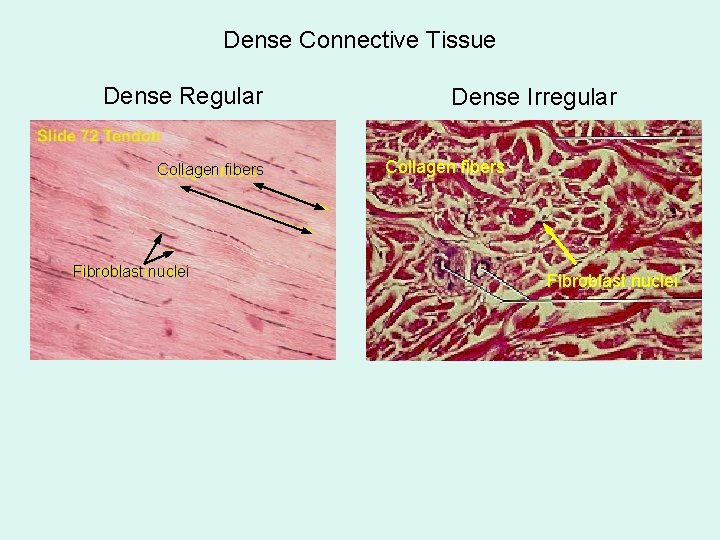
Dense Connective Tissue Dense Regular Collagen fibers Fibroblast nuclei Dense Irregular Collagen fibers Fibroblast nuclei
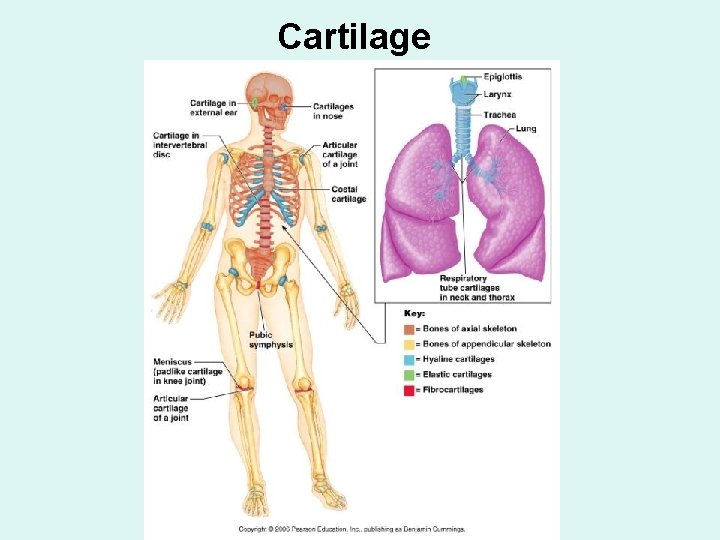
Cartilage
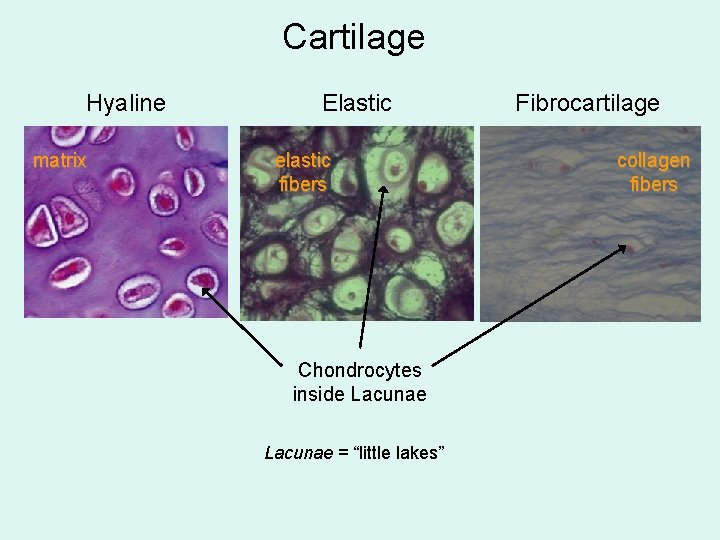
Cartilage Hyaline matrix Elastic elastic fibers Chondrocytes inside Lacunae = “little lakes” Fibrocartilage collagen fibers
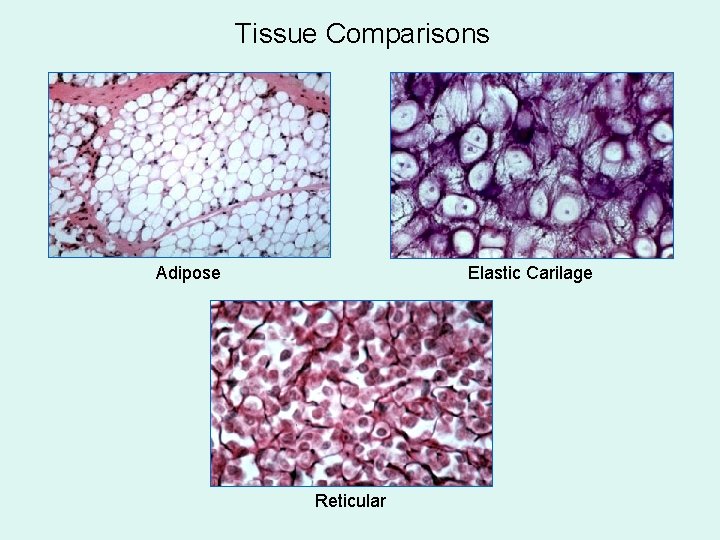
Tissue Comparisons Adipose Elastic Carilage Reticular
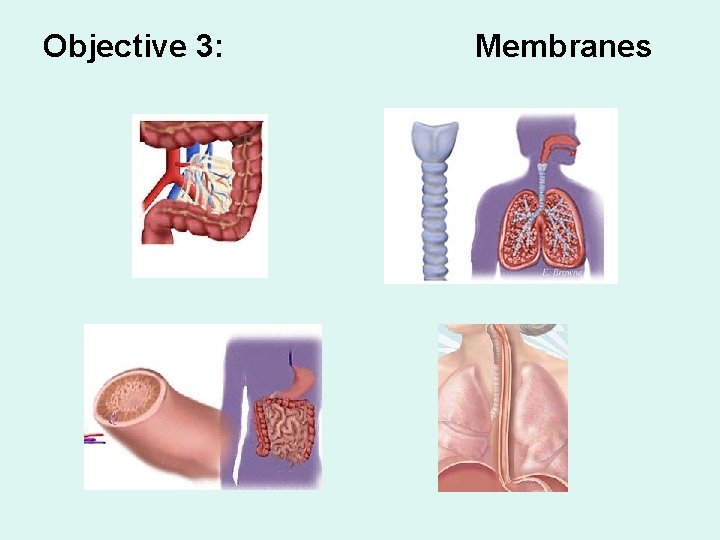
Objective 3: Membranes
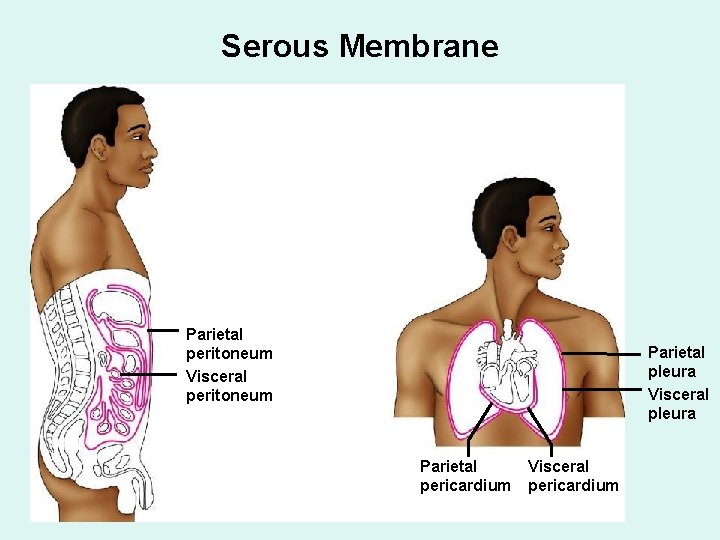
Serous Membrane Parietal peritoneum Visceral peritoneum Parietal pleura Visceral pleura Parietal pericardium Visceral pericardium
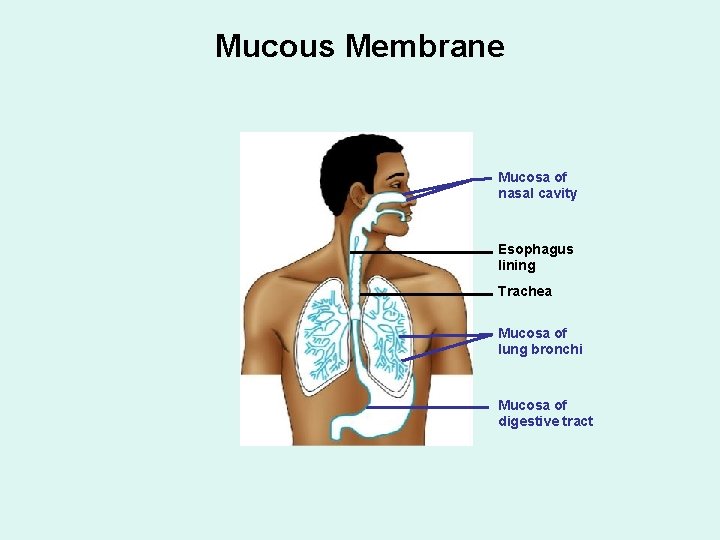
Mucous Membrane Mucosa of nasal cavity Esophagus lining Trachea Mucosa of lung bronchi Mucosa of digestive tract

Membranes are simple organs composed of 2 tissues: • Epithelium tissue • Connective tissue Serous Membrane simple squamous epithelium areolar connective tissue Mucous Membrane stratified squamous, pseudostratified columnar, or simple columnar epithelium areolar connective tissue (lamina propria)
E-Reserves More in-depth information & Practice for identifying the tissues
- Slides: 25