
Lab 3 Earth SunGeometry Earths axis is tilted
Lab 3: Earth Sun-Geometry
• Earth’s axis is tilted 23½° (from the perpendicular to the plane of the ecliptic) • Primary cause for Earth’s seasons! • Tilt is oriented in the same direction all year: • North Pole points towards Polaris

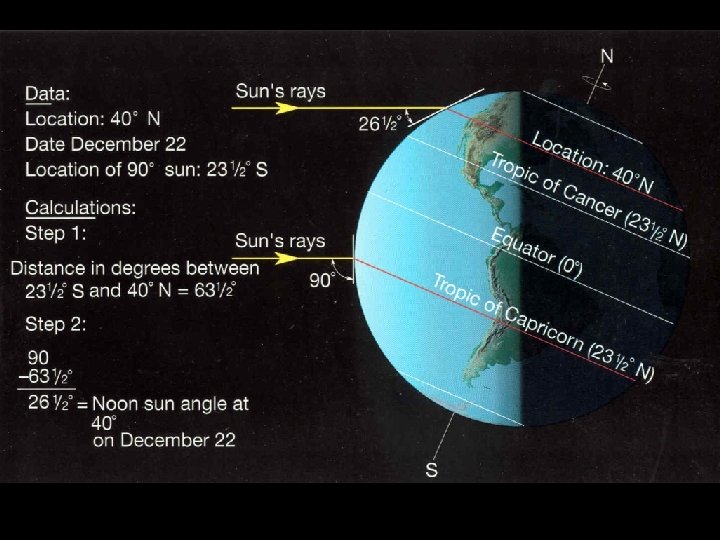
Earth-Sun Geometry • Solstices: – Summer (June 21 or 22) • Northern Hemisphere is tilted 23½° toward the sun – Sun’s rays are directly over head at 23½° N (Tropic of Cancer) – Winter (December 21 or 22) • Northern Hemisphere is tilted 23½° away from the sun – Sun’s rays are directly over head at 23½° S (Tropic of Capricorn) Solar Noon = Sun at highest point in the sky
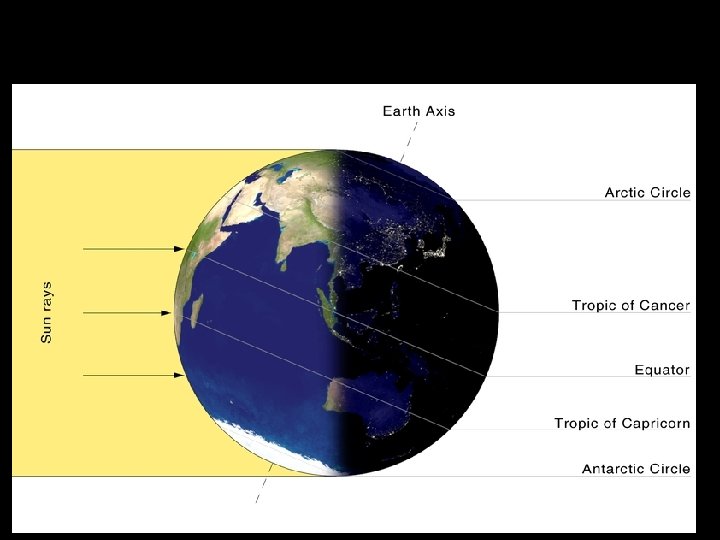
Earth-Sun Geometry http: //www. geography. hunter. cuny. edu/~tbw/wc. notes/2. heating. earth. s urface/01_Earth. Sun. html
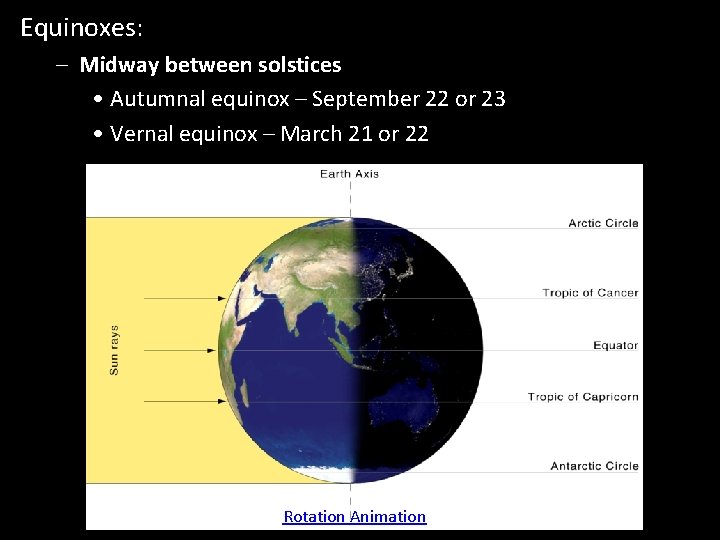
Equinoxes: – Midway between solstices • Autumnal equinox – September 22 or 23 • Vernal equinox – March 21 or 22 Rotation Animation
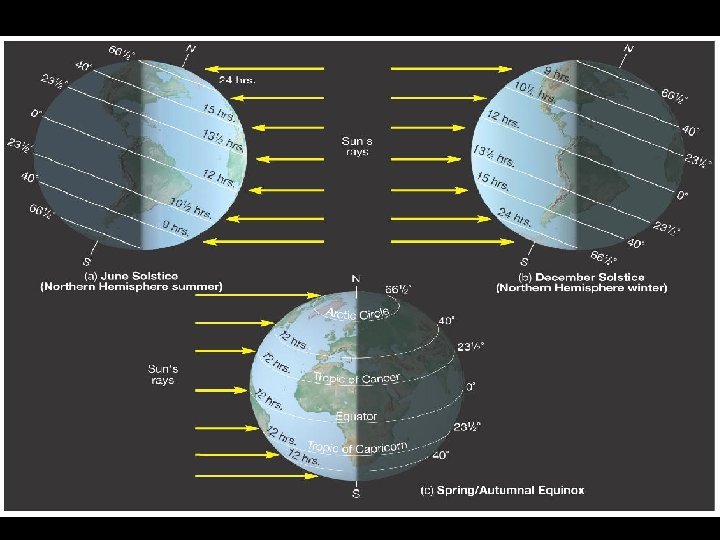
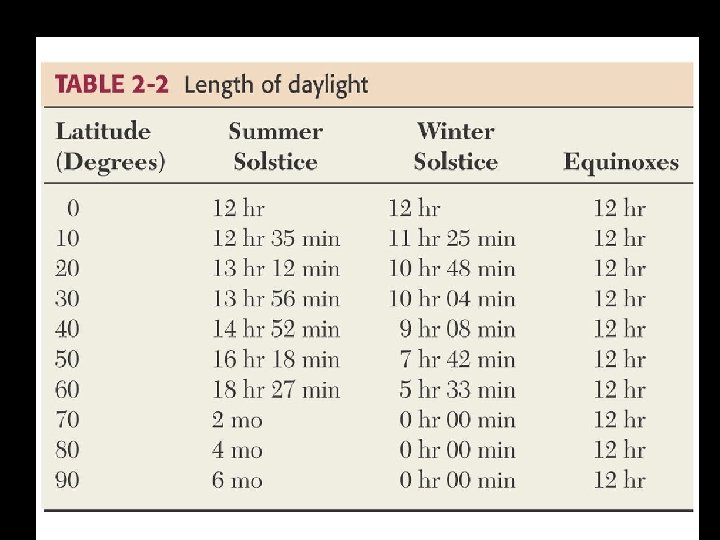
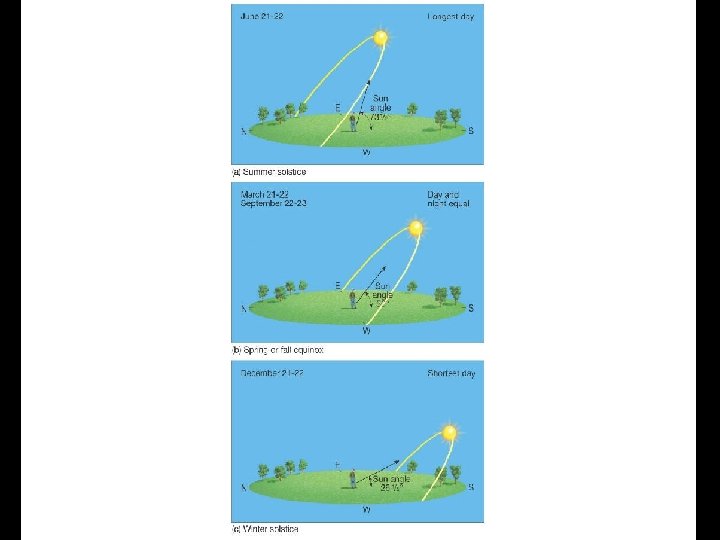

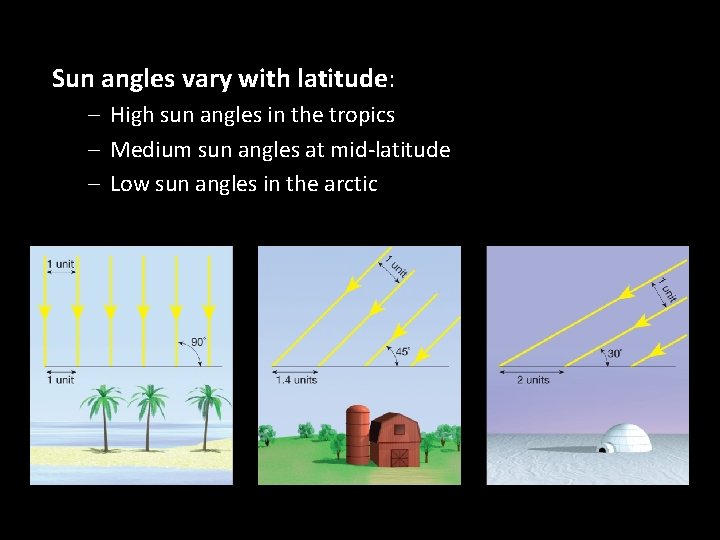
Sun angles vary with latitude: – High sun angles in the tropics – Medium sun angles at mid-latitude – Low sun angles in the arctic
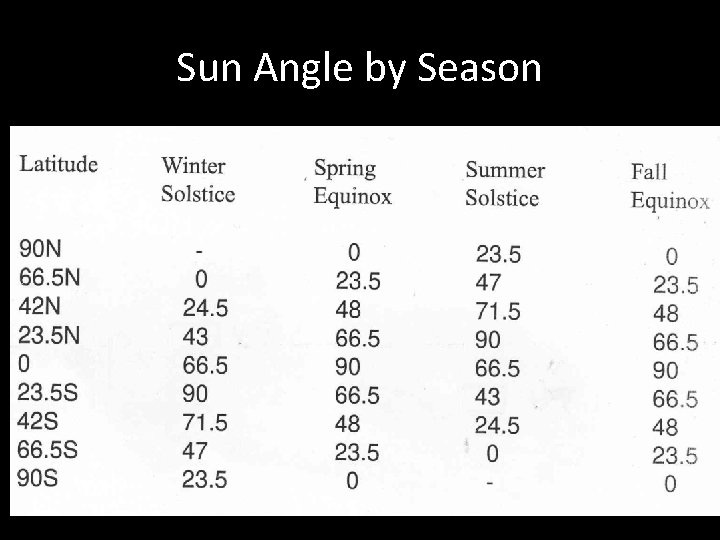
Sun Angle by Season
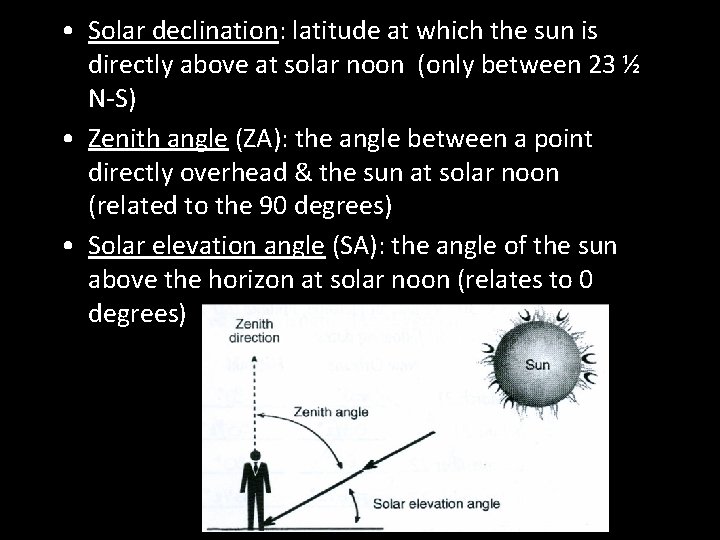
• Solar declination: latitude at which the sun is directly above at solar noon (only between 23 ½ N-S) • Zenith angle (ZA): the angle between a point directly overhead & the sun at solar noon (related to the 90 degrees) • Solar elevation angle (SA): the angle of the sun above the horizon at solar noon (relates to 0 degrees)
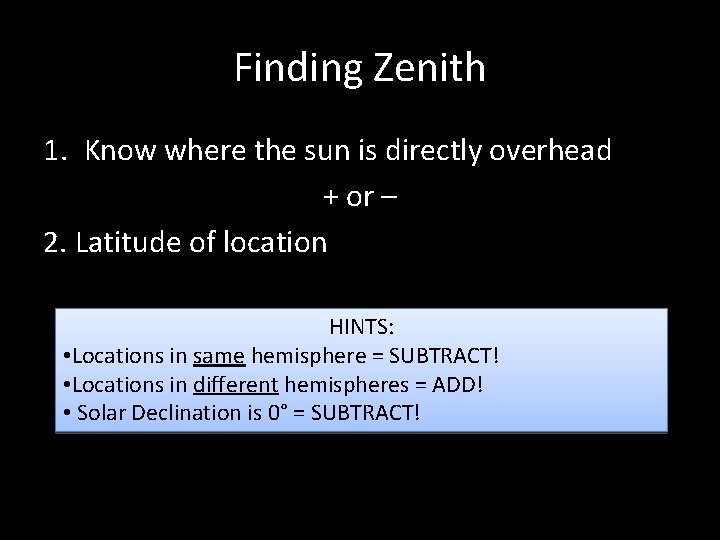
Finding Zenith 1. Know where the sun is directly overhead + or – 2. Latitude of location HINTS: • Locations in same hemisphere = SUBTRACT! • Locations in different hemispheres = ADD! • Solar Declination is 0° = SUBTRACT!
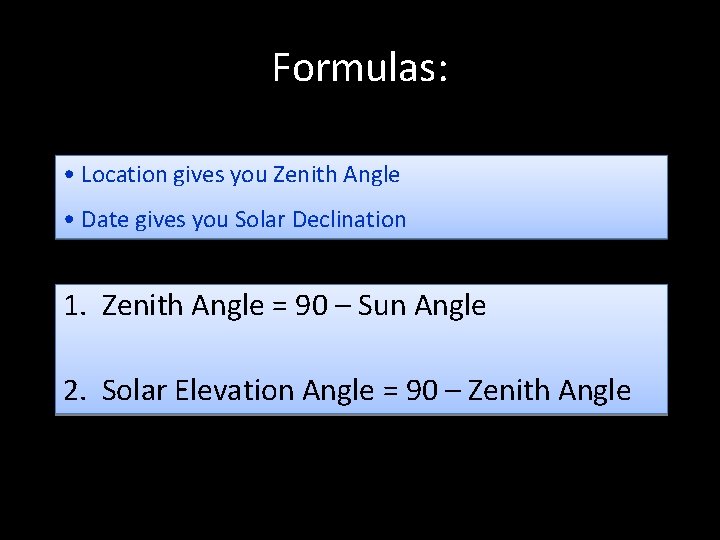
Formulas: • Location gives you Zenith Angle • Date gives you Solar Declination 1. Zenith Angle = 90 – Sun Angle 2. Solar Elevation Angle = 90 – Zenith Angle
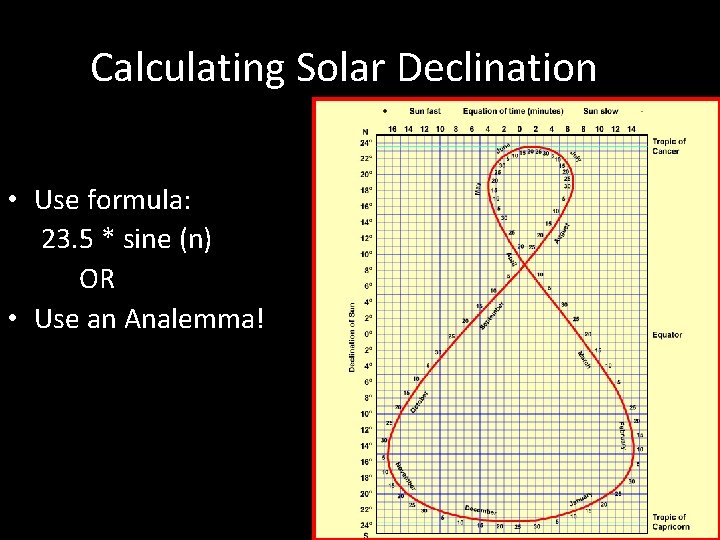
Calculating Solar Declination • Use formula: 23. 5 * sine (n) OR • Use an Analemma!
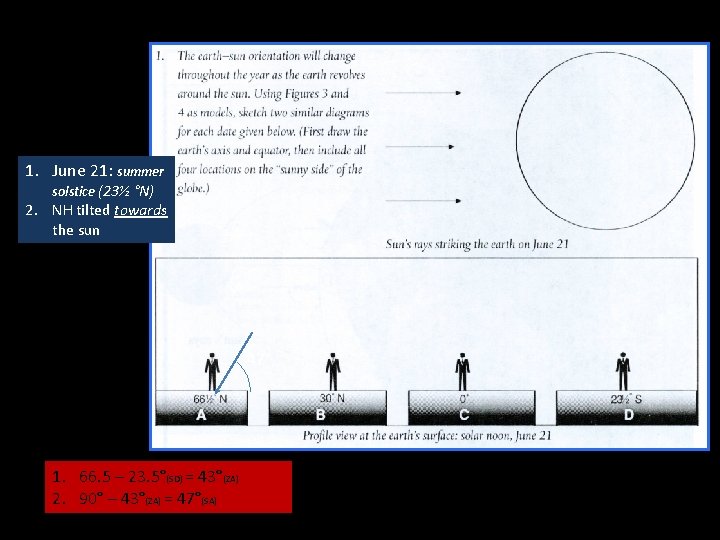
1. June 21: summer solstice (23½ °N) 2. NH tilted towards the sun SD = 23½°N 47° 1. 66. 5 – 23. 5°(SD) = 43°(ZA) 2. 90° – 43°(ZA) = 47°(SA)
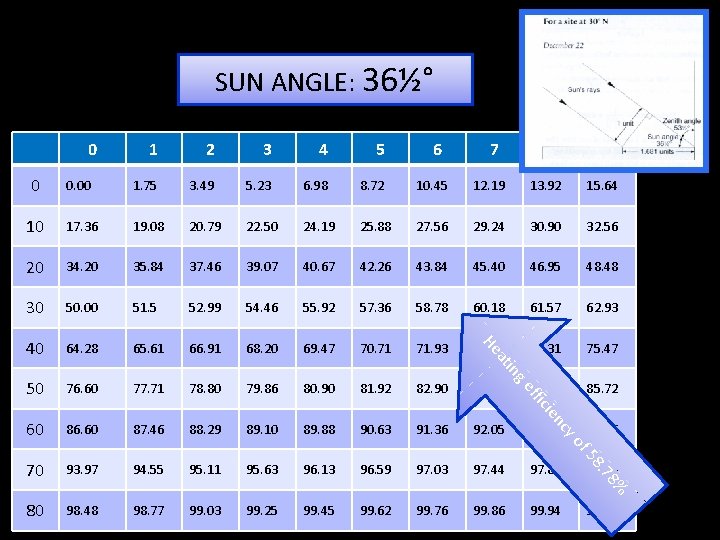
SUN ANGLE: 36½° 0 1 2 3 4 5 6 7 8 9 0. 00 1. 75 3. 49 5. 23 6. 98 8. 72 10. 45 12. 19 13. 92 15. 64 10 17. 36 19. 08 20. 79 22. 50 24. 19 25. 88 27. 56 29. 24 30. 90 32. 56 20 34. 20 35. 84 37. 46 39. 07 40. 67 42. 26 43. 84 45. 40 46. 95 48. 48 30 50. 00 51. 5 52. 99 54. 46 55. 92 57. 36 58. 78 60. 18 61. 57 62. 93 40 64. 28 65. 61 66. 91 68. 20 69. 47 70. 71 71. 93 73. 14 74. 31 75. 47 50 76. 60 77. 71 78. 80 79. 86 80. 90 81. 92 82. 90 83. 87 60 86. 60 87. 46 88. 29 89. 10 89. 88 90. 63 91. 36 92. 05 92. 72 93. 36 70 93. 97 94. 55 95. 11 95. 63 96. 13 96. 59 97. 03 97. 44 97. 81 8. f 5 80 98. 48 98. 77 99. 03 99. 25 99. 45 99. 62 99. 76 99. 86 99. 94 99. 98 ge in at He 0 85. 72 yo nc cie ffi 84. 80 % 78 98. 16
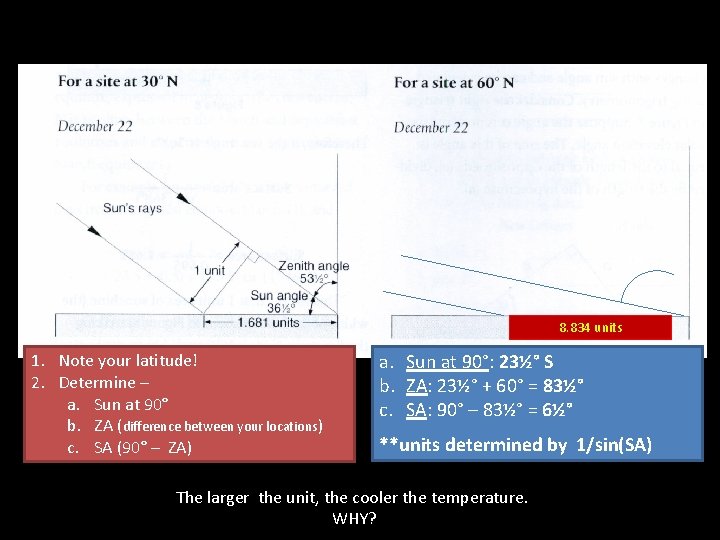
° 83½ ZA 8. 834 units 1. Note your latitude! 2. Determine – a. Sun at 90° b. ZA (difference between your locations) c. SA (90° – ZA) a. Sun at 90°: 23½° S b. ZA: 23½° + 60° = 83½° c. SA: 90° – 83½° = 6½° **units determined by 1/sin(SA) The larger the unit, the cooler the temperature. WHY?
- Slides: 20