
LAB 21 SANDFLY FLIES SAND FLY ALHERMIS Phylum
LAB. 21 SAND-FLY &FLIES
SAND FLY (ALHERMIS)

Phylum: Arthropoda Class: Insecta Order: Diptera Family: Phlebotomidae
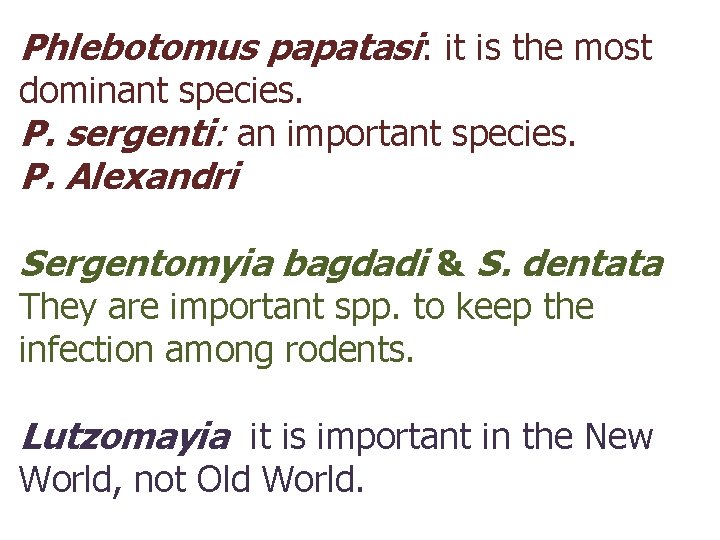
Phlebotomus papatasi: it is the most dominant species. P. sergenti: an important species. P. Alexandri Sergentomyia bagdadi & S. dentata They are important spp. to keep the infection among rodents. Lutzomayia it is important in the New World, not Old World.

Phlebotomus (Sandfly) adult Female & male v with dark colored hair. v Sandy colored. Have piercing- sucking mouth parts. Eyes are large and filling the head. Fragile insects, weak fliers, hump (jump). Long legs, wings stand up and never fold on abdomen. v Adult Phlebotomus papatasi ♀: with hair, dark colored may be the most important vector for Leishmania and papatasi fever.
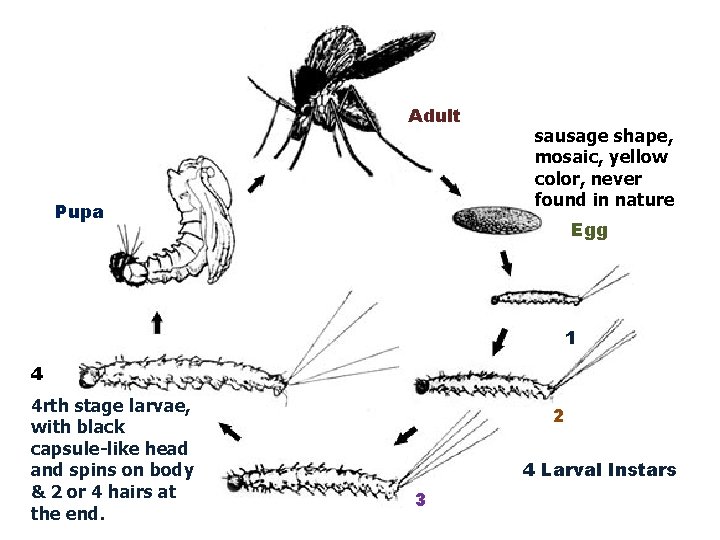
Adult Pupa sausage shape, mosaic, yellow color, never found in nature Egg 1 4 4 rth stage larvae, with black capsule-like head and spins on body & 2 or 4 hairs at the end. 2 4 Larval Instars 3
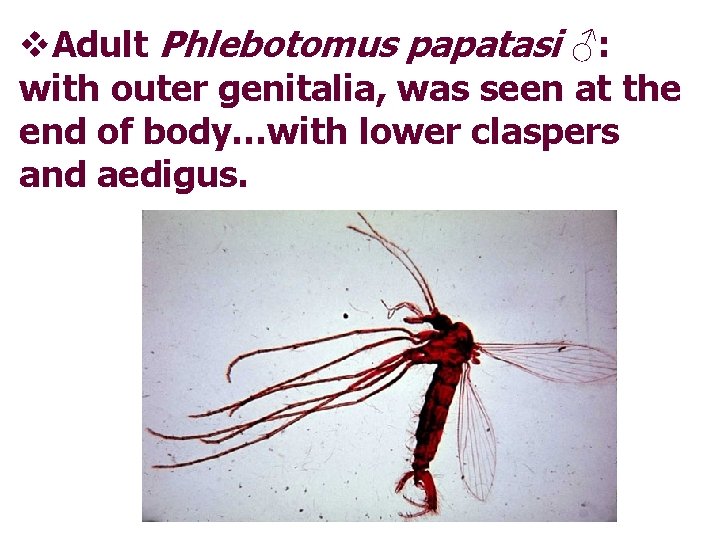
v. Adult Phlebotomus papatasi ♂: with outer genitalia, was seen at the end of body…with lower claspers and aedigus.
v. Egg of sand fly: sausage shape, mosaic, yellow color, never found in nature… 7 -10 days. v 4 rth stage larvae, with black capsulelike head and spins on body & 2 or 4 hairs at the end. v. Pupa with old exuvae at end.
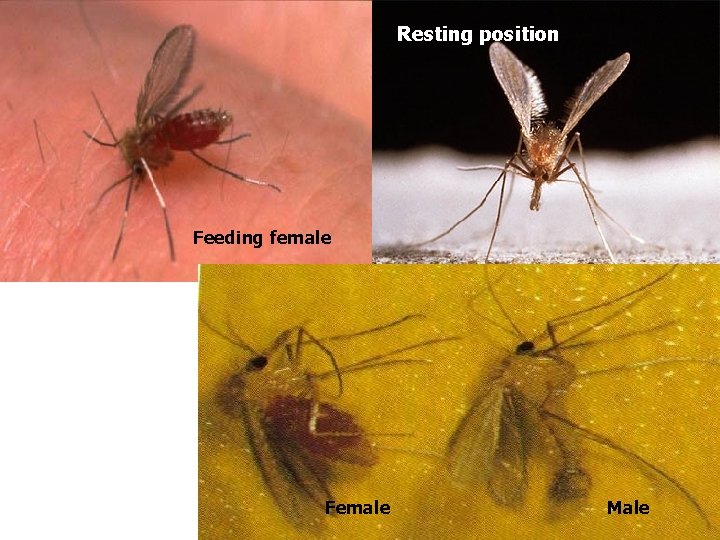
Resting position Feeding female Female Male
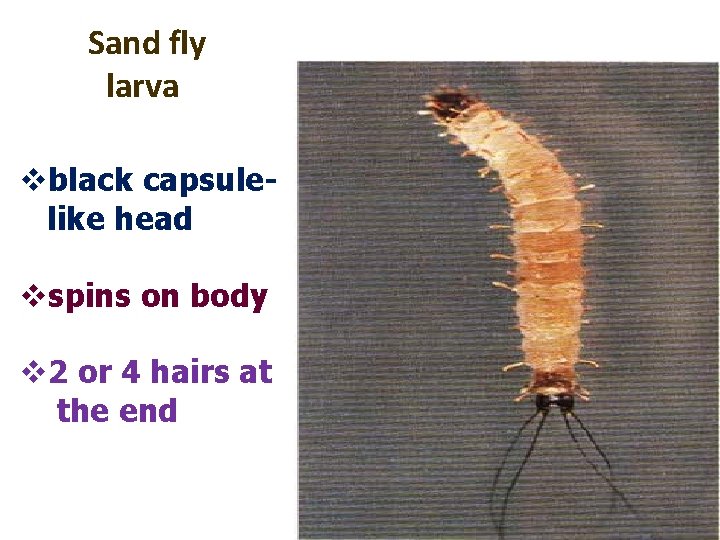
Sand fly larva vblack capsulelike head vspins on body v 2 or 4 hairs at the end
Lab 20 COMMON FLY & MYIASIS
Phylum: Arthropoda Class: Insecta Order: Diptera Suborder: Cyclorhapha
Complete metamorphosis 5 -6 days from eggs to egg-lying Larva Eggs Pupa Adult 25 -30 days
Family Muscidae: The housefly family, Medium to small size. Gray to shiny colors. Wings broad reduced veins. subfamily: Muscinae (House fly) Gray color, Musca domestica Lapping mouth parts. Lower lip modified with spongy wide tip. Do not bit. Lived on filthy, decayed, semi fluid. Ex: houseflies; Musca domestica: annoying, mechanical transmission. Larvae are maggot type (pointed front & wide end).
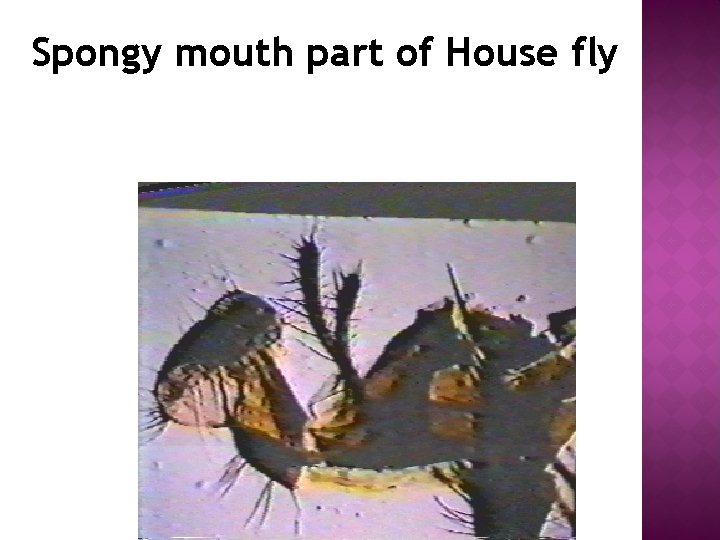
Spongy mouth part of House fly
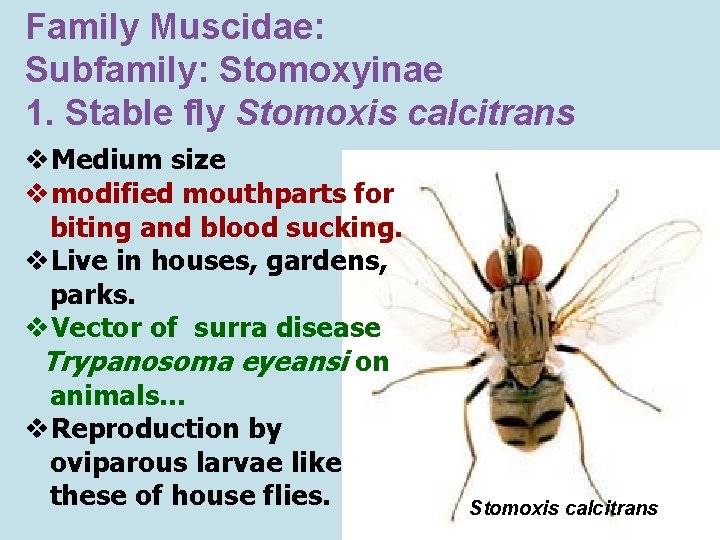
Family Muscidae: Subfamily: Stomoxyinae 1. Stable fly Stomoxis calcitrans v. Medium size vmodified mouthparts for biting and blood sucking. v. Live in houses, gardens, parks. v. Vector of surra disease Trypanosoma eyeansi on animals… v. Reproduction by oviparous larvae like these of house flies. Stomoxis calcitrans
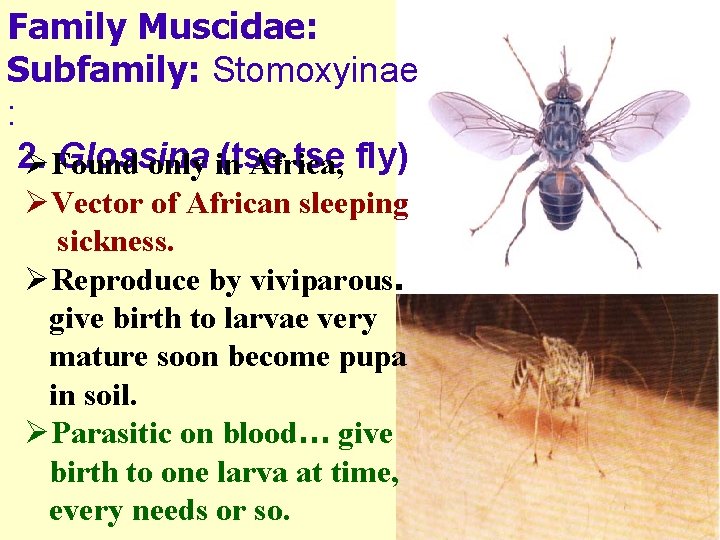
Family Muscidae: Subfamily: Stomoxyinae : 2. Glossina (tse fly) ØFound only in Africa, ØVector of African sleeping sickness. ØReproduce by viviparous. give birth to larvae very mature soon become pupa in soil. ØParasitic on blood… give birth to one larva at time, every needs or so.
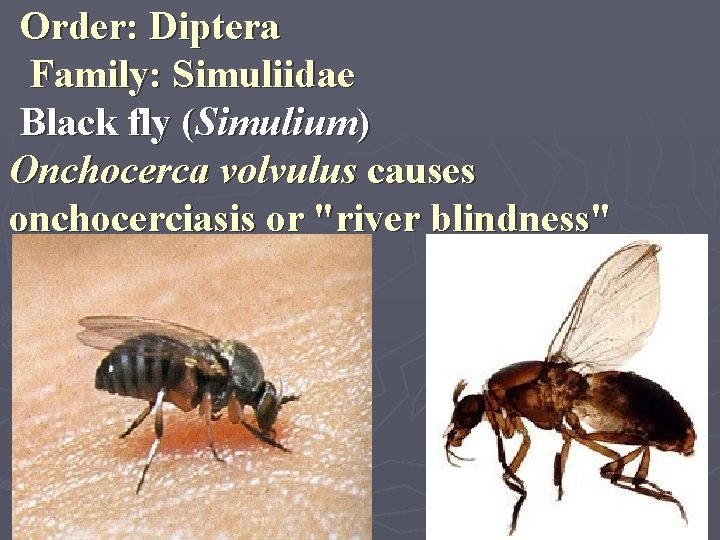
Order: Diptera Family: Simuliidae Black fly (Simulium) Onchocerca volvulus causes onchocerciasis or "river blindness"
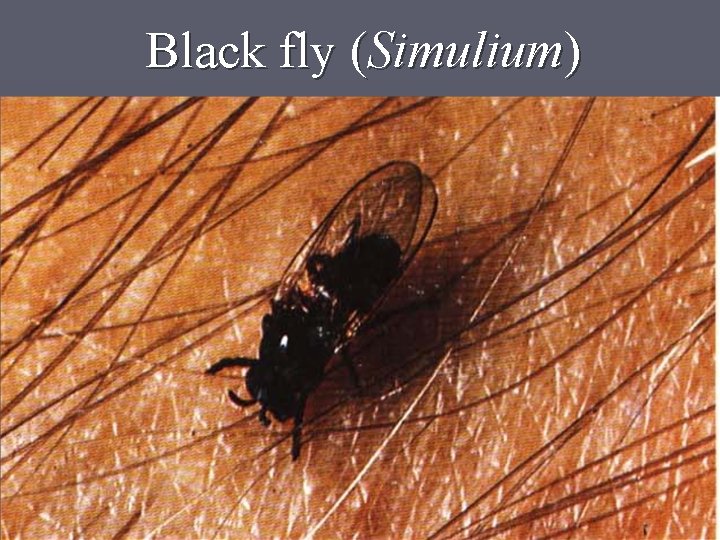
Black fly (Simulium)
Myiasis: q. Invasion of living tissues & organs by larva of advanced flies…. q. Larvae live on host, pupa in soil, qmany of them are viviparous (give birth to larvae). q. Larvae are maggot or bot which stubby, two ends are recusal.
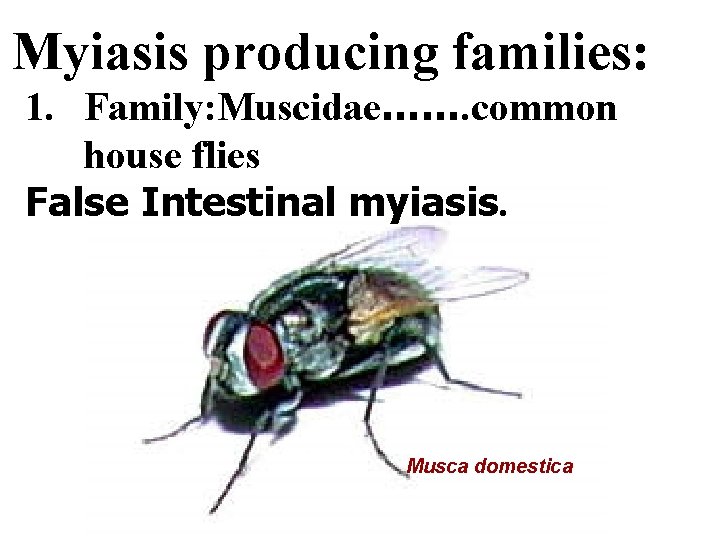
Myiasis producing families: 1. Family: Muscidae……. common house flies False Intestinal myiasis. Musca domestica
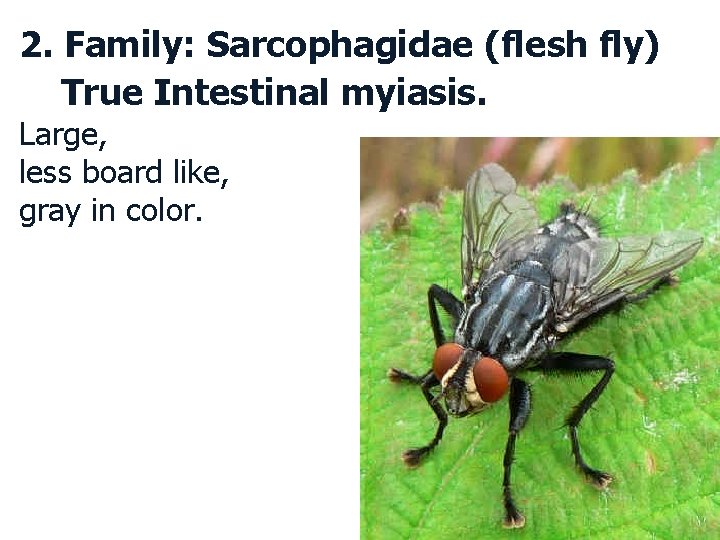
2. Family: Sarcophagidae (flesh fly) True Intestinal myiasis. Large, less board like, gray in color.
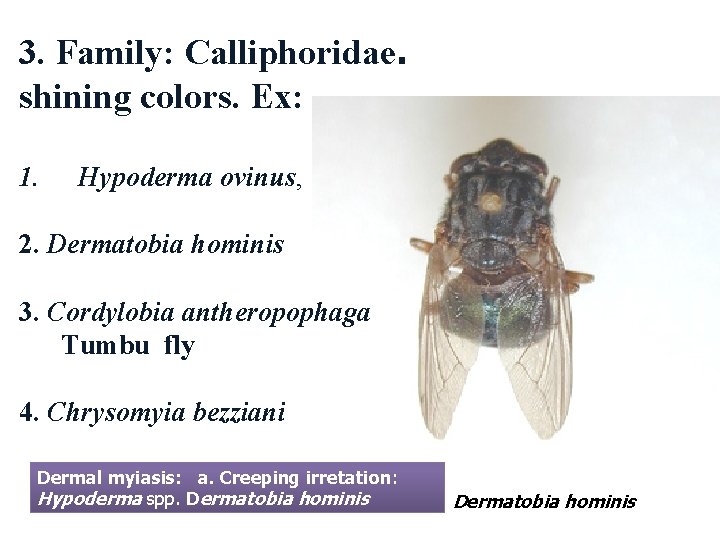
3. Family: Calliphoridae. shining colors. Ex: 1. Hypoderma ovinus, 2. Dermatobia hominis 3. Cordylobia antheropophaga Tumbu fly 4. Chrysomyia bezziani Dermal myiasis: a. Creeping irretation: Hypoderma spp. Dermatobia hominis
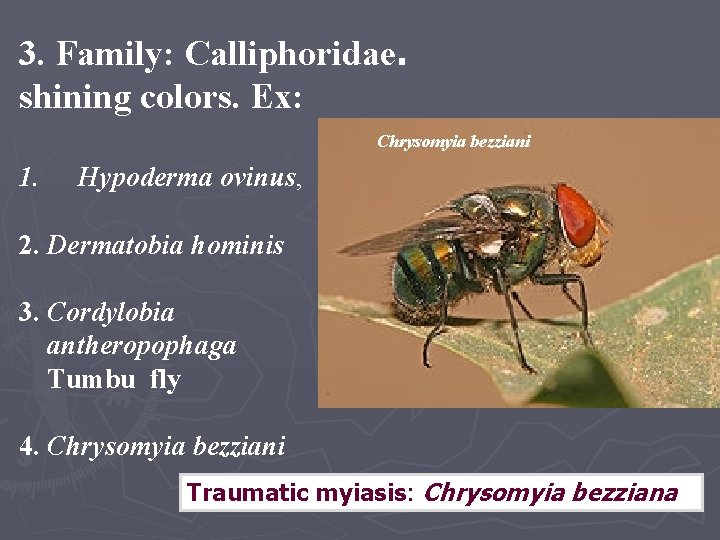
3. Family: Calliphoridae. shining colors. Ex: Chrysomyia bezziani 1. Hypoderma ovinus, 2. Dermatobia hominis 3. Cordylobia antheropophaga Tumbu fly 4. Chrysomyia bezziani Traumatic myiasis: Chrysomyia bezziana

4. Family: Oesteridae. naghaf flies. Ex: Oesterus ovis Nasophayngeal myiasis: ophthalmomyiasis in man. Oesteris ovis, nasopharynx in sheep,

Bot larvae
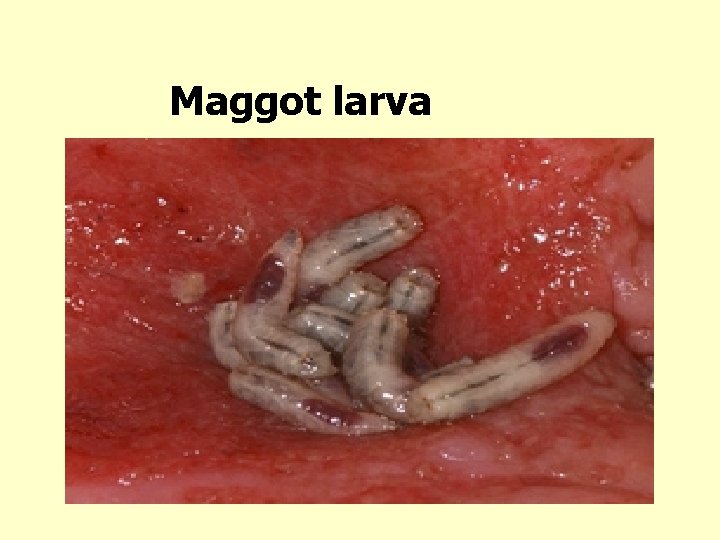
Maggot larva
- Slides: 28