
LAB 2 Biology Department 1 CLASSIFICATION OF FUNGI
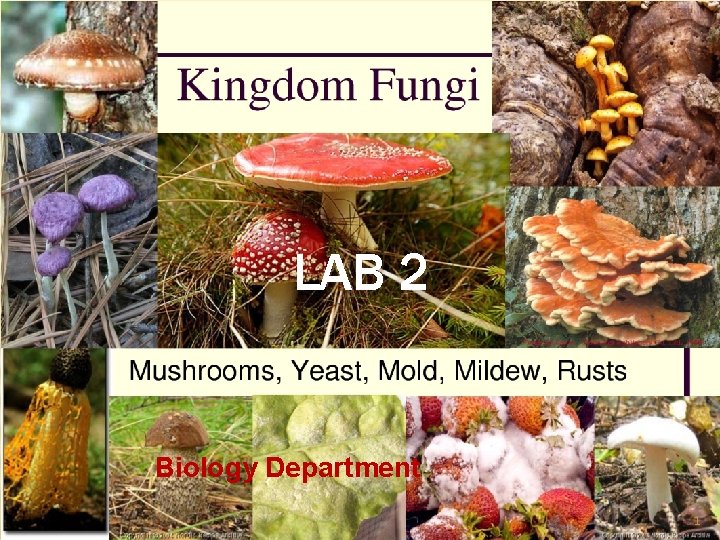
LAB 2 Biology Department 1
CLASSIFICATION OF FUNGI ü According Saprobes to nutrition : Decomposers Molds, mushrooms. Parasites Harm host Rusts and smuts (attack plants) mutualists Both benefit Lichens Mycorrhizas 2
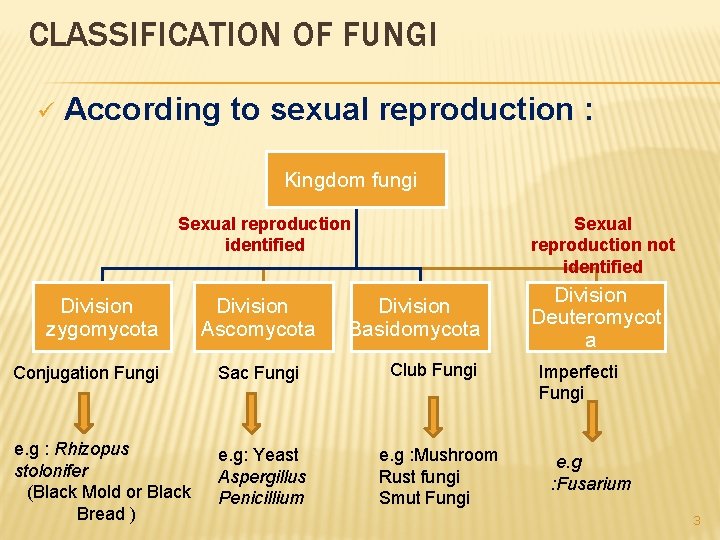
CLASSIFICATION OF FUNGI ü According to sexual reproduction : Kingdom fungi Sexual reproduction not identified Sexual reproduction identified Division zygomycota Division Ascomycota Conjugation Fungi Sac Fungi e. g : Rhizopus stolonifer (Black Mold or Black Bread ) e. g: Yeast Aspergillus Penicillium Division Basidomycota Club Fungi e. g : Mushroom Rust fungi Smut Fungi Division Deuteromycot a Imperfecti Fungi e. g : Fusarium 3
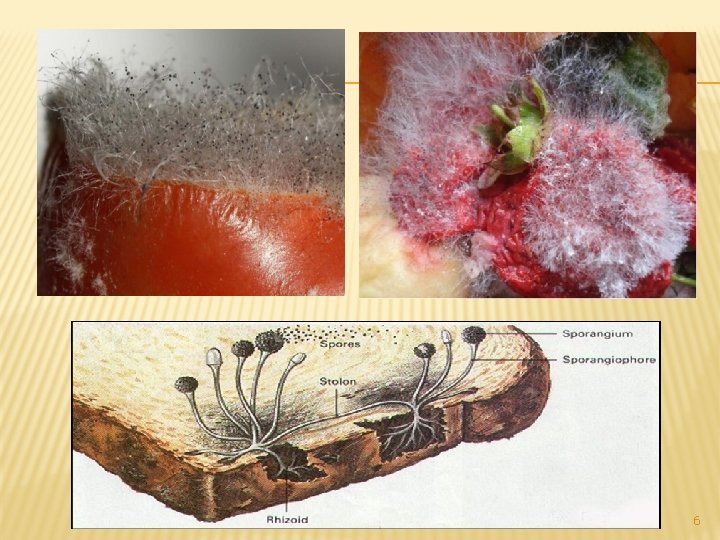
ZYGOMYCOTA � Most zygomycota are saprobes, while a few species are parasites. � Hyphae have no cross walls (Aseptate) � Zygomycota usually reproduce asexually � Asexual reproductive structure called sporangium atop sporangiospores make spores � Rhizoids anchor the mold & release digestive enzymes & absorb food 4
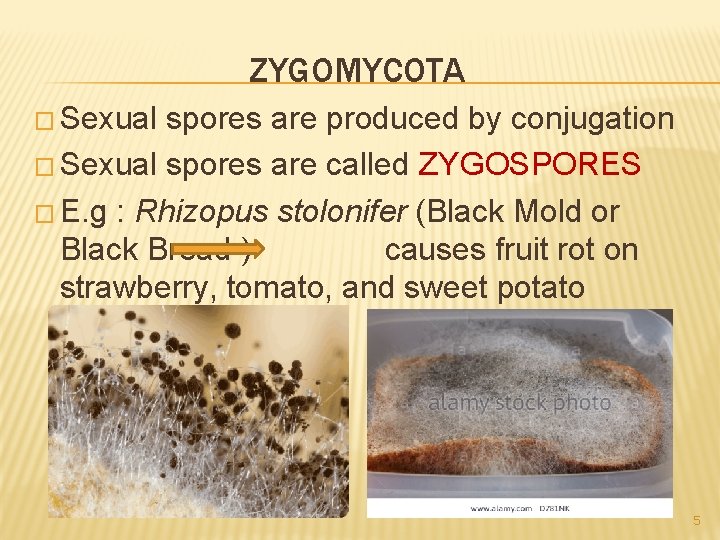
ZYGOMYCOTA � Sexual spores are produced by conjugation � Sexual spores are called ZYGOSPORES � E. g : Rhizopus stolonifer (Black Mold or Black Bread ) causes fruit rot on strawberry, tomato, and sweet potato 5
6
ASCOMYCOTA � Called Sac fungi � Includes Cup fungi, truffles, yeasts � The mycelium of ascomycetes is usually made up of septate hyphae. � Reproduce sexually & asexually � Ascus - sac that makes ascospores in sexual reproduction � Specialized hyphae known as Ascocarps contain the asci 7

ASCOMYCOTA 8
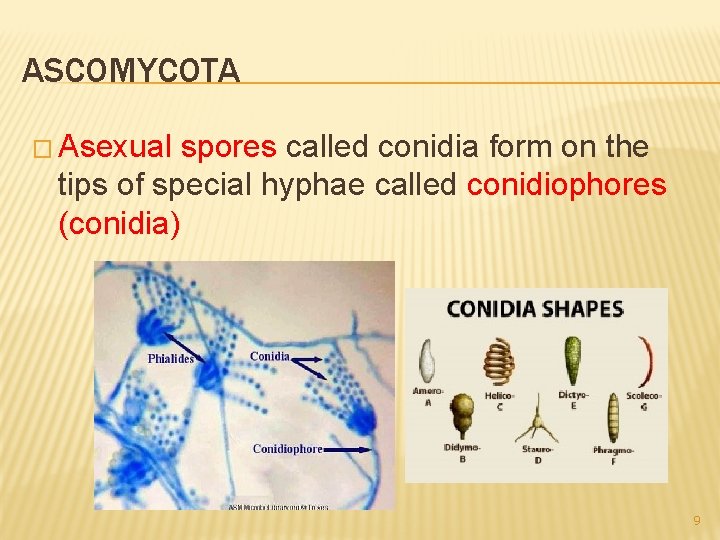
ASCOMYCOTA � Asexual spores called conidia form on the tips of special hyphae called conidiophores (conidia) 9
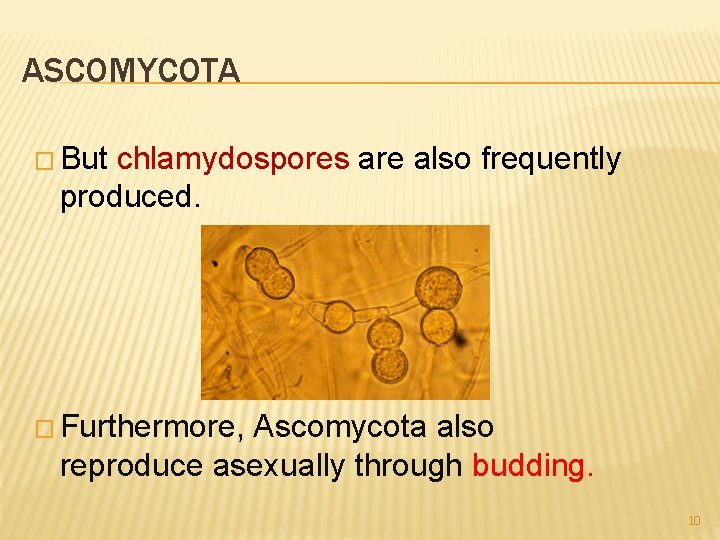
ASCOMYCOTA � But chlamydospores are also frequently produced. � Furthermore, Ascomycota also reproduce asexually through budding. 10
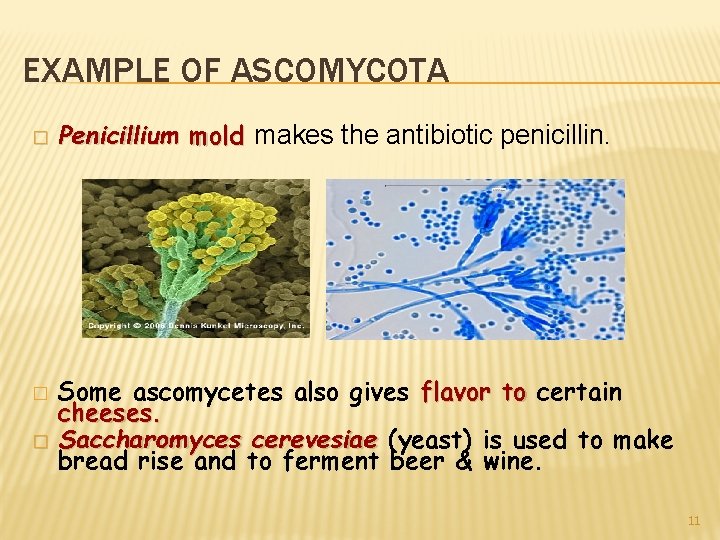
EXAMPLE OF ASCOMYCOTA � � � Penicillium mold makes the antibiotic penicillin. Some ascomycetes also gives flavor to certain cheeses. Saccharomyces cerevesiae (yeast) is used to make bread rise and to ferment beer & wine. 11
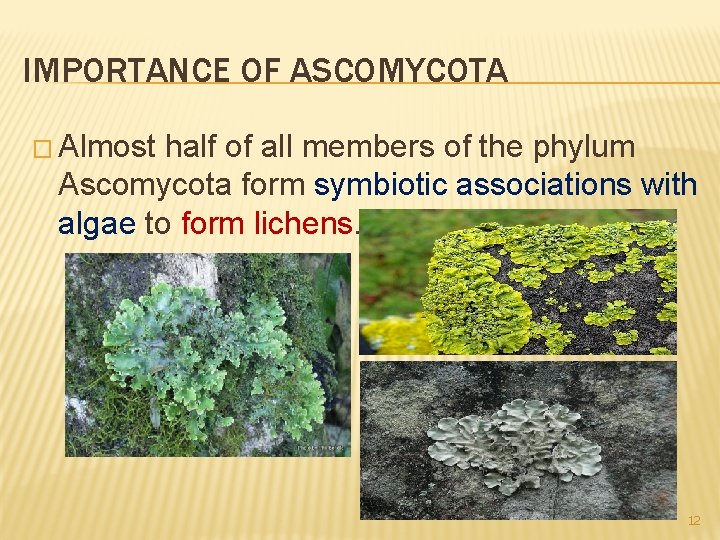
IMPORTANCE OF ASCOMYCOTA � Almost half of all members of the phylum Ascomycota form symbiotic associations with algae to form lichens. 12
NOTE : �A lichen is a composite organism that arises from algae or cyanobacteria (or both) living among filaments of a fungus in a symbiotic relationship � The fungus benefits from the algae or cyanobacteria because they produce food by photosynthesis. The algae or cyanobacteria benefit by being protected from the environment by the filaments of the fungus, which also gather moisture and nutrients from the environment, and (usually) provide an anchor to it 13
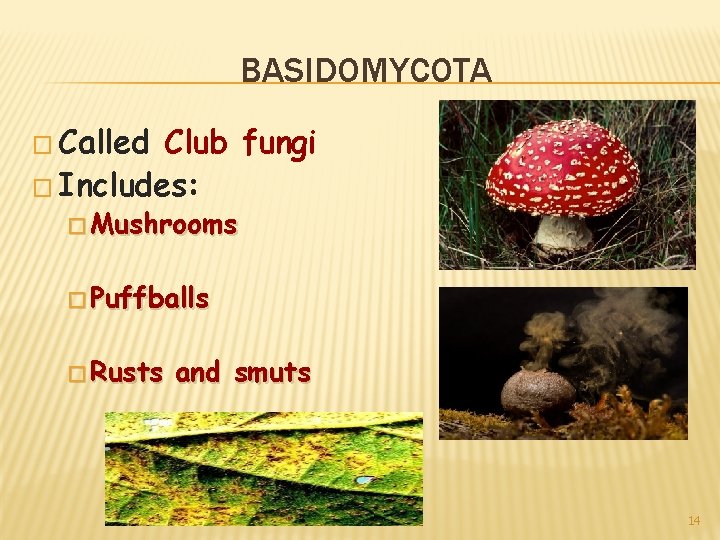
BASIDOMYCOTA � Called Club fungi � Includes: � Mushrooms � Puffballs � Rusts and smuts 14
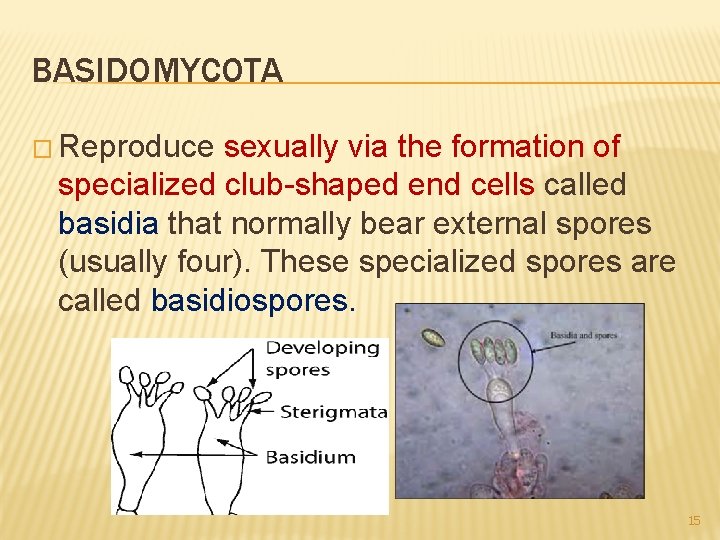
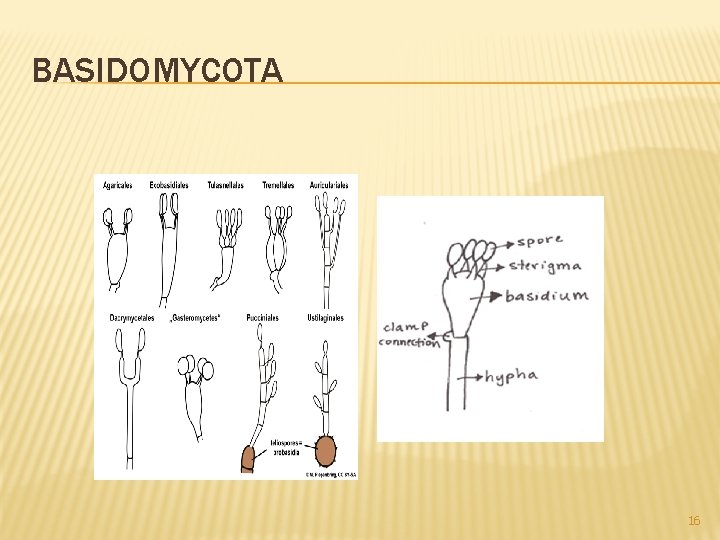
BASIDOMYCOTA � Reproduce sexually via the formation of specialized club-shaped end cells called basidia that normally bear external spores (usually four). These specialized spores are called basidiospores. 15
BASIDOMYCOTA 16
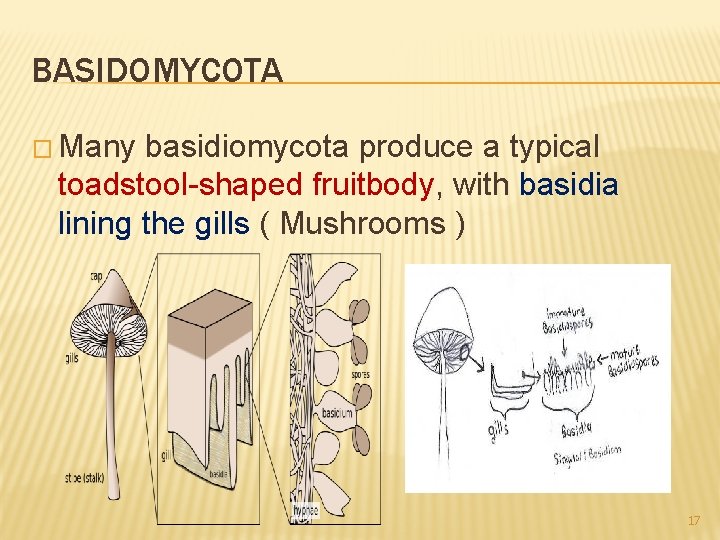
BASIDOMYCOTA � Many basidiomycota produce a typical toadstool-shaped fruitbody, with basidia lining the gills ( Mushrooms ) 17
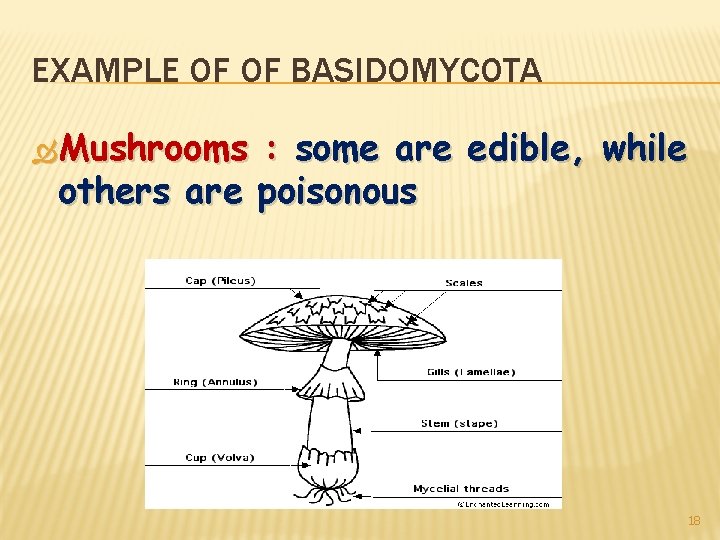
EXAMPLE OF OF BASIDOMYCOTA Mushrooms : some are edible, while others are poisonous 18
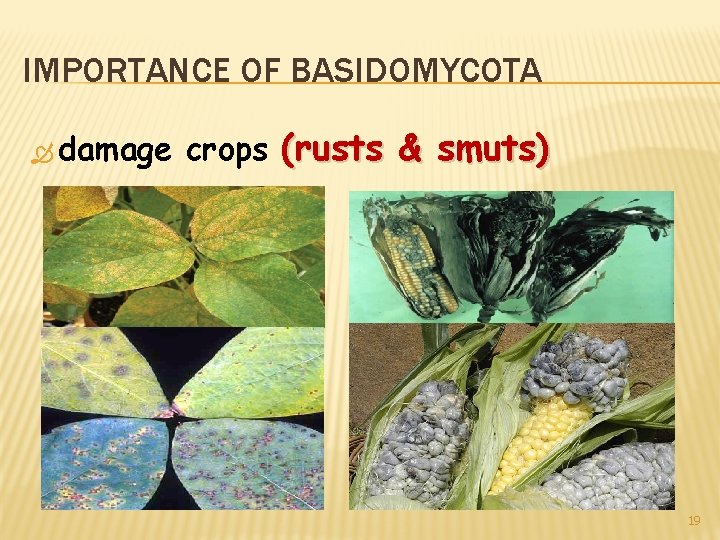
IMPORTANCE OF BASIDOMYCOTA damage crops (rusts & smuts) 19
DEUTEROMYCOTA Fungi which do not fit into the commonly established taxonomic classifications of fungi because their sexual form of reproduction has never been observed , only their asexual form of reproduction is known � hence the name "imperfect fungi. " � Most of the species are saprobes but some are parasitic. � � Many fungal diseases that infect humans belong to this group including species which cause athletes foot 20
ATHLETE'S FOOT � � � � Also known as tinea pedis: is a common skin infection of the feet caused by fungus It often results in itching, scaling, and redness In severe cases the skin may blister Athlete's foot may affect any part of the foot, but occurs most often between the toes, the next most common area is the bottom of the foot Fungal infection of the nails or of the hands may occur at the same time] Tinea pedis is caused by a number of different , E. g : Trichophyton 21

22
EXERSISES � Show Rhizopus stolonifer on Bread , tomato & under steromicroscope � Show Penicillum & conidospre under micrscope � Show Mushroom � Lichen 23
- Slides: 23