
Lab 10 Pibals Pilot Balloons Why use a
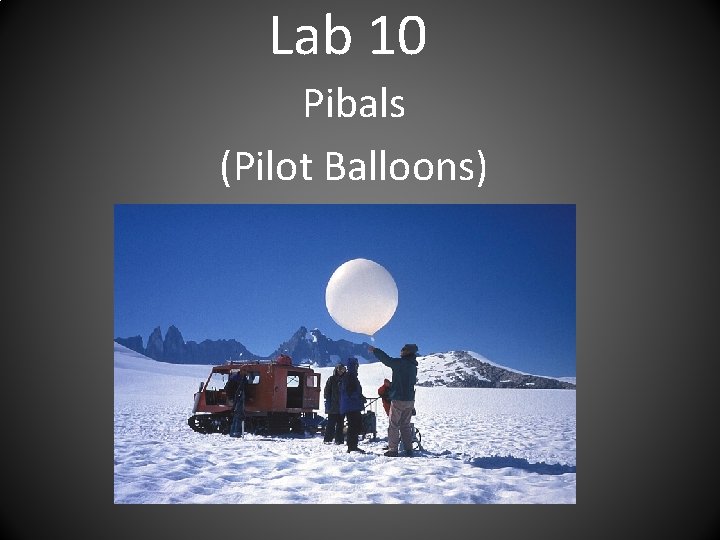
Lab 10 Pibals (Pilot Balloons)

Why use a Pibal? • Get an accurate (& cheap) wind profile! • Why do we care about mid- level winds? • • Fighting fires & smoke dispersion Toxic plumes Recreation Many more

Today’s Procedure • Set up theodolites (see diagram next slide) • Practice balloon release: balloon tied to chair • Balloon Release

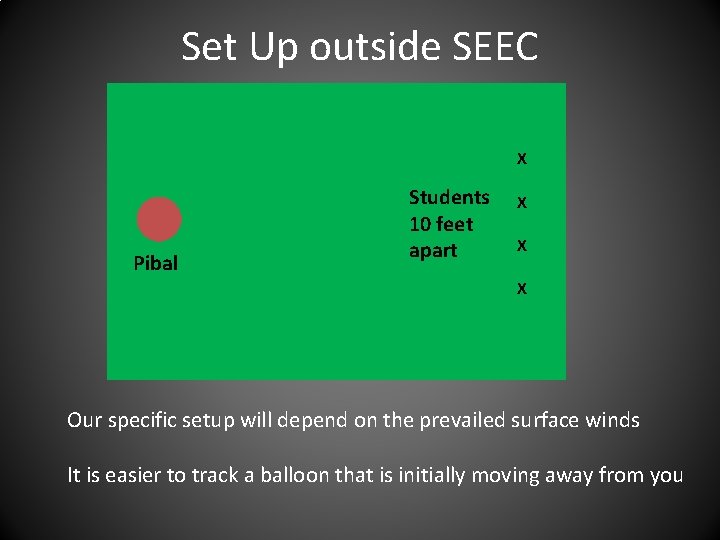
Set Up outside SEEC X Pibal Students 10 feet apart X X X Our specific setup will depend on the prevailed surface winds It is easier to track a balloon that is initially moving away from you
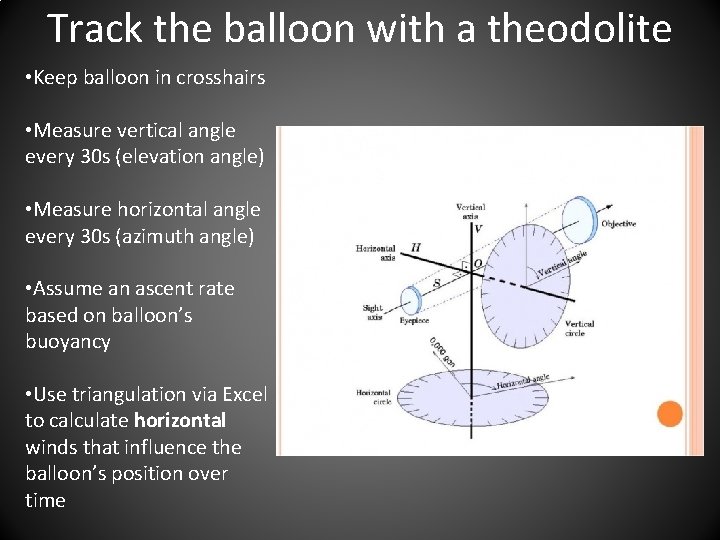
Track the balloon with a theodolite • Keep balloon in crosshairs • Measure vertical angle every 30 s (elevation angle) • Measure horizontal angle every 30 s (azimuth angle) • Assume an ascent rate based on balloon’s buoyancy • Use triangulation via Excel to calculate horizontal winds that influence the balloon’s position over time
30 -second Group Question • Are Pibals used in day-to-day operations at the National Weather Service?

Radiosondes • No theodolites GPS • No sling psychrometer Automatic pressure, temperature, humidity sensors • Measures wind speed and direction too
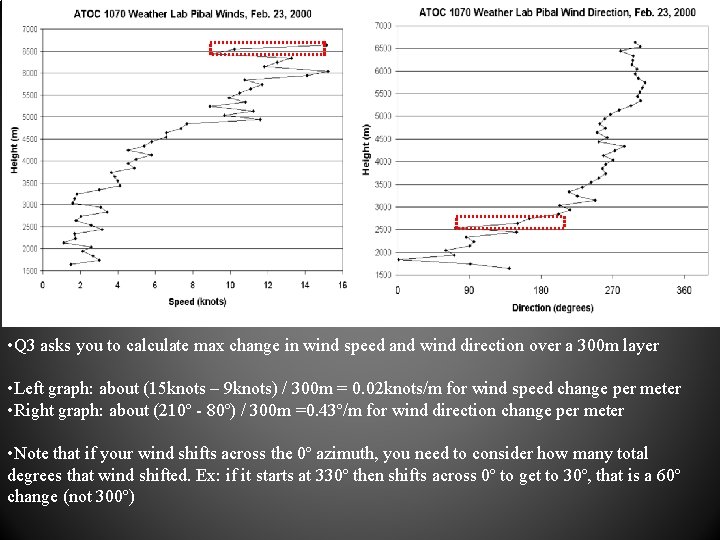
• Q 3 asks you to calculate max change in wind speed and wind direction over a 300 m layer • Left graph: about (15 knots – 9 knots) / 300 m = 0. 02 knots/m for wind speed change per meter • Right graph: about (210º - 80º) / 300 m =0. 43º/m for wind direction change per meter • Note that if your wind shifts across the 0º azimuth, you need to consider how many total degrees that wind shifted. Ex: if it starts at 330º then shifts across 0º to get to 30º, that is a 60º change (not 300º)
- Slides: 9