
Lab 1 General protein color tests Definitions Amino
Lab 1 General protein color tests
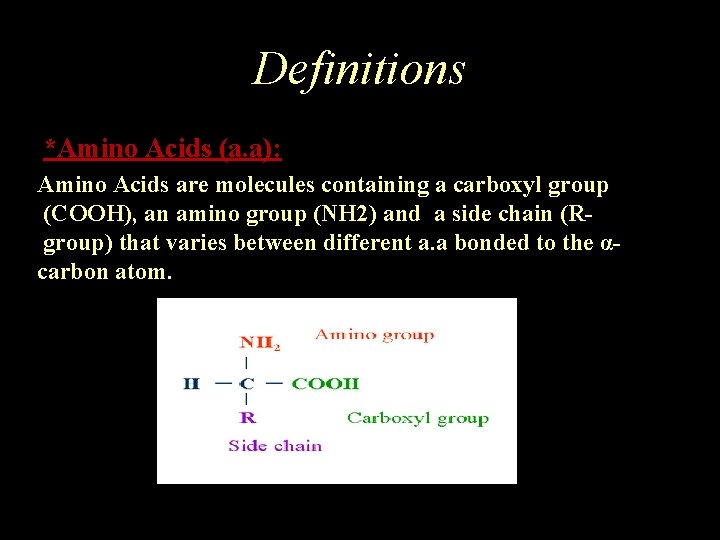
Definitions *Amino Acids (a. a): Amino Acids are molecules containing a carboxyl group (COOH), an amino group (NH 2) and a side chain (Rgroup) that varies between different a. a bonded to the αcarbon atom.
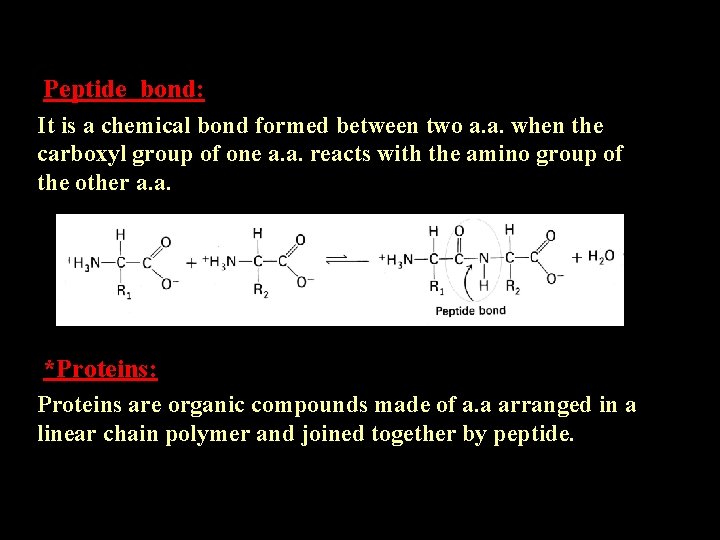
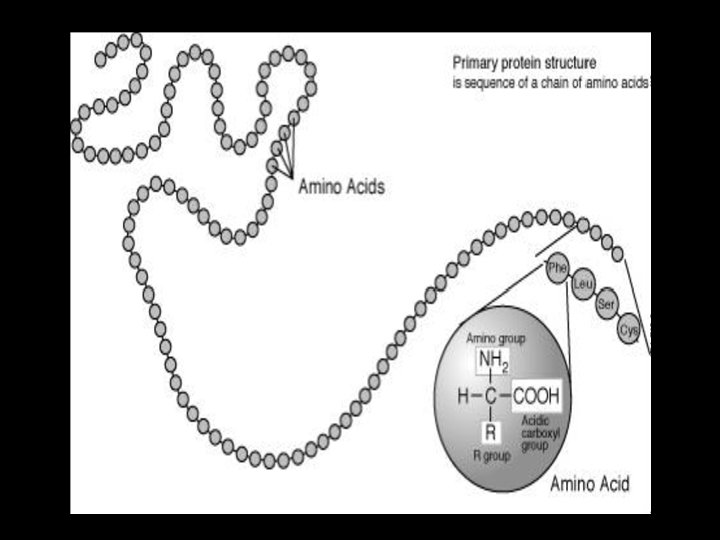
Peptide bond: It is a chemical bond formed between two a. a. when the carboxyl group of one a. a. reacts with the amino group of the other a. a. *Proteins: Proteins are organic compounds made of a. a arranged in a linear chain polymer and joined together by peptide.
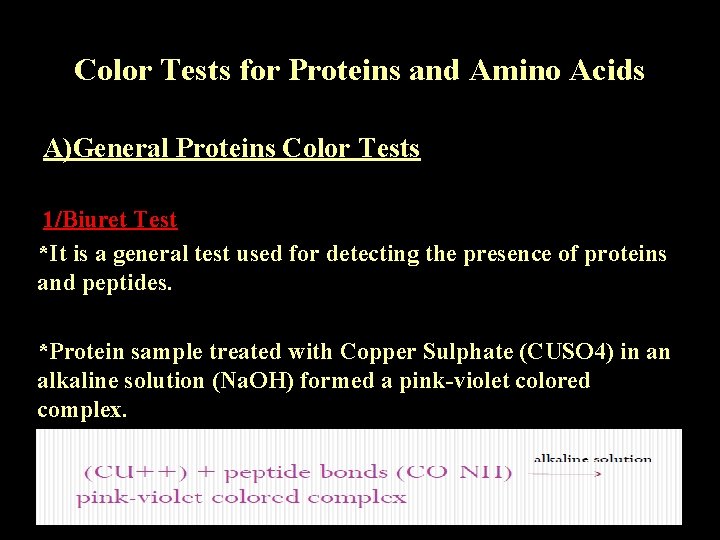
Color Tests for Proteins and Amino Acids A)General Proteins Color Tests 1/Biuret Test *It is a general test used for detecting the presence of proteins and peptides. *Protein sample treated with Copper Sulphate (CUSO 4) in an alkaline solution (Na. OH) formed a pink-violet colored complex.
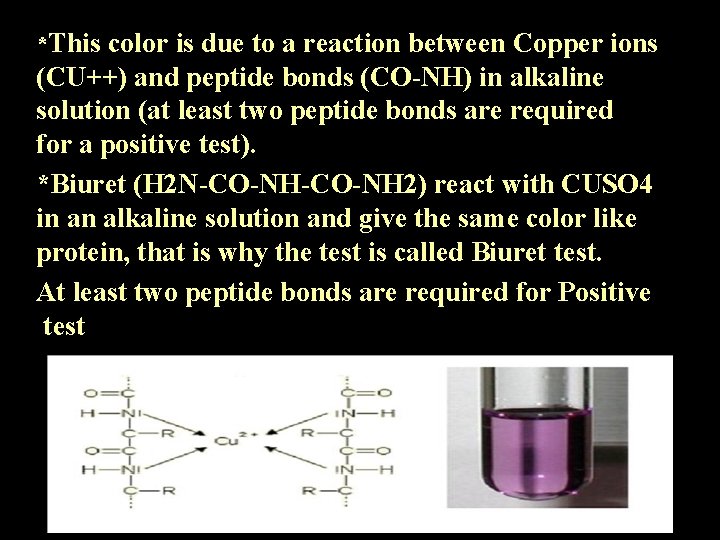
*This color is due to a reaction between Copper ions (CU++) and peptide bonds (CO-NH) in alkaline solution (at least two peptide bonds are required for a positive test). *Biuret (H 2 N-CO-NH 2) react with CUSO 4 in an alkaline solution and give the same color like protein, that is why the test is called Biuret test. At least two peptide bonds are required for Positive test
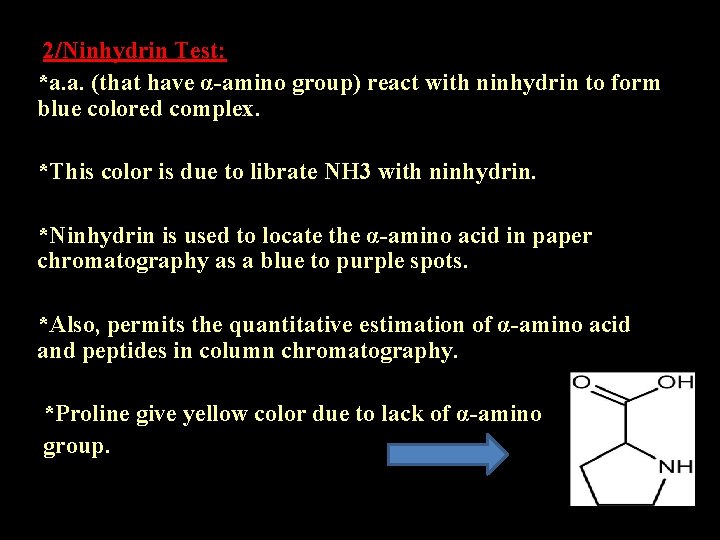
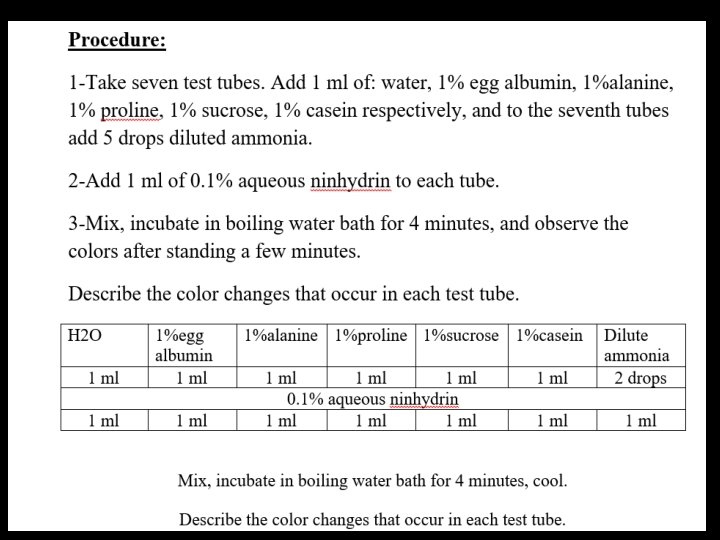
2/Ninhydrin Test: *a. a. (that have α-amino group) react with ninhydrin to form blue colored complex. *This color is due to librate NH 3 with ninhydrin. *Ninhydrin is used to locate the α-amino acid in paper chromatography as a blue to purple spots. *Also, permits the quantitative estimation of α-amino acid and peptides in column chromatography. *Proline give yellow color due to lack of α-amino group.
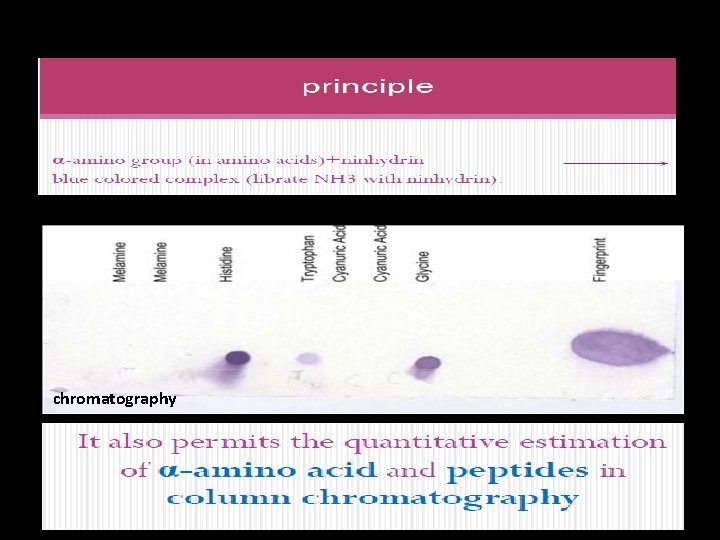
chromatography
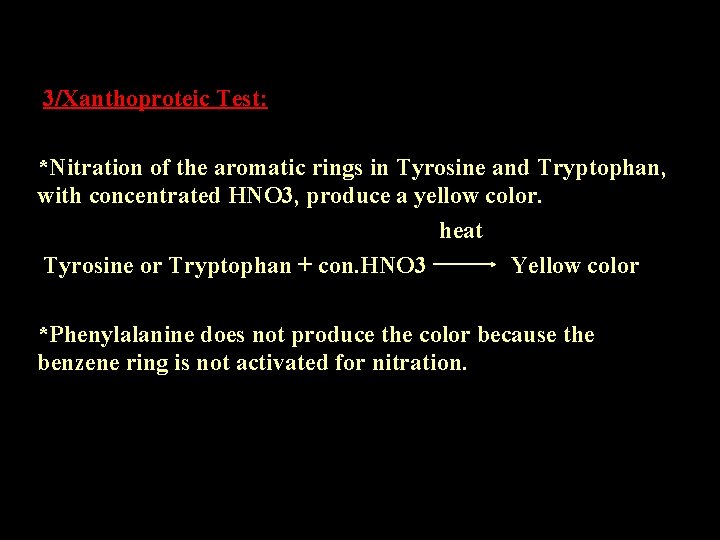
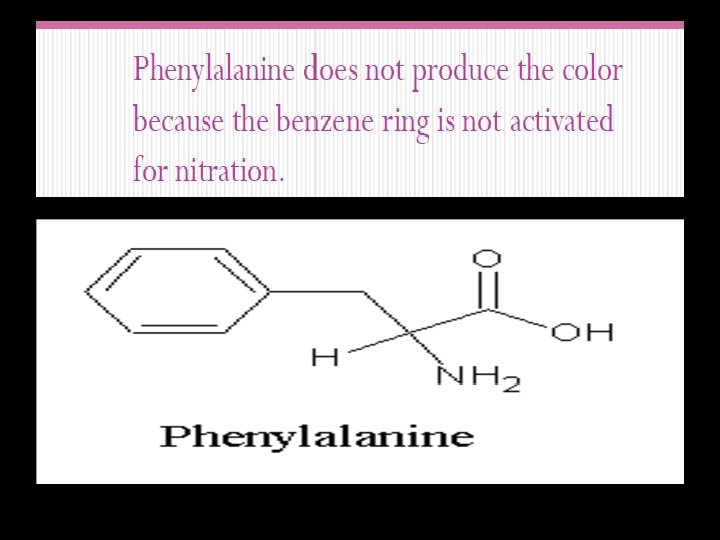
3/Xanthoproteic Test: *Nitration of the aromatic rings in Tyrosine and Tryptophan, with concentrated HNO 3, produce a yellow color. heat Tyrosine or Tryptophan + con. HNO 3 Yellow color *Phenylalanine does not produce the color because the benzene ring is not activated for nitration.
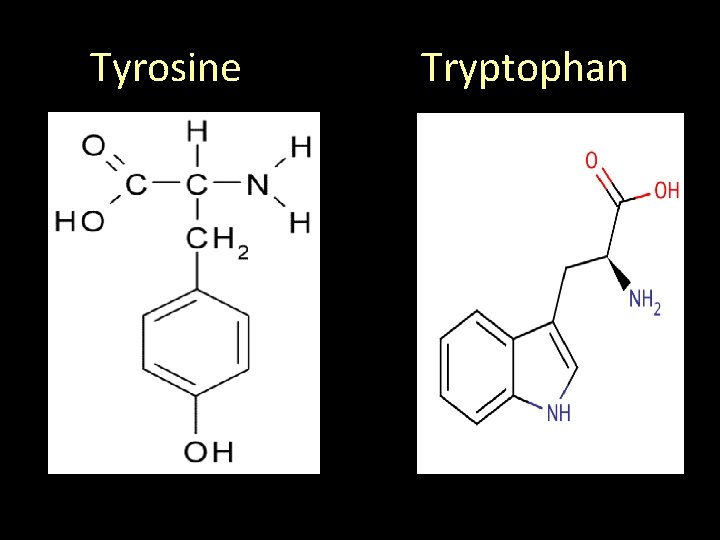
Tyrosine Tryptophan
- Slides: 14