
La Gramatica Lesson 2 Verb Conjugation What is
La Gramatica Lesson #2 Verb Conjugation
What is a verb? • It’s an action word. Sometimes it’s not an obvious action – it’s a state of being. Some examples of “action” words we have learned so far in Spanish: Obvious Actions come llora corre grita cuida vive escucha dice se ríe cuenta viene Not Obvious estoy – I am soy – I am es – is está - is necesita tiene quiere
Verbs are very important! Without them, you do NOT have a sentence. • Because we are telling lots of stories which are usually about other people, we started using verbs only in the he/she form – meaning someone else is doing the action. • However, it’s not always someone else doing the action. • Sometimes it’s “you”, “I” or even “we” or another plural group doing the action. • So time to expand our conversation to include others!
Verb Conjugation • The process of changing a verb to match WHO is DOING the action is called “conjugating” a verb. • This is a new idea in Spanish. Verbs are NOT masculine or feminine like nouns. They also do NOT become plural by adding an “s”. • The ending of the verb changes depending on the subject – who or what is doing the action.
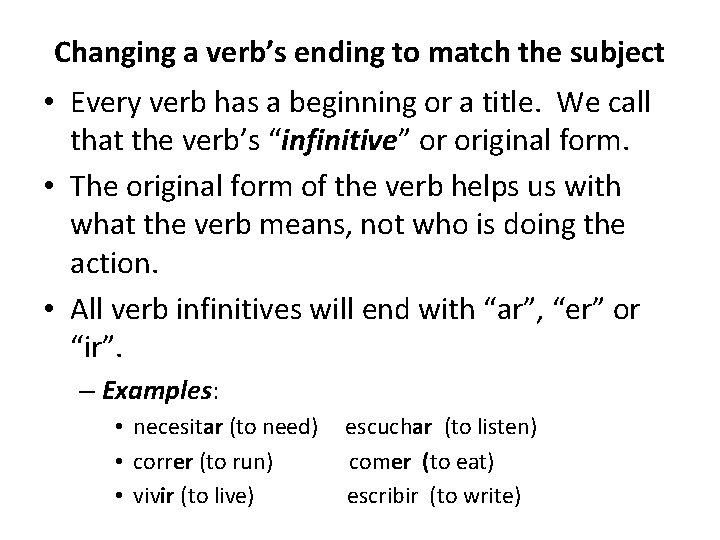
Changing a verb’s ending to match the subject • Every verb has a beginning or a title. We call that the verb’s “infinitive” or original form. • The original form of the verb helps us with what the verb means, not who is doing the action. • All verb infinitives will end with “ar”, “er” or “ir”. – Examples: • necesitar (to need) • correr (to run) • vivir (to live) escuchar (to listen) comer (to eat) escribir (to write)
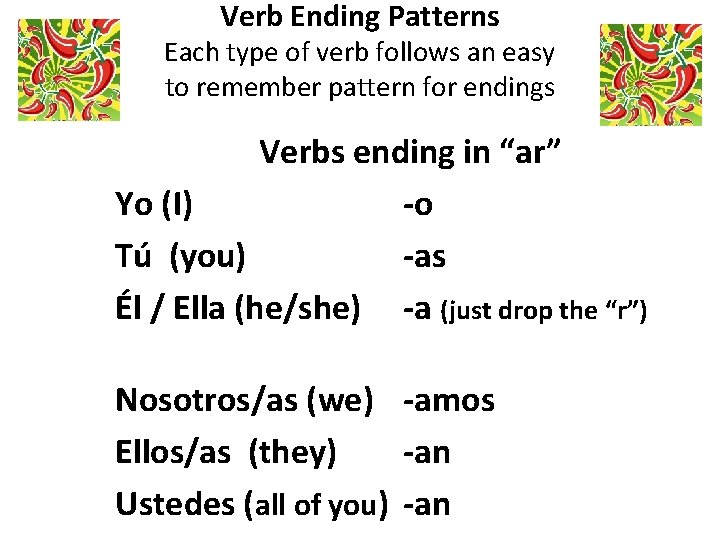
Verb Ending Patterns Each type of verb follows an easy to remember pattern for endings Verbs ending in “ar” Yo (I) -o Tú (you) -as Él / Ella (he/she) -a (just drop the “r”) Nosotros/as (we) -amos Ellos/as (they) -an Ustedes (all of you) -an

Let’s see conjugating in action! Escuchar = to listen – Yo escucho – Tú escuchas – Él escucha – Ella escucha = = I listen you listen he listens she listens – Nosotros/as escuchamos = – Ellos/as escuchan = – Ustedes escuchan = we listen they listen you all listen
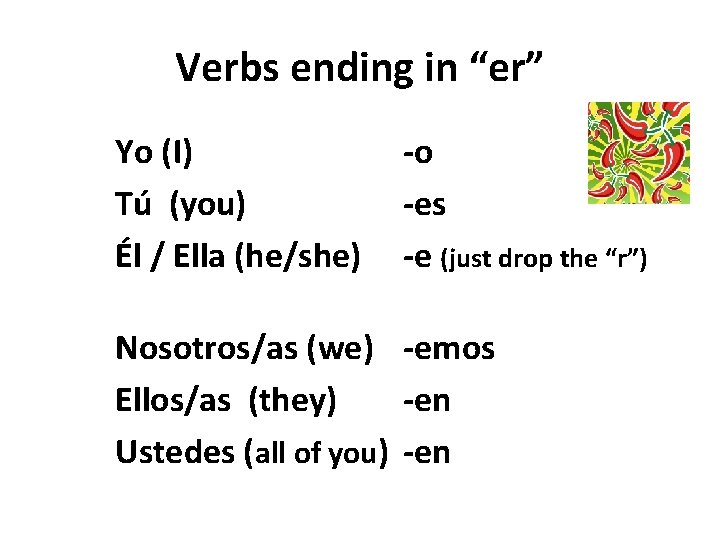
Verbs ending in “er” Yo (I) Tú (you) Él / Ella (he/she) -o -es -e (just drop the “r”) Nosotros/as (we) -emos Ellos/as (they) -en Ustedes (all of you) -en
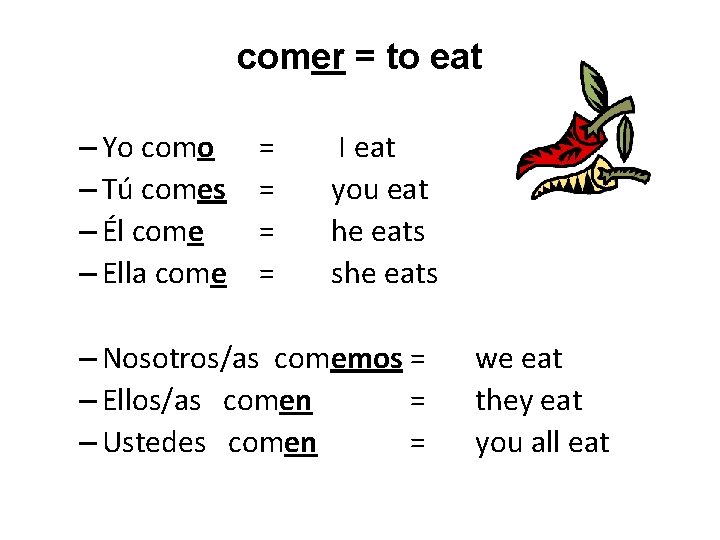
comer = to eat – Yo como – Tú comes – Él come – Ella come = = I eat you eat he eats she eats – Nosotros/as comemos = – Ellos/as comen = – Ustedes comen = we eat they eat you all eat
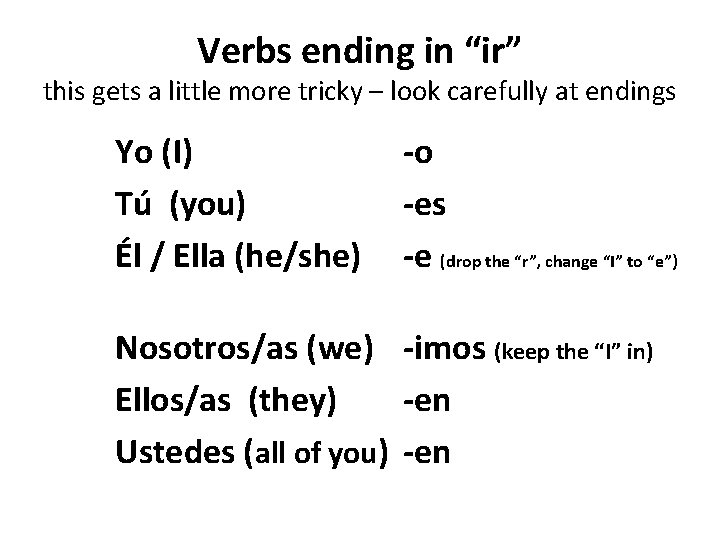
Verbs ending in “ir” this gets a little more tricky – look carefully at endings Yo (I) Tú (you) Él / Ella (he/she) -o -es -e (drop the “r”, change “I” to “e”) Nosotros/as (we) -imos (keep the “I” in) Ellos/as (they) -en Ustedes (all of you) -en
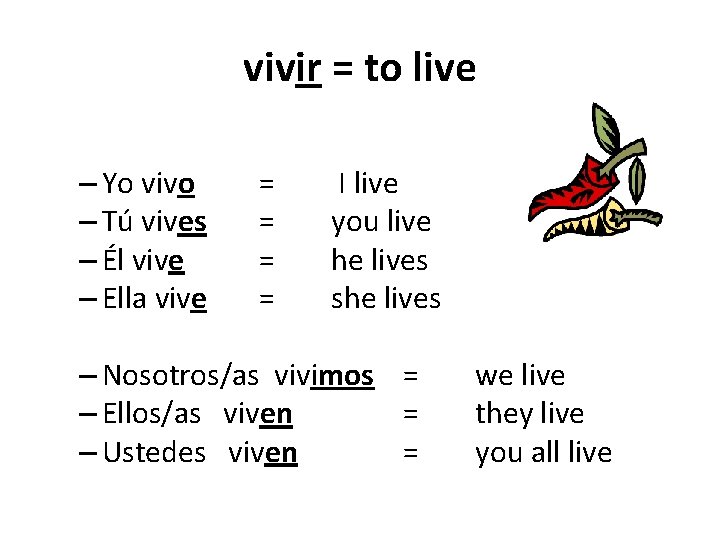
vivir = to live – Yo vivo – Tú vives – Él vive – Ella vive = = I live you live he lives she lives – Nosotros/as vivimos = – Ellos/as viven = – Ustedes viven = we live they live you all live
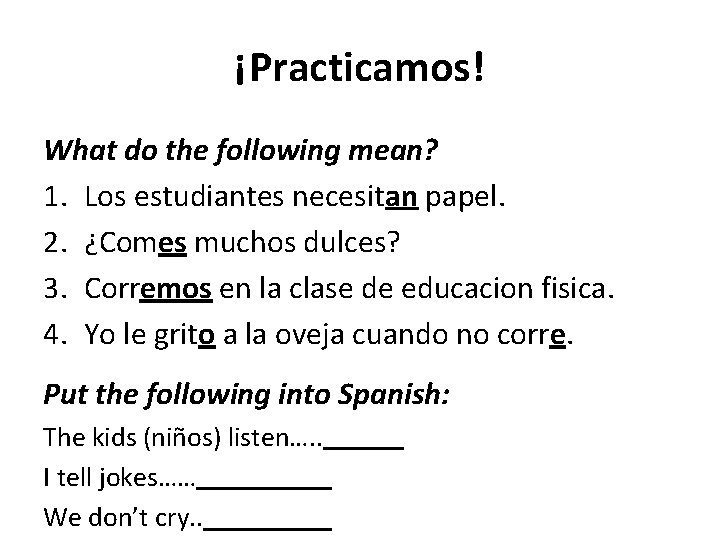
¡Practicamos! What do the following mean? 1. Los estudiantes necesitan papel. 2. ¿Comes muchos dulces? 3. Corremos en la clase de educacion fisica. 4. Yo le grito a la oveja cuando no corre. Put the following into Spanish: The kids (niños) listen…. . I tell jokes…… We don’t cry. .
- Slides: 12