
L O To understand that friction can be
L. O. To understand that friction can be useful and not useful
Watch the BBC Bitesize clip below to remind you of what we learnt about friction last week. https: //www. bbc. co. uk/bitesize/topics/zsxxsbk/articles/zxqrdxs
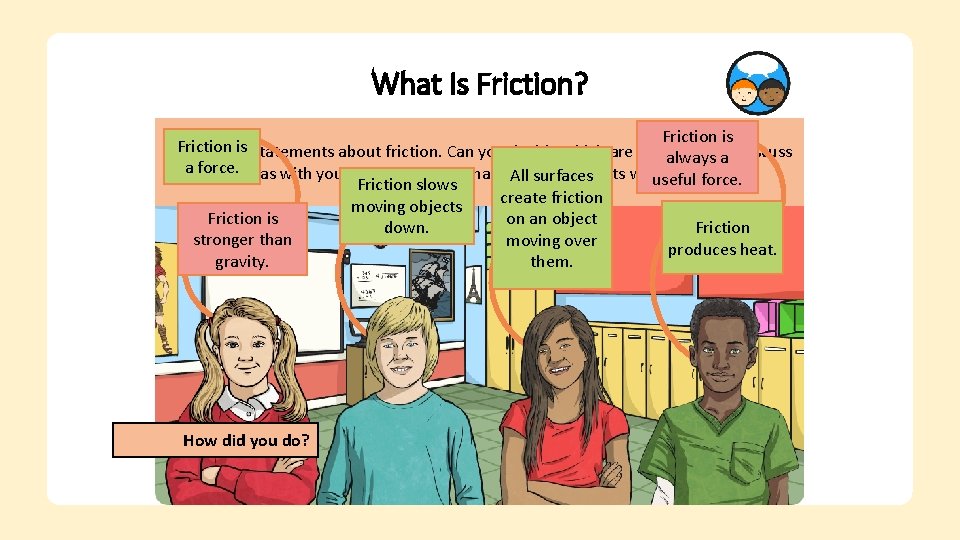
What Is Friction? Friction is Look at the statements about friction. Can you decide which are truealways or false? a Discuss a force. your ideas with your partner before sharing. Allyour thoughts with class. surfaces usefulthe force. Friction slows create friction moving objects Friction is on an object Friction down. stronger than moving over produces heat. gravity. them. How did you do?
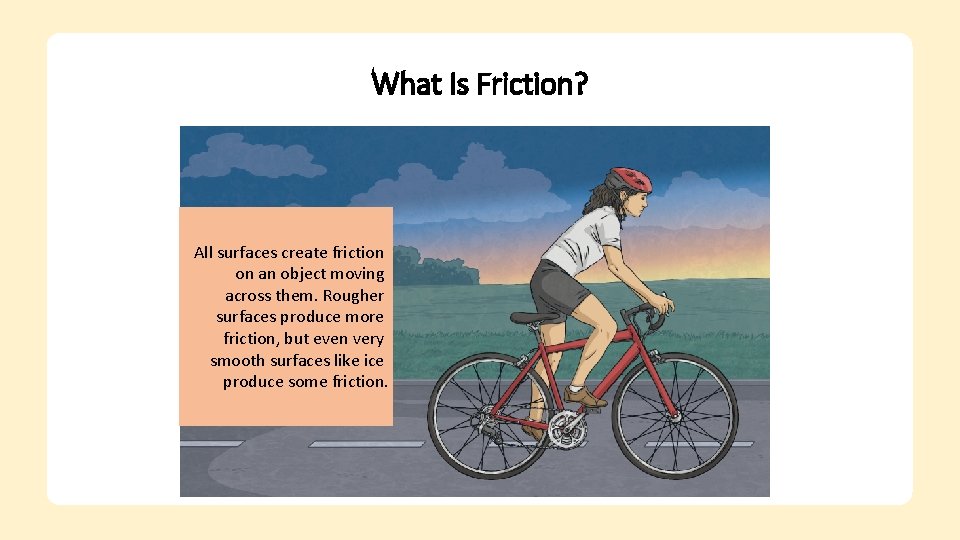
What Is Friction? Friction is a force that acts All surfaces create friction between two surfaces or on always an object Friction actsmoving in the objects that are moving, or acrossdirection them. Rougher opposite to the trying to move, across direction surfaces that produce the object more is each other. For example, friction, but even verya moving. It always slows when you try to push a smooth moving surfaces objectlike down. ice book across the floor, produce some friction makes this difficult.

Friction can be useful or not useful Push force from the car, making it move forward. Friction between the tyres and the ground, helping the car to grip. Push force from your leg as you walk forwards. Friction between the shoe and the ground, stops you slipping over.
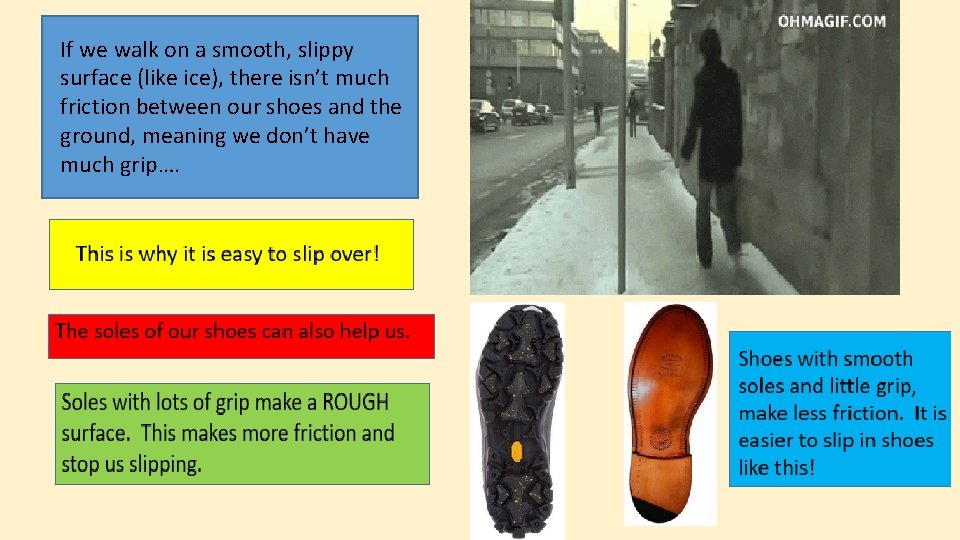
If we walk on a smooth, slippy surface (like ice), there isn’t much friction between our shoes and the ground, meaning we don’t have much grip….
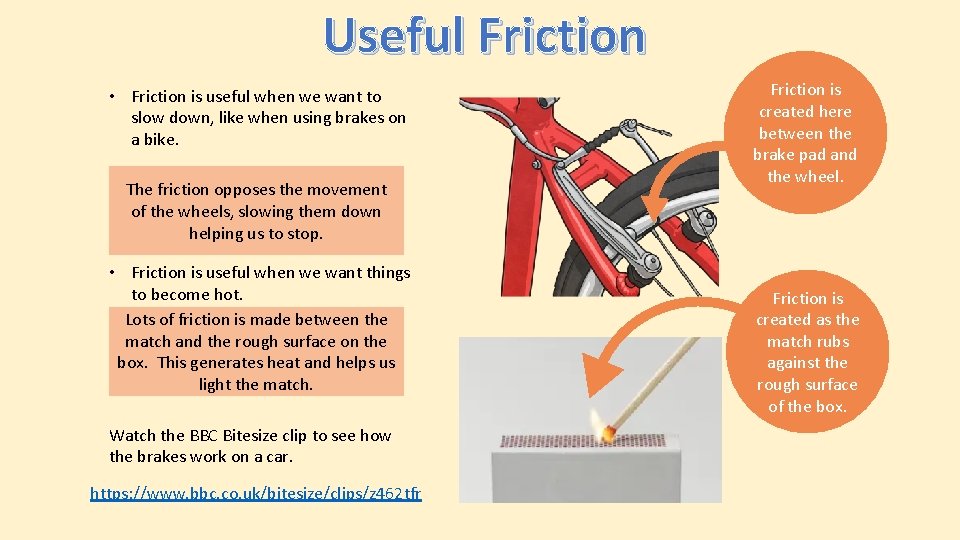
Useful Friction • Friction is useful when we want to slow down, like when using brakes on a bike. The friction opposes the movement of the wheels, slowing them down helping us to stop. • Friction is useful when we want things to become hot. Lots of friction is made between the match and the rough surface on the box. This generates heat and helps us light the match. Watch the BBC Bitesize clip to see how the brakes work on a car. https: //www. bbc. co. uk/bitesize/clips/z 462 tfr Friction is created here between the brake pad and the wheel. Friction is created as the match rubs against the rough surface of the box.
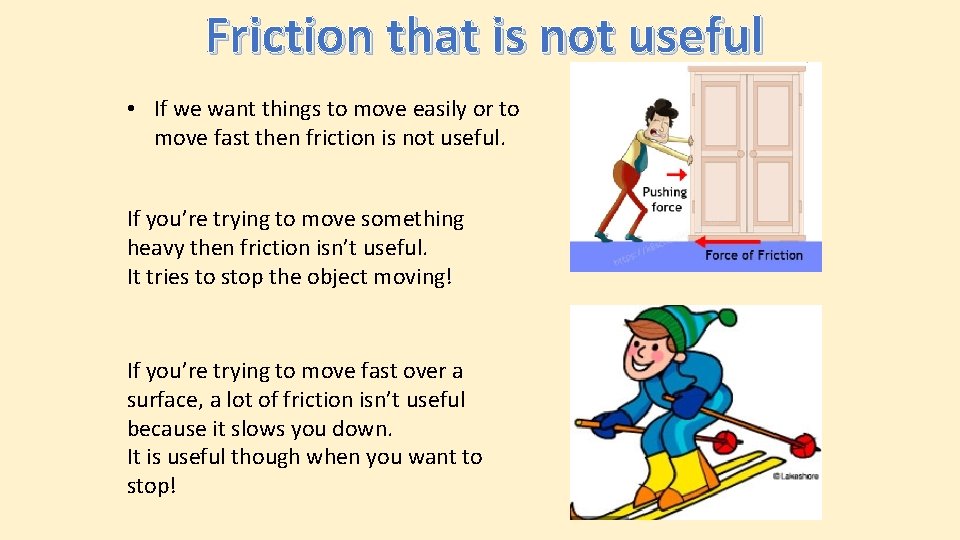
Friction that is not useful • If we want things to move easily or to move fast then friction is not useful. If you’re trying to move something heavy then friction isn’t useful. It tries to stop the object moving! If you’re trying to move fast over a surface, a lot of friction isn’t useful because it slows you down. It is useful though when you want to stop!
Things to remember…. • Friction is a force. • We get friction when 2 surface rub past each other. • Friction acts in the opposite direction to what an object is moving. • Rough surfaces create lots of friction. • Smooth/slippy surfaces don’t create much friction. • Friction can sometimes be useful, but other times not useful.
Your mission…. There are 2 activities you can try this week. 1. Try to complete the ‘Useful, Not Useful Friction’ worksheet. • Download the worksheet from the website. • Look at the pictures in the table. Do they show an action where there is a lot of friction, or not much friction? • Is the friction useful (does it help the person in the picture)? Or not useful (does it make things more difficult for the person in the picture)? • Tick one box for each picture to show your choices. 2. BBC Bitesize Experiment – Waxing Skis • Download the experiment sheet from the website and watch the video of the experiment. • Try to answer the questions then fill in the results table. • If you want an extra challenge try to create a bar chart to display the results. • Complete the conclusion – what did you learn? Does waxing skis make them faster?
- Slides: 10