
L O To translate polygons and describe translations
L. O. To translate polygons and describe translations
Rhombus 1 Hexagon 2 Equilateral Triangle 3 Enter your text here 4 Enter your text here 10 Enter your text here 11 12 17 18 Isosceles Triangle 7 Trapezium 8 Kite 9 Enter your text here Octagon 13 Scalene Triangle 14 15 Enter your text here 16 Enter your text here Parallelogram 19 Heptagon 22 23 Hide All Show All 20 Pentagon 6 5 Enter your text here tekhnologic
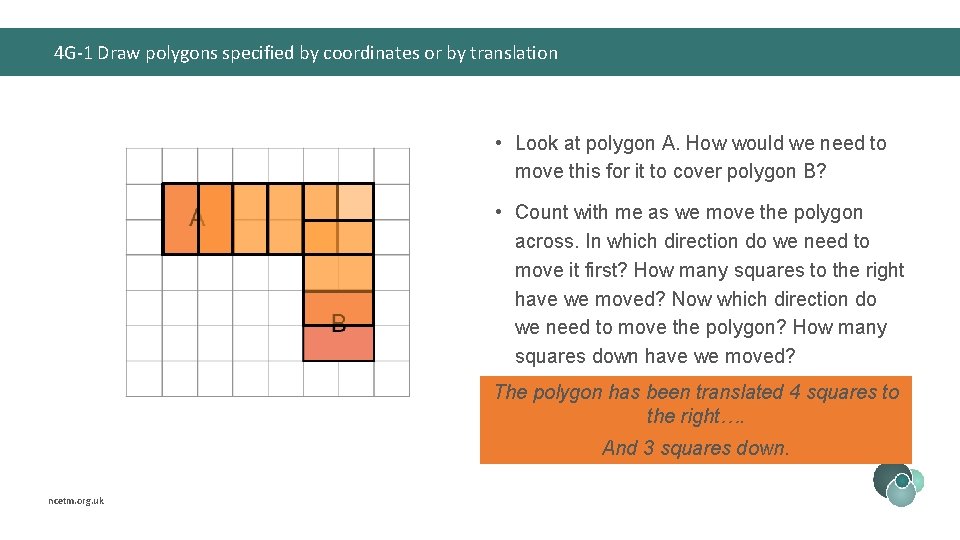
4 G-1 Draw polygons specified by coordinates or by translation • Look at polygon A. How would we need to move this for it to cover polygon B? • Count with me as we move the polygon across. In which direction do we need to move it first? How many squares to the right have we moved? Now which direction do we need to move the polygon? How many squares down have we moved? The polygon has been translated 4 squares to the right…. And 3 squares down. ncetm. org. uk
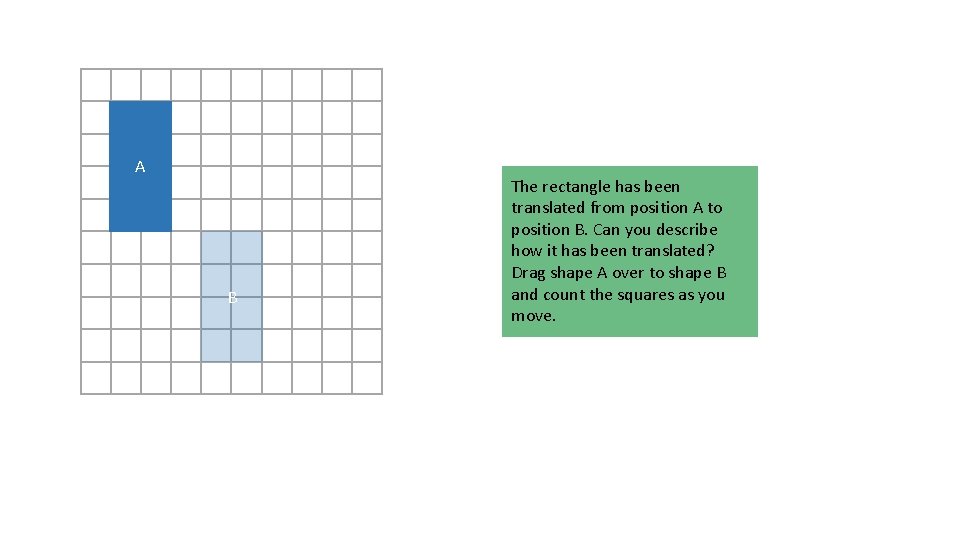
A B The rectangle has been translated from position A to position B. Can you describe how it has been translated? Drag shape A over to shape B and count the squares as you move.

Cut out the shapes. Translate them and stick them in their new position. 1) Translate the rectangle 4 squares to the right and 6 squares down. 2) Translate the square 1 square to the left and 4 squares up. 3) Translate the trapezium 7 squares to the right and 4 squares down. 4) Translate the triangle 4 squares to the left and 3 squares up. Extension: Cut out the right-angled triangles – stick them in empty positions on your grid. Underneath your grid, describe their translation. The right-angled triangle has been translated……. .
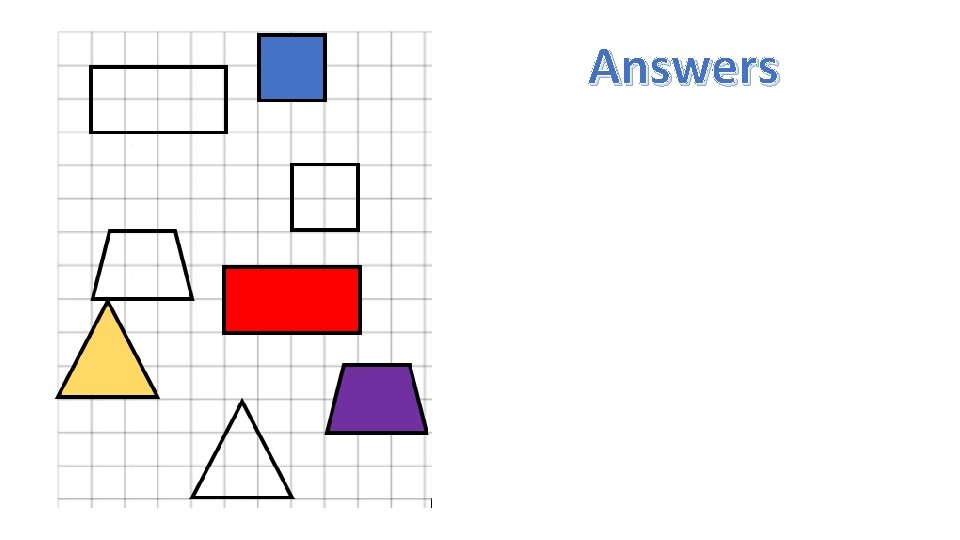
Answers
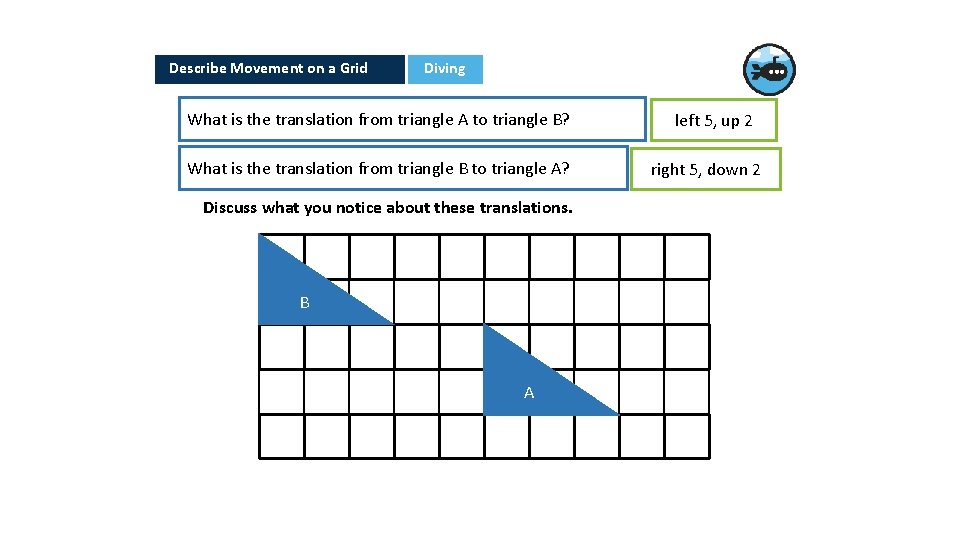
Describe Movement on a Grid Diving What is the translation from triangle A to triangle B? What is the translation from triangle B to triangle A? Discuss what you notice about these translations. B A left 5, up 2 right 5, down 2
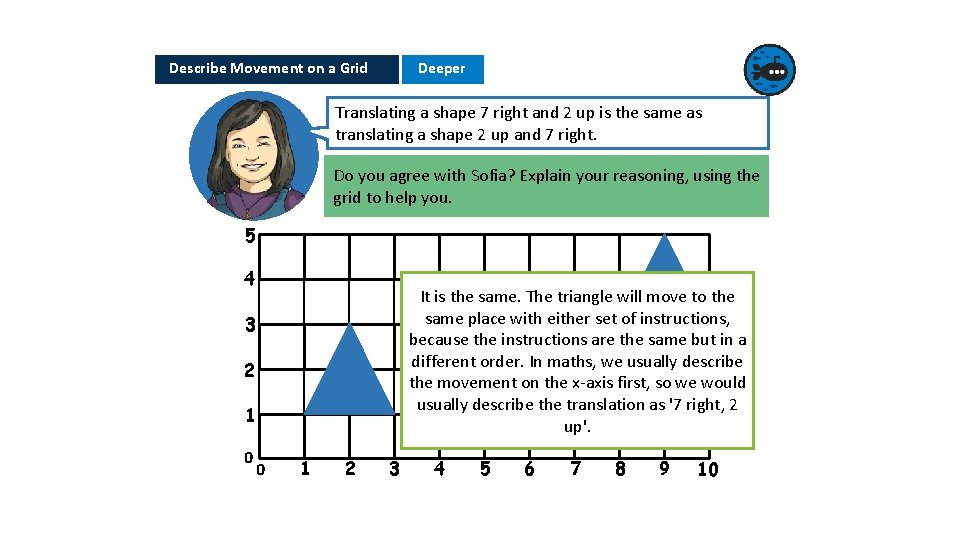
Describe Movement on a Grid Deeper Translating a shape 7 right and 2 up is the same as translating a shape 2 up and 7 right. Do you agree with Sofia? Explain your reasoning, using the grid to help you. 5 4 It is the same. The triangle will move to the same place with either set of instructions, because the instructions are the same but in a different order. In maths, we usually describe the movement on the x-axis first, so we would usually describe the translation as '7 right, 2 up'. 3 2 1 0 0 1 2 3 4 5 6 7 8 9 10
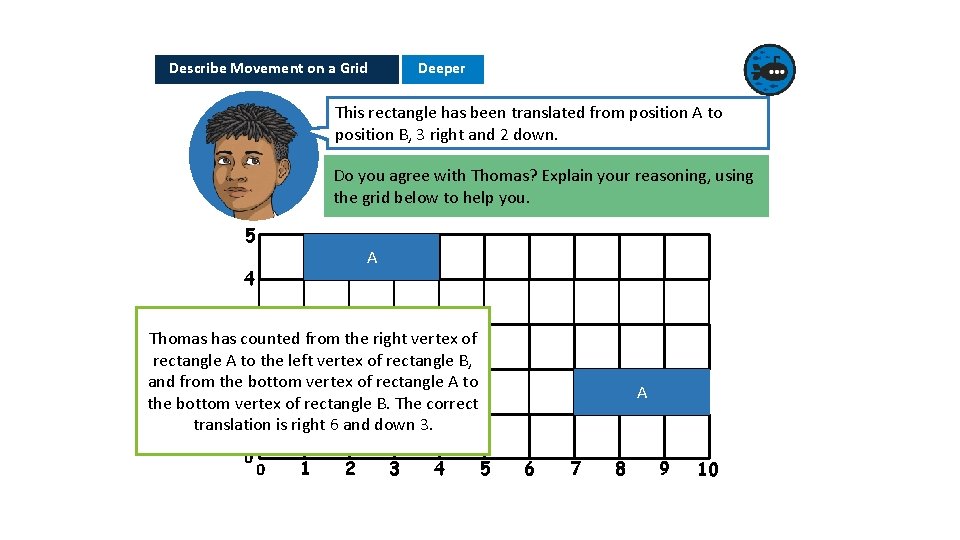
Describe Movement on a Grid Deeper This rectangle has been translated from position A to position B, 3 right and 2 down. Do you agree with Thomas? Explain your reasoning, using the grid below to help you. 5 A 4 3 Thomas has counted from the right vertex of rectangle A to the left vertex of rectangle B, 2 and from the bottom vertex of rectangle A to the bottom vertex of rectangle B. The correct 1 is right 6 and down 3. translation 0 0 1 2 3 4 A 5 6 7 8 9 10
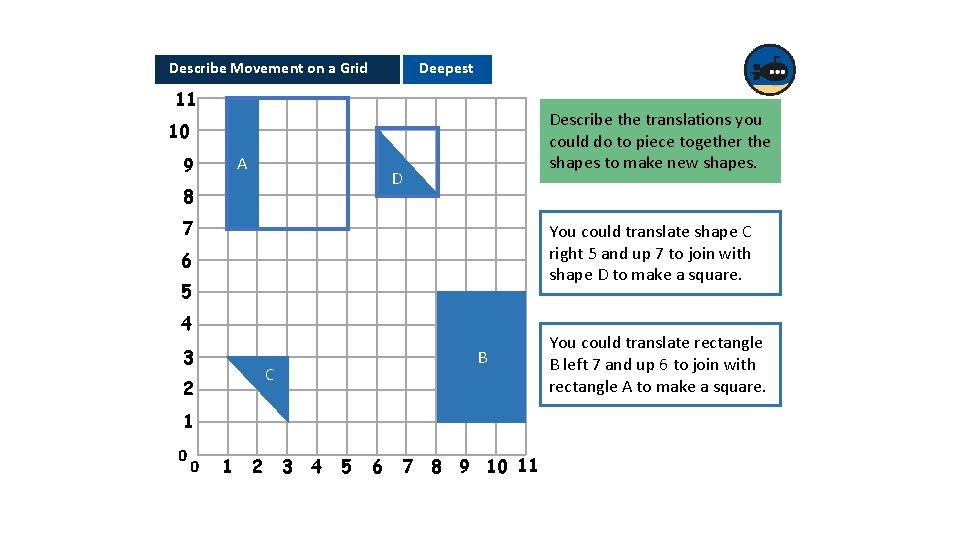
Describe Movement on a Grid Deepest 11 Describe the translations you could do to piece together the shapes to make new shapes. 10 9 A D 8 7 You could translate shape C right 5 and up 7 to join with shape D to make a square. 6 5 4 3 B C 2 1 0 0 1 2 3 4 5 6 7 8 9 10 11 You could translate rectangle B left 7 and up 6 to join with rectangle A to make a square.
Try Activity Sheet 2
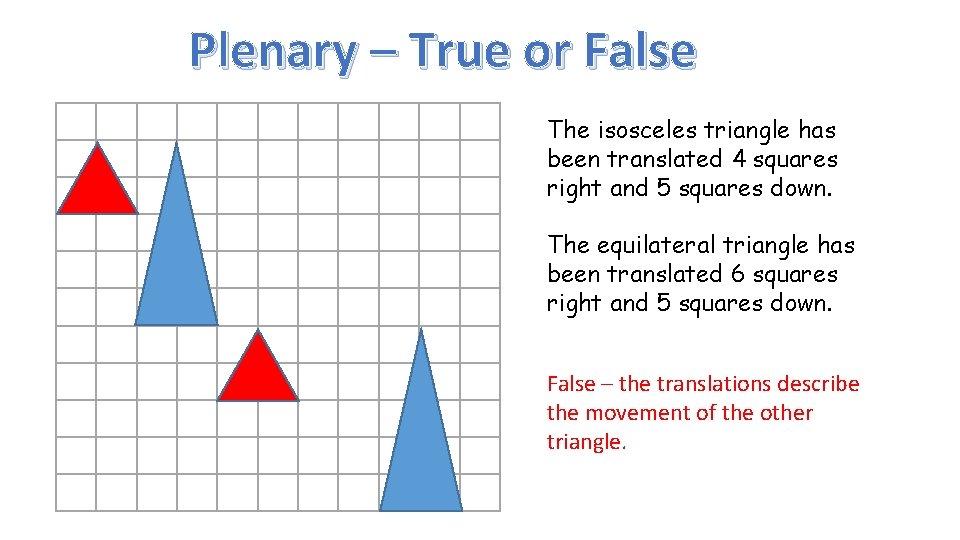
Plenary – True or False The isosceles triangle has been translated 4 squares right and 5 squares down. The equilateral triangle has been translated 6 squares right and 5 squares down. False – the translations describe the movement of the other triangle.
- Slides: 12