
L O To explain coastal erosion Geography What


- Slides: 28
L. O. To explain coastal erosion Geography
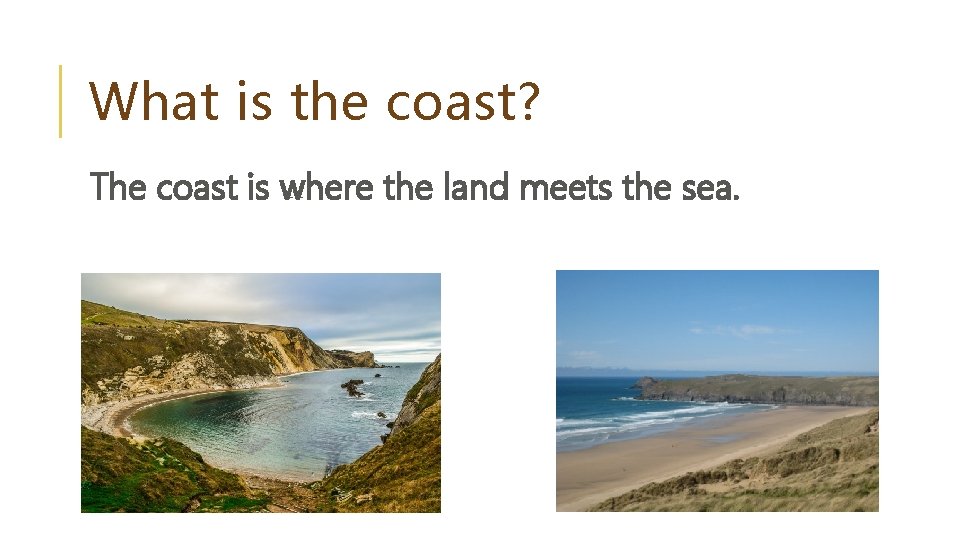
What is the coast? The coast is where the land meets the sea.
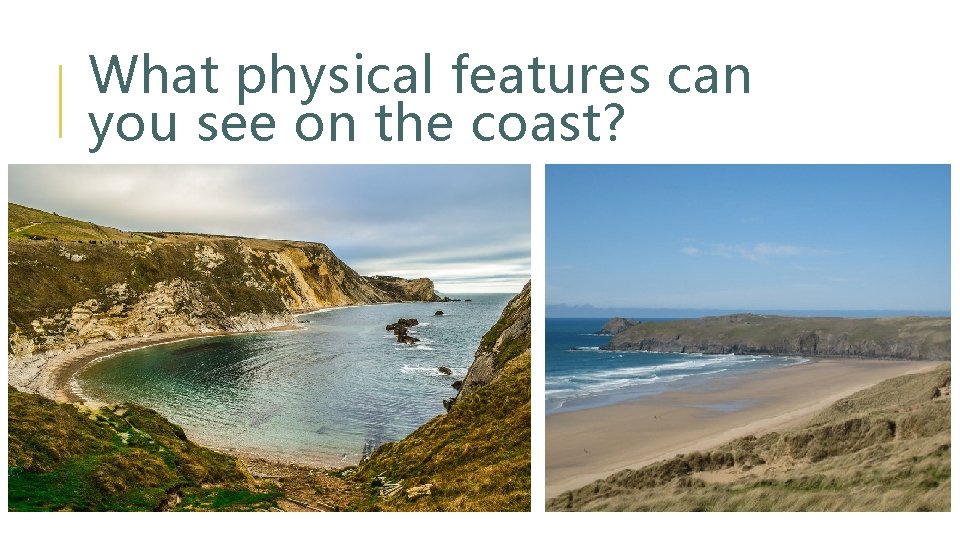
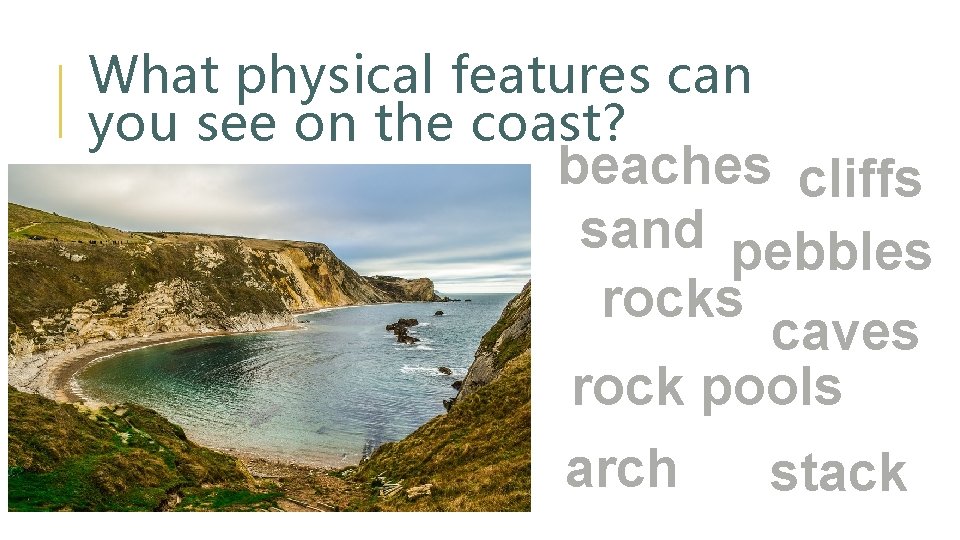
What physical features can you see on the coast?
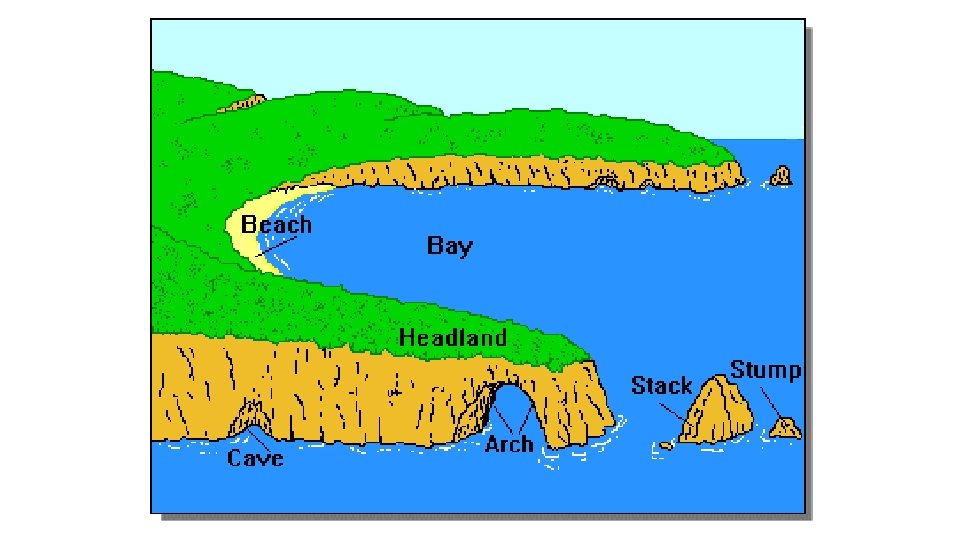
What physical features can you see on the coast? beaches cliffs sand pebbles rocks caves rock pools arch stack
Whys does the coast look different everywhere? v. The sea constantly bashes against the edge of the land in different directions. v. Some rock in the land is soft, some is hard. v. Some places have more strong and forceful storms than others.
What is change? Change is when something becomes different to how it was before. E. g. it may be bigger or smaller in size etc.
Coastal Changes Today we are learning about how the coast changes over time. Why does this happen?
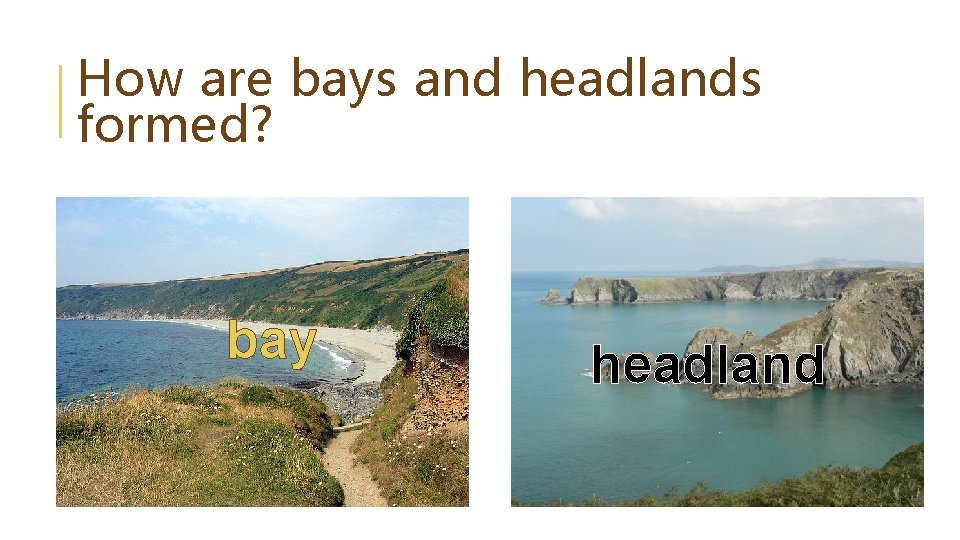
How are bays and headlands formed? bay headland
Click on the link to find out more! http: //www. viewpure. com/F 1 Pt. FRs 23 EA? start=0&end =0
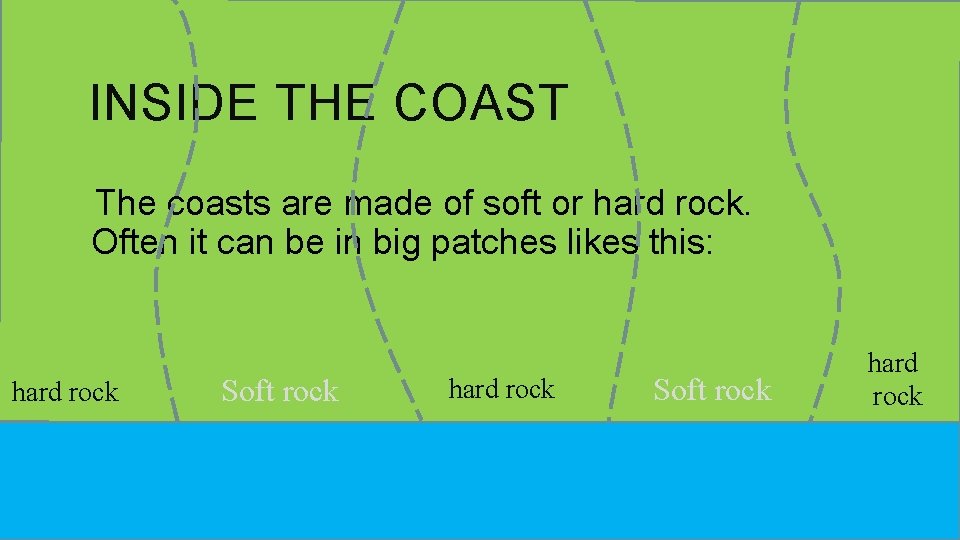
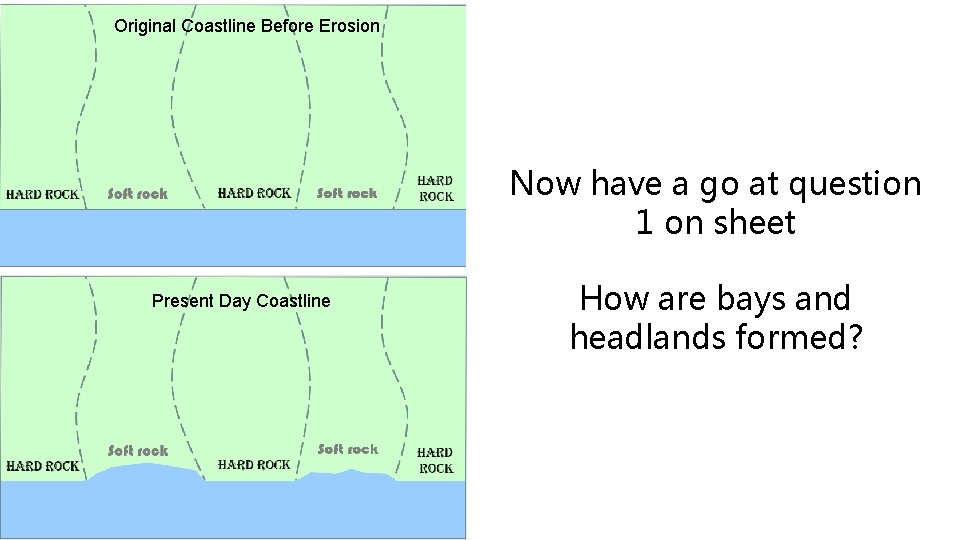
INSIDE THE COAST The coasts are made of soft or hard rock. Often it can be in big patches likes this: hard rock Soft rock hard rock
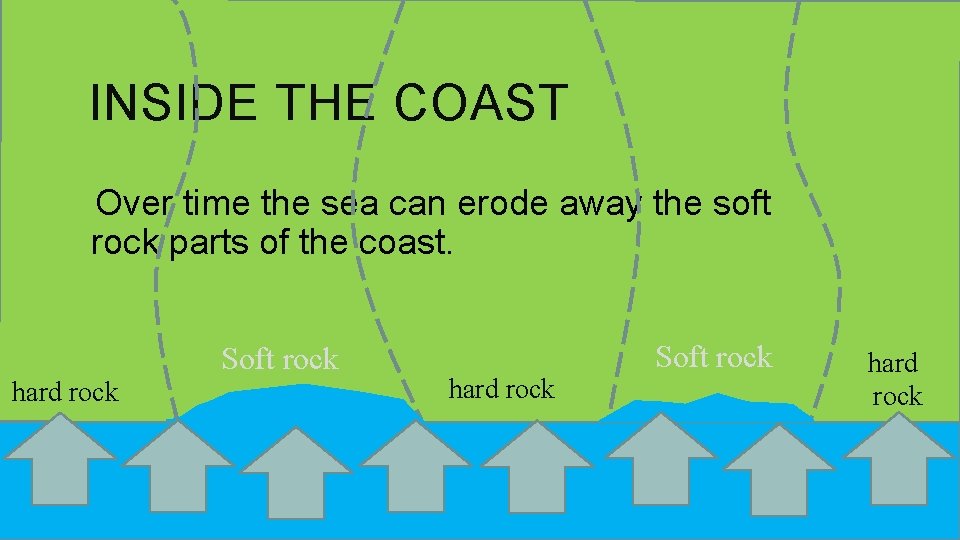
INSIDE THE COAST Over time the sea can erode away the soft rock parts of the coast. hard rock Soft rock hard rock
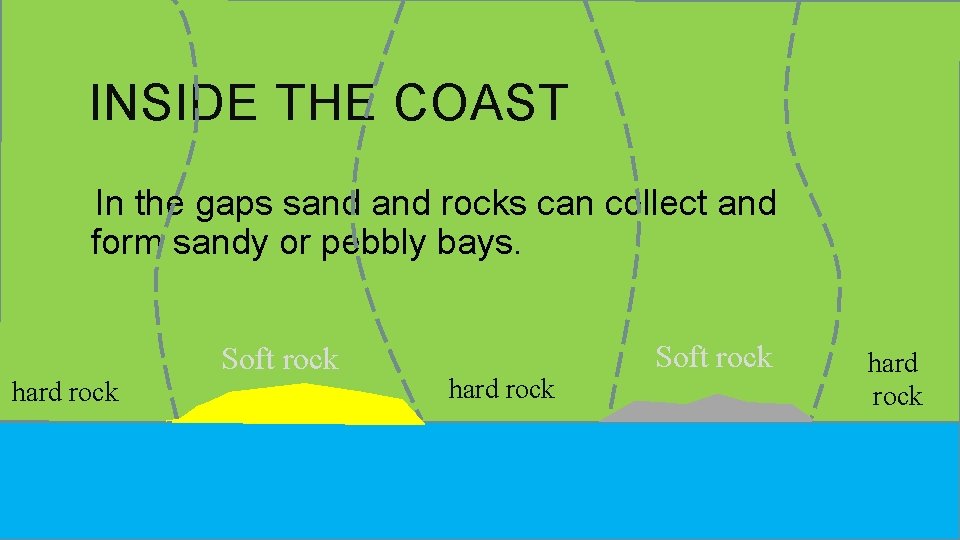
INSIDE THE COAST In the gaps sand rocks can collect and form sandy or pebbly bays. hard rock Soft rock hard rock
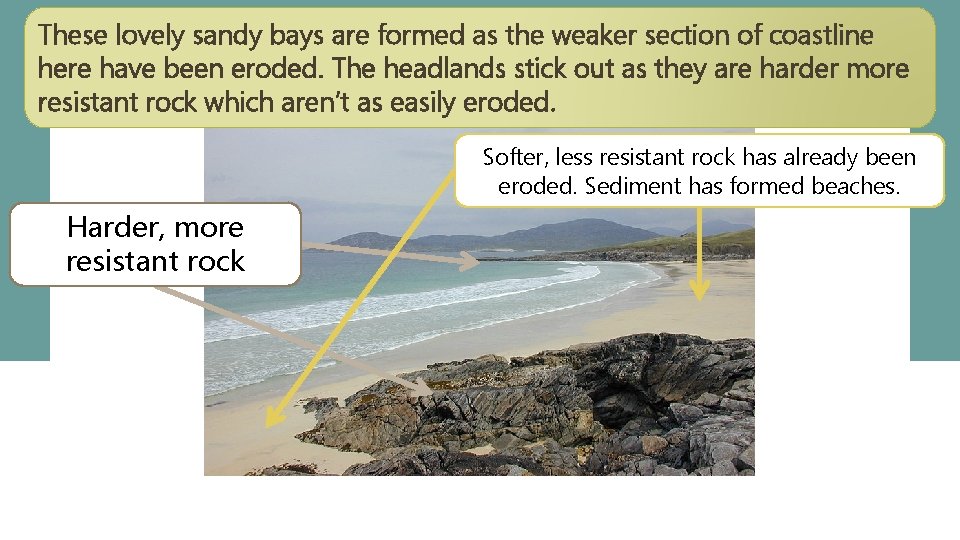
These lovely sandy bays are formed as the weaker section of coastline here have been eroded. The headlands stick out as they are harder more resistant rock which aren’t as easily eroded. Softer, less resistant rock has already been eroded. Sediment has formed beaches. Harder, more resistant rock
Original Coastline Before Erosion Now have a go at question 1 on sheet Present Day Coastline How are bays and headlands formed?
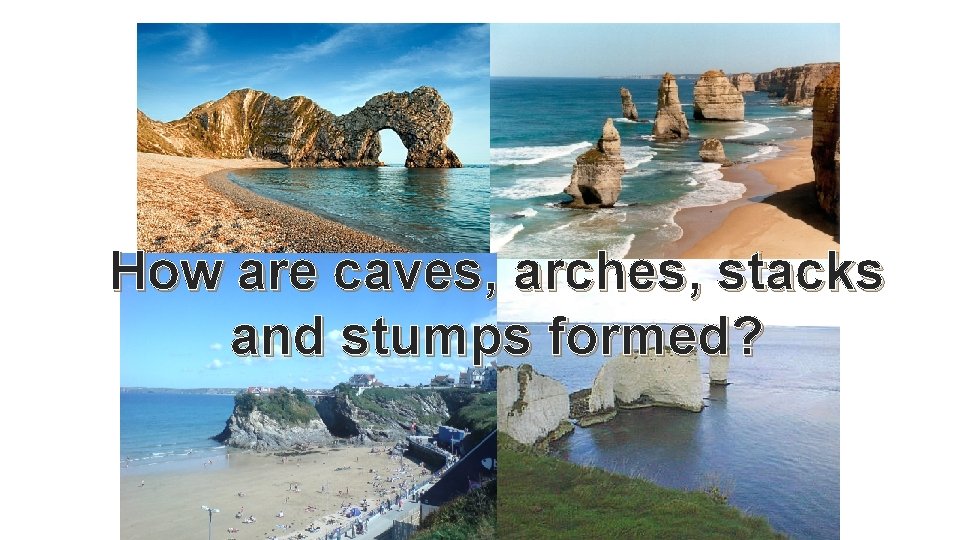
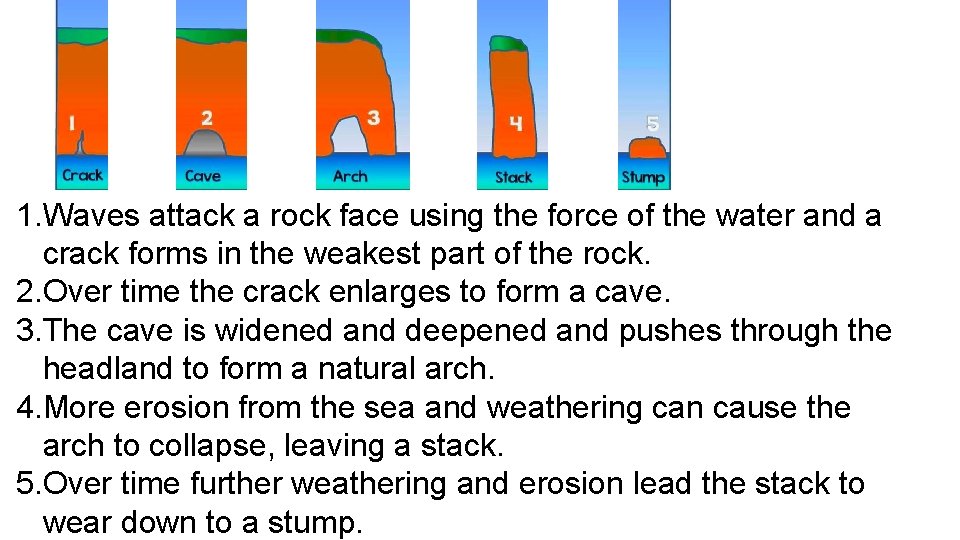
How are caves, arches, stacks and stumps formed?
Click on the link to find out more! http: //www. viewpure. com/00 Khn 0 RSp. YA? start=0&end=
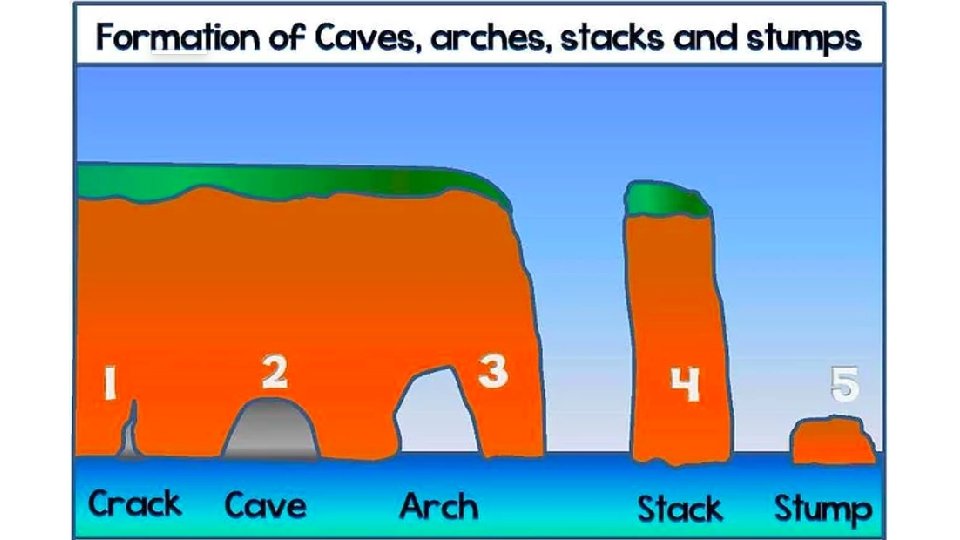
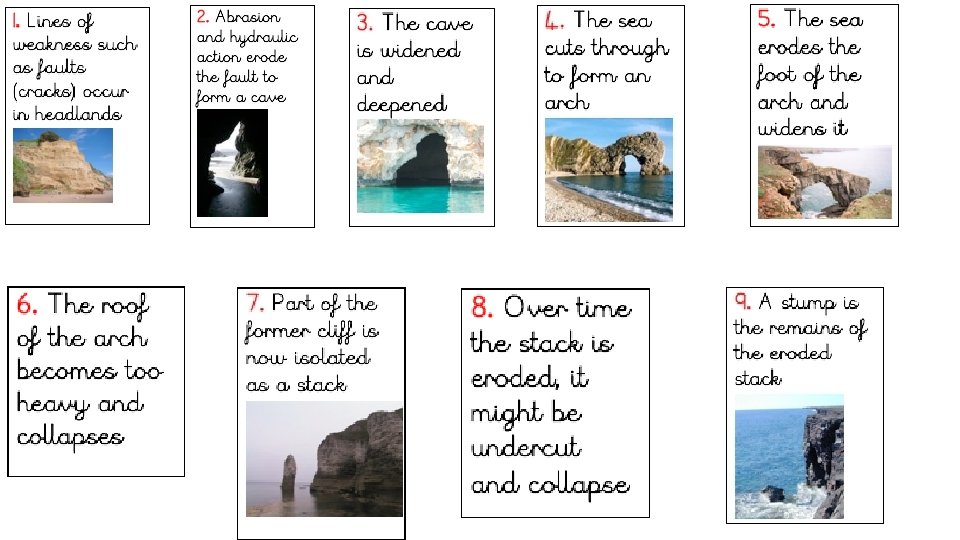
1. Waves attack a rock face using the force of the water and a crack forms in the weakest part of the rock. 2. Over time the crack enlarges to form a cave. 3. The cave is widened and deepened and pushes through the headland to form a natural arch. 4. More erosion from the sea and weathering can cause the arch to collapse, leaving a stack. 5. Over time further weathering and erosion lead the stack to wear down to a stump.
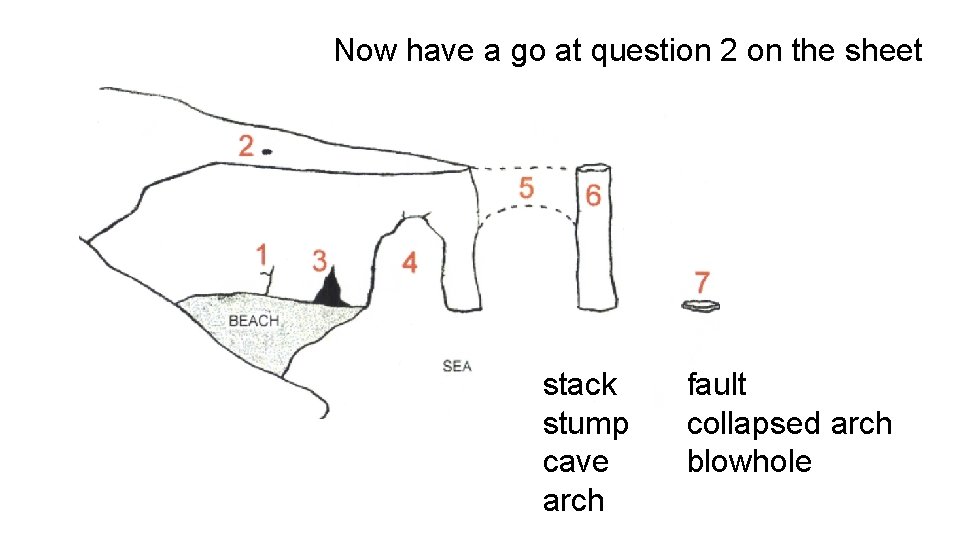
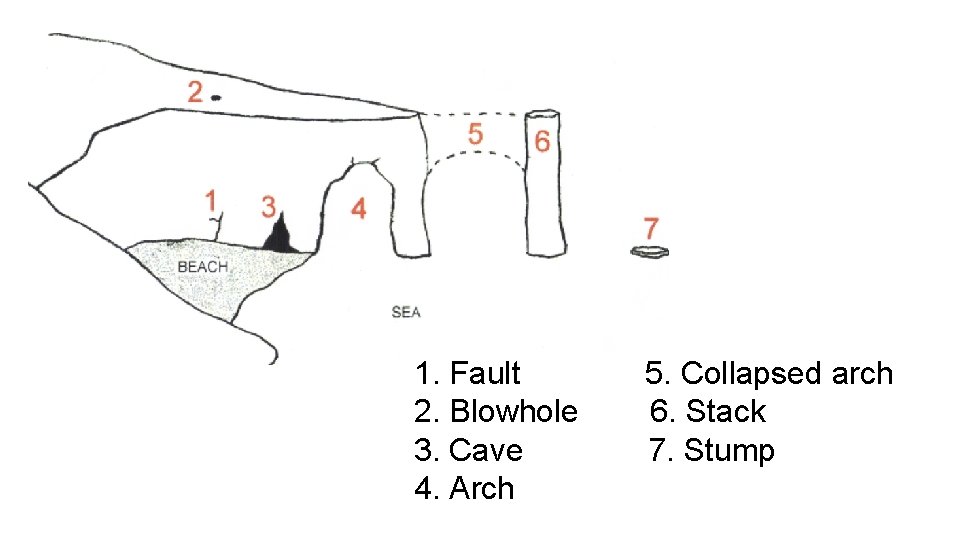
Now have a go at question 2 on the sheet stack stump cave arch fault collapsed arch blowhole
1. Fault 2. Blowhole 3. Cave 4. Arch 5. Collapsed arch 6. Stack 7. Stump
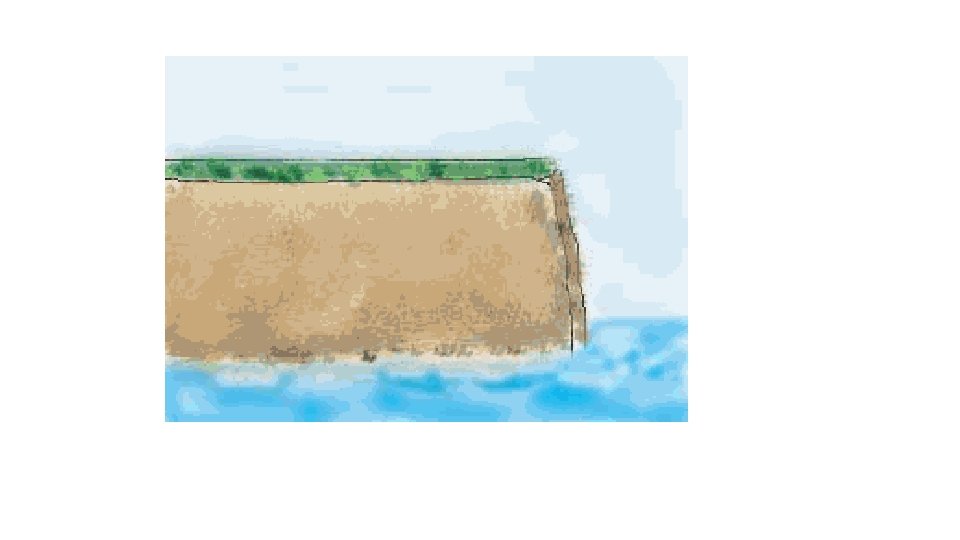
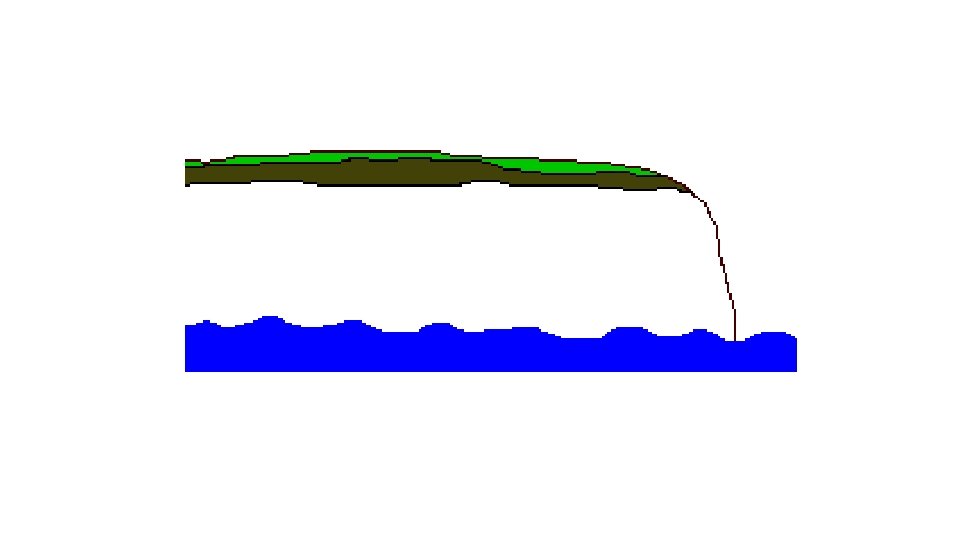
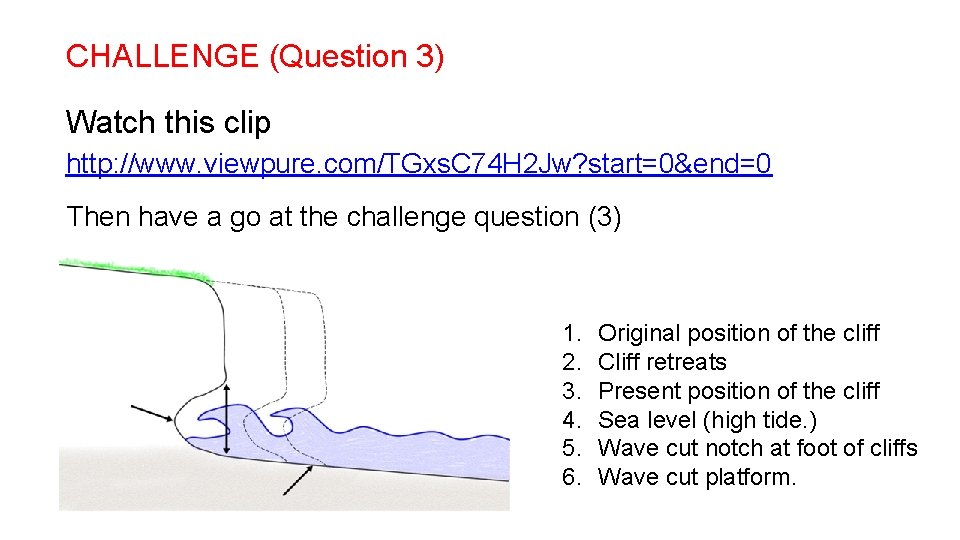
CHALLENGE (Question 3) Watch this clip http: //www. viewpure. com/TGxs. C 74 H 2 Jw? start=0&end=0 Then have a go at the challenge question (3) 1. 2. 3. 4. 5. 6. Original position of the cliff Cliff retreats Present position of the cliff Sea level (high tide. ) Wave cut notch at foot of cliffs Wave cut platform.
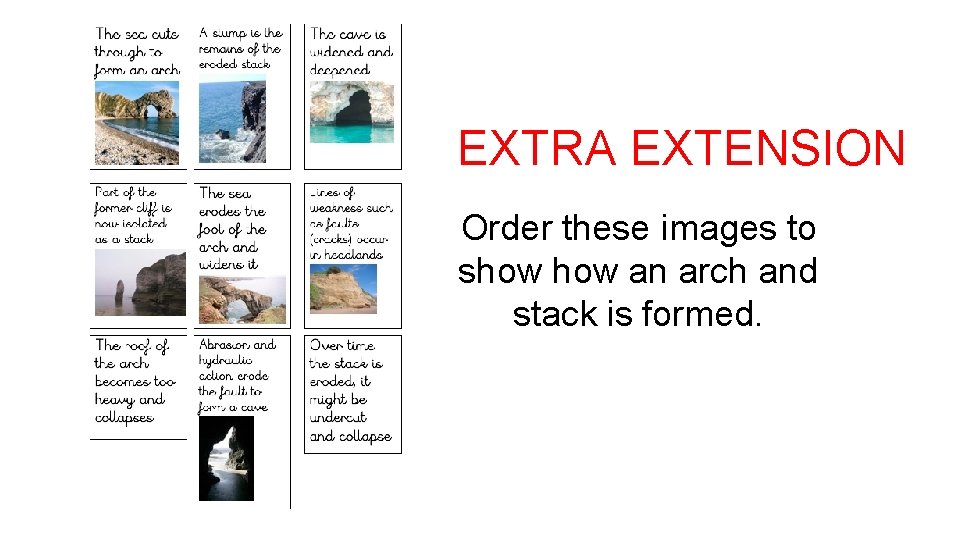
EXTRA EXTENSION Order these images to show an arch and stack is formed.
Plenary When have you seen examples of this in real life?