
L O To be able to identify multiples
L. O. To be able to identify multiples
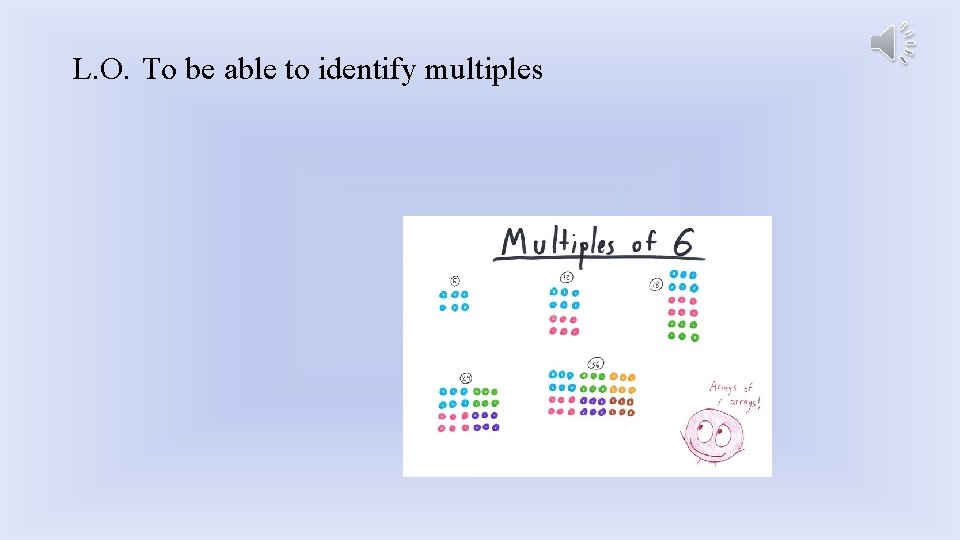
What is a multiple? A multiple is a number that can be divided by another number a certain number of times without a remainder. Multiples : 0 × 6 = 0 so 0 is a multiple of 6 1 × 6 = 6 so 6 is a multiple of 6 2 × 6 = 12 so 12 is a multiple of 6 and so on
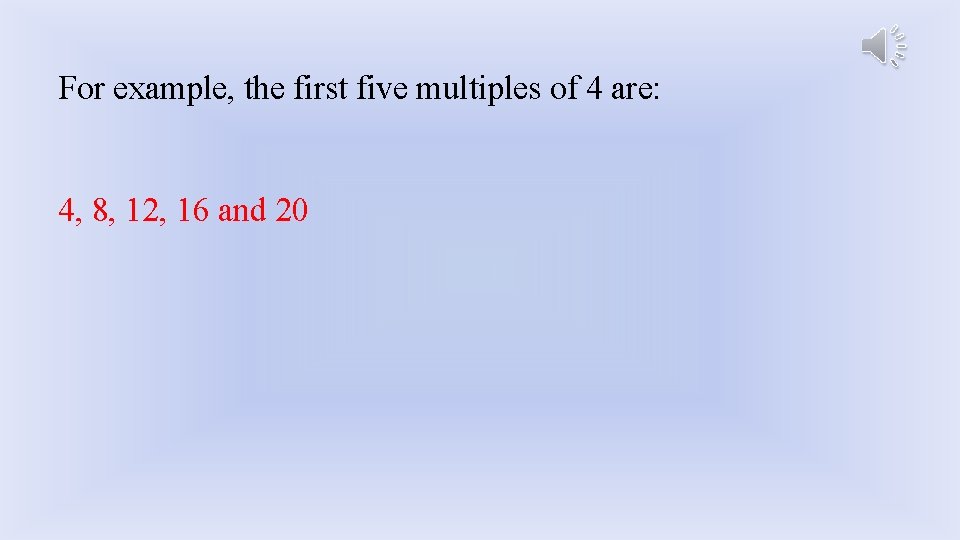
For example, the first five multiples of 4 are: 4, 8, 12, 16 and 20
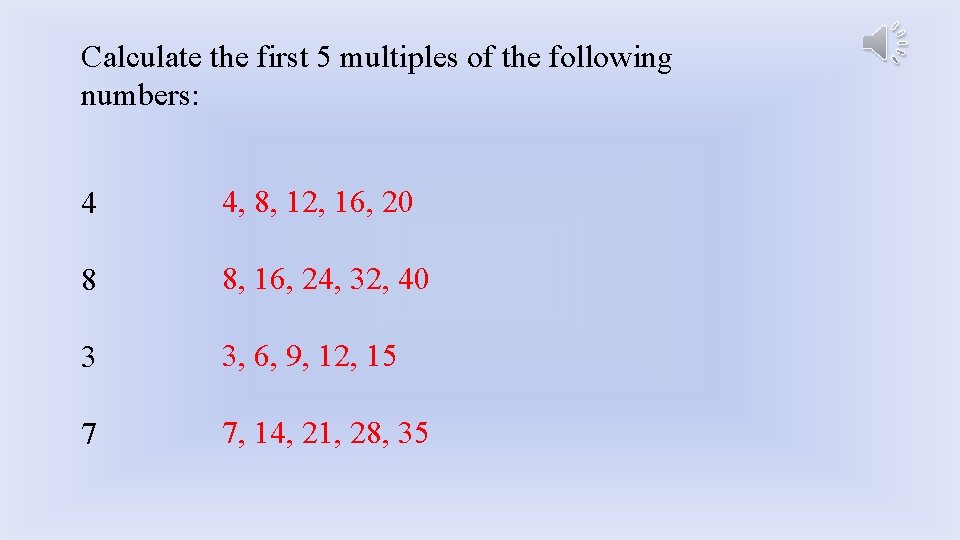
Calculate the first 5 multiples of the following numbers: 4 4, 8, 12, 16, 20 8 8, 16, 24, 32, 40 3 3, 6, 9, 12, 15 7 7, 14, 21, 28, 35

• How do you know if a number is a multiple of 2? • The number is even – the one’s digit is a 0, 2, 4, 6 or 8 • How do you know if a number is a multiple of 10? • The one’s digit (last digit) is 0 • How do you know if a number is a multiple of 5? • The one’s digit (last digit) is 5 or 0.

How do you know if a number is a multiple of 3? The digital root is 3, 6 or 9 (add the digits until you get a single digit) E. g. 264 = 2 + 6 + 4 = 12 = 1 + 2 = 3 So 264 is a multiple of 3 How do you know if a number is a multiple of 4? The last 2 digits are in the 4 times table. E. g. 248 4 & 8 are in the 4 times table so 248 is a multiple of 4
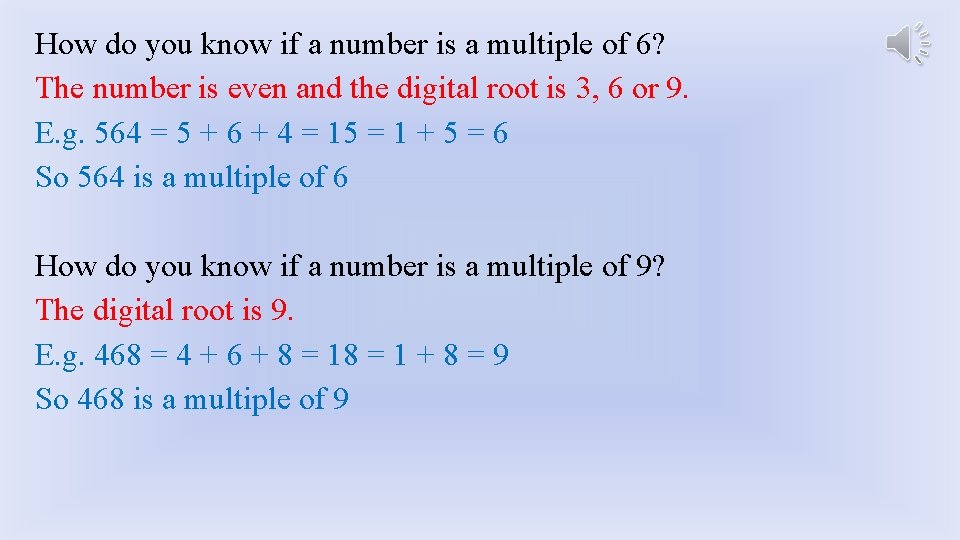
How do you know if a number is a multiple of 6? The number is even and the digital root is 3, 6 or 9. E. g. 564 = 5 + 6 + 4 = 15 = 1 + 5 = 6 So 564 is a multiple of 6 How do you know if a number is a multiple of 9? The digital root is 9. E. g. 468 = 4 + 6 + 8 = 1 + 8 = 9 So 468 is a multiple of 9
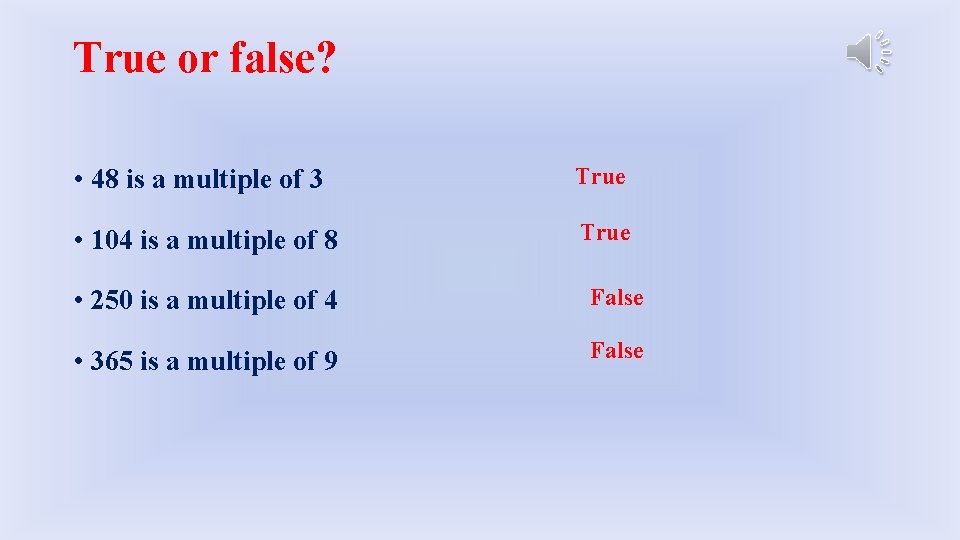
True or false? • 48 is a multiple of 3 True • 104 is a multiple of 8 True • 250 is a multiple of 4 False • 365 is a multiple of 9 False
Tasks 1. Complete Practice Sheet: Group A & B: A Questions Group C: B Questions 2. Mark your work and complete your corrections 3. Word Questions 4. Mark your work and complete any corrections
- Slides: 9