
L O To acknowledge different feelings and emotions
- Slides: 8
L. O - To acknowledge different feelings and emotions that people experience.
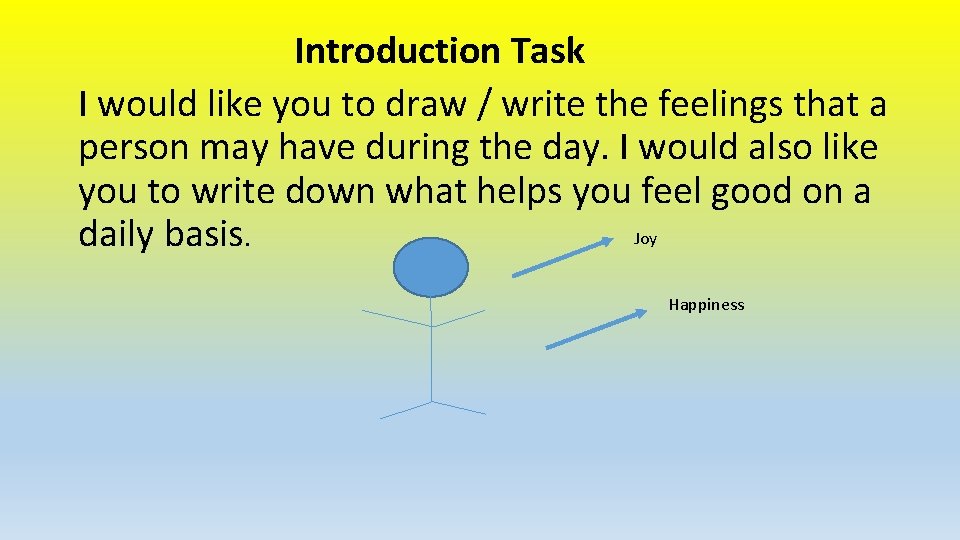
Introduction Task I would like you to draw / write the feelings that a person may have during the day. I would also like you to write down what helps you feel good on a Joy daily basis. Happiness
WHAT IS A FEELING? Come up with a definition.
‘A feeling is our emotional state, or our reaction to something. Feelings are important because they help us to manage different situations and look after ourselves. Feelings and emotions are about our minds but we might also experience them in our bodies. ’
You have already learnt in school that we have lots of different feelings all the time and that different things can influence and affect our feelings; that our feelings change often. I would like you to look at a timeline that shows what a boy named Ziggy gets up to during his day. Using the timeline sheet, I would like you to plot how Ziggy may feel at different times of the day. I would like you to use the words good, neutral or not so good.
Work through the cards and arrange them into groups. Are they good moments or not so good moments? Once you have done, I would like you to write whether it was a good day or not-so-good day, so far. I would like you to write down the types of things that made the day better or worse; things we can control and things we can’t. Example: The sun came out – We have no control over the weather and we are unable to change it, so it is not something that we should allow to control our emotions.
There are some ways we can help to make our days feel better, or to help recover if something happens that doesn’t make us feel good and that this is all part of looking after our feelings and emotions (our mental health). Read Resource 3: Sammi’s blog post and identify the different ways Sammi suggests people can feel good every day (or better, if something feels not so good). Do you like the ideas? Have you got any others to suggest? Example: having a hug; thinking of something or somewhere nice.
1. Write a reminder message to Ziggy suggesting one idea to manage feelings positively every day. Think back to the timeline activity to help think of suitable ideas for Ziggy. 2. Have a look at your introduction task that you completed at the beginning of the lesson and use a different coloured pen or pencil to change their original ideas or add their new learning to their work.